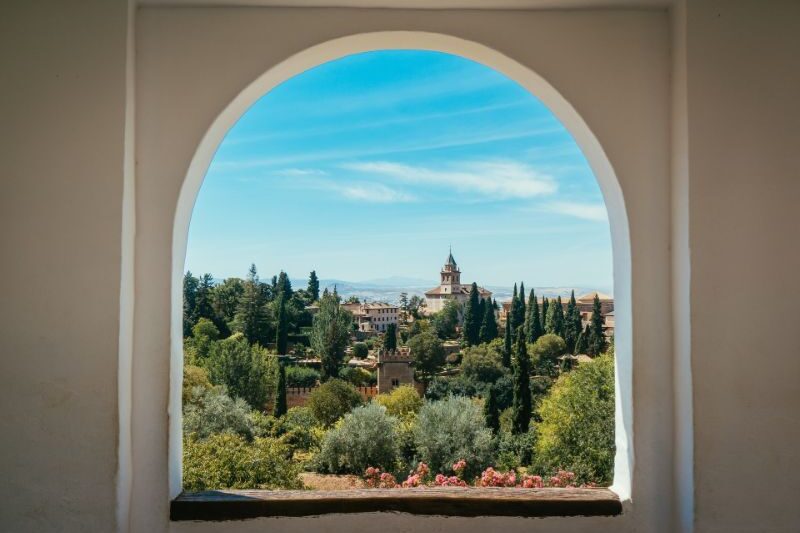
Barrio Santa Cruz occupies the steep hillside between Alicante’s old town and the rock of Monte Benacantil, making it the city’s oldest continuously inhabited quarter. Its narrow cobbled streets follow a medieval and partly Moorish street plan, lined with low whitewashed houses decorated with potted geraniums and bougainvillea. The neighbourhood sits directly beneath Castillo de Santa Bárbara and above the Explanada de España promenade.
What is Barrio Santa Cruz known for?
Barrio Santa Cruz is known for its steep whitewashed alleyways, colourful flower displays, and some of the best elevated views over Alicante’s port and the Mediterranean, all within a compact, walkable medieval street grid that has survived largely intact. The neighbourhood’s most photographed feature is the Callejón del Rollo, a stairway lane decorated year-round with hanging pots and painted tiles. Traditional festivals, including the Hogueras de San Juan bonfires in June, are celebrated here with particular intensity, and several small neighbourhood chapels dot the quarter.
Best things to do in Barrio Santa Cruz
Walking the stairway alleys, visiting Castillo de Santa Bárbara via the lift entrance on Avenida Jovellanos, and exploring the Plaza del Barrio are the core activities, with the castle offering free entry and panoramic views over the bay.
- Climb the pedestrian stairways from Calle Labradores up into the heart of the barrio
- Visit Castillo de Santa Bárbara, accessible by lift from the beach or on foot through the quarter
- Explore the small plaza at Plaza del Barrio, a local social hub
- Look for the decorated ceramic street-name tiles unique to this quarter
- Attend a neighbourhood mass or festival at one of the local chapels
Where to eat and drink in Barrio Santa Cruz
The streets immediately bordering Barrio Santa Cruz, particularly Calle Mayor and the streets around Plaza del Carmen in the adjacent Casco Antiguo, hold the densest concentration of tapas bars and traditional Alicantino restaurants serving rice dishes such as arroz a banda and locally caught seafood.
- Look for bars offering pericana, a traditional Alicantine condiment of dried red pepper and salt cod
- Calle Mayor and surrounding lanes have traditional bodega-style wine bars
- The covered Mercado Central on Plaza 25 de Mayo is a short walk downhill for fresh produce
- Small neighbourhood cafés open early for coffee and tostadas along the lower lanes
Where to walk in Barrio Santa Cruz
The classic walk begins at the Explanada de España on the waterfront, climbs through the Casco Antiguo via Calle Mayor, enters Barrio Santa Cruz through its lower stairways off Calle San Pascual, and ascends to the castle esplanade for panoramic views over the port and the city grid below.
- Callejón del Rollo: one of the most photographed flower-lined stairways in the quarter
- The path from Plaza del Carmen up through the barrio to the castle access road
- Calle Benito Pérez Galdós and adjacent lanes for a quieter residential circuit
How to get to Barrio Santa Cruz
Barrio Santa Cruz is reachable on foot in under ten minutes from Alicante’s central Explanada de España waterfront promenade, with local SUBUS urban buses serving the wider Casco Antiguo area and the TRAM Metropolitano d’Alacant stopping at Luceros station roughly 700 metres from the neighbourhood’s lower edge.
- TRAM Metropolitano: Luceros station, lines L1 and L2, central city hub
- SUBUS urban bus network: multiple lines stop on Avenida de la Constitución nearby
- Alicante-Termino main railway station is approximately 1.2 km on foot
- Alicante-Elche Airport is about 12 km; taxis and bus C-6 serve the city centre
Best time to visit Barrio Santa Cruz
Spring (April–May) and early autumn (September–October) offer the most comfortable temperatures for climbing the steep lanes, while June brings the Hogueras de San Juan festival when the neighbourhood is at its most festive, though July and August see peak crowds and intense heat on the exposed hillside.