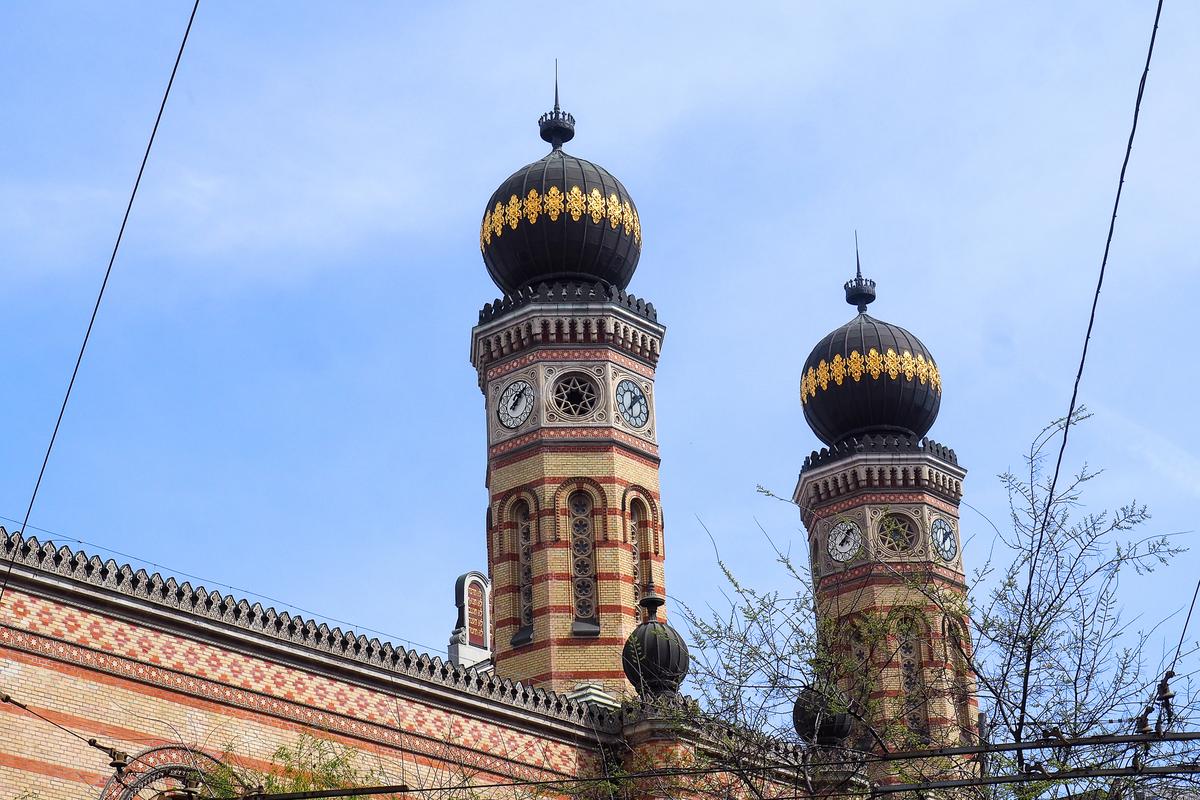
Erzsébetváros, Budapest’s seventh district, occupies the former Jewish quarter of Pest, bounded roughly by the Nagykörút (Grand Boulevard) to the west and Király utca to the north. The district retains its dense Historicist and Eclectic-style apartment blocks from the late 19th century alongside synagogues, kosher delis, and the globally recognised ruin-bar scene. It is one of the most walkable and culturally layered neighborhoods in Central Europe.
What is Erzsébetváros known for?
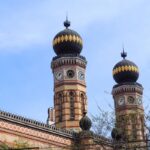
Erzsébetváros is known primarily for three things: the Dohány Street Synagogue (the largest synagogue in Europe), the ruin bars concentrated around Kazinczy utca and Akácfa utca — most famously Szimpla Kert — and its preserved Jewish heritage including the Hungarian Jewish Museum and the Emanuel Tree memorial in the synagogue’s garden. The district also contains Gozsdu Udvar, a series of interconnected 19th-century courtyards now lined with bars and restaurants running between Kiraly utca and Dob utca.
Best things to do in Erzsébetváros
Visiting the Dohány Street Synagogue complex — which includes the museum, the Raoul Wallenberg Memorial Park, and the Weeping Willow memorial — is essential and typically takes two hours. Beyond that, the district rewards slow exploration on foot.
- Tour the Dohány utca Synagogue and attached Hungarian Jewish Museum
- Walk Gozsdu Udvar between Király utca and Dob utca
- Visit Kazinczy utca’s Orthodox Synagogue, a 1913 Art Nouveau building
- Explore the ruin bars: Szimpla Kert (Kazinczy u. 14), Fogasház, and Élesztő
- Browse Hunyadi tér and nearby streets for antique shops and secondhand bookstores
Where to eat and drink in Erzsébetváros
The district offers a full range from traditional Hungarian Jewish dishes to contemporary bistros: Kőleves on Kazinczy utca serves Hungarian comfort food in a relaxed courtyard setting, Macesz Huszár on Dob utca is known for Hungarian-Jewish dishes such as cholent and stuffed cabbage, and the covered stalls inside Gozsdu Udvar provide street food and craft beer year-round. Frici Papa kifőzdéje on Király utca is a long-running, no-frills Hungarian canteen popular with locals for daily lunch specials.
- Macesz Huszár – Hungarian-Jewish cuisine, Dob utca
- Kőleves – courtyard bistro, Kazinczy utca
- Frici Papa kifőzdéje – budget Hungarian canteen, Király utca
- Gozsdu Udvar – covered food and drink passage
- Szimpla Kert – ruin bar with Sunday farmer’s market
Where to walk in Erzsébetváros
The most rewarding walking route runs from the Dohány utca Synagogue north along Dob utca through Gozsdu Udvar to Király utca, then east along Kazinczy utca past the Orthodox Synagogue and Szimpla Kert, looping back south via Wesselényi utca — covering the district’s core in under an hour. Side streets such as Rumbach Sebestyén utca, home to the 1872 Rumbach Synagogue designed by Otto Wagner, add architectural depth.
How to get to Erzsébetváros
The most direct metro access is Astoria station (M2 red line) on the southern edge of the district, and Blaha Lujza tér station (M2) on the western boundary along the Nagykörút; tram lines 4 and 6 stop at Blaha Lujza tér and run frequently along the Grand Boulevard. Deák Ferenc tér interchange (M1, M2, M3) is a short walk from the synagogue on Dohány utca.
- Metro M2: Astoria and Blaha Lujza tér stations
- Trams 4 and 6: Blaha Lujza tér on the Nagykörút
- Metro M1/M2/M3 interchange: Deák Ferenc tér, 5 minutes’ walk
Best time to visit Erzsébetváros
The district is liveliest from late spring through early autumn (May–September), when ruin-bar courtyards open fully, Gozsdu Udvar hosts outdoor events, and Szimpla Kert’s Sunday farmers’ market draws large crowds from around 9 a.m. The Jewish Summer Festival (Zsidó Nyári Fesztivál), held annually in August in and around the Dohány utca Synagogue, is the single largest cultural event in the district.