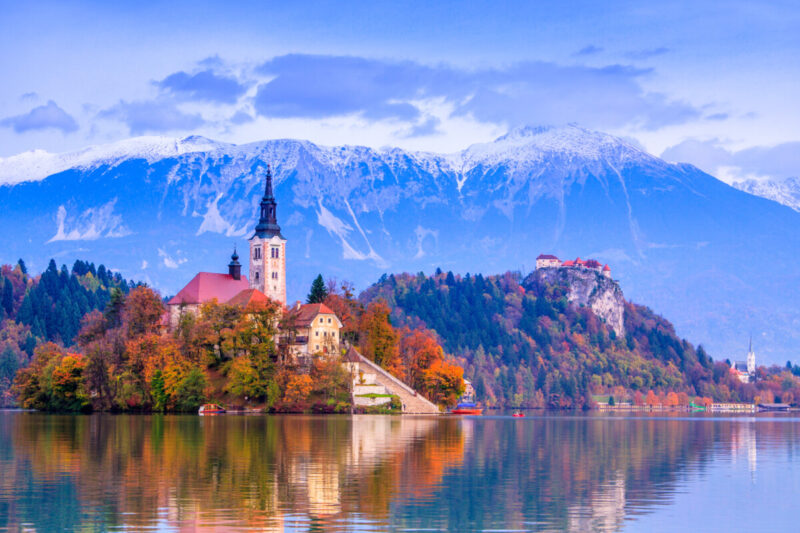
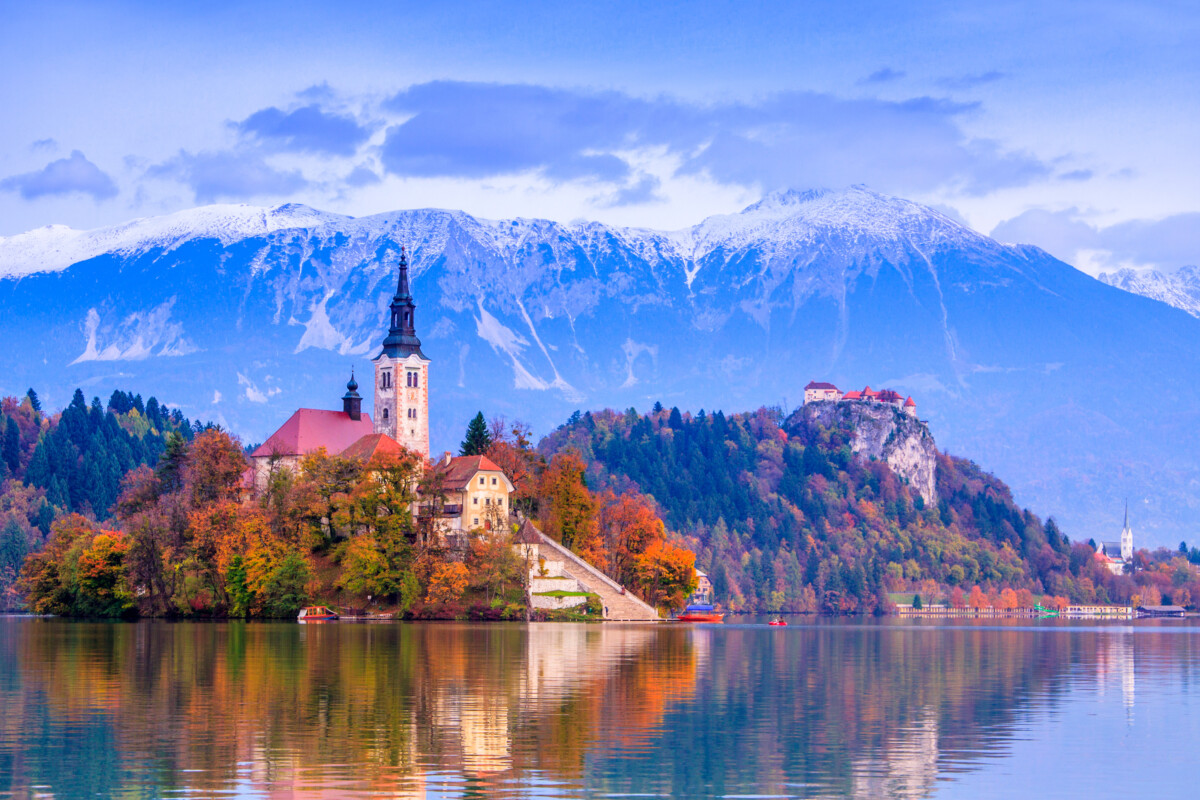
The Lake Bled area in northwestern Slovenia is one of Central Europe’s most photographed landscapes — a mirror-still Alpine lake with a tiny island church at its center, a medieval castle perched on a cliff above, and the snow-capped Julian Alps filling the horizon. The small town of Bled wraps around the eastern shore, offering a base that feels more like a peaceful village than a tourist hub despite its worldwide fame.
Attractions here are concentrated and spectacular. A traditional pletna boat ferries visitors to the island’s 15th-century Church of the Assumption, where ringing the wishing bell is a beloved tradition. Bled Castle, first documented in 1011, rewards the uphill walk with panoramic views over the lake and mountains. Just four kilometers away, Vintgar Gorge channels emerald water through a dramatic ravine on wooden walkways, while the hillside viewpoints of Mala Osojnica and Ojstrica deliver the iconic postcard perspectives that draw photographers from around the world.
Lake Bled suits nature lovers, outdoor enthusiasts, and travelers seeking authentic, charming surroundings at a manageable scale. The six-kilometer lakeside path is flat and family-friendly, while more ambitious visitors can hike, cycle, golf, paddleboard, or even scuba dive. Couples find the island church and castle especially romantic, and the local cream cake (kremšnita) at the Park Hotel terrace is an unmissable tradition.
Bled is compact enough to explore on foot or by bicycle. Regular buses connect the town to Ljubljana (75 minutes), Ljubljana Airport (45 minutes), and the nearby Bohinj valley. The Lesce-Bled train station sits four kilometers from the lake, with shuttles and taxis bridging the gap. In summer, a hop-on-hop-off tourist bus loops between the main sights.