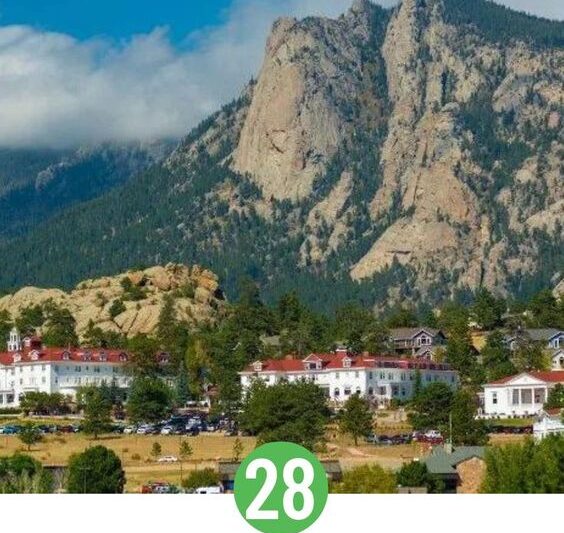

Rocky Mountain National Park sits in the northern Front Range of Colorado, straddling the Continental Divide at elevations ranging from 7,860 feet at park headquarters to 14,259 feet at Longs Peak. Established in 1915, the park draws roughly four million visitors annually and encompasses alpine tundra, glacier-carved valleys, dense forests of lodgepole pine and Engelmann spruce, and more than 150 lakes. The gateway towns of Estes Park on the east side and Grand Lake on the west side provide lodging, dining, and services.
What is Rocky Mountain National Park known for?
Rocky Mountain National Park is known for Trail Ridge Road, the highest continuous paved highway in the United States, reaching 12,183 feet and crossing 11 miles of open alpine tundra; for large herds of Rocky Mountain elk that congregate in Moraine Park and Horseshoe Park especially during the autumn rut in September and October; and for Longs Peak, a fourteener that draws technical and non-technical climbers from across the country.
- Trail Ridge Road open roughly late May through mid-October
- Annual elk rut in Horseshoe Park and Moraine Park each fall
- Longs Peak, Colorado’s northernmost fourteener at 14,259 feet
- Bear Lake, one of the most photographed glacial lakes in the Rockies
- Over 300 miles of maintained hiking trails across all difficulty levels
Best things to do in Rocky Mountain National Park
The best activities in Rocky Mountain National Park include hiking the Bear Lake corridor trails, driving Trail Ridge Road to the Alpine Visitor Center at Fall River Pass (11,796 feet), ranger-led programs at Beaver Meadows Visitor Center, and wildlife watching at dawn and dusk in Moraine Park. Stargazing is exceptional on clear nights given the park’s dark-sky conditions above 8,000 feet.
- Hike the Emerald Lake trail from Bear Lake trailhead, 3.6 miles round trip
- Drive Trail Ridge Road and stop at Rainbow Curve and Forest Canyon Overlook
- Attend ranger programs at Beaver Meadows or Kawuneeche Visitor Center
- Snowshoe or cross-country ski Bear Lake Road corridor in winter
- Fish for trout in the Big Thompson River or Sprague Lake
Where to walk in Rocky Mountain National Park
The Bear Lake trailhead network on the east side of the park offers the most accessible and interconnected walking routes, linking Bear Lake, Nymph Lake, Dream Lake, and Emerald Lake in a series of short to moderate hikes through glacial terrain, with the full loop to Emerald Lake covering about 3.6 miles round trip with 605 feet of elevation gain.
- Emerald Lake Trail: Bear Lake trailhead to Nymph, Dream, and Emerald lakes
- Sprague Lake loop: 0.5-mile accessible boardwalk with Front Range panoramas
- Tundra Communities Trail at Rock Cut: paved 1-mile tundra interpretive walk
- Chasm Lake Trail: 8.4-mile round trip beneath the east face of Longs Peak
Best time to visit Rocky Mountain National Park
Late June through mid-September offers the most accessible conditions, with Trail Ridge Road fully open, wildflowers peaking in July on the alpine tundra, and all visitor centers operating; however, September and early October add the spectacle of the elk rut and cooler crowds, making fall arguably the best combination of wildlife, foliage, and accessibility before high-elevation road closures.
- Summer (June–August): wildflowers, full trail access, crowded Bear Lake corridor
- Fall (September–October): elk rut, aspen color, thinner crowds after Labor Day
- Winter (November–April): snowshoeing, cross-country skiing, road closures above Many Parks Curve
- Spring (May–June): lingering snow, waterfalls at peak flow, unpredictable weather
How to get to Rocky Mountain National Park
The main east entrance at Beaver Meadows is 71 miles northwest of Denver via US-36 through Boulder and Lyons, or via US-34 through Loveland to Estes Park; the west entrance at Grand Lake is accessed via US-34 over Trail Ridge Road from Estes Park, or from I-70 at Granby via US-34 north. A timed entry permit system has been required seasonally for the Bear Lake Road corridor and park-wide entry.
- Estes Park Shuttle: free town shuttle connects to park entrance in summer
- Hiker Shuttle: free park shuttle loops Bear Lake Road corridor in summer
- Denver International Airport: closest major airport, roughly 90 miles southeast
- No passenger rail directly serves Estes Park or Grand Lake