The Philippines captivates visitors with its extraordinary archipelago of over 7,000 islands where pristine beaches meet vibrant coral reefs, creating some of the world’s most spectacular marine biodiversity. This Southeast Asian paradise blends Malay, Spanish, and American influences into a unique cultural tapestry expressed through colorful festivals, baroque churches, and the famously warm Filipino hospitality. The country’s natural wonders range from the underground river of Palawan to the perfect cone of Mayon Volcano, while the Chocolate Hills of Bohol and the rice terraces of Banaue showcase nature’s artistic mastery. Manila pulses with modern energy while preserving Spanish colonial history in Intramuros, where centuries-old churches and fortifications tell stories of conquest and resistance. Island-hopping adventures reveal hidden lagoons in El Nido, world-class diving in Tubbataha Reef, and encounters with whale sharks in Donsol, making the Philippines a marine enthusiast’s dream destination. The cuisine reflects the nation’s complex history through dishes like adobo, lechon, and halo-halo, while local markets overflow with tropical fruits found nowhere else on Earth. Traditional healers practice alongside modern medicine, jeepneys painted in vibrant colors navigate city streets, and karaoke echoes from every corner in this nation where music and celebration are essential to daily life. Whether seeking pristine beaches in Boracay, cultural immersion in indigenous Ifugao villages, or adventure in Siargao’s surf breaks, the Philippines offers authentic tropical experiences enhanced by the genuine warmth of people who consider every visitor a friend.
Philippines
Country in Asia, Philippines, AsiaUpdated
- Overall9/10
- Best forBudget travelers, Couples
- PeakFeb, Mar, Apr, Dec
- CurrencyPHP
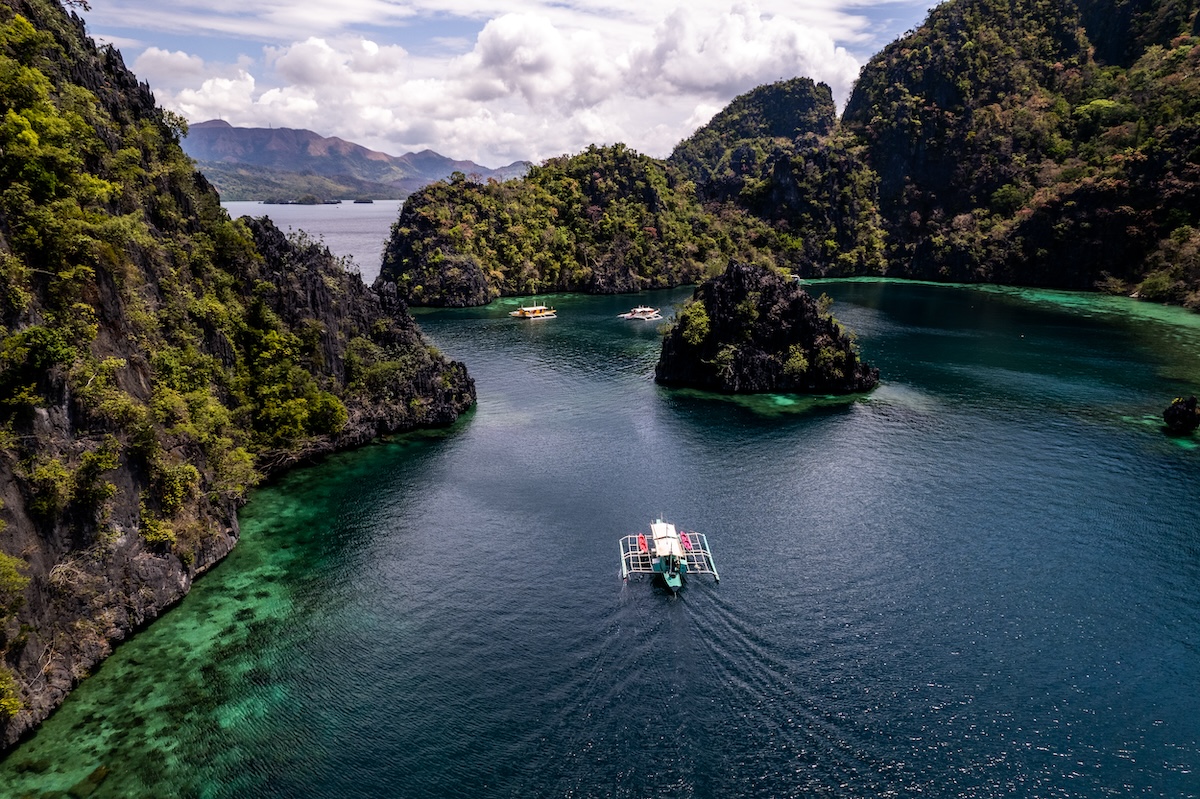
El Nido’s lagoons are worth the chaos of getting there. Palawan alone could fill two weeks — and still leave things undone.
At a glance
- Filipino
- English
- Tropical archipelago
- Sandy beaches
- Rice terraces
- Volcanic mountains
How Philippines scores
Editorial scores on a 10-point scale, weighed against destinations of the same kind.
Travel safety snapshot
SafePlace indicators use their source 100-point scale; higher is more favourable. Planning context, not a live travel advisory — check official government guidance before you go.
When to go
Best months to visit: January, February, March, April, May, November and December.
- January: 25.5 to 27.1 degrees Celsius, 150.3 millimetres of rain, best-time score 5 out of 5.
- February: 25.4 to 27 degrees Celsius, 70.1 millimetres of rain, best-time score 5 out of 5.
- March: 26 to 27.8 degrees Celsius, 45.8 millimetres of rain, best-time score 5 out of 5.
- April: 26.9 to 28.9 degrees Celsius, 55.8 millimetres of rain, best-time score 5 out of 5.
- May: 27.4 to 29.7 degrees Celsius, 144.6 millimetres of rain, best-time score 4 out of 5.
- June: 27 to 29.4 degrees Celsius, 263.7 millimetres of rain, best-time score 3 out of 5.
- July: 26.9 to 29 degrees Celsius, 303.6 millimetres of rain, best-time score 3 out of 5.
- August: 27 to 28.9 degrees Celsius, 233 millimetres of rain, best-time score 3 out of 5.
- September: 26.9 to 28.8 degrees Celsius, 316.4 millimetres of rain, best-time score 2 out of 5.
- October: 26.6 to 28.7 degrees Celsius, 364.5 millimetres of rain, best-time score 2 out of 5.
- November: 26.7 to 28.6 degrees Celsius, 248.3 millimetres of rain, best-time score 4 out of 5.
- December: 26.2 to 27.9 degrees Celsius, 275.7 millimetres of rain, best-time score 5 out of 5.
Month-by-month conditions and packing advice
- January
- Warm to hot, rainy January in Philippines: dry-season islands, beaches, diving, city stays, rice terraces, food, and ferry connections are most reliable. Crowds: January in Philippines is one of the wetter periods, so museums, food stops, flexible reservations, and backup indoor plans make the trip easier. Pack: Pack light clothing, sun protection, and comfortable walking shoes. Add a rain jacket or compact umbrella.
- February
- Mild to warm, some rain February in Philippines: dry-season islands, beaches, diving, city stays, rice terraces, food, and ferry connections are most reliable. Crowds: February in Philippines is workable with normal seasonal planning; build in layers, weather checks, and a mix of indoor and outdoor activities. Pack: Pack light clothing, sun protection, and comfortable walking shoes. Add a rain jacket or compact umbrella.
- March
- Warm to hot, occasional rain March in Philippines: dry-season islands, beaches, diving, city stays, rice terraces, food, and ferry connections are most reliable. Crowds: March in Philippines is comfortable for sightseeing, neighborhoods, food stops, day trips, and outdoor time with limited weather friction. Pack: Pack light clothing, sun protection, and comfortable walking shoes.
- April
- Warm to hot, occasional rain April in Philippines: dry-season islands, beaches, diving, city stays, rice terraces, food, and ferry connections are most reliable. Crowds: April in Philippines is comfortable for sightseeing, neighborhoods, food stops, day trips, and outdoor time with limited weather friction. Pack: Pack light clothing, sun protection, and comfortable walking shoes.
- May
- Warm to hot, rainy May in Philippines: season-edge timing can work with heat or rain planning. Crowds: May in Philippines is one of the wetter periods, so museums, food stops, flexible reservations, and backup indoor plans make the trip easier. Pack: Pack light clothing, sun protection, and comfortable walking shoes. Add a rain jacket or compact umbrella.
- June
- Warm to hot, rainy June in Philippines: wet-season rain, humidity, and storm risk make plans more variable. Crowds: June in Philippines is one of the wetter periods, so museums, food stops, flexible reservations, and backup indoor plans make the trip easier. Pack: Pack light clothing, sun protection, and comfortable walking shoes. Add a rain jacket or compact umbrella.
- July
- Warm to hot, rainy July in Philippines: wet-season rain, humidity, and storm risk make plans more variable. Crowds: July in Philippines is one of the wetter periods, so museums, food stops, flexible reservations, and backup indoor plans make the trip easier. Pack: Pack light clothing, sun protection, and comfortable walking shoes. Add a rain jacket or compact umbrella.
- August
- Warm to hot, rainy August in Philippines: wet-season rain, humidity, and storm risk make plans more variable. Crowds: August in Philippines is one of the wetter periods, so museums, food stops, flexible reservations, and backup indoor plans make the trip easier. Pack: Pack light clothing, sun protection, and comfortable walking shoes. Add a rain jacket or compact umbrella.
- September
- Warm to hot, rainy September in Philippines: peak typhoon-season risk makes broad travel less dependable. Crowds: September in Philippines is one of the wetter periods, so museums, food stops, flexible reservations, and backup indoor plans make the trip easier. Pack: Pack light clothing, sun protection, and comfortable walking shoes. Add a rain jacket or compact umbrella.
- October
- Warm to hot, rainy October in Philippines: peak typhoon-season risk makes broad travel less dependable. Crowds: October in Philippines is one of the wetter periods, so museums, food stops, flexible reservations, and backup indoor plans make the trip easier. Pack: Pack light clothing, sun protection, and comfortable walking shoes. Add a rain jacket or compact umbrella.
- November
- Warm to hot, rainy November in Philippines: season-edge timing can work with heat or rain planning. Crowds: November in Philippines is one of the wetter periods, so museums, food stops, flexible reservations, and backup indoor plans make the trip easier. Pack: Pack light clothing, sun protection, and comfortable walking shoes. Add a rain jacket or compact umbrella.
- December
- Warm to hot, rainy December in Philippines: dry-season islands, beaches, diving, city stays, rice terraces, food, and ferry connections are most reliable. Crowds: December in Philippines is one of the wetter periods, so museums, food stops, flexible reservations, and backup indoor plans make the trip easier. Pack: Pack light clothing, sun protection, and comfortable walking shoes. Add a rain jacket or compact umbrella.
- April
- March
- February
- December
- November
- October
Know before you go
About
The Philippines captivates visitors with its extraordinary archipelago of over 7,000 islands where pristine beaches meet vibrant coral reefs, creating some of the world’s most spectacular marine biodiversity. This Southeast Asian paradise blends Malay, Spanish, and American influences into a unique cultural tapestry expressed through colorful festivals, baroque churches, and the famously warm Filipino hospitality. The country’s natural wonders range from the underground river of Palawan to the perfect cone of Mayon Volcano, while the Chocolate Hills of Bohol and the rice terraces of Banaue showcase nature’s artistic mastery. Manila pulses with modern energy while preserving Spanish colonial history in Intramuros, where centuries-old churches and fortifications tell stories of conquest and resistance. Island-hopping adventures reveal hidden lagoons in El Nido, world-class diving in Tubbataha Reef, and encounters with whale sharks in Donsol, making the Philippines a marine enthusiast’s dream destination. The cuisine reflects the nation’s complex history through dishes like adobo, lechon, and halo-halo, while local markets overflow with tropical fruits found nowhere else on Earth. Traditional healers practice alongside modern medicine, jeepneys painted in vibrant colors navigate city streets, and karaoke echoes from every corner in this nation where music and celebration are essential to daily life. Whether seeking pristine beaches in Boracay, cultural immersion in indigenous Ifugao villages, or adventure in Siargao’s surf breaks, the Philippines offers authentic tropical experiences enhanced by the genuine warmth of people who consider every visitor a friend.
Best time to visit
November through May for dry season across most islands. December-February is peak season with cooler breezes. June-October is typhoon season mainly affecting Luzon. Palawan and Visayas are best January-May.
Season by season
Dry Season (Dec-May):
Weather: 30°C, sunny/humid
Highlights: Beaches
Best For: Island hopping
Wet Season (June-Nov):
Weather: Rain, typhoons
Highlights: Lush, cheap
Best For: Surfing (Siargao)
Crowds
Philippines is busiest December–April (dry season, holidays, festival months) with peak crowds in Boracay, Palawan and Manila during Holy Week and New Year; quietest June–October (monsoon) when fewer visitors and some islands have reduced services—overall busy during dry season, much quieter in rainy season.
Getting there and around
Getting there
Fly into Manila (MNL) or Cebu (CEB) as main international gateways. Budget carriers like Cebu Pacific connect to smaller islands. Ferries link the Visayas and Mindanao islands. Domestic flights reach Palawan, Boracay, and Siargao.
Top experiences in Philippines
El Nido, Palawan
Limestone karst cliffs rising from turquoise water. Island hopping reveals hidden lagoons (Big Lagoon, Small Lagoon), secret beaches, and coral gardens. Consistently ranked among the most beautiful islands in the world.
Boracay (White Beach)
A 4km stretch of powder-white sand and shallow, clear turquoise water. Divided into Stations 1 (quieter), 2 (lively), and 3 (budget). Sunsets here are legendary. The party scene is electric.
Chocolate Hills (Bohol)
Over 1,200 grass-covered hills in Bohol that turn chocolate brown during the dry season. A geological mystery. Nearby, the Philippine Tarsier (one of the world’s smallest primates) hides in the forests.
Cebu (Whale Sharks at Oslob)
Cebu is a gateway to adventure. Swimming with whale sharks in Oslob is controversially popular. Canyoneering in Kawasan Falls is an adrenaline rush. Mactan Island offers beach resort life and historical sites (Magellan’s Cross).
Banaue Rice Terraces
2,000-year-old rice terraces carved into the mountains of Ifugao by the Ifugao people. Often called the ‘8th Wonder of the World’. Green, stepped, and ancient. A UNESCO World Heritage Site.
Editor-curated picks carried over from our original guide. Where a full place guide exists, the card links to it.
Where to stay
Pangulasian Island Resort (El Nido)
Pangulasian Island, El Nido, Palawan, Philippines
A private island resort in El Nido, Palawan. Spacious villas with direct beach access. Surrounded by limestone cliffs and crystal clear water. ‘The last ecological frontier’. Exclusive and eco-conscious.
Shangri-La Boracay
Barangay Yapak, Boracay Island, Malay, Aklan, Philippines
Occupying its own pristine bay on the northern tip of Boracay. A resort within a resort — private beach cove, nature-based excursions, and tropical island luxury shielded from the bustle of White Beach.
Shangri-La Mactan, Cebu
Punta Engaño Rd, Lapu-Lapu City, Cebu, Philippines
A 5-star beachfront resort on Mactan Island, Cebu. Private beach, marine sanctuary for snorkeling, and world-class service. A family favorite. The marine sanctuary at the doorstep is remarkable.
Editor-curated stays carried over from our original guide. Where we have reviewed the hotel, the card links to the review.
Tips from the field
Highlights
- Island – El Nido, Palawan
- Beach – Boracay
- Nature – Chocolate Hills
- Diving – Tubbataha
- Terraces – Banaue
- Wildlife – Whale Sharks
- Culture – Jeepneys
- Vibe – Filipino Warmth
Best activities
- Island hop in El Nido's lagoons. Relax on Boracay's White Beach. See the Chocolate Hills and Tarsiers in Bohol. Canyoneer Kawasan Falls. Surf in Siargao. Dive Tubbataha Reef. Trek the Banaue Rice Terraces.
Photography tips
- Golden Hour: Sunset at White Beach Boracay (Station 1). Sunrise from the Chocolate Hills viewpoint.
- Iconic Shots:
- A boat anchored in the Big Lagoon (El Nido).
- White Beach Boracay at sunset.
- The Chocolate Hills panorama.
- A tarsier on a branch.
- The Banaue Rice Terraces from above.
- Technique: A drone opens up the Philippines (lagoons, terraces, beaches from above). Check local drone regulations per island. Waterproof housing is essential for island hopping.
Timing
- Peak Season (Dec-May):
- Dry, ideal for beaches
- Shoulder Season (June, Nov):
- Some rain, fewer crowds
- Wet Season (July-Oct):
- Typhoon risk, cheapest
Keeping it authentic
- The Philippines is an archipelago of over 7,600 islands. Filipino culture is a blend of Malay, Spanish, American, and Asian influences. 'Mabuhay' (welcome) is how you will be greeted. Filipinos are considered the most hospitable people in Asia. Karaoke is a national obsession.
Culture, customs and safety
Cultural heritage
The Philippines possesses a layered cultural heritage shaped by centuries of indigenous traditions, foreign colonization, and regional diversity across over 7,000 islands. Its history reflects the legacy of pre-Hispanic barangay communities, over 300 years of Spanish rule, American influence, and resilient independence movements. Notable architectural sites include the Baroque Churches of the Philippines—UNESCO-listed for their fusion of European and local design—and the Ifugao Rice Terraces, a testament to ancient indigenous engineering and sustainable land use. The archipelago’s cultural expressions span vibrant festivals, animist-rooted rituals, Catholic devotion, and richly varied crafts and cuisine that differ by island and ethnolinguistic group. Together, these elements create a uniquely syncretic national identity that continues to evolve while honoring ancestral roots.