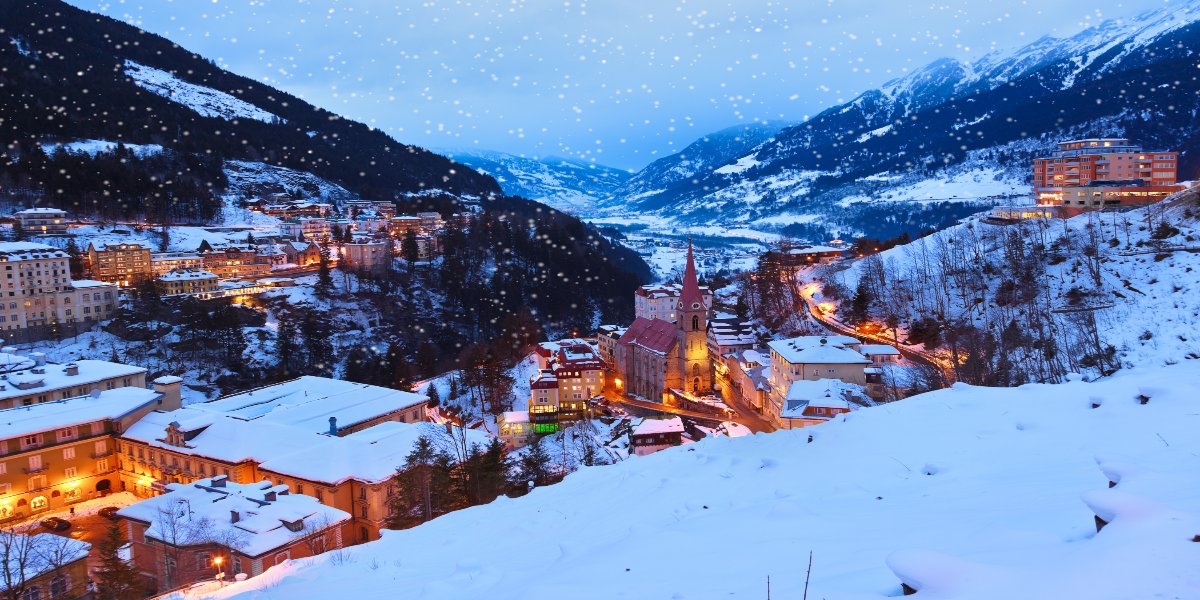
Badgastein rises dramatically along steep mountainsides in Austria’s Hohe Tauern range, where Belle Époque architecture and a thundering 341-foot waterfall create a distinctive alpine townscape. Once the preferred thermal retreat for European royalty and aristocracy, the town preserves its grand 19th-century hotels and historic bathhouses where visitors still soak in the radon-rich waters renowned for their therapeutic properties. Beyond wellness tourism, Badgastein serves as a gateway to the Gastein Valley’s extensive ski terrain with 205 kilometers of slopes, while summer reveals a network of hiking paths connecting alpine meadows and panoramic summits. The town’s unique vertical layout, with buildings perched on different elevations connected by steps and paths, creates a theatrical mountain setting complete with ornate balconies and historic funiculars. Local culinary traditions feature Austrian alpine classics reimagined in both traditional taverns and upscale restaurants, often accompanied by regional wines and schnapps. Though smaller than its better-known counterparts, Badgastein rewards cultural travelers with an authentic Austrian spa town experience where the Habsburg legacy remains palpable in both architecture and atmosphere.
The destination guide
Bad Gastein
Travel guides for Bad Gastein
More guides featuring Bad Gastein (2)
At a glance
- German
- English
- Alpine spa town
- Gastein Valley
- Waterfall terrain
- Mountain hot springs
- Skiing
- Thermal Spa
- Alpine Hiking
- Art Deco Architecture
- Music Festivals
- Wellness
- Freeride Skiing
- Mountain Biking
How Bad Gastein scores
Character
Editorial scores on a 10-point scale, weighed against destinations of the same kind.
Travel safety snapshot
SafePlace indicators use their source 100-point scale; higher is more favourable. Planning context, not a live travel advisory — check official government guidance before you go.
When to go
Best months to visit: January, February, March, June, July, August, September, October and December.
- January: -6.9 to 2.7 degrees Celsius, 110.5 millimetres of rain, best-time score 5 out of 5.
- February: -4.8 to 5.4 degrees Celsius, 100.3 millimetres of rain, best-time score 5 out of 5.
- March: -2.5 to 7.9 degrees Celsius, 95.6 millimetres of rain, best-time score 5 out of 5.
- April: 0.7 to 11.6 degrees Celsius, 100.9 millimetres of rain, best-time score 3 out of 5.
- May: 4.6 to 15.4 degrees Celsius, 165 millimetres of rain, best-time score 3 out of 5.
- June: 9.9 to 21.7 degrees Celsius, 136.8 millimetres of rain, best-time score 4 out of 5.
- July: 11 to 22.2 degrees Celsius, 151.2 millimetres of rain, best-time score 5 out of 5.
- August: 11 to 22.4 degrees Celsius, 155.4 millimetres of rain, best-time score 5 out of 5.
- September: 7.2 to 18.4 degrees Celsius, 137.1 millimetres of rain, best-time score 5 out of 5.
- October: 3.7 to 14.2 degrees Celsius, 119.9 millimetres of rain, best-time score 4 out of 5.
- November: -1.9 to 8 degrees Celsius, 117.6 millimetres of rain, best-time score 3 out of 5.
- December: -5.1 to 4.3 degrees Celsius, 112.6 millimetres of rain, best-time score 5 out of 5.
Month-by-month conditions and packing advice
- January
- Cold, some rain January in Bad Gastein: the valley is strongest for ski season or summer hiking, lifts, thermal spas, waterfalls, and alpine views. Crowds: January in Bad Gastein is best for winter-ready travelers; outdoor plans need warm gear, shorter daylight expectations, and weather-aware transport planning. Pack: Pack insulated layers, warm footwear, gloves, and a serious winter coat. Add a rain jacket or compact umbrella.
- February
- Cold, some rain February in Bad Gastein: the valley is strongest for ski season or summer hiking, lifts, thermal spas, waterfalls, and alpine views. Crowds: February in Bad Gastein is workable with normal seasonal planning; build in layers, weather checks, and a mix of indoor and outdoor activities. Pack: Pack warm layers, a coat, and comfortable shoes for cold mornings and evenings. Add a rain jacket or compact umbrella.
- March
- Cold, some rain March in Bad Gastein: the valley is strongest for ski season or summer hiking, lifts, thermal spas, waterfalls, and alpine views. Crowds: March in Bad Gastein is workable with normal seasonal planning; build in layers, weather checks, and a mix of indoor and outdoor activities. Pack: Pack warm layers, a coat, and comfortable shoes for cold mornings and evenings. Add a rain jacket or compact umbrella.
- April
- Cool to mild, some rain April in Bad Gastein: transition-season closures and variable alpine weather narrow activity choices. Crowds: April in Bad Gastein is workable with normal seasonal planning; build in layers, weather checks, and a mix of indoor and outdoor activities. Pack: Pack warm layers, a coat, and comfortable shoes for cold mornings and evenings. Add a rain jacket or compact umbrella.
- May
- Cool to mild, rainy May in Bad Gastein: transition-season closures and variable alpine weather narrow activity choices. Crowds: May in Bad Gastein is one of the wetter periods, so museums, food stops, flexible reservations, and backup indoor plans make the trip easier. Pack: Pack layered clothing and comfortable walking shoes. Add a rain jacket or compact umbrella.
- June
- Mild to warm, rainy June in Bad Gastein: early summer or fall trips can work well if lift schedules and weather cooperate. Crowds: June in Bad Gastein is one of the wetter periods, so museums, food stops, flexible reservations, and backup indoor plans make the trip easier. Pack: Pack layered clothing and comfortable walking shoes. Add a rain jacket or compact umbrella.
- July
- Mild to warm, rainy July in Bad Gastein: the valley is strongest for ski season or summer hiking, lifts, thermal spas, waterfalls, and alpine views. Crowds: July in Bad Gastein is one of the wetter periods, so museums, food stops, flexible reservations, and backup indoor plans make the trip easier. Pack: Pack layered clothing and comfortable walking shoes. Add a rain jacket or compact umbrella.
- August
- Mild to warm, rainy August in Bad Gastein: the valley is strongest for ski season or summer hiking, lifts, thermal spas, waterfalls, and alpine views. Crowds: August in Bad Gastein is one of the wetter periods, so museums, food stops, flexible reservations, and backup indoor plans make the trip easier. Pack: Pack layered clothing and comfortable walking shoes. Add a rain jacket or compact umbrella.
- September
- Cool to mild, rainy September in Bad Gastein: the valley is strongest for ski season or summer hiking, lifts, thermal spas, waterfalls, and alpine views. Crowds: September in Bad Gastein is one of the wetter periods, so museums, food stops, flexible reservations, and backup indoor plans make the trip easier. Pack: Pack layered clothing and comfortable walking shoes. Add a rain jacket or compact umbrella.
- October
- Cool to mild, some rain October in Bad Gastein: early summer or fall trips can work well if lift schedules and weather cooperate. Crowds: October in Bad Gastein is workable with normal seasonal planning; build in layers, weather checks, and a mix of indoor and outdoor activities. Pack: Pack layered clothing and comfortable walking shoes. Add a rain jacket or compact umbrella.
- November
- Cold, some rain November in Bad Gastein: transition-season closures and variable alpine weather narrow activity choices. Crowds: November in Bad Gastein is workable with normal seasonal planning; build in layers, weather checks, and a mix of indoor and outdoor activities. Pack: Pack warm layers, a coat, and comfortable shoes for cold mornings and evenings. Add a rain jacket or compact umbrella.
- December
- Cold, some rain December in Bad Gastein: the valley is strongest for ski season or summer hiking, lifts, thermal spas, waterfalls, and alpine views. Crowds: December in Bad Gastein is best for winter-ready travelers; outdoor plans need warm gear, shorter daylight expectations, and weather-aware transport planning. Pack: Pack insulated layers, warm footwear, gloves, and a serious winter coat. Add a rain jacket or compact umbrella.
Know before you go
Best time to visit
December through March for skiing (200 km of valley-linked pistes). June through September for hiking in the Hohe Tauern and thermal bathing. Mid-December for the Gastein Sounds festival. The Felsentherme spa is a year-round draw.
Season by season
Winter (Dec–Mar): -5 to 5 °C, skiing, snowboarding, thermal spa, Christmas markets. Spring (Apr–May): 5–15 °C, spring thaw, some lifts still running, quieter. Summer (Jun–Sep): 15–25 °C, hiking, mountain biking, Felsentherme spa, wildflower meadows. Autumn (Oct–Nov): 5–12 °C, golden foliage, pre-ski quiet, spa season.
Crowds
High during Christmas/New Year and February ski holidays; moderate rest of winter; lower in summer
Getting there and around
Getting there
The nearest major airport is Salzburg (SZG), about 1.5 hours by car or train. Direct trains from Salzburg Hbf reach Bad Gastein station in 1.5-2 hours. The ÖBB Austrian rail network connects to Vienna (4.5h), Munich (3h), and other Austrian cities. By car, take the A10 motorway south from Salzburg toward Villach, exit at Bischofshofen.
Getting around
Bad Gastein is compact and walkable, though its steep terrain requires fitness. The Stubnerkogelbahn cable car provides mountain access. The Gastein Valley ski bus connects Bad Gastein, Bad Hofgastein, and Dorfgastein. Local PostBus services run in the valley. In winter, ski buses run frequently. A car is helpful for wider exploration but not essential within town.
Top experiences in Bad Gastein
Gasteiner Waterfall
A dramatic 341-meter cascade plunging through three stages in the center of town, dividing Bad Gastein’s stacked Belle Époque hotels. The waterfall is lit at night and visible from balconies, bridges, and the promenade. A short walking trail descends alongside the falls, offering spray-close viewpoints.
Stubnerkogel Suspension Bridge
A 140-meter-long suspension bridge at 2,300 m on the Stubnerkogel summit, reached by gondola from Bad Gastein. The transparent-bottomed bridge spans a chasm with views of the Hohe Tauern peaks and the valley floor far below. Open in both summer (hiking access) and winter (on-mountain dining terrace).
Felsentherme Thermal Spa
A thermal spa carved into the mountainside, fed by Bad Gastein’s radon-enriched mineral springs (32–36 °C). Indoor and outdoor pools, a multi-sauna complex (salt, steam, infrared, Finnish), and relaxation grottos make this one of the Alps’ most atmospheric spa experiences. Adjacent to the Stubnerkogel base station.
Sportgastein High-Alpine Skiing
At 2,686 m, Sportgastein offers the highest and most snow-sure skiing in the Gastein Valley. Wide-open bowls, long descents, and reliable powder conditions attract advanced skiers and freeriders. In summer, the area becomes a high-alpine hiking and mountain-biking destination with panoramic views of the Hohe Tauern.
Belle Époque Architecture Walk
A self-guided walk past Bad Gastein’s grand 19th-century hotels, villas, and the former Grand Hotel de l’Europe (1889). The town’s steep terrain stacks these ornate buildings above the waterfall in a dramatic cascade of turrets, balconies, and copper cupolas — a unique blend of alpine scenery and faded Habsburg glamour.
Editor-curated picks carried over from our original guide. Where a full place guide exists, the card links to it.
Worth booking ahead in Bad Gastein
Hand-picked from the operators our guides already send readers to. Prices and availability are live on the partner site.
BrowseViator
Tours and tickets in Bad Gastein on Viator (opens Viator in a new tab)
Viator's full list of bookable tours and tickets in Bad Gastein.
BrowseGetYourGuide
Experiences in Bad Gastein on GetYourGuide (opens GetYourGuide in a new tab)
Everything GetYourGuide sells in Bad Gastein, with the cancellation terms on each listing.
Where to stayBooking.com
Stays in Bad Gastein (opens Booking.com in a new tab)
Live rates and availability for Bad Gastein on Booking.com; filter by neighbourhood once you know where your days start.
We earn a commission if you book through these links, at no extra cost to you. It is how we keep the guides free and independent.
Where to stay
A-ROSA Straubinger Grand Hotel
Karl-Heinrich-Waggerl-Str. 2, 5640 Bad Gastein, Austria
A historic Grand Hotel reimagined as a 5-star wellness resort with 89 rooms, an extensive spa fed by Gastein thermal water, an indoor pool, and a gourmet restaurant. The building’s Belle Époque façade overlooks the town waterfall. One of the few luxury properties that preserves Bad Gastein’s golden-age glamour.
The Comodo Bad Gastein
Grillparzerstr. 1, 5640 Bad Gastein, Austria
A design-forward hotel that injects modern alpine cool into Bad Gastein’s Belle Époque townscape. Rooms feature local timber, muted tones, and mountain views. A rooftop spa with infinity pool faces the Hohe Tauern peaks. The cocktail bar and bistro attract both skiers and summer hikers.
Urban Nature Bad Gastein – Badeschloss
Kaiser-Franz-Josef-Str. 16, 5640 Bad Gastein, Austria
A lifestyle hotel occupying the historic Badeschloss building, blending 19th-century grandeur with contemporary design. Features a spacious spa, a heated infinity pool overlooking the valley, and a restaurant using Salzburger Land produce. Walking distance to the Stubnerkogel gondola.
Editor-curated stays carried over from our original guide. Where we have reviewed the hotel, the card links to the review.
Tips from the field
Highlights
- Gasteiner Waterfall
- Stubnerkogel Suspension Bridge
- Felsentherme Thermal Spa
- Sportgastein Skiing
- Belle Époque Architecture
- Hohe Tauern Hiking
- Radon Healing Tunnels
- Gastein Sounds Festival
Best activities
- Ski the Sellaronda-style Gastein circuit, soak in the Felsentherme's thermal pools, walk across the Stubnerkogel suspension bridge, photograph the town waterfall at night, hike from rifugio to rifugio in the Hohe Tauern, take a radon therapy session in the healing tunnels, stroll the Belle Époque architecture walk, freeride the powder bowls of Sportgastein, spa at the Alpentherme in Bad Hofgastein, and attend the Gastein Sounds music festival.
Local experiences
- Take a radon therapy session in the Gasteiner Heilstollen (healing tunnels), warm up with Glühwein at the outdoor Après-Ski bar after skiing, attend the Gastein Sounds electronic music festival in mid-December, hike to the Bockhartsee alpine lake, or bike the Gastein Valley trail from Sportgastein to Dorfgastein.
Practical tips
- Ski Pass: Ski Amadé pass covers 760 km of linked pistes across the Gastein Valley and eastern Alps.
- Gastein Card: Free with most hotel stays, covering buses, some cable cars, and discounts on spas.
- Steep Town: Bad Gastein is built on a steep slope — wear proper shoes and expect stairs.
- Winter Tires: Mandatory in Austria from November to April.
- Currency: Euro (EUR). Cards widely accepted.
- Language: German; English spoken in tourist areas.
- Tipping: 5–10 % at restaurants.
Photography tips
- The Gasteiner Waterfall is best shot from the bridge on Kaiser-Franz-Josef-Straße — at night, the illuminated cascade against the dark Belle Époque buildings is spectacular (bring a tripod). The Stubnerkogel suspension bridge frames dramatically with a wide-angle lens looking down the valley. In winter, the frozen waterfall edges create unique ice formations. For the classic Bad Gastein skyline, shoot from the Bellevuestraße viewpoint looking across at the stacked hotels.
Timing
- Allow 3–5 days for Bad Gastein (skiing or hiking + spa). Combine with Salzburg (90 min by train) or Krimml Waterfalls (80 min) for a wider Austrian Alps itinerary.
Keeping it authentic
- Bad Gastein's identity is built on contrasts: Belle Époque grandeur alongside contemporary design hotels
- healing thermal waters paired with extreme skiing
- alpine silence interrupted by the waterfall's roar. The tradition of radon therapy (Gasteiner Heilstollen) draws health-seekers to old mining tunnels warmed by geothermal heat — a practice dating to the 1940s. The town's vertical layout, stacked up a narrow gorge, creates an atmosphere unlike any other ski resort in the Alps. Electronic music festivals (Gastein Sounds) have infused modern creative energy into the historic setting.
Culture, customs and safety
Cultural heritage
Bad Gastein preserves its Belle Époque grandeur as the “Monte Carlo of the Alps,” where European royalty and artists sought healing in radon-rich thermal waters since medieval times. Emperor Franz Joseph I, Empress Sisi, and Kaiser Wilhelm made annual pilgrimages, establishing the town’s imperial character. The thundering Gastein Waterfall plunges 341 meters through the town center, creating negative ions believed to enhance the spa’s therapeutic effects. Grand hotels like the Grand Hotel de l’Europe (1909) maintain Habsburg-era elegance despite modern renovations. The Nikolauskirche (1481) features Gothic frescoes, while traditional Perchten processions drive away winter spirits. The Böckstein mining heritage includes medieval gold and silver extraction, with thermal galleries now offering unique radon inhalation therapy 2,500 meters inside Radhausberg mountain.
Local customs & etiquette
Austrian Alpine customs prevail. Greet with ‘Grüß Gott’ (God’s greeting). Remove shoes when entering homes. Quiet hours (10 PM–7 AM) are strictly observed. Recycling is taken seriously—sort waste carefully. The Gastein Valley celebrates traditional festivals year-round: Krampus runs in December, Almabtrieb cattle descents in autumn, and Bauernherbst harvest celebrations. Tipping is appreciated (round up or 5-10%). Younger locals speak English; a few German phrases go a long way with older residents.
Safety notes
Bad Gastein is extremely safe with negligible crime. Mountain safety is the primary concern: follow FIS ski conduct rules, never ski off-piste alone without avalanche training and equipment, and check weather and avalanche bulletins daily. The town’s steep streets can be icy in winter — ice cleats help. In summer, mountain weather changes rapidly at altitude; carry rain layers and check forecasts. Tick-borne encephalitis (TBE) is endemic in Austria — consider vaccination. Emergency: 112 (EU) or 140 (Austrian alpine rescue).