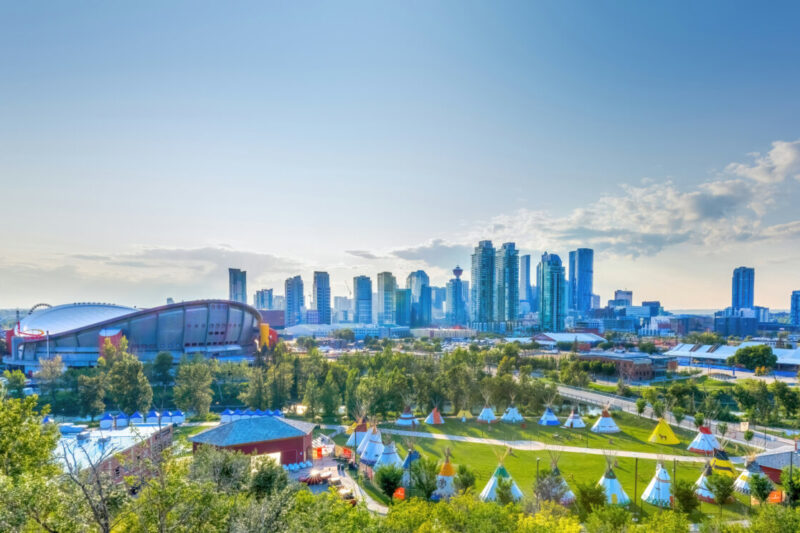
Dynamic prairie metropolis balancing cowboy heritage with cosmopolitan energy industry wealth, offering world-class festivals, Indigenous culture, and serving as gateway to the spectacular Canadian Rockies just an hour away.
The destination guide
Calgary

City in Canada, North AmericaUpdated
- Overall7/10
- Best forSolo travelers
- PeakJun–Aug
- CurrencyCAD
Calgary pulls off something rare: a city that still feels like itself. The Stampede is real, the Rockies are an hour out, and the food scene no longer needs an asterisk.
At a glance
CurrencyCAD
Time zoneTorontoAmerica/Toronto
Languages
- English
- French
Setting
- Rocky Mountain foothills
- Urban cityscape
- Bow River
- Prairie edge
Population1.3M1,306,784 residents
VisaDuration: Normally up to 6 months per visit · Documents: Valid U.S. passport or other accepted proof of U.S. citizenship and identity for the mode of travel
How Calgary scores
7/10OverallGood
Weather5/10
Value for money7/10
Safety8/10
Food & cuisine7/10
Culture & arts7/10
Cultural experience8/10
History5/10
Nature & outdoors4/10
Adventure6/10
Nightlife5/10
Shopping6/10
Family friendly5/10
Romance2/10
Editorial scores on a 10-point scale, weighed against destinations of the same kind.
Travel safety snapshot
Overall88/100High rating
Women travellers88/100
LGBTQ+ travellers85/100
Theft82/100
Medical care90/100
Physical harm90/100
Political freedom88/100
SafePlace indicators use their source 100-point scale; higher is more favourable. Planning context, not a live travel advisory — check official government guidance before you go.
When to go
Best months to visit: April, May, June, July, August, September and October.
- January: -11.7 to -1.9 degrees Celsius, 12.1 millimetres of rain, best-time score 2 out of 5.
- February: -13.8 to -2.9 degrees Celsius, 22.5 millimetres of rain, best-time score 2 out of 5.
- March: -7.9 to 4 degrees Celsius, 23.9 millimetres of rain, best-time score 3 out of 5.
- April: -2.2 to 10.2 degrees Celsius, 34 millimetres of rain, best-time score 4 out of 5.
- May: 4.1 to 17 degrees Celsius, 59.3 millimetres of rain, best-time score 5 out of 5.
- June: 8.5 to 20.5 degrees Celsius, 101.7 millimetres of rain, best-time score 5 out of 5.
- July: 11.3 to 23.4 degrees Celsius, 68.7 millimetres of rain, best-time score 5 out of 5.
- August: 10.7 to 23.1 degrees Celsius, 53.8 millimetres of rain, best-time score 5 out of 5.
- September: 6.6 to 18.4 degrees Celsius, 33.1 millimetres of rain, best-time score 5 out of 5.
- October: -0.3 to 10.3 degrees Celsius, 29.9 millimetres of rain, best-time score 4 out of 5.
- November: -6.6 to 2.7 degrees Celsius, 23.7 millimetres of rain, best-time score 2 out of 5.
- December: -11.9 to -2.8 degrees Celsius, 22.3 millimetres of rain, best-time score 3 out of 5.
Month-by-month conditions and packing advice
- January
- Very cold, mostly dry Cold winter weather, few tourists. Crowds: January in Calgary is best for winter-ready travelers; outdoor plans need warm gear, shorter daylight expectations, and weather-aware transport planning. Pack: Pack insulated layers, warm footwear, gloves, and a serious winter coat.
- February
- Very cold, mostly dry Chilly and quiet, good for museums. Crowds: February in Calgary is best for winter-ready travelers; outdoor plans need warm gear, shorter daylight expectations, and weather-aware transport planning. Pack: Pack insulated layers, warm footwear, gloves, and a serious winter coat.
- March
- Cold, mostly dry Beginning to warm up, spring blossoms. Crowds: March in Calgary is best for winter-ready travelers; outdoor plans need warm gear, shorter daylight expectations, and weather-aware transport planning. Pack: Pack insulated layers, warm footwear, gloves, and a serious winter coat.
- April
- Cool to mild, occasional rain Pleasant spring weather, great for walking. Crowds: April in Calgary is workable with normal seasonal planning; build in layers, weather checks, and a mix of indoor and outdoor activities. Pack: Pack warm layers, a coat, and comfortable shoes for cold mornings and evenings.
- May
- Cool to mild, occasional rain Excellent weather before the summer crowds. Crowds: May in Calgary is workable with normal seasonal planning; build in layers, weather checks, and a mix of indoor and outdoor activities. Pack: Pack layered clothing and comfortable walking shoes.
- June
- Mild to warm, some rain Warm, sunny, and lively. Crowds: June in Calgary is workable with normal seasonal planning; build in layers, weather checks, and a mix of indoor and outdoor activities. Pack: Pack layered clothing and comfortable walking shoes. Add a rain jacket or compact umbrella.
- July
- Mild to warm, occasional rain Peak summer heat and peak tourist season. Crowds: July in Calgary is comfortable for sightseeing, neighborhoods, food stops, day trips, and outdoor time with limited weather friction. Pack: Pack layered clothing and comfortable walking shoes.
- August
- Mild to warm, occasional rain Very warm, many festivals and outdoor dining. Crowds: August in Calgary is comfortable for sightseeing, neighborhoods, food stops, day trips, and outdoor time with limited weather friction. Pack: Pack layered clothing and comfortable walking shoes.
- September
- Cool to mild, occasional rain Perfect shoulder season with great weather. Crowds: September in Calgary is workable with normal seasonal planning; build in layers, weather checks, and a mix of indoor and outdoor activities. Pack: Pack layered clothing and comfortable walking shoes.
- October
- Cool to mild, mostly dry Crisp autumn air and beautiful colors. Crowds: October in Calgary is workable with normal seasonal planning; build in layers, weather checks, and a mix of indoor and outdoor activities. Pack: Pack warm layers, a coat, and comfortable shoes for cold mornings and evenings.
- November
- Cold, mostly dry Cooling down rapidly, often rainy. Crowds: November in Calgary is best for winter-ready travelers; outdoor plans need warm gear, shorter daylight expectations, and weather-aware transport planning. Pack: Pack insulated layers, warm footwear, gloves, and a serious winter coat.
- December
- Very cold, mostly dry Cold but festive holiday atmosphere. Crowds: December in Calgary is best for winter-ready travelers; outdoor plans need warm gear, shorter daylight expectations, and weather-aware transport planning. Pack: Pack insulated layers, warm footwear, gloves, and a serious winter coat.
Peak season
- June
- July
- August
Off-peak
- November
- December
- January
- February
- March
Know before you go
About
Calgary, Alberta, is the largest city in the Canadian province of Alberta, a dynamic prairie metropolis set in the rolling foothills where the Great Plains meet the Canadian Rockies. It is best known for the Calgary Stampede, billed as “The Greatest Outdoor Show on Earth,” a ten-day July festival featuring the world’s largest outdoor rodeo, chuckwagon races, concerts, and parades that fill the city with Western spirit. The Calgary Tower has overlooked downtown since 1968, offering 360-degree views from its glass-floored observation deck toward the snow-capped Rockies. As the closest major city to Banff National Park, about an hour to the west, Calgary is the prime gateway for Rocky Mountain adventures, while the Bow and Elbow rivers, extensive pathways, and parks lace the city itself. Travelers come for its blend of cowboy heritage and modern energy, lively dining and craft-beer scenes, and its role as the springboard to some of the world’s most spectacular mountain scenery.
Neighbourhoods
Downtown, Beltline, Kensington, Inglewood
Best time to visit
The best time to visit Calgary depends on what draws you. Summer (June through August) delivers the warmest weather with daytime highs of 20-25°C (68-77°F), long daylight hours, and the city’s signature event — the Calgary Stampede in July. Fall (September-October) brings golden aspens, mild temperatures, and smaller crowds. Winter (November-March) is cold but ideal for skiing at nearby resorts. Spring (April-May) is a quieter shoulder season with thawing trails and reasonable hotel rates.
Spring (April-May)
Temperatures hover around 5-15°C (41-59°F) with occasional snow flurries in April. The shoulder season delivers lower hotel rates and thinner crowds. Wildflowers begin appearing in the foothills by late May, and trails in the Rockies start opening.
Summer (June-August)
Peak season with highs of 20-25°C (68-77°F), intense blue skies, and up to 17 hours of daylight. The Calgary Stampede (10 days in July) transforms the city with rodeos, parades, and pancake breakfasts. Book accommodations months in advance for Stampede week. This is prime time for day trips to Banff and Lake Louise.
Autumn (September-October)
Crisp air, golden larch trees in the Rockies, and thinning tourist crowds make fall a favorite for hikers and photographers. Daytime temperatures range from 8-18°C (46-64°F). Hotel rates drop after Labour Day, and mountain trails offer excellent conditions through mid-October.
Winter (November-March)
Average lows reach -15°C (5°F) in January, with Chinook winds occasionally bringing sudden warm spells. World-class skiing is 90 minutes away at resorts like Lake Louise, Sunshine Village, and Nakiska. The YYC Hot Chocolate Fest in February and holiday markets brighten the short days.
Crowds
Calgary experiences peak crowds in June–August (summer festivals, Stampede in July) and during winter ski season access to nearby Rockies; quietest in late fall (October–November) between summer tourism and winter ski crowds.
Getting there and around
Getting there
Calgary International Airport (YYC) is a major hub with direct flights from across North America, Europe, and Asia. The airport sits 17 km northeast of downtown; the Route 300 bus connects to downtown in about 45 minutes for C$3.75, while taxis cost approximately C$40-50 and Uber/Lyft are readily available. Greyhound alternatives include Red Arrow luxury motorcoach from Edmonton (3.5 hours). VIA Rail’s ‘The Canadian’ stops at Calgary on its Toronto-Vancouver route. Drivers arriving on the Trans-Canada Highway (Highway 1) reach Banff in 90 minutes west and Edmonton in 3 hours north.
Getting around
Calgary Transit operates the CTrain light rail system (two lines, the Red and Blue) plus an extensive bus network covering the city. The downtown core offers free CTrain rides between City Hall Station and Downtown West/Kerby Station. A single ride costs C$3.75; day passes are C$11.50. Uber and Lyft operate citywide, including airport pickup. The city maintains over 850 km of urban pathways for cycling and walking, and bike-share programs (Bird, Neuron) provide dockless e-scooters. Taxis are metered and available at hotels and major venues. Car rentals are useful for Rocky Mountain day trips; the speed limit is 40 km/h in the city (30 km/h in school zones).
Top experiences in Calgary
Calgary Stampede
Billed as ‘The Greatest Outdoor Show on Earth,’ this 10-day July event has defined Calgary’s identity since 1912. The Stampede grounds host professional rodeo competitions, chuckwagon races, a midway with rides, agricultural exhibitions, and nightly grandstand shows with fireworks. Throughout the city, free pancake breakfasts pop up on street corners and corporate lobbies. Even outside Stampede season, the grounds operate year-round with events, and the culture of cowboy hats and western hospitality permeates Calgary’s character.
Banff National Park Gateway
Calgary serves as the primary gateway to Banff National Park, just 90 minutes west on the Trans-Canada Highway. The drive through the foothills into the towering Rockies is one of Canada’s most scenic road trips. Day trips to Banff townsite, Lake Louise, and the Icefields Parkway are easily managed from Calgary. Winter brings world-class skiing at three resorts (Lake Louise, Sunshine Village, Nakiska), while summer opens hundreds of kilometers of hiking trails.
Heritage Park Historical Village
Western Canada’s largest living history museum spans 127 acres on the shores of Glenmore Reservoir and tells the story of Western Canadian settlement from the 1860s fur trade era through the 1950s. Costumed interpreters demonstrate period crafts, a working steam train circles the grounds, and an authentic paddle-wheeler cruises the reservoir. The Gasoline Alley Museum houses one of Canada’s finest collections of vintage automobiles and gas-station memorabilia.
Studio Bell – National Music Centre
This architecturally striking building in the East Village houses five floors of interactive music exhibitions, over 2,000 instruments and artifacts, and recording studios. Highlights include the Rolling Stones Mobile Studio, Elton John’s piano, and exhibits exploring Canada’s musical heritage from Indigenous drumming to contemporary indie rock. Visitors can play instruments, mix tracks, and attend live performances in the 300-seat Performance Hall.
Prince's Island Park
A 20-hectare urban island park connected to downtown by pedestrian bridges spanning the Bow River. The park transforms with the seasons — summer brings the Calgary Folk Music Festival and Shakespeare in the Park, fall blankets the riverside paths in golden leaves, and winter invites skating and cross-country skiing. Year-round, the paths connect to Calgary’s extensive riverfront trail network. The Eau Claire district on the south bank offers restaurants and markets.
Editor-curated picks carried over from our original guide. Where a full place guide exists, the card links to it.
Worth booking ahead in Calgary
Hand-picked from the operators our guides already send readers to. Prices and availability are live on the partner site.
BrowseViator
Tours and tickets in Calgary on Viator (opens Viator in a new tab)
Viator's full list of bookable tours and tickets in Calgary.
BrowseGetYourGuide
Experiences in Calgary on GetYourGuide (opens GetYourGuide in a new tab)
Everything GetYourGuide sells in Calgary, with the cancellation terms on each listing.
Where to stayBooking.com
Stays in Calgary (opens Booking.com in a new tab)
Live rates and availability for Calgary on Booking.com; filter by neighbourhood once you know where your days start.
We earn a commission if you book through these links, at no extra cost to you. It is how we keep the guides free and independent.
Where to stay
Fairmont Palliser
133 9th Ave SW, Calgary, AB T2P 2M3, Canada
A historic grand railway hotel that has anchored downtown Calgary since 1914, the Fairmont Palliser blends Edwardian elegance with modern luxury. The 407 rooms feature refined decor, marble bathrooms, and city views. The Oak Room Lounge serves classic cocktails beneath original coffered ceilings, while the Hawthorn Dining Room offers contemporary Canadian cuisine. Its location on 9th Avenue places guests steps from Stephen Avenue Walk, the Glenbow Museum, and CTrain stations.
Hotel Arts
119 12th Ave SW, Calgary, AB T2R 0G8, Canada
A design-forward boutique hotel in the Beltline district featuring original artwork throughout, a heated outdoor pool, and the acclaimed Raw Bar restaurant by Chef Duncan Ly. The 185 rooms balance contemporary minimalism with warmth, and many look out over the pool courtyard. Its Beltline location puts guests within walking distance of 17th Avenue’s restaurant and nightlife strip, the Stampede grounds, and downtown office towers.
Alt Hotel Calgary East Village
110 9 Ave SE, Calgary, AB T2G 5A6, Canada
Contemporary boutique hotel in the East Village with floor-to-ceiling windows, a rooftop patio, and walkable access to St. Patrick’s Island.
Editor-curated stays carried over from our original guide. Where we have reviewed the hotel, the card links to the review.
Tips from the field
Highlights
- Calgary Stampede – 10 days of rodeo, chuckwagons, and western culture in July
- Rocky Mountain Gateway – Banff, Lake Louise, and ski resorts 90 minutes west
- Heritage Park – 127-acre living history village with steam trains
- Bow River Pathways – 850 km of urban trails for cycling and walking
- Studio Bell – National Music Centre with interactive exhibits
- Culinary Scene – Alberta beef, craft breweries, and diverse global cuisine
Best activities
- Calgary rewards visitors who embrace both its urban energy and its proximity to wilderness. The Calgary Tower observation deck delivers a 360-degree panorama spanning the downtown skyline to the jagged peaks of the Rockies on clear days. The Calgary Zoo — Canada's second largest — houses over 1,000 animals across specialized habitats, including the Canadian Wild zone featuring grizzly bears and cougars.
- For active visitors, the Bow River pathways provide world-class urban cycling and running routes, while WinSport (site of the 1988 Winter Olympics) offers bobsled rides, zip-lining, and mountain biking in summer, plus skiing and tubing in winter. The TELUS Spark Science Centre delivers interactive exhibits for families. Day trips to Drumheller's Royal Tyrrell Museum — one of the world's finest paleontology museums — take about 90 minutes through the badlands landscape.
Local experiences
- Join a free pancake breakfast during Stampede week — dozens pop up across the city every morning. Explore the East Village craft brewery district along the Bow River. Hike Nose Hill Park for prairie wildflowers and sweeping views of the skyline against the Rockies. Visit the Calgary Farmers' Market on weekends for local cheese, bison jerky, and Saskatoon berry products.
Practical tips
- Chinook Winds: Dress in layers; temperatures can swing 20°C in a single day during winter.
- Stampede Prep: Book hotels months ahead for July Stampede week; prices double.
- Free CTrain: Downtown rides between City Hall and Kerby stations are free.
- Sun Intensity: At 1,048m elevation, UV is stronger than expected — sunscreen essential even on mild days.
- Tipping: 15-20% at restaurants is standard in Canada.
- Banff Day Trip: Leave early to avoid weekend traffic on Highway 1.
Photography tips
- The Calgary Tower skyline shot works best from St. Patrick's Island at golden hour with the Bow River in the foreground. For the classic Rockies-behind-Calgary panorama, head to Nose Hill Park or the top of Scotsman's Hill in Ramsay. During Stampede, arrive early to photograph chuckwagon races in warm evening light. Heritage Park's steam train makes a photogenic subject against Glenmore Reservoir. The Peace Bridge (a Santiago Calatrava design) photographs well from either bank of the Bow River, especially illuminated at night.
Keeping it authentic
- Calgary's identity rests on a genuine tension between frontier heritage and modern ambition. The Stampede is not a tourist invention — it grew from real ranching culture, and working cowboys still compete in its rodeo. But contemporary Calgary is equally defined by a booming tech sector, world-class architecture (the new Central Library is a civic landmark), and a restaurant scene driven by Alberta-raised beef, foraged ingredients, and immigrant cuisines from over 120 countries. The East Village redevelopment has transformed former industrial land into a vibrant riverside neighborhood. What surprises visitors most is the outdoor culture: Calgarians cycle, run, and ski year-round, treating -20°C mornings as an excuse for better gear rather than staying indoors.
Culture, customs and safety
Cultural heritage
Calgary preserves its frontier heritage through the world-famous Calgary Stampede, celebrating rodeo culture since 1912 as “The Greatest Outdoor Show on Earth.” The city’s history began with the North-West Mounted Police fort in 1875, establishing law in the Canadian West. Heritage Park Historical Village, Canada’s largest living history museum, recreates prairie life from the 1860s-1950s. The Glenbow Museum houses extensive collections documenting Blackfoot, Tsuu T’ina, and Stoney Nakoda First Nations cultures. Fort Calgary preserves the original NWMP fort site where Treaty 7 was signed in 1877. Western hospitality traditions include white hat ceremonies for distinguished visitors and the annual pancake breakfasts serving millions during Stampede week.
Local customs & etiquette
Calgarians are known for genuine western hospitality — strangers greet each other on pathways, and conversations with locals come easily. During Stampede, wearing a cowboy hat and boots is practically expected regardless of background; it’s an inclusive tradition. Tipping 15-20% is standard at restaurants and for services. Punctuality is valued for both social and business engagements. The city is proudly multicultural, and visitors will find diverse cultural festivals throughout the year. Casual dress is the norm even at nicer restaurants, though white-tablecloth venues appreciate smart-casual. Respect for Indigenous cultures is important — Calgary sits on Treaty 7 territory, and many public events begin with land acknowledgments.
Safety notes
Calgary maintains one of the lower crime rates among major Canadian cities, with a Crime Severity Index of 74.4. Violent crime is relatively uncommon, especially in tourist areas. The primary risks are vehicle break-ins and petty theft in busy areas during events like Stampede. Downtown and tourist neighborhoods (Kensington, Beltline, East Village) are well-lit and populated. Calgary Transit has increased peace officers and CCTV coverage on CTrain platforms. The city has strong emergency services; dial 911 for emergencies or 311 for non-emergency city services. Medical care is accessible through the Alberta Health Services network.