

Cornwall, located in the southwest of England, is renowned for its stunning coastline, picturesque villages, and rich maritime history. With its dramatic cliffs, sandy beaches, and charming harbors, Cornwall offers a perfect escape for nature lovers and adventure seekers alike. The region is also famous for its delicious seafood and vibrant arts scene, making it a delightful destination for all.
The destination guide
Cornwall
City in United Kingdom, EuropeUpdated
- Overall7/10
- Best forCouples, Adventure seekers, Solo travelers
- PeakJun–Sep
- CurrencyGBP
Cornwall is England’s wild southwest tip — cliffside fishing villages, cream teas with a sea view, and a coastline that changes character with every cove.
Travel guides for Cornwall
More guides featuring Cornwall (7)
At a glance
Currency£ GBPCode: GBP
Time zoneGreenwich Mean Time
Languages
- English
Setting
- Atlantic coastline
- Fishing villages
- Dramatic cliffs
- Moor landscape
Known for
- Coastal exploration
- Historical and mythical sites
- Garden tours
- Seafood and local cuisine
Population604K604,275 residents
VisaDuration: Up to 6 months for tourism, family visits, business meetings, or short-term study · Documents: Valid U.S. passport
How Cornwall scores
7/10OverallGood
Weather6/10
Value for money7/10
Safety8/10
Food & cuisine8/10
Culture & arts7/10
Cultural experience7/10
History8/10
Nature & outdoors9/10
Adventure6/10
Nightlife6/10
Shopping6/10
Family friendly5/10
Romance8/10
Character
Photography score7/10
Authenticity score10/10
Off-the-beaten-path score7/10
Editorial scores on a 10-point scale, weighed against destinations of the same kind.
Travel safety snapshot
Overall88/100High rating
Women travellers88/100
LGBTQ+ travellers80/100
Theft72/100
Medical care78/100
Physical harm90/100
Political freedom85/100
SafePlace indicators use their source 100-point scale; higher is more favourable. Planning context, not a live travel advisory — check official government guidance before you go.
When to go
Best months to visit: April, May, June, July, August, September and October.
- January: 3.6 to 8.5 degrees Celsius, 114.4 millimetres of rain, best-time score 2 out of 5.
- February: 4.4 to 9.1 degrees Celsius, 109.5 millimetres of rain, best-time score 2 out of 5.
- March: 4.7 to 10.3 degrees Celsius, 116.2 millimetres of rain, best-time score 3 out of 5.
- April: 5.8 to 12.4 degrees Celsius, 78.7 millimetres of rain, best-time score 4 out of 5.
- May: 8.6 to 15.4 degrees Celsius, 74.7 millimetres of rain, best-time score 5 out of 5.
- June: 11.6 to 17.9 degrees Celsius, 90.8 millimetres of rain, best-time score 5 out of 5.
- July: 13.2 to 19.3 degrees Celsius, 89.6 millimetres of rain, best-time score 4 out of 5.
- August: 13.3 to 19.2 degrees Celsius, 89 millimetres of rain, best-time score 4 out of 5.
- September: 11.7 to 17.3 degrees Celsius, 104.8 millimetres of rain, best-time score 5 out of 5.
- October: 9.6 to 14.4 degrees Celsius, 132.8 millimetres of rain, best-time score 4 out of 5.
- November: 6.9 to 11.1 degrees Celsius, 132.3 millimetres of rain, best-time score 3 out of 5.
- December: 5.5 to 9.6 degrees Celsius, 144.3 millimetres of rain, best-time score 3 out of 5.
Month-by-month conditions and packing advice
- January
- Cold, some rain January in Cornwall: this is less balanced for a beach-and-coast itinerary. Crowds: January in Cornwall is workable with normal seasonal planning; build in layers, weather checks, and a mix of indoor and outdoor activities. Pack: Pack layered clothing and comfortable walking shoes. Add a rain jacket or compact umbrella.
- February
- Cold, some rain February in Cornwall: this is less balanced for a beach-and-coast itinerary. Crowds: February in Cornwall is workable with normal seasonal planning; build in layers, weather checks, and a mix of indoor and outdoor activities. Pack: Pack layered clothing and comfortable walking shoes. Add a rain jacket or compact umbrella.
- March
- Cool to mild, some rain March in Cornwall: scenery remains appealing, but rain, wind, and short days push plans indoors. Crowds: March in Cornwall is workable with normal seasonal planning; build in layers, weather checks, and a mix of indoor and outdoor activities. Pack: Pack layered clothing and comfortable walking shoes. Add a rain jacket or compact umbrella.
- April
- Cool to mild, some rain April in Cornwall: summer energy or shoulder travel can work, though crowds or weather need planning. Crowds: April in Cornwall is workable with normal seasonal planning; build in layers, weather checks, and a mix of indoor and outdoor activities. Pack: Pack layered clothing and comfortable walking shoes. Add a rain jacket or compact umbrella.
- May
- Cool to mild, some rain May in Cornwall: coastal walks, villages, beaches, gardens, and seafood are strong with fewer school-holiday crowds. Crowds: May in Cornwall is workable with normal seasonal planning; build in layers, weather checks, and a mix of indoor and outdoor activities. Pack: Pack layered clothing and comfortable walking shoes. Add a rain jacket or compact umbrella.
- June
- Cool to mild, some rain June in Cornwall: coastal walks, villages, beaches, gardens, and seafood are strong with fewer school-holiday crowds. Crowds: June in Cornwall is workable with normal seasonal planning; build in layers, weather checks, and a mix of indoor and outdoor activities. Pack: Pack layered clothing and comfortable walking shoes. Add a rain jacket or compact umbrella.
- July
- Cool to mild, some rain July in Cornwall: summer energy or shoulder travel can work, though crowds or weather need planning. Crowds: July in Cornwall is workable with normal seasonal planning; build in layers, weather checks, and a mix of indoor and outdoor activities. Pack: Pack layered clothing and comfortable walking shoes. Add a rain jacket or compact umbrella.
- August
- Cool to mild, some rain August in Cornwall: summer energy or shoulder travel can work, though crowds or weather need planning. Crowds: August in Cornwall is workable with normal seasonal planning; build in layers, weather checks, and a mix of indoor and outdoor activities. Pack: Pack layered clothing and comfortable walking shoes. Add a rain jacket or compact umbrella.
- September
- Cool to mild, some rain September in Cornwall: coastal walks, villages, beaches, gardens, and seafood are strong with fewer school-holiday crowds. Crowds: September in Cornwall is workable with normal seasonal planning; build in layers, weather checks, and a mix of indoor and outdoor activities. Pack: Pack layered clothing and comfortable walking shoes. Add a rain jacket or compact umbrella.
- October
- Cool to mild, rainy October in Cornwall: summer energy or shoulder travel can work, though crowds or weather need planning. Crowds: October in Cornwall is one of the wetter periods, so museums, food stops, flexible reservations, and backup indoor plans make the trip easier. Pack: Pack layered clothing and comfortable walking shoes. Add a rain jacket or compact umbrella.
- November
- Cool to mild, rainy November in Cornwall: scenery remains appealing, but rain, wind, and short days push plans indoors. Crowds: November in Cornwall is one of the wetter periods, so museums, food stops, flexible reservations, and backup indoor plans make the trip easier. Pack: Pack layered clothing and comfortable walking shoes. Add a rain jacket or compact umbrella.
- December
- Cold, rainy December in Cornwall: scenery remains appealing, but rain, wind, and short days push plans indoors. Crowds: December in Cornwall is one of the wetter periods, so museums, food stops, flexible reservations, and backup indoor plans make the trip easier. Pack: Pack layered clothing and comfortable walking shoes. Add a rain jacket or compact umbrella.
Peak season
- July
- August
- June
- September
Off-peak
- January
- February
- November
- December
- March
Know before you go
About
Cornwall, occupying the far southwestern tip of England, is a rugged coastal county of about 570,000 people known for dramatic cliffs, surf beaches and a fiercely independent Celtic identity. There is no single founding date; its history is anchored in tin and copper mining stretching back to the Bronze Age, an industry whose mining landscape earned UNESCO World Heritage status in 2006. Landmarks include Land’s End, mainland Britain’s most southwesterly point, the tidal island and castle of St Michael’s Mount, and the cliff-carved Minack Theatre. The futuristic biomes of the Eden Project rise from a former clay pit nearby. With its own language revival, its pasties and its Atlantic-battered coastline, Cornwall feels distinct from the rest of England and is one of the UK’s most popular holiday regions.
Neighbourhoods
Cornwall features several notable areas worth exploring:
- St Ives: A picturesque town known for its art scene and beautiful beaches
- Falmouth: A vibrant port town with a rich maritime history and lively atmosphere
- Newquay: Famous for its surf culture and stunning coastal views
- Penzance: A historic town with access to the beautiful Isles of Scilly
- Padstow: A charming fishing port known for its culinary delights
Each area offers a unique glimpse into Cornwall’s diverse charm and attractions.
Best time to visit
The best time to visit Cornwall is during the summer months from June to August when the weather is warm and ideal for beach activities. Spring (April to May) also offers pleasant weather and blooming landscapes, while autumn (September to October) showcases beautiful fall colors. Winter can be chilly and wet, but it’s a great time for cozy retreats and fewer crowds.
Getting there and around
Getting there
Cornwall offers romantic accessibility via Great Western Railway’s legendary services from London Paddington, with up to 11 daily direct trains reaching the heart of Celtic Cornwall in under 5 hours, including the enchanting Night Riviera Sleeper service that carries dreamers through the English countryside to awaken in Penzance after an 8-hour journey complete with comfortable cabins and onboard lounge service. From Heathrow Airport, the swift 15-minute Heathrow Express reaches Paddington for seamless connections, while Cornwall Airport Newquay provides direct flights from across the UK for those preferring aerial approaches to this peninsula where Celtic Sea meets English Channel. International travelers can easily reach this land of Arthurian legend via London’s transport hub, with train tickets starting around £170 for same-day travel or significantly less when booked in advance, delivering visitors directly to historic stations in Truro, St Austell, or the westernmost reaches of mainland Britain at Penzance—gateway to the Isles of Scilly and the edge of the known world.
Getting around
Getting around Cornwall requires a bit of planning due to its rural nature, but there are reliable options if you know where to look. The public bus network, run mainly by First Kernow and Go Cornwall, connects most towns and villages, though service can be infrequent in remote areas—download timetables in advance and be prepared for early last buses. Cornwall has no metro or tram systems, but scenic branch-line trains, like the St Ives Bay Line, offer beautiful coastal views and a relaxed way to travel between key spots. While walking is ideal in compact towns like St Ives, Falmouth, or Padstow, many rural attractions require a car or pre-booked taxi, as rideshare options are limited; if you’re relying on public transport, a Cornwall Day Rider bus pass can be excellent value for unlimited travel.
Top experiences in Cornwall
Eden Project
Two enormous geodesic biomes nestle in a reclaimed china clay pit near St Austell, housing the world’s largest indoor rainforest and a Mediterranean climate garden. The Rainforest Biome stands 55 meters tall and covers 1.56 hectares, with canopy walkways threading through tropical plants from Malaysia, West Africa, and South America. Beyond the biomes, the outdoor gardens showcase temperate species, and the Eden Sessions bring world-class musicians to perform against the otherworldly backdrop each summer. Educational programs cover sustainability, food growing, and conservation.
Tintagel Castle
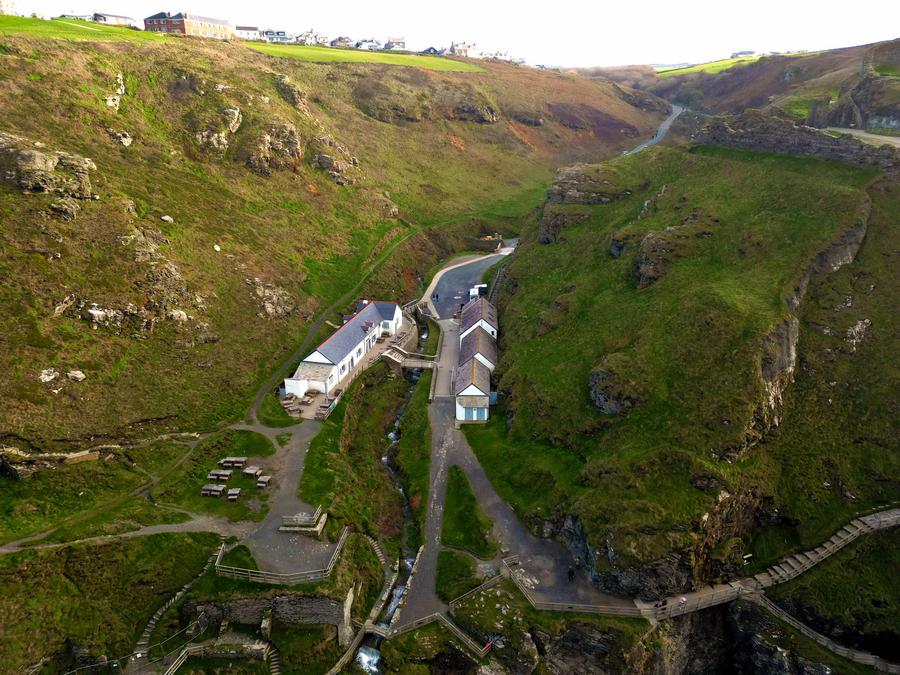
Perched on dramatic cliff faces jutting into the Atlantic, these medieval ruins are steeped in Arthurian legend as the supposed birthplace of King Arthur. English Heritage’s striking contemporary footbridge – a 70-meter steel and slate span across a deep chasm – reconnects the headland and mainland halves of the castle for the first time in 500 years. The 13th-century ruins of Richard, Earl of Cornwall’s castle frame views of Merlin’s Cave below, accessible at low tide. The on-site exhibition explores both the medieval history and the site’s earlier Dark Age settlement.
St Michael's Mount
This tidal island rises dramatically from Mount’s Bay near Marazion, crowned by a medieval castle and subtropical gardens that cascade down the granite slopes. At low tide, a cobbled causeway emerges from the sea, allowing visitors to walk the 500 meters to the island; at high tide, small boats ferry passengers across. The castle, home to the St Aubyn family since 1659, contains the Chevy Chase Room with its plaster hunting frieze, a 14th-century priory church, and collections of arms and furniture. The terraced gardens bloom with exotic plants that thrive in the mild maritime microclimate.
Minack Theatre
Carved into the granite cliffs above Porthcurno Bay, this extraordinary open-air amphitheatre was the life’s work of Rowena Cade, who began constructing it in 1932 using stone and concrete carried down the cliff face by hand. The theatre seats 750 spectators against a backdrop of Atlantic ocean views stretching to the Lizard Peninsula. The summer season (May-September) features a full program of plays, musicals, and concerts. Even without a performance, the Exhibition Centre tells Cade’s remarkable story, and the subtropical gardens surrounding the theatre reward exploration.
Lost Gardens of Heligan
These 200-acre gardens near Mevagissey were lost under brambles for 75 years after World War I before a dramatic restoration began in 1990. The restored Productive Gardens include working Victorian glasshouses with pineapple pits, melon houses, and bee boles. The Jungle Valley plunges through tree ferns and bamboo groves to tropical ponds, while the woodland walks reveal the famous Mud Maid and Giant’s Head sculptures wreathed in living plants. The estate also operates the Heligan wild farming project, where rare-breed cattle and pigs graze restored pastures.
Editor-curated picks carried over from our original guide. Where a full place guide exists, the card links to it.
Worth booking ahead in Cornwall
Hand-picked from the operators our guides already send readers to. Prices and availability are live on the partner site.
Timed ticketGetYourGuide
Tower of London and Crown Jewels admission (opens GetYourGuide in a new tab)
Admission plus the Crown Jewels; go at opening to reach the Jewels before the queue forms.
Where to stayBooking.com
Stays in Cornwall (opens Booking.com in a new tab)
Live rates and availability for Cornwall on Booking.com; filter by neighbourhood once you know where your days start.
We earn a commission if you book through these links, at no extra cost to you. It is how we keep the guides free and independent.
Where to stay
The Headland Hotel & Spa
Headland Road, Fistral Beach, Newquay, Cornwall TR7 1EW, United Kingdom
This grand Victorian five-star hotel commands a promontory overlooking Fistral Beach, one of Europe’s premier surfing destinations. Built in 1900, the red-brick landmark has hosted royalty and celebrities while maintaining its traditional character alongside modern luxury additions including an infinity pool, six self-catering cottages, and the Aqua Club spa with hydrotherapy pool and thermal suite. The hotel’s restaurants serve locally sourced Cornish produce, and its location provides direct access to both Fistral and Towan beaches.
The Scarlet Hotel
Tredragon Road, Mawgan Porth, Newquay, Cornwall TR8 4DQ, United Kingdom
This adults-only eco-luxury boutique hotel perches above Mawgan Porth beach, designed to minimize environmental impact while maximizing natural drama. Every room faces the sea through floor-to-ceiling windows, and the cliff-edge Ayurvedic spa includes an outdoor natural reed-bed swimming pool, hot tubs, and treatment rooms with ocean views. The hotel runs on biomass heating, uses sedum-planted roofs for insulation, and sources food from local and organic suppliers. A concealed log cabin and meadow hanging pods offer unique spa relaxation spaces.
Carbis Bay Hotel & Estate
Carbis Bay, St Ives, Cornwall TR26 2NP, United Kingdom
This five-star beach resort occupies 125 acres of private estate above its own Blue Flag beach near St Ives. Famous as the venue for the 2021 G7 Summit, the property includes the original 1894 hotel, luxury suites, self-catering lodges, and beach apartments. The C Bay Spa features an infinity pool overlooking the bay, and the Sands restaurant serves contemporary Cornish cuisine with panoramic sea views. A private coastal path connects directly to St Ives, and the hotel provides beach equipment, water sports instruction, and a children’s club.
Editor-curated stays carried over from our original guide. Where we have reviewed the hotel, the card links to the review.
Tips from the field
Highlights
- [Land's End](https://www.tripadvisor.com/Tourism-g186234-Cornwall_England-Vacations.html) – iconic coastal landmark
- [The Lost Gardens of Heligan](https://www.nomadicmatt.com/travel-blogs/cornwall/) – restored Victorian gardens
- [Tintagel Castle](https://www.tripadvisor.com/Tourism-g186234-Cornwall_England-Vacations.html) – legendary birthplace of King Arthur
- [The Minack Theatre](https://www.tripadvisor.com/Tourism-g186234-Cornwall_England-Vacations.html) – open-air theatre with stunning sea views
Best activities
- Explore the dramatic coastline and beaches
- Visit historic sites like [Tintagel Castle](https://www.tripadvisor.com/Tourism-g186234-Cornwall_England-Vacations.html) and [Land's End](https://www.tripadvisor.com/Tourism-g186234-Cornwall_England-Vacations.html)
- Enjoy scenic gardens like [The Lost Gardens of Heligan](https://www.nomadicmatt.com/travel-blogs/cornwall/) and [Trebah Garden](https://www.nomadicmatt.com/travel-blogs/cornwall/)
- Watch a performance at [The Minack Theatre](https://www.tripadvisor.com/Tourism-g186234-Cornwall_England-Vacations.html)
Practical tips
- Book accommodations in advance during peak summer season
- Use a car for easier access to remote coastal areas and attractions
- Bring waterproof clothing as weather can be unpredictable
Keeping it authentic
- Visit ancient sites like [Carn Euny Ancient Village](https://www.nomadicmatt.com/travel-blogs/cornwall/) for a glimpse into prehistoric Cornwall
- Explore traditional fishing villages and harbors to experience authentic Cornish maritime culture
Culture, customs and safety
Cultural heritage
Cornwall preserves Celtic identity distinct from England through Cornish language revival, traditional festivals, and mining heritage recognized by UNESCO. Tin and copper mining shaped the landscape for 4,000 years, leaving engine houses perched on dramatic cliffs. Fishing traditions continue in working harbors where pilchard pressing and net mending skills pass between generations. The Cornish pasty, originally miners’ complete meals, gained protected status. Daphne du Maurier’s Jamaica Inn and Doc Martin’s Port Isaac celebrate literary connections. Traditional music features in village feast days, while the Obby Oss festival in Padstow maintains pre-Christian fertility rites. Surfing culture thrives alongside ancient customs, creating unique coastal identity mixing Celtic mysticism with modern beach life.
Local customs & etiquette
Cornwall pulses with fierce Celtic pride where locals identify as Cornish first, British second, celebrating their distinctive culture through the revived Cornish language (Kernow), traditional Gorseth ceremonies dating to 1928, and the sacred ritual of the authentic Cornish pasty—always containing beef, potato, onion, and swede wrapped in crimp-sealed pastry, never to be confused with inferior imitations. Local festivals honor ancient Celtic traditions: the wild ‘Obby ‘Oss celebrations in Padstow featuring hobby horse processions, Helston’s Flora Day furry dances, and the wonderfully bizarre Stargazy pie served every December 23rd in Mousehole with fish heads protruding skyward. Social customs blend Celtic heritage with maritime tradition—expect warm hospitality in village pubs, respect for Methodist chapel communities that shaped working-class culture, and passionate discussions about Cornish identity, tin mining heritage, and King Arthur’s birthplace at Tintagel. Greeting locals with “Dydh da” (good day in Cornish) shows cultural appreciation, while understanding that Cornwall considers itself one of six Celtic nations alongside Wales, Scotland, Ireland, Brittany, and the Isle of Man reflects the deep cultural identity that makes this peninsula far more than just “southwest England.”
Activities