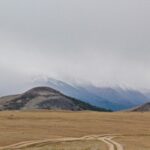
Mongolia offers adventurous travelers an authentic glimpse into a nomadic way of life that has remained largely unchanged for centuries, set against a backdrop of stunning natural landscapes. The vast Mongolian steppe—seemingly endless grasslands where wild horses roam freely—creates a profound sense of space and freedom. In the south, the Gobi Desert presents a dramatic landscape of sand dunes, ice canyons, and dinosaur fossil sites. Throughout the country, traditional ger (yurt) camps provide unique accommodation where travelers can experience nomadic hospitality, sample dairy-based foods, and witness ancient practices like eagle hunting and horse riding. The capital, Ulaanbaatar, contrasts traditional Buddhist temples with Soviet-era architecture and emerging contemporary arts. With one of the world’s lowest population densities, Mongolia delivers an unparalleled sense of wilderness and cultural authenticity for those willing to venture beyond conventional tourist destinations.
The destination guide
Mongolia

City in AsiaUpdated
- Overall6/10
- Best forBudget travelers, Solo travelers
- PeakJun–Aug
- CurrencyMNT
One of the lowest population densities on Earth means you can ride for hours across the steppe and see no one. That silence is the whole point.
Travel guides for Mongolia
Destination stories (1)
More guides featuring Mongolia (1)
At a glance
- Local
- Vast steppe grasslands
- Gobi Desert
- Mountain ranges
- Nomadic terrain
- Nomadic
- Adventure
- Desert
- Wildlife
- Culture
- Photography
- Steppe
How Mongolia scores
Character
Editorial scores on a 10-point scale, weighed against destinations of the same kind.
Travel safety snapshot
SafePlace indicators use their source 100-point scale; higher is more favourable. Planning context, not a live travel advisory — check official government guidance before you go.
When to go
Best months to visit: May, June, July, August, September and October.
- January: -21 to -10.4 degrees Celsius, 3.3 millimetres of rain, best-time score 2 out of 5.
- February: -18.3 to -6.7 degrees Celsius, 4.9 millimetres of rain, best-time score 2 out of 5.
- March: -9.5 to 2 degrees Celsius, 8.4 millimetres of rain, best-time score 2 out of 5.
- April: -3.3 to 8.9 degrees Celsius, 21.4 millimetres of rain, best-time score 3 out of 5.
- May: 2.5 to 15.6 degrees Celsius, 37 millimetres of rain, best-time score 4 out of 5.
- June: 9.4 to 21.2 degrees Celsius, 49.4 millimetres of rain, best-time score 5 out of 5.
- July: 12.3 to 23.1 degrees Celsius, 79.7 millimetres of rain, best-time score 5 out of 5.
- August: 10.4 to 20.6 degrees Celsius, 76.4 millimetres of rain, best-time score 5 out of 5.
- September: 4.8 to 15.7 degrees Celsius, 40.4 millimetres of rain, best-time score 5 out of 5.
- October: -4.3 to 5.6 degrees Celsius, 15.5 millimetres of rain, best-time score 4 out of 5.
- November: -11.8 to -2.6 degrees Celsius, 12.1 millimetres of rain, best-time score 2 out of 5.
- December: -19.3 to -9.6 degrees Celsius, 5.5 millimetres of rain, best-time score 2 out of 5.
Month-by-month conditions and packing advice
- January
- Very cold, mostly dry January in Mongolia: severe winter cold and limited infrastructure make general travel difficult. Crowds: January in Mongolia is best for winter-ready travelers; outdoor plans need warm gear, shorter daylight expectations, and weather-aware transport planning. Pack: Pack insulated layers, warm footwear, gloves, and a serious winter coat.
- February
- Very cold, mostly dry February in Mongolia: severe winter cold and limited infrastructure make general travel difficult. Crowds: February in Mongolia is best for winter-ready travelers; outdoor plans need warm gear, shorter daylight expectations, and weather-aware transport planning. Pack: Pack insulated layers, warm footwear, gloves, and a serious winter coat.
- March
- Very cold, mostly dry March in Mongolia: severe winter cold and limited infrastructure make general travel difficult. Crowds: March in Mongolia is best for winter-ready travelers; outdoor plans need warm gear, shorter daylight expectations, and weather-aware transport planning. Pack: Pack insulated layers, warm footwear, gloves, and a serious winter coat.
- April
- Cold, mostly dry April in Mongolia: spring can be windy and variable but possible for flexible travelers. Crowds: April in Mongolia is workable with normal seasonal planning; build in layers, weather checks, and a mix of indoor and outdoor activities. Pack: Pack warm layers, a coat, and comfortable shoes for cold mornings and evenings.
- May
- Cool to mild, occasional rain May in Mongolia: shoulder months can be rewarding with fewer crowds and colder-night planning. Crowds: May in Mongolia is workable with normal seasonal planning; build in layers, weather checks, and a mix of indoor and outdoor activities. Pack: Pack warm layers, a coat, and comfortable shoes for cold mornings and evenings.
- June
- Mild to warm, occasional rain June in Mongolia: steppe landscapes, ger camps, Naadam season, Gobi routes, lake trips, and cultural travel are most accessible. Crowds: June in Mongolia is comfortable for sightseeing, neighborhoods, food stops, day trips, and outdoor time with limited weather friction. Pack: Pack layered clothing and comfortable walking shoes.
- July
- Mild to warm, some rain July in Mongolia: steppe landscapes, ger camps, Naadam season, Gobi routes, lake trips, and cultural travel are most accessible. Crowds: July in Mongolia is workable with normal seasonal planning; build in layers, weather checks, and a mix of indoor and outdoor activities. Pack: Pack layered clothing and comfortable walking shoes. Add a rain jacket or compact umbrella.
- August
- Mild to warm, some rain August in Mongolia: steppe landscapes, ger camps, Naadam season, Gobi routes, lake trips, and cultural travel are most accessible. Crowds: August in Mongolia is workable with normal seasonal planning; build in layers, weather checks, and a mix of indoor and outdoor activities. Pack: Pack layered clothing and comfortable walking shoes. Add a rain jacket or compact umbrella.
- September
- Cool to mild, occasional rain September in Mongolia: steppe landscapes, ger camps, Naadam season, Gobi routes, lake trips, and cultural travel are most accessible. Crowds: September in Mongolia is workable with normal seasonal planning; build in layers, weather checks, and a mix of indoor and outdoor activities. Pack: Pack layered clothing and comfortable walking shoes.
- October
- Cold, mostly dry October in Mongolia: shoulder months can be rewarding with fewer crowds and colder-night planning. Crowds: October in Mongolia is workable with normal seasonal planning; build in layers, weather checks, and a mix of indoor and outdoor activities. Pack: Pack warm layers, a coat, and comfortable shoes for cold mornings and evenings.
- November
- Very cold, mostly dry November in Mongolia: severe winter cold and limited infrastructure make general travel difficult. Crowds: November in Mongolia is best for winter-ready travelers; outdoor plans need warm gear, shorter daylight expectations, and weather-aware transport planning. Pack: Pack insulated layers, warm footwear, gloves, and a serious winter coat.
- December
- Very cold, mostly dry December in Mongolia: severe winter cold and limited infrastructure make general travel difficult. Crowds: December in Mongolia is best for winter-ready travelers; outdoor plans need warm gear, shorter daylight expectations, and weather-aware transport planning. Pack: Pack insulated layers, warm footwear, gloves, and a serious winter coat.
- June
- July
- August
- October
- November
- December
- January
- February
- March
- April
Know before you go
Best time to visit
Mid-June through August is prime time — warm days (22–32°C), endless green steppe, and the legendary Naadam Festival in mid-July. June offers clear skies with fewer crowds; August is vibrant but slightly wetter. May and September both sit in a pleasant shoulder with fewer visitors and fall’s golden larch forests in the north. October through April is off-season: Ulaanbaatar drops below −18°C and ger camps shut by early October.
Season by season
Summer (Jun–Aug): warmest (18–28°C), green steppe, Naadam Festival in July, best touring season. Autumn (Sep–Oct): golden grasslands, clear skies, cooler nights, excellent photography. Winter (Nov–Mar): extreme cold (−20 to −40°C), Tsagaan Sar (Lunar New Year), limited travel. Spring (Apr–May): warming, dust storms, nomadic migrations, unpredictable wind.
Crowds
High (July during Naadam), Moderate (June, August), Low (September–May)
Getting there and around
Getting there
Entry to Mongolia is primarily via Chinggis Khaan International Airport (UBN) near Ulaanbaatar, requiring connections through Asian hubs like Seoul, Beijing, Tokyo, Hong Kong, or Istanbul. U.S. citizens need no visa for stays under 90 days but must register with Immigration Agency within 48 hours of arrival. Some land borders with China and Russia exist but require complex permits, making air travel the most reliable option.
Getting around
Getting around within Mongolia, particularly in Ulaanbaatar, relies heavily on buses, as there is no metro or tram system in place. The bus network is extensive and very affordable, though schedules can be inconsistent, and buses can become crowded during peak hours; smartcards are used for fare payment and can be purchased and reloaded at kiosks or convenience stores around the city. Walkability is limited outside the city center due to sprawling urban development and poor pedestrian infrastructure, so most travelers opt for taxis or local rideshare apps like UBCab, though always confirm the fare upfront or use the app to avoid overcharging. For venturing beyond the capital, hiring a 4×4 vehicle with a local driver is essential, especially if you’re heading into the steppes or Gobi Desert where public transport is virtually nonexistent.
Top experiences in Mongolia
Gobi Desert
One of the world’s great deserts, stretching across southern Mongolia with sand dunes (Khongor), limestone formations (Tsagaan Suvarga), and the Flaming Cliffs of Bayanzag where Roy Chapman Andrews discovered the first dinosaur eggs in 1923. Despite its name, the Gobi is surprisingly diverse — mountains, grasslands, and wildlife (snow leopards, wild Bactrian camels) coexist alongside sand.
Gandantegchinlen Monastery, Ulaanbaatar
Mongolia’s most important Buddhist monastery, home to a towering 26.5-m gilded statue of Megjid-Janraisig (Avalokitesvara) and over 600 resident monks. The complex survived Soviet-era purges and remains a living center of worship. Visitors can watch morning chanting ceremonies and spin prayer wheels.
Khustain Nuruu National Park
A protected steppe reserve 100 km west of Ulaanbaatar, home to the takhi (Przewalski’s horse) — the world’s last truly wild horse, brought back from the brink of extinction. Guided jeep and hiking trips offer close encounters with free-roaming herds against a backdrop of rolling grasslands.
Orkhon Valley
A UNESCO World Heritage cultural landscape in central Mongolia, featuring the ancient capital of Karakorum, the Erdene Zuu monastery (Mongolia’s oldest surviving Buddhist monastery), and the dramatic 20-m Orkhon Waterfall. Nomadic families graze yaks and horses across the valley.
Terelj National Park
A national park 70 km northeast of Ulaanbaatar, with granite rock formations, alpine meadows, and the Aryapala Meditation Center reached by a forest trail. The iconic Turtle Rock and the towering Chinggis Khaan equestrian statue (40 m) are popular day trips. Overnight ger stays available.
Editor-curated picks carried over from our original guide. Where a full place guide exists, the card links to it.
Worth booking ahead in Mongolia
Hand-picked from the operators our guides already send readers to. Prices and availability are live on the partner site.
BrowseViator
Tours and tickets in Mongolia on Viator (opens Viator in a new tab)
Viator's full list of bookable tours and tickets in Mongolia.
BrowseGetYourGuide
Experiences in Mongolia on GetYourGuide (opens GetYourGuide in a new tab)
Everything GetYourGuide sells in Mongolia, with the cancellation terms on each listing.
Where to stayBooking.com
Stays in Mongolia (opens Booking.com in a new tab)
Live rates and availability for Mongolia on Booking.com; filter by neighbourhood once you know where your days start.
We earn a commission if you book through these links, at no extra cost to you. It is how we keep the guides free and independent.
Where to stay
Best Western Premier Tuushin Hotel
Best Western Premier Tuushin Hotel, Sukhbaatar Square, Ulaanbaatar 14200, Mongolia
A 185-room luxury hotel overlooking Sukhbaatar Square in the heart of Ulaanbaatar, with a rooftop restaurant, spa, indoor pool, and rooms blending Mongolian art with international-standard amenities. Walking distance to the National Museum, Gandantegchinlen Monastery, and the State Department Store.
Shangri-La Ulaanbaatar
Olympic Street 2, Ulaanbaatar 14241, Mongolia
Mongolia’s first Shangri-La property, a 290-room five-star hotel in the capital’s business district with four restaurants, a Horizon Club lounge, a Chi Spa, and an indoor pool. The hotel is 10 minutes by car from the train station and Chinggis Khaan International Airport.
Three Camel Lodge
Bulgan Sum, Ömnögovi Province, Gobi Desert, Mongolia
An award-winning ger camp at the edge of the Gobi Desert’s Khongor Sand Dunes, offering 40 hand-crafted felt gers with wood-burning stoves, a restaurant serving Mongolian and international cuisine, a natural history museum, and guided camel treks across the dunes. No electricity in the gers — candles and silence.
Editor-curated stays carried over from our original guide. Where we have reviewed the hotel, the card links to the review.
Tips from the field
Highlights
- Gobi Desert — Flaming Cliffs and singing dunes
- Gandantegchinlen — 26.5-m golden Buddha
- Khustain Nuruu — Last wild horses
- Orkhon Valley — UNESCO World Heritage steppe
- Naadam Festival — Wrestling, archery, horse racing
- Ger camps — Nomadic hospitality
Best activities
- Ride horseback across the steppe with nomadic families, explore the Gobi Desert's Flaming Cliffs and Khongor Sand Dunes, visit the 26.5-m golden Buddha at Gandantegchinlen Monastery, attend the Naadam Festival in July, stay in a traditional ger camp, spot wild Przewalski's horses at Khustain Nuruu, hike to the Orkhon Waterfall, and stargaze in the Gobi's zero-light-pollution sky.
Local experiences
- Sleep in a felt ger with a nomadic family as they tend their horses beneath a sky crammed with stars, ride a Bactrian camel across the Khongor Sand Dunes at sunset, or sit in silence at Gandantegchinlen as 600 monks chant the morning sutras.
Practical tips
- Book an organized tour — public transport barely exists outside Ulaanbaatar.
- Dress in layers: valley temperatures can swing 20°C in a single day.
- Carry a satellite communicator in remote areas — there is no cell coverage.
- Bring your own medications; pharmacies outside UB are scarce.
- Download offline maps and carry a paper map as backup.
- Mongolian custom: accept food and drink with your right hand or both hands.
- Comprehensive travel insurance with medical evacuation is essential.
Photography tips
- The Gobi's Flaming Cliffs glow brightest in the 30 minutes before sunset — position yourself at the eastern edge facing west. Khongor Sand Dunes produce dramatic light-and-shadow patterns in early morning. Ger camps on the steppe are best framed with a wide-angle lens at dawn when smoke rises from the stovepipes. The Gandantegchinlen golden Buddha requires a fast lens (f/1.8–f/2.8) due to low interior light. Bring a telephoto (200–400 mm) for the wild horses at Khustain Nuruu. Stars in the Gobi are extraordinary — a sturdy tripod and fast wide (14 mm f/2.8) are essential.
Timing
- Three days cover Ulaanbaatar, Gandantegchinlen, and Terelj National Park. One week adds the Orkhon Valley and Khustain Nuruu. Two weeks allow a full Gobi circuit including the Flaming Cliffs, Khongor Dunes, and Yol Valley. Three weeks cover Mongolia comprehensively from north (Lake Khuvsgul) to south (Gobi).
Keeping it authentic
- Mongolia is the world's most sparsely populated sovereign nation — 2 people per square kilometer — and one of the last places on Earth where nomadic herding remains a living, breathing way of life. Approximately 30–40% of the population still moves seasonally with their livestock across the steppe, living in felt gers as their ancestors did for millennia. The Naadam Festival (archery, wrestling, horse racing) dates back to Genghis Khan's era. Throat singing (khoomei), a UNESCO Intangible Cultural Heritage, produces multiple harmonics from a single voice and is performed across the countryside.
Culture, customs and safety
Cultural heritage
Mongolia’s cultural heritage is born of the vast steppe and one of the world’s last great nomadic cultures. This legacy is expressed in the intangible traditions of horsemanship and pastoralism, a spiritual reverence for sacred mountains, and the archaeological remains of great steppe empires, most notably that of Genghis Khan. Its UNESCO sites, such as the Orkhon Valley and the sacred Burkhan Khaldun Mountain, protect this profound connection between nomadic life, the landscape, and a world-shaping history.
Local customs & etiquette
Mongolian customs are deeply rooted in nomadic traditions and strong hospitality sense. When visiting traditional ger (yurt), greet hosts by saying Nokhoigo Khorioroi (Hold the dog) upon approach, even if no dog is visible. Never step on ger threshold – enter with right foot first and move left. When offered food or drink like salted milk tea (suutei tsai) or vodka, severe etiquette breach to refuse – accept using right hand supported by left at elbow and take at least small sip. Always remove hats indoors. Head is sacred, so avoid touching anyones head, hat, or belt, particularly mens. If accidentally stepping on someones foot, immediately apologize by shaking their hand.
Safety notes
Mongolia is generally safe for tourists, but the vast distances and lack of infrastructure demand preparation. In Ulaanbaatar, pickpocketing is common in markets, on buses, and around Sukhbaatar Square, especially during Naadam. Avoid walking alone at night. Outside the capital, roads are often unpaved tracks requiring a 4×4 and experienced driver. Extreme weather — blizzards, dust storms, summer heatwaves — can develop rapidly; carry emergency supplies. Medical facilities outside UB are very limited; comprehensive travel insurance with air evacuation is essential. Always carry your passport; police do not accept copies.