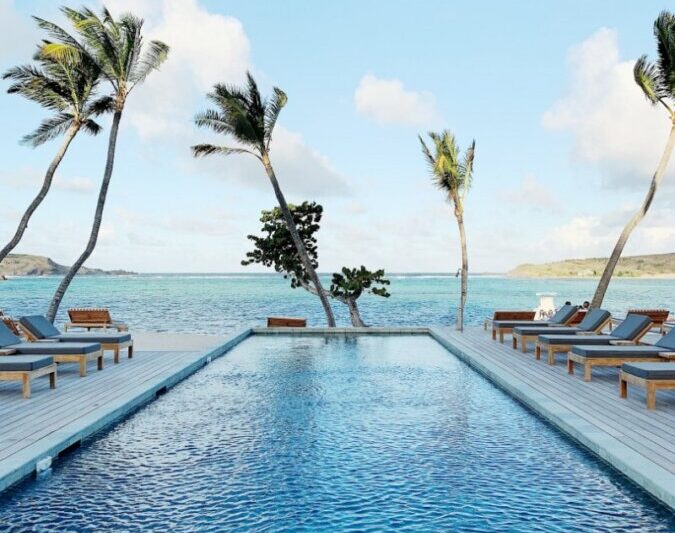
St. Barts (Saint Barthélemy), a diminutive eight-square-mile French Caribbean outpost, maintains its reputation as the Caribbean’s most exclusive island through a deliberate approach to luxury tourism focused on quality rather than quantity. The island’s distinctive topography combines 22 pristine white sand beaches tucked between rocky headlands, dramatic volcanic peaks rising to 938 feet at Morne du Vitet, and an arid landscape dotted with cacti and tropical vegetation reflecting its minimal rainfall and consistent temperatures averaging 80°F year-round. Unlike mass-tourism Caribbean destinations, St. Barts deliberately limits development to preserve its character—prohibiting cruise ships, all-inclusive resorts, high-rise buildings, and chain businesses—instead cultivating a refined atmosphere through exclusive villa rentals, boutique hotels (none exceeding 60 rooms), and high-end shopping featuring outposts of French fashion houses along rue de la République in the main town of Gustavia. The island’s Swedish colonial heritage, dating from 1784-1878, remains visible in Gustavia’s historic buildings, street names, and the diminutive Wall House Museum, complementing French influences evident in the island’s exceptional culinary scene, where over 80 restaurants serve everything from traditional French cuisine to innovative Caribbean fusion prepared by European-trained chefs using imported ingredients. Beyond luxury experiences, visitors discover stunning natural attractions including the protected marine reserve around Colombier Beach, accessible only by boat or 30-minute hiking trail, wild surf beaches on the Atlantic side contrasting with calm swimming coves along the Caribbean coast, and excellent diving and snorkeling opportunities around offshore islets. Throughout its development as a luxury destination, St. Barts has maintained its authentic French Caribbean character while catering to an international clientele seeking exclusive experiences in an intimate island setting that balances sophisticated amenities with natural beauty and European flair.
The destination guide
St. Barts

Island in Saint Barthelemy, North AmericaUpdated
- Overall8/10
- Best forCouples, Adventure seekers, Luxury travelers
- CurrencyEUR
No cruise ships, no all-inclusives, no high-rises. St. Barts enforces its exclusivity by design — and the 22 beaches back it up.
At a glance
- Caribbean island
- Luxury beaches
- Volcanic hills
- French colonial architecture
How St. Barts scores
Editorial scores on a 10-point scale, weighed against destinations of the same kind.
Travel safety snapshot
SafePlace indicators use their source 100-point scale; higher is more favourable. Planning context, not a live travel advisory — check official government guidance before you go.
When to go
Best months to visit: January, February, March, April, November and December.
- January: 24.7 to 26.2 degrees Celsius, 34.5 millimetres of rain, best-time score 5 out of 5.
- February: 24.4 to 25.9 degrees Celsius, 43 millimetres of rain, best-time score 5 out of 5.
- March: 24.6 to 25.9 degrees Celsius, 21.6 millimetres of rain, best-time score 5 out of 5.
- April: 24.9 to 26.4 degrees Celsius, 47.6 millimetres of rain, best-time score 4 out of 5.
- May: 25.8 to 27.2 degrees Celsius, 51.4 millimetres of rain, best-time score 3 out of 5.
- June: 26.6 to 28 degrees Celsius, 42.1 millimetres of rain, best-time score 2 out of 5.
- July: 26.7 to 28.3 degrees Celsius, 67.4 millimetres of rain, best-time score 2 out of 5.
- August: 27 to 28.7 degrees Celsius, 84.6 millimetres of rain, best-time score 2 out of 5.
- September: 27 to 28.8 degrees Celsius, 130.6 millimetres of rain, best-time score 2 out of 5.
- October: 26.8 to 28.6 degrees Celsius, 116.3 millimetres of rain, best-time score 3 out of 5.
- November: 26.2 to 27.8 degrees Celsius, 110.2 millimetres of rain, best-time score 4 out of 5.
- December: 25.4 to 27 degrees Celsius, 43.7 millimetres of rain, best-time score 5 out of 5.
Month-by-month conditions and packing advice
- January
- Mild to warm, occasional rain Perfect dry and warm weather. Crowds: January in St. Barts is comfortable for sightseeing, neighborhoods, food stops, day trips, and outdoor time with limited weather friction. Pack: Pack light clothing, sun protection, and comfortable walking shoes.
- February
- Mild to warm, occasional rain Excellent beach weather, low humidity. Crowds: February in St. Barts is comfortable for sightseeing, neighborhoods, food stops, day trips, and outdoor time with limited weather friction. Pack: Pack light clothing, sun protection, and comfortable walking shoes.
- March
- Mild to warm, mostly dry Slightly warmer but still dry and comfortable. Crowds: March in St. Barts is comfortable for sightseeing, neighborhoods, food stops, day trips, and outdoor time with limited weather friction. Pack: Pack light clothing, sun protection, and comfortable walking shoes.
- April
- Mild to warm, occasional rain Getting hotter, transition to wet season begins. Crowds: April in St. Barts is comfortable for sightseeing, neighborhoods, food stops, day trips, and outdoor time with limited weather friction. Pack: Pack light clothing, sun protection, and comfortable walking shoes.
- May
- Warm to hot, occasional rain Hot and humid, rains start increasing. Crowds: May in St. Barts is comfortable for sightseeing, neighborhoods, food stops, day trips, and outdoor time with limited weather friction. Pack: Pack light clothing, sun protection, and comfortable walking shoes.
- June
- Warm to hot, occasional rain Wet season, frequent heavy downpours. Crowds: June in St. Barts is comfortable for sightseeing, neighborhoods, food stops, day trips, and outdoor time with limited weather friction. Pack: Pack light clothing, sun protection, and comfortable walking shoes.
- July
- Warm to hot, occasional rain Peak monsoon/wet season. Crowds: July in St. Barts is comfortable for sightseeing, neighborhoods, food stops, day trips, and outdoor time with limited weather friction. Pack: Pack light clothing, sun protection, and comfortable walking shoes.
- August
- Warm to hot, some rain Continuing heavy rains and high humidity. Crowds: August in St. Barts is workable with normal seasonal planning; build in layers, weather checks, and a mix of indoor and outdoor activities. Pack: Pack light clothing, sun protection, and comfortable walking shoes. Add a rain jacket or compact umbrella.
- September
- Warm to hot, rainy Still very wet, risk of storms/typhoons. Crowds: September in St. Barts is one of the wetter periods, so museums, food stops, flexible reservations, and backup indoor plans make the trip easier. Pack: Pack light clothing, sun protection, and comfortable walking shoes. Add a rain jacket or compact umbrella.
- October
- Warm to hot, some rain Rains begin to taper off, still humid. Crowds: October in St. Barts is workable with normal seasonal planning; build in layers, weather checks, and a mix of indoor and outdoor activities. Pack: Pack light clothing, sun protection, and comfortable walking shoes. Add a rain jacket or compact umbrella.
- November
- Warm to hot, some rain Start of the dry season, weather improving. Crowds: November in St. Barts is workable with normal seasonal planning; build in layers, weather checks, and a mix of indoor and outdoor activities. Pack: Pack light clothing, sun protection, and comfortable walking shoes. Add a rain jacket or compact umbrella.
- December
- Warm to hot, occasional rain Fantastic weather, peak tourist season. Crowds: December in St. Barts is comfortable for sightseeing, neighborhoods, food stops, day trips, and outdoor time with limited weather friction. Pack: Pack light clothing, sun protection, and comfortable walking shoes.
Know before you go
Neighbourhoods
Gustavia, Saint-Jean, Lorient, Corossol
Best time to visit
Mid-December through April offers the driest weather, steady trade winds, and the peak social season — New Year’s Eve on St. Barts is legendary. Shoulder months (May–June and November) bring lower prices, emptier beaches, and warm weather with occasional brief showers. Hurricane season runs August through October, when many hotels and restaurants close entirely.
Crowds
St. Barts peaks in December–April winter season, especially around Christmas/New Year and March spring break; quietest in late summer and early fall (June–October) during the low season and hurricane window, with overall low-to-moderate crowds but high density at luxury hotspots in winter.
Getting there and around
Getting there
Santorini (Thira) National Airport (JTR) receives flights from Athens and Europe. Ferries connect to Piraeus (Athens) and other islands.
Getting around
Rental cars or ATVs provide freedom to explore. KTEL buses are affordable but often crowded. Walking is great within villages.
Top experiences in St. Barts
Gustavia Harbor & Shell Beach
The chic capital of St. Barts, Gustavia features a picturesque horseshoe-shaped harbor filled with mega-yachts, duty-free French designer boutiques, and Swedish-colonial architecture. Nearby Shell Beach is blanketed in millions of unique seashells.
Anse de Colombier
A secluded, protected bay at the island’s northwestern tip, accessible only by a scenic 30-minute coastal hiking path or by private yacht. It offers crystal-clear turquoise waters ideal for swimming alongside sea turtles and rays.
Editor-curated picks carried over from our original guide. Where a full place guide exists, the card links to it.
Worth booking ahead in St. Barts
Hand-picked from the operators our guides already send readers to. Prices and availability are live on the partner site.
BrowseViator
Tours and tickets in St. Barts on Viator (opens Viator in a new tab)
Viator's full list of bookable tours and tickets in St. Barts.
BrowseGetYourGuide
Experiences in St. Barts on GetYourGuide (opens GetYourGuide in a new tab)
Everything GetYourGuide sells in St. Barts, with the cancellation terms on each listing.
Where to stayBooking.com
Stays in St. Barts (opens Booking.com in a new tab)
Live rates and availability for St. Barts on Booking.com; filter by neighbourhood once you know where your days start.
We earn a commission if you book through these links, at no extra cost to you. It is how we keep the guides free and independent.
Where to stay
Cheval Blanc St-Barth Isle de France
Baie des Flamands, 97133 Saint-Barthélemy
An ultra-luxury palace hotel situated on the pristine sands of Anse des Flamands, renowned for haute French dining, bespoke Guerlain spa rituals, and serene oceanfront suites.
Le Barthélemy Hotel & Spa
Anse de Toiny, 97133 Saint-Barthélemy
Five-star resort on Grand Cul-de-Sac Bay with suites overlooking the lagoon, a spa by Ligne St Barth, and waterfront dining.
Villa Marie Saint-Barth
Anse des Flamands, 97133 Saint-Barthélemy
Hillside boutique hotel in Colombier with colonial-chic cottages, a pool, garden restaurant, and panoramic ocean views.
Editor-curated stays carried over from our original guide. Where we have reviewed the hotel, the card links to the review.
Tips from the field
Highlights
- Colombier Beach — pristine, hike-only access, sea turtles
- Gustavia Harbor — luxury yachts, French cafés, and Swedish-colonial architecture
- Gustaf III Airport — dramatic cliffside landings over Saint-Jean Beach
- Grand Cul-de-Sac — reef-protected lagoon for kitesurfing and snorkeling
- Shell Beach — sunset cocktails on coral fragments steps from town
Best activities
- Spend a morning at Colombier Beach, accessible only by a 30-minute coastal hike or by boat — the effort earns you one of the Caribbean's most pristine swimming spots with sea turtle sightings. Snorkel the reef at Grand Cul-de-Sac, then try kitesurfing or paddleboarding in the lagoon's shallow, protected waters. Explore Gustavia on foot — visit Fort Karl for panoramic harbor views, browse the Wall House Museum for Swedish-colonial history, and shop the designer boutiques along Rue de la République. Drive the narrow hillside roads to the natural rock pools at Grand Fond, best visited at low tide when volcanic formations create turquoise bathing pools. Watch planes land dramatically over Saint-Jean Beach at Gustaf III Airport — one of the world's most dramatic airport approaches. Visit the fishing village of Corossol to see traditional straw-weaving artisans at work. For dining, reserve at Bonito overlooking Gustavia harbor at sunset, or eat grilled lobster at a beach shack on Shell Beach.
Local experiences
- Watch the sun set from the natural rock pools at Grand Fond, buy a fresh baguette from a Corossol boulangerie at dawn, or sip a rum punch at Nikki Beach while watching yacht traffic in Saint-Jean Bay.
Practical tips
- Book restaurants for sunset dinner weeks in advance. Visit the ancient site of Akrotiri to see the 'Minoan Pompeii'.
Photography tips
- St. Barts' compact size means you can chase light across the entire island in a single session. Gustavia harbor photographs best during blue hour when the red-roofed buildings and yacht masts reflect in still water — shoot from the Fort Karl overlook with a wide-angle lens for the full sweep. The Gustaf III Airport approach at Saint-Jean Beach produces dramatic freeze-frame shots of planes clearing the hilltop — use a fast shutter speed (1/2000s or higher) and position yourself on the beach directly below the flight path. Colombier Beach rewards early-morning visits when sun angles illuminate the cove from the east and the water shifts between jade and cobalt depending on depth. Gouverneur Beach's crescent shape and volcanic headlands create a natural frame — shoot from the parking-area cliffside for an elevated composition. For food and lifestyle photography, the outdoor terraces at Bonito and Orega offer clean natural light with harbor backgrounds. Aerial or drone photography (where permitted) captures the island's volcanic contours and reef patterns at Grand Cul-de-Sac exceptionally well.
Keeping it authentic
- St. Barts is a French overseas collectivity of roughly 10,000 residents that has cultivated an identity quite different from its Caribbean neighbors. The island was colonized by France, briefly Swedish from 1784 to 1878 (Gustavia's name honors King Gustav III), and never developed plantation agriculture — meaning it lacks the colonial-era class dynamics that shaped much of the Caribbean. The population descends largely from Norman and Breton settlers, and older residents still speak a regional French patois. Today St. Barts functions as an open-air extension of Paris's luxury retail scene, with Chanel and Hermès boutiques lining Gustavia's harbor. The clientele skews toward ultra-high-net-worth travelers, and pricing reflects this — a casual waterfront lunch can easily exceed €100 per person. But the island's physical beauty is genuine: 22 white-sand beaches, volcanic hillside roads with switchback views, and turquoise water clarity that rivals the Maldives. The community maintains strict building codes — no structure may exceed the height of the tallest palm tree — preserving a low-rise character that keeps the island feeling intimate. Beyond the luxury veneer, a real community exists: fishermen still work from Corossol, local families run boulangeries and hardware stores, and the annual St. Barts Gourmet Festival and New Year's Eve fireworks over Gustavia harbor are genuine community events, not manufactured spectacles.
Culture, customs and safety
Cultural heritage
St. Barts preserves French Caribbean sophistication through colonial architecture, culinary excellence, and duty-free luxury within compact island setting. Gustavia red-roofed buildings reflect Swedish colonial period while maintaining French administrative culture. Wall House Museum documents island history from Arawak through colonial periods. French cuisine meets Caribbean ingredients in world-class restaurants. Traditional boat building and fishing continue alongside mega-yacht culture. The island maintains exclusivity through development restrictions preserving architectural harmony and natural beauty creating unique French West Indies identity.
Local customs & etiquette
Respect private property; don’t climb on church roofs or house domes for photos. Dress modestly when visiting monasteries.
Safety notes
Very safe. Be careful on steep stairs and slippery cobblestones. Drink bottled water.