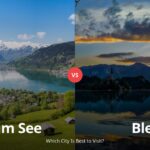
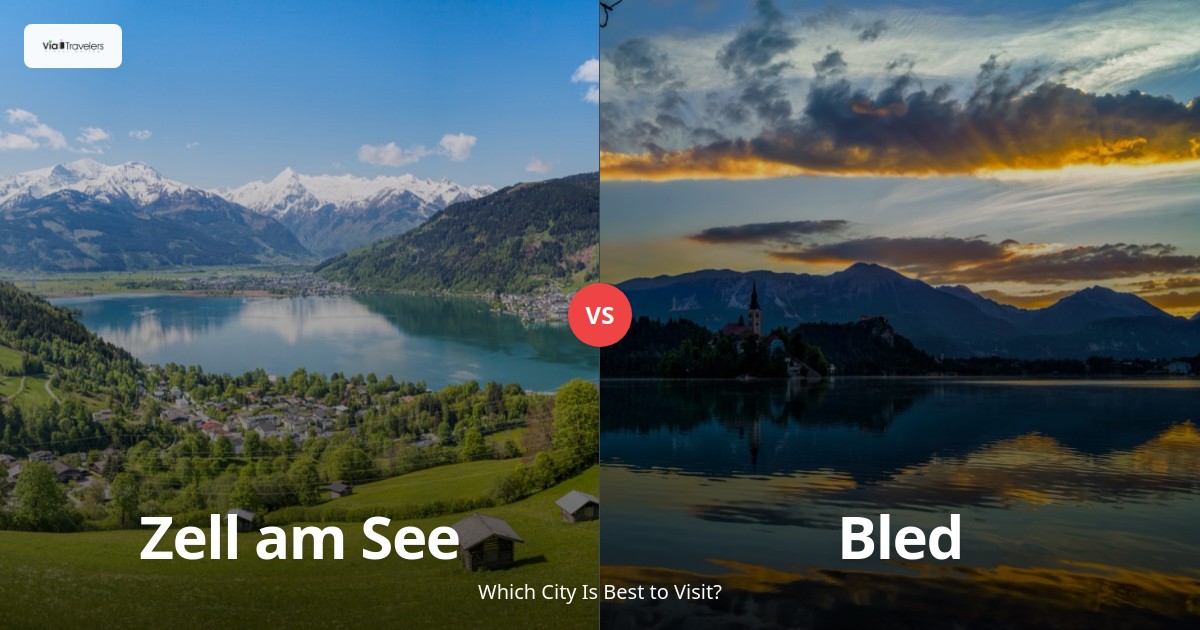
Zell am See is an enchanting Alpine resort town nestled between the crystalline waters of Lake Zell (Zeller See) and the magnificent Schmittenhöhe mountain in Austria’s Salzburg region. This picturesque destination offers a rare combination of lakeside serenity and alpine grandeur, creating a stunning backdrop of snow-capped peaks reflected in the pristine lake waters. Dating back to the 8th century, the town retains its medieval charm with a traffic-free center featuring narrow cobblestone streets, colorful traditional buildings, and the impressive Romanesque St. Hippolytus Church. Zell am See transforms seamlessly between seasons, offering excellent skiing and winter sports on the 77 kilometers of diverse slopes of the Schmittenhöhe in winter, while summer brings opportunities for swimming, sailing, and paddleboarding on the lake’s clear waters, alongside hiking and mountain biking through Alpine meadows and forests. The nearby Kitzsteinhorn glacier provides year-round skiing opportunities, while the spectacular Grossglockner High Alpine Road offers one of Europe’s most scenic drives just a short distance away. With its perfect blend of natural beauty, outdoor activities, thermal spas, gourmet dining featuring regional specialties, and proximity to Salzburg and Innsbruck, Zell am See embodies the quintessential Austrian Alpine experience in all its seasons and moods.
The destination guide
Zell Am See
Travel guides for Zell Am See
More guides featuring Zell Am See (1)
At a glance
- German
- Alpine lake
- Mountain peaks
- Glacier terrain
- Ski slopes
How Zell Am See scores
Editorial scores on a 10-point scale, weighed against destinations of the same kind.
Travel safety snapshot
SafePlace indicators use their source 100-point scale; higher is more favourable. Planning context, not a live travel advisory — check official government guidance before you go.
When to go
Best months to visit: January, February, March, June, July, August, September and December.
- January: -4.5 to 3.7 degrees Celsius, 103.4 millimetres of rain, best-time score 5 out of 5.
- February: -2.4 to 6.7 degrees Celsius, 86.5 millimetres of rain, best-time score 5 out of 5.
- March: -0.2 to 9.9 degrees Celsius, 87.6 millimetres of rain, best-time score 4 out of 5.
- April: 3.1 to 13.8 degrees Celsius, 88.7 millimetres of rain, best-time score 2 out of 5.
- May: 7 to 17.4 degrees Celsius, 148.8 millimetres of rain, best-time score 2 out of 5.
- June: 12.2 to 23.4 degrees Celsius, 127.9 millimetres of rain, best-time score 4 out of 5.
- July: 13.5 to 23.7 degrees Celsius, 151.8 millimetres of rain, best-time score 5 out of 5.
- August: 13.9 to 24 degrees Celsius, 145.9 millimetres of rain, best-time score 5 out of 5.
- September: 10.1 to 20 degrees Celsius, 121.7 millimetres of rain, best-time score 4 out of 5.
- October: 6.4 to 15.8 degrees Celsius, 107.5 millimetres of rain, best-time score 2 out of 5.
- November: 0.8 to 9.3 degrees Celsius, 95.3 millimetres of rain, best-time score 2 out of 5.
- December: -2 to 5.5 degrees Celsius, 100.3 millimetres of rain, best-time score 4 out of 5.
Month-by-month conditions and packing advice
- January
- Cold, some rain Peak winter, excellent powder snow for skiing. Crowds: January in Zell Am See is workable with normal seasonal planning; build in layers, weather checks, and a mix of indoor and outdoor activities. Pack: Pack warm layers, a coat, and comfortable shoes for cold mornings and evenings. Add a rain jacket or compact umbrella.
- February
- Cold, some rain Great snow base, lively winter resort atmosphere. Crowds: February in Zell Am See is workable with normal seasonal planning; build in layers, weather checks, and a mix of indoor and outdoor activities. Pack: Pack warm layers, a coat, and comfortable shoes for cold mornings and evenings. Add a rain jacket or compact umbrella.
- March
- Cold, some rain Spring skiing, warmer days but still good snow. Crowds: March in Zell Am See is workable with normal seasonal planning; build in layers, weather checks, and a mix of indoor and outdoor activities. Pack: Pack warm layers, a coat, and comfortable shoes for cold mornings and evenings. Add a rain jacket or compact umbrella.
- April
- Cool to mild, some rain Slushy snow, ski season ending, mud season begins. Crowds: April in Zell Am See is workable with normal seasonal planning; build in layers, weather checks, and a mix of indoor and outdoor activities. Pack: Pack layered clothing and comfortable walking shoes. Add a rain jacket or compact umbrella.
- May
- Cool to mild, rainy Mud season, many places closed for transition. Crowds: May in Zell Am See is one of the wetter periods, so museums, food stops, flexible reservations, and backup indoor plans make the trip easier. Pack: Pack layered clothing and comfortable walking shoes. Add a rain jacket or compact umbrella.
- June
- Mild to warm, some rain Summer begins, hiking trails opening up. Crowds: June in Zell Am See is workable with normal seasonal planning; build in layers, weather checks, and a mix of indoor and outdoor activities. Pack: Pack layered clothing and comfortable walking shoes. Add a rain jacket or compact umbrella.
- July
- Mild to warm, rainy Perfect summer weather for hiking and mountain biking. Crowds: July in Zell Am See is one of the wetter periods, so museums, food stops, flexible reservations, and backup indoor plans make the trip easier. Pack: Pack layered clothing and comfortable walking shoes. Add a rain jacket or compact umbrella.
- August
- Mild to warm, rainy Excellent warm mountain weather. Crowds: August in Zell Am See is one of the wetter periods, so museums, food stops, flexible reservations, and backup indoor plans make the trip easier. Pack: Pack layered clothing and comfortable walking shoes. Add a rain jacket or compact umbrella.
- September
- Mild to warm, some rain Beautiful fall colors, cooler nights. Crowds: September in Zell Am See is workable with normal seasonal planning; build in layers, weather checks, and a mix of indoor and outdoor activities. Pack: Pack layered clothing and comfortable walking shoes. Add a rain jacket or compact umbrella.
- October
- Cool to mild, some rain Transition season, getting cold, trails may close. Crowds: October in Zell Am See is workable with normal seasonal planning; build in layers, weather checks, and a mix of indoor and outdoor activities. Pack: Pack layered clothing and comfortable walking shoes. Add a rain jacket or compact umbrella.
- November
- Cold, some rain Waiting for snow, quietest time of year. Crowds: November in Zell Am See is workable with normal seasonal planning; build in layers, weather checks, and a mix of indoor and outdoor activities. Pack: Pack warm layers, a coat, and comfortable shoes for cold mornings and evenings. Add a rain jacket or compact umbrella.
- December
- Cold, some rain Ski season begins, festive holiday vibe. Crowds: December in Zell Am See is workable with normal seasonal planning; build in layers, weather checks, and a mix of indoor and outdoor activities. Pack: Pack warm layers, a coat, and comfortable shoes for cold mornings and evenings. Add a rain jacket or compact umbrella.
- July
- August
- November
- January
- February
- March
Know before you go
Neighbourhoods
Zell am See town center, Schüttdorf, Thumersbach
Best time to visit
Year-round destination. Summer (Jun-Aug) for the lake and hiking; Winter (Dec-Mar) for skiing on the Kitzsteinhorn.
Season by season
Summer (June-September):
Weather: 15-25°C (59-77°F), warm days with occasional afternoon showers
Highlights: Lake swimming, hiking, cycling, cable car rides, Sigmund Thun Gorge
Best For: Outdoor activities, families, the free Zell am See-Kaprun Summer Card
Fall (October-November):
Weather: 5-15°C, golden autumn colors, first snow on peaks
Highlights: Grossglockner Road final weeks, glacier skiing begins October
Best For: Photographers, early-season skiers
Winter (December-March):
Weather: -5 to 5°C, reliable snow coverage
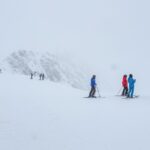
Highlights: 138km of ski runs, glacier skiing, cross-country trails, Advent markets
Best For: Skiing, snowboarding, winter sports enthusiasts
Spring (April-May):
Weather: 5-18°C, warming but variable
Highlights: Fewer crowds, glacier skiing continues, spring hiking
Best For: Budget travelers, shoulder-season deals
Crowds
Zell am See-Kaprun is busiest December-February for skiing and July-August for summer lake tourism, with busy lifts and lakeside promenades; quietest in late spring (April-May) and late autumn (October-November) between seasons.
Getting there and around
Getting there
Train is the best option; regular services run from Salzburg (1.5 hrs) and Munich (2.5 hrs).
Getting around
The town is very walkable. The ‘Zell am See-Kaprun Mobility Card’ offers free public transport (buses/trains) for guests.
Top experiences in Zell Am See
Lake Zell (Zeller See)
A crystal-clear alpine lake perfect for swimming, boating, and stand-up paddling, surrounded by mountain peaks.
Kitzsteinhorn Glacier
The Kitzsteinhorn Glacier near Kaprun reaches 3,029 meters above sea level – the highest point in the Salzburg region accessible to all visitors. The Gipfelwelt 3000 viewing platform offers jaw-dropping 360-degree panoramas of the Hohe Tauern range, including views of over 30 peaks exceeding 3,000 meters. The mountain also hosts CINEMA 3.000, the highest cinema in the Alps, screening a film about the Kitzsteinhorn through the seasons. In winter, it provides Austria’s most reliable snow conditions with glacier skiing from October through June.
Schmittenhöhe Peak
Schmittenhöhe rises directly above the town of Zell am See, offering some of the most spectacular panoramic views in the Austrian Alps – on clear days, up to 30 peaks over 3,000 meters are visible, including the Grossglockner, Austria’s highest mountain. A modern cable car whisks visitors to the summit, where well-maintained hiking trails wind between traditional mountain huts serving hearty Austrian cuisine. Schmidolin’s World of Adventure makes this a family-friendly mountain experience. In winter, 77 kilometers of ski runs descend toward the lake.
Sigmund Thun Gorge
Sigmund Thun Gorge near Kaprun is a dramatic natural spectacle where the Kapruner Ache river has carved a canyon 32 meters deep and 320 meters long through ancient rock. Wooden walkways and bridges guide visitors above the churning turquoise water, offering heart-pounding views of waterfalls cascading between narrow rock walls. The path emerges at Klammsee, a serene artificial lake perfect for a picnic. Special evening events like ‘Gorgeous Lights’ illuminate the gorge with atmospheric lighting during summer months. Free entry with the Zell am See-Kaprun Summer Card.
Grossglockner High Alpine Road
The Grossglockner High Alpine Road is Austria’s most dramatic scenic drive – a 48-kilometer serpentine route through the heart of Hohe Tauern National Park. The road climbs to 2,504 meters at the Hochtor pass, passing through 36 hairpin bends with Alpine meadows, waterfalls, and marmot colonies along the way. The Kaiser-Franz-Josefs-Höhe viewpoint at the end of a spur road provides a face-to-face encounter with the Pasterze Glacier and Austria’s highest peak, the Grossglockner (3,798m). Open typically from May to October.
Editor-curated picks carried over from our original guide. Where a full place guide exists, the card links to it.
Worth booking ahead in Zell Am See
Hand-picked from the operators our guides already send readers to. Prices and availability are live on the partner site.
BrowseViator
Tours and tickets in Zell Am See on Viator (opens Viator in a new tab)
Viator's full list of bookable tours and tickets in Zell Am See.
BrowseGetYourGuide
Experiences in Zell Am See on GetYourGuide (opens GetYourGuide in a new tab)
Everything GetYourGuide sells in Zell Am See, with the cancellation terms on each listing.
Where to stayBooking.com
Stays in Zell Am See (opens Booking.com in a new tab)
Live rates and availability for Zell Am See on Booking.com; filter by neighbourhood once you know where your days start.
We earn a commission if you book through these links, at no extra cost to you. It is how we keep the guides free and independent.
Where to stay
Grand Hotel Zell am See
Auerspergstraße 11, 5700 Zell am See, Austria
A classic Belle Époque hotel located on a private peninsula directly on Lake Zell, offering exclusive wellness facilities.
Hotel Salzburgerhof
Auerspergstraße 11, 5700 Zell am See, Austria
Hotel Salzburgerhof is a grand luxury hotel in the heart of Zell am See combining opulent country-house style with modern alpine sophistication. The property features an award-winning restaurant showcasing Austrian and international cuisine, an extensive wine cellar, and a world-class spa with indoor and outdoor pools, saunas, and treatment rooms. Rooms and suites offer views of either Lake Zell or the surrounding mountain peaks, each decorated with warm wood paneling and plush furnishings.
Schloss Prielau
Hofmannsthalstraße 10, 5700 Zell am See, Austria
Schloss Prielau is a striking lakeside castle hotel set within manicured grounds on the shores of Lake Zell, offering an intimate retreat where historic Austrian grandeur meets contemporary comfort. The 16th-century building has been carefully restored, with vaulted ceilings, antique furnishings, and a celebrated gourmet restaurant helmed by a Michelin-trained chef. Direct access to the lake provides swimming in summer, while the property’s proximity to the Schmittenhöhe and Kitzsteinhorn lifts makes it an ideal ski-season base.
Editor-curated stays carried over from our original guide. Where we have reviewed the hotel, the card links to the review.
Tips from the field
Highlights
- Lake Zell – Crystal-clear alpine lake for swimming, sailing, and lakeside dining
- Kitzsteinhorn Glacier – Year-round skiing and 3,029m viewing platform
- Schmittenhöhe – Panoramic mountain with 77km of ski runs and summer hiking
- Sigmund Thun Gorge – Dramatic canyon with wooden walkways above thundering water
- Grossglockner High Alpine Road – Austria's most spectacular 48km scenic drive
- Kaprun High Alpine Reservoirs – Massive dams with guided engineering tours
- Hohe Tauern National Park – Austria's largest national park with ibex, eagles, and glaciers
- Elisabeth Park – Elegant lakeside park with fountain shows
- Old Town Zell am See – Medieval center with the 10th-century Church of St. Hippolyt
- Thumersbach Beach – Sandy public beach with mountain panorama
Best activities
- Zell am See-Kaprun is the rare alpine destination that excels in every season. Summer transforms the region into an outdoor playground where swimming in the crystal-clear Lake Zell, hiking among wildflower meadows on the Schmittenhöhe, and cycling the Tauern Radweg bike path fill sun-drenched days. The free Summer Card grants access to cable cars, gorges, and swimming pools across the region. The Kitzsteinhorn Glacier provides year-round skiing above 3,000 meters, while winter blankets 138 kilometers of groomed runs connecting the Schmittenhöhe and Kitzsteinhorn ski areas. Walk through the dramatic Sigmund Thun Gorge on elevated wooden bridges with turquoise water crashing below, or drive the legendary Grossglockner High Alpine Road through Austria's highest peaks and encounter the Pasterze Glacier face to face. Paragliding tandem flights from the Schmittenhöhe offer the most exhilarating perspective of lake and mountains combined.
Practical tips
- Visit the Kitzsteinhorn glacier for snow even in summer. The 'Summer Card' includes many cable cars and attractions.
Photography tips
- Golden Hour: Shoot Lake Zell at sunrise or sunset when the surrounding mountains reflect in the calm water surface
- Iconic Shots:
- Kitzsteinhorn Gipfelwelt 3000 – Panoramic views of the Hohe Tauern range above the clouds
- Schmittenhöhe summit – Lake Zell far below with mountain backdrop
- Sigmund Thun Gorge – Turquoise water rushing through narrow rock walls
- Grossglockner viewpoint – Austria's highest peak and the Pasterze Glacier
- Zell am See Old Town – Medieval church tower framed by alpine peaks
- Technique: Bring a polarizing filter to cut glare on the lake and deepen blue mountain skies. Wide-angle lenses capture the sweeping alpine panoramas best.
- Drone: Austrian drone regulations require registration and insurance. Many mountain areas are restricted airspace. Check austro-control.at before flying.
Timing
- Peak Season (July-August & December-March):
- Highest prices and most crowds
- Summer Card makes activities excellent value
- Book ski-season accommodations 3-4 months ahead
- Christmas/New Year week commands premium rates
- Shoulder Season (June, September, April):
- June: Everything opens, fewer crowds, long daylight
- September: Warm lake, fall colors beginning
- April: Spring skiing on glacier, valley hiking begins
- Low Season (October-November & April-May):
- Grossglockner Road closes by late October
- Limited cable car operations
- Best accommodation deals of the year
- Glacier skiing still available on Kitzsteinhorn
Keeping it authentic
- Zell am See-Kaprun maintains an authentic Austrian alpine character that many comparable resorts have traded away. The Old Town still functions as a living town center rather than a tourist stage set, with locals gathering at traditional Gasthäuser for Kaspressknödel and Kaiserschmarrn. The farming traditions of the Pinzgau region persist – Pinzgauer cattle grazing summer pastures produce the milk for the area's celebrated cheese. While the ski infrastructure is thoroughly modern, the mountain huts (Almhütten) serve meals prepared from local ingredients in buildings that have sheltered hikers for generations. The Summer Card program, funded by the accommodation tax, demonstrates a community-wide commitment to accessible tourism rather than elite exclusivity.
Culture, customs and safety
Cultural heritage
Zell am See preserves Alpine lake culture and medieval pilgrimage traditions beneath the Hohe Tauern mountains. The town church features Romanesque origins with Gothic additions, serving as a spiritual center for centuries. Traditional fishing practices on Lake Zell maintain connections to Celtic and Roman settlements. Historic hotels and gasthauses showcase 19th-century Alpine tourism architecture. Local customs include Perchten winter festivals, traditional boat building, and mountain farming practices that define the authentic Salzburg lake district character.
Local customs & etiquette
Greet people with ‘Grüß Gott’. Punctuality is valued. Quiet hours are often observed on Sundays.
Safety notes
Very safe. Follow mountain safety rules when hiking or skiing.