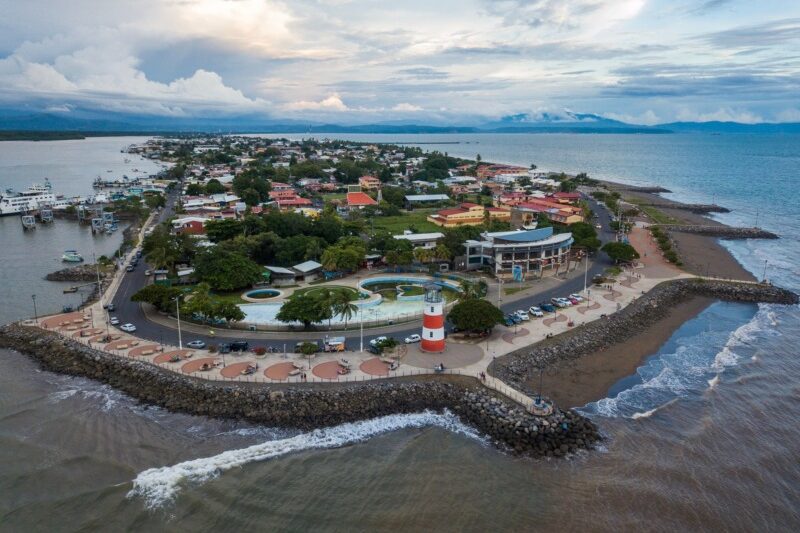
Dominical captures Costa Rica’s Pacific essence where powerful surf meets jungle-draped mountains in a village that has retained its authenticity despite growing international appeal. Once a remote fishing community, this coastal haven now draws wave-chasers to its consistent beach breaks while maintaining a deliberately unhurried atmosphere through locally-owned cafés, weekly farmers markets, and artisan craft stalls lining unpaved roads. Beyond surfing, Dominical serves as gateway to experiences ranging from waterfall rappelling at Nauyaca Falls to wildlife spotting in Hacienda Barú, where howler monkeys announce dawn and sunset along jungle trails. The town’s unique character emerges through its blend of traditional Costa Rican warmth and bohemian influence, creating spaces where yoga decks overlook the ocean, regenerative farms welcome visitors, and evening beach gatherings celebrate the spectacular Pacific sunsets.
The destination guide
Dominical
Town in Costa Rica, North AmericaUpdated
- Overall7/10
- Best forFamilies, Adventure seekers
- CurrencyCRC
Dominical is Costa Rica’s laid-back Pacific surf town — consistent waves, howler monkeys in the trees, and Nauyaca waterfalls a short drive inland. No resorts, just jungle.
Travel guides for Dominical
More guides featuring Dominical (2)
At a glance
- Spanish
- Pacific coast
- Surfing beaches
- Tropical hills
- Rain forest
How Dominical scores
Character
Editorial scores on a 10-point scale, weighed against destinations of the same kind.
Travel safety snapshot
SafePlace indicators use their source 100-point scale; higher is more favourable. Planning context, not a live travel advisory — check official government guidance before you go.
When to go
Best months to visit: January, February, March, April, May, July, August, November and December.
- January: 23.5 to 28.2 degrees Celsius, 176.9 millimetres of rain, best-time score 5 out of 5.
- February: 24 to 29 degrees Celsius, 75.3 millimetres of rain, best-time score 5 out of 5.
- March: 24.4 to 29.3 degrees Celsius, 90.2 millimetres of rain, best-time score 5 out of 5.
- April: 24.5 to 28.7 degrees Celsius, 383.8 millimetres of rain, best-time score 5 out of 5.
- May: 24.5 to 28.2 degrees Celsius, 712.7 millimetres of rain, best-time score 4 out of 5.
- June: 24.1 to 27.8 degrees Celsius, 861.3 millimetres of rain, best-time score 3 out of 5.
- July: 23.9 to 27.6 degrees Celsius, 976.7 millimetres of rain, best-time score 4 out of 5.
- August: 23.8 to 27.6 degrees Celsius, 1053.8 millimetres of rain, best-time score 4 out of 5.
- September: 23.8 to 27.5 degrees Celsius, 873.1 millimetres of rain, best-time score 3 out of 5.
- October: 23.6 to 27 degrees Celsius, 1123.3 millimetres of rain, best-time score 2 out of 5.
- November: 23.4 to 26.9 degrees Celsius, 1041.9 millimetres of rain, best-time score 4 out of 5.
- December: 23.3 to 27.6 degrees Celsius, 371.2 millimetres of rain, best-time score 5 out of 5.
Month-by-month conditions and packing advice
- January
- Warm to hot, rainy January in Dominical: dry-season beaches, surfing, waterfalls, wildlife, and coastal road trips are most reliable. Crowds: January in Dominical is one of the wetter periods, so museums, food stops, flexible reservations, and backup indoor plans make the trip easier. Pack: Pack light clothing, sun protection, and comfortable walking shoes. Add a rain jacket or compact umbrella.
- February
- Warm to hot, some rain February in Dominical: dry-season beaches, surfing, waterfalls, wildlife, and coastal road trips are most reliable. Crowds: February in Dominical is workable with normal seasonal planning; build in layers, weather checks, and a mix of indoor and outdoor activities. Pack: Pack light clothing, sun protection, and comfortable walking shoes. Add a rain jacket or compact umbrella.
- March
- Warm to hot, some rain March in Dominical: dry-season beaches, surfing, waterfalls, wildlife, and coastal road trips are most reliable. Crowds: March in Dominical is workable with normal seasonal planning; build in layers, weather checks, and a mix of indoor and outdoor activities. Pack: Pack light clothing, sun protection, and comfortable walking shoes. Add a rain jacket or compact umbrella.
- April
- Warm to hot, rainy April in Dominical: dry-season beaches, surfing, waterfalls, wildlife, and coastal road trips are most reliable. Crowds: April in Dominical is one of the wetter periods, so museums, food stops, flexible reservations, and backup indoor plans make the trip easier. Pack: Pack light clothing, sun protection, and comfortable walking shoes. Add a rain jacket or compact umbrella.
- May
- Warm to hot, rainy May in Dominical: green-season timing can bring value, wildlife, and morning activity windows with flexible plans. Crowds: May in Dominical is one of the wetter periods, so museums, food stops, flexible reservations, and backup indoor plans make the trip easier. Pack: Pack light clothing, sun protection, and comfortable walking shoes. Add a rain jacket or compact umbrella.
- June
- Warm to hot, rainy June in Dominical: heavier rains can affect roads, trails, and beach time. Crowds: June in Dominical is one of the wetter periods, so museums, food stops, flexible reservations, and backup indoor plans make the trip easier. Pack: Pack light clothing, sun protection, and comfortable walking shoes. Add a rain jacket or compact umbrella.
- July
- Warm to hot, rainy July in Dominical: green-season timing can bring value, wildlife, and morning activity windows with flexible plans. Crowds: July in Dominical is one of the wetter periods, so museums, food stops, flexible reservations, and backup indoor plans make the trip easier. Pack: Pack light clothing, sun protection, and comfortable walking shoes. Add a rain jacket or compact umbrella.
- August
- Warm to hot, rainy August in Dominical: green-season timing can bring value, wildlife, and morning activity windows with flexible plans. Crowds: August in Dominical is one of the wetter periods, so museums, food stops, flexible reservations, and backup indoor plans make the trip easier. Pack: Pack light clothing, sun protection, and comfortable walking shoes. Add a rain jacket or compact umbrella.
- September
- Warm to hot, rainy September in Dominical: heavier rains can affect roads, trails, and beach time. Crowds: September in Dominical is one of the wetter periods, so museums, food stops, flexible reservations, and backup indoor plans make the trip easier. Pack: Pack light clothing, sun protection, and comfortable walking shoes. Add a rain jacket or compact umbrella.
- October
- Warm to hot, rainy October in Dominical: peak rainy-season conditions make logistics and outdoor plans less dependable. Crowds: October in Dominical is one of the wetter periods, so museums, food stops, flexible reservations, and backup indoor plans make the trip easier. Pack: Pack light clothing, sun protection, and comfortable walking shoes. Add a rain jacket or compact umbrella.
- November
- Mild to warm, rainy November in Dominical: green-season timing can bring value, wildlife, and morning activity windows with flexible plans. Crowds: November in Dominical is one of the wetter periods, so museums, food stops, flexible reservations, and backup indoor plans make the trip easier. Pack: Pack light clothing, sun protection, and comfortable walking shoes. Add a rain jacket or compact umbrella.
- December
- Warm to hot, rainy December in Dominical: dry-season beaches, surfing, waterfalls, wildlife, and coastal road trips are most reliable. Crowds: December in Dominical is one of the wetter periods, so museums, food stops, flexible reservations, and backup indoor plans make the trip easier. Pack: Pack light clothing, sun protection, and comfortable walking shoes. Add a rain jacket or compact umbrella.
Know before you go
About
Dominical is a small surf town on Costa Rica’s southern Pacific coast, roughly 45 kilometers south of Quepos and the gateway to the Costa Ballena (Whale Coast) region. The town sits where the Río Barú meets the ocean, backed by steep, jungle-covered mountains that plunge toward a long stretch of dark sand beach. With a permanent population under 1,000, Dominical has maintained a laid-back, bohemian character even as the surrounding area develops — the main street is still unpaved, surf shops outnumber banks, and howler monkeys call from the trees edging town. The warm Pacific waters produce consistent swells year-round, drawing surfers from around the world, while the surrounding rainforest and nearby Marino Ballena National Park provide wildlife encounters to rival anywhere in the country.
Best time to visit
December through April for dry weather and consistent surf. Green season (May–November) brings fewer crowds and lush landscapes.
Season by season
Dry season (December–April) brings sunny skies, minimal rain, and the highest tourist traffic. This is peak season with higher prices and advance booking requirements. Green season (May–November) delivers lush landscapes, afternoon rain showers (mornings are usually clear), fewer crowds, and discounted accommodation rates. July and August offer a brief dry window within the green season. The biggest surf swells roll in from May through November. Humpback whale watching peaks in August–September (southern hemisphere migrants) and January–March (northern hemisphere migrants). September and October are the wettest months and some mountain roads may be impassable.
Crowds
Dominical, Costa Rica is busiest during the dry season (December–April) and surf contests/holidays, with popular weekends seeing crowded beaches; quietest in the wet season (May–November) when visitor numbers drop substantially — overall low to moderate crowding except peak surf season.
Getting there and around
Getting there
Dominical is approximately 3.5–4.5 hours from San José by car, driving via Highway 27 (a toll road) to the coast and continuing south on Highway 34 (the Costanera Sur). A 4WD vehicle is recommended but not strictly necessary if sticking to paved highways. Public buses operated by Tracopa depart from the San José terminal and take about 5 hours, with connections also available from Quepos and Uvita. Shared and private shuttle services run daily between San José and Dominical. The quickest option is a 30-minute domestic flight from San José to Quepos (La Managua Airport), followed by a 45-minute drive south. The nearest international airport is Juan Santamaría (SJO) outside San José.
Getting around
Within Dominical town, everything is walkable — restaurants, surf shops, and the beach are clustered along a few unpaved streets. For excursions to Nauyaca Waterfalls, Marino Ballena National Park, or lodges in the hills above town, a rental car (ideally 4WD or high-clearance) is highly recommended, as mountain roads can be steep, unpaved, and slippery in the rainy season. Local taxis and colectivo buses connect Dominical with Uvita and Quepos. Tour operators provide transport for organized excursions like whale watching or waterfall hikes. Uber does not operate reliably in this area.
Top experiences in Dominical
Nauyaca Waterfalls
A two-tiered waterfall dropping 45 meters into a large, deep rocky pool surrounded by dense tropical vegetation. The upper falls cascade into a mid-level pool before plunging again to the swimming area below. Access is via a moderate 4-kilometer trail or by horseback, and the cool pool at the base provides relief from the tropical heat. Early morning visits avoid the heaviest tour traffic.
Marino Ballena National Park
A marine and coastal national park protecting 5,500 hectares of ocean and 110 hectares of land around Uvita, 17 kilometers south of Dominical. The park’s defining feature is the Whale’s Tail — a natural sandbar shaped like a whale’s fluke that emerges fully at low tide. The surrounding waters serve as a nursery for humpback whales, and the park’s coral reefs and mangrove estuaries support diverse marine life.
Hacienda Barú Wildlife Refuge
A 330-hectare private nature reserve spanning beach, wetland, secondary and primary rainforest, and pasture habitats along the coast north of Dominical. The refuge supports over 330 bird species, four species of monkey, sloths, coatis, and peccaries. Guided and self-guided trail options, canopy zip-line tours, and night walks are available. Decades of reforestation here have reconnected fragmented forest corridors.
Alturas Wildlife Sanctuary
A rescue and rehabilitation center for injured and orphaned wild animals in the mountains above Dominical. Guided tours introduce visitors to resident capuchins, howler monkeys, sloths, anteaters, and raptors in spacious enclosures designed to minimize stress. The sanctuary’s goal is to release rehabilitated animals back into the wild, and tour fees fund veterinary care and habitat restoration.
Playa Dominicalito
A sheltered cove just south of the main Dominical beach, offering calmer water conditions suited for swimming, snorkeling, and kayaking — a contrast to Dominical’s powerful surf. At low tide, tide pools appear along the rocky edges of the cove. The small beach is backed by a few restaurants and offers views of fishing boats anchored offshore. It serves as the local swimming beach when Playa Dominical’s waves are too large.
Editor-curated picks carried over from our original guide. Where a full place guide exists, the card links to it.
Worth booking ahead in Dominical
Hand-picked from the operators our guides already send readers to. Prices and availability are live on the partner site.
BrowseViator
Tours and tickets in Dominical on Viator (opens Viator in a new tab)
Viator's full list of bookable tours and tickets in Dominical.
BrowseGetYourGuide
Experiences in Dominical on GetYourGuide (opens GetYourGuide in a new tab)
Everything GetYourGuide sells in Dominical, with the cancellation terms on each listing.
Where to stayBooking.com
Stays in Dominical (opens Booking.com in a new tab)
Live rates and availability for Dominical on Booking.com; filter by neighbourhood once you know where your days start.
We earn a commission if you book through these links, at no extra cost to you. It is how we keep the guides free and independent.
Where to stay
Hotel Villas Río Mar
Main Road, Dominical, Osa, Puntarenas, Costa Rica
A tropical resort set back from the beach along the Río Barú, featuring rooms surrounded by manicured gardens, an outdoor pool, a restaurant, and direct access to rainforest trails. The property’s riverside setting attracts visiting wildlife including monkeys and toucans. Located a five-minute walk from the surf break.
Hacienda Barú Lodge
Costanera Sur, Barú de Osa, Puntarenas, Costa Rica
An eco-lodge within the 330-hectare Hacienda Barú National Wildlife Refuge, combining simple but comfortable cabins with direct rainforest access. Guests can book canopy zip-line tours, night walks, and birdwatching guides directly through the lodge. The beachfront location at the northern edge of Dominical offers a quieter alternative to in-town stays.
Tribe Boutique Hotel
Escaleras Road, Dominical, Puntarenas, Costa Rica
An adults-only boutique hotel perched on a hillside above Dominical, offering modern rooms with open-air showers, a saltwater infinity pool with ocean views, and a restaurant serving locally sourced cuisine. The elevated position provides cooling breezes and sweeping views over the coastline and surrounding forest canopy.
Editor-curated stays carried over from our original guide. Where we have reviewed the hotel, the card links to the review.
Tips from the field
Highlights
- World-class surf break – consistent, powerful waves on Playa Dominical year-round, with the biggest swells from May through November
- Nauyaca Waterfalls – a dramatic two-tiered cascade with a deep swimming pool at the base, reachable by hiking or horseback
- Marino Ballena National Park – home to the iconic Whale's Tail sandbar visible at low tide and prime humpback whale watching
- Hacienda Barú Wildlife Refuge – 330 hectares of protected coastal rainforest with canopy tours, night walks, and birdwatching trails
- Whale and dolphin watching – humpback whales migrate through these waters twice a year (December–April and July–October)
- Waterfall circuit – Eco-Chontales, Pozo Azul, Uvita Waterfall, and the towering Diamante Waterfall are all within day-trip distance
Best activities
- Surfing defines daily life in Dominical. Playa Dominical delivers powerful beach breaks suited to intermediate and advanced surfers, while beginners can head to Playa Dominicalito just south for gentler, more forgiving waves. Multiple surf schools offer board rentals and lessons. Outside the water, the Nauyaca Waterfalls hike is the area's signature excursion — a moderate trail through tropical forest leads to a 45-meter double cascade with a large natural pool for swimming.
- Wildlife enthusiasts should spend a morning at Hacienda Barú, where trails pass through mangroves, secondary forest, and old-growth canopy harboring howler and white-faced capuchin monkeys, sloths, peccaries, coatis, and over 330 bird species. For a rescue-oriented experience, Alturas Wildlife Sanctuary rehabilitates injured and orphaned animals — guided tours introduce visitors to capuchins, sloths, and anteaters in a non-exploitative setting.
- From nearby Uvita, whale and dolphin watching tours depart into Marino Ballena National Park waters, where humpback whales are regularly sighted during their two annual migration windows. At low tide, walk out on the park's Whale's Tail sandbar for a perspective found nowhere else in Costa Rica. For quieter exploration, kayak or stand-up paddleboard through the mangrove channels of the Río Barú estuary, where monkeys, herons, and crocodiles patrol the waterways.
Local experiences
- Attend the Saturday morning Feria (organic farmers' market) for fresh tropical fruit, locally roasted coffee, coconut bread, and handmade crafts. Take a night tour through the jungle to spot red-eyed tree frogs, sleeping toucans, and bioluminescent insects. Join a chocolate tour at a small cacao farm where you process raw beans into drinking chocolate. For a quieter beach day, walk south from Dominical to Dominicalito — the protected cove offers calmer waters, tide pools, and pelican-watching.
Practical tips
- Costa Rican colones are the local currency, but US dollars are widely accepted in tourist businesses. ATMs are available in Dominical but can be unreliable — carry backup cash. Credit cards are accepted at most hotels and restaurants but not at roadside stands or small sodas. Insect repellent is essential, especially during the green season. Sunscreen should be reef-safe as you'll be swimming in marine-protected waters. Pack light rain gear even in the dry season, as short afternoon showers can occur.
Photography tips
- Sunrise over the forested mountains behind Dominical creates dramatic backlit silhouettes from the beach. The Nauyaca Waterfalls photograph best with a polarizer to cut spray reflections and a slow shutter to smooth the falling water. The Whale's Tail sandbar at Marino Ballena is best captured from the elevated viewpoint on the Costanera highway during low tide. For wildlife, bring at least a 200mm lens — howler monkeys in the trees on the road to Hacienda Barú are active at dawn and dusk.
Timing
- Dominical works as a 3–5 day base for exploring the Costa Ballena. Allow one day for surfing and the beach, one day for Nauyaca Waterfalls, one day for Marino Ballena National Park and whale watching, and a half-day for Hacienda Barú or Alturas Sanctuary. With more time, add a day trip to Manuel Antonio or an overnight excursion to Corcovado National Park via Drake Bay.
Keeping it authentic
- Dominical has retained its unpolished character despite growing international awareness. The main road remains unpaved, most dining is open-air, and the town shuts down early. The surf community is genuine rather than resort-manufactured, and many long-term residents are involved in conservation or sustainable agriculture. The surrounding Osa region is one of the most biodiverse corridors on the planet, and local tour operators prioritize environmental protection.
Culture, customs and safety
Cultural heritage
Dominical’s culture blends Tico traditions with an international surf community that arrived in the 1990s. The wider Osa region has indigenous Boruca roots — the Boruca people are known for their carved balsa wood masks and the annual Fiesta de los Diablitos ceremony held in late December and early January. Costa Rican ‘Pura Vida’ philosophy permeates Dominical’s pace of life: interactions are unhurried, schedules remain flexible, and community ties are strong. The Saturday organic farmers’ market, known as the Feria, gathers local growers, artisanal bakers, and craft vendors, reflecting the town’s emphasis on sustainable living.
Local customs & etiquette
Greet people with ‘Buenas’ (short for buenos días/tardes/noches) when entering shops or restaurants. The ‘Pura Vida’ greeting functions as hello, goodbye, thank you, and a general expression of contentment. Tipping is appreciated — a 10% service charge is included in restaurant bills, but an additional small tip for good service is welcome. Remove shoes when entering someone’s home. Bargaining is not common in shops or restaurants but is acceptable at market stalls.
Safety notes
Dominical is generally safe, with a peaceful small-town atmosphere and friendly locals. The primary safety concern is the ocean: Playa Dominical has strong undertows and a steep beach slope that create dangerous swimming conditions, especially for inexperienced swimmers. Lifeguards are present but cannot cover the entire beach. If caught in a rip current, swim parallel to the shore rather than fighting it. Petty theft of unattended belongings on the beach does occur — never leave valuables unattended. Avoid isolated stretches of beach after dark. Tap water in established businesses is generally safe, and medical clinics are available in Dominical and nearby Uvita. The nearest hospital is in San Isidro de El General, about an hour east.