

Chicago, known as the Windy City, is a bustling metropolis renowned for its stunning architecture, vibrant arts scene, and diverse culinary offerings. From the iconic skyline featuring the Willis Tower to the beautiful Millennium Park, Chicago offers a mix of cultural experiences and outdoor activities that captivate visitors year-round.
The destination guide
Chicago

City in United States, North AmericaUpdated
- Overall8/10
- Best forCouples, Budget travelers
- PeakJun–Sep
- CurrencyUSD
Welcome to our travel guide, featuring the top neighborhoods, rich cultural heritage, and diverse attractions of Chicago.
Travel guides for Chicago
Itineraries & day trips (1)
Things to do (7)
Where to stay (2)
Food & drink (1)
Travel tips & costs (1)
Destination stories (6)
More guides featuring Chicago (45)
At a glance
Currency$ USDCode: USD
Time zoneCentral Standard Time
Languages
- English
Setting
- Lake Michigan
- Urban skyline
- Chicago River
- Prairie edge
Known for
- Architecture
- World-Class Museums
- Foodies
- Urban Parks.
Population2.6M2,611,867 residents
VisaDocuments: For domestic U.S. air travel, travelers age 18 and older must present a REAL ID-compliant driver's license or another TSA-accepted ID such as a valid passport
How Chicago scores
8/10OverallExcellent
Weather6/10
Value for money7/10
Safety5/10
Food & cuisine9/10
Culture & arts6/10
Cultural experience8/10
History7/10
Nature & outdoors6/10
Adventure4/10
Nightlife8/10
Shopping9/10
Family friendly5/10
Romance7/10
Character
Photography score9/10
Authenticity score10/10
Off-the-beaten-path score6/10
Editorial scores on a 10-point scale, weighed against destinations of the same kind.
Travel safety snapshot
Overall60/100Exercise precaution
Women travellers60/100
LGBTQ+ travellers70/100
Theft55/100
Medical care80/100
Physical harm52/100
Political freedom75/100
SafePlace indicators use their source 100-point scale; higher is more favourable. Planning context, not a live travel advisory — check official government guidance before you go.
When to go
Best months to visit: May, June, July, August, September and October.
- January: -18 to 52 degrees Celsius, 0.2 millimetres of rain, best-time score 2 out of 5.
- February: 0 to 57 degrees Celsius, 0.4 millimetres of rain, best-time score 2 out of 5.
- March: 5 to 64 degrees Celsius, 0.3 millimetres of rain, best-time score 3 out of 5.
- April: 23 to 70 degrees Celsius, 0.6 millimetres of rain, best-time score 3 out of 5.
- May: 34 to 86 degrees Celsius, 0.7 millimetres of rain, best-time score 4 out of 5.
- June: 45 to 88 degrees Celsius, 0.4 millimetres of rain, best-time score 5 out of 5.
- July: 61 to 91 degrees Celsius, 0.8 millimetres of rain, best-time score 5 out of 5.
- August: 59 to 88 degrees Celsius, 0.6 millimetres of rain, best-time score 5 out of 5.
- September: 50 to 88 degrees Celsius, 0.4 millimetres of rain, best-time score 5 out of 5.
- October: 28 to 82 degrees Celsius, 0.6 millimetres of rain, best-time score 4 out of 5.
- November: 12 to 57 degrees Celsius, 0.1 millimetres of rain, best-time score 3 out of 5.
- December: 1 to 59 degrees Celsius, 0.2 millimetres of rain, best-time score 3 out of 5.
Month-by-month conditions and packing advice
- January
- Hot and sunny, mostly dry Bitterly cold and snowy; indoor museums and low prices. Crowds: January represents Chicago’s low tourist season due to its frigid conditions, which significantly thin out crowds at major attractions like the Art Institute, Millennium Park, and indoor cultural venues. Accommodation rates are typically more affordable, and reservations for restaurants and shows are easier to secure. Outdoor exploration is limited to those prepared for extreme cold, but winter festivals, ice skating at Maggie Daley Park, and cozy jazz clubs offer seasonal charm. Travelers should plan for indoor-heavy itineraries and be aware of potential delays due to icy weather. For those seeking an authentic winter city atmosphere without summer crowds, this is an ideal time. Pack: Heavy insulated winter coat rated for sub-zero temperatures; Thermal base layers for upper and lower body; Waterproof, insulated boots with good traction; Wool hat and insulated gloves; Scarf or neck gaiter to block wind chill; Moisturizing lip balm and hand cream to combat dryness
- February
- Hot and sunny, mostly dry Still frigid; quietest, cheapest time to visit. Crowds: February is low tourist season in Chicago, offering significant savings on hotels and flights compared to warmer months. While frigid temperatures and potential icy conditions can limit outdoor activities, this period rewards visitors who focus on cultural and indoor attractions—such as the Art Institute, Chicago Symphony Orchestra, or historic theaters. Crowds are minimal, making it easier to enjoy major sights without long waits. Outdoor exploration is possible with proper winter gear, and photography enthusiasts can capture crisp, crowd-free cityscapes. Expect shorter daylight hours and plan excursions accordingly. Advance booking is generally unnecessary except for special events like winter festivals or major performances, where demand can still be high. Pack: Thermal base layers for insulation; Insulated winter coat with wind protection; Waterproof boots with good traction; Warm hat and insulated gloves; Scarf or neck gaiter for wind chill; Camera with weather-resistant gear for cold conditions
- March
- Hot and sunny, mostly dry Cold easing; St. Patrick's Day river dyeing mid-month. Crowds: March is a shoulder-season month in Chicago, offering lower crowd levels and better hotel deals compared to summer’s peak. While it’s not yet warm enough for full-fledged outdoor dining or beach activities, it’s perfect for museum-hopping, indoor cultural festivals, and scenic city walks without battling dense tourist traffic. The weather’s variability means layering is essential, as you might experience a mild afternoon followed by a brisk, chilly evening. Sports fans can catch the tail end of the hockey and basketball seasons, while food lovers will find Chicago’s culinary scene vibrant and less booked out. This is an ideal time for travelers seeking cultural depth over peak-season bustle, with the added bonus of off-peak pricing on accommodations and attractions. Pack: Layered clothing including sweaters and a mid-weight jacket; Comfortable closed-toe walking shoes; Scarf and gloves for cooler evenings; Compact umbrella for unexpected showers; Camera for capturing early spring light; Daypack for carrying layers and essentials
- April
- Hot and sunny, mostly dry Cool, variable spring; fewer crowds, budding parks. Crowds: April offers a shoulder-season sweet spot in Chicago, with rising temperatures and mostly dry weather encouraging outdoor exploration. Tourist crowds remain moderate compared to summer peaks, meaning more space at museums, theaters, and iconic attractions like Millennium Park. Accommodation rates are still relatively reasonable before summer pricing spikes. This is an excellent month for walking tours, river cruises, and cultural festivals that signal the start of the warm season, though early mornings may feel wintery. Booking outdoor activities later in the day maximizes comfort. While patio dining and lakefront activities are starting to open, boat tours may still operate on limited schedules early in the month. Pack: Layered clothing for temperature swings; Warm jacket or coat for chilly mornings; Comfortable walking shoes for urban exploration; Light sweater or hoodie for daytime warmth; Sunglasses to handle bright spring sun; Scarf or hat to block lakefront breezes
- May
- Hot and sunny, mostly dry Pleasant late spring, festivals begin, lakefront reopens. Crowds: Late spring in Chicago offers an excellent window for sightseeing before the summer tourist surge. Comfortable weather supports full days of outdoor exploration—perfect for walking tours, river cruises, and attending May festivals. Crowds are moderate compared to peak summer, meaning shorter lines at attractions like the Art Institute or Willis Tower. Accommodation prices remain manageable, though popular downtown hotels start seeing higher demand toward Memorial Day weekend. The cooler mornings require layering, but midday warmth makes outdoor dining and rooftop bars inviting. With minimal rain risk, travelers can plan activities confidently without frequent weather disruptions. Booking early for late-May visits is advised, especially if aligning with holiday events. Pack: Layered clothing for shifting temperatures; Light waterproof jacket for unexpected showers; Comfortable walking shoes for urban exploration; Sunglasses with UV protection; Light scarf or wrap for cooler evenings; Casual yet neat attire for dining and cultural venues
- June
- Hot and sunny, mostly dry Warm, festival season, Blues Fest, long lake days. Crowds: June marks the start of Chicago’s peak summer tourist season, with warm weather perfect for outdoor festivals, architecture river cruises, and long walks through neighborhoods like Lincoln Park and Wicker Park. The comfortable evenings and minimal rainfall make it ideal for both daytime sightseeing and night-time events. Expect higher hotel rates and increased foot traffic around major attractions, particularly on weekends and during special events like the Chicago Blues Festival. Advance booking for accommodations and popular tours is strongly recommended. While heat can spike during midday, the city’s breeze off Lake Michigan often provides welcome relief. Pack: Light, breathable clothing for warm days; A light jacket or sweater for cooler mornings; Comfortable walking shoes for urban exploration; Sunglasses and high-SPF sunscreen; Reusable water bottle to stay hydrated; Casual evening attire for rooftop bars and dining
- July
- Hot and sunny, mostly dry Peak summer, hot, festivals, lakefront at its best. Crowds: July is peak summer tourism in Chicago, drawing visitors for its festival season, outdoor events, and prime lakefront weather. Expect large crowds at Navy Pier, Millennium Park, and popular museums, especially on weekends. Accommodation rates are at their highest, and advance booking for hotels and major attractions is essential. The warm, mostly dry conditions are perfect for architecture river cruises, biking the Lakefront Trail, and attending open-air concerts, but midday heat can be intense—making early morning or late afternoon sightseeing more pleasant. Waterfront activities and beaches are at their best, while some indoor attractions may offer respite from the heat. Secure tickets for major events well ahead and plan shaded or indoor breaks during peak sun hours. Pack: Lightweight, breathable summer clothing; Comfortable walking sandals or sneakers; Broad-brimmed hat and polarized sunglasses; High-SPF sunscreen and lip balm; Reusable water bottle to stay hydrated; Light jacket or sweater for cooler evenings by the lake
- August
- Hot and sunny, mostly dry Warm and lively, Air & Water Show, beach weather. Crowds: August marks high tourist activity in Chicago, as the warm, dry conditions are perfect for outdoor events, waterfront activities, and open-air dining. Expect larger crowds at major attractions such as Navy Pier, Millennium Park, and the Art Institute, as well as at seasonal festivals. Hotel and flight prices tend to be elevated due to demand, especially around big events. This is an excellent month for evening lake cruises, rooftop dining, and neighborhood street fairs. However, midday heat may make extended walking less comfortable, so plan sightseeing in the mornings or late afternoons. Booking accommodations and key event tickets well in advance is strongly advised. Pack: Breathable summer clothing like shorts and lightweight shirts; Comfortable walking sandals or sneakers; Sunglasses with strong UV protection; Refillable water bottle to stay hydrated; Light jacket or wrap for cooler evenings by the lake; Portable hand fan or cooling towel for midday outings
- September
- Hot and sunny, mostly dry Ideal: warm days, fewer crowds, golden light. Crowds: This is one of the best times to visit Chicago for comfortable sightseeing, al fresco dining, and cultural exploration without the heavy tourist crowds of midsummer. While it’s technically post-peak season, warmer-than-expected spells mean summer activities—like boat tours or lakefront picnics—are still appealing. Accommodation rates begin to soften compared to July and August, and event calendars remain busy with food festivals, neighborhood markets, and early fall art shows. The mild weather also supports longer walking tours through neighborhoods like Pilsen or Andersonville. Travelers should be prepared for wide daily temperature swings and the occasional gusty wind off the lake. Pack: Light jacket or sweater for cooler evenings; Breathable shirts for warm afternoons; Comfortable walking shoes for urban exploration; Reusable water bottle to stay hydrated; Sunglasses for bright lakefront days; Compact umbrella for unexpected showers
- October
- Hot and sunny, mostly dry Crisp autumn, fall colors, film festival, comfortable. Crowds: October offers near-perfect sightseeing conditions with warm days, cool nights, and little rainfall—ideal for outdoor attractions like Millennium Park, river architecture tours, and fall foliage walks in Lincoln Park. Tourist numbers begin to thin after the summer high season, resulting in slightly reduced hotel rates and more availability at popular restaurants and events. This is shoulder season at its best: enough warmth for al fresco dining yet cool enough for comfort during active exploration. Cultural programming is robust, with major art exhibitions, theater premieres, and the film festival drawing international visitors. Advance booking is recommended for premium events, but spontaneous plans are easier to accommodate than in peak summer months. Pack: Light jacket or cardigan for cooler evenings; Comfortable walking shoes for urban exploration; Layered clothing to adjust between warm days and cool nights; Sunglasses and SPF 30+ sunscreen for daytime outings; Casual yet stylish attire for dining and cultural events; Reusable water bottle to stay hydrated during city walks
- November
- Hot and sunny, mostly dry Cold sets in; quieter before the holidays. Crowds: November is a shoulder-season month in Chicago, with fewer tourists and more affordable hotel rates compared to the summer high season. The cool, dry conditions are well-suited for exploring museums, galleries, and historic neighborhoods, though evenings require warm layers. Outdoor walking tours are comfortable in midday but can be brisk in the mornings and after dark. Popular attractions like Millennium Park and the Art Institute see lighter crowds, offering a more relaxed pace. This is also a good time to catch cultural events and early holiday markets without peak-season congestion. Booking last-minute accommodations is easier, though prime locations may still fill for holiday weekends. Pack: Warm layered clothing for fluctuating temperatures; Insulated jacket for mornings and evenings; Comfortable, weather-resistant walking shoes; Light scarf and gloves for wind protection; Compact umbrella for occasional showers; Smart casual outfits for cultural events and dining
- December
- Hot and sunny, mostly dry Cold but festive with holiday markets and ice skating. Crowds: December in Chicago aligns with the city’s festive season, drawing visitors for holiday markets, ice skating at Millennium Park, and seasonal performances like The Nutcracker. Despite the cold, the low rainfall makes exploring more predictable, but visitors must prepare for sudden cold fronts. Crowds concentrate around downtown holiday attractions and shopping districts, while hotel rates can spike near Christmas and New Year’s. Outdoor sightseeing remains possible on warmer days, though wind chill may limit time spent outside. Indoor attractions such as the Art Institute, Field Museum, and Chicago Architecture Center offer warm retreats. Booking early for festive events and accommodations is advisable, especially for stays near major holiday venues. Pack: Insulated winter coat for cold winds; Thermal base layers for fluctuating temperatures; Water-resistant boots with good traction; Warm hat and insulated gloves; Layered sweaters or fleeces for indoor-outdoor transitions; Scarf to protect against wind chill along the lakefront
Peak season
- June
- July
- August
- September
Off-peak
- January
- February
- March
- November
Know before you go
About
Chicago, Illinois, is the third-largest city in the United States and the cultural and commercial heart of the American Midwest, set on the southwestern shore of Lake Michigan. Famous as the birthplace of the modern skyscraper, the city is celebrated for its bold architecture, from the 1,450-foot Willis Tower, whose glass-floored Skydeck offers views across four states, to the neo-Gothic Tribune Tower and the surviving Water Tower that withstood the Great Chicago Fire of 1871. Millennium Park draws crowds to Anish Kapoor’s mirror-polished Cloud Gate sculpture and Frank Gehry’s curving Jay Pritzker Pavilion, while the Magnificent Mile lines Michigan Avenue with world-class shopping and landmark towers. Travelers come for the Art Institute of Chicago, deep-dish pizza, a celebrated blues and jazz heritage, lakefront beaches, and architecture river cruises that showcase the skyline. With its grand boulevards, vibrant neighborhoods, and championship sports culture, Chicago ranks among America’s most rewarding and walkable urban destinations.
Neighbourhoods
I always say you don’t know Chicago until you know its neighborhoods. The city limits have 77 distinct neighborhood areas that give the city its gravitas. You will probably spend much time downtown or in the Loop area. Still, you can’t possibly get to know them all in a single visit, though there are a handful I recommend you consider before your next trip.
- Andersonville: One of the city’s largest LGBTQIA+ communities, Andersonville is an adorable neighborhood on the North Side. You’ll find lots of brunchy spots, unique boutiques, and ways to spend an afternoon.
- Swedish American Museum
- Chicago Magic Lounge
- The Neo-Futurists
- Gold Coast: A historic neighborhood, the Gold Coast is lined with incredible homes that once belonged to some of the city’s most rich and powerful. It is a beautiful neighborhood to walk around or dine in one of its delicious restaurants.
- Museum of Contemporary Art Chicago
- Navy Pier
- Gibsons Bar & Steakhouse
- Grant Park: While it is called Millennium Park, it is actually part of the much larger Grant Park. The neighborhood that shares its name is where many of the city’s big attractions reside, including the massive Museum Campus.
- The Art Institute of Chicago (one of the largest art museums in the world)
- Cloud Gate
- Shedd Aquarium
- The Field Museum (the natural history museum)
- Hyde Park: Famously known as being home to former President Barack Obama, Hyde Park houses one of the only buildings left from the World’s Columbian Exposition. This neighborhood on the city’s South Side is an incredible glimpse into Chicago’s past.
- Museum of Science and Industry
- Promontory Point (perfect for photographing the Chicago skyline)
- DuSable Black History Museum
- Frederick C. Robie House (a Frank Lloyd Wright home and historic landmark)
- Logan Square: Home to a range of Chicago style homes, Logan Square is one of the more trendy areas in the city. Here is where you can do some excellent sightseeing in a more local way. Enjoy some bar hopping or indulge in a food tour.
- The 606 (a pedestrian trail)
- The Logan Theatre
- Emporium Arcade Bar
- River North: A neighbor to the Gold Coast, the River North area is another luxe part near downtown. You’ll find lots of restaurants and bars here, as well as a handful of attractions like Willis Tower (Sears Tower, as many of us still stubbornly call it).
- Merchandise Mart
- House of Blues Chicago
- Richard H. Driehaus Museum
Best time to visit
May to June, September to October
Season by season
Summer is spectacular with festivals and lakefront activities, but hot and humid. Autumn is ideal with crisp weather. Winter is bitterly cold and snowy.
Crowds
High
Getting there and around
Getting there
O’Hare (ORD) connects via the Blue Line L train to downtown (45 minutes, $5). Midway (MDW) connects via the Orange Line.
Getting around
The L train covers the city efficiently. Divvy bike-share is extensive. Water taxis run along the Chicago River in summer.
Top experiences in Chicago
Millennium Park & Cloud Gate
Chicago’s signature public space in the Loop, home to Anish Kapoor’s mirror-polished ‘Cloud Gate’ (the Bean), Frank Gehry’s Pritzker Pavilion bandshell, and the Crown Fountain’s video towers. Free and open year-round, it anchors the lakefront and offers the city’s most photographed skyline reflections.
Art Institute of Chicago
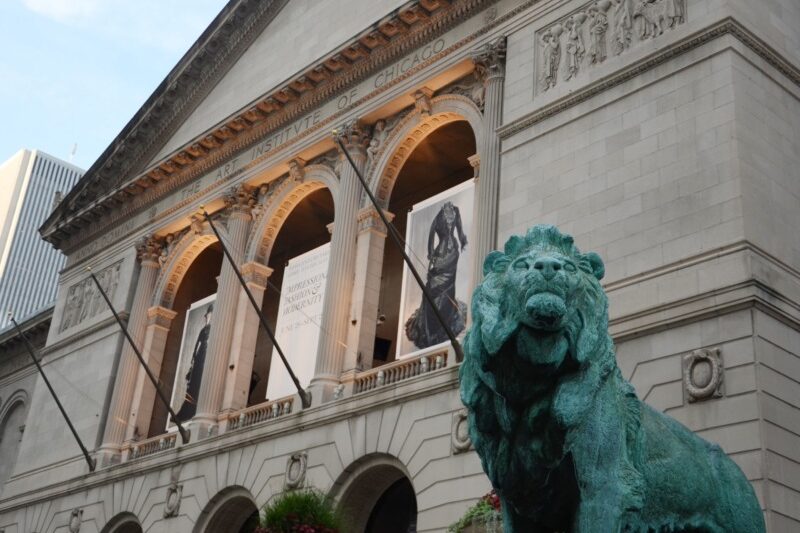
One of the world’s great encyclopedic art museums, founded in 1879 and housed in a grand Beaux-Arts building flanked by its iconic bronze lions. The collection spans 5,000 years across 300,000 works — from Monet’s Water Lilies and Seurat’s A Sunday on La Grande Jatte to Edward Hopper’s Nighthawks and Grant Wood’s American Gothic. Renzo Piano’s Modern Wing (2009) added 264,000 square feet of luminous galleries for contemporary art, architecture, and photography. Allow at least half a day; the Impressionist galleries alone are worth the trip.
Navy Pier
Willis Tower Skydeck
The 103rd-floor Skydeck of the 1,450-foot Willis Tower (long known as the Sears Tower) offers views across four states on a clear day. Step onto ‘The Ledge,’ a glass box cantilevered out over Wacker Drive, for a vertigo-inducing look straight down at the streets below.
Chicago Riverwalk
1.25-mile pedestrian path along the Chicago River with restaurants, kayak launches, and architectural views.
Editor-curated picks carried over from our original guide. Where a full place guide exists, the card links to it.
Worth booking ahead in Chicago
Hand-picked from the operators our guides already send readers to. Prices and availability are live on the partner site.
BrowseViator
Tours and tickets in Chicago on Viator (opens Viator in a new tab)
Viator's full list of bookable tours and tickets in Chicago.
BrowseGetYourGuide
Experiences in Chicago on GetYourGuide (opens GetYourGuide in a new tab)
Everything GetYourGuide sells in Chicago, with the cancellation terms on each listing.
Where to stayBooking.com
Stays in Chicago (opens Booking.com in a new tab)
Live rates and availability for Chicago on Booking.com; filter by neighbourhood once you know where your days start.
We earn a commission if you book through these links, at no extra cost to you. It is how we keep the guides free and independent.
Where to stay
The Langham, Chicago
Industrial-chic hotel in Fulton Market with a rooftop pool and ground-floor restaurant by Boka Group.
Palmer House a Hilton Hotel
Five-star hotel in Mies van der Rohe’s IBM Building on the Chicago River with a Chuan Spa and afternoon tea.
The Peninsula Chicago
Members’ club and hotel in a converted belt factory in the West Loop with a rooftop pool overlooking the skyline.
Editor-curated stays carried over from our original guide. Where we have reviewed the hotel, the card links to the review.
Tips from the field
Highlights
- The reflective 'Bean' sculpture in Millennium Park, the world-class collections at the Art Institute, and the towering skyscrapers defining a spectacular skyline.
Best activities
- Taking an architecture river cruise, biking along the Lakefront Trail, and eating deep-dish pizza.
Local experiences
- Eat a classic Chicago-style hot dog (strictly no ketchup) or catch a comedy show at The Second City.
Practical tips
- An architectural river cruise is the absolute best way to learn about the city's history and skyline. The 'L' train system is efficient for getting around.
Photography tips
- Play with reflections at Cloud Gate, or head to the Adler Planetarium on the Museum Campus for the most iconic, sweeping view of the Chicago skyline.
Timing
- 3 to 4 days is solid for hitting the major museums, parks, and doing a river tour.
Keeping it authentic
- Despite its massive size, Chicago retains a Distinctly Midwestern friendliness and unpretentious attitude, especially compared to East Coast hubs.
Culture, customs and safety
Cultural heritage
Birthplace of the skyscraper, Chicago blues, improv comedy, and a literary tradition from Saul Bellow to Gwendolyn Brooks.
Local customs & etiquette
Strong neighborhood identity — ask a local which side of the city they’re from. Never put ketchup on a Chicago-style hot dog.
Safety notes
Downtown tourist areas like The Loop, River North, and Magnificent Mile are generally very safe. Be vigilant at night and stick to well-lit, populated areas. Avoid wandering into unfamiliar neighborhoods far south or west.

Travel Style
Season
Activities
