MenuClose

The destination guide

Cote D’Azur

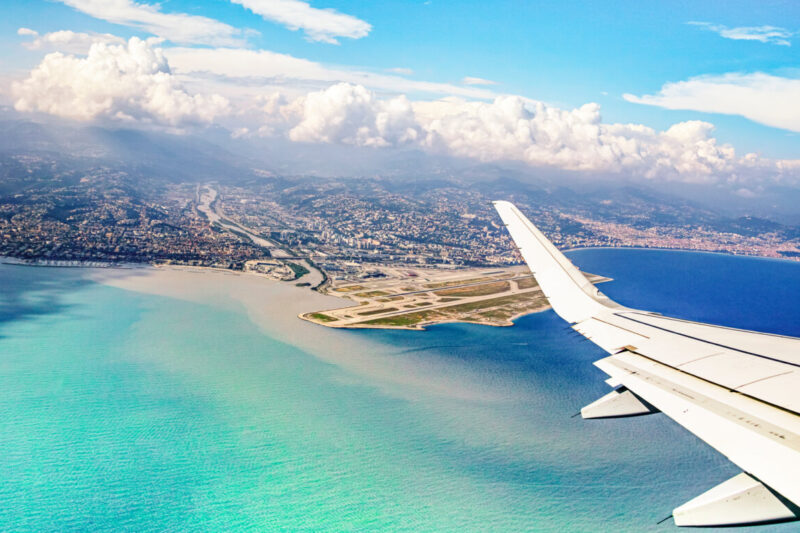
Nice city airport, French riviera
Jareck / Adobe Stock

Region in France, EuropeUpdated

  • Overall9/10
  • Best forLuxury travelers, Solo travelers
  • PeakJun–Aug
  • CurrencyEUR

Skip Saint-Tropez in August. The real Côte d’Azur is Antibes at dawn, socca from a Nice market stall, and Matisse in a quiet room.

Travel guides for Cote D'Azur

More guides featuring Cote D'Azur (1)
Essentials

At a glance

Currency€ EURCode: EUR
Time zoneParisEurope/Paris
Languages
  • French
Setting
  • Mediterranean coast
  • Lavender hills
  • Glamorous beaches
  • Maritime Alps
Known for
  • Beaches
  • Glamour
  • Art
  • Mediterranean
  • Cuisine
  • History
  • Film
  • Architecture
Population1.1M1,100,000 residents
VisaDuration: Up to 90 days within any 180-day period in the Schengen Area · Documents: Valid passport issued within the last 10 years and valid for at least 3 months after planned departure, plus proof of accommodation, onward or return travel, and sufficient funds if requested
Daily budget$90–$700 / day Full budget guide →Luxury destination
Scorecard

How Cote D’Azur scores

9/10OverallExcellent
Weather4/10
Value for money9/10
Safety8/10
Food & cuisine8/10
Culture & arts4/10
Cultural experience8/10
History2/10
Nature & outdoors4/10
Adventure4/10
Nightlife3/10
Shopping9/10
Family friendly5/10
Romance6/10

Character

Photography score5/10
Authenticity score9/10
Off-the-beaten-path score7/10

Editorial scores on a 10-point scale, weighed against destinations of the same kind.

Safety

Travel safety snapshot

Overall84/100High rating
Women travellers82/100
LGBTQ+ travellers80/100
Theft45/100
Medical care85/100
Physical harm86/100
Political freedom70/100

SafePlace indicators use their source 100-point scale; higher is more favourable. Planning context, not a live travel advisory — check official government guidance before you go.

Seasonality

When to go

Best months to visit: April, May, June, July, August, September and October.

  1. January: 18.8 to 26.9 degrees Celsius, 98.2 millimetres of rain, best-time score 2 out of 5.
  2. February: 19 to 26.4 degrees Celsius, 92.2 millimetres of rain, best-time score 2 out of 5.
  3. March: 17.7 to 24.6 degrees Celsius, 95.2 millimetres of rain, best-time score 3 out of 5.
  4. April: 15.1 to 21.4 degrees Celsius, 114.9 millimetres of rain, best-time score 4 out of 5.
  5. May: 11.7 to 17.7 degrees Celsius, 84.7 millimetres of rain, best-time score 5 out of 5.
  6. June: 9 to 15.2 degrees Celsius, 84.2 millimetres of rain, best-time score 5 out of 5.
  7. July: 8.2 to 14.7 degrees Celsius, 113.3 millimetres of rain, best-time score 4 out of 5.
  8. August: 8.7 to 16 degrees Celsius, 95.7 millimetres of rain, best-time score 4 out of 5.
  9. September: 10.1 to 17.4 degrees Celsius, 66.2 millimetres of rain, best-time score 5 out of 5.
  10. October: 12.1 to 19.6 degrees Celsius, 89.2 millimetres of rain, best-time score 4 out of 5.
  11. November: 14.6 to 23 degrees Celsius, 75.7 millimetres of rain, best-time score 3 out of 5.
  12. December: 16.9 to 25.2 degrees Celsius, 77.6 millimetres of rain, best-time score 2 out of 5.
Month-by-month conditions and packing advice
January
Mild to warm, some rain January in Cote D'Azur: winter is quieter but less balanced for a first-time Riviera trip. Crowds: January in Cote D'Azur is workable with normal seasonal planning; build in layers, weather checks, and a mix of indoor and outdoor activities. Pack: Pack light clothing, sun protection, and comfortable walking shoes. Add a rain jacket or compact umbrella.
February
Mild to warm, some rain February in Cote D'Azur: winter is quieter but less balanced for a first-time Riviera trip. Crowds: February in Cote D'Azur is workable with normal seasonal planning; build in layers, weather checks, and a mix of indoor and outdoor activities. Pack: Pack light clothing, sun protection, and comfortable walking shoes. Add a rain jacket or compact umbrella.

March
Mild to warm, some rain March in Cote D'Azur: cooler or wetter weather narrows beach and outdoor plans. Crowds: March in Cote D'Azur is workable with normal seasonal planning; build in layers, weather checks, and a mix of indoor and outdoor activities. Pack: Pack light clothing, sun protection, and comfortable walking shoes. Add a rain jacket or compact umbrella.
April
Mild to warm, some rain April in Cote D'Azur: conditions remain attractive, though peak summer crowds or autumn rain require planning. Crowds: April in Cote D'Azur is workable with normal seasonal planning; build in layers, weather checks, and a mix of indoor and outdoor activities. Pack: Pack layered clothing and comfortable walking shoes. Add a rain jacket or compact umbrella.
May
Cool to mild, some rain May in Cote D'Azur: Riviera beaches, old towns, coastal walks, art museums, day trips, and outdoor dining balance warmth and crowds. Crowds: May in Cote D'Azur is workable with normal seasonal planning; build in layers, weather checks, and a mix of indoor and outdoor activities. Pack: Pack layered clothing and comfortable walking shoes. Add a rain jacket or compact umbrella.
June
Cool to mild, some rain June in Cote D'Azur: Riviera beaches, old towns, coastal walks, art museums, day trips, and outdoor dining balance warmth and crowds. Crowds: June in Cote D'Azur is workable with normal seasonal planning; build in layers, weather checks, and a mix of indoor and outdoor activities. Pack: Pack layered clothing and comfortable walking shoes. Add a rain jacket or compact umbrella.
July
Cool to mild, some rain July in Cote D'Azur: conditions remain attractive, though peak summer crowds or autumn rain require planning. Crowds: July in Cote D'Azur is workable with normal seasonal planning; build in layers, weather checks, and a mix of indoor and outdoor activities. Pack: Pack layered clothing and comfortable walking shoes. Add a rain jacket or compact umbrella.
August
Cool to mild, some rain August in Cote D'Azur: conditions remain attractive, though peak summer crowds or autumn rain require planning. Crowds: August in Cote D'Azur is workable with normal seasonal planning; build in layers, weather checks, and a mix of indoor and outdoor activities. Pack: Pack layered clothing and comfortable walking shoes. Add a rain jacket or compact umbrella.
September
Cool to mild, occasional rain September in Cote D'Azur: Riviera beaches, old towns, coastal walks, art museums, day trips, and outdoor dining balance warmth and crowds. Crowds: September in Cote D'Azur is workable with normal seasonal planning; build in layers, weather checks, and a mix of indoor and outdoor activities. Pack: Pack layered clothing and comfortable walking shoes.
October
Cool to mild, some rain October in Cote D'Azur: conditions remain attractive, though peak summer crowds or autumn rain require planning. Crowds: October in Cote D'Azur is workable with normal seasonal planning; build in layers, weather checks, and a mix of indoor and outdoor activities. Pack: Pack layered clothing and comfortable walking shoes. Add a rain jacket or compact umbrella.
November
Mild to warm, some rain November in Cote D'Azur: cooler or wetter weather narrows beach and outdoor plans. Crowds: November in Cote D'Azur is workable with normal seasonal planning; build in layers, weather checks, and a mix of indoor and outdoor activities. Pack: Pack layered clothing and comfortable walking shoes. Add a rain jacket or compact umbrella.
December
Mild to warm, some rain December in Cote D'Azur: winter is quieter but less balanced for a first-time Riviera trip. Crowds: December in Cote D'Azur is workable with normal seasonal planning; build in layers, weather checks, and a mix of indoor and outdoor activities. Pack: Pack light clothing, sun protection, and comfortable walking shoes. Add a rain jacket or compact umbrella.
Peak season
  • June
  • July
  • August
Off-peak
  • January
  • February
  • November
Overview

Know before you go

About

The Cote d’Azur extends along southeastern France’s Mediterranean coastline, where azure waters meet dramatic coastal landscapes and centuries of artistic inspiration have created distinctive cultural depth. This glamorous region balances famous resort towns like Saint-Tropez, Cannes, and Monaco with authentic villages perched dramatically on hillsides overlooking the sea. Beyond celebrity associations and luxury yachts, the French Riviera offers exceptional artistic heritage through museums dedicated to masters who found inspiration here Picasso in Antibes, Matisse in Nice, and Chagall in Saint-Paul-de-Vence.

The region’s microclimate allows for Mediterranean plants from citrus groves to olive trees, while maritime influences shape the local cuisine highlighted by dishes like bouillabaisse, socca, and fresh seafood paired with regional rosé wines. Visitors discover surprising diversity from the red rock formations of the Esterel Massif to hidden coves accessible only by boat, alongside cultural experiences ranging from the Cannes Film Festival to traditional markets selling Provençal crafts, honey, and lavender products.

The French Riviera preserves its aristocratic heritage through Belle Époque architecture while embracing contemporary art and cuisine, creating a multifaceted destination beyond its famous sunshine and celebrity allure.

Best time to visit

Late April through June and September through early October deliver warm sunshine with manageable crowds and lower prices. September is the sweet spot: the Mediterranean is still warm enough for swimming, the light is ideal for photography, and summer visitors have departed. July and August bring intense heat, gridlocked coastal roads, and premium prices. Winter (November–March) is mild, uncrowded, and budget-friendly, though some inland restaurants close and beach culture goes dormant.

Season by season

Spring (Apr–May): mild (18–23°C), flowers blooming, pre-summer calm, Cannes Film Festival in May. Summer (Jun–Aug): hot (28–33°C), peak beach season, crowded, highest prices. Autumn (Sep–Oct): warm sea (22–24°C), golden light, fewer crowds, excellent for photography. Winter (Nov–Mar): mild (10–16°C), quiet, Carnival de Nice in February, Christmas markets.

Crowds

High (July–August, Cannes Film Festival in May), Moderate (June, September–October), Low (November–March)

Logistics

Getting there and around

Getting there

The legendary Côte d’Azur enjoys world-class connectivity through Nice Côte d’Azur Airport, France’s leading international gateway after Paris serving 13.3 million passengers with direct connections to 117 destinations across 40 countries, while high-speed TGV trains from Paris Gare de Lyon deliver travelers to the heart of the French Riviera in just 5 hours and 25 minutes at speeds reaching 200mph. Mediterranean TGV services connect Paris to Cannes in 5 hours and Toulon in 4 hours with advance tickets starting at €29, while Nice’s revolutionary tram line 2 operates 21 hours daily providing 8-minute frequency connections between both airport terminals and the city center for just €1.50.

International jet-setters arriving at Nice can reach Monaco in 30 minutes, Cannes in 45 minutes, or St-Tropez in 90 minutes via the efficient TER regional train network that connects every major Riviera resort along this glamorous Mediterranean coastline where 300+ days of annual sunshine have attracted royalty, aristocrats, and celebrities since the 18th century when the Côte d’Azur became Europe’s original winter health resort.

Getting around

Getting around the Côte d’Azur is both scenic and efficient thanks to its robust public transportation network. Regional TER trains run frequently and affordably between coastal cities like Nice, Antibes, Cannes, and Monaco, making them ideal for day trips, while the Lignes d’Azur bus and tram system is reliable for exploring within Nice itself. Most towns are highly walkable, especially the old quarters where cars are impractical, and while taxis and Uber are available, they can be pricey during peak season—booking in advance is wise. To save money and streamline travel, consider purchasing a multi-day transit pass or the Zou! card, which offers significant discounts on regional trains and buses throughout the Riviera.

The Cote d’Azur extends along southeastern France’s Mediterranean coastline, where azure waters meet dramatic coastal landscapes and centuries of artistic inspiration have created distinctive cultural depth.

This glamorous region balances famous resort towns like Saint-Tropez, Cannes, and Monaco with authentic villages perched dramatically on hillsides overlooking the sea. Beyond celebrity associations and luxury yachts, the French Riviera offers exceptional artistic heritage through museums dedicated to masters who found inspiration here Picasso in Antibes, Matisse in Nice, and Chagall in Saint-Paul-de-Vence.

The region’s microclimate allows for Mediterranean plants from citrus groves to olive trees, while maritime influences shape the local cuisine highlighted by dishes like bouillabaisse, socca, and fresh seafood paired with regional rosé wines. Visitors discover surprising diversity from the red rock formations of the Esterel Massif to hidden coves accessible only by boat, alongside cultural experiences ranging from the Cannes Film Festival to traditional markets selling Provençal crafts, honey, and lavender products. The French Riviera preserves its aristocratic heritage through Belle Époque architecture while embracing contemporary art and cuisine, creating a multifaceted destination beyond its famous sunshine and celebrity allure.

Curated picks

Top experiences in Cote D’Azur

  1. Promenade des Anglais, Nice

    A 7-km seafront promenade along the Baie des Anges, lined with palm trees, Belle Époque hotels, and blue chairs that have become a symbol of Nice. Walk, cycle, or rollerblade past turquoise Mediterranean waters from the airport to the port.

  2. Vieux Nice (Old Town)

    A maze of narrow, sun-dappled lanes filled with colorful Baroque façades, gelato shops, and the flower-filled Cours Saleya market. Climb Castle Hill (Colline du Château) for sweeping views over the terracotta rooftops, the port, and the coast stretching to Cap d’Antibes.

  3. Boulevard de la Croisette, Cannes

    Cannes’ iconic seaside boulevard, flanked by luxury boutiques, grand hotels, and private beach clubs on one side and the Mediterranean on the other. The red-carpet steps of the Palais des Festivals sit at the western end — open for a selfie year-round.

  4. Èze Village & Jardin Exotique

    A medieval stone village perched 427 m above the sea between Nice and Monaco, crowned by an exotic cactus garden with 360° panoramas of the coast. Friedrich Nietzsche walked the cliffside path from the sea to the top — it’s now named after him.

  5. Lérins Islands

    Île Sainte-Marguerite and Île Saint-Honorat, a 15-minute ferry from Cannes. Sainte-Marguerite holds Fort Royal (where the Man in the Iron Mask was imprisoned) and shaded eucalyptus trails. Saint-Honorat is home to a working 5th-century monastery whose monks produce wine and lavender liqueur.

Editor-curated picks carried over from our original guide. Where a full place guide exists, the card links to it.

Bookable experiences

Worth booking ahead in Cote D’Azur

Hand-picked from the operators our guides already send readers to. Prices and availability are live on the partner site.

We earn a commission if you book through these links, at no extra cost to you. It is how we keep the guides free and independent.

Insider tips

Tips from the field

Highlights
  • Promenade des Anglais — Iconic Nice seafront
  • Vieux Nice — Baroque lanes and Cours Saleya market
  • La Croisette — Cannes' glamorous boulevard
  • Èze Village — Medieval perch with sea views
  • Lérins Islands — Fort, monastery, and blue water
  • Corniche roads — Coastal cliff drives
Best activities
  • Walk the Promenade des Anglais at sunset, browse the Cours Saleya flower market in Nice, climb Castle Hill for panoramic views, stroll the Croisette in Cannes, ferry to the Lérins Islands, explore the medieval village of Èze, tour the Matisse and Chagall museums, drive the Corniche roads between Nice and Monaco, taste rosé wine at a Provençal vineyard, and swim at a private beach club.
Local experiences
  • Sip a glass of rosé at a Cours Saleya café as the flower market unfolds around you, drive the Grande Corniche between Nice and Monaco with the sea glittering 500 m below, or sit among the cacti in Èze's hilltop garden at sunset.
Practical tips
  • Nice's tram system connects the airport to the city center and Old Town.
  • The Südtirol-style Guest Pass equivalent here is the French Riviera Pass (1/2/3 days) — covers museums, tours, and activities.
  • Private beach clubs charge €20–40 for a sun lounger; public beaches are free and adjacent.
  • Parking in Cannes during the Film Festival (late May) is near-impossible — use the train.
  • The Corniche roads (Basse, Moyenne, Grande) each offer different perspectives; the Grande Corniche is most dramatic.
  • Restaurant tipping: 5–10% or round up; service is included in the bill.
Photography tips
  • Castle Hill in Nice delivers the widest panoramic view of the Baie des Anges — shoot in late afternoon for warm light on the terracotta rooftops. The Promenade des Anglais' blue chairs against the turquoise sea is best in early morning before crowds arrive. La Croisette in Cannes is most photogenic at dawn when the beach clubs are empty and the Esterel mountains glow pink. Èze's cactus garden at golden hour produces dramatic sky-meets-sea compositions. Use a polarizing filter on all water scenes.
Timing
  • Two days cover Old Nice, Castle Hill, and the Promenade. Three days add Cannes' Croisette and the Lérins Islands. Five days include Èze, the Corniche drive, and Monaco. A week lets you explore Saint-Paul-de-Vence, Antibes, and a vineyard tour.
Keeping it authentic
  • The Côte d'Azur has attracted artists, writers, and monarchs since the 18th century — Queen Victoria wintered in Nice, Matisse and Chagall lived and painted here, and Picasso worked in Antibes and Vallauris. The fishing village of Villefranche-sur-Mer still serves as a working port, and the hilltop perched villages (Èze, Saint-Paul-de-Vence, Mougins) retain medieval layouts and stone architecture that predate tourism by centuries. The Cours Saleya flower market in Nice has operated since the 18th century.
Context

Culture, customs and safety

Cultural heritage

The Côte d’Azur’s heritage stretches from prehistoric settlements and ancient Greek ports to Roman monuments like the Trophy of Augustus at La Turbie. Its modern identity began in the 18th century when British aristocrats established the coast as a winter health resort, giving it the name “French Riviera.” The poetic name “Côte d’Azur” was coined in 1887 by a writer inspired by the azure-blue sea and sky, cementing its image as a place of exceptional natural beauty and leisure.

Local customs & etiquette

The Côte d’Azur embodies sophisticated Mediterranean lifestyle where centuries-old Provençal traditions blend seamlessly with international glamour, creating customs that reflect both aristocratic heritage and cosmopolitan elegance.

Social rhythms follow the leisurely “art de vivre” philosophy: long lunches featuring local specialties like pissaladière (onion and anchovy tart), ratatouille, and aioli served with rosé wines from nearby hillside vineyards, while evenings unfold along palm-fringed promenades where designer boutiques meet Belle Époque architecture. Cultural calendar revolves around prestigious events—the May Cannes Film Festival transforms the Croisette into cinema’s global stage, summer Festival d’Art Pyrotechnique illuminates Cannes with spectacular fireworks, and casino culture in Monaco maintains dress codes requiring elegant attire after sunset.

Greeting customs blend French formality with Riviera warmth: expect “bonjour” with shop entries, afternoon “bises” (cheek kisses) among acquaintances, and dining etiquette emphasizing quality over speed where meals are social experiences rather than rushed necessities. Local wisdom suggests avoiding tourist beaches in July-August crowds, embracing spring and autumn’s perfect weather, and understanding that true Riviera style prioritizes understated elegance over ostentatious display—sophistication born from centuries of welcoming European royalty to this azure Mediterranean paradise.

Safety notes

The French Riviera is generally safe, but pickpocketing and phone snatching are common in crowded tourist spots, train stations, and on beaches. Keep valuables in a cross-body bag or hotel safe. The ‘gold ring’ scam and petition-signing scam target distracted tourists — walk past without engaging. Beach theft peaks in summer; never leave bags unattended. Avoid isolated areas late at night in Nice’s port district. France emergency number: 112. Monaco, 20 minutes east, is one of the safest places in Europe due to intense police presence.

Updated Data: Editorial research · SafePlace safety indicators