Jet d’Eau’s iconic 140-meter water fountain shooting 500 liters per second at 200km/h, originally built 1886 as hydraulic plant safety valve for craftspeople and watchmakers, relocated to harbor 1891 and upgraded 1951 to current spectacular height creating Geneva’s most recognizable landmark. Lake Geneva’s largest Alpine lake in Europe spanning 580 square kilometers (73km length, 14km width) offering swimming, boating, hiking, cycling across pristine mountain-lake recreation paradise. United Nations European headquarters at Palais des Nations (former League of Nations home) establishing Geneva as world diplomatic conference center alongside International Red Cross Museum showcasing humanitarian aid and human rights championing through powerful exhibits. CERN’s world’s largest particle physics research center (founded 1954, 8km west) where global physicists explore fundamental universe forces and materials, making Geneva the epicenter of scientific breakthrough discoveries. Luxury watchmaking heritage since 1541 when Calvinist jewelry bans redirected goldsmiths to functional timepieces, preserved at Patek Philippe Museum displaying centuries of Swiss precision from antique pocket watches to contemporary masterpieces. International diplomacy nexus blending watchmaking precision, chocolate excellence, and global flair where cobbled Old Town cafes meet modern art galleries and UN headquarters, creating unique experience balancing history, diplomacy, nature, and refined Swiss living across this diplomatic capital.
The destination guide
Geneva
City in Switzerland, EuropeUpdated
- Overall7/10
- Best forCouples, Adventure seekers, Solo travelers
- PeakJun–Sep
- CurrencyCHF
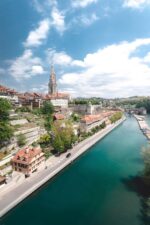
Geneva sits at the tip of its lake with the Jet d’Eau fountain, CERN on the outskirts, and the Alps visible from almost every vantage point in the city.
Travel guides for Geneva
More guides featuring Geneva (13)
At a glance
- German
- French
- Italian
- Romansh
- Lake shore
- Alpine backdrop
- Jet d'Eau
- Mountain panorama
- Science & Innovation
- International Diplomacy
- Watchmaking
- Chocolate
- Lake Activities
- Alpine Views
- History
- Gastronomy
How Geneva scores
Editorial scores on a 10-point scale, weighed against destinations of the same kind.
Travel safety snapshot
SafePlace indicators use their source 100-point scale; higher is more favourable. Planning context, not a live travel advisory — check official government guidance before you go.
When to go
Best months to visit: May, June, July, August, September, October and December.
- January: -2.8 to 4.4 degrees Celsius, 27.5 millimetres of rain, best-time score 3 out of 5.
- February: -1.3 to 7.3 degrees Celsius, 30.8 millimetres of rain, best-time score 3 out of 5.
- March: 1.1 to 10.5 degrees Celsius, 44.4 millimetres of rain, best-time score 3 out of 5.
- April: 4.1 to 14.8 degrees Celsius, 27.1 millimetres of rain, best-time score 3 out of 5.
- May: 6.1 to 14.1 degrees Celsius, 80.3 millimetres of rain, best-time score 4 out of 5.
- June: 12.1 to 22.4 degrees Celsius, 64.9 millimetres of rain, best-time score 5 out of 5.
- July: 13.1 to 23.7 degrees Celsius, 45.2 millimetres of rain, best-time score 5 out of 5.
- August: 13.8 to 24.9 degrees Celsius, 68.3 millimetres of rain, best-time score 5 out of 5.
- September: 10.5 to 20.8 degrees Celsius, 49.1 millimetres of rain, best-time score 5 out of 5.
- October: 5.6 to 14.9 degrees Celsius, 36.4 millimetres of rain, best-time score 4 out of 5.
- November: 2.6 to 10.8 degrees Celsius, 45.2 millimetres of rain, best-time score 3 out of 5.
- December: -0.4 to 5.6 degrees Celsius, 60.1 millimetres of rain, best-time score 4 out of 5.
Month-by-month conditions and packing advice
- January
- Cold weather, some rain January in Geneva: indoor culture remains useful, but cold or transitional weather limits lake-focused plans. Crowds: January is firmly in Geneva’s low tourist season, making it a prime time for travelers who value quieter streets and reduced accommodation rates. While the cold may deter casual sightseeing, it enhances the appeal of cultural attractions, from the Patek Philippe Museum to the United Nations headquarters. Proximity to the Alps makes the city an excellent base for day trips to ski areas, with reliable snow in nearby resorts. Outdoor sightseeing is best approached in shorter bursts, punctuated by warm indoor breaks. Budget-conscious visitors will appreciate the lower hotel prices, though some smaller attractions may operate on reduced schedules. Advance planning for indoor activities ensures a rich experience despite the brisk temperatures. Pack: Insulated winter coat with windproof exterior; Waterproof boots with good traction for icy streets; Thermal base layers for added warmth; Wool hat and insulated gloves; Compact umbrella for occasional rain or snow; Smart casual attire for upscale dining and cultural venues
- February
- Cold weather, some rain February in Geneva: indoor culture remains useful, but cold or transitional weather limits lake-focused plans. Crowds: February is part of Geneva’s low tourist season, apart from visitors drawn to nearby ski areas or the annual Geneva International Motor Show when it falls in late winter. Accommodation prices are generally lower than in summer, but popular hotels near ski routes may be busier. Cold, damp conditions favor indoor cultural exploration—museums, galleries, and watchmaking workshops—over prolonged outdoor strolling. Winter sports are in full swing in the surrounding Alps, with excellent transport connections making day trips convenient. Travelers should plan for short daylight hours and be prepared for shifting conditions. Booking early for ski weekends is advised, while city stays offer a quieter, more relaxed experience. Pack: Insulated winter coat suitable for sub-zero temperatures; Waterproof boots with good grip for wet or icy streets; Thermal base layers for added warmth; Compact umbrella for sudden rain showers; Warm hat, gloves, and scarf; Smart-casual attire for Geneva’s upscale dining and cultural venues
- March
- Cool weather, some rain March in Geneva: indoor culture remains useful, but cold or transitional weather limits lake-focused plans. Crowds: March is considered a shoulder season in Geneva, offering a quieter travel experience before the full bloom of spring tourism. While not peak tourist season, visitors can enjoy lower hotel rates and fewer crowds at attractions such as the Old Town, museums, and lakeside promenades. Outdoor activities are weather-dependent, as cool temperatures and periodic rain may limit extended time outside, but indoor cultural experiences thrive. It’s a good time for wine tastings in nearby vineyards or short ski trips to nearby resorts still in operation. Travelers seeking serene cityscapes and lower travel costs will find March rewarding, though packing for varied weather is essential. Pack: Water-resistant jacket for light rain; Layered clothing for fluctuating temperatures; Comfortable waterproof walking shoes; Warm scarf and gloves for cooler mornings; Compact travel umbrella; Smart-casual attire for Geneva’s dining and cultural venues
- April
- Cool weather, some rain April in Geneva: indoor culture remains useful, but cold or transitional weather limits lake-focused plans. Crowds: April marks the shoulder season in Geneva, offering a quieter alternative to the summer rush. The moderate temperatures and blooming landscapes make it ideal for walking tours, lakeside picnics, and day trips to nearby vineyards or alpine villages. Hotel rates are generally lower than peak summer months, and cultural venues—from museums to concert halls—remain fully active. Occasional showers may require flexible planning, but indoor attractions are abundant. This is a prime time for travelers who value fewer crowds, photogenic scenery, and a blend of winter’s lingering charm with spring’s renewal. Booking ahead for lakeside accommodations ensures prime views without summer’s premium prices. Pack: Light waterproof jacket for spring showers; Layered clothing to adjust to temperature shifts; Comfortable walking shoes for cobblestone streets; Compact travel umbrella; Scarf or light sweater for cool mornings and evenings; Camera for capturing spring blossoms and mountain views
- May
- Cool weather, some rain May in Geneva: shoulder or festive timing can be rewarding with layers and flexible weather plans. Crowds: May marks the shoulder season in Geneva, offering a balance between fewer tourist crowds and increasingly pleasant conditions for sightseeing. While the weather is generally comfortable, rain showers are common, so flexible planning is key. Outdoor cafés and markets begin to thrive, and lake cruises resume regular schedules, making it an ideal time for cultural immersion without peak-season congestion. Accommodation prices are moderate compared to summer highs, and many attractions operate with extended hours. Hiking in nearby hills is possible, though higher alpine trails may still have snow. Booking transport and hotels a few weeks ahead ensures better rates and selection, especially around public holidays when locals also travel. Pack: Waterproof jacket with hood for frequent showers; Layered clothing for cool mornings and warmer afternoons; Comfortable waterproof walking shoes; Compact travel umbrella; Light scarf for added warmth in the evenings; Smart-casual attire for Geneva’s upscale dining and cultural venues
- June
- Warm and pleasant, some rain June in Geneva: lakefront walks, parks, day trips, museums, boat rides, and outdoor dining are strongest. Crowds: June marks the beginning of Geneva’s peak tourist period, driven by its warm, comfortable climate and an active cultural calendar. Outdoor dining, boat cruises on Lake Geneva, and excursions into the surrounding Alps are at their most inviting. Moderate rainfall can occasionally interrupt outdoor plans, so flexible itineraries are wise. This is also when crowd levels start rising, and hotel rates trend higher, particularly around major events such as Fête de la Musique. The combination of ideal temperatures, long daylight hours, and a lively atmosphere makes June an excellent time for sightseeing and cultural immersion, though early bookings for accommodations and popular tours are recommended to secure the best options. Pack: Light waterproof jacket for occasional showers; Comfortable walking shoes for cobblestone streets; Light sweater or cardigan for cooler evenings; Travel umbrella or compact rain poncho; Smart-casual attire for upscale dining; Sunglasses and broad-spectrum sunscreen
- July
- Warm and pleasant, some rain July in Geneva: lakefront walks, parks, day trips, museums, boat rides, and outdoor dining are strongest. Crowds: July marks peak summer season in Geneva, with near-perfect conditions for outdoor activities such as lake cruises, alpine hikes, and festival-going. Crowds swell as both international tourists and locals take advantage of the warm weather, meaning hotel rates and popular attractions are at their busiest. Early booking is essential for accommodations and key events, especially during cultural festivals. While the warmth is comfortable, midday sun can be strong, so early mornings and late afternoons are best for active sightseeing. The occasional summer shower is unlikely to disrupt plans and often enhances the lushness of parks and gardens. Long daylight hours offer flexibility in planning, making this an excellent time for extended itineraries that blend urban discovery with nearby nature escapes. Pack: Lightweight summer clothing such as breathable cotton shirts; Comfortable walking shoes for city and lakeside exploration; Light rain jacket or compact umbrella for brief showers; Sunglasses and broad-brimmed hat for sun protection; Layered evening wear for cooler nights; Reusable water bottle to stay hydrated during long days
- August
- Warm and pleasant, some rain August in Geneva: lakefront walks, parks, day trips, museums, boat rides, and outdoor dining are strongest. Crowds: August is part of Geneva’s peak summer tourism window, drawing visitors for its festivals, lakeside leisure, and access to the Alps. Warm, comfortable days are ideal for walking tours, waterfront activities, and exploring local vineyards. Rainfall is moderate, so planning a few indoor options—such as museums or watchmaking workshops—can keep your itinerary flexible. Crowd levels are high, especially around the lakefront and major cultural sites, leading to elevated hotel rates. Early booking is recommended for accommodation and popular activities. This is also a prime month for events like open-air concerts and food festivals, adding cultural depth to your visit while still enjoying optimal weather for outdoor exploration. Pack: Lightweight summer clothing such as dresses, shirts, and shorts; Compact travel umbrella or light rain jacket for occasional showers; Comfortable walking shoes for cobblestone streets and parks; Sunglasses and broad-brimmed hat for daytime lakefront walks; Light sweater or jacket for cooler evenings by the lake; Smart-casual outfit for dining in upscale Geneva restaurants
- September
- Warm and pleasant, some rain September in Geneva: lakefront walks, parks, day trips, museums, boat rides, and outdoor dining are strongest. Crowds: September is shoulder season in Geneva, combining favorable weather with a gradual dip in summer tourist numbers. Comfortable temperatures make it a prime month for walking tours, lake cruises, and wine region excursions. Hotel rates may begin to ease after peak summer pricing, though demand remains steady during events like the harvest festivals in nearby Lavaux. Occasional rain showers are unlikely to disrupt plans and can enhance indoor experiences such as museums and chocolate tastings. Outdoor markets brim with seasonal produce, and cafés spill onto sidewalks, offering a more relaxed atmosphere than the high summer months. It’s a balanced time to experience both the city’s cultural richness and its surrounding natural beauty without extreme weather or overwhelming crowds. Pack: Light sweater or cardigan for cool mornings; Comfortable waterproof walking shoes; Compact travel umbrella or light rain jacket; Layered clothing for fluctuating temperatures; Smart-casual attire for dining and cultural venues; Scarf for added warmth during evening outings
- October
- Cool weather, some rain October in Geneva: shoulder or festive timing can be rewarding with layers and flexible weather plans. Crowds: October marks the shoulder season in Geneva, offering a calmer alternative to the busy summer months. Cooler weather and occasional rain keep tourist numbers moderate, resulting in shorter queues at museums and cultural landmarks, and more availability in lakeside accommodations. Prices for hotels and flights often dip compared to peak summer rates, making it a cost-effective time to visit. Outdoor activities like walking tours, lakeside strolls, and vineyard visits remain enjoyable with proper layering, while alpine day trips may be limited by early-season weather changes. This is also prime time for cultural events such as art exhibitions and seasonal food markets, which feel more relaxed without heavy crowds. Booking a mix of indoor and outdoor activities is wise to adapt to variable conditions. Pack: Waterproof jacket with hood for light rain; Layered clothing including sweaters and light thermals; Comfortable waterproof walking shoes; Compact travel umbrella; Scarf and gloves for cooler mornings; Smart casual attire for dining and cultural events
- November
- Cool weather, some rain November in Geneva: indoor culture remains useful, but cold or transitional weather limits lake-focused plans. Crowds: November marks Geneva’s shoulder season, when cooler temperatures and shorter days lead to fewer tourists and more relaxed sightseeing. While it’s too early for reliable skiing, the surrounding mountains begin preparing for winter sports, and in-town cultural life is in full swing with exhibitions, concerts, and seasonal markets. Accommodation prices are generally lower than in peak summer or festive December, offering good value for travelers. Outdoor activities like lake cruises may be limited by weather, but indoor experiences — from watchmaking workshops to UNESCO-recognized heritage sites — shine. Visitors should be prepared for rain and cooler evenings, but the trade-off is quieter attractions and a more intimate experience of the city’s charm. Pack: Waterproof mid-weight jacket for rain and wind; Warm scarf and gloves for chilly mornings and evenings; Comfortable waterproof walking shoes; Compact travel umbrella; Layered clothing to adjust to indoor heating; Smart-casual attire for cultural venues and dining
- December
- Cold weather, some rain December in Geneva: shoulder or festive timing can be rewarding with layers and flexible weather plans. Crowds: December is part of Geneva’s low city tourism season but a peak period for winter and holiday-related travel. While crowds at urban attractions are minimal, nearby ski resorts in the Alps draw significant traffic, which can influence accommodation prices. The cool, damp air makes outdoor sightseeing slower-paced, but it’s perfect for enjoying Christmas markets, indoor cultural venues, and winter sports day trips. Light snow or rain may cause brief travel delays, but the trade-off is the city’s festive charm and quiet public spaces. Booking early for accommodations near the lake or transit hubs is wise, especially for travelers planning alpine excursions. The month also offers excellent opportunities for winter photography, with low sun angles casting dramatic shadows over historic architecture. Pack: Insulated winter coat with windproof layer; Waterproof boots with good traction for icy paths; Thermal base layers for warmth; Wool scarf, hat, and gloves; Compact umbrella for rain or snow; Smart casual attire for indoor dining and cultural events
- July
- August
- June
- September
- January
- February
- November
- December
- March
- April
Know before you go
Best time to visit
The best time to visit Geneva is from May to September when the weather is warm and ideal for outdoor activities. Summer months host various festivals and events, but expect larger crowds. For those looking for a quieter experience, consider visiting in spring or early autumn when the city is less crowded, and the weather is still pleasant.
Season by season
Spring (Apr–May): 10–18 °C, blooming gardens, pleasant sightseeing. Summer (Jun–Aug): 22–28 °C, lakeside swimming, Fêtes de Genève, longest days. Autumn (Sep–Oct): 12–20 °C, vineyard harvest, fewer tourists, golden light. Winter (Dec–Feb): 0–5 °C, Christmas markets, proximity to ski resorts, cozy fondue.
Crowds
Moderate year-round; higher during summer lakeside activities and the Fêtes de Genève (August); low at CERN; very low at La Jonction
Getting there and around
Getting there
Geneva is served by Geneva Airport (GVA/Cointrin), located just 4 km from the city center with free public transport tickets provided upon arrival. The airport train station (Genève-Aéroport) connects to Geneva’s main station (Genève-Cornavin) in 7 minutes, with trains running every 10-15 minutes. High-speed TGV trains link Geneva to Paris (3 hours) and Lyon (2 hours), while regional trains serve the Swiss network and French Alps. The city’s location on Lake Geneva (Lac Léman) allows for scenic boat arrivals from other lakeside cities. International buses and proximity to French territory make it easily accessible from both countries.
Getting around
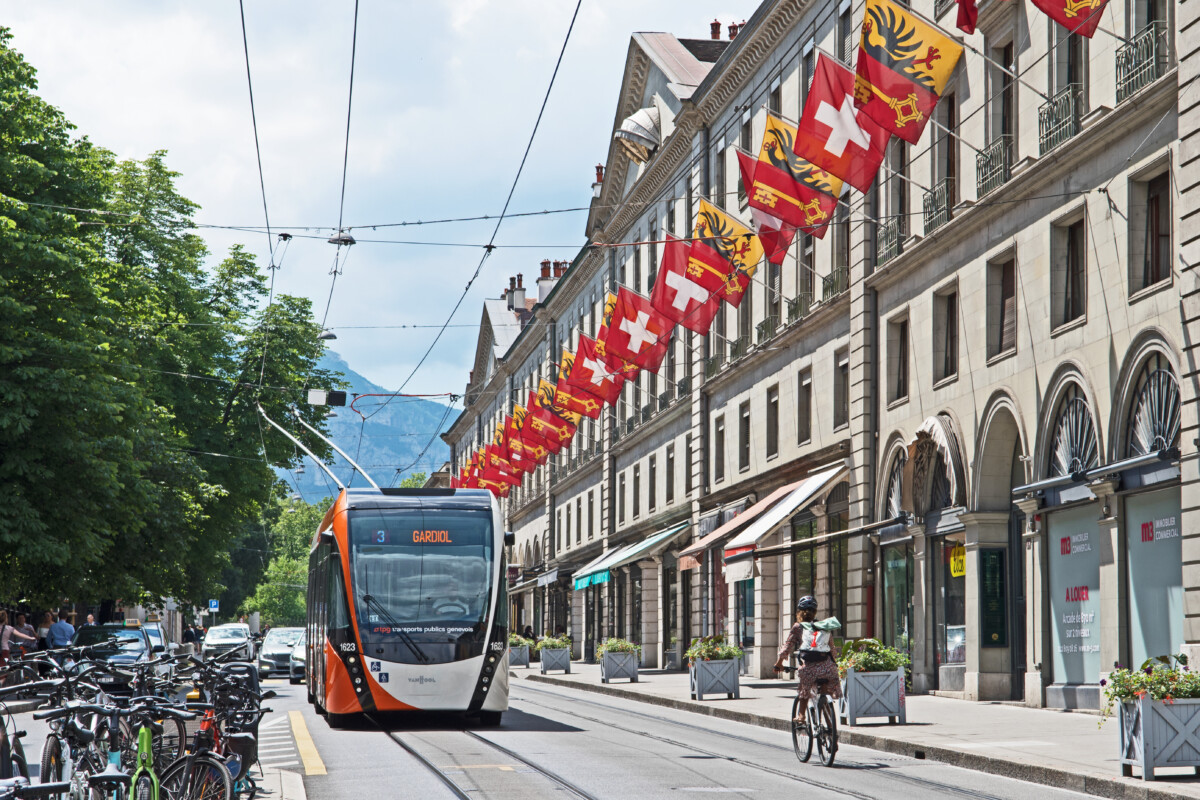
Geneva’s efficient public transport system (TPG) includes trams, buses, trolleybuses, and yellow taxi-boats (mouettes) crossing the lake. Visitors receive a free Geneva Transport Card from hotels, granting unlimited public transport access. Tram lines 12, 14, 15, and 18 serve major areas including the UN, Old Town, and airport. The city is highly walkable with most attractions within 30 minutes of Cornavin station. GénèveRoule offers free bike loans for up to 4 hours at multiple stations. Water taxis provide scenic lake crossings between Paquis, Eaux-Vives, and other waterfront points. The CERN research facility is accessible via tram 18 to its visitor center.
Top experiences in Geneva
Jet d'Eau & Lake Geneva
Geneva’s defining icon—a 140-metre column of water erupting from Lake Geneva at 200 km/h, visible from nearly everywhere in the city. Originally an 1886 industrial valve for a hydraulic power network, it was relocated to the harbour in 1891 and now pumps 500 litres per second. The best views are from the Quai du Mont-Blanc or the Eaux-Vives jetty, where you can walk close enough to feel the mist. The fountain operates year-round (weather permitting) and is illuminated at night. Behind it, Lake Geneva—Europe’s largest Alpine lake—stretches 73 km toward Montreux with paddle steamers, kayaking, and swimming at public beaches.
Old Town & St. Pierre Cathedral
Switzerland’s largest historic centre, a maze of cobblestone lanes, antique shops, and hidden courtyards climbing uphill from the lake. At its summit stands St. Pierre Cathedral, an 850-year-old church with a mix of Romanesque, Gothic, and neoclassical elements. Climb 157 steps in the north tower for a 360-degree panorama of the city, the lake, the Jura Mountains, and (on clear days) Mont Blanc. Below the cathedral, one of Europe’s largest archaeological sites reveals 4th-century Roman mosaics. The Place du Bourg-de-Four at the base—Geneva’s oldest square—is filled with café terraces.
CERN Science Gateway
The world’s largest particle physics laboratory, straddling the Franco-Swiss border, where the Higgs boson was discovered and the World Wide Web was invented. The Science Gateway visitor centre (opened 2023, designed by Renzo Piano) features immersive exhibitions on the universe’s origins, interactive particle-accelerator simulations, and hands-on experiments. Guided tours led by CERN physicists take you into the underground caverns housing the Large Hadron Collider experiments. Free admission; advance booking required for guided tours. Accessible by Tram 18 from central Geneva.
Palace of Nations (United Nations)
The European headquarters of the United Nations, set in the Parc de l’Ariana overlooking Lake Geneva and Mont Blanc. The 1930s Art Deco building hosts over 10,000 meetings per year—more than any other UN office. Guided tours (60–90 minutes) walk through the Assembly Hall, Council Chamber, and corridors hung with donated artworks from member states. In front stands the Broken Chair—a 12-metre wooden sculpture on three legs by Daniel Berset—symbolising opposition to landmines and cluster munitions. Bring a passport for entry.
La Jonction & Bains des Pâquis
Two contrasting ways to experience Geneva’s water: La Jonction is the remarkable spot where the glacial-blue Rhône and the muddy-brown Arve rivers merge, creating a dramatic two-tone current visible from the Viaduc de la Jonction footbridge. Upstream, Bains des Pâquis—a public bathing pier jutting 100 metres into Lake Geneva since 1932—is where locals swim in summer, steam in the winter hammam, and eat fondue on the waterfront terrace. Entry is around CHF 2. Together they capture Geneva’s relationship with water better than any museum.
Editor-curated picks carried over from our original guide. Where a full place guide exists, the card links to it.
Worth booking ahead in Geneva
Hand-picked from the operators our guides already send readers to. Prices and availability are live on the partner site.
BrowseViator
Tours and tickets in Geneva on Viator (opens Viator in a new tab)
Viator's full list of bookable tours and tickets in Geneva.
BrowseGetYourGuide
Experiences in Geneva on GetYourGuide (opens GetYourGuide in a new tab)
Everything GetYourGuide sells in Geneva, with the cancellation terms on each listing.
Where to stayBooking.com
Stays in Geneva (opens Booking.com in a new tab)
Live rates and availability for Geneva on Booking.com; filter by neighbourhood once you know where your days start.
We earn a commission if you book through these links, at no extra cost to you. It is how we keep the guides free and independent.
Tips from the field
Highlights
- Jet d'Eau & Lake Geneva
- Old Town & St. Pierre Cathedral
- CERN Science Gateway
- Palace of Nations (UN)
- La Jonction River Confluence
- Bains des Pâquis
- Mont Salève Panorama
- Swiss Chocolate & Watchmaking
Best activities
- Watch the Jet d'Eau up close from the Eaux-Vives jetty, climb St. Pierre Cathedral tower for panoramic views, take a guided CERN tour with a physicist, explore the UN Palace of Nations, swim at Bains des Pâquis, browse the Plainpalais flea market, see the two-toned rivers merge at La Jonction, visit the Red Cross Museum, take a chocolate tasting tour, and hike or take the cable car up Mont Salève.
Local experiences
- Swim year-round at Bains des Pâquis and eat fondue on the pier, browse the Plainpalais flea market on Wednesday or Saturday morning, climb St. Pierre Cathedral tower at sunset, take a CERN Science Gateway tour with a physicist guide, stand on the Viaduc de la Jonction footbridge to watch two rivers merge in different colours, play giant chess in the Parc des Bastions, visit the Red Cross and Red Crescent Museum, paddle-board on Lake Geneva with Mont Blanc in the background, shop for Swiss chocolate at Stettler or Auer, and take a 5-minute cable car up Mont Salève for Alpine views.
Practical tips
- Public transport is efficient and free for hotel guests
- Many museums offer free entry on the first Sunday of each month
- Geneva can be expensive, so budget accordingly
Photography tips
- The Jet d'Eau against the Alps is best captured from the Quai du Mont-Blanc at sunset using a fast shutter speed to freeze the spray, or a slow exposure for a silky effect. St. Pierre Cathedral tower provides the wide panoramic cityscape shot. La Jonction's two-toned river confluence is dramatic from the Viaduc de la Jonction with a telephoto lens to compress the colour difference. The Flower Clock in Jardin Anglais is a classic postcard shot in spring bloom. The Broken Chair sculpture frames well against the Palais des Nations and snow-capped mountains. Early morning along the lakefront eliminates tourist crowds and delivers mirror-like water reflections.
Timing
- Allow 2–3 full days: a lakefront day (Jet d'Eau, Bains des Pâquis, Eaux-Vives beach, paddle steamer cruise), a culture day (Old Town, St. Pierre Cathedral, Red Cross Museum, UN Palace of Nations), and a science day (CERN half-day + Mont Salève cable car or Plainpalais flea market). Geneva connects to Lausanne (40 min), Montreux (70 min), and Chamonix (90 min) for day trips.
Keeping it authentic
- Geneva's international identity—40% of residents are non-Swiss nationals, 200+ international organisations are headquartered here—gives it a uniquely cosmopolitan character among Swiss cities. But the local layer remains: the Old Town's fondue restaurants haven't changed menus in decades, the Plainpalais flea market (Wednesday and Saturday) is where Genevois sell family silver rather than Chinese imports, and the Bains des Pâquis pier is used by commuting office workers year-round, not just tourists. The l'Horloge Fleurie (Flower Clock) in the Jardin Anglais is replanted every season with 6,500 plants in working synchronisation—a tribute to Geneva's watchmaking heritage.
Culture, customs and safety
Cultural heritage
Geneva embodies international diplomacy and Calvinist heritage where the Jet d’Eau fountain shoots Lake Leman water 140 meters high, originally a pressure valve becoming the city’s symbol. The Old Town’s cobblestones lead to St. Pierre Cathedral where John Calvin preached Reformation ideals that shaped Protestant theology. The Flower Clock in the English Garden showcases Swiss precision through 6,500 seasonal plants. International Geneva hosts 200+ organizations including UN European headquarters in the Palais des Nations. Traditional watchmaking excellence continues at Patek Philippe Museum, while local fondue and raclette customs warm winter gatherings. The Escalade festival commemorates 1602’s failed Savoyard attack with chocolate cauldrons and costumed parades.
Local customs & etiquette
Geneva culture balances Swiss precision with international cosmopolitanism as home to 200+ international organizations including the UN and Red Cross. The city operates on Swiss efficiency – punctuality is paramount, and quiet hours after 10 PM are strictly observed. Greetings involve three cheek kisses (left-right-left) among acquaintances, while handshakes suffice for formal meetings. Despite its reputation for expense, apéro culture thrives with after-work drinks by the lake. Fondue and raclette remain winter staples, though the city’s diversity offers global cuisines. The Escalade festival in December celebrates Geneva’s independence with chocolate cauldrons and historical reenactments. Environmental consciousness is high – recycling is mandatory and detailed. The Protestant work ethic coexists with French joie de vivre, creating a unique cultural blend.