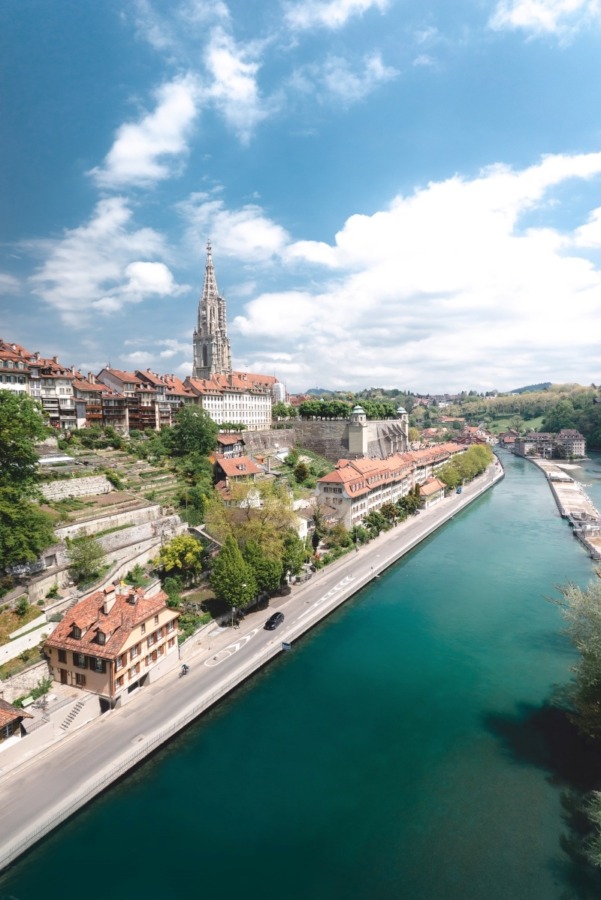
Switzerland is a landlocked mountainous country in Central Europe known for its stunning Alpine landscapes, crystal-clear lakes, and picturesque villages. Bordered by France, Italy, Germany, Austria, and Liechtenstein, this federal republic spans 41,285 square kilometers with a diverse geography including the high Alps in the south, the Swiss Plateau in the middle, and the Jura Mountains in the northwest. Switzerland is renowned for its political neutrality, high quality of life, precise watchmaking industry, exquisite chocolates, and robust banking system. The country embraces multicultural diversity with four national languages – German, French, Italian, and Romansh – reflecting its unique position at the crossroads of Germanic, French, and Italian influences. Visitors are drawn to Switzerland for its world-class skiing, hiking opportunities, remarkable train journeys through breathtaking scenery, and charming cities like Zürich, Geneva, and the capital Bern.
The destination guide
Switzerland
Browse all 10 destinations in Switzerland
Travel guides for Switzerland
Itineraries & day trips (1)
Things to do (7)
Where to stay (3)
Destination stories (4)
More guides featuring Switzerland (7)
At a glance
- German (63%)
- French (23%)
- Italian (8%)
- Romansh (0.5%)
- Alpine mountains
- Crystal lakes
- Valleys
- Glacier terrain
- Skiing
- Hiking
- Scenic Railways
- Lakes
- Culture
- Luxury
How Switzerland scores
Character
Editorial scores on a 10-point scale, weighed against destinations of the same kind.
Travel safety snapshot
SafePlace indicators use their source 100-point scale; higher is more favourable. Planning context, not a live travel advisory — check official government guidance before you go.
When to go
Best months to visit: January, February, March, May, June, July, August, September, October and December.
- January: -7.5 to 0.2 degrees Celsius, 147.5 millimetres of rain, best-time score 4 out of 5.
- February: -5.6 to 2.6 degrees Celsius, 110.9 millimetres of rain, best-time score 4 out of 5.
- March: -4.5 to 4.2 degrees Celsius, 127.4 millimetres of rain, best-time score 4 out of 5.
- April: -1.3 to 7.5 degrees Celsius, 143.3 millimetres of rain, best-time score 3 out of 5.
- May: 2.6 to 11 degrees Celsius, 205.6 millimetres of rain, best-time score 4 out of 5.
- June: 8 to 16.7 degrees Celsius, 195.1 millimetres of rain, best-time score 5 out of 5.
- July: 9.7 to 17.8 degrees Celsius, 212.9 millimetres of rain, best-time score 5 out of 5.
- August: 9.5 to 18.1 degrees Celsius, 193.8 millimetres of rain, best-time score 5 out of 5.
- September: 6.1 to 14.2 degrees Celsius, 154.9 millimetres of rain, best-time score 5 out of 5.
- October: 2.5 to 11 degrees Celsius, 140 millimetres of rain, best-time score 4 out of 5.
- November: -3.1 to 4.8 degrees Celsius, 125.5 millimetres of rain, best-time score 3 out of 5.
- December: -5.6 to 2.1 degrees Celsius, 136.8 millimetres of rain, best-time score 4 out of 5.
Month-by-month conditions and packing advice
- January
- Very cold, rainy January in Switzerland: ski season or shoulder months can work well if lifts, snow, and weather align. Crowds: January in Switzerland is best for winter-ready travelers; outdoor plans need warm gear, shorter daylight expectations, and weather-aware transport planning. Pack: Pack insulated layers, warm footwear, gloves, and a serious winter coat. Add a rain jacket or compact umbrella.
- February
- Cold, some rain February in Switzerland: ski season or shoulder months can work well if lifts, snow, and weather align. Crowds: February in Switzerland is best for winter-ready travelers; outdoor plans need warm gear, shorter daylight expectations, and weather-aware transport planning. Pack: Pack insulated layers, warm footwear, gloves, and a serious winter coat. Add a rain jacket or compact umbrella.
- March
- Cold, some rain March in Switzerland: ski season or shoulder months can work well if lifts, snow, and weather align. Crowds: March in Switzerland is workable with normal seasonal planning; build in layers, weather checks, and a mix of indoor and outdoor activities. Pack: Pack warm layers, a coat, and comfortable shoes for cold mornings and evenings. Add a rain jacket or compact umbrella.
- April
- Cold, rainy April in Switzerland: transition-season closures and variable weather narrow activity choices. Crowds: April in Switzerland is one of the wetter periods, so museums, food stops, flexible reservations, and backup indoor plans make the trip easier. Pack: Pack warm layers, a coat, and comfortable shoes for cold mornings and evenings. Add a rain jacket or compact umbrella.
- May
- Cool to mild, rainy May in Switzerland: ski season or shoulder months can work well if lifts, snow, and weather align. Crowds: May in Switzerland is one of the wetter periods, so museums, food stops, flexible reservations, and backup indoor plans make the trip easier. Pack: Pack warm layers, a coat, and comfortable shoes for cold mornings and evenings. Add a rain jacket or compact umbrella.
- June
- Cool to mild, rainy June in Switzerland: alpine trails, lakes, rail routes, villages, and city stays are strongest in the main summer mountain season. Crowds: June in Switzerland is one of the wetter periods, so museums, food stops, flexible reservations, and backup indoor plans make the trip easier. Pack: Pack layered clothing and comfortable walking shoes. Add a rain jacket or compact umbrella.
- July
- Cool to mild, rainy July in Switzerland: alpine trails, lakes, rail routes, villages, and city stays are strongest in the main summer mountain season. Crowds: July in Switzerland is one of the wetter periods, so museums, food stops, flexible reservations, and backup indoor plans make the trip easier. Pack: Pack layered clothing and comfortable walking shoes. Add a rain jacket or compact umbrella.
- August
- Cool to mild, rainy August in Switzerland: alpine trails, lakes, rail routes, villages, and city stays are strongest in the main summer mountain season. Crowds: August in Switzerland is one of the wetter periods, so museums, food stops, flexible reservations, and backup indoor plans make the trip easier. Pack: Pack layered clothing and comfortable walking shoes. Add a rain jacket or compact umbrella.
- September
- Cool to mild, rainy September in Switzerland: alpine trails, lakes, rail routes, villages, and city stays are strongest in the main summer mountain season. Crowds: September in Switzerland is one of the wetter periods, so museums, food stops, flexible reservations, and backup indoor plans make the trip easier. Pack: Pack layered clothing and comfortable walking shoes. Add a rain jacket or compact umbrella.
- October
- Cool to mild, rainy October in Switzerland: ski season or shoulder months can work well if lifts, snow, and weather align. Crowds: October in Switzerland is one of the wetter periods, so museums, food stops, flexible reservations, and backup indoor plans make the trip easier. Pack: Pack warm layers, a coat, and comfortable shoes for cold mornings and evenings. Add a rain jacket or compact umbrella.
- November
- Cold, some rain November in Switzerland: transition-season closures and variable weather narrow activity choices. Crowds: November in Switzerland is workable with normal seasonal planning; build in layers, weather checks, and a mix of indoor and outdoor activities. Pack: Pack warm layers, a coat, and comfortable shoes for cold mornings and evenings. Add a rain jacket or compact umbrella.
- December
- Cold, rainy December in Switzerland: ski season or shoulder months can work well if lifts, snow, and weather align. Crowds: December in Switzerland is best for winter-ready travelers; outdoor plans need warm gear, shorter daylight expectations, and weather-aware transport planning. Pack: Pack insulated layers, warm footwear, gloves, and a serious winter coat. Add a rain jacket or compact umbrella.
- December
- January
- February
- July
- August
- April
- May
- October
- November
- March
- June
- September
Know before you go
About
Switzerland is a landlocked federal republic of 26 cantons in the heart of the Alps, home to about 9 million people and famed for mountains, precision, and neutrality. Bern serves as the “federal city,” or de facto capital, while four national languages—German, French, Italian, and Romansh—reflect the country’s cultural patchwork. The Confederation traces its origins to an alliance struck in 1291, and its Latin name, Confoederatio Helvetica, survives in the “CH” country code. Across roughly 39,500 km², the landscape soars from lakeshore cities to glaciated summits, crowned by the iconic 4,478 m Matterhorn near Zermatt on the Italian border. Travelers ride scenic trains like the Glacier Express, ski and hike resorts such as Zermatt, Grindelwald, and St. Moritz, and explore lakeside Geneva, Lucerne, and Zürich. Renowned for chocolate, cheese, watches, and clockwork-reliable public transport, Switzerland offers some of Europe’s most spectacular and accessible alpine scenery.
Best time to visit
Summer (June–August) for hiking and lake activities; Winter (December–March) for skiing; Spring and Autumn for fewer crowds and stunning foliage
Season by season
Winter (Dec–Mar): world-class skiing, Christmas markets, snow-covered towns. Spring (late Mar–May): wildflowers, gentle hikes, fewer crowds. Summer (Jun–Aug): warm weather, peak hiking and lake season, festivals. Autumn (Sep–Nov): golden foliage, wine harvests, crisp air, uncrowded trails.
Crowds
High in summer and ski season; moderate in spring/autumn
Getting there and around
Getting there
Major international airports in Zurich (ZRH), Geneva (GVA), and Basel (BSL/MLH). High-speed rail connections from Paris (TGV Lyria, ~3 h), Milan (EC, ~3.5 h), and Munich (EC, ~4 h). FlixBus and Eurolines serve key cities. Driving is straightforward via well-maintained motorways (CHF 40 annual vignette required).
Getting around
Switzerland has one of the world’s best public-transport networks. Swiss Federal Railways (SBB) connects virtually every town; PostBuses fill in rural gaps. Lake steamers, cable cars, cogwheel trains, and funiculars access alpine areas. Consider the Swiss Travel Pass for unlimited travel plus free museum entry, or the Half Fare Card for 50% off most tickets. Cities have integrated tram and bus networks.
Top experiences in Switzerland
Jungfraujoch — Top of Europe
The highest railway station in Europe (3,454 m) offers an Ice Palace carved into the glacier, the Sphinx observation terrace with panoramic views, and year-round snow activities.
Matterhorn & Zermatt
One of the world’s most recognizable peaks, set above the car-free resort town of Zermatt with 360 km of ski runs, cable cars, and the Gornergrat Bahn scenic railway.
Lake Geneva & Château de Chillon
Europe’s largest alpine lake, flanked by the UNESCO-listed Lavaux vineyards and the fairy-tale island fortress of Château de Chillon near Montreux.
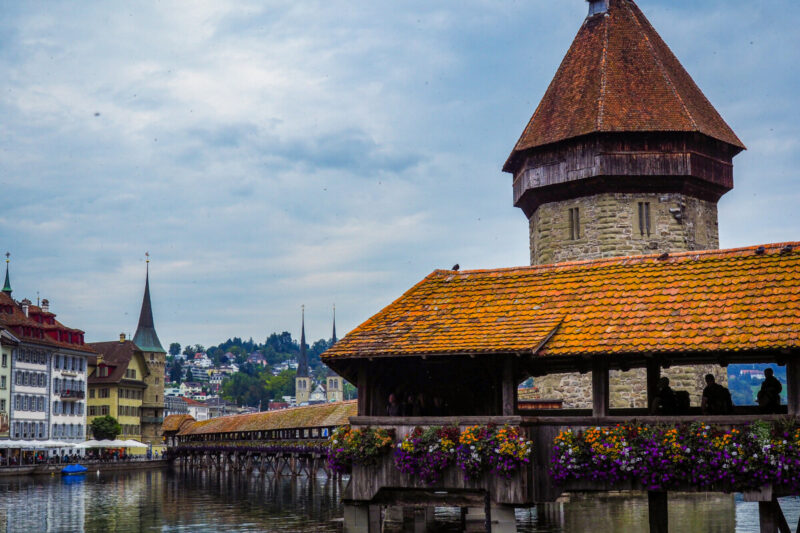
Lucerne & Chapel Bridge
A lakeside city featuring the 14th-century wooden Kapellbrücke, the KKL concert hall, and easy access to Mount Pilatus and Mount Rigi.
Bernina Express
A UNESCO World Heritage railway crossing 196 bridges and 55 tunnels between Chur and Tirano, passing glaciers, alpine meadows, and the striking Landwasser Viaduct.
Editor-curated picks carried over from our original guide. Where a full place guide exists, the card links to it.

Worth booking ahead in Switzerland
Hand-picked from the operators our guides already send readers to. Prices and availability are live on the partner site.
BrowseViator
Tours and tickets in Switzerland on Viator (opens Viator in a new tab)
Viator's full list of bookable tours and tickets in Switzerland.
BrowseGetYourGuide
Experiences in Switzerland on GetYourGuide (opens GetYourGuide in a new tab)
Everything GetYourGuide sells in Switzerland, with the cancellation terms on each listing.
Where to stayBooking.com
Stays in Switzerland (opens Booking.com in a new tab)
Live rates and availability for Switzerland on Booking.com; filter by neighbourhood once you know where your days start.
We earn a commission if you book through these links, at no extra cost to you. It is how we keep the guides free and independent.
Where to stay
Beau-Rivage Palace
Chemin de Beau-Rivage 21, 1006 Lausanne, Switzerland
An iconic 1861 grand hotel on Lake Geneva’s shore with 168 rooms, a Michelin-starred restaurant, 1,500 m² Guerlain Spa, indoor and outdoor pools, and sweeping lake-and-Alps views.
The Dolder Grand
Kurhausstrasse 65, 8032 Zurich, Switzerland
An 1899 city resort above Zurich with 175 rooms, two-Michelin-star dining, a 4,000 m² spa, an art collection with works by Dalí and Murakami, and panoramic city-lake-Alps views.
Badrutt's Palace
Via Serlas 27, 7500 St. Moritz, Switzerland
A legendary 1896 five-star hotel on six acres in St. Moritz with 155 rooms, six restaurants, an indoor pool, spa, and panoramic Engadine Alps and lake views.
Editor-curated stays carried over from our original guide. Where we have reviewed the hotel, the card links to the review.
Tips from the field
Highlights
- Jungfraujoch — Top of Europe railway station and Ice Palace
- Matterhorn & Zermatt — Iconic peak and car-free village
- Lake Geneva & Lavaux vineyards — UNESCO-listed terraced vineyards
- Lucerne — Kapellbrücke, KKL concert hall, Mount Pilatus
- Rhine Falls — Europe's largest waterfall
- Bernina Express & Glacier Express — Legendary scenic train routes
Best activities
- Hike the Via Alpina or Eiger Trail, ride the Glacier Express or Bernina Express, ski in Zermatt or St. Moritz, swim in Lake Brienz or Lake Lucerne, visit Château de Chillon, tour Swiss National Museum in Zurich, paraglide over Interlaken, explore Bern's medieval old town.
Local experiences
- Enjoy a fondue dinner in a mountain chalet, watch the autumn Alpabzug cow parades, take a chocolate-making workshop in Broc, hike to a SAC mountain hut and stay overnight, attend Basel's Fasnacht carnival in February.
Practical tips
- Buy a Swiss Travel Pass or Half Fare Card before arrival to save significantly on transport.
- Tap water is safe and free—many towns have public drinking fountains.
- Tipping is included in bills, but rounding up 5–10% is polite.
- Shops close early on Saturdays and are shut on Sundays (except at train stations).
- Carry cash for small mountain huts; cards are accepted nearly everywhere else.
Photography tips
- Shoot at sunrise or sunset for golden and blue-hour alpine light. The Matterhorn reflects perfectly in Riffelsee at dawn. Lauterbrunnen Valley and Lake Bachalpsee are iconic compositions. Use a wide-angle lens for mountain panoramas and a telephoto for isolated peaks. Autumn offers golden larch forests
- winter delivers crisp snow scenes.
Timing
- Plan 7–14 days for a comprehensive visit. 3–4 days covers one region well (Bernese Oberland, Lake Geneva, or Zurich area). Allow a full day for each scenic train route.
Keeping it authentic
- Each of Switzerland's 26 cantons maintains distinct traditions. The German-speaking majority, French Romandie, Italian Ticino, and Romansh Graubünden each contribute unique customs—from Basel's Fasnacht carnival to the Fête des Vignerons wine festival. Alpine heritage lives on through yodeling, alphorn concerts, and the autumn Alpabzug cow processions.
Culture, customs and safety
Cultural heritage
Home to 13 UNESCO World Heritage Sites—including the Old City of Bern, Abbey of Saint Gall, and the Lavaux vineyard terraces—Switzerland blends Germanic, French, and Italian influences. Traditional fondue, raclette, Swiss chocolate, and watchmaking are cultural pillars, while intangible heritage like the Basel Carnival and traditional irrigation systems (‘bisses’) are UNESCO-recognized.
Local customs & etiquette
Punctuality is deeply valued—being late is considered disrespectful. Greet with a firm handshake and direct eye contact; in French-speaking areas, friends exchange three cheek kisses. Keep voices low on public transport. Finish everything on your plate at dinner. Sundays are quiet by law—noisy activities like mowing are restricted.
Safety notes
Switzerland is one of the safest countries in the world with very low violent crime. Watch for pickpockets in busy tourist areas and train stations in Zurich, Geneva, and Basel. In alpine areas, check weather forecasts, wear proper gear, and stay on marked trails. Travel insurance covering mountain rescue is recommended for skiing and hiking.