Poignant tribute to Swiss Guards' sacrifice.
- Universal Appeal and Cultural Authenticity
- Iconic sculpture that draws visitors from around the world.
- Elicits strong emotional responses and appreciation for artistry.
- Mark Twain’s description as “the most mournful and moving piece of stone” enhances its emotional and cultural appeal.
- Cultural Richness and Educational Value
- Represents a key historical event: the massacre of the Swiss Guards during the French Revolution.
- The monument deeply delves into Swiss history and its relationship with France.
- Available descriptions and translations help visitors understand the rich cultural context.
- Preservation and Integrity
- Well-maintained despite its age, it was carved in 1821.
- Preservation efforts could be more noticeable given the surrounding modern amenities.
- The presence of nearby bars and food stalls detracts slightly from its solemnity.
- Accessibility and Visitor Engagement
- Located centrally in Lucerne, making it easily accessible.
- Free attraction with additional nearby sites like museums and gardens.
- Occasionally crowded, which can impact the experience, but it is still worth visiting.
Lion Monument Review: A Majestic Tribute to Swiss Valor in Lucerne
History and Significance
You’ll be amazed by the rich history behind Lucerne’s
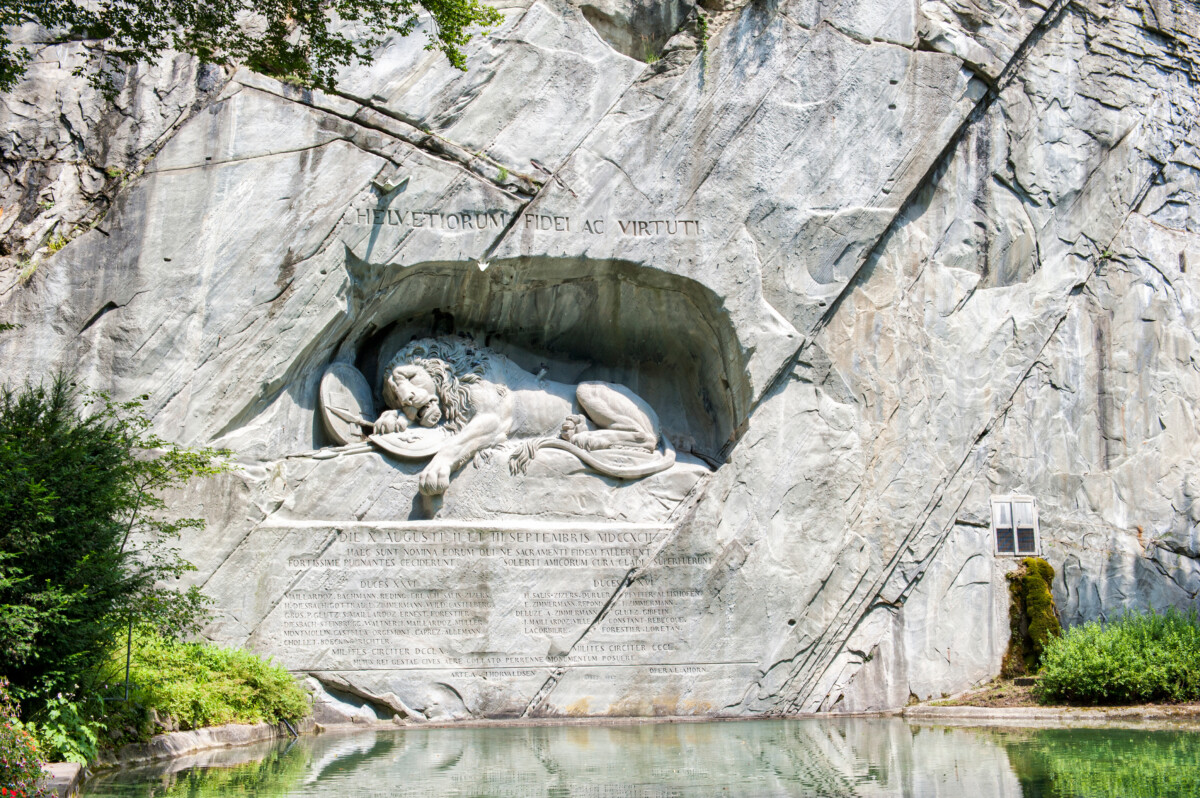
Lion Monument. This striking sculpture was carved into a sandstone cliff in 1820-1821 to honor Swiss Guards who died protecting King Louis XVI during the French Revolution.
As you gaze at the dying lion, you see a powerful symbol of loyalty and bravery. The monument quickly became famous, drawing visitors from around the world. Mark Twain called it “the most mournful and moving piece of stone in the world.”
Did you know the sculpture was designed by Bertel Thorvaldsen but carved by Lukas Ahorn? It’s a masterpiece of 19th-century art that still captivates today.
When you visit, take a moment to reflect on the sacrifice it represents. The Lion Monument isn’t just a tourist attraction – it’s a solemn memorial that has touched hearts for 200 years.
Don’t miss the peaceful English Garden surrounding the monument. It was added in 1824 and creates a tranquil spot for contemplation. Your visit to this iconic Lucerne landmark will be both moving and memorable.
Main Attractions and Activities
The Lion Monument is a
must-see when you’re in Lucerne. This stunning sculpture of a dying lion is carved into a rock face, creating a powerful and moving image. As you approach, you’ll be struck by its sheer size and the intricate details.
Take your time admiring the craftsmanship up close. The lion’s expression is so lifelike that you might feel a tug at your heartstrings. Don’t forget your camera—this is a perfect spot for photos!
While climbing is not allowed on the monument itself, you can explore the peaceful park surrounding it. It’s a great place to relax and reflect. Bring a picnic and enjoy the
serene atmosphere.
For fun, try to spot the lion-shaped outline in the rock above the sculpture. It’s like a hidden picture puzzle!
If you’re interested in history, read the inscription below the lion. It tells the story of Swiss Guards who died protecting the French king. You’ll leave with a deeper appreciation of this touching tribute.
Visitor Experience
The Lion Monument is tucked away in a peaceful corner of Lucerne. As you approach, the massive stone carving is seen, and it’s quite a sight to behold. The dying lion’s expression is incredibly moving.
The park around the monument is usually quiet, perfect for reflecting its meaning. You might spot a few other tourists snapping photos, but it rarely feels crowded.
There aren’t any staff or guides on-site, so you can explore at your own pace. Bring a guidebook or look up some history beforehand to fully appreciate what you see.
Don’t rush your visit. Take time to walk around and view the carving from different angles. The lion’s face looks different as the light shifts throughout the day.
The surrounding pond adds to the tranquil atmosphere. You may want to sit on a nearby bench and soak in the scene for a while. It’s a great spot to pause and recharge during a busy day of sightseeing in Lucerne.
Tips for Visitors
You’ll want to get to the Lion Monument early to beat the crowds. Mornings are best, especially on weekdays. Wear comfy shoes – you’ll do a bit of walking in the park. Bring a camera to snap pics of this amazing sculpture!
It’s free to visit, so no need to book tickets. But you might want to join a
guided tour to learn more about the history. These usually cost around 15-20 Swiss francs per person.
Don’t forget a light jacket, even in summer. Lucerne can get chilly, especially near the pond. Speaking of which, toss in some breadcrumbs if you want to feed the ducks!
Got kids? They’ll love the nearby playground. Pack a picnic and make a day of it in the park.
Remember to be respectful—this is a memorial, after all. But don’t be shy about getting up close to see the details in the carving. It’s truly impressive!
Accessibility and Facilities
You’ll find the Lion Monument quite accessible, with paved paths leading right up to the viewing area.
There’s a small pond in front, so watch your step if you use a wheelchair or have mobility issues.
Restrooms are available nearby, and they’re free to use. The flush is surprisingly powerful – it might startle you!
No food or drink is sold directly at the monument, but don’t worry. You’re just a short walk from charming Lucerne’s cafes and restaurants.
Parking can be tricky. Your best bet is to use one of the public lots in town and stroll over. It’s a nice walk, and you’ll get to soak in more of the city’s atmosphere.
I found it easy to get around and admire the sculpture. The park setting is peaceful, with benches where you can sit and reflect. Just remember to bring water on hot days—there’s not much shade right at the monument itself.
Unique Features
You’ll be awestruck by the sheer size of the Lion Monument. Carved directly into a sandstone cliff face, this massive sculpture spans 10 meters wide and 6 meters high. It’s not every day you see a lion emerging from solid rock!
The lion’s pained expression is incredibly lifelike. As you gaze into its sorrowful eyes, you can almost feel the anguish of the fallen Swiss Guards it honors. The broken spear piercing the lion’s side adds to the poignant symbolism.
What makes this monument truly special is its peaceful setting. Tucked away in a quiet park, a serene pond reflects the lion’s image. The tranquil atmosphere lets you soak in the emotional impact.
Don’t miss the Latin inscription above the lion. It reads “Helvetiorum Fidei ac Virtuti” – To the loyalty and bravery of the Swiss. This touching tribute gives you a glimpse into Switzerland’s rich history.
As you admire this masterpiece, you’ll understand why Mark Twain called it “the most mournful and moving piece of stone in the world.”
Best Time to Visit
- Early Morning or Late Evening: To avoid the peak crowds, visit either early or late evening. This timing allows for a more peaceful experience and better opportunities for reflection and photography without large crowds.
- Midweek Visits: Aim to visit on weekdays, particularly Tuesday through Thursday, when the site is less crowded than weekends. This will help you enjoy the monument in a more tranquil setting.
- Off-Peak Tourist Season: Consider visiting during off-peak seasons, such as late spring (May) or early autumn (September). These periods generally see fewer tourists, offering a more serene and uninterrupted experience.
Overall Impressions
The Lion Monument is a moving and memorable sight. Gazing at the massive sculpture carved into the rock face, you can’t help but feel the emotion it conveys. The dying lion’s pained expression is truly captivating.
The peaceful park setting adds to the somber mood. Take a moment to sit on a nearby bench and reflect.
How such a simple monument can stir up deep feelings might surprise you.
While it’s a quick visit, the Lion Monument leaves a lasting impact. It’s definitely worth seeing during your time in Lucerne. The artistry and symbolism are impressive.
You’ll likely come away with a renewed appreciation for the sacrifices of soldiers throughout history. The monument serves as a powerful reminder of war’s human toll.
Be prepared for crowds, especially during peak times. But don’t let that deter you. This
iconic Lucerne attraction deserves a spot on your itinerary. You’ll be glad you made the effort to experience it firsthand.
Pros and Cons
Let me tell you, the Lion Monument in Lucerne is quite a sight to behold! After visiting it, I can share some of the ups and downs you might experience.
Pros:
• It’s free to visit – your wallet will thank you
• The sculpture is truly breathtaking and moving
• You can easily fit it into a quick Lucerne itinerary
• It’s in a peaceful park setting, perfect for reflection
Cons:
• It can get crowded, especially during peak tourist season
• There’s not much else to do right at the monument itself
• The meaning behind it might be lost if you don’t know the history
• Weather can impact your experience – rainy days are a bummer
The monument is tucked away in a little park. It’s a quick visit, but don’t rush it. Take a moment to look at the details of the dying lion. The craftsmanship is incredible!
I remember feeling a bit emotional when I first saw it. The lion’s expression is so lifelike and sorrowful. You might be surprised by how it affects you, too.
Just be prepared for potential crowds. I went early in the morning and had a much more peaceful experience, if you can. Try to time your visit for a quieter period.