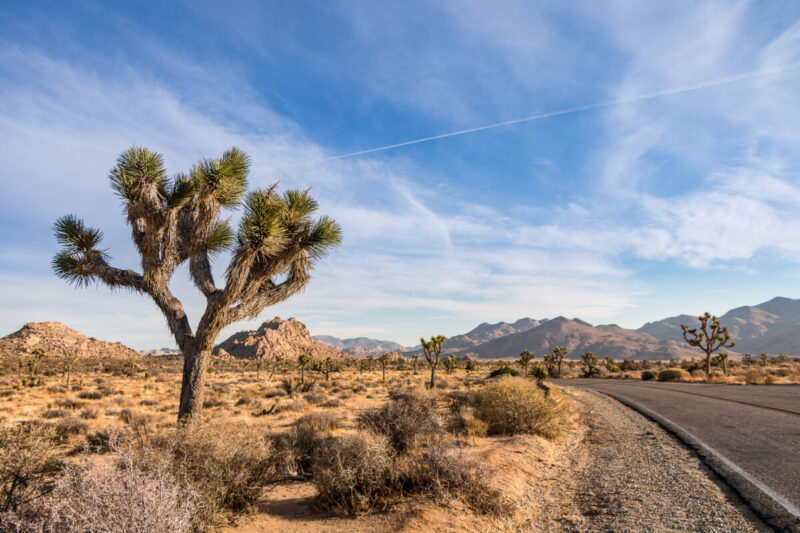
Surreal desert wilderness where two distinct ecosystems converge, featuring otherworldly Joshua trees, massive granite monoliths, palm oases, and some of the darkest night skies in Southern California for world-class stargazing and rock climbing.
The destination guide
Joshua Tree National Park
National / State Park in United States, North AmericaUpdated
- Overall7/10
- Best forCouples
- CurrencyUSD
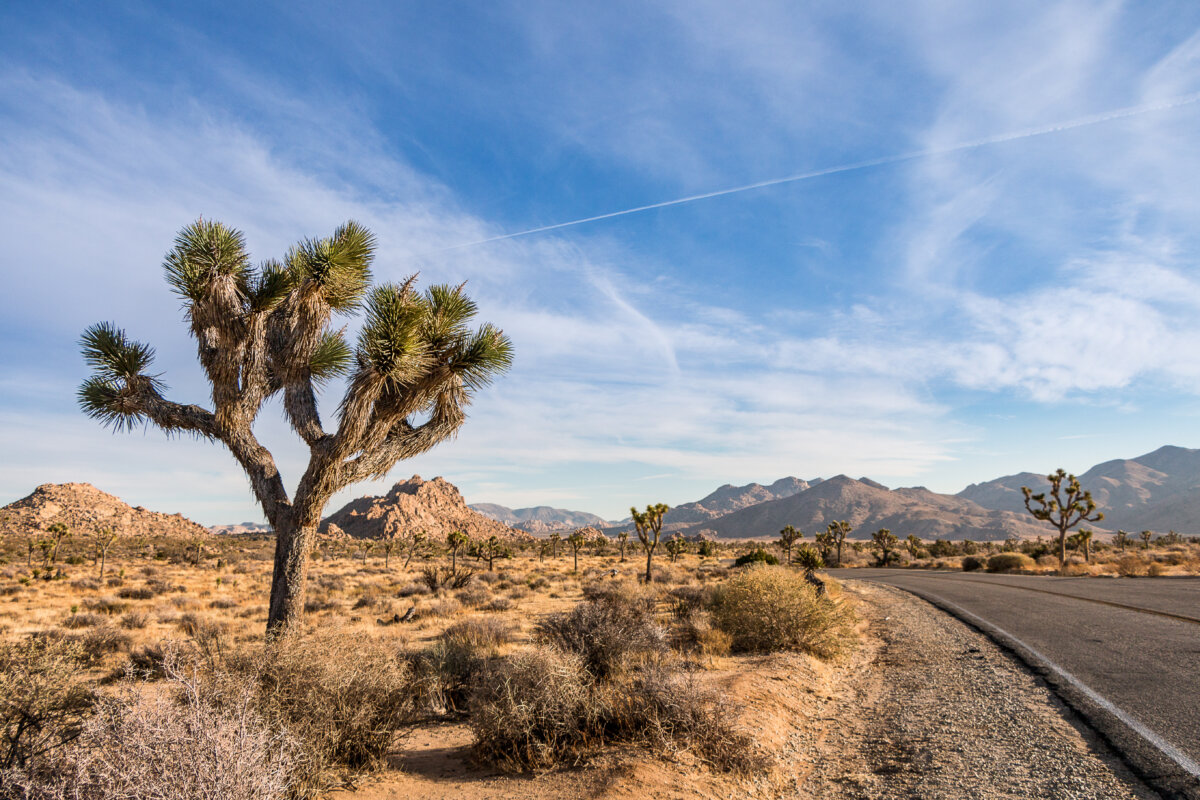
Joshua Tree sits where the Mojave and Colorado deserts meet — surreal rock formations, stargazing with zero light pollution, and the trees themselves looking like something from another planet.
Travel guides for Joshua Tree National Park
Things to do (2)
Where to stay (1)
More guides featuring Joshua Tree National Park (23)
At a glance
Currency$ USDCode: USD
Time zoneNew YorkAmerica/New_York
Languages
- English
Setting
- Desert landscape
- Joshua tree forests
- Rocky formations
- Stargazing terrain
Known for
- Stargazing
- Rock Climbing
- Photography
- Hiking
- Desert Nature
- Camping
Population500500 residents
VisaDocuments: For domestic U.S. air travel, travelers age 18 and older must present a REAL ID-compliant driver's license or another TSA-accepted ID such as a valid passport
How Joshua Tree National Park scores
7/10OverallGood
Weather4/10
Value for money8/10
Food & cuisine8/10
Culture & arts4/10
Cultural experience4/10
History3/10
Nature & outdoors4/10
Adventure6/10
Nightlife3/10
Shopping2/10
Family friendly5/10
Romance10/10
Character
Photography score4/10
Authenticity score5/10
Off-the-beaten-path score1/10
Editorial scores on a 10-point scale, weighed against destinations of the same kind.
Travel safety snapshot
Overall80/100High rating
Women travellers78/100
LGBTQ+ travellers72/100
Theft88/100
Medical care70/100
Physical harm82/100
Political freedom75/100
SafePlace indicators use their source 100-point scale; higher is more favourable. Planning context, not a live travel advisory — check official government guidance before you go.
When to go
Best months to visit: February, March, April, May, October, November and December.
- January: 6.1 to 14.9 degrees Celsius, 19.7 millimetres of rain, best-time score 3 out of 5.
- February: 7.1 to 16.9 degrees Celsius, 14.5 millimetres of rain, best-time score 4 out of 5.
- March: 8.9 to 19.6 degrees Celsius, 13.8 millimetres of rain, best-time score 5 out of 5.
- April: 13.5 to 25.1 degrees Celsius, 5.7 millimetres of rain, best-time score 5 out of 5.
- May: 16.7 to 28.5 degrees Celsius, 2.2 millimetres of rain, best-time score 5 out of 5.
- June: 22.7 to 34.9 degrees Celsius, 1.3 millimetres of rain, best-time score 2 out of 5.
- July: 25.9 to 37.3 degrees Celsius, 9.6 millimetres of rain, best-time score 2 out of 5.
- August: 25.2 to 36.3 degrees Celsius, 13.3 millimetres of rain, best-time score 2 out of 5.
- September: 21.2 to 32.4 degrees Celsius, 13.1 millimetres of rain, best-time score 3 out of 5.
- October: 15.9 to 26.8 degrees Celsius, 5.6 millimetres of rain, best-time score 5 out of 5.
- November: 10.6 to 20.2 degrees Celsius, 9.9 millimetres of rain, best-time score 5 out of 5.
- December: 7.1 to 15.9 degrees Celsius, 17.2 millimetres of rain, best-time score 4 out of 5.
Month-by-month conditions and packing advice
- January
- Cool to mild, mostly dry January in Joshua Tree National Park: cold nights, temperature swings, or shoulder heat require careful timing and hydration. Crowds: January in Joshua Tree National Park is workable with normal seasonal planning; build in layers, weather checks, and a mix of indoor and outdoor activities. Pack: Pack layered clothing and comfortable walking shoes.
- February
- Cool to mild, mostly dry February in Joshua Tree National Park: winter-edge months can be beautiful with cold-night planning. Crowds: February in Joshua Tree National Park is workable with normal seasonal planning; build in layers, weather checks, and a mix of indoor and outdoor activities. Pack: Pack layered clothing and comfortable walking shoes.
- March
- Cool to mild, mostly dry March in Joshua Tree National Park: cooler desert hiking, rock formations, wildflowers, stargazing, and photography avoid dangerous summer heat. Crowds: March in Joshua Tree National Park is workable with normal seasonal planning; build in layers, weather checks, and a mix of indoor and outdoor activities. Pack: Pack layered clothing and comfortable walking shoes.
- April
- Mild to warm, mostly dry April in Joshua Tree National Park: cooler desert hiking, rock formations, wildflowers, stargazing, and photography avoid dangerous summer heat. Crowds: April in Joshua Tree National Park is comfortable for sightseeing, neighborhoods, food stops, day trips, and outdoor time with limited weather friction. Pack: Pack light clothing, sun protection, and comfortable walking shoes.
- May
- Warm to hot, mostly dry May in Joshua Tree National Park: cooler desert hiking, rock formations, wildflowers, stargazing, and photography avoid dangerous summer heat. Crowds: May in Joshua Tree National Park is comfortable for sightseeing, neighborhoods, food stops, day trips, and outdoor time with limited weather friction. Pack: Pack light clothing, sun protection, and comfortable walking shoes.
- June
- Very hot, mostly dry June in Joshua Tree National Park: summer heat makes hiking and exposed desert sightseeing much less safe. Crowds: June in Joshua Tree National Park can be very hot, so travelers should favor early starts, shaded breaks, indoor attractions, and flexible afternoon pacing. Pack: Pack breathable clothing, strong sun protection, and a refillable water bottle.
- July
- Very hot, mostly dry July in Joshua Tree National Park: summer heat makes hiking and exposed desert sightseeing much less safe. Crowds: July in Joshua Tree National Park can be very hot, so travelers should favor early starts, shaded breaks, indoor attractions, and flexible afternoon pacing. Pack: Pack breathable clothing, strong sun protection, and a refillable water bottle.
- August
- Very hot, mostly dry August in Joshua Tree National Park: summer heat makes hiking and exposed desert sightseeing much less safe. Crowds: August in Joshua Tree National Park can be very hot, so travelers should favor early starts, shaded breaks, indoor attractions, and flexible afternoon pacing. Pack: Pack breathable clothing, strong sun protection, and a refillable water bottle.
- September
- Warm to hot, mostly dry September in Joshua Tree National Park: cold nights, temperature swings, or shoulder heat require careful timing and hydration. Crowds: September in Joshua Tree National Park is workable with normal seasonal planning; build in layers, weather checks, and a mix of indoor and outdoor activities. Pack: Pack light clothing, sun protection, and comfortable walking shoes.
- October
- Mild to warm, mostly dry October in Joshua Tree National Park: cooler desert hiking, rock formations, wildflowers, stargazing, and photography avoid dangerous summer heat. Crowds: October in Joshua Tree National Park is comfortable for sightseeing, neighborhoods, food stops, day trips, and outdoor time with limited weather friction. Pack: Pack light clothing, sun protection, and comfortable walking shoes.
- November
- Mild to warm, mostly dry November in Joshua Tree National Park: cooler desert hiking, rock formations, wildflowers, stargazing, and photography avoid dangerous summer heat. Crowds: November in Joshua Tree National Park is comfortable for sightseeing, neighborhoods, food stops, day trips, and outdoor time with limited weather friction. Pack: Pack layered clothing and comfortable walking shoes.
- December
- Cool to mild, mostly dry December in Joshua Tree National Park: winter-edge months can be beautiful with cold-night planning. Crowds: December in Joshua Tree National Park is workable with normal seasonal planning; build in layers, weather checks, and a mix of indoor and outdoor activities. Pack: Pack layered clothing and comfortable walking shoes.
Know before you go
About
Joshua Tree National Park, in southeastern California just east of Palm Springs, is a vast desert wilderness where the higher Mojave Desert meets the lower Colorado Desert, famed for its twisted Joshua trees and monumental piles of weather-sculpted granite. Established as a national monument in 1936 and redesignated a national park in 1994, it spans roughly 1,235 square miles of stark, otherworldly terrain. The signature Joshua trees, a species of yucca native to the Mojave, cluster across the park’s western half, while the Colorado side showcases the Cholla Cactus Garden and stands of spiny ocotillo. Travelers come to scramble and rock climb among boulder formations like Hidden Valley and Skull Rock, take in the sweeping Coachella Valley panorama from Keys View, and witness some of the darkest night skies in Southern California. A UNESCO biosphere reserve since 1984, the park draws hikers, climbers, photographers, and stargazers year-round.
Best time to visit
Fall (October–November) and spring (March–May) offer the most comfortable temperatures (70–85 °F) and the best conditions for hiking and camping. Spring may bring wildflower super-blooms. Winter (December–February) is cool and pleasant for longer hikes but nights dip near freezing. Summer regularly exceeds 100 °F; limit activity to early mornings and evenings.
Season by season
Fall (Oct–Nov): comfortable 70–85°F days, cool nights, clear skies, moderate crowds. Winter (Dec–Feb): mild days (~60°F), near-freezing nights, excellent for longer hikes and stargazing, quieter campgrounds. Spring (Mar–May): wildflower blooms possible, warm and sunny, busiest season. Summer (Jun–Sep): daytime highs above 100°F, very few visitors, best for experienced desert hikers willing to start at dawn.
Crowds
High (October–May weekends and holidays), Moderate (weekdays October–May), Low (June–September)
Getting there and around
Getting there
Joshua Tree National Park has three entrance points: Yucca Valley (west entrance), Twentynine Palms (north entrance), and Cottonwood Springs (south entrance). From Los Angeles (150 miles), take Interstate 10 to Highway 62 for Yucca Valley/Twentynine Palms entrances, or I-10 to Indio for Cottonwood Springs entrance. Palm Springs International Airport (PSP) is closest (50 miles), though LAX offers more flight options. Car rental essential – no public transportation within park and spotty cell service prevents ride-hailing. Arrive with full gas tank as no services available inside park. Paved roads throughout make park accessible to all vehicles. Entry fees: $30 private vehicles, $25 motorcycles, $15 individuals (2025 rates). Annual passes and America the Beautiful passes accepted.
Getting around
Getting around Joshua Tree National Park requires careful planning, as public transportation options like buses, metros, or trams are virtually nonexistent within the park boundaries. The vast desert terrain and long distances between trailheads make walking impractical for anything beyond short, localized hikes. Taxis and rideshares such as Uber or Lyft are available in nearby towns like Joshua Tree or Twentynine Palms, but they can be unreliable and expensive due to spotty cell coverage and the remoteness of trail drop-off points. The most practical—and highly recommended—option is to rent a car, ideally a high-clearance vehicle if you’re venturing onto backcountry roads, and start your day early to avoid traffic at the west entrance and secure parking at popular trailheads.
Top experiences in Joshua Tree National Park
Keys View
A paved viewpoint at 5,185 feet offering a sweeping 180-degree panorama of the Coachella Valley, the San Andreas Fault, the Salton Sea, and—on exceptionally clear days—Signal Mountain in Mexico. Sunrise and sunset are the most dramatic times to visit.
Skull Rock
A naturally weathered boulder formation that unmistakably resembles a human skull, located along a short roadside trail between Jumbo Rocks and Split Rock. It doubles as a family-friendly photo stop and a gateway to longer loop hikes.
Hidden Valley Nature Trail
A one-mile loop winding through a boulder-ringed valley thick with Joshua trees. According to legend, 19th-century cattle rustlers used the enclosed valley as a natural corral. The easy terrain and concentrated scenery make it the park’s most-walked trail.
Cholla Cactus Garden
A quarter-mile boardwalk loop through a dense stand of teddy-bear cholla cacti in the park’s Pinto Basin. The silvery, backlit spines are most photogenic in late afternoon light. Stay on the boardwalk—detached cholla segments cling painfully to skin and clothing.
Barker Dam Trail
A 1.1-mile loop leading to a small dam built by ranchers in the early 1900s to collect rainwater for cattle. The trail passes through Joshua tree groves, large boulder fields, and a rock face with Native American petroglyphs. Bighorn sheep are occasionally spotted here.
Editor-curated picks carried over from our original guide. Where a full place guide exists, the card links to it.
Worth booking ahead in Joshua Tree National Park
Hand-picked from the operators our guides already send readers to. Prices and availability are live on the partner site.
BrowseViator
Tours and tickets in Joshua Tree National Park on Viator (opens Viator in a new tab)
Viator's full list of bookable tours and tickets in Joshua Tree National Park.
BrowseGetYourGuide
Experiences in Joshua Tree National Park on GetYourGuide (opens GetYourGuide in a new tab)
Everything GetYourGuide sells in Joshua Tree National Park, with the cancellation terms on each listing.
Where to stayBooking.com
Stays in Joshua Tree National Park (opens Booking.com in a new tab)
Live rates and availability for Joshua Tree National Park on Booking.com; filter by neighbourhood once you know where your days start.
We earn a commission if you book through these links, at no extra cost to you. It is how we keep the guides free and independent.
Where to stay
AutoCamp Joshua Tree
62975 Twentynine Palms Highway, Joshua Tree, CA 92252, USA
A luxury glamping resort on the edge of the park in Joshua Tree Village, offering polished Airstream trailers, canvas tents, and spacious cabins set among native desert plants. Amenities include a heated pool, communal fire pits, a general store, and complimentary cruiser bikes for exploring the surrounding area.
Indian Cove Campground
Indian Cove Campground, off Indian Cove Road, Joshua Tree, CA 92277, USA
One of the park’s most popular campgrounds, tucked among massive boulder formations on the north side of the Wonderland of Rocks. The 101 individual sites and 13 group sites offer a quintessential Joshua Tree camping experience with pit toilets, fire rings, and picnic tables—though no water or hookups.
Joshua Tree Inn
6171 Twentynine Palms Highway, Joshua Tree, CA 92252, USA
A desert-chic boutique hotel just minutes from the park’s west entrance, featuring 15 Hacienda-style rooms with private patios, a spring-fed pool, a hot tub, and a poolside bar. The on-site restaurant serves farm-to-table Californian cuisine.
Editor-curated stays carried over from our original guide. Where we have reviewed the hotel, the card links to the review.
Tips from the field
Highlights
- Joshua Trees – Iconic desert flora
- Keys View – Panoramic desert panorama
- Skull Rock & Arch Rock – Surreal boulder formations
- Cholla Cactus Garden – Glowing silver spines
- Dark Sky Park – World-class stargazing
- Rock Climbing – 8,000+ routes
Best activities
- Hike the Hidden Valley loop or Ryan Mountain for panoramic views, photograph the Cholla Cactus Garden in late-afternoon backlight, scramble among the surreal boulders at Jumbo Rocks, stargaze under some of the darkest skies in Southern California, climb any of over 8,000 documented rock-climbing routes, drive the Geology Tour Road in a 4WD, and watch sunrise from Keys View overlooking the Coachella Valley and San Andreas Fault.
Local experiences
- Join a ranger-led evening stargazing program, take a guided rock-climbing lesson from one of the local outfitters in Joshua Tree Village, or catch a live music performance at Pappy & Harriet's Pioneertown Palace nearby.
Practical tips
- No gas, food, or water available inside the park—fill up in Joshua Tree or Twentynine Palms.
- Carry at least 2 gallons of water per person per day.
- Cell service is extremely limited; download offline maps beforehand.
- Book campgrounds up to 6 months in advance on recreation.gov.
- Arrive before 9 AM on weekends to secure parking at popular trailheads.
- Rattlesnakes are present—watch where you step and never reach into crevices.
Photography tips
- Golden hour light (the hour after sunrise and before sunset) intensifies the warm tones of the rock formations. The Cholla Cactus Garden glows when backlit by late-afternoon sun—shoot toward the light at f/8–f/11 for starburst effects through the spines. For Milky Way shots, use a wide-angle lens at f/2.8, ISO 3200, 20–25 second exposures
- the best dark-sky locations are Quail Springs, Cap Rock, and Hidden Valley parking areas. Arrive at Keys View before sunrise to capture layered desert colors.
Timing
- A single full day allows you to hit Keys View at sunrise, hike Hidden Valley, photograph Skull Rock, walk the Cholla Cactus Garden, and stargaze after dark. Two days add Ryan Mountain, Barker Dam, and a longer desert drive. Three days let you camp, climb, and explore the quieter eastern Colorado Desert side of the park.
Keeping it authentic
- Joshua Tree sits at the ecological crossroads of two distinct deserts—the higher, cooler Mojave to the west and the lower Colorado Desert to the east—creating an overlap zone found nowhere else on Earth. The park's namesake trees were named by Mormon pioneers who saw the outstretched limbs as the biblical Joshua beckoning them westward. Serrano and Cahuilla peoples shaped this landscape for thousands of years, leaving petroglyphs, grinding rocks, and village sites still visible along several trails. Since the 1970s the park has attracted musicians, artists, and countercultural communities drawn to the stark beauty and solitude.
Culture, customs and safety
Cultural heritage
Joshua Tree National Park preserves the cultural landscapes where Mojave Desert indigenous peoples, particularly the Chemehuevi and Serrano, maintained traditional desert survival knowledge and spiritual connections to this unique desert ecosystem for thousands of years. The area represents the intersection of Native American desert traditions, desert pioneer culture, and contemporary environmental consciousness that celebrates both cultural heritage and natural desert beauty. Joshua Tree cultural heritage encompasses indigenous desert wisdom, mining and ranching history, counterculture movement connections, and ongoing desert conservation efforts that continue to inspire environmental stewardship and desert spiritual traditions.
Local customs & etiquette
Joshua Tree embraces National Park Service ethos of ‘Leave No Trace’ – pack out all trash, stay on designated trails, and respect wildlife by observing from distance. Desert environment demands serious preparation: bring minimum one gallon water per person per day, wide-brimmed hats, loose clothing, sunscreen. Heat can be deadly – 1-2 visitors die annually from heatstroke. Limit activities to early morning (before 9 AM) or evening (after 5 PM) in summer. Respect Native American cultural sites – four tribes (Serrano, Cahuilla, Chemehuevi, Mojave) consider this ancestral homeland. Rock climbing permitted on established routes (8,000+ climbing routes available). Camping requires reservations October-May. Dark Sky Park designation (2017) makes stargazing exceptional but requires red-filtered flashlights. No services (food, gas, lodging) within park – plan accordingly.
Safety notes
Extreme heat is the primary hazard—summer temperatures regularly top 100 °F. Carry ample water (two gallons per person per day), wear sunscreen and a wide-brimmed hat, and limit strenuous hiking to early mornings and evenings. Cell coverage is virtually nonexistent inside the park, so share your itinerary with someone and carry paper maps. Watch for rattlesnakes, especially near rocky areas; give them space and they will leave you alone. Flash floods can occur during summer monsoon season (July–October)—avoid low-lying washes during storms. If you break down, stay with your vehicle.