

Leuven, a vibrant university city in Belgium, is renowned for its rich history, stunning architecture, and lively atmosphere. Home to one of the oldest universities in the world, KU Leuven, this city blends academic excellence with a youthful spirit. Explore its beautiful squares, historic buildings, and a thriving café culture that makes Leuven a delightful destination for travelers.
The destination guide
Leuven
Leuven brews Stella Artois, hosts Europe’s oldest Catholic university, and wraps a Gothic town hall in a Belgian city you can walk end to end in 20 minutes.
Travel guides for Leuven
More guides featuring Leuven (2)
At a glance
Currency€ EURCode: EUR
Time zoneCentral European Time
Languages
- Dutch
- French
- German
Setting
- Flemish university town
- Gothic architecture
- Brewery heritage
- River Dijle
Known for
- University Town
- Belgian Beer
- Gothic Architecture
- Student Culture
- Stella Artois Brewery
- Medieval Squares
- Day Trip from Brussels
- Flemish Heritage
Population101K101,032 residents
VisaDuration: Up to 90 days within any 180-day period in the Schengen Area · Documents: Valid passport issued within the last 10 years and valid for at least 3 months after planned departure, plus proof of accommodation, onward or return travel, and sufficient funds if requested
How Leuven scores
6/10OverallFair
Weather6/10
Value for money7/10
Safety8/10
Food & cuisine8/10
Culture & arts8/10
Cultural experience8/10
History9/10
Nature & outdoors5/10
Adventure4/10
Nightlife8/10
Shopping5/10
Family friendly5/10
Romance7/10
Character
Photography score9/10
Authenticity score10/10
Off-the-beaten-path score7/10
Editorial scores on a 10-point scale, weighed against destinations of the same kind.
Travel safety snapshot
Overall86/100High rating
Women travellers88/100
LGBTQ+ travellers88/100
Theft78/100
Medical care88/100
Physical harm90/100
Political freedom82/100
SafePlace indicators use their source 100-point scale; higher is more favourable. Planning context, not a live travel advisory — check official government guidance before you go.
When to go
Best months to visit: April, May, June, July, August, September, October and December.
- January: 1.7 to 5.5 degrees Celsius, 28.6 millimetres of rain, best-time score 2 out of 5.
- February: 2.8 to 8.9 degrees Celsius, 17.9 millimetres of rain, best-time score 2 out of 5.
- March: 4.3 to 11.6 degrees Celsius, 14 millimetres of rain, best-time score 3 out of 5.
- April: 5.5 to 14.9 degrees Celsius, 6.8 millimetres of rain, best-time score 5 out of 5.
- May: 7.4 to 15.9 degrees Celsius, 12.5 millimetres of rain, best-time score 5 out of 5.
- June: 12.6 to 21.3 degrees Celsius, 19.7 millimetres of rain, best-time score 5 out of 5.
- July: 13.4 to 21.9 degrees Celsius, 19 millimetres of rain, best-time score 4 out of 5.
- August: 15.1 to 23.3 degrees Celsius, 31.8 millimetres of rain, best-time score 4 out of 5.
- September: 11.9 to 20.9 degrees Celsius, 8.1 millimetres of rain, best-time score 5 out of 5.
- October: 8.1 to 14.8 degrees Celsius, 16 millimetres of rain, best-time score 5 out of 5.
- November: 6 to 10.4 degrees Celsius, 21.4 millimetres of rain, best-time score 3 out of 5.
- December: 2.3 to 6.3 degrees Celsius, 9.8 millimetres of rain, best-time score 4 out of 5.
Month-by-month conditions and packing advice
- January
- Cold weather, some rain January in Leuven: cold, damp days make this a more indoor-focused stop. Crowds: Winter in Leuven is part of the low tourist season, meaning fewer crowds and better availability at hotels and guesthouses. January is not ideal for outdoor terrace culture, but it’s excellent for museum visits, brewery tours, and warming up with traditional Belgian dishes in intimate restaurants. Prices for accommodation and flights tend to be lower than in spring or summer, making it attractive for budget-conscious travelers. However, limited daylight and chilly damp conditions restrict prolonged outdoor exploration. This is a great month for travelers who prioritize cultural depth over weather-dependent activities and who value smaller crowds in historic centers. Pack: Warm waterproof coat for damp winter days; Thermal layers for comfort during cold mornings; Sturdy waterproof walking shoes; Compact umbrella for light rain showers; Scarf, gloves, and hat for added warmth; Smart-casual attire for breweries and cultural venues
- February
- Cool weather, mostly dry February in Leuven: cold, damp days make this a more indoor-focused stop. Crowds: Travelers visiting Leuven in February will encounter a quieter, off-peak period ideal for cultural exploration without heavy crowds. This shoulder-season window means more affordable hotel rates compared to spring and summer. The weather is cool but manageable for walking tours of the Old Market Square or excursions to nearby abbeys. Outdoor dining remains impractical, but the city’s renowned beer halls and indoor cultural venues provide ample warmth and atmosphere. Carnival events may add liveliness to local neighborhoods, though major tourist inflows are absent. Photography enthusiasts benefit from the clear winter light and fewer pedestrians obstructing architectural shots. While not peak season for outdoor excursions, February provides a budget-friendly, authentic experience of Leuven’s cultural heart. Pack: Warm layered clothing including sweaters and jackets; Water-resistant shoes for damp streets; Scarf, gloves, and hat for chilly mornings; Compact umbrella for occasional showers; Camera with low-light lens for winter conditions; Smart casual wear suitable for cafés and cultural venues
- March
- Cool weather, mostly dry March in Leuven: museums and cafes help, but weather is cooler and more variable. Crowds: March represents the shoulder season in Leuven, where travel conditions are favorable but not yet bustling with peak-season crowds. The cooler temperatures mean outdoor activities are best suited for cultural exploration—walking through the historic university campus, visiting the Stella Artois brewery, or spending time in museums and cafés. Accommodations are generally more affordable compared to summer, and booking flexibility is greater. While the weather isn’t ideal for extended time outdoors without layers, it allows for unhurried city exploration without heavy tourist traffic. This timing appeals to travelers who prioritize authenticity and cultural depth over warm-weather leisure. Expect smaller queues at attractions and better opportunities to connect with Leuven’s student-driven energy before spring tourism fully ramps up. Pack: Warm layers including sweaters and a medium-weight coat; Compact travel umbrella for occasional showers; Comfortable waterproof walking shoes; Scarf and gloves for chilly evenings; Daypack for carrying layers during warmer afternoons; Smart-casual attire suitable for cafés and cultural venues
- April
- Cool weather, mostly dry April in Leuven: university-town energy, terraces, cycling, beer culture, and Flemish day trips balance mild weather and manageable crowds. Crowds: April marks the shoulder season in Leuven, bringing fewer tourists compared to summer while offering pleasant conditions for cultural exploration. Accommodation prices are moderate, and popular sites like the Stella Artois brewery or the M-Museum Leuven are comfortably accessible without large crowds. Outdoor dining becomes increasingly popular as terraces reopen, though evenings can still feel chilly. The mix of dry weather and blooming landscapes makes April particularly appealing for travelers seeking a quieter, authentic experience. Cycling around the university town or taking short day trips into Flemish Brabant is comfortable in these temperatures. However, visitors should plan for layering as daily swings from brisk mornings to milder afternoons are common. Booking accommodations in advance is advisable during Easter and spring festivals, which bring local gatherings and increased activity. Pack: Layered clothing for cool mornings and milder afternoons; Water-resistant jacket for occasional spring showers; Comfortable walking shoes for cobblestone streets; Light scarf for added warmth in the evenings; Smart-casual attire for café and cultural outings; Travel umbrella for unpredictable weather changes
- May
- Cool weather, mostly dry May in Leuven: university-town energy, terraces, cycling, beer culture, and Flemish day trips balance mild weather and manageable crowds. Crowds: May is considered a shoulder season in Leuven, offering favorable travel conditions with fewer crowds than the peak summer months. Accommodation prices are relatively moderate, and the pleasant weather allows for extended city walks, bike rides, and day trips to nearby towns like Brussels or Mechelen. The cool evenings make outdoor dining enjoyable, though a light jacket is essential. Attractions such as the university library and town square are accessible without long queues, making it an excellent month for cultural exploration. Occasional rain showers may slightly disrupt outdoor plans, but overall, May represents an ideal compromise between comfort, affordability, and authentic atmosphere. Early bookings are advised for central hotels as the city attracts academic visitors tied to the university’s spring schedule. Pack: Light waterproof jacket for passing showers; Comfortable walking shoes for cobbled streets; Layered clothing for cool mornings and evenings; Compact travel umbrella; Smart casual wear suitable for dining and cultural venues; Light scarf or shawl for added warmth at night
- June
- Warm and pleasant, mostly dry June in Leuven: university-town energy, terraces, cycling, beer culture, and Flemish day trips balance mild weather and manageable crowds. Crowds: Travelers visiting Leuven in June benefit from a sweet spot between spring’s freshness and the busier peak summer season. The weather is favorable for cycling through the surrounding Flemish countryside, joining local beer tastings, or enjoying concerts and festivals that often kick off the summer calendar. Tourist numbers begin to rise, but Leuven avoids the density of Brussels or Bruges, offering a more relaxed atmosphere. Accommodation prices remain moderate, though advance booking is advisable for weekends and event dates. The long daylight hours extend sightseeing opportunities, and the mild warmth makes outdoor terraces and historical walking tours especially appealing. Visitors should prepare for occasional showers but can expect generally stable and pleasant travel conditions. Pack: Light waterproof jacket for occasional rain; Comfortable walking shoes for cobblestone streets; Breathable layers for daytime warmth; Light sweater or scarf for cooler evenings; Umbrella or compact rain poncho; Casual but neat clothing suitable for café and beer hall culture
- July
- Warm and pleasant, mostly dry July in Leuven: summer festivals or festive winter visits are lively, though busier or cooler. Crowds: July represents peak summer in Leuven, attracting both international visitors and students enjoying the break. The weather is ideal for outdoor activities such as cycling through Flemish countryside, day trips to nearby Brussels, or al fresco dining in the Oude Markt. Crowds are moderate compared to Belgium’s tourist hubs, but accommodations and flights can see higher seasonal pricing. Longer daylight hours mean more time for sightseeing without rushing, yet travelers should book accommodations and train tickets in advance to secure good rates. The month’s mild evenings encourage staying out late at cultural festivals and enjoying the city’s café culture, making July one of the best times for immersive exploration of Leuven’s historic and contemporary attractions. Pack: Light jacket for cooler evenings; Comfortable walking shoes for cobblestone streets; Reusable water bottle for long sightseeing days; Compact umbrella for occasional summer showers; Casual yet modest outfits for churches and cultural sites; Sunglasses and sunscreen for long daylight hours
- August
- Warm and pleasant, some rain August in Leuven: summer festivals or festive winter visits are lively, though busier or cooler. Crowds: August offers highly favorable travel conditions in Leuven, with warm days and comfortable evenings ideal for exploring on foot or by bicycle. This period aligns with late summer tourism across Belgium, meaning visitor numbers remain moderate to high, especially in university towns and cultural hubs. Accommodation prices can be elevated due to peak season demand, so early booking is recommended. The occasional rain shower is unlikely to hinder activities significantly, though it’s wise to plan for indoor options such as museums, abbey breweries, or library visits on wetter days. Festivals and outdoor events thrive in August, making it a particularly vibrant time to visit. Travelers benefit from long daylight hours, offering extended opportunities for sightseeing and al fresco dining. Overall, August balances accessibility, cultural immersion, and lively local energy, with only minor adjustments needed for short bursts of rainfall. Pack: Light waterproof jacket for occasional showers; Comfortable walking shoes suitable for cobblestones; Breathable cotton shirts for warm afternoons; Compact umbrella for sudden rain; Light sweater or cardigan for cooler evenings; Daypack for carrying water and camera during city walks
- September
- Warm and pleasant, mostly dry September in Leuven: university-town energy, terraces, cycling, beer culture, and Flemish day trips balance mild weather and manageable crowds. Crowds: September is considered one of Leuven’s shoulder-season months, offering excellent travel conditions without the peak summer crowds. The mild, mostly dry weather allows for a full range of outdoor activities—beer tastings at historic breweries, guided walking tours, or cycling day trips to nearby castles. Unlike July and August, accommodation prices begin to soften, giving travelers better value while retaining favorable conditions. University life restarts in September, bringing a lively cultural energy back to the city with festivals, concerts, and student events. Travelers can enjoy the balance of accessibility, cultural vibrancy, and comfortable weather. Advance booking for hotels is still advisable, especially near the academic term start, but overall crowd levels are moderate and manageable. Pack: Light jacket or cardigan for cool mornings and evenings; Comfortable walking shoes suitable for cobblestone streets; Compact umbrella or rain jacket for occasional showers; Layered clothing to adapt to fluctuating temperatures; Camera or smartphone for autumn photography; Smart-casual attire for brewery visits and cultural events
- October
- Cool weather, mostly dry October in Leuven: university-town energy, terraces, cycling, beer culture, and Flemish day trips balance mild weather and manageable crowds. Crowds: October represents a shoulder season in Leuven, offering a quieter alternative to the crowded summer months. The cool but manageable weather supports outdoor exploration—whether it’s walking tours, cycling routes, or day trips into Flemish Brabant’s countryside. Tourist numbers drop significantly, which translates into more affordable hotel rates and better availability in restaurants. Seasonal events like beer festivals and student activities enliven the city, adding cultural vibrancy without overwhelming crowds. Shorter days and cooler evenings require a more flexible pace, with mornings well-suited for sightseeing and evenings perfect for experiencing Leuven’s cozy pub culture. Travelers should plan for variable weather by booking flexible outdoor activities while also having indoor cultural options—such as museums or brewery tours—on standby. Pack: Warm layers including a fleece or light sweater; Water-resistant jacket for passing showers; Comfortable walking shoes suitable for cobblestones; Scarf and gloves for chilly evenings; Compact umbrella for unexpected rain; Smart-casual attire for Belgian cafés and cultural venues
- November
- Cool weather, mostly dry November in Leuven: museums and cafes help, but weather is cooler and more variable. Crowds: November is part of Leuven’s low tourist season, offering a calmer experience with reduced crowd levels and more affordable hotel pricing compared to summer and early autumn. The cool, mostly dry weather is favorable for walking tours, museum visits, and sampling Belgium’s culinary staples in cozy brasseries. Outdoor exploration is still possible, though layered clothing is essential for comfort in the damp chill. Cultural travelers will find November appealing, as the city’s pace slows and events such as early winter fairs and academic gatherings dominate the calendar. For those seeking quiet discovery and authentic local rhythm, this is an ideal month to visit without the bustle of peak tourism. Advance bookings for accommodation are less necessary, but securing indoor activity options will ensure an enjoyable stay during brisk days. Pack: Warm layered clothing including sweaters and thermal tops; Water-resistant coat for misty or damp conditions; Comfortable walking shoes with good grip for slick streets; Scarf, hat, and gloves for chilly mornings and evenings; Compact umbrella for occasional showers; Smart casual attire for indoor dining and cultural venues
- December
- Cold weather, mostly dry December in Leuven: summer festivals or festive winter visits are lively, though busier or cooler. Crowds: December in Leuven means quieter streets compared to the spring and summer tourist peaks, though the holiday season does bring festive activity around the Grote Markt and the Oude Markt squares. Accommodation is easier to find than in warmer months, with prices slightly lower outside the Christmas period, though special events and markets can drive up demand briefly. The cold and humidity limit outdoor café culture, shifting activity indoors to cozy brasseries, breweries, and cultural spaces. Sightseeing is still rewarding but best paced with frequent warm-up breaks. It’s an excellent month for travelers seeking authentic local experiences without summer crowds, but those wanting extended outdoor exploration may find conditions restrictive. Booking ahead for holiday dining and events is recommended. Pack: Thermal base layers for cold, damp weather; Insulated winter coat with wind protection; Water-resistant boots for wet cobblestones; Wool scarf, gloves, and hat for evenings; Compact umbrella for light showers; Smart casual layers suitable for indoor dining and cultural sites
Peak season
- July
- August
- May
- June
- September
Off-peak
- January
- February
- November
- December
- March
- April
Know before you go
About
Leuven, capital of Flemish Brabant in Belgium, is a historic university city of about 104,000 people just east of Brussels. Its identity is bound to KU Leuven, founded in 1425 as the oldest university in the Low Countries and today the largest Dutch-speaking university in the world, which fills the town with students. The Grote Markt is dominated by the late-Gothic Town Hall, an ornate 15th-century masterpiece whose facade bristles with hundreds of statues. Nearby stand St. Peter’s Church and the Oude Markt, a single long square lined with bars and billed as the longest bar in Europe. Leuven is also the global headquarters of brewing giant AB InBev and the historic home of Stella Artois, making it as much a beer capital as a center of learning.
Neighbourhoods
Leuven features several charming neighborhoods:
- Old Market Square: Known as the ‘longest bar in the world’ with numerous pubs and cafes.
- University Quarter: Vibrant area filled with students, shops, and cultural venues.
- Naamsestraat: A street lined with historic buildings and restaurants.
- Park Abbey: A serene area featuring beautiful gardens and a historic abbey.
Each neighborhood offers a unique vibe, making it easy to explore and enjoy the city’s diverse atmosphere.
Best time to visit
April through June and September through October for mild 12–22 °C weather, outdoor terrace season, and cultural events (including KU Leuven’s 600th anniversary in 2025). July–August is warmest but the student population thins. December for Christmas markets.
Season by season
Spring (Mar–May): 8–18 °C, blooming Botanical Garden, Easter markets, outdoor terraces open. Summer (Jun–Aug): 18–25 °C, warmest weather, students away (quieter bars), longest days. Autumn (Sep–Nov): 8–17 °C, university returns, cultural season starts, golden foliage. Winter (Dec–Feb): 0–7 °C, Christmas market, cozy beer cafés, occasional frost.
Crowds
Moderate when university is in session (Oct–Jun); lower in July–August when students leave; busiest during Christmas market (Dec)
Getting there and around
Getting there
Brussels Airport (BRU) is the primary international gateway, just 25km from Leuven with direct SNCB train connections every 15-30 minutes (13-15 minutes, €4-8). The airport train is the fastest and most convenient option, arriving at Leuven’s central station.
From Brussels city center, IC trains depart every 10-15 minutes from Brussels Central Station (20 minutes, €6-10). International high-speed trains (Thalys, Eurostar, ICE, TGV) arrive at Brussels-South, with connections to Leuven every 30 minutes (25 minutes). Alternative bus connections via FlixBus operate from Brussels Airport (45-60 minutes, €3-8).
Getting around
Leuven’s compact historic city center is highly walkable, with most attractions, restaurants, and university buildings within 2km of the central train station. The pedestrian-friendly city center features car-free zones and prioritizes foot traffic around the famous Town Hall and Grote Markt.
De Lijn operates the comprehensive bus network with the central hub at the railway station, connecting all neighborhoods and KU Leuven campus locations. Leuven is exceptionally bike-friendly with extensive cycling infrastructure, dedicated bike lanes, and a bike-sharing program. Many residents cycle as their primary transport due to the flat terrain and compact size. Taxis are available at fixed stands near the train station for longer distances.
Top experiences in Leuven
Leuven Town Hall (Stadhuis)
A 15th-century Late Gothic masterpiece covered in 235 carved statues depicting biblical figures, saints, and local nobles. Widely regarded as the most ornate town hall in Flanders. Interior visits are by guided tour (check availability — renovations underway until 2029). The façade alone is worth the visit.
Groot Begijnhof (Grand Beguinage)
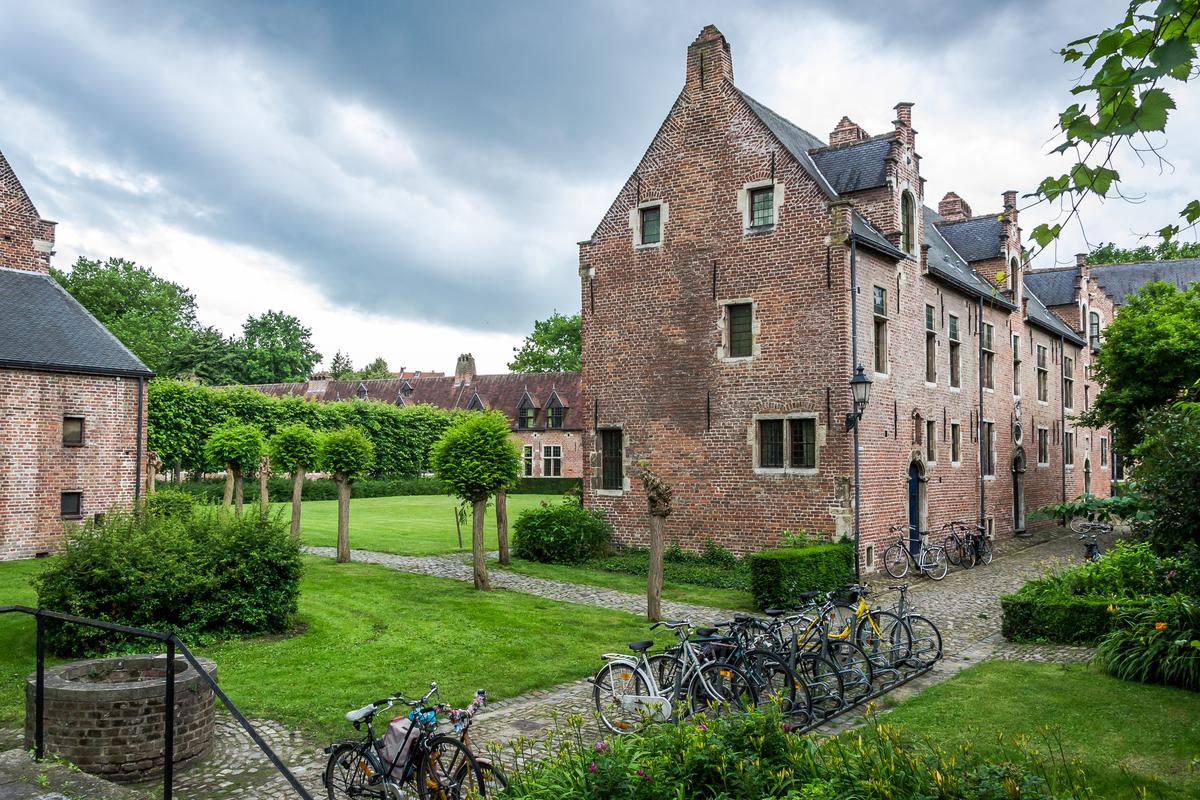
A UNESCO World Heritage Site comprising 72 houses built between the 13th and 17th centuries, lining cobblestone lanes alongside the Dijle River. Originally home to a community of devout single women (beguines), it is now student housing for KU Leuven. Free to walk through; guided tours available.
Oude Markt ('Longest Bar in Europe')
A large rectangular square ringed by 40+ bars and restaurants, earning its nickname as the ‘longest bar in Europe.’ In summer, terraces extend across the cobblestones; in winter, the square hosts the Leuven Christmas Market. The university student population keeps prices low and energy high.
St. Peter's Church & Dirk Bouts' Last Supper
A Brabantine Gothic church on the Grote Markt housing two triptychs by Dirk Bouts: ‘The Last Supper’ (1464–1468) and ‘The Martyrdom of St. Erasmus.’ The 50-meter tower was never completed — a Leuven landmark in its own right. The Treasury Museum displays Gothic sculpture and vestments. Admission ~€7.
University Library Tower
The rebuilt University Library (destroyed in both World Wars) houses a carillon of 63 bells. Climb the tower (298 steps) for a panoramic view over the Flemish countryside and the Old Town rooftops. Each floor displays photographs documenting the library’s destruction and reconstruction. Carillon concerts on Tuesday evenings and Wednesday lunchtimes. Admission ~€7.
Editor-curated picks carried over from our original guide. Where a full place guide exists, the card links to it.


Worth booking ahead in Leuven
Hand-picked from the operators our guides already send readers to. Prices and availability are live on the partner site.
BrowseViator
Tours and tickets in Leuven on Viator (opens Viator in a new tab)
Viator's full list of bookable tours and tickets in Leuven.
BrowseGetYourGuide
Experiences in Leuven on GetYourGuide (opens GetYourGuide in a new tab)
Everything GetYourGuide sells in Leuven, with the cancellation terms on each listing.
Where to stayBooking.com
Stays in Leuven (opens Booking.com in a new tab)
Live rates and availability for Leuven on Booking.com; filter by neighbourhood once you know where your days start.
We earn a commission if you book through these links, at no extra cost to you. It is how we keep the guides free and independent.
Where to stay
Begijnhof Congreshotel
Groot Begijnhof 15, 3000 Leuven, Belgium
A 4-star conference hotel set within the UNESCO-listed Grand Beguinage, occupying restored medieval buildings with cobblestone courtyards, a garden terrace, and quiet rooms with historic character. Breakfast is served in a vaulted refectory. Walking distance to the Botanical Garden and Grote Markt.
Martin's Klooster
Onze-Lieve-Vrouwstraat 22, 3000 Leuven, Belgium
A boutique hotel in a converted 16th-century convent near the Oude Markt, featuring individually styled rooms, exposed beams, a candlelit courtyard, and a restaurant specializing in regional Flemish-French cuisine. One of Belgium’s most characterful stays.
Pentahotel Leuven
Wieringstraat 7, 3000 Leuven, Belgium
A modern 4-star hotel in the university quarter with design-forward rooms, a fitness area, a rooftop terrace, and a ground-floor café. Central location between the station and the Grote Markt, with easy walking access to M-Museum and St. Peter’s Church.
Editor-curated stays carried over from our original guide. Where we have reviewed the hotel, the card links to the review.
Tips from the field
Highlights
- Leuven Town Hall (235 statues)
- Groot Begijnhof (UNESCO)
- Oude Markt ('Longest Bar')
- St. Peter's Church & Dirk Bouts
- University Library Tower
- Stella Artois Brewery Tour
- M-Museum
- Botanical Garden
Best activities
- Admire the Town Hall's 235 statues, stroll the UNESCO Groot Begijnhof, bar-hop across the Oude Markt, see Dirk Bouts' Last Supper in St. Peter's Church, climb the University Library Tower for panoramic views, tour the Stella Artois brewery, visit M-Museum, explore the Botanical Garden (Belgium's oldest), eat Vol-au-Vent at a Grote Markt brasserie, and attend a carillon concert.
Local experiences
- Take a Stella Artois brewery tour, sit on the Oude Markt terrace and people-watch with a locally brewed Stella or Domus beer, attend a Tuesday-evening carillon concert at the University Library, walk through the Begijnhof at dusk when the streetlights illuminate the cobblestones, browse the Saturday morning market on the Grote Markt, or cycle along the Dijle River towpath.
Practical tips
- Getting There: 25 min by train from Brussels Airport; 30 min from Brussels Central. Frequent direct trains.
- Transport: Leuven is compact and walkable. Rent a city bike (Velo) for longer distances.
- Currency: Euro (EUR). Contactless payment universal.
- Language: Dutch (Flemish), with excellent English spoken everywhere.
- Tipping: Service is included; round up for good service.
- Brewery Tour: Book the Stella Artois Experience online in advance (~€16).
Photography tips
- The Town Hall's intricate façade photographs best in flat, overcast light that eliminates harsh shadows across the statues — Leuven's frequent grey skies are an advantage. The Groot Begijnhof's cobblestone lanes and brick houses are most atmospheric in early morning or late afternoon when light rakes across the facades. The University Library Tower offers the best elevated perspective. The Oude Markt's café terraces glow at dusk.
Timing
- Allow 1–2 full days for Leuven (Town Hall, Begijnhof, Brewery, St. Peter's, Library Tower, Oude Markt). Combine with Brussels (30 min), Mechelen (20 min), or Bruges (70 min) for a wider Flanders itinerary.
Keeping it authentic
- Leuven is inseparable from KU Leuven — one of Europe's oldest universities (founded 1425), which infuses the city with youthful energy, international diversity, and accessible prices. The AB InBev brewery (formerly Stella Artois, founded here in 1366) dominates the city's industrial heritage
- a brewery tour is a rite of passage. The Groot Begijnhof is one of the best-preserved beguinages in Flanders — not a museum but a living residential quarter. Market mornings on the Grote Markt sell Vol-au-Vent (Flemish chicken stew in puff pastry), Leuven's unofficial dish.
Culture, customs and safety
Cultural heritage
Leuven serves as the intellectual and brewing capital of Belgium, where medieval university excellence, Catholic scholarly traditions, and Belgian beer culture created one of Europe oldest and most prestigious university cities. The city preserves Gothic architecture and academic traditions while maintaining its role as center of Belgian cultural life and brewing innovation. Leuven cultural heritage encompasses medieval university culture, Catholic intellectual traditions, Belgian beer brewing excellence, and contemporary European academic leadership that continues to influence global higher education and Belgian cultural identity through centuries of scholarly achievement.
Local customs & etiquette
In Leuven, be respectful of local customs and traditions.
Safety notes
Leuven is very safe with low crime rates. Pickpocketing can occur at the train station and in crowded bars — keep valuables secure. Bicycle theft is a minor issue on campus — use a solid lock. The Oude Markt area gets lively on weekend nights but remains safe. Belgium’s national terrorism threat level is elevated (level 3 of 4), though Leuven itself has seen no incidents. Avoid deserted parks after dark. Emergency: 112.

Travel Style
Season
Activities