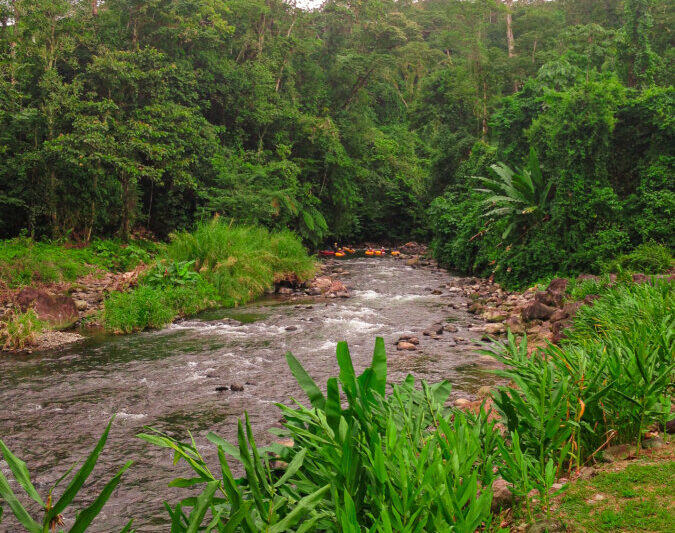
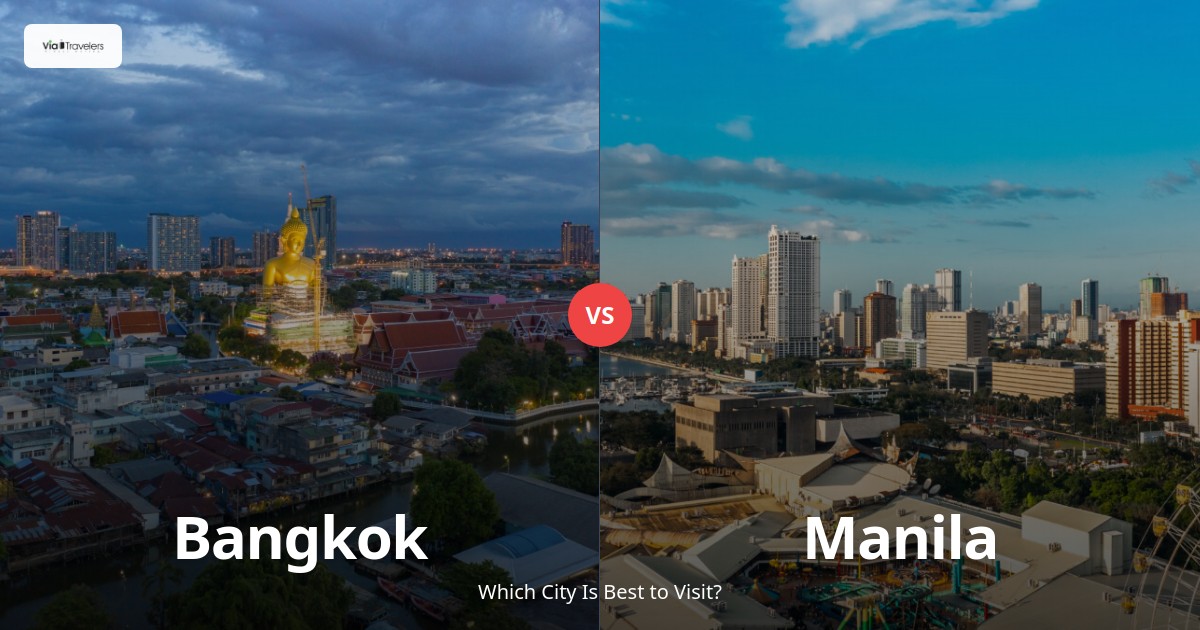
Manila, the capital of the Philippines, is a bustling metropolis that beautifully blends rich history with modernity. Known for its vibrant street life and cultural landmarks, visitors can explore the historic Intramuros, the National Museum, and enjoy the lively atmosphere of Rizal Park. The city’s diverse culinary scene and energetic nightlife further enhance its appeal.
The destination guide
Manila
City in Philippines, AsiaUpdated
- Overall8/10
- Best forBudget travelers
- PeakFeb, Mar, Apr, Dec
- CurrencyPHP
Intramuros alone earns Manila a stop — 16th-century Spanish walls standing inside one of Southeast Asia’s most chaotic cities.
Travel guides for Manila
Where to stay (1)
At a glance
Currency₱ PHPCode: PHP
Time zonePhilippine Standard Time
Languages
- Filipino
- English
Setting
- Urban metropolis
- Manila Bay
- Historic walled city
- Tropical climate
Population1.8M1,846,513 residents
VisaDuration: Tourist visa not required for stays under 30 days · Documents: Valid U.S. passport with 6 months validity beyond the planned stay and sufficient blank passport space
How Manila scores
8/10OverallExcellent
Weather8/10
Value for money9/10
Food & cuisine8/10
Culture & arts4/10
Cultural experience8/10
Nature & outdoors5/10
Adventure4/10
Nightlife7/10
Shopping6/10
Family friendly5/10
Romance6/10
Editorial scores on a 10-point scale, weighed against destinations of the same kind.
Travel safety snapshot
Overall45/100Exercise precaution
Women travellers38/100
LGBTQ+ travellers20/100
Theft62/100
Medical care60/100
Physical harm40/100
Political freedom55/100
SafePlace indicators use their source 100-point scale; higher is more favourable. Planning context, not a live travel advisory — check official government guidance before you go.
When to go
Best months to visit: January, February, March, April, May, November and December.
- January: 23.1 to 29.2 degrees Celsius, 72.7 millimetres of rain, best-time score 5 out of 5.
- February: 23 to 30.1 degrees Celsius, 40.6 millimetres of rain, best-time score 5 out of 5.
- March: 24.1 to 32 degrees Celsius, 26.6 millimetres of rain, best-time score 5 out of 5.
- April: 25.7 to 33.6 degrees Celsius, 41.3 millimetres of rain, best-time score 5 out of 5.
- May: 26.6 to 33.5 degrees Celsius, 145.6 millimetres of rain, best-time score 4 out of 5.
- June: 25.9 to 31.1 degrees Celsius, 278.1 millimetres of rain, best-time score 3 out of 5.
- July: 25.5 to 30 degrees Celsius, 434.7 millimetres of rain, best-time score 3 out of 5.
- August: 25.5 to 29.6 degrees Celsius, 353.8 millimetres of rain, best-time score 3 out of 5.
- September: 25.2 to 29.6 degrees Celsius, 357.6 millimetres of rain, best-time score 2 out of 5.
- October: 25 to 29.9 degrees Celsius, 245.9 millimetres of rain, best-time score 2 out of 5.
- November: 24.7 to 30.5 degrees Celsius, 133.6 millimetres of rain, best-time score 4 out of 5.
- December: 24.1 to 29.7 degrees Celsius, 158 millimetres of rain, best-time score 5 out of 5.
Month-by-month conditions and packing advice
- January
- Warm to hot, some rain January in Manila: dry-season city walks, food, heritage sites, day trips, malls, and island connections are most reliable. Crowds: January in Manila is workable with normal seasonal planning; build in layers, weather checks, and a mix of indoor and outdoor activities. Pack: Pack light clothing, sun protection, and comfortable walking shoes. Add a rain jacket or compact umbrella.
- February
- Warm to hot, occasional rain February in Manila: dry-season city walks, food, heritage sites, day trips, malls, and island connections are most reliable. Crowds: February in Manila is workable with normal seasonal planning; build in layers, weather checks, and a mix of indoor and outdoor activities. Pack: Pack light clothing, sun protection, and comfortable walking shoes.
- March
- Warm to hot, mostly dry March in Manila: dry-season city walks, food, heritage sites, day trips, malls, and island connections are most reliable. Crowds: March in Manila is workable with normal seasonal planning; build in layers, weather checks, and a mix of indoor and outdoor activities. Pack: Pack light clothing, sun protection, and comfortable walking shoes.
- April
- Warm to hot, occasional rain April in Manila: dry-season city walks, food, heritage sites, day trips, malls, and island connections are most reliable. Crowds: April in Manila is workable with normal seasonal planning; build in layers, weather checks, and a mix of indoor and outdoor activities. Pack: Pack light clothing, sun protection, and comfortable walking shoes.
- May
- Warm to hot, rainy May in Manila: season-edge timing can work with heat or rain planning. Crowds: May in Manila is one of the wetter periods, so museums, food stops, flexible reservations, and backup indoor plans make the trip easier. Pack: Pack light clothing, sun protection, and comfortable walking shoes. Add a rain jacket or compact umbrella.
- June
- Warm to hot, rainy June in Manila: wet-season rain, humidity, and storm risk make plans more variable. Crowds: June in Manila is one of the wetter periods, so museums, food stops, flexible reservations, and backup indoor plans make the trip easier. Pack: Pack light clothing, sun protection, and comfortable walking shoes. Add a rain jacket or compact umbrella.
- July
- Warm to hot, rainy July in Manila: wet-season rain, humidity, and storm risk make plans more variable. Crowds: July in Manila is one of the wetter periods, so museums, food stops, flexible reservations, and backup indoor plans make the trip easier. Pack: Pack light clothing, sun protection, and comfortable walking shoes. Add a rain jacket or compact umbrella.
- August
- Warm to hot, rainy August in Manila: wet-season rain, humidity, and storm risk make plans more variable. Crowds: August in Manila is one of the wetter periods, so museums, food stops, flexible reservations, and backup indoor plans make the trip easier. Pack: Pack light clothing, sun protection, and comfortable walking shoes. Add a rain jacket or compact umbrella.
- September
- Warm to hot, rainy September in Manila: peak typhoon-season risk makes travel less dependable. Crowds: September in Manila is one of the wetter periods, so museums, food stops, flexible reservations, and backup indoor plans make the trip easier. Pack: Pack light clothing, sun protection, and comfortable walking shoes. Add a rain jacket or compact umbrella.
- October
- Warm to hot, rainy October in Manila: peak typhoon-season risk makes travel less dependable. Crowds: October in Manila is one of the wetter periods, so museums, food stops, flexible reservations, and backup indoor plans make the trip easier. Pack: Pack light clothing, sun protection, and comfortable walking shoes. Add a rain jacket or compact umbrella.
- November
- Warm to hot, rainy November in Manila: season-edge timing can work with heat or rain planning. Crowds: November in Manila is one of the wetter periods, so museums, food stops, flexible reservations, and backup indoor plans make the trip easier. Pack: Pack light clothing, sun protection, and comfortable walking shoes. Add a rain jacket or compact umbrella.
- December
- Warm to hot, rainy December in Manila: dry-season city walks, food, heritage sites, day trips, malls, and island connections are most reliable. Crowds: December in Manila is one of the wetter periods, so museums, food stops, flexible reservations, and backup indoor plans make the trip easier. Pack: Pack light clothing, sun protection, and comfortable walking shoes. Add a rain jacket or compact umbrella.
Peak season
- April
- March
- February
- December
Off-peak
- November
- October
Know before you go
About
Manila, Metro Manila, is the capital of the Philippines, set on the eastern shore of Manila Bay at the mouth of the Pasig River and home to about 1.9 million residents (2024 census). Established as the Spanish colonial capital in 1571 by Miguel López de Legazpi, it is the historic and political core of the wider metropolis and ranks among the most densely populated cities in the world. Its heart is Intramuros, the 16th-century Spanish walled city, where Fort Santiago, a citadel begun in the 1590s, guards the river mouth. Nearby Rizal Park (Luneta) marks the spot where national hero José Rizal was executed in 1896. Manila layers Spanish, American, and Filipino history across its churches, plazas, and bustling markets, offering visitors a dense, vivid introduction to Philippine heritage, faith, and street food.
Best time to visit
December through February for cool, dry weather. March-May is hot and humid but sees fewer tourists. June-November is rainy season with typhoon risk, though rain is often short-lived.
Season by season
Dry Season (Dec-May):
Weather: 30°C, humid but dry
Highlights: Sightseeing
Best For: Walking
Wet Season (June-Nov):
Weather: Rain, Typhoons
Highlights: Malls
Best For: Indoor
Crowds
Manila is busiest during December–January holiday season and Holy Week (March/April), with heavy congestion in Intramuros, malls and transport hubs; quietest in mid-year months (May–June) outside school holidays—overall very crowded in central districts year-round.
Getting there and around
Getting there
Manila is accessible via Ninoy Aquino International Airport and domestic flight networks. The city connects to other Philippine cities via domestic flights and ferry services.
Getting around
Navigate Manila via iconic jeepneys—the Philippines’ beloved cultural symbol operating fixed routes for just PhP8 (first 4km), offering cheap, fast mini-bus transport avoiding major thoroughfares while immersing in authentic Filipino street culture. Master Metro Manila’s five railway systems: LRT-1, LRT-2, MRT-3 (5-10 minute frequency, ₱13-30 fares), plus PNR North/South Commuter scheduled services, using reloadable Beep Cards (₱100 minimum) for cheaper fares than Single Journey Tickets. Access historic Intramuros (“within the walls”) via LRT1 Central Terminal Station requiring 2-minute walk, though many travelers prefer taxis for convenience reaching this 0.67-square-kilometer Spanish colonial fortress. Experience authentic kalesas (horse-drawn carriages) still operating through Binondo and Intramuros streets, or use modern Grab, Angkas, Joyride ride-hailing services for first-timer convenience. Navigate via Sakay.ph app providing Metro Manila commuting directions across jeepneys, trains, buses, P2P, UV Express, and Pasig River Ferry. Board various jeepney routes to Intramuros: Quiapo-Pier, Doroteo Jose-Baclaran, Quiapo-Lawton, connecting the historic walled city to greater Manila’s sprawling transportation web where Spanish heritage meets contemporary Southeast Asian urban mobility.
Top experiences in Manila
Intramuros
The Walled City. The historic heart of Manila built by the Spanish. Cobblestone streets, calesas (horse-drawn carriages), and old ruins. It feels like stepping back in time.
Rizal Park (Luneta)
A massive park dedicated to the national hero, Jose Rizal. It is the lungs of the city. Locals come here to picnic, exercise, and relax. The monument is guarded 24/7.
SM Mall of Asia
One of the largest malls in the world. It is a city within a city. Shopping, an ice skating rink, and a bayfront amusement park. A testament to mall culture in the Philippines.
Fort Santiago
A citadel inside Intramuros. Jose Rizal was imprisoned here before his execution. It has dungeons, gardens, and a shrine. A place of deep historical significance.
San Agustin Church
A UNESCO World Heritage site inside Intramuros. The oldest stone church in the country. It survived WWII bombing. The baroque interior is breathtaking.
Editor-curated picks carried over from our original guide. Where a full place guide exists, the card links to it.
Worth booking ahead in Manila
Hand-picked from the operators our guides already send readers to. Prices and availability are live on the partner site.
BrowseViator
Tours and tickets in Manila on Viator (opens Viator in a new tab)
Viator's full list of bookable tours and tickets in Manila.
BrowseGetYourGuide
Experiences in Manila on GetYourGuide (opens GetYourGuide in a new tab)
Everything GetYourGuide sells in Manila, with the cancellation terms on each listing.
Where to stayBooking.com
Stays in Manila (opens Booking.com in a new tab)
Live rates and availability for Manila on Booking.com; filter by neighbourhood once you know where your days start.
We earn a commission if you book through these links, at no extra cost to you. It is how we keep the guides free and independent.
Where to stay
The Manila Hotel
1 Rizal Park, Ermita, Manila, 0913 Metro Manila, Philippines
The ‘Grand Dame’ of Manila. Opened in 1912. General MacArthur lived here. It exudes history and colonial charm. The lobby is massive and iconic.
Conrad Manila
Seaside Boulevard, Coral Way, Pasay, 1300 Metro Manila, Philippines
A luxury hotel on top of S Maison mall. The architecture looks like a cruise ship. It has stunning views of Manila Bay (and the famous sunset). Very modern.
Okada Manila
New Seaside Dr, Parañaque, 1701 Metro Manila, Philippines
A massive integrated resort in Entertainment City. It has a casino, a fountain show that rivals Dubai’s, and pink-themed rooms. It is opulent and over-the-top.
Editor-curated stays carried over from our original guide. Where we have reviewed the hotel, the card links to the review.
Tips from the field
Highlights
- History – Intramuros
- Shop – Mall of Asia
- Food – Halo-Halo
- Sunset – Manila Bay
- Museum – National Museum
- Church – San Agustin
- Transport – Jeepney
- Vibe – Chaotic Energy
Best activities
- Ride a bamboo bike (Bambike) in Intramuros. Watch the sunset at Manila Bay. Shop at Mall of Asia. Visit the National Museum of Fine Arts. Eat Halo-Halo at Razon's. Walk around Rizal Park. Tour Fort Santiago.
Practical tips
- Currency: Philippine Peso (PHP). Cash needed at markets; cards at malls.
- Getting There: Ninoy Aquino Airport (MNL). Grab/taxi to Makati (~₱300-500).
- Transportation: MRT/LRT trains, jeepneys (₱13), Grab. Walking limited due to traffic.
- Dining: Adobo, sinigang, lechon. Street food from ₱50-100. Mall food courts ₱150-300. BGC and Makati for upscale dining.
- Free Attractions: Intramuros walking, Rizal Park, Manila Baywalk, BGC public art, Binondo (Chinatown).
- Tipping: 10%
- Electricity: 220V/60Hz, Type A/B plugs
Photography tips
- Golden Hour: Sunset at Manila Bay (world famous). Golden light hitting the walls of Intramuros.
- Iconic Shots:
- The Rizal Monument.
- A Calesa ride in Intramuros.
- The Manila Bay sunset.
- Jeepneys on the street.
- The Fountain at Okada.
- Technique: Manila is chaotic and colorful. Use a fast shutter speed to capture the jeepneys. Be careful with your gear in crowded areas (Divisoria).
Timing
- Peak Season (Dec-May):
- Dry but hot
- Low Season (June-Oct):
- Rain, typhoons, flooding risk
Keeping it authentic
- Manila is gritty, loud, and full of life. It is not just a stopover. The 'Jeepney' is the symbol of Filipino ingenuity. Filipinos are arguably the friendliest people in Asia.
Culture, customs and safety
Cultural heritage
Manila serves as the cultural crossroads of Southeast Asian and Hispanic civilizations, where pre-colonial Tagalog traditions, Spanish colonial heritage, American influence, and contemporary Filipino identity created one of Asia most complex multicultural urban centers. The city preserves significant Spanish colonial architecture while embracing its role as center of Filipino cultural expression and overseas Filipino worker global connections. Manila cultural heritage encompasses ancient Tagalog culture, Spanish colonial architectural magnificence, American colonial influence, and contemporary Filipino cultural innovation that continues to influence Southeast Asian urban development and global Filipino cultural diaspora.
Local customs & etiquette
In Manila, greet with ‘Kumusta’ (hello) and show respect for elders. Filipinos are warm and hospitable. Tipping is customary (10-15% in restaurants). Family values are central to culture.
Safety notes
Manila requires more awareness than most Asian capitals.
General Safety:
• Makati, BGC (Bonifacio Global City), and Intramuros are safe
• Avoid walking alone at night in less-developed areas
• Use Grab instead of flagging taxis
Traffic:
• Notoriously bad — allow extra time between appointments
Emergency: 911

Travel Style
Season