Molokai, known as the Friendly Isle, is a serene Hawaiian island that offers a glimpse into traditional Hawaiian culture and stunning natural beauty. With its lush landscapes, pristine beaches, and welcoming communities, Molokai is perfect for those seeking a peaceful escape from the hustle and bustle of modern life.
The destination guide
Molokai
Island in United States, North AmericaUpdated
- Overall7/10
- Best forCouples, Adventure seekers, Solo travelers
- PeakJan–Apr
- CurrencyUSD
Molokai has no traffic lights, no high-rises, and no resort strip. That’s the point — and exactly why it feels like Hawaii used to.
Travel guides for Molokai
More guides featuring Molokai (2)
At a glance
Currency$ USDCode: USD
Time zoneHawaii-Aleutian Standard Time
Languages
- English
Setting
- Tropical island
- Pristine beaches
- Sea cliffs
- Rural farmland
Population7,3507,350 residents
VisaDocuments: For domestic U.S. air travel, travelers age 18 and older must present a REAL ID-compliant driver's license or another TSA-accepted ID such as a valid passport
How Molokai scores
7/10OverallGood
Weather9/10
Value for money7/10
Safety9/10
Food & cuisine7/10
Culture & arts6/10
Cultural experience9/10
Nature & outdoors9/10
Adventure6/10
Nightlife2/10
Shopping3/10
Family friendly5/10
Romance8/10
Editorial scores on a 10-point scale, weighed against destinations of the same kind.
Travel safety snapshot
Overall82/100High rating
Women travellers86/100
LGBTQ+ travellers75/100
Theft80/100
Medical care70/100
Physical harm84/100
Political freedom75/100
SafePlace indicators use their source 100-point scale; higher is more favourable. Planning context, not a live travel advisory — check official government guidance before you go.
When to go
Best months to visit: January, February, March, April, November and December.
- January: 18.2 to 23.7 degrees Celsius, 53.4 millimetres of rain, best-time score 5 out of 5.
- February: 17.9 to 23.1 degrees Celsius, 58.1 millimetres of rain, best-time score 5 out of 5.
- March: 18.3 to 23.8 degrees Celsius, 47.7 millimetres of rain, best-time score 5 out of 5.
- April: 19.1 to 24.5 degrees Celsius, 58.7 millimetres of rain, best-time score 4 out of 5.
- May: 19.7 to 25.3 degrees Celsius, 29.5 millimetres of rain, best-time score 3 out of 5.
- June: 20.5 to 26.3 degrees Celsius, 19.1 millimetres of rain, best-time score 2 out of 5.
- July: 21.1 to 26.8 degrees Celsius, 21.1 millimetres of rain, best-time score 2 out of 5.
- August: 21.4 to 27.3 degrees Celsius, 29.9 millimetres of rain, best-time score 2 out of 5.
- September: 21.3 to 27.3 degrees Celsius, 22.6 millimetres of rain, best-time score 2 out of 5.
- October: 21 to 26.8 degrees Celsius, 38.6 millimetres of rain, best-time score 3 out of 5.
- November: 20.1 to 25.4 degrees Celsius, 33 millimetres of rain, best-time score 4 out of 5.
- December: 19 to 24.1 degrees Celsius, 63.9 millimetres of rain, best-time score 5 out of 5.
Month-by-month conditions and packing advice
- January
- Mild to warm, occasional rain Perfect dry and warm weather. Crowds: January in Molokai is comfortable for sightseeing, neighborhoods, food stops, day trips, and outdoor time with limited weather friction. Pack: Pack layered clothing and comfortable walking shoes.
- February
- Mild to warm, occasional rain Excellent beach weather, low humidity. Crowds: February in Molokai is comfortable for sightseeing, neighborhoods, food stops, day trips, and outdoor time with limited weather friction. Pack: Pack layered clothing and comfortable walking shoes.
- March
- Mild to warm, occasional rain Slightly warmer but still dry and comfortable. Crowds: March in Molokai is comfortable for sightseeing, neighborhoods, food stops, day trips, and outdoor time with limited weather friction. Pack: Pack layered clothing and comfortable walking shoes.
- April
- Mild to warm, occasional rain Getting hotter, transition to wet season begins. Crowds: April in Molokai is comfortable for sightseeing, neighborhoods, food stops, day trips, and outdoor time with limited weather friction. Pack: Pack light clothing, sun protection, and comfortable walking shoes.
- May
- Mild to warm, mostly dry Hot and humid, rains start increasing. Crowds: May in Molokai is comfortable for sightseeing, neighborhoods, food stops, day trips, and outdoor time with limited weather friction. Pack: Pack light clothing, sun protection, and comfortable walking shoes.
- June
- Mild to warm, mostly dry Wet season, frequent heavy downpours. Crowds: June in Molokai is comfortable for sightseeing, neighborhoods, food stops, day trips, and outdoor time with limited weather friction. Pack: Pack light clothing, sun protection, and comfortable walking shoes.
- July
- Mild to warm, mostly dry Peak monsoon/wet season. Crowds: July in Molokai is comfortable for sightseeing, neighborhoods, food stops, day trips, and outdoor time with limited weather friction. Pack: Pack light clothing, sun protection, and comfortable walking shoes.
- August
- Warm to hot, mostly dry Continuing heavy rains and high humidity. Crowds: August in Molokai is comfortable for sightseeing, neighborhoods, food stops, day trips, and outdoor time with limited weather friction. Pack: Pack light clothing, sun protection, and comfortable walking shoes.
- September
- Warm to hot, mostly dry Still very wet, risk of storms/typhoons. Crowds: September in Molokai is comfortable for sightseeing, neighborhoods, food stops, day trips, and outdoor time with limited weather friction. Pack: Pack light clothing, sun protection, and comfortable walking shoes.
- October
- Mild to warm, occasional rain Rains begin to taper off, still humid. Crowds: October in Molokai is comfortable for sightseeing, neighborhoods, food stops, day trips, and outdoor time with limited weather friction. Pack: Pack light clothing, sun protection, and comfortable walking shoes.
- November
- Mild to warm, occasional rain Start of the dry season, weather improving. Crowds: November in Molokai is comfortable for sightseeing, neighborhoods, food stops, day trips, and outdoor time with limited weather friction. Pack: Pack light clothing, sun protection, and comfortable walking shoes.
- December
- Mild to warm, occasional rain Fantastic weather, peak tourist season. Crowds: December in Molokai is comfortable for sightseeing, neighborhoods, food stops, day trips, and outdoor time with limited weather friction. Pack: Pack light clothing, sun protection, and comfortable walking shoes.
Peak season
- March
- February
- January
- April
Off-peak
- September
- August
- July
- June
Know before you go
About
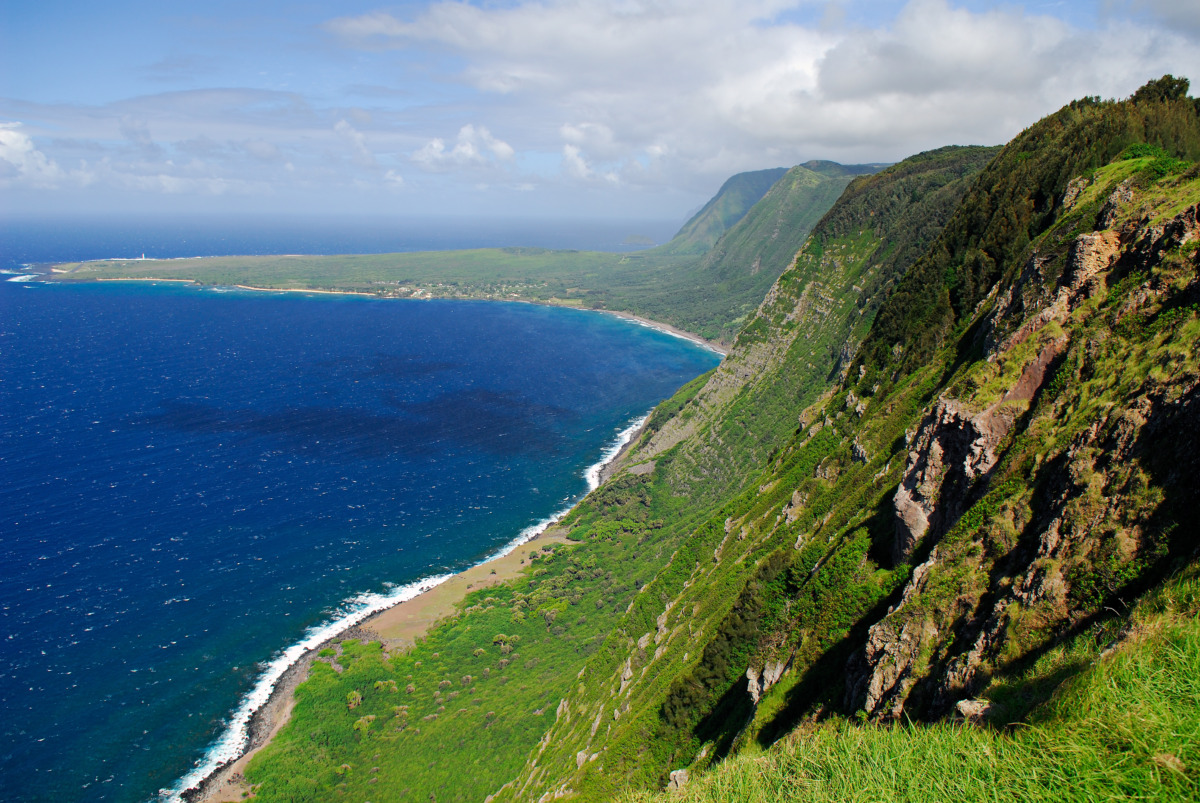
Molokai, in Hawaii’s Maui County, is the most traditional and least developed of the main Hawaiian islands, affectionately known as “The Friendly Isle.” Stretching about 38 by 10 miles across roughly 260 square miles, it is home to around 7,400 residents and has deliberately resisted large-scale tourism, with no traffic lights and no buildings taller than a palm tree. Its rugged north coast is lined with some of the world’s tallest sea cliffs, plunging dramatically to the Pacific, while the isolated Kalaupapa Peninsula—reached on foot or by mule—holds a former Hansen’s disease settlement (1866–1969) now preserved as Kalaupapa National Historical Park. On the lush east end, the Halawa Valley unfolds with waterfalls, ancient Hawaiian sites, and guided cultural hikes. Visitors come for an unhurried, deeply local experience: empty beaches, fishponds, taro farms, and a strong Native Hawaiian culture that makes Molokai feel worlds apart from its busier neighbors.
Neighbourhoods
Kaunakakai, Halawa Valley, Maunaloa
Best time to visit
April through October for drier conditions and calmer seas. Winter brings larger surf and whale-watching season (December–April).
Season by season
Molokai is tropical year-round.
Winter (Dec-March):
• Weather: 70-80°F, wetter
• Highlights: Whale Watching (humpbacks visible from shore), big surf
Summer (June-Sept):
• Weather: 80-90°F, dry trade winds
• Highlights: Calm waters, festivals
Shoulder:
• Weather: Consistent
• Highlights: Ka Hula Piko Festival (May) – birth of Hula
Crowds
Molokai is busiest in summer months and around major Hawaiian holidays (June–August, December), with increased day-trip traffic to Kalaupapa and ferry access days; quietest in late fall and early spring (September–November, February–March), remaining sparsely visited compared with other Hawaiian islands.
Getting there and around
Getting there
Molokai Airport (MKK/Hoolehua Airport) in central Molokai is accessible only by air via 25-minute flights. Hawaiian Airlines and Mokulele Airlines connect from Honolulu (HNL), Maui Kahului (OGG), and Kapalua (JHM). No direct mainland US service – must connect through Honolulu. No ferry service available (discontinued). Airport is 15 minutes from Kaunakakai, Molokai’s only town. Book flights early as service is limited.
Getting around
Getting around Molokai is less about public transportation and more about embracing a slower, intentional pace. There’s no formal bus or rail network here, and while the county operates a very limited door-to-door shuttle service for residents and those with appointments, it’s not designed for spontaneous tourist travel. The island’s compact villages like Kaunakakai are walkable, but to explore more remote spots like Halawa Valley or Papohaku Beach, renting a car is nearly essential—just book in advance as availability is limited. Rideshare services like Uber and Lyft are essentially nonexistent, and taxis are rare, so plan ahead and be prepared for offline navigation, as cell service can be spotty in rural areas.
Top experiences in Molokai
Kalaupapa National Historical Park
One of the most poignant sites in Hawaii, this isolated peninsula was a forced colony for Hansen’s Disease (leprosy) patients from 1866 to 1969. It is accessible only by mule ride, hiking (trail currently closed/under repair), or small plane. Visiting the grave of Saint Damien and hearing the stories of resilience is a deeply spiritual experience. *Permit required.
Papohaku Beach
One of the largest white sand beaches in Hawaii (3 miles long and 100 yards wide), yet likely you’ll be the only person on it. Located on the West End, it offers views of Oahu across the channel. Swimming can be rough, but it’s perfect for beachcombing, camping, and watching glorious sunsets.
Halawa Valley
This historic valley on the East End is believed to be one of the earliest Hawaiian settlements. A guided hike (mandatory to enter private land) takes you through lush jungle to the towering Mooula Falls. The guides share ancient legends and cultural protocols, making it a true immersion into Hawaiian heritage.
Kapuaiwa Coconut Grove
Planted in the 1860s by King Kamehameha V, this grove contains hundreds of coconut palms. It is one of the last royal coconut groves in the islands. Located just off the highway, it’s beautiful at sunset when the silhouettes of the trees reflect in the ancient fishponds nearby. *Warning: Do not walk under the trees due to falling coconuts.
Kamakou Preserve
A nature Conservancy preserve high in the mountains. A 4WD vehicle is needed to reach the Waikolu Lookout, which offers views into a lush valley often shrouded in mist. The Pepeopae Trail leads through a rare mossy cloud forest, home to native birds found nowhere else on earth.
Editor-curated picks carried over from our original guide. Where a full place guide exists, the card links to it.
Worth booking ahead in Molokai
Hand-picked from the operators our guides already send readers to. Prices and availability are live on the partner site.
BrowseViator
Tours and tickets in Molokai on Viator (opens Viator in a new tab)
Viator's full list of bookable tours and tickets in Molokai.
BrowseGetYourGuide
Experiences in Molokai on GetYourGuide (opens GetYourGuide in a new tab)
Everything GetYourGuide sells in Molokai, with the cancellation terms on each listing.
Where to stayBooking.com
Stays in Molokai (opens Booking.com in a new tab)
Live rates and availability for Molokai on Booking.com; filter by neighbourhood once you know where your days start.
We earn a commission if you book through these links, at no extra cost to you. It is how we keep the guides free and independent.
Where to stay
Hotel Moloka'i
1300 Kamehameha V Hwy, Kaunakakai, HI 96748
Known as the ‘Friendly Isle’s’ most iconic hotel, this Polynesian village-style property sits right on Kamiloloa Beach. The design mimics traditional hale (houses) with open-air lanais. While rustic (no AC in many rooms, relying on trade winds), it captures the authentic, laid-back spirit of old Hawaii. The oceanfront restaurant offers live slack-key guitar music.
Molokai Shores
100 Kamehameha V Hwy, Kaunakakai, HI 96748
Centrally located near the main town of Kaunakakai, Molokai Shores offers condo-style living with ocean views. The lush grounds feature tropical gardens, a pool, and barbecue areas. It’s a perfect home base for exploring the island, with fully equipped kitchens allowing guests to cook fresh local produce.
Kepuhi Beach Resort
1131 Kaluakoi Rd, Maunaloa, HI 96770
Located on the dry, sunny West End, these condos overlook the stunning (and often empty) Kepuhi Beach. The resort is quieter and more secluded, situated on the grounds of a former golf course which is now a park-like roaming ground for wild turkey and deer. It offers spectacular sunsets and access to miles of coastal trails.
Editor-curated stays carried over from our original guide. Where we have reviewed the hotel, the card links to the review.
Tips from the field
Highlights
- Kalaupapa – History & spirituality
- Papohaku Beach – Empty 3-mile strand
- Halawa Valley – Ancient culture & falls
- Sea Cliffs – Highest in the world (3,000ft)
- Post-A-Nut – Mail a coconut at the post office
- Fishponds – Ancient engineering
- Kaunakakai – Sleepy main town
- Purdy's Macadamia Nut Farm – Taste fresh nuts
Best activities
- Molokai is for slowing down. There are no traffic lights and no box stores. Visit Purdy's Macadamia Farm to crack fresh nuts. Buy hot bread (stuffed with jams) from the back door of Kanemitsu Bakery late at night. Hike Halawa Valley with a cultural guide. The most spectacular activity is a helicopter tour to see the North Shore sea cliffs, which are otherwise inaccessible. It's about 'talking story' with locals, not checking boxes.
Local experiences
- Line up at Kanemitsu Bakery's back alley late at night for their legendary hot bread loaded with butter, cream cheese, or cinnamon. Take a guided hike to Moʻoula Falls through Halawa Valley, one of Hawaiʻi's earliest settlements. Visit Purdy's Natural Macadamia Nut Farm to crack and taste fresh nuts on a working family farm. Attend a Friday night jam session at Paddlers where local 'aunties and uncles' play traditional Hawaiian music. Arrange a permit-only tour of Kalaupapa National Historical Park to learn about the Hansen's disease settlement and the legacy of Saint Damien. Stargaze from Papohaku Beach — with almost zero light pollution, the Milky Way is clearly visible.
Practical tips
- Reserve a rental car well in advance — availability is extremely limited and prices run $120–$190 per day. There is no public transportation on Molokai. Gas prices are significantly higher than other Hawaiian islands, so fill up in Kaunakakai. Accommodation options are very limited
- Hotel Molokai is the only hotel, so book early or look into vacation rentals. Bring all specialty supplies from Maui or Oahu, as stores are small and selection is minimal. Cell service is spotty outside Kaunakakai. The island essentially shuts down on Sundays — plan accordingly.
Photography tips
- Golden Hour: Sunset at Kapuaiwa Coconut Grove to catch the reflections.
- Iconic Shots:
- The sea cliffs (highest in the world) from a boat or plane.
- Halawa Valley waterfalls.
- Empty expanse of Papohaku Beach.
- Phallic Rock (Kauleonanahoa) – for the culturally curious.
- Technique: The island is quiet. Photography should be respectful. Ask permission before photographing locals or sacred sites.
Timing
- Year-Round:
- Molokai doesn't have a distinct peak season like other islands.
- It is always quiet.
- Check for local festivals which might fill the hotel.
- Book rental cars well in advance; supply is limited.
Keeping it authentic
- This is the 'Most Hawaiian Island.' Over 50% of the population has Native Hawaiian ancestry. They fought hard against mass tourism and development. Respect is paramount. Aloha is not a marketing slogan here
- it's a way of life. Drive slowly (Aloha pace). Dress modestly. It is not Maui or Oahu
- don't expect nightlife or room service.
Culture, customs and safety
Cultural heritage
Molokai preserves the most authentic Native Hawaiian cultural experience and traditional island lifestyle, where ancient Hawaiian land stewardship, traditional fishing practices, and community cultural preservation created Hawaii most culturally intact island community. The island maintains traditional Hawaiian values of ohana and malama aina while resisting mass tourism development that has transformed other Hawaiian islands. Molokai cultural heritage encompasses ancient Hawaiian cultural practices, traditional Polynesian land management, Native Hawaiian cultural preservation, and contemporary indigenous cultural resistance that continues to represent authentic Hawaiian cultural identity and Pacific Islander heritage preservation.
Local customs & etiquette
Molokai embraces the Hawaiian concept of ‘Slow down, this is Molokai’ with a deliberately slower pace of life. Over 50% of residents have Native Hawaiian ancestry, maintaining authentic island traditions. Respect for the land (malama aina) is fundamental. Visitors should embrace the unhurried lifestyle – no traffic lights, minimal development, and island time scheduling. Local protocol emphasizes respect for sacred sites, especially Kalaupapa. Traditional Hawaiian values of ohana (family), aloha spirit, and community connection remain strong. Fishing and farming traditions continue. Visitors should approach with humility and respect for this most Hawaiian of islands.
Safety notes
Molokai is one of Hawaii’s safest islands with very low crime. The main safety concerns are ocean-related: no beaches have lifeguards, and west-end beaches like Papohaku can have dangerous currents. Never turn your back on the ocean. Sun exposure is intense — high-SPF sunscreen and a hat are essential. Speed limits are strictly enforced (maximum 45 mph). Respect all ‘kapu’ (no trespassing) signs, which protect sacred or private land. There are no medical trauma facilities on the island — serious emergencies require helicopter transfer to Maui or Oahu. Always carry drinking water, as many beach areas have no facilities.

Travel Style
Activities