Paros is a stunning island in the Aegean Sea, known for its beautiful beaches, charming villages, and rich history. With its whitewashed houses, crystal-clear waters, and vibrant nightlife, Paros offers a perfect blend of relaxation and adventure. Explore the picturesque town of Naoussa, visit the ancient marble quarries, and enjoy the local cuisine in traditional tavernas.
The destination guide
Paros
Travel guides for Paros
More guides featuring Paros (2)
At a glance
Currency€ EURCode: EUR
Time zoneEastern European Time
Languages
- Greek
Setting
- Cycladic island
- Sandy beaches
- Marble quarries
- Fishing villages
Known for
- Beach relaxation
- Historical exploration
- Traditional Greek island life
- Water sports
- Culinary experiences
Population12,00012,000 residents
VisaDuration: Up to 90 days within any 180-day period in the Schengen Area · Documents: Valid passport issued within the last 10 years and valid for at least 3 months after planned departure, plus proof of accommodation, onward or return travel, and sufficient funds if requested
How Paros scores
6/10OverallFair
Weather9/10
Value for money7/10
Safety8/10
Food & cuisine8/10
Culture & arts4/10
Cultural experience8/10
History8/10
Nature & outdoors9/10
Adventure4/10
Nightlife7/10
Shopping6/10
Family friendly5/10
Romance9/10
Character
Photography score7/10
Authenticity score9/10
Off-the-beaten-path score6/10
Editorial scores on a 10-point scale, weighed against destinations of the same kind.
Travel safety snapshot
Overall86/100High rating
Women travellers82/100
LGBTQ+ travellers74/100
Theft78/100
Medical care72/100
Physical harm85/100
Political freedom79/100
SafePlace indicators use their source 100-point scale; higher is more favourable. Planning context, not a live travel advisory — check official government guidance before you go.
When to go
Best months to visit: April, May, June, September and October.
- January: 13 to 14.9 degrees Celsius, 41.1 millimetres of rain, best-time score 2 out of 5.
- February: 12.1 to 13.6 degrees Celsius, 37.9 millimetres of rain, best-time score 2 out of 5.
- March: 13.3 to 14.8 degrees Celsius, 3.3 millimetres of rain, best-time score 3 out of 5.
- April: 15.8 to 17.1 degrees Celsius, 0.6 millimetres of rain, best-time score 4 out of 5.
- May: 19.1 to 20.5 degrees Celsius, 0.3 millimetres of rain, best-time score 5 out of 5.
- June: 22.8 to 23.8 degrees Celsius, best-time score 5 out of 5.
- July: 24.9 to 25.9 degrees Celsius, best-time score 3 out of 5.
- August: 25.1 to 26.4 degrees Celsius, best-time score 3 out of 5.
- September: 24.2 to 25.1 degrees Celsius, best-time score 5 out of 5.
- October: 21 to 22.1 degrees Celsius, 6 millimetres of rain, best-time score 4 out of 5.
- November: 17.6 to 18.8 degrees Celsius, 7.1 millimetres of rain, best-time score 2 out of 5.
- December: 15.1 to 16.5 degrees Celsius, 18.1 millimetres of rain, best-time score 2 out of 5.
Month-by-month conditions and packing advice
- January
- Cool weather, some rain January in Paros: cold, quiet off-season with many businesses closed, cool days, and seas too chilly for swimming. Crowds: Travelers visiting Paros in January will find themselves outside the island’s tourist season, meaning fewer open hotels and restaurants but also dramatically lower prices and a calm, local atmosphere. It is not beach weather, but the cooler climate is excellent for hiking inland trails or wandering village streets without the summer heat. Rain showers may limit time outdoors, yet they rarely last long and often give way to bright skies. With limited ferry schedules, planning ahead is essential, but those who visit gain access to an authentic, unhurried island experience. Crowds are virtually nonexistent, making it ideal for cultural immersion and photography of village life. Budget-conscious travelers will appreciate off-season deals, though advance booking for accommodations is still recommended to secure quality stays. Pack: Water-resistant jacket for sudden showers; Comfortable walking shoes for cobbled streets; Warm sweater or fleece for cool evenings; Compact travel umbrella; Modest clothing for visiting monasteries and churches; Layered outfits with breathable base fabrics
- February
- Cool weather, some rain February in Paros: still quiet low season with cool, sometimes wet weather and limited services open. Crowds: February is firmly within Paros’s low season, meaning travelers will find quiet villages, low accommodation rates, and limited ferry schedules. Many beachfront businesses remain closed, but cultural sites, local eateries, and inland villages remain accessible and rewarding. The cooler weather supports hiking, photography, and exploring historic sites like the Byzantine Panagia Ekatontapiliani church without the crush of crowds. Rainfall may occasionally alter outdoor plans, but it rarely disrupts an entire day. For budget-conscious travelers or those seeking a slower, more authentic experience of Cycladic life, this period is ideal. Advance booking is less critical than in peak months, but planning transport connections carefully is advisable due to reduced seasonal services. Pack: Waterproof jacket for light rain showers; Layered clothing for cool days and colder evenings; Comfortable walking shoes suitable for wet stone streets; Warm scarf or shawl for wind protection; Compact travel umbrella for passing showers; Modest clothing for visiting churches and monasteries
- March
- Cool weather, mostly dry March in Paros: early-spring warming with wildflowers and very light crowds, though the sea remains cold for swimming. Crowds: March falls in Paros’s shoulder season, a transitional period between the quiet winter and the lively summer. The cool yet dry conditions create a comfortable climate for walking tours, cultural exploration, and photographing the island’s landscapes without crowds. Most beach clubs remain closed, but tavernas in Naoussa and Parikia begin to show early signs of activity. Prices for accommodation remain lower than summer peaks, offering value for those seeking authentic experiences. Expect minimal tourist congestion, with more interaction possible with locals in traditional villages. While ferry schedules are slightly reduced compared to summer, connectivity remains reliable, making it a practical time to combine Paros with nearby islands. For travelers seeking cultural depth over nightlife or beach lounging, March offers excellent timing before the Easter holiday crowds arrive. Pack: Light sweater or fleece for cool evenings; Comfortable walking shoes for cobbled streets and trails; Light rain jacket for occasional showers; Scarf or wrap for windy coastal areas; Modest clothing for visiting churches and monasteries; Camera gear to capture soft spring light
- April
- Warm and pleasant, mostly dry April in Paros: pleasant spring weather reopening the island, with mild days, blooming landscapes, and minimal crowds. Crowds: April is a shoulder-season month in Paros, offering a balance between comfortable weather and relatively quiet tourist conditions. While it is not yet peak beach season, the island feels alive with spring vibrancy, and many cafes and tavernas reopen in anticipation of summer. Accommodation prices remain moderate compared to the high rates of July and August, making this an excellent time for value-seeking travelers. Outdoor activities like hiking ancient trails, exploring Byzantine churches, or cycling through small villages are especially rewarding with mild temperatures. The sea remains cool, so swimming is more for the adventurous, but ferries and island connections are reliable, allowing visitors to explore the Cyclades with ease. For travelers wanting authentic cultural immersion with fewer crowds, April is one of the most rewarding times to visit. Pack: Light jacket for cooler evenings; Comfortable walking shoes for cobblestone streets; Breathable layers for daytime comfort; Compact umbrella for occasional showers; Scarf or shawl for breezy ferry rides; Modest attire for church visits
- May
- Warm and pleasant, mostly dry May in Paros: ideal late-spring with warm swimmable seas, wildflowers, minimal crowds, and only occasional early meltemi wind. Crowds: May represents the shoulder season in Paros, offering one of the best times to visit before the summer rush. Conditions are excellent for hiking ancient trails, wine tastings, and exploring archaeological sites without oppressive heat or tourist crowds. Accommodation rates remain moderate, with more availability compared to peak July and August. Restaurants and tavernas begin extending their hours, yet still retain a local feel. Ferry schedules expand, improving island-hopping options across the Cyclades. Beaches are peaceful, with only a handful of early swimmers and sunbathers. This month offers excellent value and atmosphere for travelers who prioritize authenticity, cultural exploration, and uncrowded landscapes. Advance booking is recommended for boutique stays but less critical than high summer. Pack: Light layers for cool evenings and breezy ferry rides; Comfortable sandals for walking stone-paved streets; Light jacket or shawl for outdoor dining at night; Wide-brimmed hat and SPF 50 sunscreen; Swimwear for early season beach visits; Respectful attire for monastery and church visits
- June
- Warm and pleasant, mostly dry June in Paros: excellent early-summer with warm sunny weather and good swimming before peak crowds, though meltemi winds begin late month. Crowds: June represents the beginning of the high summer tourism season in Paros, with weather conditions ideally suited for outdoor activities. Beach visits, archaeological exploration, and leisurely village strolls are all enhanced by warm yet tolerable temperatures. While not as crowded as July and August, June sees a noticeable uptick in visitor numbers, meaning hotels and ferry tickets can book quickly. Prices begin their seasonal climb, though they are still more moderate compared to peak season. Early summer festivals and local events, often tied to Orthodox calendar celebrations, bring authentic cultural experiences alongside the pristine beach atmosphere. For those seeking a balance of excellent weather and manageable crowd levels, June offers one of the best windows of the year to visit. Pack: Light cotton or linen outfits suitable for warm Mediterranean days; Comfortable sandals for village and coastal walking; Wide-brimmed hat and polarized sunglasses for strong sunlight; Light scarf or wrap for evenings and modesty at monasteries; High SPF reef-safe sunscreen to protect against strong UV; Swimwear and quick-dry towel for daily beach or boat excursions
- July
- Hot and sunny, mostly dry July in Paros: hot busy peak season with warm seas but heavy crowds and strong meltemi winds great for wind sports, tougher for boating. Crowds: July represents the height of Paros’ tourist season, when the island is buzzing with visitors and prices for accommodation peak. The dry, hot weather ensures uninterrupted days for beachgoing, sailing, and open-air dining, though strong Meltemi winds can limit some boat excursions. Expect lively nightlife, packed tavernas, and crowded ferries as the island fills with both international travelers and Athenians on summer holiday. For those seeking cultural depth, this is also when many local festivals occur, often blending religious traditions with music and dance under warm evening skies. While it is an ideal month for beach lovers and social travelers, the crowds and premium pricing mean advanced booking is essential. Travelers looking for quieter cultural exploration may find mornings and late evenings the best times to enjoy historic villages and archeological sites with fewer visitors. Pack: Light, breathable clothing such as linen or cotton; High-SPF sunscreen and after-sun care; Swimwear and quick-dry beach towel; Windproof jacket or wrap for Meltemi breezes; Comfortable sandals for uneven village streets; Sun hat and polarized sunglasses
- August
- Hot and sunny, mostly dry August in Paros: hottest, busiest, and priciest month with packed beaches and nightlife plus peak meltemi winds. Crowds: August represents peak tourist season on Paros, when the island reaches its liveliest rhythm. Beaches are crowded, ferries run at full capacity, and nightlife spills into the streets. Accommodation prices are at their highest and advanced bookings are essential, particularly in Parikia and Naousa. The reliable hot, dry weather makes it perfect for swimming, sailing, and exploring the island’s archaeological ruins without fear of rain. However, the strong meltemi winds can occasionally disrupt ferry schedules, so travelers should plan flexible itineraries. Despite the crowds, August offers unparalleled energy, with festivals and village celebrations creating immersive cultural experiences. For those seeking quieter moments, early morning village walks or excursions to lesser-visited beaches offer respite from the midday bustle. Pack: Breathable linen or cotton outfits for hot days; Wide-brimmed hat and polarized sunglasses; High-SPF reef-safe sunscreen; Sturdy sandals for cobbled streets; Light shawl or scarf for church visits and cultural sites; Reusable water bottle to stay hydrated
- September
- Warm and pleasant, mostly dry September in Paros: ideal early-autumn with warm seas, thinning crowds, and excellent swimming and watersports. Crowds: September marks the beginning of Paros’ shoulder season, making it one of the most rewarding times for travelers. While the island still enjoys peak-summer weather, crowds begin to thin as European holidaymakers return home. Accommodation prices soften slightly compared to August highs, though availability remains plentiful. Beaches are quieter, tavernas feel more intimate, and cultural sites can be explored without the bustle of midsummer. Conditions are perfect for outdoor activities like wine tours, hiking, and archaeological explorations, while the warm sea keeps water sports appealing. With clear skies and fewer visitors, September is also an excellent month for photographers and travelers seeking authenticity. Advance booking is still advisable for boutique stays, but the overall experience feels more relaxed, balanced, and immersive. Pack: Lightweight linen or cotton clothing for warm days; Comfortable sandals suitable for cobblestone streets; Swimwear for beach and water activities; Light scarf or wrap for breezy evenings and modesty at churches; Sunglasses with strong UV protection; Reusable water bottle to stay hydrated in the sun
- October
- Warm and pleasant, mostly dry October in Paros: mild shoulder season with pleasant days and fewer crowds, though winds pick up and a chill arrives late month. Crowds: October marks the gentle slide into the island’s shoulder season. With temperatures remaining warm, the conditions are excellent for swimming, hiking, and village exploration. Unlike the busy summer months, crowd levels are moderate to low, and many boutique hotels and restaurants remain open, often offering lower rates and more personalized service. Beaches and cultural landmarks are accessible without queues, and ferries still run regularly, albeit on a slightly reduced schedule. Visitors benefit from the calm ambiance and affordability, though some seasonal businesses may begin winding down. This makes October ideal for travelers who prefer cultural immersion and unhurried experiences rather than peak-season energy. Booking in advance is less critical, though securing accommodation near ferry ports or in central villages is still recommended for convenience. Pack: Lightweight layers for mild daytime warmth and cooler evenings; Comfortable walking shoes for cobblestone village streets; Swimwear for warm Aegean waters; A light jacket or shawl for breezy nights; Sunscreen and sunglasses for bright autumn sun; Modest clothing for church or monastery visits
- November
- Warm and pleasant, mostly dry November in Paros: cooling and quieting with seas getting too chilly to swim and many venues closing. Crowds: November offers a relaxed and authentic experience in Paros, free from the crowds of summer. With pleasant temperatures and mostly dry days, it’s ideal for slow-paced exploration of villages, ancient ruins, and countryside walks. Many seasonal hotels and tavernas will have closed, but those remaining are quieter, more affordable, and often family-run, offering a deeper connection to local life. Prices for accommodation and ferries are significantly lower, and availability is rarely an issue. Outdoor dining is still possible during the day, though evenings invite indoor coziness. While swimming becomes less common, cultural immersion and photography thrive during this serene season, making November an excellent choice for travelers seeking authenticity rather than resort energy. Pack: Light jacket or windbreaker for cooler evenings; Comfortable walking shoes for cobblestone streets; Layered clothing to adjust between day and night; Umbrella or compact rain jacket for occasional showers; Scarf or shawl for warmth and cultural site visits; Travel adapter and power bank for extended outings
- December
- Warm and pleasant, mostly dry December in Paros: cold, quiet off-season with most tourist services closed and unsettled winter weather. Crowds: December marks the low travel season in Paros, with far fewer tourists compared to the summer. Accommodation rates drop significantly, and many beach-oriented businesses close for the winter. However, this quiet season offers authenticity—local tavernas stay open for residents, and cultural life continues at a slower, more personal pace. Conditions are mild enough for outdoor exploration, though swimming is not practical for most visitors. Travelers can explore archaeological sites, enjoy coastal hikes, and experience the island without the pressures of peak-season crowds. While ferry schedules are more limited, the atmosphere rewards those seeking cultural immersion and solitude rather than lively nightlife or beach tourism. Advance planning for transport is recommended. Pack: Light jacket or windbreaker for breezy days; Comfortable walking shoes for exploring villages; Compact umbrella or light raincoat for occasional showers; Warm sweater for evenings when temperatures drop; Modest clothing suitable for churches and monasteries; Travel guidebook or offline map due to limited winter services
Peak season
- July
- August
- June
- September
Off-peak
- December
- January
- February
- March
- April
- October
- November
Know before you go
About
Paros, in Greece’s Cyclades, is an island in the central Aegean just west of Naxos, with around 13,000 permanent residents, a figure that swells past 100,000 at the August peak. Its capital and main port, Parikia, and the whitewashed fishing village of Naoussa rank among the prettiest in the Cyclades, with windmills, blue-domed chapels, and cube-shaped Cycladic houses. In antiquity Paros was prized for its translucent white Parian marble, used for ancient Greek sculpture including the Venus de Milo. The island’s spiritual landmark is Panagia Ekatontapyliani, the “Church of 100 Doors,” one of the oldest and best-preserved Byzantine churches in Greece, with origins reaching to the 4th–6th centuries. Today Paros draws travelers with golden beaches, sheltered bays popular for windsurfing, and easy ferry links across the Aegean.
Neighbourhoods
Parikia is the main port town with a Venetian kastro, the 4th-century Panagia Ekatontapiliani church, and a waterfall of whitewashed lanes. Naoussa on the north coast is a photogenic fishing harbour with upscale restaurants and beach clubs. Lefkes in the island’s interior is a hilltop marble village with Byzantine walking trails. Piso Livadi on the east coast is a small ferry port with quiet beaches. Antiparos, a smaller island reached by a 10-minute ferry, has a cave with stalactites and a laid-back hippie vibe.
Best time to visit
The best time to visit Paros is during the late spring (May to June) and early fall (September to October) when the weather is warm and the crowds are smaller. July and August are peak tourist months, offering vibrant nightlife and numerous events, but can be quite crowded.
Getting there and around
Getting there
Paros National Airport (PAS) has domestic flights from Athens (45 min, Olympic Air and Sky Express). Ferries from Piraeus (Athens) take 3-4 hours by high-speed catamaran or 5 hours by conventional ferry. Paros is a central hub in the Cycladic ferry network with connections to Naxos (40 min), Mykonos (1-2 hours), Santorini (2-3 hours), and Ios. Blue Star Ferries, SeaJets, and Minoan Lines operate routes.
Getting around
KTEL buses connect Parikia to Naoussa, the beaches, and Lefkes every 30-60 minutes. Scooter and ATV rental is popular and widely available. Car rental is useful for reaching remote beaches on the south and east coasts. Water taxis run between beaches in summer. The island is flat enough for cycling, and several hire shops offer bikes and e-bikes. Taxis are limited; book ahead in high season.
Top experiences in Paros
Naoussa Harbour & Old Port
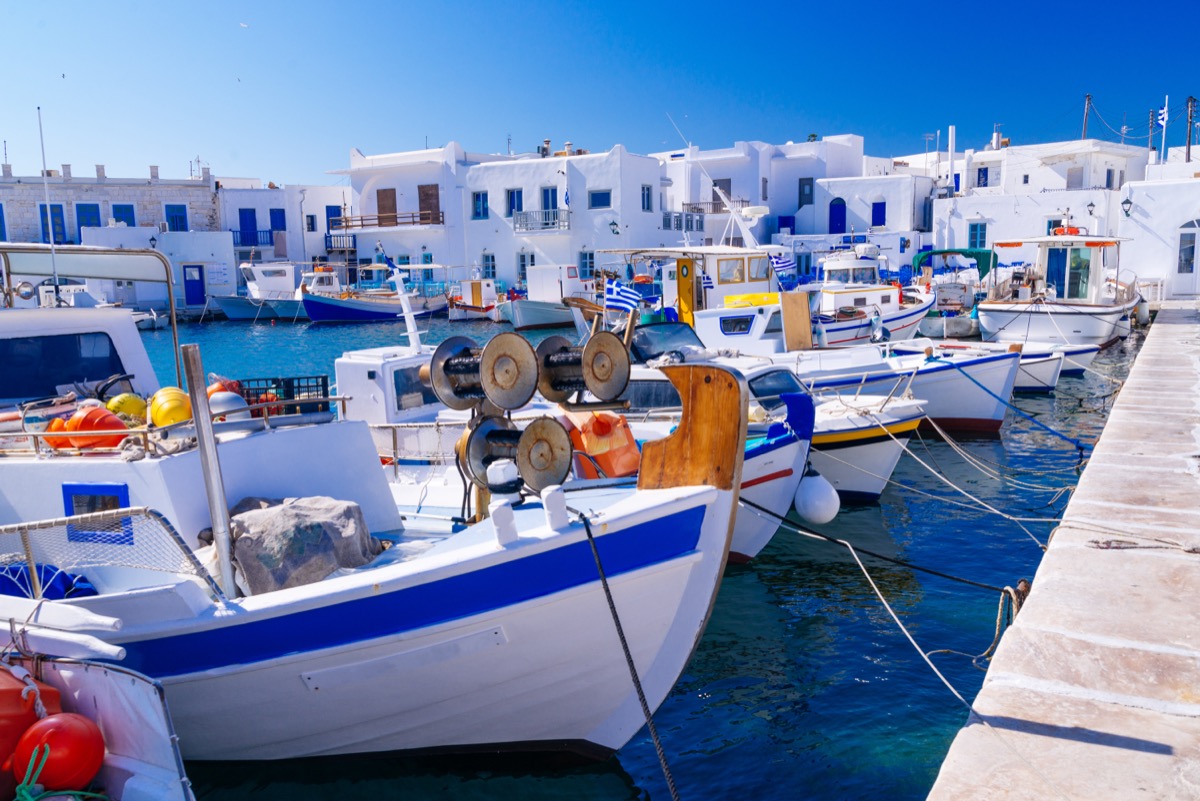
A crescent-shaped fishing harbour lined with whitewashed tavernas, cocktail bars, and bobbing caiques. The half-submerged Venetian fortress guards the harbour entrance. At sunset, the quay fills with diners eating grilled octopus and drinking Aegean wine. The surrounding lanes feature boutiques, galleries, and blue-domed churches. Naoussa hosts lively summer nightlife and an annual wine festival in July.
Kolymbithres Beach
A beach on the north coast near Naoussa, famous for its surreal granite rock formations sculpted by wind and waves into smooth, rounded shapes. Shallow turquoise water fills the coves between the rocks, creating natural swimming pools. The beach has two sections—one with sunbeds and a cantina, the other wild and undeveloped. Reachable by caique from Naoussa harbour (10 min) or by road.
Panagia Ekatontapiliani (Church of 100 Doors)
One of the most important Byzantine monuments in Greece, this church complex in Parikia dates to the 4th century (rebuilt 6th century). According to legend, the church has 99 doors—the 100th will appear when Constantinople returns to Greek control. The interior includes a marble iconostasis, a baptistery with a cruciform font, and a small ecclesiastical museum with 17th-century icons and vestments.
Lefkes Village & Byzantine Trail
A marble-paved hilltop village in the island’s interior, Lefkes was the medieval capital of Paros, positioned inland to avoid pirate raids. The village’s lanes are too narrow for cars, winding past the Church of Agia Triada (Holy Trinity), built of local marble. The Byzantine Road (Byzantini Odos), a 4-km marble-paved path, connects Lefkes to the village of Prodromos through terraced countryside with views of Naxos.
Antiparos Island & Cave
A small island reached by a 10-minute ferry from Pounta or a seasonal caique from Parikia. The main village is a pedestrianised kastro (Venetian fort) with a boho-chic atmosphere, craft shops, and casual tavernas. The Cave of Antiparos, one of the oldest known caves in Europe, descends 85 m underground with stalactites and stalagmites. The cave entrance sits 200 m above sea level and is reached by bus or scooter from the village.
Editor-curated picks carried over from our original guide. Where a full place guide exists, the card links to it.
Worth booking ahead in Paros
Hand-picked from the operators our guides already send readers to. Prices and availability are live on the partner site.
BrowseViator
Tours and tickets in Paros on Viator (opens Viator in a new tab)
Viator's full list of bookable tours and tickets in Paros.
BrowseGetYourGuide
Experiences in Paros on GetYourGuide (opens GetYourGuide in a new tab)
Everything GetYourGuide sells in Paros, with the cancellation terms on each listing.
Where to stayBooking.com
Stays in Paros (opens Booking.com in a new tab)
Live rates and availability for Paros on Booking.com; filter by neighbourhood once you know where your days start.
We earn a commission if you book through these links, at no extra cost to you. It is how we keep the guides free and independent.
Where to stay
Parilio, a Member of Design Hotels
Naoussa, Paros 844 01, Greece
Chic boutique hotel in whitewashed Naoussa with minimalist Cycladic design, a pool overlooking the harbour, and easy access to waterfront dining.
Cosme Luxury Suites
Kolymbithres, Paros 844 00, Greece
Five-star resort near Kolymbithres Beach with suites featuring private pools, a spa, multiple restaurants, and direct beach access.
Mr & Mrs White Paros
Santa Maria Beach, Paros 844 01, Greece
Elegant beachfront hotel with Cycladic architecture, private sandy beach, infinity pool, and watersports centre.
Editor-curated stays carried over from our original guide. Where we have reviewed the hotel, the card links to the review.
Tips from the field
Highlights
- Frankish Castle in Paroikia
- Holy Shrine of the Virgin Mary Ekatontapyliani
- Paros Park
- Golden Beach
- Venetian Castle in Naoussa
Best activities
- Exploring the picturesque town of Naoussa
- Visiting the ancient marble quarries
- Relaxing on beautiful beaches like Golden Beach
- Hiking in Paros Park
- Exploring the Cave of Archilochos
Practical tips
- Rent a car or scooter to explore the island thoroughly
- Book accommodations in advance during peak summer months
- Bring comfortable walking shoes for exploring villages and hiking trails
- Learn a few basic Greek phrases to connect with locals
Keeping it authentic
- Paros offers a more traditional Cycladic island experience
- The island maintains its charming villages and relaxed atmosphere
Culture, customs and safety
Cultural heritage
Paros was famous in antiquity for its translucent white marble—Parian marble was used to carve the Venus de Milo and the roof of the Parthenon. The Panagia Ekatontapiliani (Church of 100 Doors) in Parikia is one of the oldest Byzantine churches in Greece, founded in the 4th century CE and rebuilt in the 6th. The island’s Venetian-era kastro in Parikia incorporates columns and marble blocks from an ancient temple. Naoussa preserves a ruined Venetian fortress at its harbour entrance.
Local customs & etiquette
- Greet locals with a friendly smile and a polite ‘Kalimera’ (Good Morning)
- Dress modestly when visiting churches and monasteries
- Try the local cuisine, especially seafood and traditional Greek dishes
- Be respectful of local customs and traditions, particularly during festivals

Travel Style
Activities