

The Phi Phi Islands, a stunning archipelago in Thailand, are renowned for their breathtaking beaches, crystal-clear waters, and vibrant marine life. Famous for the iconic Maya Bay, these islands offer a paradise for snorkeling, diving, and relaxation. With a lively atmosphere, visitors can enjoy beach parties, delicious Thai cuisine, and the natural beauty that surrounds them.
The destination guide
Phi Phi Islands
Phi Phi’s Maya Bay (the one from The Beach) reopened with visitor caps — the limestone cliffs, snorkeling, and boat access make it Thailand’s most photogenic day trip.
At a glance
Currency฿ THBCode: THB
Time zoneIndochina Time
Languages
- Thai
Setting
- Tropical islands
- Turquoise lagoon
- Limestone pillars
- Coral reefs
Known for
- Beach paradise
- Island hopping
- Snorkeling and diving
- Nature exploration
- Backpacker-friendly
Population3,0003,000 residents
VisaDuration: No tourist visa required if your stay is less than 60 days · Documents: Valid U.S. passport with 6 months validity and one blank page per entry stamp
How Phi Phi Islands scores
7/10OverallGood
Weather8/10
Value for money7/10
Safety7/10
Food & cuisine8/10
Culture & arts4/10
Cultural experience6/10
History4/10
Nature & outdoors9/10
Adventure6/10
Nightlife7/10
Shopping5/10
Family friendly5/10
Romance9/10
Character
Photography score7/10
Authenticity score9/10
Off-the-beaten-path score4/10
Editorial scores on a 10-point scale, weighed against destinations of the same kind.
Travel safety snapshot
Overall72/100Moderate rating
Women travellers68/100
LGBTQ+ travellers60/100
Theft65/100
Medical care55/100
Physical harm70/100
Political freedom70/100
SafePlace indicators use their source 100-point scale; higher is more favourable. Planning context, not a live travel advisory — check official government guidance before you go.
When to go
Best months to visit: January, February, March, April, November and December.
- January: 25.9 to 29 degrees Celsius, 56.4 millimetres of rain, best-time score 5 out of 5.
- February: 26.1 to 29.6 degrees Celsius, 26.6 millimetres of rain, best-time score 5 out of 5.
- March: 26.8 to 30 degrees Celsius, 55.2 millimetres of rain, best-time score 5 out of 5.
- April: 27.4 to 30.1 degrees Celsius, 131.3 millimetres of rain, best-time score 4 out of 5.
- May: 27.3 to 29.9 degrees Celsius, 247.7 millimetres of rain, best-time score 2 out of 5.
- June: 27.3 to 29.5 degrees Celsius, 197.3 millimetres of rain, best-time score 2 out of 5.
- July: 27.2 to 29.3 degrees Celsius, 185.1 millimetres of rain, best-time score 2 out of 5.
- August: 26.9 to 29.1 degrees Celsius, 210.3 millimetres of rain, best-time score 2 out of 5.
- September: 26.7 to 28.7 degrees Celsius, 249.3 millimetres of rain, best-time score 1 out of 5.
- October: 26.3 to 28.5 degrees Celsius, 278.6 millimetres of rain, best-time score 2 out of 5.
- November: 26.2 to 28.5 degrees Celsius, 233.5 millimetres of rain, best-time score 4 out of 5.
- December: 25.9 to 28.7 degrees Celsius, 121.2 millimetres of rain, best-time score 5 out of 5.
Month-by-month conditions and packing advice
- January
- Warm to hot, occasional rain January in the Phi Phi Islands: peak dry season with sunny skies, calm clear seas, and ideal beach and snorkeling weather. Crowds: January in Phi Phi Islands is workable with normal seasonal planning; build in layers, weather checks, and a mix of indoor and outdoor activities. Pack: Pack light clothing, sun protection, and comfortable walking shoes.
- February
- Warm to hot, mostly dry February in the Phi Phi Islands: prime dry-season conditions with minimal rain, calm waters, and excellent visibility for diving. Crowds: February in Phi Phi Islands is workable with normal seasonal planning; build in layers, weather checks, and a mix of indoor and outdoor activities. Pack: Pack light clothing, sun protection, and comfortable walking shoes.
- March
- Warm to hot, occasional rain March in the Phi Phi Islands: dry, sunny, and calm with warm seas and great boat conditions, though heat begins to build. Crowds: March in Phi Phi Islands is workable with normal seasonal planning; build in layers, weather checks, and a mix of indoor and outdoor activities. Pack: Pack light clothing, sun protection, and comfortable walking shoes.
- April
- Warm to hot, rainy April in the Phi Phi Islands: hot end of the dry season with mostly calm seas, still good for beaches before the rains. Crowds: April in Phi Phi Islands is one of the wetter periods, so museums, food stops, flexible reservations, and backup indoor plans make the trip easier. Pack: Pack light clothing, sun protection, and comfortable walking shoes. Add a rain jacket or compact umbrella.
- May
- Warm to hot, rainy May in the Phi Phi Islands: the southwest monsoon arrives with rising rain, humidity, and rougher seas dampening boat trips. Crowds: May in Phi Phi Islands is one of the wetter periods, so museums, food stops, flexible reservations, and backup indoor plans make the trip easier. Pack: Pack light clothing, sun protection, and comfortable walking shoes. Add a rain jacket or compact umbrella.
- June
- Warm to hot, rainy June in the Phi Phi Islands: wet monsoon weather with frequent showers and choppy seas, though greener and cheaper. Crowds: June in Phi Phi Islands is one of the wetter periods, so museums, food stops, flexible reservations, and backup indoor plans make the trip easier. Pack: Pack light clothing, sun protection, and comfortable walking shoes. Add a rain jacket or compact umbrella.
- July
- Warm to hot, rainy July in the Phi Phi Islands: rainy monsoon season with heavy downpours, humidity, and unsettled seas between sunny breaks. Crowds: July in Phi Phi Islands is one of the wetter periods, so museums, food stops, flexible reservations, and backup indoor plans make the trip easier. Pack: Pack light clothing, sun protection, and comfortable walking shoes. Add a rain jacket or compact umbrella.
- August
- Warm to hot, rainy August in the Phi Phi Islands: wet and humid monsoon month with rough seas and frequent rain limiting island-hopping. Crowds: August in Phi Phi Islands is one of the wetter periods, so museums, food stops, flexible reservations, and backup indoor plans make the trip easier. Pack: Pack light clothing, sun protection, and comfortable walking shoes. Add a rain jacket or compact umbrella.
- September
- Warm to hot, rainy September in the Phi Phi Islands: peak monsoon with the heaviest rain, thick clouds, and the roughest seas of the year. Crowds: September in Phi Phi Islands is one of the wetter periods, so museums, food stops, flexible reservations, and backup indoor plans make the trip easier. Pack: Pack light clothing, sun protection, and comfortable walking shoes. Add a rain jacket or compact umbrella.
- October
- Warm to hot, rainy October in the Phi Phi Islands: still wet as the monsoon eases late month, with cooling temps, low prices, and improving conditions. Crowds: October in Phi Phi Islands is one of the wetter periods, so museums, food stops, flexible reservations, and backup indoor plans make the trip easier. Pack: Pack light clothing, sun protection, and comfortable walking shoes. Add a rain jacket or compact umbrella.
- November
- Warm to hot, rainy November in the Phi Phi Islands: the dry season returns with decreasing rain, pleasant weather, and fewer crowds than peak. Crowds: November in Phi Phi Islands is one of the wetter periods, so museums, food stops, flexible reservations, and backup indoor plans make the trip easier. Pack: Pack light clothing, sun protection, and comfortable walking shoes. Add a rain jacket or compact umbrella.
- December
- Warm to hot, some rain December in the Phi Phi Islands: ideal peak dry season with cool sunny days, calm clear seas, and perfect beach conditions. Crowds: December in Phi Phi Islands is workable with normal seasonal planning; build in layers, weather checks, and a mix of indoor and outdoor activities. Pack: Pack light clothing, sun protection, and comfortable walking shoes. Add a rain jacket or compact umbrella.
Peak season
- December
- January
- February
- March
Off-peak
- September
- October
- May
- June
Know before you go
About
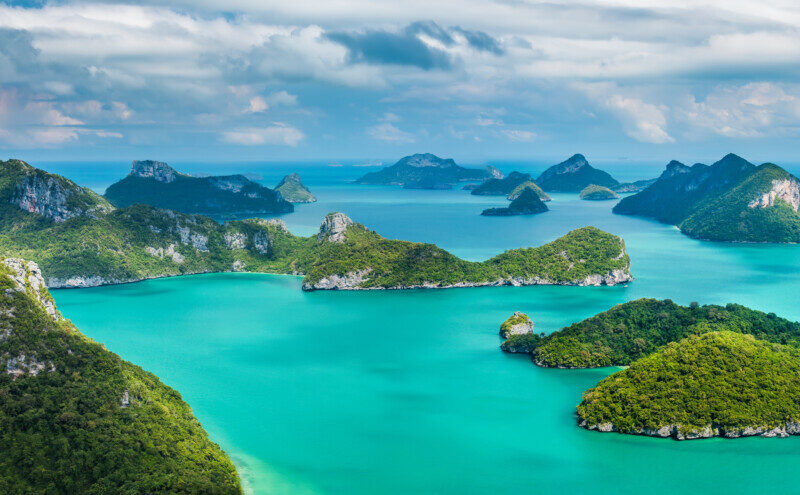
The Phi Phi Islands, in Thailand’s Krabi Province, are a group of six islands in the Andaman Sea between Phuket and the mainland, protected within Hat Noppharat Thara–Mu Ko Phi Phi National Park. The two main islands are Phi Phi Don, the only inhabited and developed one with roughly 17,000 residents, and uninhabited Phi Phi Leh, home to the cliff-ringed Maya Bay. Made famous by the 2000 film “The Beach,” Maya Bay was closed in June 2018 to let its ecosystem recover and reopened on January 1, 2022 under strict visitor rules. Towering limestone karst cliffs, turquoise water, and longtail boats define the islands, which draw snorkelers and divers on day trips from Phuket and Krabi. Heavily struck by the 2004 Indian Ocean tsunami, Phi Phi has since rebuilt into one of Thailand’s iconic tropical escapes.
Best time to visit
The best time to visit the Phi Phi Islands is from November to April when the weather is dry and pleasant. This period is ideal for beach activities and exploring the islands. The monsoon season runs from May to October, bringing heavy rains and rough seas, which can limit travel options.
Getting there and around
Getting there
To reach the Phi Phi Islands, travelers typically fly into Phuket or Krabi and then take a ferry or speedboat to the islands. Multiple ferry services operate daily, providing convenient access to this tropical paradise.
Worth booking ahead in Phi Phi Islands
Hand-picked from the operators our guides already send readers to. Prices and availability are live on the partner site.
BrowseViator
Tours and tickets in Phi Phi Islands on Viator (opens Viator in a new tab)
Viator's full list of bookable tours and tickets in Phi Phi Islands.
BrowseGetYourGuide
Experiences in Phi Phi Islands on GetYourGuide (opens GetYourGuide in a new tab)
Everything GetYourGuide sells in Phi Phi Islands, with the cancellation terms on each listing.
Where to stayBooking.com
Stays in Phi Phi Islands (opens Booking.com in a new tab)
Live rates and availability for Phi Phi Islands on Booking.com; filter by neighbourhood once you know where your days start.
We earn a commission if you book through these links, at no extra cost to you. It is how we keep the guides free and independent.
Where to stay
SAii Phi Phi Island Village
118-120 Moo 7, Ao Nang, Phi Phi Don, Krabi 81000, Thailand
Luxury beachfront resort spread across a private bay with spacious rooms and villas, multiple pools, diverse dining, and a PADI dive centre.
OUTRIGGER Phi Phi Island Resort
Laem Tong, Phi Phi Don, Krabi 81000, Thailand
Secluded eco-conscious resort on Laem Tong Beach with teakwood suites, a dive centre, spa, and access to pristine snorkelling reefs.
Phi Phi CoCo Beach Resort
Loh Dalum Bay, Phi Phi Don, Krabi 81000, Thailand
Stylish bamboo villas with eco-inspired design right on Loh Dalum Bay, offering beachfront dining, a pool, and a peaceful retreat from the backpacker scene.
Editor-curated stays carried over from our original guide. Where we have reviewed the hotel, the card links to the review.
Tips from the field
Highlights
- [Maya Bay](https://www.google.com/maps/uv?pb=!1s0x3051df871e91f22f:0xd208a5fd490533f8!15zQ2dJWUlRPT0)
- [Pi Leh Bay](https://www.google.com/maps/uv?pb=!1s0x3051df871e91f22f:0xd208a5fd490533f8!15zQ2dJWUlRPT0)
- [Phi Phi Viewpoint 3](https://www.google.com/maps/uv?pb=!1s0x3051df871e91f22f:0xd208a5fd490533f8!15zQ2dJWUlRPT0)
- [Bamboo Island](https://www.google.com/maps/uv?pb=!1s0x3051df871e91f22f:0xd208a5fd490533f8!15zQ2dJWUlRPT0)
- Viking Cave
Best activities
- Snorkeling and diving to explore vibrant marine life
- Hiking to Phi Phi Viewpoint 3 for panoramic island views
- Island hopping to Bamboo Island and other nearby islands
- Beach relaxation at Long Beach
Practical tips
- Bring cash as ATMs are limited on the islands
- Book accommodations in advance during peak season
- Respect local customs and dress modestly when not on the beach
- Be prepared for higher prices compared to mainland Thailand
Keeping it authentic
- Some areas like Maya Bay have become highly commercialized due to tourism
- Seek out less crowded spots like Phak Nam Bay for a more authentic experience
Culture, customs and safety
Cultural heritage
Phi Phi Islands preserve traditional Thai Muslim fishing culture within dramatic limestone karsts, balancing paradise tourism with local Urak Lawoi sea gypsy heritage. Stilted fishing villages maintain traditional boat building and sustainable fishing practices. Local mosques serve Muslim communities distinct from Buddhist mainland. Traditional longtail boats evolved from fishing to tourism while maintaining distinctive design. The 2004 tsunami destruction and rebuilding demonstrated community resilience. The islands balance international beach tourism with preserving local fishing culture and environmental protection creating Thai island paradise.
Local customs & etiquette
- Dress modestly when visiting temples or local communities
- Always remove shoes when entering someone’s home or certain establishments
- Be mindful of wildlife and marine life, avoiding littering and damaging coral reefs
- Engage with locals respectfully and be open to learning about their culture
Travel Style
Season
Activities