

Thailand captivates visitors with its golden temples, tropical beaches, and vibrant street food culture. Known as the “Land of Smiles,” this Southeast Asian kingdom offers experiences from bustling Bangkok markets to tranquil mountain villages in the north. Ancient ruins, pristine islands, and warm hospitality create unforgettable memories for travelers seeking both adventure and relaxation in this culturally rich destination.
The destination guide
Thailand
Country in AsiaUpdated
- Overall6/10
- Best forBudget travelers
- PeakNov–Feb
- CurrencyTHB
Bangkok’s street food alone justifies the flight. Add Chiang Mai, Pai, and the Andaman coast and you have a country that rewards slow travel.
Travel guides for Thailand
Itineraries & day trips (1)
Things to do (1)
Destination stories (1)
More guides featuring Thailand (9)
At a glance
Currency฿ THBCode: THB
Time zoneIndochina Time (UTC+07:00)
Languages
- Thai (limited English in tourism areas
- less in rural regions)
Setting
- Tropical beaches
- Jungle mountains
- Buddhist temples
- Island chains
Known for
- Beach
- Culture
- Food
- Adventure
- Temples
- Nightlife
Population71.8M71,801,279 residents
VisaDuration: No tourist visa required if your stay is less than 60 days · Documents: Valid U.S. passport with 6 months validity and one blank page per entry stamp
How Thailand scores
6/10OverallFair
Weather3/10
Value for money8/10
Food & cuisine10/10
Culture & arts6/10
Cultural experience7/10
History6/10
Nature & outdoors4/10
Adventure4/10
Nightlife4/10
Shopping9/10
Family friendly4/10
Romance6/10
Character
Photography score9/10
Authenticity score10/10
Off-the-beaten-path score5/10
Editorial scores on a 10-point scale, weighed against destinations of the same kind.
Travel safety snapshot
Overall75/100Moderate rating
Women travellers70/100
LGBTQ+ travellers45/100
Theft60/100
Medical care70/100
Physical harm75/100
Political freedom60/100
SafePlace indicators use their source 100-point scale; higher is more favourable. Planning context, not a live travel advisory — check official government guidance before you go.
When to go
Best months to visit: January, February, March, April, November and December.
- January: 19.9 to 30.1 degrees Celsius, 19.3 millimetres of rain, best-time score 5 out of 5.
- February: 21 to 31.7 degrees Celsius, 26.4 millimetres of rain, best-time score 5 out of 5.
- March: 23.6 to 34.2 degrees Celsius, 46.5 millimetres of rain, best-time score 4 out of 5.
- April: 25.2 to 34.9 degrees Celsius, 83.4 millimetres of rain, best-time score 4 out of 5.
- May: 25.4 to 33.3 degrees Celsius, 193.5 millimetres of rain, best-time score 3 out of 5.
- June: 24.9 to 31.7 degrees Celsius, 227.1 millimetres of rain, best-time score 3 out of 5.
- July: 24.4 to 30.7 degrees Celsius, 313.2 millimetres of rain, best-time score 3 out of 5.
- August: 24.2 to 30.6 degrees Celsius, 352.6 millimetres of rain, best-time score 3 out of 5.
- September: 23.9 to 30.4 degrees Celsius, 382.9 millimetres of rain, best-time score 2 out of 5.
- October: 23.3 to 30.4 degrees Celsius, 188 millimetres of rain, best-time score 3 out of 5.
- November: 22.1 to 30.4 degrees Celsius, 44.9 millimetres of rain, best-time score 5 out of 5.
- December: 20.2 to 29.5 degrees Celsius, 9.4 millimetres of rain, best-time score 5 out of 5.
Month-by-month conditions and packing advice
- January
- Warm to hot, mostly dry January in Thailand: cooler, drier weather supports temples, beaches, islands, food markets, national parks, and multi-stop routes. Crowds: January in Thailand is workable with normal seasonal planning; build in layers, weather checks, and a mix of indoor and outdoor activities. Pack: Pack light clothing, sun protection, and comfortable walking shoes.
- February
- Warm to hot, mostly dry February in Thailand: cooler, drier weather supports temples, beaches, islands, food markets, national parks, and multi-stop routes. Crowds: February in Thailand is workable with normal seasonal planning; build in layers, weather checks, and a mix of indoor and outdoor activities. Pack: Pack light clothing, sun protection, and comfortable walking shoes.
- March
- Very hot, occasional rain March in Thailand: late dry-season timing can work well, though heat builds in many regions. Crowds: March in Thailand can be very hot, so travelers should favor early starts, shaded breaks, indoor attractions, and flexible afternoon pacing. Pack: Pack breathable clothing, strong sun protection, and a refillable water bottle.
- April
- Very hot, some rain April in Thailand: late dry-season timing can work well, though heat builds in many regions. Crowds: April in Thailand can be very hot, so travelers should favor early starts, shaded breaks, indoor attractions, and flexible afternoon pacing. Pack: Pack breathable clothing, strong sun protection, and a refillable water bottle. Add a rain jacket or compact umbrella.
- May
- Warm to hot, rainy May in Thailand: rainy-season travel can be lush and good value but needs flexible routing. Crowds: May in Thailand is one of the wetter periods, so museums, food stops, flexible reservations, and backup indoor plans make the trip easier. Pack: Pack light clothing, sun protection, and comfortable walking shoes. Add a rain jacket or compact umbrella.
- June
- Warm to hot, rainy June in Thailand: rainy-season travel can be lush and good value but needs flexible routing. Crowds: June in Thailand is one of the wetter periods, so museums, food stops, flexible reservations, and backup indoor plans make the trip easier. Pack: Pack light clothing, sun protection, and comfortable walking shoes. Add a rain jacket or compact umbrella.
- July
- Warm to hot, rainy July in Thailand: rainy-season travel can be lush and good value but needs flexible routing. Crowds: July in Thailand is one of the wetter periods, so museums, food stops, flexible reservations, and backup indoor plans make the trip easier. Pack: Pack light clothing, sun protection, and comfortable walking shoes. Add a rain jacket or compact umbrella.
- August
- Warm to hot, rainy August in Thailand: rainy-season travel can be lush and good value but needs flexible routing. Crowds: August in Thailand is one of the wetter periods, so museums, food stops, flexible reservations, and backup indoor plans make the trip easier. Pack: Pack light clothing, sun protection, and comfortable walking shoes. Add a rain jacket or compact umbrella.
- September
- Warm to hot, rainy September in Thailand: peak rain can disrupt beach, boat, and road plans in many regions. Crowds: September in Thailand is one of the wetter periods, so museums, food stops, flexible reservations, and backup indoor plans make the trip easier. Pack: Pack light clothing, sun protection, and comfortable walking shoes. Add a rain jacket or compact umbrella.
- October
- Warm to hot, rainy October in Thailand: rainy-season travel can be lush and good value but needs flexible routing. Crowds: October in Thailand is one of the wetter periods, so museums, food stops, flexible reservations, and backup indoor plans make the trip easier. Pack: Pack light clothing, sun protection, and comfortable walking shoes. Add a rain jacket or compact umbrella.
- November
- Warm to hot, occasional rain November in Thailand: cooler, drier weather supports temples, beaches, islands, food markets, national parks, and multi-stop routes. Crowds: November in Thailand is workable with normal seasonal planning; build in layers, weather checks, and a mix of indoor and outdoor activities. Pack: Pack light clothing, sun protection, and comfortable walking shoes.
- December
- Warm to hot, mostly dry December in Thailand: cooler, drier weather supports temples, beaches, islands, food markets, national parks, and multi-stop routes. Crowds: December in Thailand is workable with normal seasonal planning; build in layers, weather checks, and a mix of indoor and outdoor activities. Pack: Pack light clothing, sun protection, and comfortable walking shoes.
Peak season
- November
- December
- January
- February
Off-peak
- May
- June
- September
- October
Know before you go
About
Thailand, a country in Southeast Asia, is one of the region’s most popular travel destinations, celebrated for its ornate Buddhist temples, tropical islands, vibrant street food, and warm hospitality. The capital, Bangkok, is a bustling metropolis where the glittering Grand Palace and the Emerald Buddha sit near Wat Pho, home of the giant Reclining Buddha, and lively riverside markets and Chinatown. Northern Thailand centers on Chiang Mai, a culturally rich city more than 700 years old, surrounded by mountains, hill-tribe villages, and hundreds of temples. To the south, the Andaman and Gulf coasts draw beach lovers to Phuket, Krabi, and the iconic Phi Phi Islands, famed for limestone cliffs, crystal-clear waters, and lively nightlife. Thailand’s cuisine, from pad thai to spicy curries and mango sticky rice, is a destination in itself. Cultural highlights include the exuberant Songkran water festival marking the Thai New Year each April. With affordable luxury, ancient temples, jungle adventures, and idyllic islands, Thailand offers an irresistible mix that keeps travelers returning year after year.
Best time to visit
November to February (cool, dry season) for the best weather across most of Thailand
Season by season
Cool Season (November–February): 70–90°F, dry, comfortable everywhere. Peak tourist season.
Hot Season (March–May): 85–100°F, very humid inland. Songkran (April). Islands remain good.
Rainy Season (June–October): 75–90°F, afternoon downpours (usually 1–2 hours). Lush green landscapes, lower prices. Gulf islands (Koh Samui) best July–August. Andaman coast wet.
Crowds
High in Bangkok year-round; high on islands during peak season (Dec–Feb); moderate in Chiang Mai; low in Khao Sok and Isan
Getting there and around
Getting there
Bangkok Suvarnabhumi (BKK) is the main international hub with flights from worldwide. Don Mueang (DMK) handles budget carriers. Thai Airways, AirAsia, Singapore Airlines, Emirates, and many others serve Bangkok. Most nationalities receive 30–60 day visa-free entry. Visa on arrival available for some nationalities. Chiang Mai (CNX) and Phuket (HKT) receive some international flights.
Getting around
Domestic flights connect Bangkok with Chiang Mai (1 hr), Phuket, Krabi, Koh Samui, and other cities via Thai Airways, Bangkok Airways, AirAsia, Nok Air, and Thai Lion Air. Overnight trains link Bangkok to Chiang Mai (13 hr). VIP buses serve intercity routes cheaply. Songthaews (shared pickup trucks) and tuk-tuks handle local transport. Grab (ride-hailing app) is the best option in cities. Longtail boats serve island-hopping and coastal routes. Motorbike rental is common but traffic is hazardous.
Top experiences in Thailand
Grand Palace & Wat Phra Kaew, Bangkok
Thailand’s most sacred site, the Grand Palace complex (1782) covers 22 hectares of gilded spires, mosaic-covered halls, and the Temple of the Emerald Buddha (Wat Phra Kaew) — housing a 66 cm jade Buddha in royal robes changed three times a year by the King. The architecture layers Thai, Chinese, and European influences. Dress code is strictly enforced (covered shoulders, long trousers/skirts). Open 8:30 AM–3:30 PM daily. Admission THB 500.
Chiang Mai Old City Temples
Chiang Mai’s Old City, encircled by a moat and remnant walls, holds over 30 Buddhist temples spanning 700 years. Wat Phra Singh houses the Lion Buddha in classic Lanna style. Wat Chedi Luang’s ruined 14th-century chedi once held the Emerald Buddha. Wat Phra That Doi Suthep (a short drive up the mountainside) offers panoramic valley views and a gleaming golden chedi. The Sunday Walking Street market transforms Ratchadamnoen Road into a night bazaar of crafts, food, and live music.
Railay Beach & Krabi
Railay Beach, accessible only by longtail boat from Krabi, is surrounded by dramatic limestone karst cliffs. Rock climbing routes (over 700) draw climbers from worldwide. Tongsai and Phra Nang beaches offer turquoise swimming. Kayaking through karst lagoons and island-hopping to the Four Islands (Koh Poda, Chicken Island, Tup Island, Phra Nang Cave) are quintessential Thai island experiences. The Andaman Sea coast offers some of Thailand’s finest beach scenery.
Ayutthaya Historical Park
A UNESCO World Heritage Site 80 km north of Bangkok, Ayutthaya was the Siamese capital for 417 years (1350–1767) before Burmese armies destroyed it. Brick ruins of palaces, monasteries, and Buddha statues overgrown with fig tree roots (Wat Mahathat’s famous Buddha head) evoke a lost empire. Wat Phra Si Sanphet, Wat Chaiwatthanaram, and Wat Ratchaburana are highlights. Easily visited as a day trip from Bangkok by train, van, or boat.
Khao Sok National Park
One of Southeast Asia’s most biodiverse primary rainforests, Khao Sok (739 km²) in southern Thailand shelters wild elephants, gibbons, hornbills, and possibly the world’s largest flower (Rafflesia). Cheow Lan Lake’s emerald waters surrounded by towering karst peaks recall a prehistoric landscape. Floating bungalows (raft houses) on the lake offer overnight stays amid complete wilderness silence. Night safaris, kayaking, and jungle trekking complete the experience.
Editor-curated picks carried over from our original guide. Where a full place guide exists, the card links to it.
Worth booking ahead in Thailand
Hand-picked from the operators our guides already send readers to. Prices and availability are live on the partner site.
BrowseViator
Tours and tickets in Thailand on Viator (opens Viator in a new tab)
Viator's full list of bookable tours and tickets in Thailand.
BrowseGetYourGuide
Experiences in Thailand on GetYourGuide (opens GetYourGuide in a new tab)
Everything GetYourGuide sells in Thailand, with the cancellation terms on each listing.
Where to stayBooking.com
Stays in Thailand (opens Booking.com in a new tab)
Live rates and availability for Thailand on Booking.com; filter by neighbourhood once you know where your days start.
We earn a commission if you book through these links, at no extra cost to you. It is how we keep the guides free and independent.
Where to stay
Mandarin Oriental, Bangkok
48 Oriental Avenue (Soi 40), Bangkok, Thailand
The Mandarin Oriental Bangkok has defined Southeast Asian luxury since 1876. The Authors’ Wing (where Somerset Maugham, Joseph Conrad, and Noel Coward stayed) preserves colonial-era elegance. The riverside terrace restaurant, Le Normandie (French fine dining), and the Oriental Spa across the river are legendary. Every room faces the Chao Phraya River. The hotel’s cooking school is one of Bangkok’s best culinary experiences. Rates THB 15,000–80,000+ per night.
Six Senses Samui
33/3 Moo 1, Goh Noi, Koh Samui, Surat Thani, Thailand
Six Senses Samui perches on a headland on Koh Samui’s northern tip. 66 pool villas (each with a private infinity pool) cascade down the hillside to a private bay. The sustainability-conscious resort grows ingredients on site, runs coral restoration, and offers holistic spa treatments. Dining at Dining on the Rocks features platforms cantilevered over the gulf. Rates THB 20,000–100,000+ per night.
137 Pillars House, Chiang Mai
51/4 Soi 1, Srithana Road, Chiang Mai, Thailand
137 Pillars House occupies a beautifully restored 1889 teak house in Chiang Mai’s charming Wat Gate neighbourhood. The 30-suite boutique hotel blends Lanna heritage with modern luxury. The pool courtyard and Jack Bain’s Bar honour the property’s British East Borneo Company history. Breakfast features northern Thai specialities. Walking distance to the Night Bazaar and Ping River. Rates THB 8,000–25,000+ per night.
Editor-curated stays carried over from our original guide. Where we have reviewed the hotel, the card links to the review.
Tips from the field
Highlights
- Grand Palace & Wat Phra Kaew — Bangkok's gilded royal complex housing the Emerald Buddha
- Chiang Mai Temples — 700-year-old Lanna temples and the golden Doi Suthep on the mountainside
- Railay Beach & Krabi — Limestone karst paradise with world-class rock climbing
- Ayutthaya — UNESCO ruins of the Siamese capital with Buddha heads in tree roots
- Khao Sok National Park — Ancient rainforest with karst peaks and floating lake bungalows
- Bangkok Street Food — Pad thai, som tum, mango sticky rice from the world's best hawkers
- Koh Samui & Koh Phangan — Gulf islands with palm beaches and Full Moon Parties
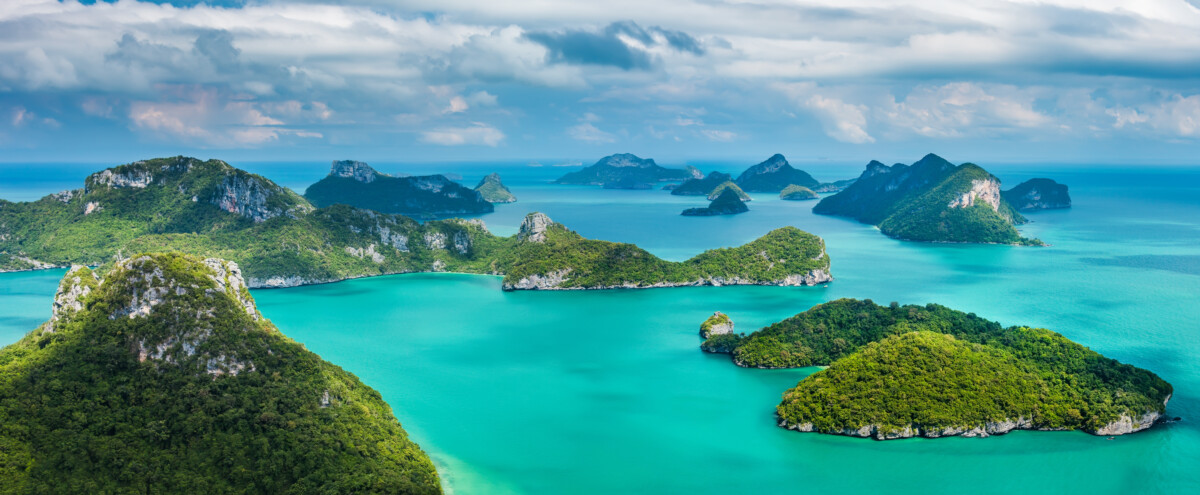
- Phi Phi Islands — Andaman Sea archipelago of turquoise bays and limestone cliffs
- Sukhothai — First Thai kingdom's ruins in a serene historical park
- Elephant Sanctuaries — Ethical wildlife encounters in northern Thailand
Best activities
- Explore the Grand Palace and Wat Phra Kaew in Bangkok
- Eat pad thai and mango sticky rice at a Bangkok street stall
- Visit elephant sanctuaries near Chiang Mai
- Rock-climb the limestone karsts at Railay Beach
- Hike to Doi Suthep temple for sunset views over Chiang Mai
- Island-hop through the Andaman Sea from Krabi
- Stay in a floating bungalow on Cheow Lan Lake, Khao Sok
- Explore Ayutthaya's ancient ruins by bicycle
- Dive or snorkel at Koh Tao's coral reefs
- Celebrate Songkran (Thai New Year water festival) in April
Local experiences
- Eat khao soi (northern Thai curry noodles) from a Chiang Mai street stall, get a THB 200 Thai massage, take a cooking class in a Bangkok shophouse, sip a Chang beer on a beach, wake for the morning alms-giving ceremony in Luang Prabang, explore a Bangkok rooftop bar at sunset, visit a floating market (Damnoen Saduak or Amphawa), and attend a muay Thai fight at Lumpinee Stadium.
Practical tips
- Use Grab app for taxis and motorbike rides — avoids overcharging and language barriers.
- Always negotiate tuk-tuk fares before getting in.
- 7-Eleven stores are everywhere and serve as a convenient resource (SIM cards, snacks, cash withdrawal).
- Drink bottled water only. Street food is generally safe if cooked fresh in front of you.
- Learn basic Thai: Sawadee (hello), Khop khun (thank you), adding 'krap' (male) or 'ka' (female).
Photography tips
- The Grand Palace's golden spires photograph best in early morning with warm light and fewer crowds. Chiang Mai's Doi Suthep temple glows at sunset. Railay's karst silhouettes make striking sunrise/sunset compositions. Ayutthaya's Buddha head in the tree roots at Wat Mahathat is the classic shot (morning light, low angle). Bangkok's Chinatown neon lights pop at blue hour.
Timing
- Plan 3–4 days for Bangkok, 3–4 days for Chiang Mai, 1 day for Ayutthaya (day trip), 3–5 days for southern islands (Krabi, Railay, Phi Phi, Koh Samui, or Koh Phangan), 2–3 days for Khao Sok. A comprehensive Thailand trip takes 14–21 days.
Keeping it authentic
- Thai Buddhism is a lived daily practice, not a museum piece. Morning alms-giving to monks, spirit houses outside every building, the wai greeting, and the reverence for the monarchy are genuine cultural expressions. Thai cooking — balancing sweet, sour, salty, spicy, and bitter — is an art passed between generations. The night markets, temple fairs, and Songkran water festival are community celebrations that welcome visitors without being staged.
Culture, customs and safety
Cultural heritage
Thailand is the only Southeast Asian country never colonised, preserving an unbroken cultural tradition. Buddhism (Theravada) shapes daily life — 95% of the population is Buddhist and the country has over 40,000 temples. The Sukhothai Kingdom (1238–1438) and Ayutthaya Kingdom (1350–1767) left extraordinary architectural legacies. Thailand has 7 UNESCO World Heritage Sites including Ayutthaya, Sukhothai, and Ban Chiang. Thai boxing (muay Thai), classical dance (khon), and silk weaving are living traditions. The monarchy is deeply revered.
Local customs & etiquette
The wai (placing palms together and bowing) is the standard greeting — return it when received. Never touch anyone’s head (considered sacred). Remove shoes when entering temples and homes. Point feet away from people and Buddha images. Dress modestly at temples (cover shoulders and knees). Stand when the national anthem plays (8 AM and 6 PM daily). Never disrespect the monarchy (lèse-majesté laws carry heavy penalties). Tipping is not obligatory but 10% is appreciated in restaurants.
Safety notes
US State Department rates Thailand Level 1 (exercise normal precautions). Thailand is generally safe for tourists. Petty crime (pickpocketing, bag-snatching) occurs in Bangkok and tourist areas. Scams are common (gem shops, jet-ski damage claims, tuk-tuk commission tours). Motorbike accidents are a leading cause of tourist injury. Avoid the deep-south provinces (Narathiwat, Pattani, Yala). Drug penalties are severe (including the death penalty). Full moon parties carry safety risks (alcohol, drugs). Emergency: 191 (police), 1669 (ambulance).


Travel Style
Season
Activities