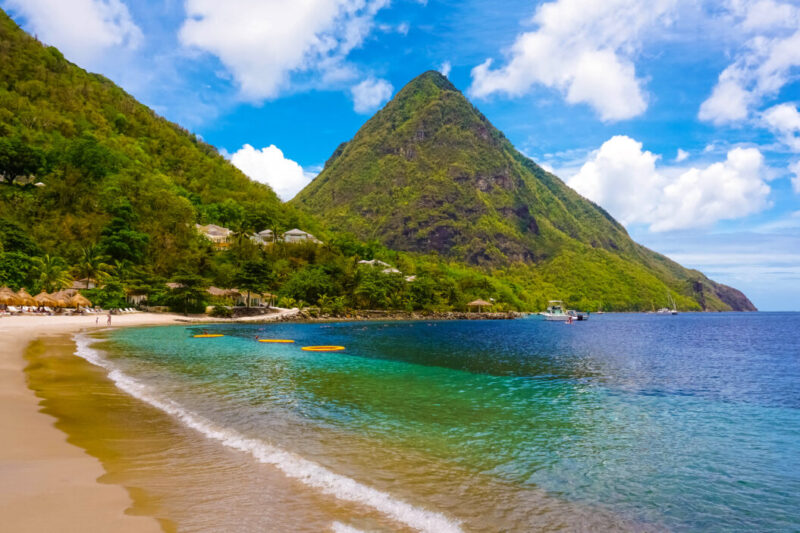
Rising dramatically from the Caribbean Sea with its iconic twin Piton mountains, Saint Lucia blends lush natural beauty with a rich cultural heritage shaped by African, French, and British influences. This volcanic island offers travelers experiences that range from exploring colorful fishing villages to hiking through rainforest trails leading to hidden waterfalls. St. Lucia cultural expressions include jounen kweyol (Creole Day) celebrations, intricate madras fabric designs, and folk music traditions like kwadril dancing accompanied by string bands. The island distinctive cuisine – featuring green figs and saltfish, pepperpot stew, and cocoa tea – reflects its agricultural heritage and cultural blending, while local craft traditions maintain connections to both African roots and colonial influences.
The destination guide
Saint Lucia

Country in North AmericaUpdated
- Overall9/10
- Best forFamilies, Couples, Adventure seekers
- PeakDec–May
The Pitons look best from the water at dusk — but the real Saint Lucia is a bowl of pepperpot stew in a fishing village.
At a glance
- English
- Volcanic island
- Piton mountains
- Rainforest
- Sandy beaches
- Beaches
- Nature
- Romance
- Luxury
- Adventure
How Saint Lucia scores
Editorial scores on a 10-point scale, weighed against destinations of the same kind.
Travel safety snapshot
SafePlace indicators use their source 100-point scale; higher is more favourable. Planning context, not a live travel advisory — check official government guidance before you go.
When to go
Best months to visit: January, February, March, April, May, November and December.
- January: 21.4 to 25.3 degrees Celsius, 72.2 millimetres of rain, best-time score 5 out of 5.
- February: 21.2 to 25.5 degrees Celsius, 57.6 millimetres of rain, best-time score 5 out of 5.
- March: 21.5 to 26.1 degrees Celsius, 60 millimetres of rain, best-time score 5 out of 5.
- April: 22.3 to 26.9 degrees Celsius, 51.8 millimetres of rain, best-time score 4 out of 5.
- May: 23 to 27.3 degrees Celsius, 71 millimetres of rain, best-time score 4 out of 5.
- June: 23.1 to 27.1 degrees Celsius, 113.4 millimetres of rain, best-time score 3 out of 5.
- July: 23 to 26.9 degrees Celsius, 141.5 millimetres of rain, best-time score 3 out of 5.
- August: 23.3 to 27.3 degrees Celsius, 131.8 millimetres of rain, best-time score 3 out of 5.
- September: 23.5 to 27.8 degrees Celsius, 125.9 millimetres of rain, best-time score 3 out of 5.
- October: 23.3 to 27.3 degrees Celsius, 133.3 millimetres of rain, best-time score 3 out of 5.
- November: 22.7 to 26.5 degrees Celsius, 136.6 millimetres of rain, best-time score 4 out of 5.
- December: 22 to 25.9 degrees Celsius, 71.3 millimetres of rain, best-time score 5 out of 5.
Month-by-month conditions and packing advice
- January
- Mild to warm, some rain Peak season, dry and warm. Crowds: January in Saint Lucia is workable with normal seasonal planning; build in layers, weather checks, and a mix of indoor and outdoor activities. Pack: Pack light clothing, sun protection, and comfortable walking shoes. Add a rain jacket or compact umbrella.
- February
- Mild to warm, occasional rain Excellent beach weather. Crowds: February in Saint Lucia is comfortable for sightseeing, neighborhoods, food stops, day trips, and outdoor time with limited weather friction. Pack: Pack light clothing, sun protection, and comfortable walking shoes.
- March
- Mild to warm, occasional rain High season, sunny and clear. Crowds: March in Saint Lucia is comfortable for sightseeing, neighborhoods, food stops, day trips, and outdoor time with limited weather friction. Pack: Pack light clothing, sun protection, and comfortable walking shoes.
- April
- Mild to warm, occasional rain Weather remains lovely, good time to visit. Crowds: April in Saint Lucia is comfortable for sightseeing, neighborhoods, food stops, day trips, and outdoor time with limited weather friction. Pack: Pack light clothing, sun protection, and comfortable walking shoes.
- May
- Warm to hot, some rain Transition to rainy season, but still pleasant. Crowds: May in Saint Lucia is workable with normal seasonal planning; build in layers, weather checks, and a mix of indoor and outdoor activities. Pack: Pack light clothing, sun protection, and comfortable walking shoes. Add a rain jacket or compact umbrella.
- June
- Warm to hot, some rain Start of off-peak, hurricane season begins. Crowds: June in Saint Lucia is workable with normal seasonal planning; build in layers, weather checks, and a mix of indoor and outdoor activities. Pack: Pack light clothing, sun protection, and comfortable walking shoes. Add a rain jacket or compact umbrella.
- July
- Mild to warm, rainy More rain and humidity. Crowds: July in Saint Lucia is one of the wetter periods, so museums, food stops, flexible reservations, and backup indoor plans make the trip easier. Pack: Pack light clothing, sun protection, and comfortable walking shoes. Add a rain jacket or compact umbrella.
- August
- Warm to hot, rainy Peak hurricane risk. Crowds: August in Saint Lucia is one of the wetter periods, so museums, food stops, flexible reservations, and backup indoor plans make the trip easier. Pack: Pack light clothing, sun protection, and comfortable walking shoes. Add a rain jacket or compact umbrella.
- September
- Warm to hot, some rain Rainiest month, fewer tourists. Crowds: September in Saint Lucia is workable with normal seasonal planning; build in layers, weather checks, and a mix of indoor and outdoor activities. Pack: Pack light clothing, sun protection, and comfortable walking shoes. Add a rain jacket or compact umbrella.
- October
- Warm to hot, rainy Wet and humid, cheap flights. Crowds: October in Saint Lucia is one of the wetter periods, so museums, food stops, flexible reservations, and backup indoor plans make the trip easier. Pack: Pack light clothing, sun protection, and comfortable walking shoes. Add a rain jacket or compact umbrella.
- November
- Mild to warm, rainy Rain tapering off, approaching high season. Crowds: November in Saint Lucia is one of the wetter periods, so museums, food stops, flexible reservations, and backup indoor plans make the trip easier. Pack: Pack light clothing, sun protection, and comfortable walking shoes. Add a rain jacket or compact umbrella.
- December
- Mild to warm, some rain Start of peak season, perfect weather. Crowds: December in Saint Lucia is workable with normal seasonal planning; build in layers, weather checks, and a mix of indoor and outdoor activities. Pack: Pack light clothing, sun protection, and comfortable walking shoes. Add a rain jacket or compact umbrella.
- December
- January
- February
- March
- April
- May
- June
- July
- August
- September
- October
- November
Know before you go
Neighbourhoods
Castries is the capital and cruise port hub with the central market, duty-free shopping, and Derek Walcott Square. Rodney Bay in the northwest is the main tourist strip with resorts, restaurants, and Reduit Beach — the island’s liveliest area after dark. Soufrière on the southwest coast sits between the Pitons and is the base for volcano tours, mud baths, and waterfall hikes. Marigot Bay, a sheltered harbor between Castries and Soufrière, is a quieter luxury enclave surrounded by hills. Gros Islet in the north is a local fishing village famous for its Friday Night Jump Up street party. Vieux Fort at the southern tip near Hewanorra International Airport offers access to the wild Atlantic coast and Maria Islands.
Best time to visit
The best time to visit Saint Lucia is between February and May, when the island enjoys its driest weather with temperatures in the high 70s to mid-80s°F, minimal rainfall, and comfortable humidity levels perfect for beach activities and exploring the Pitons. This period falls within the dry season while avoiding the December-January holiday price spike.
Dry Season (December-April)
December through April represents Saint Lucia’s peak tourist season, delivering sunny skies, warm temperatures (82-86°F), and minimal rainfall averaging under 4 inches monthly. December and January bring the highest hotel rates and largest crowds due to winter escapes, making February through April the sweet spot for optimal weather without extreme pricing. Water temperatures hover around a perfect 79-81°F for swimming and diving.
Shoulder Months (May-June, November)
May, June, and November offer excellent value with hotel rates 30-40% below peak season while maintaining pleasant weather. Late spring (May-June) provides wonderful temperatures in the high 70s to low 80s°F with only occasional brief showers, typically in afternoons. These months let you enjoy relatively risk-free Caribbean vacations while avoiding the statistically most dangerous hurricane period.
Hurricane Season (June-November)
Official hurricane season runs June 1 to November 30, with the highest risk occurring in September and October, which are also the rainiest months with afternoon thunderstorms. However, if you avoid mid-August through early October, you can still experience Caribbean paradise at significantly reduced rates. Rainfall rarely lasts all day, typically arriving in short afternoon or evening bursts.
Budget Season (March-April, October-November)
For budget-conscious travelers, March, April, October, and November deliver the best value proposition – pleasant weather with occasional rain but dramatically lower accommodation costs. March and April maintain dry season reliability while April hotel rates drop as Easter crowds depart. November requires accepting more frequent rain showers but rewards travelers with some of the year’s lowest prices.
Season by season
Dry Season (December-April):
Weather: 75-85°F, minimal rainfall, peak sunshine
Highlights: Perfect beach weather, calm seas, clear skies
Best For: Swimming, snorkeling, diving, sailing, hiking
Consider: Most expensive, most crowded; book early
Shoulder Season (May-June):
Weather: 75-86°F, increasing humidity, occasional showers
Highlights: Still excellent beach weather, fewer tourists
Best For: Balance of good weather and value; Jazz Festival in May
Consider: Rain increases in June but still manageable
Wet Season (July-October):
Weather: 80-86°F, highest temperatures, afternoon thunderstorms
Highlights: Lush landscapes, dramatic skies, lowest prices
Best For: Budget travelers, those seeking quiet resorts
Consider: Hurricane season (September-October peak); brief but intense rain
Transitional (November):
Weather: 76-84°F, decreasing rain, comfortable humidity
Highlights: Dry season begins, prices still moderate
Best For: Great value before peak season; excellent conditions
Consider: One of the best times for optimal weather-to-price ratio
Crowds
High: Dec-Apr; Moderate: May-Jun, Nov; Low: Jul-Oct
Getting there and around
Getting there
Most international visitors arrive via Hewanorra International Airport (UVF) in Vieux Fort, located on the southern tip about 90 minutes from most resorts in the north. This airport handles long-haul flights from the US (American, Delta, JetBlue, United), Canada (Air Canada, WestJet), and the UK (British Airways, Virgin Atlantic). Regional flights from neighboring Caribbean islands land at George F.L. Charles Airport (SLU) near Castries in the north, just minutes from many hotels. By sea, ferries connect Saint Lucia with Martinique, Dominica, and Guadeloupe via the terminal in Castries. Cruise ships dock at Pointe Seraphine or La Place Carenage in Castries harbor.
Getting around
Minibuses serve as Saint Lucia’s primary public transportation, operating regular routes between major towns (Castries, Soufrière, Vieux Fort) with fares ranging EC$2.50-8.00 (~US$1-3). These privately-owned vehicles identified by green number plates with ‘M’ prefix run frequently on demand rather than fixed schedules. Flag them down along main roads and pay cash to the driver. Routes can be confusing for visitors – ask locals or your hotel for guidance. Taxis are readily available with red ‘TX’ number plates but are not metered – negotiate fares before departure (typical rates: airport to Rodney Bay EC$75-90, airport to Soufrière EC$150-180). Major taxi services include Saint Lucia Taxi Service and Real Saint Lucia Tours. Rental cars provide freedom to explore at your own pace (rates ~$70/day) but require a temporary Saint Lucian driver’s license (obtainable at airport, police station in Castries, or rental offices with valid home license, fee ~EC$54). Driving is on the left (British influence) with narrow, winding mountain roads requiring caution. Water taxis operate in Soufrière Bay connecting resorts and beaches like Anse Chastanet and Jalousie Beach. Some resorts offer boat transfers from Hewanorra Airport via FunToSee Island Water Ferry. The island is small (27 miles long) but mountainous terrain makes drives longer than distances suggest – allow 1.5 hours from airport to northern resorts, 45 minutes to Soufrière. Many visitors rely on resort shuttles and organized tours rather than independent transportation.
Top experiences in Saint Lucia
The Pitons (Gros Piton & Petit Piton)
The Pitons rise as Saint Lucia’s most iconic landmarks – twin volcanic spires designated UNESCO World Heritage Site for their exceptional natural beauty and geological significance. Gros Piton soars 2,530 feet (771m) from the Caribbean Sea, while Petit Piton reaches 2,438 feet (743m), both featuring near-vertical slopes covered in tropical vegetation. Gros Piton offers guided hiking (4-5 hours round trip) along steep but non-technical trail requiring good fitness – guides are mandatory (arrange through Soufrière or your hotel, ~US$50-75 including guide and park fees). The summit rewards climbers with 360-degree panoramas across Saint Lucia’s west coast, Soufrière Bay, and neighboring islands on clear days. Petit Piton remains closed to hikers due to dangerous terrain. The Pitons Management Area protects 2,909 hectares of land and sea including coral reefs, hot springs, and diverse ecosystems. The best views of both Pitons come from Jalousie Beach (between the two peaks), Tet Paul Nature Trail (easier 45-minute guided walk offering ‘stairway to heaven’ views for ~US$10), or boat approaches from the sea. The Pitons appear on every Saint Lucia promotional material and serve as powerful symbols of the island. Sunset illuminates the peaks in golden light while early morning often sees clouds wreathing the summits. Photography is spectacular from Soufrière waterfront. The volcanic soil supports rich biodiversity including endemic plant species. Allow full day for Gros Piton hike; start early (7-8 AM) to avoid midday heat.
Sulphur Springs & Mud Baths
Sulphur Springs near Soufrière claims the title as the world’s only ‘drive-in volcano’ – the collapsed dome of an ancient volcano where visitors can drive to within 400 feet of bubbling sulfurous pools and steaming vents. The geothermal area features multiple pools of boiling mud and water reaching temperatures up to 340°F (171°C), creating otherworldly landscape with yellow and gray deposits. Guided tours (included with admission ~US$7-10) explain the volcanic geology and take visitors to therapeutic mud baths where mineral-rich black mud is applied to skin for its supposed healing properties. After the mud bath, rinse off under warm waterfall cascades fed by the volcanic springs. The entire experience takes 1-2 hours. The site is part of the Soufrière Volcanic Center, one of the Caribbean’s most active geothermal areas. Wear old clothing or swimwear as the mud stains permanently. The sulfur smell is strong – not for everyone. Photography captures the dramatic steaming landscape. Operating hours typically 9 AM-5 PM daily. The site is located 2 miles north of Soufrière town, accessible by car or taxi. Many tour packages combine Sulphur Springs with Pitons views, Toraille Waterfall, and Diamond Botanical Gardens. The mud bath is touristy but provides unique volcanic experience found nowhere else. Local guides often provide enthusiastic and entertaining commentary.
Pigeon Island National Landmark
Pigeon Island National Landmark occupies a 44-acre peninsula (formerly an island) connected to the mainland by causeway, featuring historic British military fort ruins and dramatic headland hiking. The site served as strategic naval lookout during 18th-century colonial conflicts between French and British forces. Two peaks provide panoramic views – Signal Peak (higher, steeper climb) offers 360-degree vistas across Rodney Bay, the northern coastline, and on clear days, Martinique 21 miles north. The ruins include officers’ quarters, soldiers’ barracks, gunpowder magazine, and artillery batteries. The Interpretation Centre museum details the island’s military history and archaeological findings. The beaches below fort ruins provide swimming and snorkeling opportunities. Hiking trails range from easy beach walks to moderate climbs through dry forest to the peaks. Operating hours 9 AM-5 PM; admission ~US$10 adults. The hike to Signal Peak takes 30-45 minutes with steep sections – wear sturdy shoes and bring water. The site hosts Saint Lucia Jazz Festival events in May and other concerts in the outdoor amphitheater. Allow 2-3 hours to explore ruins and hike to viewpoint. Free parking available. The landmark combines history, nature, and spectacular views in one location. Best visited early morning or late afternoon to avoid midday heat. The beach areas are quieter alternative to crowded Reduit Beach nearby.
Anse Chastanet Beach & Reef
Anse Chastanet Beach features distinctive black volcanic sand, dramatic mountain backdrop with Pitons views, and Saint Lucia’s finest shore-accessible coral reef protected as marine reserve. The beach sits at the base of a lush hillside just north of Soufrière in a secluded cove. The reef begins mere steps from shore, making it ideal for snorkelers without boat access – wade in from the beach and immediately encounter vibrant corals, schools of tropical fish (parrotfish, angelfish, tangs), sea turtles, spotted eagle rays, and occasional octopus. The reef features brain corals, elkhorn, staghorn, and sponges at depths from 5-60 feet. The beach is free and public but dominated by Anse Chastanet Resort which provides equipment rentals and beachside dining. Day visitors can access the beach via water taxi from Soufrière or the steep access road (rental car required). The volcanic sand heats quickly – bring water shoes. Trees provide limited shade. The dramatic Pitons rising across the bay create spectacular backdrop. Water clarity is excellent except after heavy rains. The beach attracts serious snorkelers and divers – not ideal for sunbathing crowds. Scuba diving from the beach accesses deeper sites including the wall dropping to 140+ feet. Operating hours: Daylight. No admission fee. Snorkel gear rentals ~US$15-20. The beach restaurant serves fresh seafood and island cuisine. This is one of the Caribbean’s premier shore-dive/snorkel locations.
Diamond Falls Botanical Gardens & Mineral Baths
Diamond Falls Botanical Gardens encompasses 6 acres of lush tropical landscaping surrounding the rainbow-hued Diamond Waterfall, colored by volcanic minerals creating yellows, greens, purples, and grays on the rock face. The 17-foot waterfall cascades into pools fed by Soufrière’s geothermal springs. The gardens feature exotic flowers, trees labeled with botanical names, and peaceful walking paths through tropical vegetation. The site includes historic mineral baths built in 1784 by order of King Louis XVI of France for his troops stationed in the Caribbean – the thermal pools (optional additional fee ~US$7) provide warm mineral-rich bathing said to offer therapeutic benefits. The temperature-regulated outdoor baths maintain comfortable warmth year-round. The garden setting creates tranquil atmosphere just outside Soufrière town. Operating hours 10 AM-5 PM Monday-Saturday, 10 AM-3 PM Sunday; admission ~US$7-10 adults. The waterfall’s colors intensify after rain when mineral content is highest. Photography is excellent with the multi-hued waterfall as focal point. Allow 1-2 hours to explore gardens and enjoy the baths. Wear swimwear under clothes if planning to use mineral baths. The site is less crowded than other Soufrière attractions. Combine with nearby Sulphur Springs and Toraille Waterfall for comprehensive volcanic features tour. The gardens provide accessible, family-friendly introduction to Saint Lucia’s volcanic geography and botanical diversity.
Editor-curated picks carried over from our original guide. Where a full place guide exists, the card links to it.
Worth booking ahead in Saint Lucia
Hand-picked from the operators our guides already send readers to. Prices and availability are live on the partner site.
BrowseViator
Tours and tickets in Saint Lucia on Viator (opens Viator in a new tab)
Viator's full list of bookable tours and tickets in Saint Lucia.
BrowseGetYourGuide
Experiences in Saint Lucia on GetYourGuide (opens GetYourGuide in a new tab)
Everything GetYourGuide sells in Saint Lucia, with the cancellation terms on each listing.
Where to stayBooking.com
Stays in Saint Lucia (opens Booking.com in a new tab)
Live rates and availability for Saint Lucia on Booking.com; filter by neighbourhood once you know where your days start.
We earn a commission if you book through these links, at no extra cost to you. It is how we keep the guides free and independent.
Where to stay
Jade Mountain Resort
Anse Chastanet Road, Soufrière, Saint Lucia
Jade Mountain Resort redefines luxury Caribbean accommodation with 29 open-air ‘sanctuaries’ featuring the fourth wall completely removed, exposing rooms to panoramic Piton views and Caribbean breezes. Each sanctuary includes a private infinity pool (some extending 900+ square feet) integrated into the living space, with no glass walls or doors separating guests from the dramatic landscape. The architectural concept creates seamless indoor-outdoor living. Rooms feature king beds, stone-and-tile construction, and sophisticated design emphasizing the natural setting. The resort occupies a hillside above Anse Chastanet Bay with each sanctuary strategically positioned for unobstructed Piton views. Jade Mountain Club restaurant serves gourmet Caribbean-fusion cuisine with ingredients from organic farm. The Kai en Ciel Spa offers treatments with ocean and mountain vistas. The resort operates adults-only policy (16+) creating romantic, peaceful atmosphere ideal for honeymooners and couples. There are no TVs, radios, or telephones in sanctuaries – the focus is nature and connection. Complimentary non-motorized water sports, fitness center, and yoga pavilion available. Access to Anse Chastanet Beach and reef via shuttle. The resort consistently ranks among the Caribbean’s most romantic properties and earned worldwide acclaim for its bold architectural vision. Rates start ~US$1,300-3,500 per night reflecting ultra-luxury positioning. The property is bucket-list worthy for architecture enthusiasts and couples seeking extraordinary setting. Advance booking essential (3-6 months for peak season).
Sugar Beach, A Viceroy Resort
Val des Pitons, Soufrière, Saint Lucia
Sugar Beach, A Viceroy Resort occupies a stunning location on a white sand beach between the iconic Pitons (Gros Piton and Petit Piton), offering the island’s most dramatic natural setting. The resort features 96 accommodations including beachfront bungalows, luxury villas, and residences, many with private plunge pools, gardens, and butler service. The property balances luxury with family-friendliness, offering comprehensive kids’ club (ages 4-12), teen lounge, and family-focused programming while maintaining sophisticated atmosphere. Four restaurants serve cuisines from Caribbean to Asian fusion, with the Great Room offering breakfast with Pitons views. The Rainforest Spa features treatments incorporating local ingredients and offers couples’ massage rooms. The beach provides calm waters ideal for swimming and kayaking, with complimentary water sports equipment. Sugar Beach particularly excels at service with personal butlers for higher-tier accommodations attending to every detail from unpacking to arranging private dining experiences. The resort’s location in Soufrière places it near major attractions (Sulphur Springs, Diamond Falls, Pitons hikes) but requires transfers to airport (45 minutes to Hewanorra, 1.5 hours to George FL Charles). The property underwent renovation maintaining its status as Saint Lucia’s premier family-luxury resort. Rates start ~US$800-2,000 per night depending on accommodation type and season. The resort appeals to families seeking luxury with kids’ amenities, couples wanting dramatic setting, and travelers prioritizing location over convenience to airport.
Sandals Grande St. Lucian
Pigeon Island Causeway, Gros Islet, Saint Lucia
Sandals Grande St. Lucian occupies its own peninsula (Pigeon Point) near Rodney Bay, creating a resort surrounded by ocean on three sides with panoramic views across the bay, mountains, and Martinique’s distant shores on clear days. As Sandals’ flagship Saint Lucia property, the resort offers adults-only (couples only) all-inclusive luxury with 312 rooms and suites including 12 overwater bungalows extending into the Caribbean Sea – the island’s only overwater accommodations. The overwater bungalows feature glass floor panels, outdoor showers, private infinity pools, and butler service. Multiple room categories include beachfront, oceanview, and poolside options across various villa groupings. The resort provides 12 international restaurants (French, Italian, Southwestern, Asian, Caribbean), 7 bars, and 24-hour room service – all included. Guests enjoy exchange privileges accessing Sandals Halcyon Beach and Sandals Regency La Toc for additional dining and beach variety via complimentary shuttle. Three pools, Red Lane Spa, fitness center, and extensive water sports (scuba diving included for certified divers) provide activities. The peninsula location creates private, secure environment. Nightly entertainment includes live music and themed parties. The resort emphasizes romance with candlelit beach dinners, couples’ spa packages, and wedding/honeymoon services. Rates are all-inclusive (starting ~US$400-800 per couple per night). The property appeals to honeymooners, couples celebrating anniversaries, and adults seeking comprehensive all-inclusive without children. Free WiFi, gratuities, and premium liquors included.
Editor-curated stays carried over from our original guide. Where we have reviewed the hotel, the card links to the review.
Tips from the field
Highlights
- The Pitons – UNESCO World Heritage volcanic peaks: Gros Piton (2,530 ft) and Petit Piton (2,438 ft)
- Sulphur Springs – Drive-in volcano with therapeutic mud baths
- Pigeon Island National Park – Historic fort with panoramic views
- Marigot Bay – Stunning natural harbor featured in films
- Diamond Falls Botanical Gardens – Rainbow waterfall and mineral baths
- Rodney Bay – White sand beaches with waterfront dining
- Tet Paul Nature Trail – 'Stairway to heaven' with Pitons views
- Anse Chastanet – Volcanic black sand beach with world-class snorkeling
- Recognition: Featured in National Geographic documentaries; The Pitons are one of the Caribbean's most iconic natural landmarks
- Sources: National Geographic, Sandals, Global Citizen Solutions
Best activities
- Saint Lucia's UNESCO-listed Pitons define the island's dramatic landscape – twin volcanic spires rising directly from the Caribbean Sea that create the nation's most iconic vista. Gros Piton challenges hikers with a guided 2,619-foot ascent through tropical forest to summit views spanning the entire southern coastline, while Sugar Beach nestles between these majestic peaks offering picture-perfect swimming in calm turquoise waters. The world's only drive-in volcano awaits at Sulphur Springs Park near Soufrière, where bubbling mud pools and steam vents reveal the island's volcanic origins, followed by therapeutic mineral baths at Diamond Falls Botanical Gardens where waterfall waters cascade over mineral-stained rocks creating rainbow hues.
- Water activities capitalize on Saint Lucia's position in the eastern Caribbean – sunset catamaran cruises along the west coast combine snorkeling at protected reefs with rum punch and local music, while dedicated dive sites like Anse Chastanet's coral wall drop dramatically to 140 feet showcasing tropical fish, rays, and occasional turtles. Rodney Bay transforms into the island's nightlife hub after dark, where Gros Islet Friday Night Street Party brings locals and visitors together for grilled seafood, cold Piton beer, and jumping-up to soca and reggae music. The northeastern Atlantic coast offers contrast at Cas En Bas Beach, where consistent trade winds create ideal conditions for kitesurfing and the deserted shoreline rewards those willing to navigate rougher roads.
Local experiences
- Attend Friday night 'Jump Up' street party in Gros Islet for authentic Creole culture, street food, and live soca music
- Sample green figs and saltfish (national dish) at local rum shops and authentic Creole restaurants
- Visit Castries Market on Saturday mornings for fresh tropical produce, spices, and handmade crafts
- Join Jounen Kwéyòl (Creole Day) celebrations in late October featuring traditional music, dance, storytelling, and costume
- Explore Anse La Raye Friday Fish Fry sampling fresh seafood grilled on the beach with local music
- Learn Kwéyòl (Creole) phrases from locals – the French-based patois remains widely spoken
- Visit heritage cocoa estates discovering traditional chocolate production from bean to bar
- Take cooking classes learning to prepare Creole dishes like callaloo soup and pepperpot stew
- Experience traditional madras fabric and crafts at local markets and craft centers
- Attend Saint Lucia Jazz Festival (May) for world-class performances in intimate Caribbean settings
- Join locals at Sunday church services featuring vibrant gospel music and community fellowship
- Sample Bounty Rum at local distilleries learning about Caribbean rum-making traditions
- Participate in traditional folk dances like the quadrille at cultural events
Practical tips
- Drive-In Volcano & Sulphur Springs: Visit Soufrière's active geothermal Sulphur Springs early in the morning for mineral mud baths before cruise tour excursions arrive.
- Currency & Payments: Eastern Caribbean Dollar (XCD / EC$), pegged at 2.70 XCD to 1 USD. US dollars are widely accepted in tourist businesses, though change is often provided in EC$.
- Water Taxis: Water taxis from Soufrière to Anse Chastanet and Sugar Beach (between the Pitons) are faster and more scenic than mountain roads.
- Airport Transfers: Hewanorra Airport (UVF) is located in the far south; travel time to northern resorts in Rodney Bay is approx. 90 minutes by road or 15 minutes by scenic helicopter shuttle.
Photography tips
- Best Time for Photography:
- Dry season (December-April) for clear skies and vibrant colors
- Golden hour (6-7 AM / 5:30-6:30 PM) for dramatic Pitons shots
- Avoid midday harsh tropical sun
- Iconic Shots:
- The Pitons from Soufrière waterfront or Tet Paul Trail viewpoint
- Marigot Bay from the hilltop lookout
- Sunset at Pigeon Island National Park
- Diamond Falls rainbow waterfall in soft morning light
- Beach scenes from Anse Chastanet or Sugar Beach
- Equipment:
- Waterproof camera for snorkeling and waterfall shots
- Polarizing filter to reduce water glare
- Wide-angle lens for landscape and beach scenes
- Telephoto for wildlife (tropical birds, sea life)
- Tips: Respect local culture – always ask permission before photographing people; some areas may restrict commercial photography
Timing
- Peak Season (December-April):
- Driest weather, most sunshine
- Highest prices and most crowds
- Book accommodations 4-6 months advance
- Ideal for beach activities and water sports
- December-February coolest months
- Shoulder Season (May-June & November):
- Good weather before/after wet season
- Moderate crowds and prices
- May: Saint Lucia Jazz Festival
- November: Start of dry season, fewer tourists
- Wet Season (July-October):
- Lowest prices (30-50% off peak)
- Short afternoon rain showers typical
- September-October: Peak hurricane season (rare direct hits)
- Still warm and suitable for beach activities between showers
- Fewer crowds, relaxed atmosphere
- Special Events:
- Saint Lucia Jazz Festival (May): International performances
- La Rose/La Marguerite Festivals (August-October): Cultural celebrations
- Carnival (July): Vibrant street parades and parties
Keeping it authentic
- Saint Lucian authenticity emerges through social courtesies that locals expect and visitors often miss. Greetings aren't optional pleasantries but essential acknowledgments of respect – Saint Lucians will always offer 'good morning,' 'good afternoon,' or 'good night' when passing on streets or entering shops, and not reciprocating draws curious looks that signal cultural misstep. The island maintains conservative dress standards despite tropical heat: beachwear stays strictly on the beach, revealing clothing in towns is considered disrespectful, and going topless or nude anywhere on the island constitutes a major cultural violation. Cash remains king across Saint Lucia with many small businesses and street vendors operating cash-only, while driving on the left (a British colonial legacy) on narrow, winding mountain roads creates adventures that rental car companies address by installing right-hand-drive vehicles. This formality and tradition coexist with genuine Caribbean warmth – once proper greetings are exchanged, Saint Lucians reveal infectious humor and pride in their island's natural beauty, particularly regarding those iconic Pitons that appear on everything from the national flag to Piton beer labels.
Culture, customs and safety
Cultural heritage
Saint Lucia’s heritage is dramatically shaped by its volcanic geology, which created the iconic Pitons, the island’s stunning UNESCO World Heritage site. Its history was forged in a turbulent colonial struggle between the French and British, who fought over the island 14 times. This dual influence has produced a vibrant, syncretic culture that blends Carib, African, French, and English traditions, most evident in the widely spoken Kwéyòl language and the island’s rich musical and festive customs.
Local customs & etiquette
Saint Lucians are known for warm hospitality blending African, French, and British cultural influences. Greet people with a friendly ‘good morning’ or ‘good afternoon’ – this simple courtesy is highly valued and expected before any interaction. While English is the official language, Kwéyòl (French Creole) remains widely spoken especially in rural areas – learning basic phrases earns goodwill. When invited to someone’s home, bring a small gift or treat to share. Dress modestly when away from beaches – swimwear is appropriate only at beach areas. Cover up when visiting villages, markets, or religious sites. Tipping is customary at 10-20% depending on service level, as many service employees rely on tips. At all-inclusive resorts, small tips (EC$5-10) for exceptional service are appreciated though not required. Respect local sensibilities – public displays of affection should be modest. Same-sex relationships face legal restrictions (though rarely enforced against tourists) – LGBTQ+ travelers should exercise discretion. Photography of people requires permission – ask first and respect if declined. Beach vendors and tour operators can be persistent – firm but polite ‘no thank you’ is acceptable. Jounen Kwéyòl (Creole Day) celebrates traditional culture with music, dance, storytelling, and traditional dress – participating shows cultural appreciation. Sunday is observed as day of rest with many businesses closed. Punctuality is more relaxed than North American/European standards – ‘island time’ is real. When dining, wait for host to begin eating. The island’s Creole heritage is point of pride – showing interest in local music (calypso, soca), traditional madras fabric, and folk customs demonstrates respect.
Safety notes
As of 2026, Saint Lucia remains a premier Caribbean destination policed by the Royal Saint Lucia Police Force (RSLPF).
Key Regional Security, Mountain & Legal Rules:
• UNESCO Piton Hiking Regulations: Climbing Gros Piton legally requires registering at the Fond Gens Libre interpretive center and hiking with a certified guide from the Soufrière Regional Development Foundation (SRDF). Petit Piton involves unmarked vertical rope climbs and should never be attempted without experienced mountaineering escorts.
• Urban Awareness & Nightlife: Tourist resort enclaves (Rodney Bay, Cap Estate, Marigot Bay, Soufrière) are secure. Exercise heightened vigilance in southern urban areas (Vieux Fort) and downtown Castries after dark. At the Gros Islet Friday Night Street Party, keep cash and phones in front pockets.
• Left-Hand Driving on Mountain Roads: Traffic drives on the left. The winding West Coast Road connecting Castries to Soufrière has hairpin turns, steep drop-offs, and sudden rain squalls; rental drivers must obtain a temporary local permit.
• Emergency: Dial 911 for Police, Fire, and Ambulance.