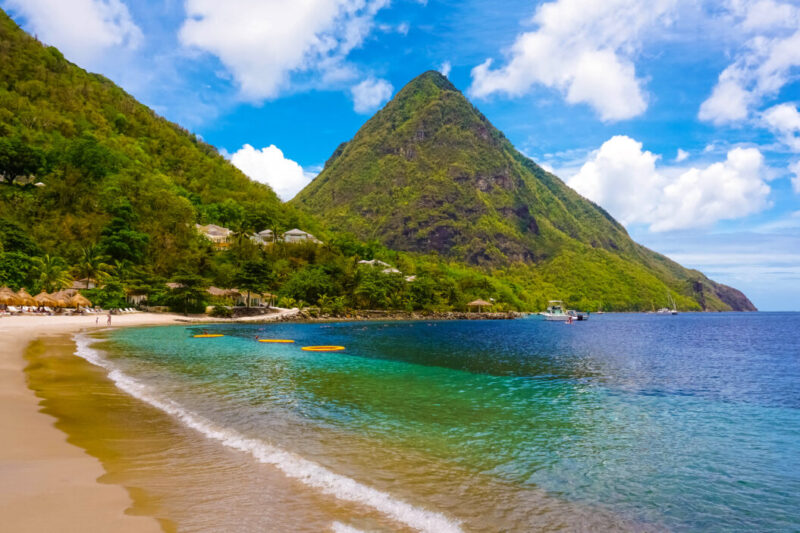
St. Lucia, rising dramatically from the eastern Caribbean Sea, distinguishes itself through the iconic twin volcanic spires of the Pitons—Gros Piton and Petit Piton—which soar over 2,500 feet above the southwestern coast, creating one of the world’s most recognizable natural landmarks and a UNESCO World Heritage site. This lush 238-square-mile island nation, located between Martinique and St. Vincent in the Lesser Antilles, showcases extraordinary geological diversity from the world’s only drive-in volcano with bubbling sulfur springs at Soufriere to dense inland rainforests covering 19,000 acres of protected wilderness through which flow scenic rivers and waterfalls like the 50-foot cascade at Diamond Falls Botanical Gardens. St. Lucia’s distinctive cultural identity emerges from a complex colonial history alternating between French and British control 14 times before gaining independence in 1979, creating a unique heritage evident in local Kweyol (Creole) language, place names, cuisine combining African, French, and East Indian influences, and traditional practices including the island’s folk music and Flower Festivals. The island offers contrasting experiences between the developed north featuring the capital Castries with its colonial architecture and bustling Castries Market selling local spices and crafts, resort-lined Rodney Bay with its marina and restaurant scene, and the more authentic southern region where fishing villages like Choiseul maintain traditional boat-building crafts and the agricultural town of Soufriere serves as gateway to natural attractions including Edmund Forest Reserve and Enbas Saut waterfall. Throughout the year, St. Lucia animates its cultural calendar through events ranging from the internationally recognized St. Lucia Jazz & Arts Festival to the St. Lucia Carnival in July, offering visitors opportunities to experience the island’s vibrant artistic expressions alongside its world-class natural beauty, making it a preferred destination for travelers seeking both adventure and cultural immersion in a stunning tropical setting.
The destination guide
St. Lucia

Island in Saint Lucia, North AmericaUpdated
- Overall7/10
- Best forCouples, Adventure seekers
- CurrencyXCD
St. Lucia has the Pitons rising from the sea, volcanic mud baths you can actually swim in, and a Caribbean setting that makes other islands feel flat by comparison.
Travel guides for St. Lucia
More guides featuring St. Lucia (2)
At a glance
- English
- Caribbean island
- Volcanic peaks
- Rainforest
- Piton mountains
- Beaches
- Hiking
- Volcanic
- Caribbean
- Luxury
- Romance
- Diving
How St. Lucia scores
Editorial scores on a 10-point scale, weighed against destinations of the same kind.
Travel safety snapshot
SafePlace indicators use their source 100-point scale; higher is more favourable. Planning context, not a live travel advisory — check official government guidance before you go.
When to go
Best months to visit: January, February, March, April, May, June, November and December.
- January: 23.7 to 27.1 degrees Celsius, 69.3 millimetres of rain, best-time score 5 out of 5.
- February: 23.4 to 27.2 degrees Celsius, 54.2 millimetres of rain, best-time score 5 out of 5.
- March: 23.7 to 27.8 degrees Celsius, 54.8 millimetres of rain, best-time score 5 out of 5.
- April: 24.4 to 28.6 degrees Celsius, 44.6 millimetres of rain, best-time score 5 out of 5.
- May: 25.1 to 29.2 degrees Celsius, 61.4 millimetres of rain, best-time score 4 out of 5.
- June: 25.2 to 29.1 degrees Celsius, 106.4 millimetres of rain, best-time score 4 out of 5.
- July: 25.2 to 28.8 degrees Celsius, 129.2 millimetres of rain, best-time score 3 out of 5.
- August: 25.4 to 29.3 degrees Celsius, 117.2 millimetres of rain, best-time score 3 out of 5.
- September: 25.7 to 30 degrees Celsius, 109.5 millimetres of rain, best-time score 2 out of 5.
- October: 25.5 to 29.3 degrees Celsius, 107.3 millimetres of rain, best-time score 2 out of 5.
- November: 24.9 to 28.4 degrees Celsius, 112.9 millimetres of rain, best-time score 4 out of 5.
- December: 24.3 to 27.7 degrees Celsius, 71.7 millimetres of rain, best-time score 5 out of 5.
Month-by-month conditions and packing advice
- January
- Warm to hot, occasional rain January in St. Lucia: dry-season beaches, Piton views, snorkeling, hiking, resorts, and catamaran trips are most reliable. Crowds: January in St. Lucia is comfortable for sightseeing, neighborhoods, food stops, day trips, and outdoor time with limited weather friction. Pack: Pack light clothing, sun protection, and comfortable walking shoes.
- February
- Warm to hot, occasional rain February in St. Lucia: dry-season beaches, Piton views, snorkeling, hiking, resorts, and catamaran trips are most reliable. Crowds: February in St. Lucia is comfortable for sightseeing, neighborhoods, food stops, day trips, and outdoor time with limited weather friction. Pack: Pack light clothing, sun protection, and comfortable walking shoes.
- March
- Warm to hot, occasional rain March in St. Lucia: dry-season beaches, Piton views, snorkeling, hiking, resorts, and catamaran trips are most reliable. Crowds: March in St. Lucia is comfortable for sightseeing, neighborhoods, food stops, day trips, and outdoor time with limited weather friction. Pack: Pack light clothing, sun protection, and comfortable walking shoes.
- April
- Warm to hot, occasional rain April in St. Lucia: dry-season beaches, Piton views, snorkeling, hiking, resorts, and catamaran trips are most reliable. Crowds: April in St. Lucia is comfortable for sightseeing, neighborhoods, food stops, day trips, and outdoor time with limited weather friction. Pack: Pack light clothing, sun protection, and comfortable walking shoes.
- May
- Warm to hot, occasional rain May in St. Lucia: shoulder timing can offer value and good weather before or after peak demand. Crowds: May in St. Lucia is workable with normal seasonal planning; build in layers, weather checks, and a mix of indoor and outdoor activities. Pack: Pack light clothing, sun protection, and comfortable walking shoes.
- June
- Warm to hot, some rain June in St. Lucia: shoulder timing can offer value and good weather before or after peak demand. Crowds: June in St. Lucia is workable with normal seasonal planning; build in layers, weather checks, and a mix of indoor and outdoor activities. Pack: Pack light clothing, sun protection, and comfortable walking shoes. Add a rain jacket or compact umbrella.
- July
- Warm to hot, some rain July in St. Lucia: humidity, showers, and storm risk require flexible plans. Crowds: July in St. Lucia is workable with normal seasonal planning; build in layers, weather checks, and a mix of indoor and outdoor activities. Pack: Pack light clothing, sun protection, and comfortable walking shoes. Add a rain jacket or compact umbrella.
- August
- Warm to hot, some rain August in St. Lucia: humidity, showers, and storm risk require flexible plans. Crowds: August in St. Lucia is workable with normal seasonal planning; build in layers, weather checks, and a mix of indoor and outdoor activities. Pack: Pack light clothing, sun protection, and comfortable walking shoes. Add a rain jacket or compact umbrella.
- September
- Warm to hot, some rain September in St. Lucia: peak storm-season risk makes this less balanced for a beach-and-adventure trip. Crowds: September in St. Lucia is workable with normal seasonal planning; build in layers, weather checks, and a mix of indoor and outdoor activities. Pack: Pack light clothing, sun protection, and comfortable walking shoes. Add a rain jacket or compact umbrella.
- October
- Warm to hot, some rain October in St. Lucia: peak storm-season risk makes this less balanced for a beach-and-adventure trip. Crowds: October in St. Lucia is workable with normal seasonal planning; build in layers, weather checks, and a mix of indoor and outdoor activities. Pack: Pack light clothing, sun protection, and comfortable walking shoes. Add a rain jacket or compact umbrella.
- November
- Warm to hot, some rain November in St. Lucia: shoulder timing can offer value and good weather before or after peak demand. Crowds: November in St. Lucia is workable with normal seasonal planning; build in layers, weather checks, and a mix of indoor and outdoor activities. Pack: Pack light clothing, sun protection, and comfortable walking shoes. Add a rain jacket or compact umbrella.
- December
- Warm to hot, some rain December in St. Lucia: dry-season beaches, Piton views, snorkeling, hiking, resorts, and catamaran trips are most reliable. Crowds: December in St. Lucia is workable with normal seasonal planning; build in layers, weather checks, and a mix of indoor and outdoor activities. Pack: Pack light clothing, sun protection, and comfortable walking shoes. Add a rain jacket or compact umbrella.
Know before you go
Best time to visit
The best time to visit St. Lucia is from December to April when the weather is dry and pleasant. This period is ideal for outdoor activities and enjoying the beaches. The rainy season runs from June to November, with the possibility of hurricanes, so travelers should plan accordingly.
Season by season
Dry season (Dec–Apr): warm (27–31°C), sunny, driest months, peak tourism and highest prices. Early wet season (May–Jun): warm, occasional afternoon showers, fewer crowds, lush greenery. Hurricane season (Jul–Nov): hot, humid, heavier rain, risk of tropical storms, lowest prices and quietest beaches. Dec highs can exceed 30°C.
Crowds
High (December–April), Moderate (May–June, November), Low (July–October)
Getting there and around
Getting there
Fly into Hewanorra International Airport (UVF) in the south or George F.L. Charles Airport (SLU) near Castries for smaller aircraft. Direct flights from major US, UK, and Canadian cities. Water taxis connect beach resorts along the coast.
Top experiences in St. Lucia
The Pitons (Gros Piton & Petit Piton)
Twin volcanic spires rising to 786 m (Gros Piton) and 750 m (Petit Piton) on the southwest coast — a UNESCO World Heritage Site. The Gros Piton hike (4–6 hours round-trip with a required guide) rewards with panoramic views of the island and, on clear days, Martinique to the north.
Sugar Beach
A crescent of white sand framed by the two Pitons, accessible by boat or through the Viceroy-branded resort that flanks it. Calm turquoise water, excellent snorkeling over the coral reef, and an Instagram-famous perspective of the twin peaks behind you.
Sulphur Springs
Billed as the world’s only drive-in volcano, this geothermal area near Soufrière features bubbling mud pools and steaming fumaroles. A short walk brings you to natural mineral baths where you can coat yourself in warm, sulfur-rich mud — said to rejuvenate skin.
Pigeon Island National Park
A 44-acre national park on a causeway-connected island off the northwest coast, featuring the ruins of an 18th-century British fort, two beaches, hiking trails through dry scrubland, and a 360° summit view from Signal Peak. The park hosts the annual St. Lucia Jazz & Arts Festival.
Diamond Botanical Gardens & Waterfall
Botanical gardens dating to 1713, fed by mineral-rich water that flows from Sulphur Springs. The Diamond Waterfall cascades over multi-colored rocks stained by volcanic minerals. Walking paths wind through tropical flowers, towering palms, and a warm mineral bath.
Editor-curated picks carried over from our original guide. Where a full place guide exists, the card links to it.
Worth booking ahead in St. Lucia
Hand-picked from the operators our guides already send readers to. Prices and availability are live on the partner site.
BrowseViator
Tours and tickets in St. Lucia on Viator (opens Viator in a new tab)
Viator's full list of bookable tours and tickets in St. Lucia.
BrowseGetYourGuide
Experiences in St. Lucia on GetYourGuide (opens GetYourGuide in a new tab)
Everything GetYourGuide sells in St. Lucia, with the cancellation terms on each listing.
Where to stayBooking.com
Stays in St. Lucia (opens Booking.com in a new tab)
Live rates and availability for St. Lucia on Booking.com; filter by neighbourhood once you know where your days start.
We earn a commission if you book through these links, at no extra cost to you. It is how we keep the guides free and independent.
Where to stay
Jade Mountain Resort
Soufrière, St. Lucia
An architectural marvel of open-wall sanctuaries perched on a ridge overlooking the Pitons, designed by architect Nick Troubetzkoy. Each of the 29 infinity-pool suites has an entire wall missing, replaced by an unobstructed view of the Caribbean Sea and the Pitons. No TVs, no phones — total immersion in the landscape.
Anse Chastanet Resort
Anse Chastanet Road, Soufrière, St. Lucia
A 49-room hillside resort on two beaches at the base of Petit Piton, offering rooms that range from beachfront bungalows to treehouse suites. The on-site dive center, chocolate-making lab, and organic farm-to-table restaurant make it a self-contained destination. Access to Sugar Beach via water taxi.
Coconut Bay Beach Resort & Spa
Pigeon Island Causeway, Gros Islet, St. Lucia
A 332-room all-inclusive, family-friendly resort spread along a mile of beachfront on the island’s southern tip, with two distinct sides: Harmony (adults-only) and Splash (families with kids). Water park, lazy river, spa, and five restaurants included.
Editor-curated stays carried over from our original guide. Where we have reviewed the hotel, the card links to the review.
Tips from the field
Highlights
- The Pitons — UNESCO volcanic twin peaks
- Sugar Beach — White sand between the Pitons
- Sulphur Springs — Drive-in volcano and mud baths
- Pigeon Island — 18th-century fort and panoramic trails
- Diamond Waterfall — Mineral-stained cascade
- Friday Night Jump-Up — Street party in Gros Islet
Best activities
- Hike Gros Piton with a local guide, snorkel at Anse Chastanet's reef, soak in the volcanic mud baths at Sulphur Springs, catamaran day-sail along the west coast, zipline through the rainforest canopy, visit Diamond Botanical Gardens, explore Pigeon Island's fort ruins, attend the Friday night fish fry in Anse La Raye, and dive the coral walls off Soufrière.
Local experiences
- Hike to the summit of Gros Piton at sunrise with a Soufrière guide, coat yourself in warm volcanic mud at Sulphur Springs, or join the locals at the Friday Night Jump-Up in Gros Islet as soca music fills the street.
Practical tips
- Rent a car for flexibility; roads are narrow, steep, and left-hand drive.
- The Gros Piton hike requires a licensed guide — book through the Fond Gens Libre visitor center.
- Bring reef-safe sunscreen; it's required at some beaches.
- ATMs are available in Castries, Rodney Bay, and Soufrière.
- US dollars are widely accepted, but change is given in Eastern Caribbean dollars (XCD).
- Budget travelers: the local buses ('route taxis') are cheap and run frequently along the main road.
Photography tips
- The Pitons are most dramatic from the water — book a catamaran trip and shoot with a wide-angle lens as the sails frame the twin peaks. Sugar Beach is best photographed from the northern bluff in the morning when the light is behind you. The Diamond Waterfall's mineral-stained rocks pop under overcast skies. For Gros Piton summit shots, a clear morning offers views to Martinique. Bring a polarizing filter to cut Caribbean sea glare.
Timing
- Three days cover the Pitons hike, Sulphur Springs, and a beach day. Five days add Pigeon Island, a catamaran sail, and a rainforest zipline. One week allows a relaxed pace with diving, the fish fry, and a chocolate-estate tour.
Keeping it authentic
- St. Lucia has changed hands between France and Britain 14 times — more than any other Caribbean island. The result is a uniquely layered culture: French Creole place names, English governance, Catholic church spires, and a Kwéyòl (Creole) language spoken alongside English. The Friday Night Jump-Up in Gros Islet is an authentic street party, not a tourist event. Fishing villages like Anse La Raye still hold weekly fish fry nights that date back generations. The Pitons are geologically 200,000–300,000 years old and remain sacred to the local Amerindian heritage.
Culture, customs and safety
Cultural heritage
St. Lucia preserves French and British colonial influences alongside African cultural heritage within dramatic volcanic landscape of the Pitons. Castries market maintains Creole traditions through spices, crafts, and cultural exchange. French patois language persists alongside English in daily communication. Plantation estates like Fond Doux demonstrate colonial agricultural heritage transformed into cultural tourism. Jazz festival and carnival celebrate Caribbean musical traditions. Traditional fishing villages maintain boat building and seafaring culture. The island balances colonial architecture with vibrant Creole identity.
Local customs & etiquette
- Greet locals with a friendly smile and a simple ‘hello’
- Respect local customs and traditions, especially during festivals
- Tip service staff, as it is appreciated but not mandatory
- Try local dishes and support local artisans
Safety notes
St. Lucia is generally safe in tourist areas like Rodney Bay, Soufrière, and Marigot Bay, which are regularly patrolled by Tourism Police. Petty theft can occur in crowded markets and at busy beaches — secure your valuables and avoid leaving items unattended. Use licensed taxis or hotel-arranged transport, especially at night. Avoid walking alone after dark in poorly lit or unfamiliar areas. The roads are steep and winding; drive cautiously, especially on mountain routes. Drink bottled water in rural areas. Hurricane season runs June through November — monitor weather advisories.