The destination guide
Sonoma
City in United States, North AmericaUpdated
- Overall7/10
- Best forLuxury travelers, Solo travelers
- PeakJun–Oct
- CurrencyUSD
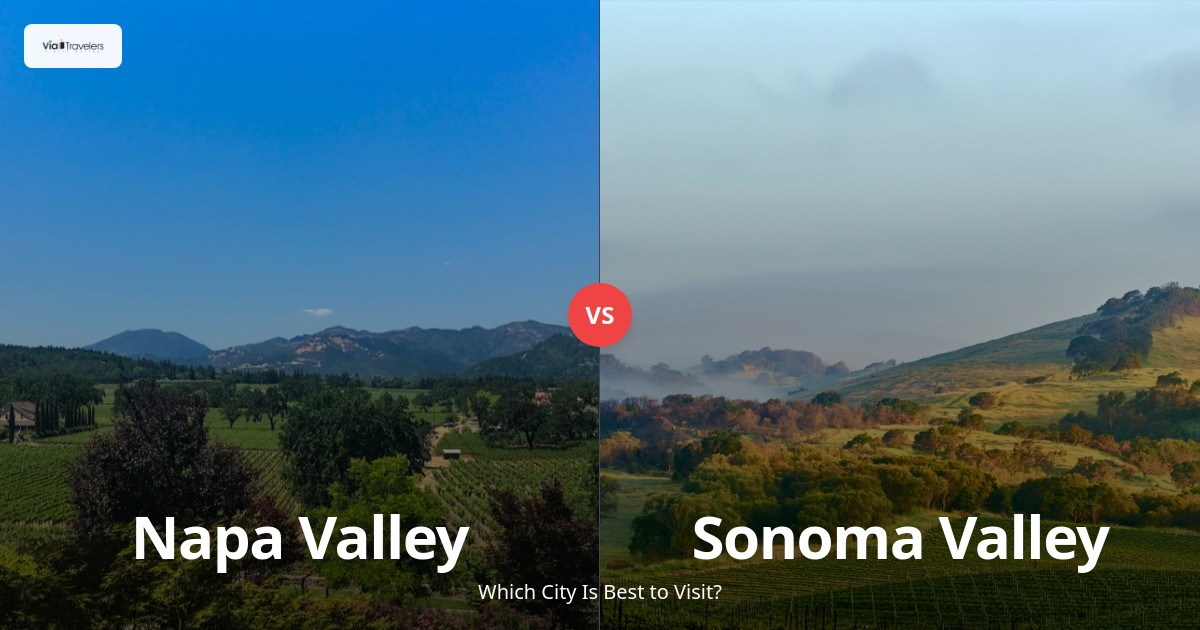
Sonoma is Napa’s more relaxed neighbor — fewer limos, more farm stands, and a town square where you can taste world-class Pinot Noir without the Napa Valley markup.
Travel guides for Sonoma
Things to do (1)
More guides featuring Sonoma (15)
At a glance
- English, Spanish
- Wine country
- Rolling hills
- Redwood forests
- Pacific coast nearby
- Wine country experience
- Historical exploration
- Outdoor adventures
- Culinary tourism
How Sonoma scores
Editorial scores on a 10-point scale, weighed against destinations of the same kind.
Travel safety snapshot
SafePlace indicators use their source 100-point scale; higher is more favourable. Planning context, not a live travel advisory — check official government guidance before you go.
When to go
Best months to visit: March, April, May, June, August, September, October and November.
- January: 4.9 to 14 degrees Celsius, 171.2 millimetres of rain, best-time score 3 out of 5.
- February: 4.9 to 15.6 degrees Celsius, 134.3 millimetres of rain, best-time score 3 out of 5.
- March: 5.9 to 16.2 degrees Celsius, 121.5 millimetres of rain, best-time score 4 out of 5.
- April: 7.8 to 19.9 degrees Celsius, 39.8 millimetres of rain, best-time score 4 out of 5.
- May: 10 to 23.4 degrees Celsius, 21.1 millimetres of rain, best-time score 4 out of 5.
- June: 12.2 to 27.5 degrees Celsius, 2.6 millimetres of rain, best-time score 4 out of 5.
- July: 13 to 29.4 degrees Celsius, 0.1 millimetres of rain, best-time score 3 out of 5.
- August: 13.6 to 29.7 degrees Celsius, 1.5 millimetres of rain, best-time score 5 out of 5.
- September: 13.3 to 28.6 degrees Celsius, 8.1 millimetres of rain, best-time score 5 out of 5.
- October: 10.8 to 24.7 degrees Celsius, 41.6 millimetres of rain, best-time score 5 out of 5.
- November: 6.9 to 18 degrees Celsius, 77.1 millimetres of rain, best-time score 4 out of 5.
- December: 4.8 to 13.8 degrees Celsius, 137.7 millimetres of rain, best-time score 3 out of 5.
Month-by-month conditions and packing advice
- January
- Cool to mild, rainy January in Sonoma: winter value or summer warmth can work, but rain, heat, or demand reduce the balance. Crowds: January in Sonoma is one of the wetter periods, so museums, food stops, flexible reservations, and backup indoor plans make the trip easier. Pack: Pack layered clothing and comfortable walking shoes. Add a rain jacket or compact umbrella.
- February
- Cool to mild, rainy February in Sonoma: winter value or summer warmth can work, but rain, heat, or demand reduce the balance. Crowds: February in Sonoma is one of the wetter periods, so museums, food stops, flexible reservations, and backup indoor plans make the trip easier. Pack: Pack layered clothing and comfortable walking shoes. Add a rain jacket or compact umbrella.
- March
- Cool to mild, some rain March in Sonoma: spring, early summer, or late fall can be excellent with fewer peak-season crowds. Crowds: March in Sonoma is workable with normal seasonal planning; build in layers, weather checks, and a mix of indoor and outdoor activities. Pack: Pack layered clothing and comfortable walking shoes. Add a rain jacket or compact umbrella.
- April
- Cool to mild, occasional rain April in Sonoma: spring, early summer, or late fall can be excellent with fewer peak-season crowds. Crowds: April in Sonoma is workable with normal seasonal planning; build in layers, weather checks, and a mix of indoor and outdoor activities. Pack: Pack layered clothing and comfortable walking shoes.
- May
- Mild to warm, mostly dry May in Sonoma: spring, early summer, or late fall can be excellent with fewer peak-season crowds. Crowds: May in Sonoma is comfortable for sightseeing, neighborhoods, food stops, day trips, and outdoor time with limited weather friction. Pack: Pack layered clothing and comfortable walking shoes.
- June
- Warm to hot, mostly dry June in Sonoma: spring, early summer, or late fall can be excellent with fewer peak-season crowds. Crowds: June in Sonoma is comfortable for sightseeing, neighborhoods, food stops, day trips, and outdoor time with limited weather friction. Pack: Pack light clothing, sun protection, and comfortable walking shoes.
- July
- Warm to hot, mostly dry July in Sonoma: winter value or summer warmth can work, but rain, heat, or demand reduce the balance. Crowds: July in Sonoma is workable with normal seasonal planning; build in layers, weather checks, and a mix of indoor and outdoor activities. Pack: Pack light clothing, sun protection, and comfortable walking shoes.
- August
- Warm to hot, mostly dry August in Sonoma: harvest energy, vineyard color, food events, warm days, and winery visits are strongest. Crowds: August in Sonoma is workable with normal seasonal planning; build in layers, weather checks, and a mix of indoor and outdoor activities. Pack: Pack light clothing, sun protection, and comfortable walking shoes.
- September
- Warm to hot, mostly dry September in Sonoma: harvest energy, vineyard color, food events, warm days, and winery visits are strongest. Crowds: September in Sonoma is comfortable for sightseeing, neighborhoods, food stops, day trips, and outdoor time with limited weather friction. Pack: Pack light clothing, sun protection, and comfortable walking shoes.
- October
- Mild to warm, occasional rain October in Sonoma: harvest energy, vineyard color, food events, warm days, and winery visits are strongest. Crowds: October in Sonoma is comfortable for sightseeing, neighborhoods, food stops, day trips, and outdoor time with limited weather friction. Pack: Pack light clothing, sun protection, and comfortable walking shoes.
- November
- Cool to mild, some rain November in Sonoma: spring, early summer, or late fall can be excellent with fewer peak-season crowds. Crowds: November in Sonoma is workable with normal seasonal planning; build in layers, weather checks, and a mix of indoor and outdoor activities. Pack: Pack layered clothing and comfortable walking shoes. Add a rain jacket or compact umbrella.
- December
- Cool to mild, rainy December in Sonoma: winter value or summer warmth can work, but rain, heat, or demand reduce the balance. Crowds: December in Sonoma is one of the wetter periods, so museums, food stops, flexible reservations, and backup indoor plans make the trip easier. Pack: Pack layered clothing and comfortable walking shoes. Add a rain jacket or compact umbrella.
- August
- September
- June
- July
- October
- January
- February
- November
- December
- March
- April
- May
Know before you go
About
Sonoma Valley, renowned for its picturesque vineyards and rolling hills, is a premier wine destination in California. This charming area offers a blend of outdoor adventures, culinary experiences, and rich history. Visitors can explore world-class wineries, enjoy farm-to-table dining, and immerse themselves in the local art scene, making it a perfect getaway for wine enthusiasts and nature lovers alike.
Neighbourhoods
Downtown Sonoma centres on the eight-acre Sonoma Plaza, surrounded by tasting rooms, restaurants, and historic buildings. Glen Ellen, 12 km north, is a quieter village set among oak-studded hills with wineries and Jack London State Historic Park. Kenwood further north features premium Cabernet producers. The Sonoma Coast, about 45 minutes west, offers dramatic Pacific bluffs and Bodega Bay.
Best time to visit
The best time to visit Sonoma Valley is during the harvest season in late summer to early fall (August to October) when the vineyards are bustling with activity. Spring (March to May) is also beautiful, with blooming wildflowers and mild weather. Summer can be warm, while winter offers a quieter experience with fewer crowds.
Getting there and around
Getting there
From San Francisco, drive north across the Golden Gate Bridge and take US-101 to Highway 37 East, then Highway 121/12 North—about 72 km (1 hour without traffic). From Oakland, take I-80 West to Highway 37. The nearest commercial airport is Charles M. Schulz–Sonoma County Airport (STS) in Santa Rosa, 30 minutes north, with flights from Alaska, American, and Avelo Airlines. San Francisco (SFO) and Oakland (OAK) international airports are about 90 minutes south. Groome Transportation runs shuttles between SFO and Sonoma County.
Getting around
Downtown Sonoma is compact and walkable, with the Sonoma Plaza as the anchor. For winery visits outside town, a car is essential—Highway 12 runs north through the valley to Glen Ellen and Kenwood. Cycling is popular along quieter vineyard roads; bike rentals are available on the plaza. Several tour operators offer guided van and limo winery tours so you can taste without driving. Uber and Lyft operate in the area, though wait times can be longer outside downtown.
Top experiences in Sonoma
Sonoma Plaza & Mission San Francisco Solano
The eight-acre Sonoma Plaza is the largest town square in California and the focal point of the city. At its northeast corner stands Mission San Francisco Solano (1823), the last and northernmost of California’s 21 missions. The plaza hosts a weekly farmers’ market, wine events, and the site where the Bear Flag was raised in 1846. Surrounding blocks feature tasting rooms, boutiques, and some of the valley’s best restaurants.
Buena Vista Winery
Founded in 1857 by Count Agoston Haraszthy, Buena Vista is California’s oldest premium winery. Set in a stone building carved into a hillside east of the plaza, it offers tastings of estate-grown varietals and historical cave tours. The winery is a California Historical Landmark and the birthplace of the state’s commercial wine industry.
Jack London State Historic Park
Located in Glen Ellen, this 1,400-acre park preserves the final ranch of author Jack London, who lived and wrote here from 1905 until his death in 1916. Trails wind through redwood groves and open meadows to the ruins of Wolf House, London’s grand stone mansion that burned just before completion. The cottage where London wrote ‘The Call of the Wild’ and a museum of personal artefacts are open to visitors.
Gundlach Bundschu Winery
One of the oldest family-owned wineries in California (established 1858), ‘GunBun’ sits on a 320-acre estate on the slopes of the Sonoma hillside. Known for Gewürztraminer, Merlot, and Tempranillo, the winery offers cave tours, vineyard hikes, and an outdoor amphitheatre that hosts concerts and events throughout summer.
Sonoma Coast State Park
Stretching 17 miles along the Pacific coast west of Sonoma, this park encompasses windswept bluffs, hidden coves, and wide sandy beaches. Bodega Head offers whale-watching from December through April, and Goat Rock Beach sits at the mouth of the Russian River. Hiking trails along the coastal bluffs provide sweeping ocean panoramas and opportunities to spot harbour seals, ospreys, and grey whales.
Editor-curated picks carried over from our original guide. Where a full place guide exists, the card links to it.
Worth booking ahead in Sonoma
Hand-picked from the operators our guides already send readers to. Prices and availability are live on the partner site.
BrowseViator
Tours and tickets in Sonoma on Viator (opens Viator in a new tab)
Viator's full list of bookable tours and tickets in Sonoma.
BrowseGetYourGuide
Experiences in Sonoma on GetYourGuide (opens GetYourGuide in a new tab)
Everything GetYourGuide sells in Sonoma, with the cancellation terms on each listing.
Where to stayBooking.com
Stays in Sonoma (opens Booking.com in a new tab)
Live rates and availability for Sonoma on Booking.com; filter by neighbourhood once you know where your days start.
We earn a commission if you book through these links, at no extra cost to you. It is how we keep the guides free and independent.
Where to stay
Fairmont Sonoma Mission Inn & Spa
18140 Sonoma Hwy, Sonoma, CA 95476
Five-star resort on a 300-acre estate with suites, vineyard views, a state-of-the-art spa, Michelin-starred restaurant, and championship golf.
MacArthur Place Hotel & Spa
630 Broadway, Sonoma, CA 95476
Boutique hotel housed in a meticulously restored 1840s adobe, steps from Sonoma Plaza, with elegant rooms, vineyard views, and wine-country dining.
El Pueblo Inn
405 1st St W, Sonoma, CA 95476
Charming historic inn on the west side of Sonoma Plaza with lush gardens, a heated pool, complimentary breakfast, and rooms styled with wine-country elegance.
Editor-curated stays carried over from our original guide. Where we have reviewed the hotel, the card links to the review.
Tips from the field
Highlights
- Sonoma Plaza and its surrounding historic buildings
- Buena Vista Winery, California's oldest premium winery
- The scenic Sonoma Overlook Trail
- Bartholomew Park for hiking and picnicking
Best activities
- Wine tasting at world-class wineries
- Exploring Sonoma State Historic Park
- Visiting the Sonoma Valley Museum of Art
- Riding the Sonoma TrainTown Railroad
Practical tips
- Make reservations for popular wineries in advance
- Consider hiring a designated driver or joining a wine tour
- Wear comfortable shoes for walking around Sonoma Plaza and hiking trails
- Bring layers as temperatures can vary throughout the day
Keeping it authentic
- Sonoma Plaza is the heart of the city's historic district
- Many wineries offer tours showcasing traditional winemaking methods
Culture, customs and safety
Cultural heritage
The Sonoma Valley played a pivotal role in California’s early history. Mission San Francisco Solano, founded in 1823, was the last and northernmost of the 21 California missions. The Bear Flag Revolt of 1846 began right on Sonoma Plaza when American settlers declared independence from Mexico and raised the bear flag—the precursor to California’s state flag. General Mariano Guadalupe Vallejo, the last Mexican commandant of Northern California, made Sonoma his headquarters; his restored Gothic-Victorian home and the adjacent Sonoma Barracks are now part of a state historic park.
Local customs & etiquette
- Be respectful of the local environment and support sustainable practices
- Engage with winery staff and ask questions about their wines
- Enjoy tastings responsibly and consider arranging transportation
- Tip service staff generously, especially in restaurants and tasting rooms