Geiranger is a village of roughly 250 permanent residents situated at the innermost point of Geirangerfjord in the Sunnmøre region of western Norway. The fjord was inscribed as a UNESCO World Heritage Site in 2005 alongside Nærøyfjord, recognised for its exceptional natural beauty, dramatic cliffs, and cascading waterfalls. Every summer, hundreds of thousands of visitors arrive by cruise ship, ferry, and road to experience one of Norway’s most iconic landscapes.
What is Geirangerfjord known for?
Geirangerfjord is best known as an 15-kilometre-long UNESCO-listed fjord cutting through near-vertical mountain walls up to 1,400 metres high, famous for the Seven Sisters waterfall, the Suitor waterfall directly opposite, and the abandoned hillside farms of Skageflå and Knivsflå that cling to near-inaccessible ledges above the water. The fjord’s deep blue-green water, year-round snowcapped peaks, and concentration of multiple named waterfalls in a single view make it one of the most photographed natural sites in Scandinavia. Cruise ships from major European lines dock regularly in the village harbour between May and September.
Best things to do in Geiranger
The most popular activities combine fjord-level and mountain-top perspectives: a fjord sightseeing boat tour from Geiranger quay passes directly in front of the Seven Sisters and Suitor waterfalls, while the Geiranger Skywalk at Dalsnibba mountain plateau (1,500 metres above sea level) offers a panoramic view straight down to the village and fjord. Other concrete options include:
- Driving or cycling the Ørnesvegen (Eagle Road), a series of 11 hairpin bends above the fjord between Geiranger and Eidsdal, with multiple signed viewpoints.
- Hiking to the abandoned farm Skageflå, reached by a steep marked trail from the fjord with rope-assisted sections.
- Visiting the Norwegian Fjord Centre (Norsk Fjordsenter) in Geiranger village for exhibition context on fjord geology, ecology, and local farming history.
- Kayaking on the fjord, with guided tours departing from the village harbour area.
Where to eat in Geiranger
Dining in Geiranger is concentrated in and around the village centre near the quay, with options ranging from hotel restaurants to a small number of independent cafes; the Hotel Union Geiranger restaurant and the Brasserie Posten are among the established venues serving Norwegian dishes including local salmon, brown cheese (brunost), and traditional kjøttkaker (Norwegian meatballs). Most restaurants operate seasonally from May through September and close or reduce hours significantly outside summer. The village bakery near the harbour offers packed lunches suitable for hikers.
How to get to Geiranger
Geiranger is accessible by the scenic ferry route across Geirangerfjord operated by Fjord1 between Geiranger and Hellesylt, running multiple times daily in summer and connecting to the national road network on both sides. By road, visitors approach via the Trollstigen mountain route from the north or via Eagle Road (Ørnesvegen, County Road 63) from Eidsdal to the west. The nearest airport is Ålesund Airport Vigra, approximately 130 kilometres by road, with regular bus and car connections. Geiranger has no railway station; the closest rail stop is Åndalsnes on the Rauma Line from Dombås.
Where to walk in Geiranger
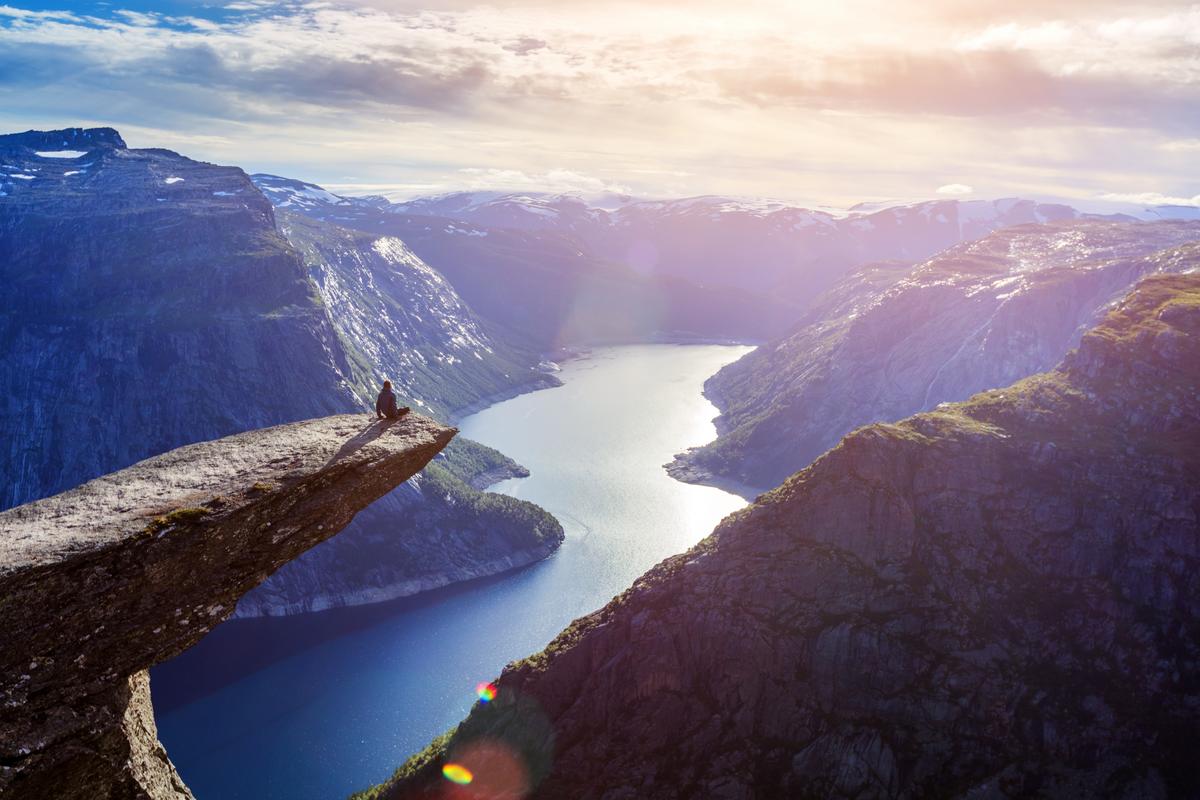
The most rewarding walking routes ascend from the village to abandoned fjordside farms, with the trail to Storseterfossen waterfall — walkable directly behind the falls — being one of the most accessible hikes starting near the village centre on marked paths along Geirangelva river. The trail to Flydalsjuvet viewpoint, a short drive or moderate walk above the village, provides the classic overhanging-rock photograph of the fjord. Longer routes connect to Vesterås farm viewpoint, accessible via a marked trail from the main road above the village.
Best time to visit Geiranger
Late May through early September is the primary tourist season, when all ferries, boat tours, mountain roads including the Dalsnibba road, and most restaurants and accommodations are open; June and July see the maximum daylight hours with near-continuous light above the Arctic Circle’s influence, while May and September offer significantly fewer crowds with most infrastructure still operational. Winter access is limited as the Dalsnibba road closes due to snow, and the Eagle Road may close periodically; however, the fjord itself remains open and the village is accessible year-round by road from the south.