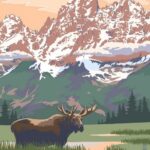
Grand Teton National Park spans roughly 310,000 acres in northwestern Wyoming, anchored by the dramatic Teton Range rising abruptly from the Jackson Hole valley floor. The park encompasses Jackson Lake, Jenny Lake, the Snake River, and habitat supporting grizzly bears, moose, bison, and pronghorn. It sits immediately south of Yellowstone National Park, connected by the John D. Rockefeller Jr. Memorial Parkway.
What is Grand Teton National Park known for?
Grand Teton is known for its sheer, glacier-carved peaks rising without foothills directly from the valley, with the Grand Teton summit reaching 13,775 feet, making the range one of the most visually dramatic mountain fronts in North America; the park also protects critical Greater Yellowstone Ecosystem habitat and offers Class IV technical climbing routes on the Cathedral Group peaks. The Teton Range contains twelve peaks exceeding 12,000 feet, and the park’s glacially formed lakes — Jenny, Jackson, Leigh, and String — provide striking foreground reflections of the mountains.
Best things to do in Grand Teton National Park
Hiking, wildlife watching, mountaineering, boating on Jackson Lake, and scenic driving along Teton Park Road and U.S. Highway 191/89/26 are the park’s core activities. Jenny Lake Loop Trail, the Cascade Canyon Trail, and the Paintbrush-Cascade Loop rank among the most celebrated routes. Signal Mountain Summit Road offers a paved drive to elevated views without strenuous hiking.
- Hike Cascade Canyon Trail from Jenny Lake to the canyon floor
- Take the Jenny Lake Ferry to shorten the approach to Hidden Falls and Inspiration Point
- Float the Snake River on a guided scenic float trip
- Drive the Antelope Flats Road at dawn for bison and pronghorn sightings
- Climb the Grand Teton via the Exum or Owen-Spalding route with a licensed guide
- Attend a ranger-led program at Colter Bay Visitor Center
Where to eat near Grand Teton National Park
Dining within the park is concentrated at historic lodges operated by Grand Teton Lodge Company, including the Mural Room at Jackson Lake Lodge, the Peaks Restaurant at Signal Mountain Lodge, and the Jenny Lake Lodge Dining Room, which serves prix-fixe dinners; the town of Jackson, roughly 13 miles south of Moose Entrance Station, offers a full range of independent restaurants and markets. The Blue Heron Lounge at Jackson Lake Lodge serves casual meals with lake views, and Leeks Marina Pizzeria near Colter Bay provides a relaxed waterside option during summer.
Best time to visit Grand Teton National Park
Late June through early September offers the widest access to trails, full visitor services, and reliable warm daytime temperatures, though this period brings peak crowds; mid-September through mid-October delivers fall foliage, fewer visitors, and excellent wildlife activity as animals move toward lower elevations. Winter from December through March opens Nordic skiing and snowshoeing on groomed trails near Taggart Lake and along the Teton Park Road, which closes to vehicles but welcomes non-motorized travel.
Where to walk in Grand Teton National Park
The Jenny Lake Loop, a 7.1-mile relatively flat trail circling Jenny Lake with Teton Range reflections, is the park’s most iconic walk; Schwabacher Landing off U.S. 26/89/191 provides a short flat path to beaver ponds and Snake River braids with unobstructed Grand Teton views. The Menor’s Ferry Historic District near Moose offers a flat interpretive walk along the Snake River bank past a reconstructed 1890s ferry and the Chapel of the Transfiguration.
How to get to Grand Teton National Park
Jackson Hole Airport (airport code JAC) sits inside the park boundary roughly 7 miles north of Jackson and is the primary air gateway, served by several major carriers with seasonal nonstop flights from multiple U.S. cities; driving via U.S. Highway 191/89/26 from Jackson through the Moose Entrance is the standard road approach. START Bus operates public transit between Jackson, Teton Village, and park-adjacent areas, and the park’s free south entrance is accessible from Jackson approximately year-round.