Jumeirah is a broad coastal district stretching along Dubai’s Arabian Gulf shoreline, roughly between Al Satwa to the north and Umm Suqeim to the south. It combines free public beaches, landmark hotels, open-air dining plazas, and low-rise villa streets lined with bougainvillea and corner cafes. The area is divided informally into Jumeirah 1, 2, and 3, each with its own neighborhood rhythm.
What is Jumeirah known for?
Jumeirah is best known for its Arabian Gulf beaches, the sail-shaped Burj Al Arab hotel on its own artificial island off Jumeirah Road, and a stretch of accessible public shoreline that includes Jumeirah Beach Park and Kite Beach. The district also contains the Jumeirah Mosque, one of the few mosques in Dubai open to non-Muslim visitors for guided tours, and the low-density residential streets that gave rise to the informal expat phrase “Jumeirah Jane” describing the area’s affluent suburban character.
Best things to do in Jumeirah
The single most popular activity is spending time on Kite Beach, a free public beach near Umm Suqeim that offers rentable water-sports equipment, a dedicated kite-surfing zone, beachside food trucks, and a clear view of the Burj Al Arab. Other strong options include visiting the Jumeirah Mosque on a morning guided tour run by the Sheikh Mohammed Centre for Cultural Understanding, browsing the Boxpark open-air retail and dining container mall on Al Wasl Road, and walking or cycling the paved Kite Beach promenade.
- Guided cultural tour of Jumeirah Mosque with SMCCU
- Kite-surfing or paddleboarding at Kite Beach
- Open-air shopping and eating at Boxpark on Al Wasl Road
- Sunset walk along Jumeirah Beach Road past the Burj Al Arab viewpoint
- Visiting Safa Park, a large public park straddling Al Wasl Road and Sheikh Zayed Road
Where to eat in Jumeirah
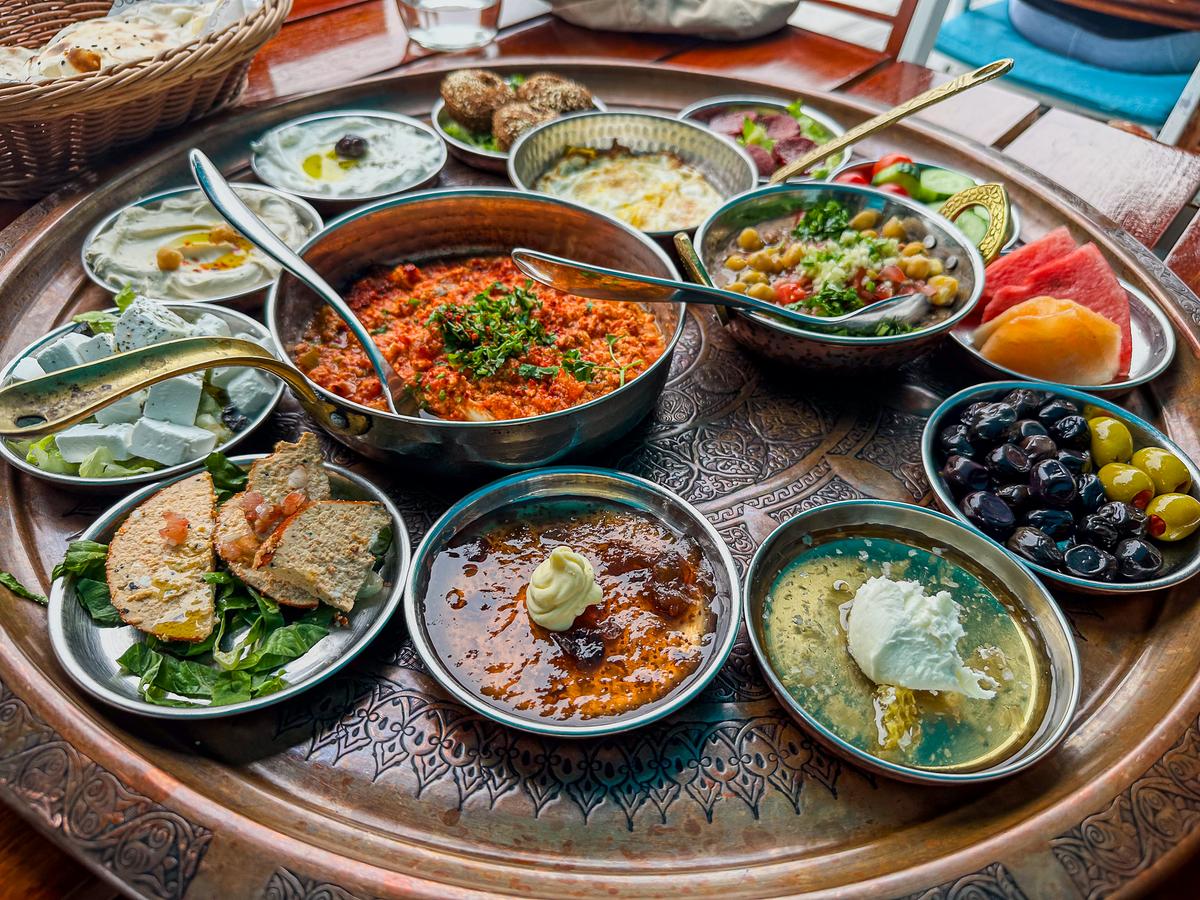
Jumeirah’s dining scene ranges from casual beachside trucks at Kite Beach to well-regarded all-day restaurants along Jumeirah Beach Road and La Mer, a waterfront retail and dining development on the northern Jumeirah 1 shoreline. The area is strong for Lebanese and Gulf cuisine, with several long-running Lebanese restaurants on and around Jumeirah Beach Road serving mezze, grilled meats, and fresh juices. Boxpark hosts a dense cluster of international casual concepts in one walkable block.
- Lebanese mezze and grilled meats along Jumeirah Beach Road
- Beachside food trucks and casual eats at Kite Beach
- International casual dining at Boxpark, Al Wasl Road
- Waterfront restaurants and cafes at La Mer development
Where to walk in Jumeirah
The best walking route in Jumeirah runs along the Kite Beach promenade south toward Umm Suqeim Beach, with the Burj Al Arab visible throughout and a paved path suitable for cycling and running. For a more urban walk, Jumeirah Beach Road between La Mer and the Jumeirah Mosque passes independent boutiques, juice bars, and local cafes in low-rise buildings typical of older Jumeirah.
How to get to Jumeirah
Jumeirah has no Dubai Metro station directly within the district; the nearest Red Line stations are World Trade Centre and Business Bay on its eastern edge, requiring a taxi or bus connection to reach the beach. RTA public buses serve Jumeirah Beach Road, including routes 8 and X28, and the area is well-covered by Dubai Taxi and ride-hailing apps. Driving via Jumeirah Beach Road or Al Wasl Road is the most common approach, with paid and free parking available near Kite Beach and La Mer.
Best time to visit Jumeirah
The best months to visit Jumeirah are November through March, when daytime temperatures range from roughly 20–28°C, making beach time, outdoor dining, and walking along Jumeirah Beach Road genuinely comfortable. Summer months from June through September bring extreme heat and humidity above 40°C, limiting most outdoor activity to early morning or evening. The Jumeirah Mosque tours run year-round on most mornings except Fridays.