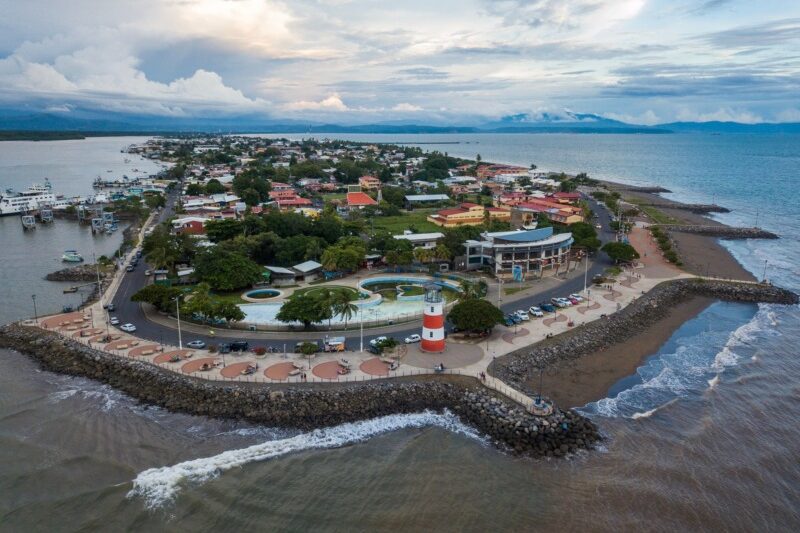
Manuel Antonio sits along the Pacific coast of Costa Rica, roughly 3 kilometers south of Quepos town, where the road ends at the entrance to Manuel Antonio National Park. The area combines protected rainforest, coral-fringed beaches, and a compact strip of hotels and restaurants along the main road, making it one of the most visited destinations on Costa Rica’s central Pacific coast.
What is Manuel Antonio known for?
Manuel Antonio is best known for its national park, which protects four beaches—Playa Manuel Antonio, Playa Espadilla Sur, Playa Biesanz, and Playa Gemelas—alongside humid tropical forest that shelters white-faced capuchin monkeys, three-toed sloths, squirrel monkeys, and hundreds of bird species including the scarlet macaw. The park is one of the smallest but most biodiverse national parks in Costa Rica, covering approximately 1,625 hectares of land and marine habitat.
Best things to do in Manuel Antonio
Hiking the park trails, swimming at Playa Manuel Antonio, and early-morning wildlife spotting are the top activities; guided naturalist tours inside the park significantly increase the chance of spotting sloths, poison dart frogs, and Jesus Christ lizards. Beyond the park, visitors can rent kayaks or paddleboards from operators near Playa Biesanz, take boat tours out of Quepos Marina for sport fishing or dolphin watching, zip-line through the forest canopy on courses operated by outfitters on the main Quepos–Manuel Antonio road, and visit the crocodile-inhabited Río Naranjo estuary south of town.
- Guided wildlife walks inside Manuel Antonio National Park
- Snorkeling and kayaking at Playa Biesanz
- Sport fishing charters from Quepos Marina
- Canopy zip-line tours along the main park road
- Sunset boat tours on the Pacific
Where to eat in Manuel Antonio
The main road between Quepos and the park entrance—locally called the road to Manuel Antonio—is lined with open-air restaurants serving fresh Pacific seafood, with ceviche, whole fried red snapper, and rice with shrimp (arroz con camarones) being regional staples. El Avión, a restaurant built around a real 1954 Fairchild C-123 cargo plane on the hillside above Manuel Antonio, is one of the most recognizable dining landmarks in the area. Ronny’s Place on the hilltop road is known for its panoramic ocean views and grilled seafood. The central market in Quepos town, about 3 kilometers north, offers local sodas serving casado—the traditional Costa Rican plate of rice, beans, salad, and a protein.
How to get to Manuel Antonio
The most common routes from San José are the 3.5-hour drive via the Costanera Sur highway (Route 34) through Jacó and Parrita, or the daily scheduled bus service operated by Transportes Morales and Transportes Delio Morales from the Tracopa terminal on Avenida 5 in San José, which stops in Quepos before continuing to the park entrance. Shared shuttle services from San José, Monteverde, and La Fortuna are widely available through operators like Interbus and Grayline. The nearest domestic airport is Quepos La Managua Airport, served by Sansa Airlines with daily flights from San José Juan Santamaría International Airport, a 20-minute flight. Local tuk-tuks and shared taxis connect Quepos town to Manuel Antonio.
Where to walk in Manuel Antonio
The primary walking experience is the network of signed trails inside Manuel Antonio National Park, including the Punta Catedral loop trail—a 45-minute circuit across a former island tombolo with ocean views on both sides—and the path to Playa Espadilla Sur. Outside the park, the main road from Quepos to the park entrance passes roadside wildlife trees where sloths are frequently spotted, and the waterfront malecón in Quepos town offers an easy flat walk along the estuary and marina.
Best time to visit Manuel Antonio
The dry season from December through April brings the clearest skies, calmest Pacific surf, and easiest park trail conditions, with January through March considered peak season; the green season from May through November brings daily afternoon rain but far fewer crowds, lower hotel rates, and lush forest that makes wildlife even more visible against the foliage. The park is closed on Tuesdays.