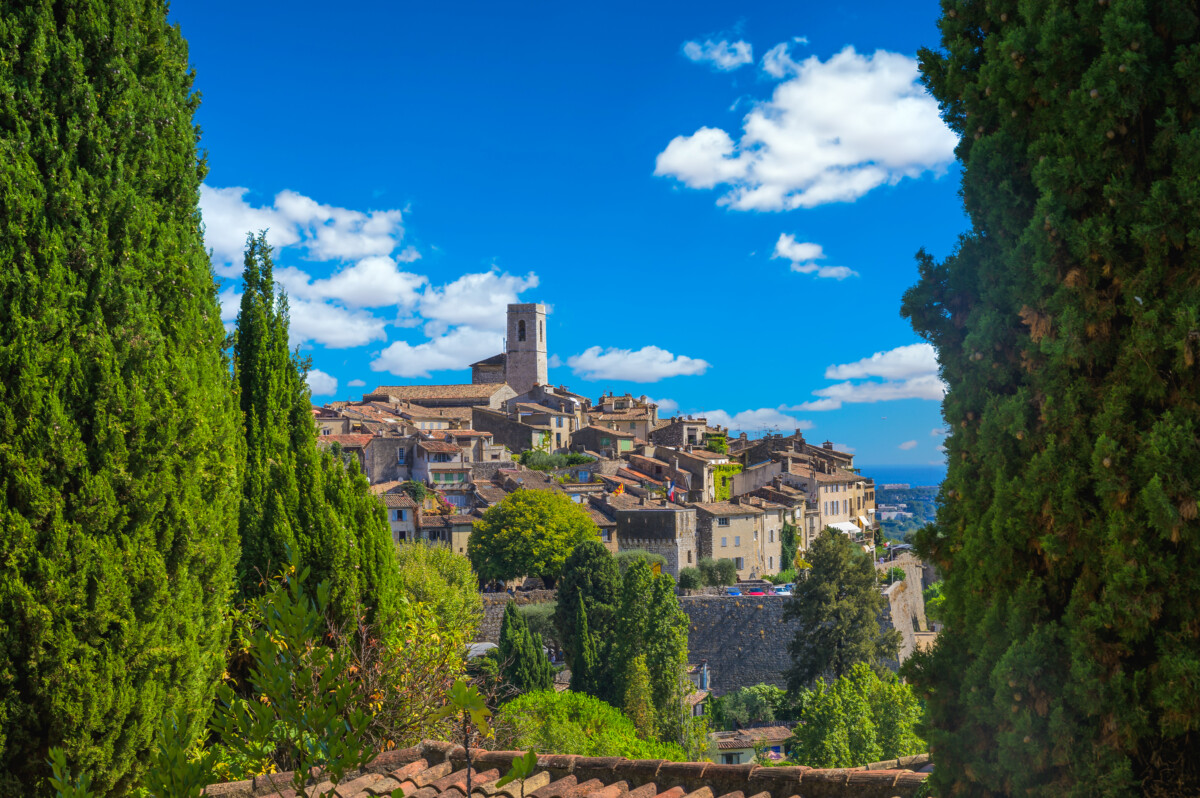
Vieux Nice is the oldest urban core of Nice, occupying roughly 50 hectares between the Castle Hill (Colline du Château) and the Place Masséna. Its street grid follows medieval patterns, and the architecture reflects centuries of Savoyard and Italian influence, with ochre, terracotta, and yellow facades lining narrow lanes called carruggi. The neighborhood is a UNESCO-recognized historic district and remains a living, working quarter alongside its role as a major visitor destination.
What is Vieux Nice known for?
Vieux Nice is known primarily for its baroque churches, its open-air Cours Saleya market, and a distinct Niçois culinary tradition that blends French and Ligurian Italian elements, including socca (chickpea-flour crepes), pissaladière (onion and anchovy tart), and pan bagnat sandwiches sold at street stalls and small restaurants throughout the quarter. The Cathedral of Sainte-Réparate on Place Rossetti is the neighborhood’s most prominent religious landmark, dating to the seventeenth century, with a polychrome tiled dome visible above the rooflines. The Chapel of the Annunciation (Chapelle de l’Annonciation) on Rue de la Poissonnerie is another well-preserved baroque interior worth entering.
Best things to do in Vieux Nice
The single most essential activity is visiting the Cours Saleya market, which operates Tuesday through Sunday mornings as a flower, fruit, and vegetable market, and on Monday mornings as an antiques market. Beyond the market, the following are concrete, doable activities:
- Climb or take the free elevator to Colline du Château for panoramic views over the Baie des Anges and the rooftops of the old town.
- Walk the full length of Rue Pairolière, the main pedestrian food and provisions street, to browse olive oils, cured meats, and Niçois specialties.
- Visit the Palais Lascaris on Rue Droite, a seventeenth-century baroque palace now a city museum with free admission on the first Sunday of the month.
- Explore the fish market stalls on Place Saint-François, which operate weekday mornings.
Where to eat in Vieux Nice
Vieux Nice concentrates some of the most authentic Niçois cooking in the city, with restaurants and street vendors clustered around Cours Saleya, Rue Droite, and Rue de la Préfecture serving dishes specific to this coastal cuisine. Socca is best eaten hot from the wood-fired pans at stalls around the Cours Saleya or from established spots on Rue Pairolière. Daube niçoise (beef stew with olives and orange peel), stockfish (stewed dried cod called estocaficada), and barbajuans (fried pastries filled with Swiss chard and ricotta) are menu staples at traditional restaurants. The area around Rue Benoît Bunico and Place du Jésus has a concentration of sit-down restaurants that cater to both locals and visitors.
How to get to Vieux Nice
Vieux Nice is directly accessible by tram on Line 1 (T1) of the Nice Métropole network, with the Jean Médecin and Cathédrale Vieille Ville stops serving the western and central edges of the quarter respectively. From Nice-Ville train station (Gare de Nice-Ville), the T1 tram reaches the old town in under ten minutes. Buses operated by Lignes d’Azur stop along the Promenade des Anglais and Quai des États-Unis, bordering the southern edge of the neighborhood. The airport (Nice Côte d’Azur) is connected by tram Line 2 (T2) to Jean Médecin, where passengers transfer to T1.
Where to walk in Vieux Nice
The most rewarding walking route begins at Place Masséna, passes through the Cours Saleya along Quai des États-Unis, continues up Montée du Château to the Castle Hill summit, then descends into the old town via Rue Droite back to Place Rossetti, covering the neighborhood’s main landmarks in roughly ninety minutes at a relaxed pace. Secondary lanes worth exploring include Rue du Collet, Rue Benoît Bunico, and Rue de la Poissonnerie, all of which retain original building proportions and traditional shop fronts.
Best time to visit Vieux Nice
Vieux Nice is accessible and active year-round, but the period from late April through June combines mild temperatures, the full flower market season on Cours Saleya, and smaller crowds than the peak July and August summer months. February brings the Nice Carnival, one of the largest in Europe, which is centered partly around Cours Saleya and the adjacent Place Masséna. Morning visits on any day allow access to the market at its liveliest and avoid afternoon heat in summer.