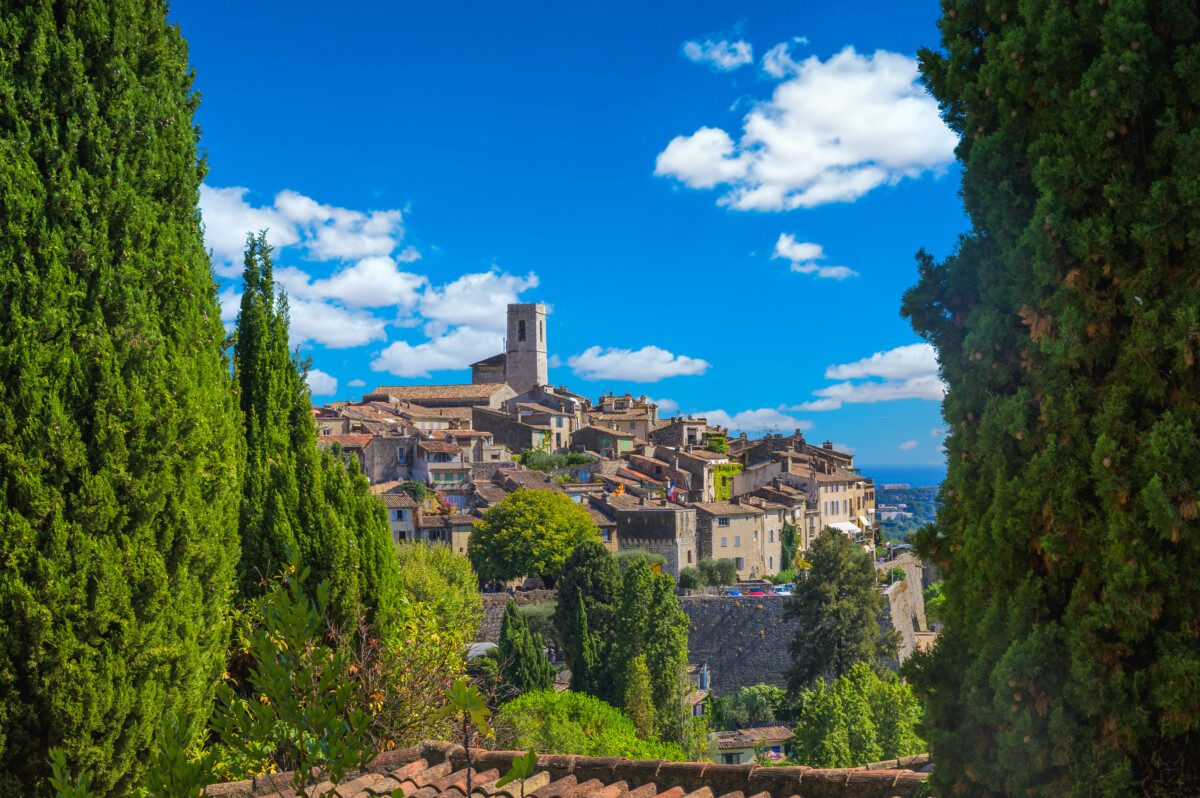
Vieux Nice, the historic old town of Nice on the French Riviera, occupies a compact grid of narrow streets east of Place Masséna, bounded by the sea to the south and Castle Hill to the east. Its architecture reflects centuries under the House of Savoy and strong Piedmontese-Italian influence, visible in the ochre, sienna, and rose-washed facades lining streets such as Rue Droite and Rue du Marché. The neighbourhood is one of the best-preserved baroque urban landscapes in southern France.
What is Vieux Nice known for?
Vieux Nice is known above all for its Cours Saleya market, its dense concentration of baroque churches including the Cathédrale Sainte-Réparate and the Chapelle de la Miséricorde, and for being the birthplace of Niçoise cuisine featuring dishes such as socca, pissaladière, and salade niçoise. The street grid follows a Roman and medieval pattern, with Rue Droite as its historic spine, and the neighbourhood retains a genuinely residential population alongside tourism.
Best things to do in Vieux Nice
- Browse the Cours Saleya flower, fruit, and vegetable market, held Tuesday through Sunday mornings.
- Climb or take the free elevator from Rue des Ponchettes up to Castle Hill (Colline du Château) for panoramic views over the Baie des Anges.
- Visit the Cathédrale Sainte-Réparate on Place Rossetti, the neighbourhood’s main baroque church built in the 17th century.
- Walk Rue Droite end to end to see ornate doorways, the Palais Lascaris museum, and local food shops.
- Attend an evening concert or event at the Opéra de Nice, located on Rue Saint-François-de-Paule.
Where to eat in Vieux Nice
The best eating in Vieux Nice centres on Cours Saleya and the streets immediately behind it, where you can find socca—a thin chickpea-flour crêpe cooked in wood-fired ovens—at dedicated counters, as well as pissaladière (onion and anchovy tart) and pan bagnat at street stalls and boulangeries. Rue de la Préfecture and Rue Benoit Bunico are lined with restaurants serving traditional Niçoise food including daube niçoise and estocaficada. The Monday antiques market on Cours Saleya gives way the rest of the week to food vendors.
Where to walk in Vieux Nice
The most rewarding walk in Vieux Nice starts at Place Masséna, passes through Jardins Albert 1er, then enters the old town along Rue Saint-François-de-Paule past the Opéra de Nice and the famous Alziari olive oil shop, continues along Cours Saleya, and finishes by ascending to the Colline du Château via the stairs or elevator at the eastern end of Quai des États-Unis. A second worthwhile route follows Rue Droite from its western entrance near Rue du Marché all the way east, branching onto Rue Rossetti to reach Place Rossetti and the cathedral.
How to get to Vieux Nice
Vieux Nice is served by Tram Line 1 (T1) of the Nice tram network, with the most useful stops being Opéra-Vieille Ville and Cathédrale-Vieille Ville; the line connects directly to Nice-Ville main train station in about ten minutes. Several bus lines operated by Lignes d’Azur stop on or near Place Masséna, the main hub immediately west of the old town. The neighbourhood is fully walkable from the Promenade des Anglais and from Nice-Ville station on foot in under twenty minutes.
Best time to visit Vieux Nice
Vieux Nice is best visited in shoulder season—April through early June or September through October—when the Cours Saleya market is lively, temperatures are comfortable for walking, and crowds are lighter than in July and August. Mornings on weekdays offer the quietest experience of the narrow streets and the best access to fresh produce at the market. The Nice Carnival, held each February around Place Masséna and extending into the old town, is the city’s largest annual event and draws significant crowds.