

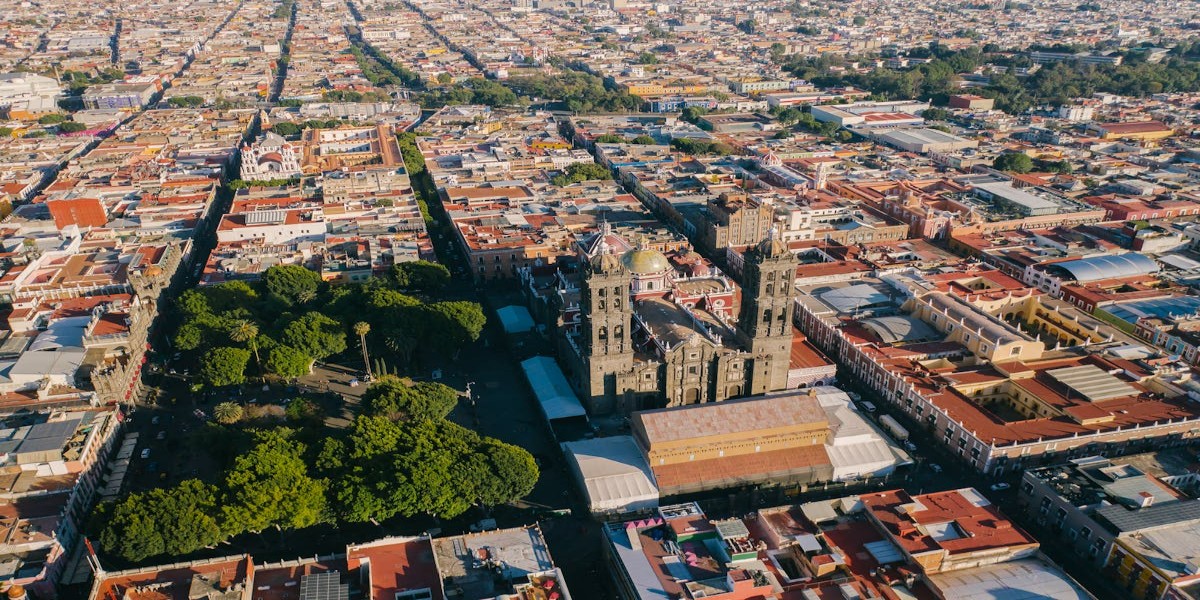
Puebla, known for its stunning colonial architecture and culinary heritage, is a vibrant city that offers a blend of history and modernity. Famous for its Talavera pottery and mole poblano, Puebla is a UNESCO World Heritage site with beautiful churches, museums, and picturesque streets. Visitors can explore the Zócalo, the historic center, and enjoy the local cuisine at various markets and restaurants.
The destination guide
Puebla
City in Mexico, North AmericaUpdated
- Overall8/10
- Best forBudget travelers
- PeakJan, Mar, Nov, Dec
- CurrencyMXN
Puebla’s mole poblano didn’t originate in a restaurant — it came from a convent. That context changes how you eat here.
At a glance
CurrencyMXN
Time zoneCentral Standard Time
Languages
- Spanish
Setting
- Highland city
- Volcanic peaks
- Colonial architecture
- Valley setting
Population3M3,000,000 residents
VisaDuration: Up to 180 days as a visitor without paid activities · Documents: Valid passport for the duration of stay and supporting documents requested by Mexican immigration authorities
How Puebla scores
8/10OverallExcellent
Weather7/10
Value for money9/10
Food & cuisine9/10
Culture & arts8/10
Cultural experience9/10
Nature & outdoors5/10
Adventure4/10
Nightlife5/10
Shopping6/10
Family friendly5/10
Romance7/10
Editorial scores on a 10-point scale, weighed against destinations of the same kind.
Travel safety snapshot
Overall58/100Exercise precaution
Women travellers52/100
LGBTQ+ travellers50/100
Theft55/100
Medical care70/100
Physical harm50/100
Political freedom65/100
SafePlace indicators use their source 100-point scale; higher is more favourable. Planning context, not a live travel advisory — check official government guidance before you go.
When to go
Best months to visit: January, February, March, April, May, September, October, November and December.
- January: 8.1 to 19.1 degrees Celsius, 11.6 millimetres of rain, best-time score 5 out of 5.
- February: 9.6 to 22.5 degrees Celsius, 2.5 millimetres of rain, best-time score 5 out of 5.
- March: 11.1 to 23.6 degrees Celsius, 14.8 millimetres of rain, best-time score 5 out of 5.
- April: 13.1 to 25.3 degrees Celsius, 19.5 millimetres of rain, best-time score 5 out of 5.
- May: 14 to 24.6 degrees Celsius, 58.3 millimetres of rain, best-time score 4 out of 5.
- June: 13.5 to 23.4 degrees Celsius, 58.4 millimetres of rain, best-time score 3 out of 5.
- July: 11.6 to 22.6 degrees Celsius, 67.6 millimetres of rain, best-time score 3 out of 5.
- August: 11.7 to 23.1 degrees Celsius, 61.9 millimetres of rain, best-time score 3 out of 5.
- September: 12.6 to 21.5 degrees Celsius, 76.7 millimetres of rain, best-time score 4 out of 5.
- October: 11 to 22.9 degrees Celsius, 17.5 millimetres of rain, best-time score 4 out of 5.
- November: 9 to 21.4 degrees Celsius, 5.1 millimetres of rain, best-time score 5 out of 5.
- December: 9.1 to 21 degrees Celsius, 4.6 millimetres of rain, best-time score 5 out of 5.
Month-by-month conditions and packing advice
- January
- Cool weather, mostly dry January in Puebla: dry-season colonial streets, food, churches, markets, day trips, and volcano views are most reliable. Crowds: January is part of Puebla’s dry, cooler season, making it an inviting time for cultural tourism and city exploration without the discomfort of heat or heavy rain. This period falls outside Mexico’s peak holiday rush, so while international visitors enjoy the weather, crowd levels remain manageable compared to late December festivities. Hotel rates are steadier than during Christmas or Semana Santa, though early booking is still wise near festival dates. Walking tours, visits to UNESCO-recognized churches, and excursions to nearby archaeological sites are especially comfortable in these temperatures. Layering clothing is essential, as mornings and nights are cool while afternoons warm up pleasantly. Photographers and culture seekers find January especially rewarding, with sharp winter light enhancing architectural details and volcanic landscapes. Pack: Light sweater or fleece for cool evenings; Comfortable walking shoes for cobblestone streets; Layered clothing for shifting day-to-night temperatures; Sunglasses and sunscreen for bright winter sun; Smart-casual attire for Puebla’s historic restaurants and cafés; Scarf or shawl for added warmth and church visits
- February
- Warm and pleasant, mostly dry February in Puebla: dry-season colonial streets, food, churches, markets, day trips, and volcano views are most reliable. Crowds: Travelers visiting Puebla in February benefit from the city’s dry-season conditions, with virtually no rainfall to disrupt plans. This period falls outside the peak summer vacation months, meaning tourist sites such as the UNESCO-listed historic center, the Great Pyramid of Cholula, and nearby craft villages remain relatively uncrowded. Accommodation rates are moderate compared to high season around Easter and summer, offering better value for cultural travelers. February’s clear skies enhance views of surrounding volcanoes, making it an excellent month for day trips into the Valley of Puebla or hikes in nearby highlands. The main challenge is the noticeable temperature drop after sunset, requiring visitors to plan for cooler evenings. Overall, conditions are excellent for outdoor exploration, street festivals, and photography, with fewer logistical pressures than peak tourist months. Pack: Lightweight long-sleeve shirts for daytime comfort; Warm sweater or fleece for cool evenings; Comfortable walking shoes for cobblestone streets; Sunhat and high SPF sunscreen for afternoon sun; Scarf or shawl for layering in the evenings; Modest attire for visiting churches and religious sites
- March
- Warm and pleasant, mostly dry March in Puebla: dry-season colonial streets, food, churches, markets, day trips, and volcano views are most reliable. Crowds: March brings highly favorable travel conditions to Puebla, positioning it within the shoulder season before Easter festivities and the onset of heavier spring rains. Comfortable daytime temperatures encourage walking tours, outdoor dining, and visits to cultural landmarks without the discomfort of heat or humidity. Tourist crowds are moderate, with pricing for hotels and tours more reasonable compared to peak holiday periods, though demand begins to rise as Semana Santa approaches. This period offers excellent value for travelers who want authentic access to Puebla’s food culture and heritage sites. While evenings are cool, conditions are stable enough to plan day trips to nearby archaeological zones and mountain villages without weather disruptions. Advance booking is smart if travel overlaps with local religious events, which can affect availability. Pack: Light sweater or jacket for cool evenings; Comfortable walking shoes for cobblestone streets; Sunglasses and SPF 50+ sunscreen for daytime sun; Lightweight breathable clothing for daytime warmth; Scarf or shawl for entering religious sites; Reusable water bottle to stay hydrated at altitude
- April
- Warm and pleasant, mostly dry April in Puebla: dry-season colonial streets, food, churches, markets, day trips, and volcano views are most reliable. Crowds: April marks one of the most favorable months for travel to Puebla, as conditions remain dry and comfortably warm without the intensity of the rainy season that arrives later in summer. This shoulder-season timing means that while cultural sites such as the UNESCO-listed historic center see steady interest, they are less crowded than during Easter week or high summer holidays. Accommodation prices are moderate, offering better value than peak tourist months. The reliable weather supports full days of sightseeing, from exploring Puebla’s churches and museums to venturing into the surrounding highlands. The manageable temperatures make culinary tours—sampling mole poblano or visiting traditional markets—particularly pleasant. Advance booking for popular experiences is recommended, but overall the balance of good weather, cultural vibrancy, and manageable visitor numbers makes April a prime choice for travelers seeking both comfort and authenticity. Pack: Light sweater or jacket for cooler mornings and evenings; Comfortable walking shoes for cobblestone streets; Breathable shirts and trousers for warm afternoons; Wide-brimmed hat and sunscreen for midday sun; Smart-casual attire for dining in traditional restaurants; Reusable water bottle to stay hydrated at altitude
- May
- Warm and pleasant, some rain May in Puebla: season-edge timing can work with afternoon rain or warmer days planned around. Crowds: May marks the transitional season in Puebla, just before the heavy summer rains arrive. Visitors benefit from comfortable daytime conditions for exploring UNESCO-listed architecture, sampling local cuisine, or venturing into nearby mountains. Afternoon showers may briefly interrupt plans, but they rarely dominate the day. Tourist numbers are moderate, as this period falls between the Easter holiday crowds and the busy summer vacation season, making it a sweet spot for those seeking cultural immersion without peak congestion. Accommodation and airfare prices are generally more favorable compared to high-demand months. Outdoor festivals and cultural events continue with little disruption, though travelers should build flexibility into their itineraries. Overall, May offers an appealing balance of mild crowds, manageable weather, and excellent opportunities for sightseeing, provided one is prepared for sudden shifts between sunshine and showers. Pack: Light rain jacket or compact travel umbrella; Breathable cotton and linen clothing for warm days; Comfortable walking shoes suitable for cobblestone streets; Light sweater or cardigan for cooler evenings; Modest attire for churches and cultural sites; Waterproof bag or cover for electronics and cameras
- June
- Warm and pleasant, some rain June in Puebla: rainier months make outdoor plans and visibility less predictable. Crowds: June represents the early stage of Puebla’s wet season, offering mostly comfortable temperatures for walking tours and cultural outings. Rainfall is moderate and usually falls in short bursts, rarely disrupting a full day of exploration. Tourist numbers are moderate, as many international visitors wait until later summer months or the Día de los Muertos festivities, meaning smaller crowds at museums and local markets. Prices for accommodations remain more favorable than in peak holiday seasons. This balance makes June appealing for those who prefer authentic cultural encounters without heavy tourist traffic. Travelers should plan key outdoor activities in the morning hours and be prepared with flexible scheduling to accommodate occasional afternoon rain showers. Pack: Compact umbrella or lightweight rain jacket for afternoon showers; Breathable layers to handle warm days and cooler nights; Comfortable walking shoes suitable for cobblestone streets; Modest attire for visiting churches and cultural sites; Wide-brimmed hat and sunscreen for midday sun exposure; Reusable water bottle to stay hydrated in highland air
- July
- Warm and pleasant, some rain July in Puebla: rainier months make outdoor plans and visibility less predictable. Crowds: July falls within Puebla’s wet season, meaning visitors should anticipate occasional showers but also benefit from cooler mountain air compared to Mexico’s hotter lowlands. The weather is favorable for exploring museums, cathedrals, and food markets, though outdoor excursions may be briefly interrupted by afternoon rain. Tourism during July is moderate, with fewer international crowds compared to holiday peaks, which can lead to more accessible hotel rates and less congestion in the historic center. This timing is especially rewarding for culinary travelers, as Puebla’s cuisine—like mole poblano—pairs beautifully with the season’s local produce. Rain may limit long hiking days around the volcanoes, but cultural festivals and indoor attractions remain fully enjoyable. Booking accommodations near the historic center allows flexibility to duck indoors during sudden showers while still experiencing the city’s charm. Pack: Compact travel umbrella and quick-dry rain jacket; Layered clothing for cool mornings and warmer afternoons; Comfortable walking shoes with good grip for wet streets; Breathable fabrics to manage mild humidity; Respectful attire for religious and cultural sites; Light sweater or scarf for evening temperatures
- August
- Warm and pleasant, some rain August in Puebla: rainier months make outdoor plans and visibility less predictable. Crowds: August falls within Puebla’s rainy season, which shapes but does not diminish the visitor experience. While heavy downpours may temporarily disrupt outdoor sightseeing, mornings and early afternoons remain excellent for exploring the city’s UNESCO-listed historic center, sampling mole poblano, or browsing artisan markets. The season keeps international tourist numbers slightly lower than the December–April dry months, making attractions more accessible and reducing crowding at major landmarks. Hotel pricing remains moderate compared to the high winter season, offering good value. Visitors should plan outdoor excursions earlier in the day and keep flexible schedules to adjust for occasional showers. This period is also favorable for attending local cultural events with fewer crowds, while enjoying authentic experiences alongside residents. Pack: Water-resistant jacket or compact travel umbrella; Light sweater or long sleeves for cool evenings; Comfortable walking shoes with good grip for wet streets; Breathable clothing suitable for humid conditions; Daypack to carry rain protection and water; Modest attire for churches and cultural sites
- September
- Warm and pleasant, some rain September in Puebla: season-edge timing can work with afternoon rain or warmer days planned around. Crowds: Travelers visiting Puebla in September should anticipate a balance between cultural richness and the remnants of the rainy season. While conditions are comfortable for exploring historic neighborhoods and sampling mole in open-air markets, the periodic downpours may delay excursions to nearby natural sites such as Popocatépetl viewpoints. This month falls outside of peak tourist season, so visitors benefit from lower hotel rates and lighter crowds at UNESCO-listed attractions like the Cathedral and the Biblioteca Palafoxiana. However, high humidity and wet streets can make walking less convenient. It is an excellent time for those seeking authentic experiences without the high-season bustle, provided they pack appropriately and plan for flexible afternoons. Advance bookings aren’t as essential as in holiday months, making September a value-friendly window for culturally focused travel. Pack: Light rain jacket or compact umbrella; Comfortable waterproof walking shoes; Breathable cotton layers for humid conditions; Warm sweater or jacket for cool evenings; Camera protection for sudden showers; Modest attire suitable for churches and cultural sites
- October
- Warm and pleasant, mostly dry October in Puebla: season-edge timing can work with afternoon rain or warmer days planned around. Crowds: October is shoulder season in Puebla, offering an excellent balance of favorable weather and manageable crowd levels. The near absence of rain means outdoor festivals, food tours, and day trips to surrounding towns are rarely disrupted. Unlike the high summer season, accommodations and flights are often more affordable, with fewer tour groups crowding major attractions. This period leads into the Day of the Dead festivities at the end of the month, one of Mexico’s most important cultural events, so visitors arriving in late October will see preparations across cemeteries and markets. Travelers benefit from stable, cool weather that supports full days of walking and sightseeing without the discomfort of summer heat or the unpredictability of the rainy months. Advance bookings are still recommended if staying into early November, when cultural tourism peaks. Pack: Light jacket or sweater for cool evenings; Comfortable walking shoes for cobblestone streets; Breathable shirts and trousers for daytime warmth; Compact umbrella or rain jacket for the occasional shower; Modest attire for visiting churches and religious sites; Wide-brimmed hat or sunglasses for midday sun
- November
- Warm and pleasant, mostly dry November in Puebla: dry-season colonial streets, food, churches, markets, day trips, and volcano views are most reliable. Crowds: November marks the start of Puebla’s dry season, making it an excellent time for cultural travelers. The low chance of rain ensures uninterrupted sightseeing, while cooler nights bring a cozy charm to evenings spent in plazas or at traditional eateries. Crowds are lighter compared to peak holiday months in December, which keeps hotel prices relatively moderate. This shoulder-season timing allows visitors to enjoy authentic local rhythms without the heavy influx of tourists. The clear weather also benefits excursions to surrounding volcanoes and archaeological sites, offering better visibility and trekking conditions. While the city isn’t in peak festival mode this month, the reliable climate enhances everyday experiences, from exploring artisan workshops to savoring Puebla’s renowned cuisine. Early bookings aren’t strictly necessary, but choosing central accommodations offers easy access to cultural highlights during this pleasant transitional season. Pack: Light sweater or jacket for cool evenings; Comfortable walking shoes for cobblestone streets; Layered clothing to adapt to day-night temperature swings; Scarf or shawl for added warmth and cultural sites; Reusable water bottle to stay hydrated at altitude; Camera with extra memory for crisp seasonal photography
- December
- Warm and pleasant, mostly dry December in Puebla: dry-season colonial streets, food, churches, markets, day trips, and volcano views are most reliable. Crowds: December represents one of Puebla’s most inviting travel periods, with dry skies and mild temperatures allowing for full days of exploration without discomfort. The lack of rainfall makes it a perfect month for strolling the historic center, climbing nearby volcano viewpoints, or day trips to Cholula. It coincides with holiday festivities, so while the city feels vibrant and animated, it may also bring slightly higher accommodation demand around Christmas and New Year. Compared to Mexico’s coastal resort towns, Puebla sees fewer international tourists, meaning prices stay reasonable and sites remain accessible. The cooler evenings, however, call for travelers to plan layers for comfort, particularly during nighttime celebrations and outdoor dining. Advance booking is smart for central hotels during the holidays. Pack: Layered clothing for cool mornings and evenings; Comfortable walking shoes for cobblestone streets; Light jacket or sweater for night temperatures; Sun hat and sunglasses for strong midday sun; Smart-casual attire for holiday cultural events; Reusable water bottle to stay hydrated at altitude
Peak season
- November
- December
- January
- March
Off-peak
- June
- July
- August
- September
Know before you go
About
Puebla, known for its stunning colonial architecture and culinary heritage, is a vibrant city that offers a blend of history and modernity. Famous for its Talavera pottery and mole poblano, Puebla is a UNESCO World Heritage site with beautiful churches, museums, and picturesque streets. Visitors can explore the Zócalo, the historic center, and enjoy the local cuisine at various markets and restaurants.
Best time to visit
October through April for dry season and pleasant temperatures. March-May are warmest months. Rainy season (June-September) brings afternoon showers but green landscapes.
Season by season
Summer (June-Sept):
Weather: 15-25°C, rain
Highlights: Chiles en Nogada
Best For: Foodies
Spring (March-May):
Weather: 20-30°C, warm
Highlights: Cinco de Mayo
Best For: Festivals
Fall (Oct-Nov):
Weather: 10-25°C, pleasant
Highlights: Day of Dead
Best For: Culture
Winter (Dec-Feb):
Weather: 5-20°C, cool
Highlights: Lights
Best For: Walking
Crowds
Puebla is busiest during Day of the Dead (late Oct–early Nov) and Holy Week, plus summer weekends when domestic tourism rises; quietest in late winter (January-February) and mid-week periods outside festival dates.
Getting there and around
Getting there
Fly into Puebla’s Hermanos Serdán Airport (PBC) or Mexico City (MEX), then take a 2-hour bus via CAPU terminal. Frequent ADO and Estrella Roja buses run from Mexico City’s TAPO terminal.
Top experiences in Puebla
Cholula Pyramid
The largest pyramid in the world by volume (it looks like a hill with a yellow church on top). You can explore the tunnels inside. The view of Popocatépetl volcano from the top is iconic.
Puebla Cathedral
Possessing the tallest towers in Mexico. The interior is magnificent, with the ‘Altar of the Kings’ and a massive organ. It is the heart of the city’s UNESCO World Heritage center.
Capilla del Rosario
The ‘House of Gold’. Located inside the Church of Santo Domingo. It is a masterpiece of Mexican Baroque, covered in 24k gold leaf and stucco. It is blindingly beautiful.
Biblioteca Palafoxiana
The first public library in the Americas (1646). The carved cedar bookshelves and the collection of ancient books are breathtaking. It feels like stepping into Harry Potter.
Callejón de los Sapos
Alley of the Frogs. A colorful pedestrian street lined with antique shops and artisan markets. On weekends, it is a bustling flea market. Great for finding Talavera pottery.
Editor-curated picks carried over from our original guide. Where a full place guide exists, the card links to it.
Worth booking ahead in Puebla
Hand-picked from the operators our guides already send readers to. Prices and availability are live on the partner site.
BrowseViator
Tours and tickets in Puebla on Viator (opens Viator in a new tab)
Viator's full list of bookable tours and tickets in Puebla.
BrowseGetYourGuide
Experiences in Puebla on GetYourGuide (opens GetYourGuide in a new tab)
Everything GetYourGuide sells in Puebla, with the cancellation terms on each listing.
Where to stayBooking.com
Stays in Puebla (opens Booking.com in a new tab)
Live rates and availability for Puebla on Booking.com; filter by neighbourhood once you know where your days start.
We earn a commission if you book through these links, at no extra cost to you. It is how we keep the guides free and independent.
Where to stay
Rosário Boutique Hotel
5 Poniente 105, Centro Histórico, 72000 Puebla, Mexico
Five-star hotel in a 17th-century colonial mansion in the historic centre with ornate Talavera-tiled interiors, a courtyard restaurant, spa, and rooftop pool.
Casona María
2 Oriente 11, Centro, 72000 Puebla, Mexico
Boutique hotel in a restored 16th-century building steps from the Zócalo with individually designed rooms, colonial courtyards, and a rooftop terrace.
La Purificadora
Blvd. Hermanos Serdán 141, Aquiles Serdán, 72140 Puebla, Mexico
Contemporary luxury hotel with spacious suites, an infinity-edge pool, full-service spa, and panoramic views of the Puebla skyline and volcanoes.
Editor-curated stays carried over from our original guide. Where we have reviewed the hotel, the card links to the review.
Tips from the field
Highlights
- Food – Mole Poblano
- History – Cinco de Mayo
- Landmark – Great Pyramid
- Art – Talavera Pottery
- Architecture – Baroque
- Library – Palafoxiana
- View – Popocatépetl
- Sweet – Camotes
Best activities
- Climb the Great Pyramid of Cholula. Eat Mole Poblano at El Mural de los Poblanos. Marvel at the Capilla del Rosario. Browse antiques at Callejón de los Sapos. Visit the International Museum of the Baroque. Buy Talavera pottery.
Photography tips
- Golden Hour: Sunset from the Cholula Pyramid (church and volcano). Sunrise in the Zócalo.
- Iconic Shots:
- The yellow church atop the Great Pyramid.
- The intricate facade of the Casa de los Muñecos.
- Talavera tiles on building facades.
- A plate of Mole Poblano.
- The gold interior of Capilla del Rosario.
- Technique: Use a wide lens for the architecture. Inside churches, steady your hand (no flash allowed).
Timing
- Peak Season (Dec, Easter):
- Busy, festive
- Shoulder Season (Oct-Nov):
- Best weather
- Low Season (May-June):
- Hot, before rain
Keeping it authentic
- Puebla is the culinary capital of Mexico. Mole Poblano and Chiles en Nogada (seasonal: Aug/Sept) were invented here. The architecture is unique due to the use of Talavera tiles. It is more conservative and traditional than Mexico City.
Culture, customs and safety
Cultural heritage
Puebla showcases Mexican baroque architecture at its finest through churches adorned with Talavera tiles, creating unique aesthetic fusion of indigenous and Spanish traditions. The cathedral and Rosario Chapel demonstrate baroque excess with gold leaf and intricate stucco. Talavera pottery workshops maintain 16th-century techniques producing distinctive blue and white ceramics. Mole poblano originated here blending indigenous and Spanish ingredients. The historic center UNESCO designation preserves colonial urban planning. Traditional sweets, chiles en nogada, and Cinco de Mayo battlefield create culinary and patriotic heritage.

Travel Style
Activities