
Africa, the second-largest continent by both area and population, is home to 54 diverse countries offering an extraordinary tapestry of cultures, landscapes, and experiences. From the ancient pyramids of Egypt and the vast Sahara Desert to the wildlife-rich savannas of East Africa and the cultural melting pot of cities like Marrakech and Cape Town, Africa presents travelers with unparalleled opportunities for cultural immersion and adventure. The continent’s remarkable diversity spans Mediterranean coastlines, tropical rainforests, highland plateaus, and pristine beaches, each region offering unique traditions, languages, and ways of life that have evolved over millennia.
Africa
RegionUpdated
- Overall9/10
- Best forAdventure seekers, Budget travelers
54 countries, one continent — Africa rewards the traveler who goes deeper than the safari brochure.
Travel Style
Best For
Activities
Season
Budget
At a glance
Time zoneMultiple time zones
Languages
- Arabic
- Swahili
- English
- French
Setting
- Diverse continent
- Sahara Desert
- Savannahs
- Tropical rainforests
- Mountain ranges
Population1,400M1,400,000,000 residents
VisaDuration: Varies by country · Documents: A valid passport is required for international travel across Africa; many destinations also require visas, electronic travel authorizations, or other entry documents
How Africa scores
9/10OverallExcellent
Weather9/10
Value for money8/10
Food & cuisine6/10
Culture & arts7/10
Cultural experience10/10
Nature & outdoors10/10
Adventure6/10
Nightlife5/10
Shopping5/10
Family friendly4/10
Romance7/10
Editorial scores on a 10-point scale, weighed against destinations of the same kind.
Travel safety snapshot
Overall25/100Exercise precaution
Women travellers30/100
LGBTQ+ travellers5/100
Theft35/100
Medical care30/100
Physical harm20/100
Political freedom20/100
SafePlace indicators use their source 100-point scale; higher is more favourable. Planning context, not a live travel advisory — check official government guidance before you go.
When to go
Best months to visit: January, February, May, June, July, August, September, October and November.
- January: 21.7 to 36.1 degrees Celsius, 0.2 millimetres of rain, best-time score 4 out of 5.
- February: 23.4 to 37.2 degrees Celsius, 2 millimetres of rain, best-time score 4 out of 5.
- March: 24.1 to 37.1 degrees Celsius, 10 millimetres of rain, best-time score 3 out of 5.
- April: 23.1 to 34.5 degrees Celsius, 58.1 millimetres of rain, best-time score 3 out of 5.
- May: 21.7 to 31.6 degrees Celsius, 119.1 millimetres of rain, best-time score 4 out of 5.
- June: 20.4 to 29.8 degrees Celsius, 115.1 millimetres of rain, best-time score 5 out of 5.
- July: 19.7 to 28.1 degrees Celsius, 146.3 millimetres of rain, best-time score 5 out of 5.
- August: 19.6 to 28.1 degrees Celsius, 179.8 millimetres of rain, best-time score 5 out of 5.
- September: 19.6 to 28.7 degrees Celsius, 136.6 millimetres of rain, best-time score 5 out of 5.
- October: 19.5 to 29.3 degrees Celsius, 102.3 millimetres of rain, best-time score 5 out of 5.
- November: 19.8 to 31.4 degrees Celsius, 20.8 millimetres of rain, best-time score 4 out of 5.
- December: 20.6 to 34.4 degrees Celsius, 2.4 millimetres of rain, best-time score 3 out of 5.
Month-by-month conditions and packing advice
- January
- Very hot, mostly dry January in Africa: regional planning can still produce excellent wildlife, culture, desert, or coast trips. Crowds: January in Africa can be very hot, so travelers should favor early starts, shaded breaks, indoor attractions, and flexible afternoon pacing. Pack: Pack breathable clothing, strong sun protection, and a refillable water bottle.
- February
- Very hot, mostly dry February in Africa: regional planning can still produce excellent wildlife, culture, desert, or coast trips. Crowds: February in Africa can be very hot, so travelers should favor early starts, shaded breaks, indoor attractions, and flexible afternoon pacing. Pack: Pack breathable clothing, strong sun protection, and a refillable water bottle.
- March
- Very hot, mostly dry March in Africa: rain, heat, or regional contrasts require more selective routing. Crowds: March in Africa can be very hot, so travelers should favor early starts, shaded breaks, indoor attractions, and flexible afternoon pacing. Pack: Pack breathable clothing, strong sun protection, and a refillable water bottle.
- April
- Very hot, occasional rain April in Africa: rain, heat, or regional contrasts require more selective routing. Crowds: April in Africa can be very hot, so travelers should favor early starts, shaded breaks, indoor attractions, and flexible afternoon pacing. Pack: Pack breathable clothing, strong sun protection, and a refillable water bottle.
- May
- Warm to hot, some rain May in Africa: regional planning can still produce excellent wildlife, culture, desert, or coast trips. Crowds: May in Africa is workable with normal seasonal planning; build in layers, weather checks, and a mix of indoor and outdoor activities. Pack: Pack light clothing, sun protection, and comfortable walking shoes. Add a rain jacket or compact umbrella.
- June
- Warm to hot, some rain June in Africa: dry-season safari regions, wildlife viewing, road access, cooler mornings, and major park itineraries are often strongest. Crowds: June in Africa is workable with normal seasonal planning; build in layers, weather checks, and a mix of indoor and outdoor activities. Pack: Pack light clothing, sun protection, and comfortable walking shoes. Add a rain jacket or compact umbrella.
- July
- Warm to hot, rainy July in Africa: dry-season safari regions, wildlife viewing, road access, cooler mornings, and major park itineraries are often strongest. Crowds: July in Africa is one of the wetter periods, so museums, food stops, flexible reservations, and backup indoor plans make the trip easier. Pack: Pack light clothing, sun protection, and comfortable walking shoes. Add a rain jacket or compact umbrella.
- August
- Warm to hot, rainy August in Africa: dry-season safari regions, wildlife viewing, road access, cooler mornings, and major park itineraries are often strongest. Crowds: August in Africa is one of the wetter periods, so museums, food stops, flexible reservations, and backup indoor plans make the trip easier. Pack: Pack light clothing, sun protection, and comfortable walking shoes. Add a rain jacket or compact umbrella.
- September
- Warm to hot, rainy September in Africa: dry-season safari regions, wildlife viewing, road access, cooler mornings, and major park itineraries are often strongest. Crowds: September in Africa is one of the wetter periods, so museums, food stops, flexible reservations, and backup indoor plans make the trip easier. Pack: Pack light clothing, sun protection, and comfortable walking shoes. Add a rain jacket or compact umbrella.
- October
- Warm to hot, some rain October in Africa: dry-season safari regions, wildlife viewing, road access, cooler mornings, and major park itineraries are often strongest. Crowds: October in Africa is workable with normal seasonal planning; build in layers, weather checks, and a mix of indoor and outdoor activities. Pack: Pack light clothing, sun protection, and comfortable walking shoes. Add a rain jacket or compact umbrella.
- November
- Warm to hot, mostly dry November in Africa: regional planning can still produce excellent wildlife, culture, desert, or coast trips. Crowds: November in Africa is workable with normal seasonal planning; build in layers, weather checks, and a mix of indoor and outdoor activities. Pack: Pack light clothing, sun protection, and comfortable walking shoes.
- December
- Very hot, mostly dry December in Africa: rain, heat, or regional contrasts require more selective routing. Crowds: December in Africa can be very hot, so travelers should favor early starts, shaded breaks, indoor attractions, and flexible afternoon pacing. Pack: Pack breathable clothing, strong sun protection, and a refillable water bottle.
Know before you go
About
Africa, the second-largest continent by both area and population, is home to 54 diverse countries offering an extraordinary tapestry of cultures, landscapes, and experiences. From the ancient pyramids of Egypt and the vast Sahara Desert to the wildlife-rich savannas of East Africa and the cultural melting pot of cities like Marrakech and Cape Town, Africa presents travelers with unparalleled opportunities for cultural immersion and adventure. The continent’s remarkable diversity spans Mediterranean coastlines, tropical rainforests, highland plateaus, and pristine beaches, each region offering unique traditions, languages, and ways of life that have evolved over millennia.
Best time to visit
Varies widely by region. East Africa (June-October for safaris), Southern Africa (May-September dry season), North Africa (March-May, September-November). Research your specific destination.
Season by season
Safari Season (June-Oct):
Weather: Dry, cool
Highlights: Migration
Best For: Game Viewing
Cape Town Summer (Nov-March):
Weather: 25-30°C, windy
Highlights: Beach
Best For: South Africa
Wet Season (Nov-April):
Weather: Hot, green
Highlights: Baby animals
Best For: Birding/Budget
Crowds
Africa (continent-wide) experiences varied peaks: North Africa busiest Oct–Apr (dry season/tourist season), East Africa peaks for safaris June–Oct and Dec–Jan, southern destinations busiest Nov–Mar; quietest generally during local rainy seasons—overall demand and crowding vary widely by country and attraction.
Getting there and around
Getting there
Africa is accessible via major international airports across the continent. Each country offers different entry requirements and transportation networks.
Getting around
Africa offers diverse transportation options including trains, buses, rental cars, and domestic flights. Transportation quality varies significantly between countries.
Top experiences in Africa
Serengeti National Park
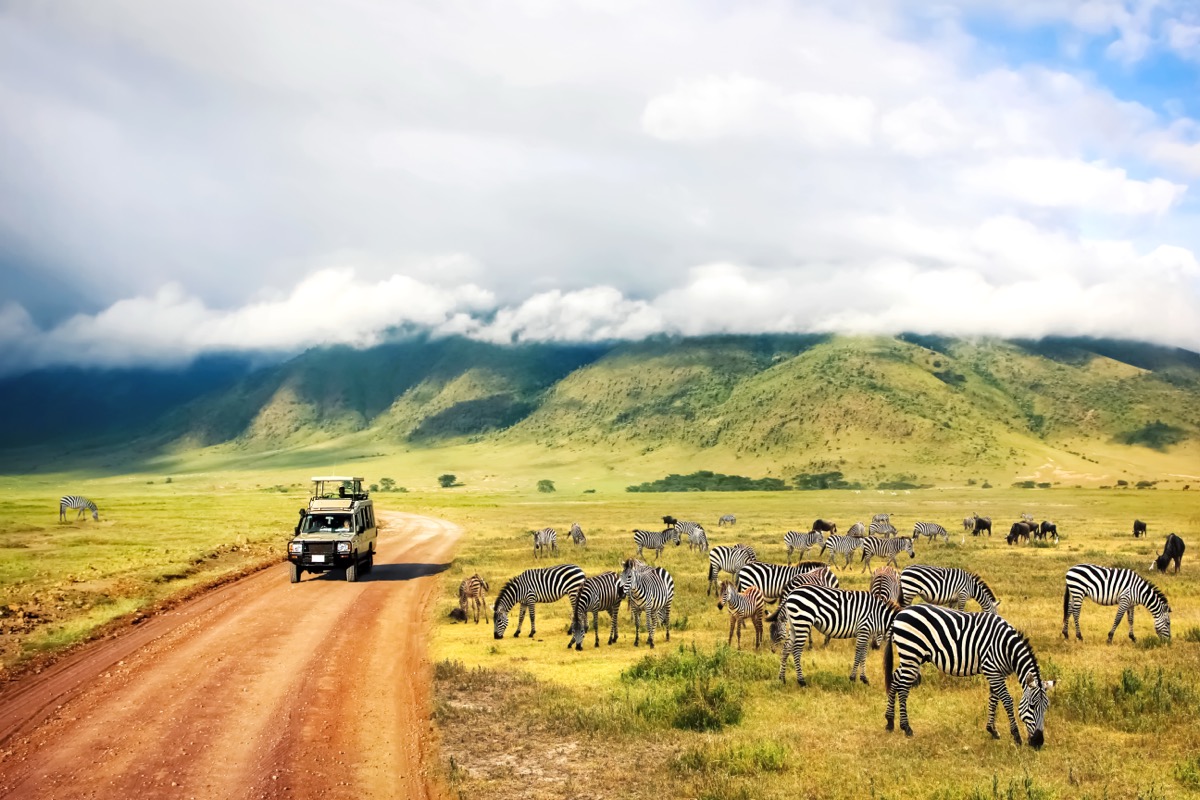
The site of the Great Migration. Millions of wildebeest and zebra moving across the plains. One of the greatest natural spectacles on earth. Endless savannah.
Victoria Falls
The Smoke That Thunders. On the border of Zambia and Zimbabwe. The largest curtain of falling water in the world. You get soaked just walking near it.
Cape Town (Table Mountain)
One of the most beautiful cities in the world. Dominated by Table Mountain. Beaches, vineyards, and penguins (Boulders Beach). A cosmopolitan gem.
Kruger National Park
South Africa’s premier game reserve. The size of Israel. Incredible density of the Big 5 (Lion, Leopard, Elephant, Rhino, Buffalo). Great for self-drive safaris.
Pyramids of Giza
The only remaining Wonder of the Ancient World. Located in Cairo, Egypt. Seeing the Great Pyramid and Sphinx in person is humbling.
Editor-curated picks carried over from our original guide. Where a full place guide exists, the card links to it.
Where to stay
Four Seasons Safari Lodge Serengeti
Serengeti National Park, Tanzania
Located deep in the Serengeti (Tanzania). It has an infinity pool overlooking a watering hole where elephants drink. Five-star luxury in the wild.
The Silo Hotel
Silo Square, V&A Waterfront, Cape Town, 8001, South Africa
Built into a historic grain silo in Cape Town (South Africa). Spectacular views of Table Mountain and the harbor through pillowed glass windows. An art hotel masterpiece.
Giraffe Manor
Gogo Falls Road, Nairobi, Kenya
A boutique hotel in Nairobi (Kenya). Famous for the resident Rothschild giraffes that poke their heads into the windows at breakfast. Unique int he world.
Editor-curated stays carried over from our original guide. Where we have reviewed the hotel, the card links to the review.
Tips from the field
Highlights
- Wildlife – Big 5
- Wonder – Victoria Falls
- History – Pyramids
- City – Cape Town
- Desert – Namib
- Mountain – Kilimanjaro
- Culture – Maasai
- Luxury – Safari Lodge
Best activities
- Go on a game drive in the Serengeti. Swim in Devil's Pool at Victoria Falls. Hike Table Mountain. Trek with Gorillas in Rwanda. Visit the Pyramids. Wine taste in Stellenbosch. Climb Dune 45 in Sossusvlei.
Photography tips
- Golden Hour: Sunset on the Savannah (acacia silhouettes). Sunrise at the Pyramids.
- Iconic Shots:
- A lion in the grass.
- The view from the top of Table Mountain.
- The Victoria Falls bridge.
- A refined giraffe at Giraffe Manor.
- Dune 45 in Namibia.
- Technique: You need a long lens (400mm+) for safari. Bean bags are better than tripods in a jeep.
Timing
- Peak Season (June-Oct, Dec):
- Expensive, prime viewing
- Green Season (Nov-April):
- Lush, cheaper, rain
Keeping it authentic
- Africa is a continent of 54 countries, not a country. Each region is vastly different. 'Ubuntu' (I am because we are) is a shared philosophy. Time moves slower ('African Time').
Culture, customs and safety
Cultural heritage
As the cradle of humanity, Africa’s cultural heritage is a vast and diverse tapestry encompassing ancient Egyptian monuments, the ruins of great kingdoms like Zimbabwe, and a wealth of living traditions. Its 129 UNESCO World Heritage sites, from the rock-hewn churches of Ethiopia to the vibrant cultural landscapes of Nigeria, tell a story of immense contribution to global history. Through initiatives like UNESCO’s General History of Africa, the continent’s rich narrative is being reclaimed and celebrated from an African perspective, correcting centuries of colonial bias.
Local customs & etiquette
In Africa, customs vary greatly between countries. Research local etiquette, tipping practices, and cultural norms for each destination.


