Germany’s best parks support very different trips: Alpine hiking in Berchtesgaden, lake-country cycling in Müritz, palace gardens in Potsdam, free green spaces in Berlin, and full-day theme parks in western Germany. This guide compares 20 parks by experience, location, time commitment, and admission model so you can choose places that fit your route.
Germany has 16 designated national parks. The list below features six of them, along with ten city and landscape parks and four theme or wildlife parks. It is a curated travel list based on scenery, cultural significance, regional variety, and practical value rather than an official ranking.
Last verified: August 2026. Trail closures, fire restrictions, palace access, seasonal shows, and theme-park ticket prices can change. Use the official link in each section before traveling.
Disclosure: This article contains affiliate links. ViaTravelers may earn a commission if you book through one of these links, at no additional cost to you.
Key takeaways
- Choose Berchtesgaden for Alpine scenery, Saxon Switzerland for sandstone hikes, and Müritz for cycling, lakes, and birdwatching.
- English Garden, Großer Tiergarten, and Planten un Blomen are strong free options within major cities.
- Sanssouci, Bergpark Wilhelmshöhe, and Muskauer Park combine landscaped grounds with major architectural or UNESCO-listed sites.
- Movie Park Germany, Steinwasen Park, Plopsaland Deutschland, and Eifelpark charge admission and normally require most of a day.
In this guide
- Quick comparison of 20 parks
- How to choose the right park
- National parks
- City and landscape parks
- Theme and wildlife parks
- Planning tips
- Frequently asked questions
Quick comparison of the best parks in Germany
| Park | Type and region | Best for | Typical visit | Admission |
|---|---|---|---|---|
| Bavarian Forest National Park | National park, Bavaria | Forest wilderness and wildlife | 1 full day or 2 days | Park access is free; some attractions and parking cost extra |
| Berchtesgaden National Park | National park, Bavaria | Alpine hiking and Königssee | 1 to 3 days | Park access is free; boats and lifts cost extra |
| Müritz National Park | National park, Mecklenburg-Vorpommern | Cycling, lakes, and birdwatching | 1 to 2 days | Park access is free; transport and boat trips cost extra |
| Black Forest National Park | National park, Baden-Württemberg | Forest walks and wilderness education | Half or full day | Park access is free; exhibitions or parking may cost extra |
| Eifel National Park | National park, North Rhine-Westphalia | Forest, wildlife, and multi-day hiking | 1 day or a 4-stage trek | Park access is free; tours and exhibitions may cost extra |
| Saxon Switzerland National Park | National park, Saxony | Sandstone hiking and viewpoints | 1 to 3 days | Park access is free; transit and some attractions cost extra |
| English Garden | City park, Munich | Walking, people-watching, and beer gardens | 2 to 4 hours | Free |
| Großer Tiergarten | City park, Berlin | A central green break and monuments | 1 to 3 hours | Free |
| Treptower Park | City park, Berlin | River walks, history, and the observatory | 2 to 4 hours | Park access is free; observatory programs cost extra |
| Muskauer Park | UNESCO landscape park, Saxony and Poland | Landscape design and cycling | Half or full day | Grounds are largely free; individual attractions may charge |
| Sanssouci Park | Palace park, Potsdam | Gardens, architecture, and palaces | Half or full day | Park is free; palace interiors require tickets |
| Maschpark | City park, Hanover | Photography and a short city-center walk | 45 to 90 minutes | Free |
| Bergpark Wilhelmshöhe | UNESCO landscape park, Kassel | Hercules monument and water displays | Half or full day | Park is free; museums and tours cost extra |
| Landschaftspark Duisburg-Nord | Industrial landscape park, Duisburg | Photography, night lighting, climbing, and diving | 2 to 5 hours | Park is free; specialist activities cost extra |
| Rosenstein Park | City park, Stuttgart | Walks and museum or zoo pairings | 1 to 3 hours | Park is free; nearby attractions charge admission |
| Planten un Blomen | City park, Hamburg | Gardens, playgrounds, and water-light concerts | 2 to 4 hours | Free |
| Movie Park Germany | Theme park, North Rhine-Westphalia | Film-themed rides and family attractions | Full day | Paid, with date-based pricing |
| Steinwasen Park | Wildlife and family park, Black Forest | Animals, an alpine coaster, and young families | Full day | Paid and seasonal |
| Plopsaland Deutschland | Theme park, Rhineland-Palatinate | Roller coasters and family rides | Full day | Paid, with date-based pricing |
| Eifelpark | Wildlife and theme park, Rhineland-Palatinate | Animals, playgrounds, and mixed-age rides | Full day | Paid and seasonal |
How to choose the right park
Start with the experience you want rather than a national ranking. A remote national park and a central city garden solve different travel needs.
- For serious scenery and hiking: Berchtesgaden, Saxon Switzerland, Bavarian Forest, or Eifel.
- For cycling and flatter terrain: Müritz National Park or Muskauer Park.
- For a city-break pause: English Garden, Großer Tiergarten, Maschpark, Rosenstein Park, or Planten un Blomen.
- For palace grounds and garden history: Sanssouci Park, Bergpark Wilhelmshöhe, or Muskauer Park.
- For rides with children: Movie Park Germany, Steinwasen Park, Plopsaland Deutschland, or Eifelpark.
- For a car-free visit: Prioritize city parks, Sanssouci, Saxon Switzerland, or national-park visitor centers served by regional transport.
Best national parks in Germany
National parks protect natural processes rather than functioning as manicured recreation grounds. Access is generally free, but visitors must stay on approved routes, follow fire restrictions, keep dogs under control, and check current trail conditions.
1. Bavarian Forest National Park
Location: Eastern Bavaria, along the Czech border
Best for: Forest wilderness, wildlife areas, and multi-day walking
Plan: One full day or two nights
Bavarian Forest National Park became Germany’s first national park in 1970. It now protects more than 24,000 hectares of forest, bogs, mountain streams, and former high pastures. Together with the neighboring Šumava National Park in the Czech Republic, it forms a large continuous protected forest.
The easiest introduction is one of the two main visitor areas. The Lusen National Park Centre near Neuschönau has information facilities, animal enclosures, accessible routes, and access to the treetop walk. The Falkenstein National Park Centre near Ludwigsthal has another wildlife area and the Haus zur Wildnis visitor facility.
Hikers can choose from hundreds of kilometers of marked paths, while cyclists must use designated cycling routes. For a broader regional itinerary, combine the park with other things to do in Bavaria.
2. Berchtesgaden National Park
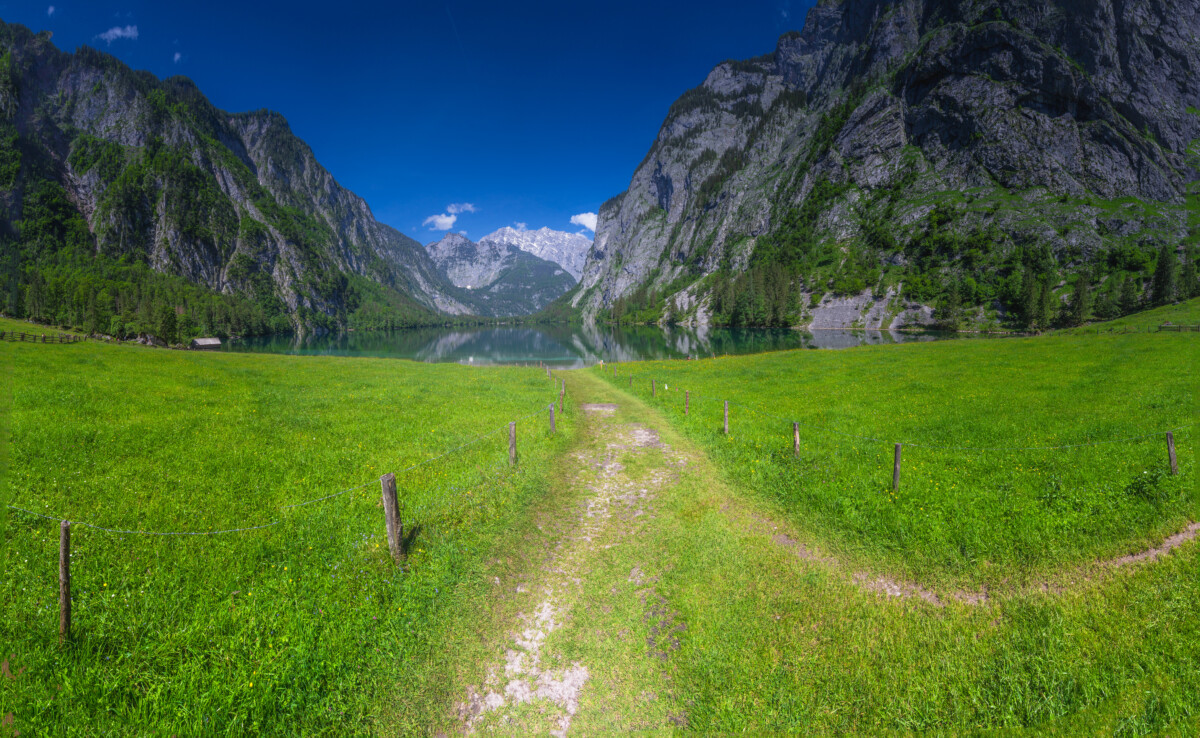
Location: Southeastern Bavaria, beside the Austrian border
Best for: Alpine hiking, Königssee, and mountain scenery
Plan: One to three days
Berchtesgaden National Park is Germany’s only national park in the Alps. Its 210 square kilometers surround Watzmann, Königssee, high valleys, forests, and steep mountain terrain. Around 260 kilometers of marked hiking trails and Alpine paths range from accessible walks to demanding ascents.
A first visit can combine the Königssee boat route with a walk near St. Bartholomä or Obersee. Boat tickets are separate from national-park access, and popular departures can sell out during busy periods. Haus der Berge in Berchtesgaden provides a useful introduction before a longer hike.
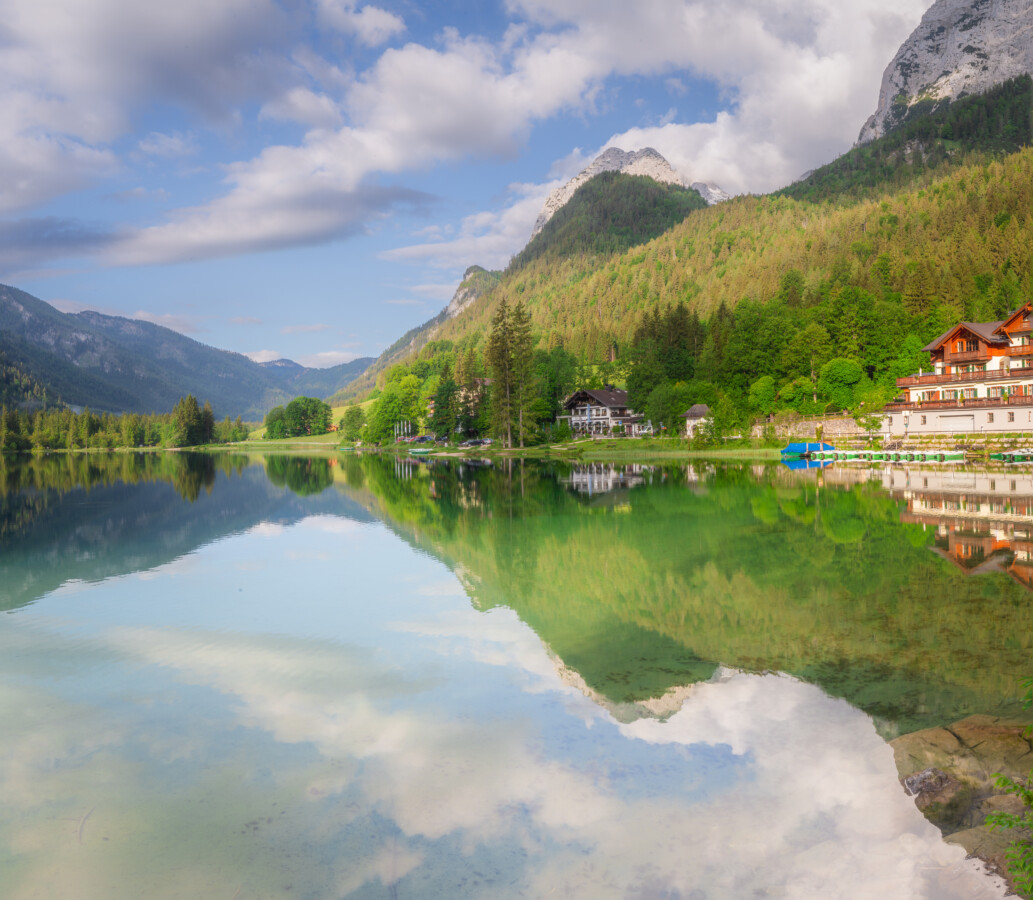
Weather can change quickly at higher elevations, and some routes require sure-footedness. Check the official path and safety information before leaving. The park also fits naturally into an itinerary covering the mountains of Germany or nearby places to visit in Austria.
3. Müritz National Park

Location: Mecklenburg-Vorpommern, east of Lake Müritz
Best for: Cycling, lakes, wetlands, and birdwatching
Plan: One or two days
Müritz National Park covers 322 square kilometers, making it Germany’s largest forest national park. Its protected landscape contains forests, more than 100 sizable lakes, hundreds of wetlands, and a narrow section of Lake Müritz’s eastern shore.
The terrain and route network make Müritz particularly useful for travelers who prefer cycling to mountain hiking. Waren, Neustrelitz, Kratzeburg, and smaller park communities provide different entry points. Seasonal buses and bicycle transport can reduce the need to drive between trailheads.
Bird activity is a major draw, especially around wetlands and open water. Early morning and late afternoon are usually better than midday for quieter observation. Stay on marked routes and keep a respectful distance from nesting or resting wildlife.
4. Black Forest National Park
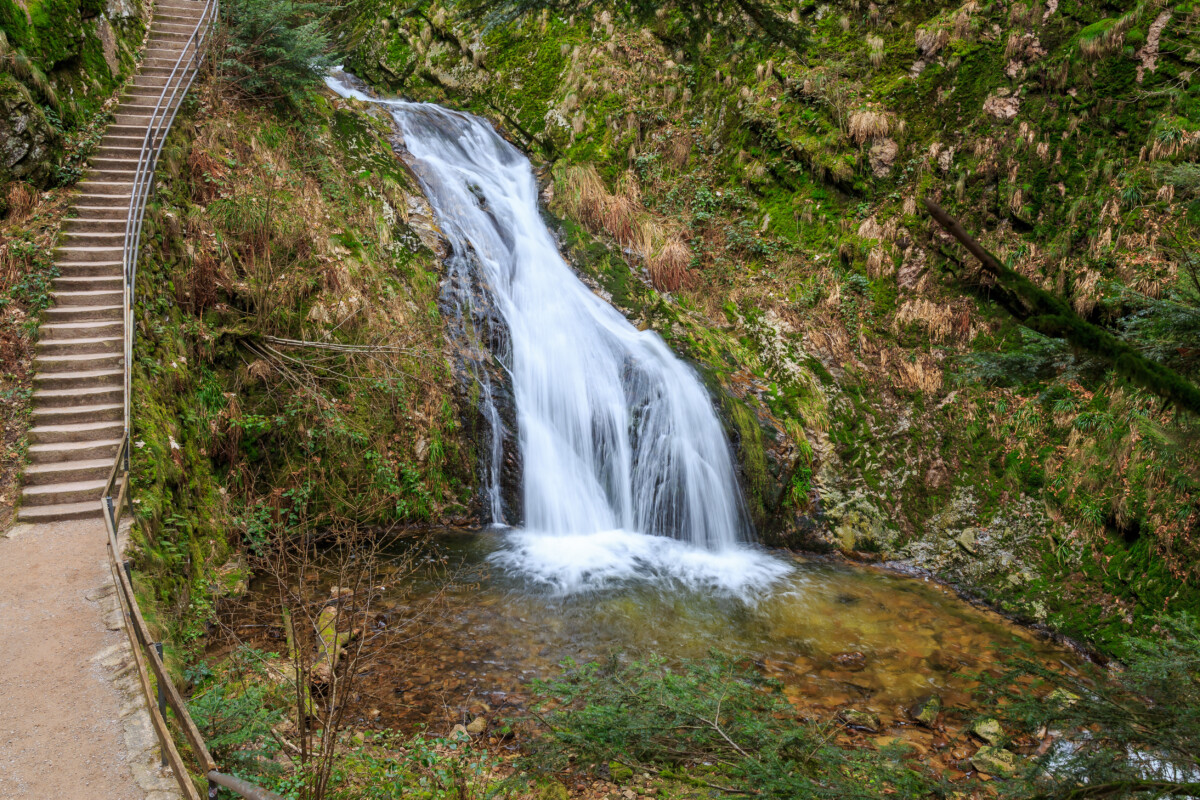
Location: Northern Black Forest, Baden-Württemberg
Best for: Short forest walks, wildlife education, and scenic driving routes
Plan: Half or full day
Black Forest National Park was established in 2014 and covers approximately 10,062 hectares, or about 100.6 square kilometers. Its forests, mountain heath, streams, tarns, and areas of developing wilderness are concentrated around the Schwarzwaldhochstraße and the Ruhestein area.
The National Park Centre at Ruhestein is the strongest starting point for a first visit. It has an exhibition, visitor information, an accessible wilderness bridge, a viewing tower, and connections to several walking routes. Shorter options include interpretive trails, while longer walks reach quieter forest and upland areas.
Check the official closure map and fire notices immediately before setting out. Storm damage, dead trees, habitat protection, snow, and dry conditions can alter access. The wider Black Forest travel guide and these Black Forest travel tips can help you build a longer regional itinerary.
Travelers based across the border can also compare this guided Black Forest and Baden-Baden day trip from Strasbourg. Review the itinerary carefully because a regional Black Forest tour does not necessarily include national-park trails.
5. Eifel National Park
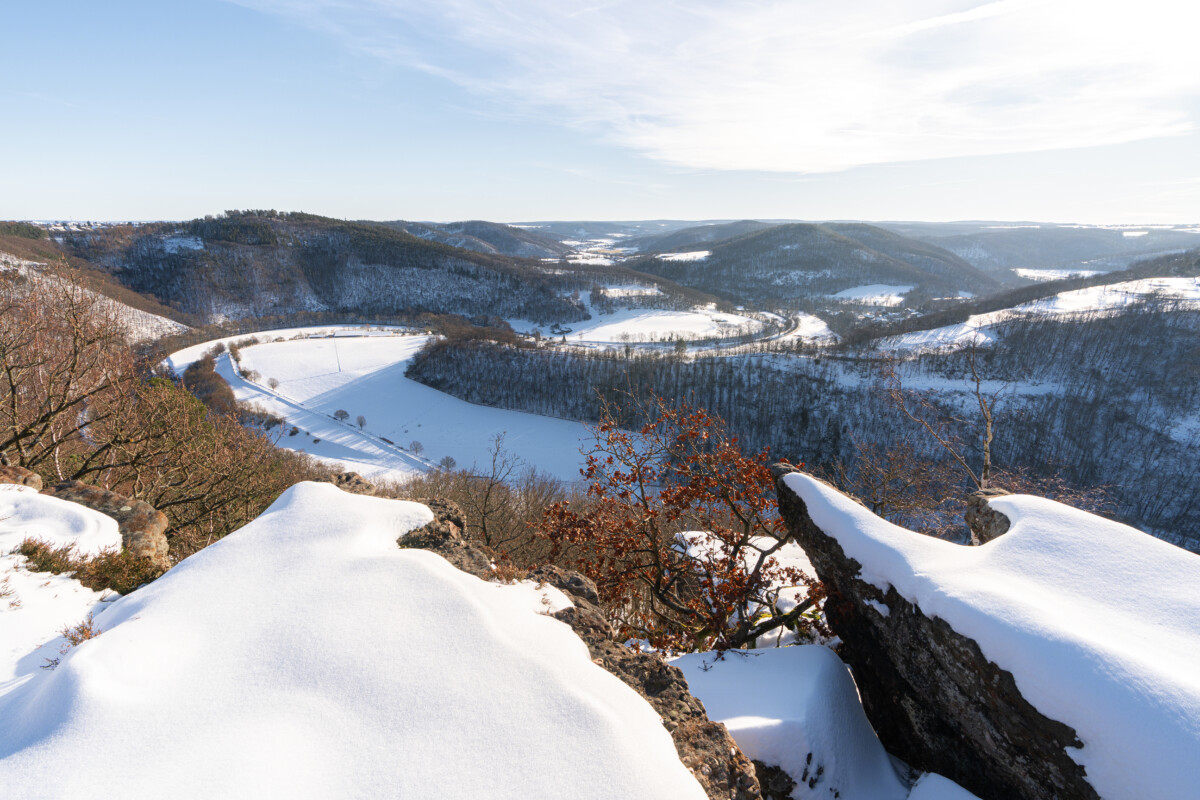
Location: North Rhine-Westphalia, near the Belgian border
Best for: Forest hiking, wildlife, dark skies, and modern history
Plan: One day or a four-stage trek
Eifel National Park was founded in 2004 and covers roughly 110 square kilometers. Mixed forests, river valleys, reservoirs, rocky areas, and the open Dreiborn Plateau provide habitat for wildcats, red deer, black storks, eagle owls, and other protected species.
The 85-kilometer Wilderness Trail crosses the park in four stages, but shorter routes begin near locations such as Gemünd, Heimbach, Rurberg, and Vogelsang. The National Park Centre near Vogelsang includes an accessible exhibition and visitor information.
Part of the Dreiborn Plateau was used as a military training area until 2005. Visitors must remain on marked paths because unexploded ordnance may remain outside approved routes. Cycling is also restricted to marked cycle paths. Broader trip ideas are available in this North Rhine-Westphalia travel guide.
6. Saxon Switzerland National Park
Location: Saxony, southeast of Dresden
Best for: Sandstone formations, viewpoints, and hiking
Plan: One to three days
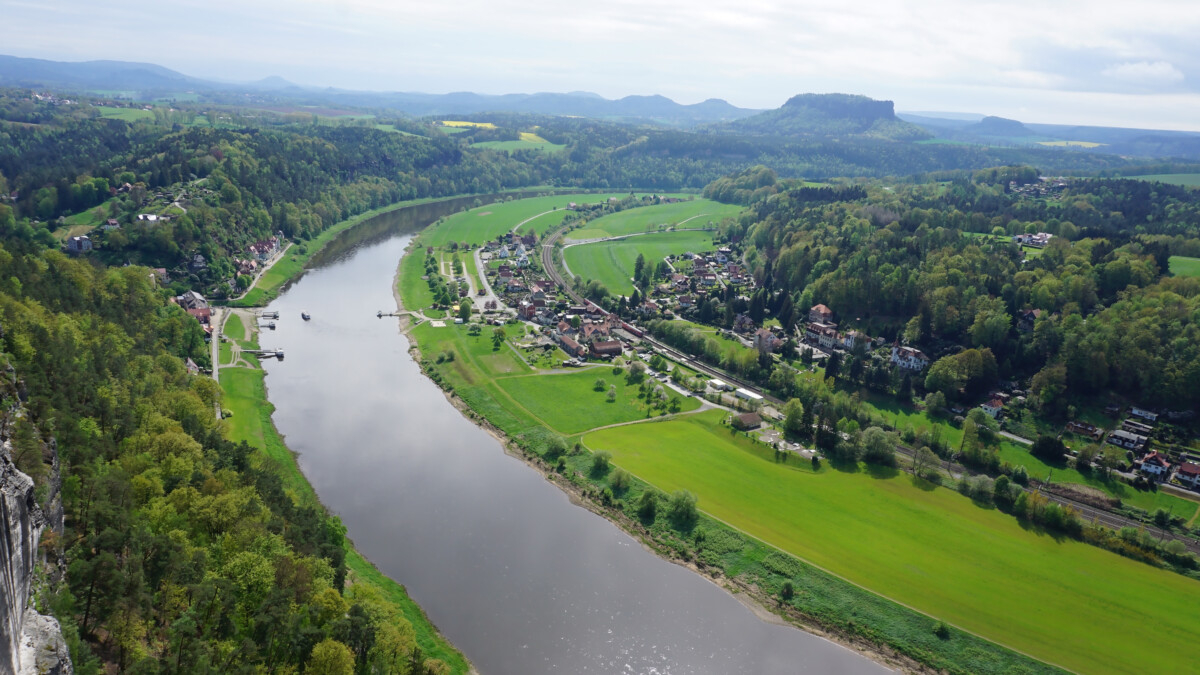
Saxon Switzerland National Park protects the German side of the Elbe Sandstone Mountains. Its table mountains, narrow gorges, forested cliffs, and rock towers form one of the country’s most recognizable hiking regions.
The Bastei is the simplest first stop, with a bridge, viewing platforms, and public-transport connections through Rathen. More demanding outings include the Schrammsteine, Lilienstein, or stages of the Malerweg. Some routes involve steep steps, ladders, narrow passages, and exposed sections.
Trail access can change because of fire danger, storm damage, unstable deadwood, or habitat protection. Check the official trail-information page on the day of your visit. Trains, ferries, buses, and the Kirnitzschtal tram make several routes possible without a car. The park is an easy extension to a stay focused on the best things to do in Dresden.
Best city and landscape parks in Germany
These parks work well within city breaks and cultural itineraries. Most grounds are free, although palaces, museums, observatories, guided activities, and parking may require separate payment. Several also connect naturally with Germany’s castles and palaces.
7. English Garden, Munich

Location: Central and northern Munich
Best for: Long walks, urban scenery, beer gardens, and people-watching
Plan: Two to four hours
Munich’s English Garden covers 376 hectares and extends for roughly 5.5 kilometers. Created from 1789 onward, it is larger than New York’s Central Park and connects central Munich with quieter northern meadows and woodland.
A compact first route can begin near the Eisbach wave before continuing to the Monopteros, Chinese Tower, and Kleinhesseloher See. The southern portion is busier and closer to major landmarks; the northern Hirschau section is better for a longer, less crowded walk.
The park is free and open throughout the year. Food and drinks are available at several beer gardens and kiosks, although opening schedules vary by season and weather. See the wider Munich travel guide, compare other parks in Munich, or add nearby Munich landmarks.
A guided option is this Munich and English Garden walking tour.
8. Großer Tiergarten, Berlin
Location: Central Berlin, between Brandenburg Gate and Berlin Zoo
Best for: Walking, jogging, picnics, and a break between major sights
Plan: One to three hours
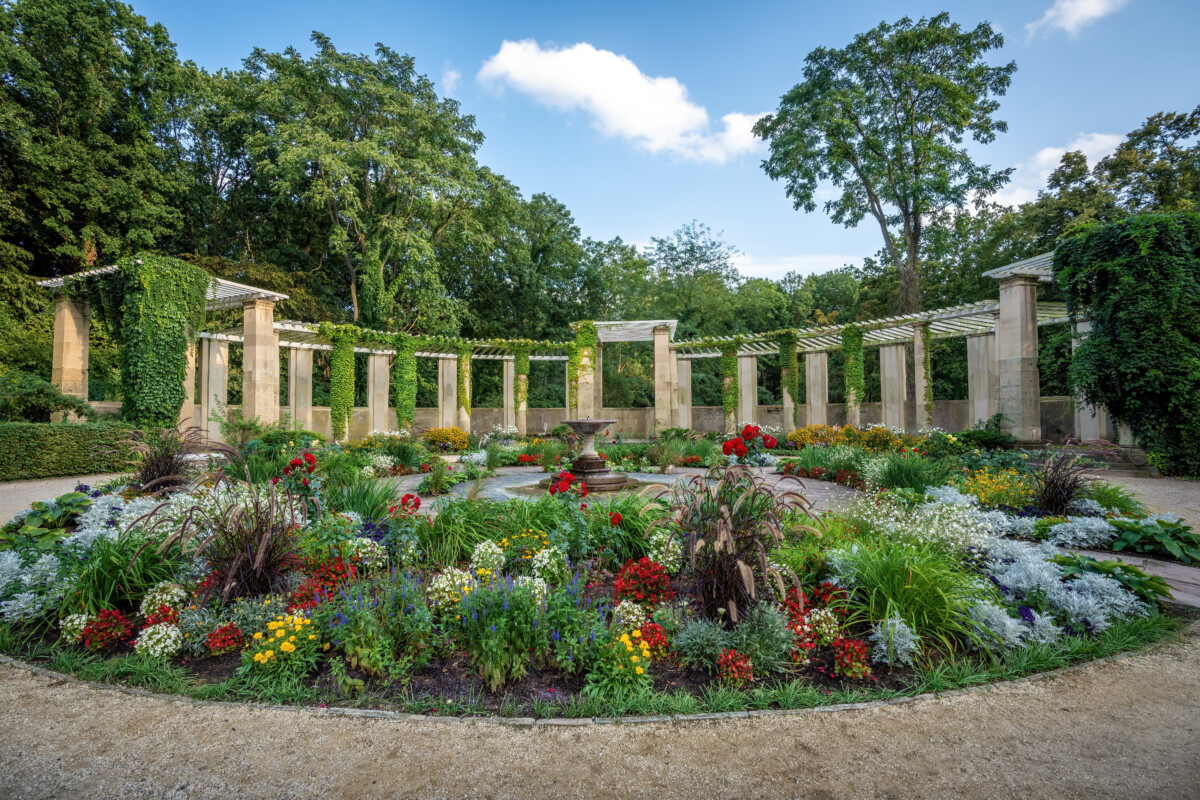
Großer Tiergarten is Berlin’s largest and most frequently used inner-city park. Its roughly 210 hectares contain broad lawns, wooded paths, ponds, memorials, gardens, and routes connecting the government district with the Victory Column and western Berlin.
The park works best as part of a walking route rather than a separate day trip. Enter near Brandenburg Gate, cross toward the Victory Column, and leave near Bellevue Palace, the Kulturforum, or Berlin Zoo depending on the rest of your schedule.
Tiergarten is free and accessible from several U-Bahn, S-Bahn, and bus stops. Pair it with other things to do in Berlin.
9. Treptower Park, Berlin
Location: Southeast Berlin, beside the River Spree
Best for: River walks, twentieth-century history, boating, and astronomy
Plan: Two to four hours
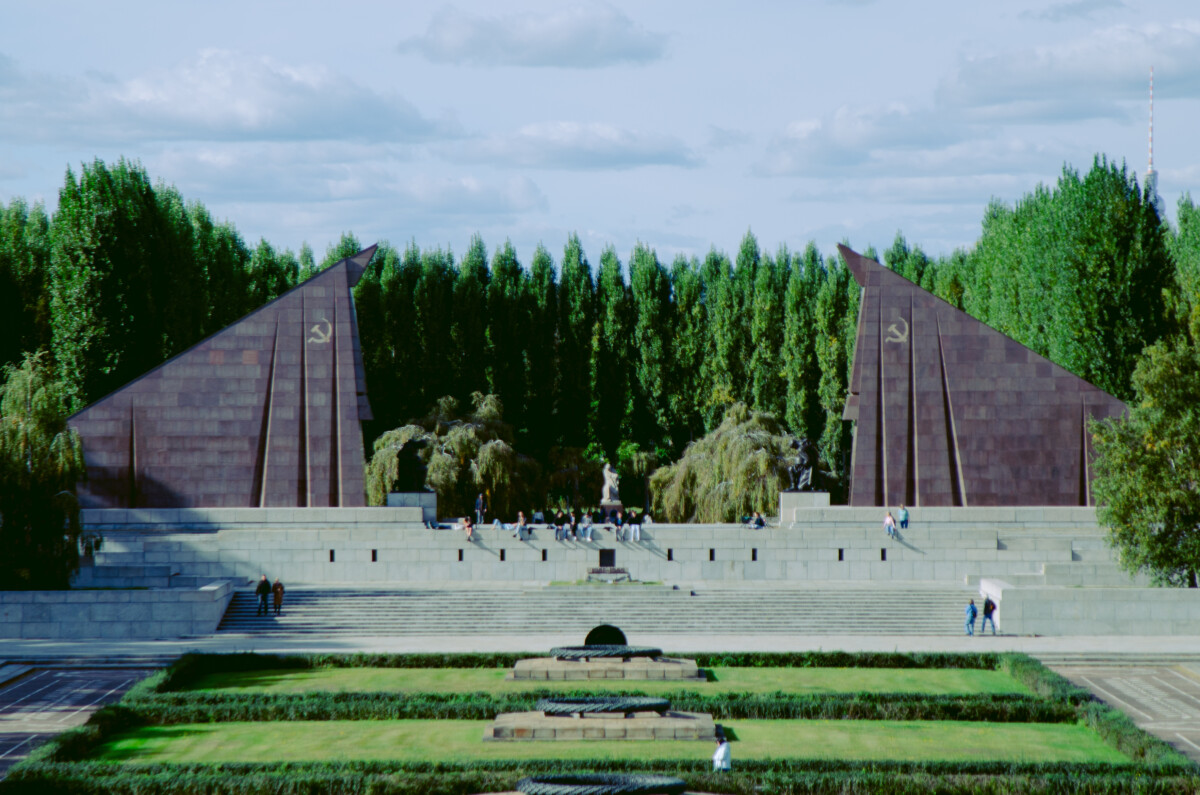
Treptower Park is an 88-hectare public park laid out from 1876 to 1888. Paths and lawns run beside the Spree, with boat piers, the Insel der Jugend, and the large Soviet War Memorial distributed across the grounds.
The memorial is both a monumental work and the burial site of thousands of Soviet soldiers. Treat the central memorial area as a place of remembrance rather than a casual recreational backdrop.
Archenhold Observatory contains the world’s longest movable refracting telescope, along with modern telescopes and a small planetarium. Program times and admission are separate from the free park. Families can combine the area with other ideas for visiting Berlin with kids.
10. Muskauer Park / Park Mużakowski
Location: Bad Muskau, on the German-Polish border
Best for: Landscape architecture, cycling, and a cross-border outing
Plan: Half or full day
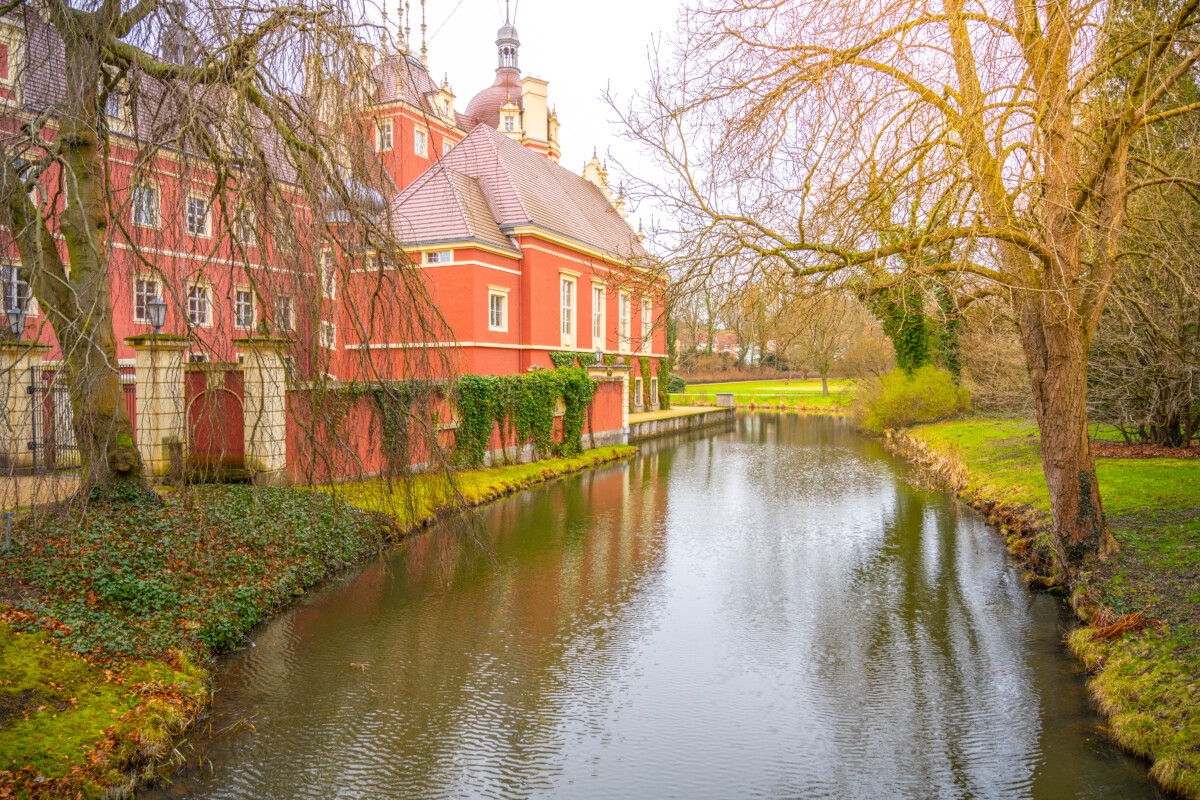
Muskauer Park / Park Mużakowski is a 559.9-hectare landscape park spanning both sides of the Lusatian Neisse. Prince Hermann von Pückler-Muskau developed it between 1815 and 1844 as an integrated composition of fields, woodland, water, paths, bridges, viewpoints, and architecture.
The New Castle and German castle grounds form the most recognizable section, but much of the park extends into Poland. Walking is possible, although a bicycle makes the scale easier to appreciate. Allow extra time for bridge crossings, viewpoints, and the less formal Polish side.
General access to the landscape is largely free, while exhibitions, rentals, or specific buildings may charge. Check current cross-border access and opening information before arriving.
11. Sanssouci Park, Potsdam
Location: Potsdam, southwest of Berlin
Best for: Palace architecture, formal gardens, and a Berlin day trip
Plan: Half or full day
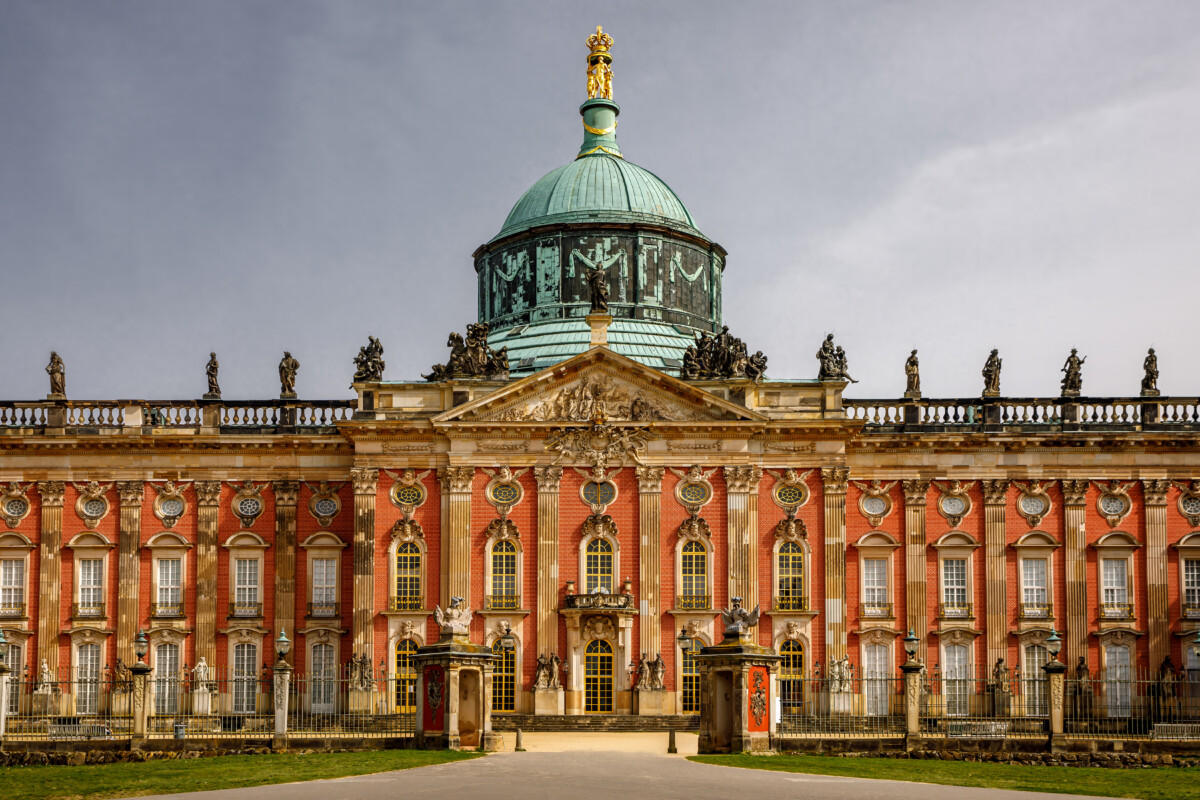
Sanssouci Park covers nearly 300 hectares and stretches for more than two kilometers from east to west. Terraces, fountains, lawns, wooded paths, smaller garden areas, Sanssouci Palace, the New Palace, and other historic buildings create a full-day cultural site rather than a single palace stop.
The grounds are free and generally open daily from 8 a.m. until dark. Palace interiors have separate hours, closure days, admission fees, and in some cases timed entry. Reserve priority interiors before travel and leave enough time to walk between them.
The park is conditionally barrier-free, but its size, historic surfaces, terraces, and elevation changes require route planning. The official Sanssouci app includes accessible route information.
Travelers who prefer interpretation can compare this guided Sanssouci Palace and park tour.
12. Maschpark, Hanover
Location: Beside the New Town Hall in central Hanover
Best for: Photography and a short landscaped walk
Plan: 45 to 90 minutes
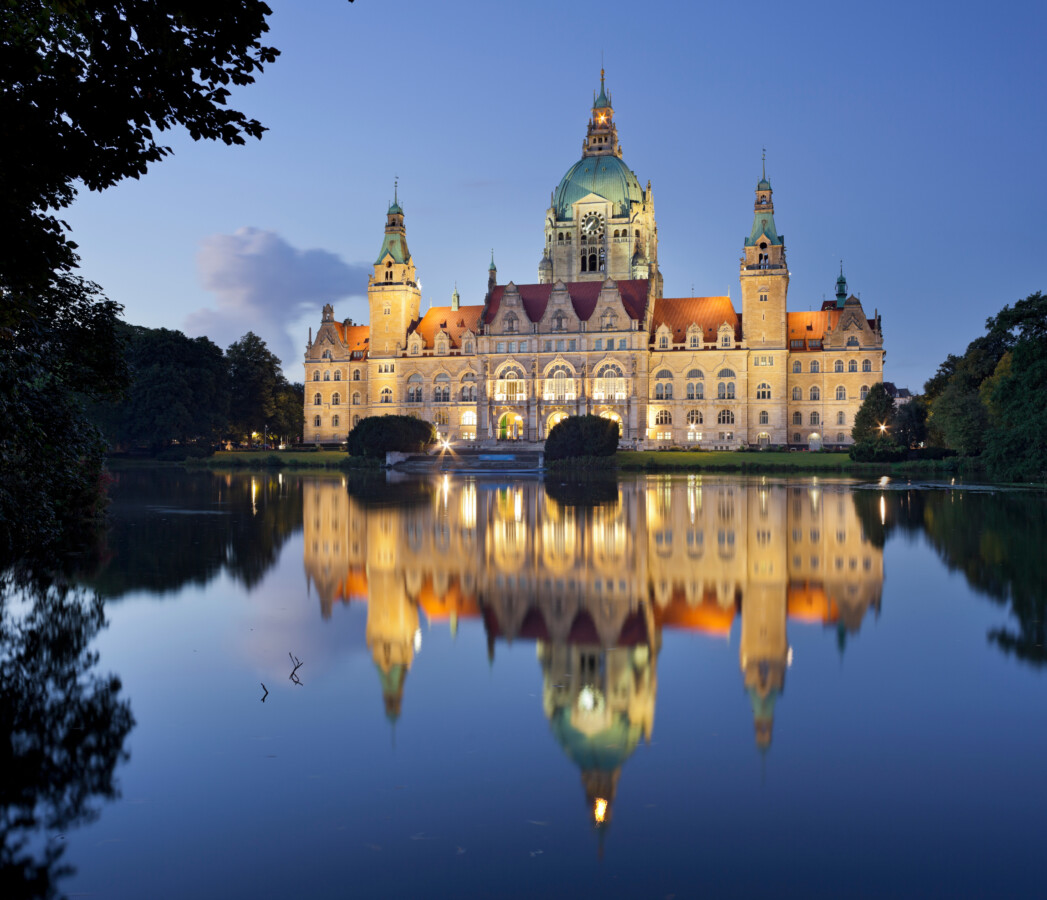
Maschpark was planned around 1900 by Hanover garden director Julius Trip and completed in 1913. It became the city’s first public Bürgerpark.
The artificial pond, curving shore, arched bridge, mature planting, and views of the New Town Hall make the park more useful as a compact city stop than a long recreational day. Henry Moore’s Scottish Cross stands at an elevated viewpoint.
Walk through before or after visiting the New Town Hall, then continue with other things to do in Hanover.
13. Bergpark Wilhelmshöhe, Kassel

Location: Western Kassel
Best for: Garden history, views, Hercules, and historic water displays
Plan: Half or full day
Bergpark Wilhelmshöhe covers approximately 560 hectares on the slopes above Kassel. The park’s major features include the Hercules monument, cascades, Wilhelmshöhe Palace, Löwenburg, woodland, and gravity-powered waterworks.
General admission to the park is free. The water displays operate on selected days during the warmer season rather than continuously, so confirm the exact calendar before planning a trip around them. Museums, exhibitions, and guided activities have separate tickets.
The route between the palace area and Hercules is steep and gains more than 200 meters of elevation. Comfortable shoes are essential, and visitors with limited mobility should study the accessible routes and transport options before arrival.
14. Landschaftspark Duisburg-Nord
Location: Duisburg-Meiderich, North Rhine-Westphalia
Best for: Industrial architecture, photography, night lighting, climbing, and diving
Plan: Two to five hours
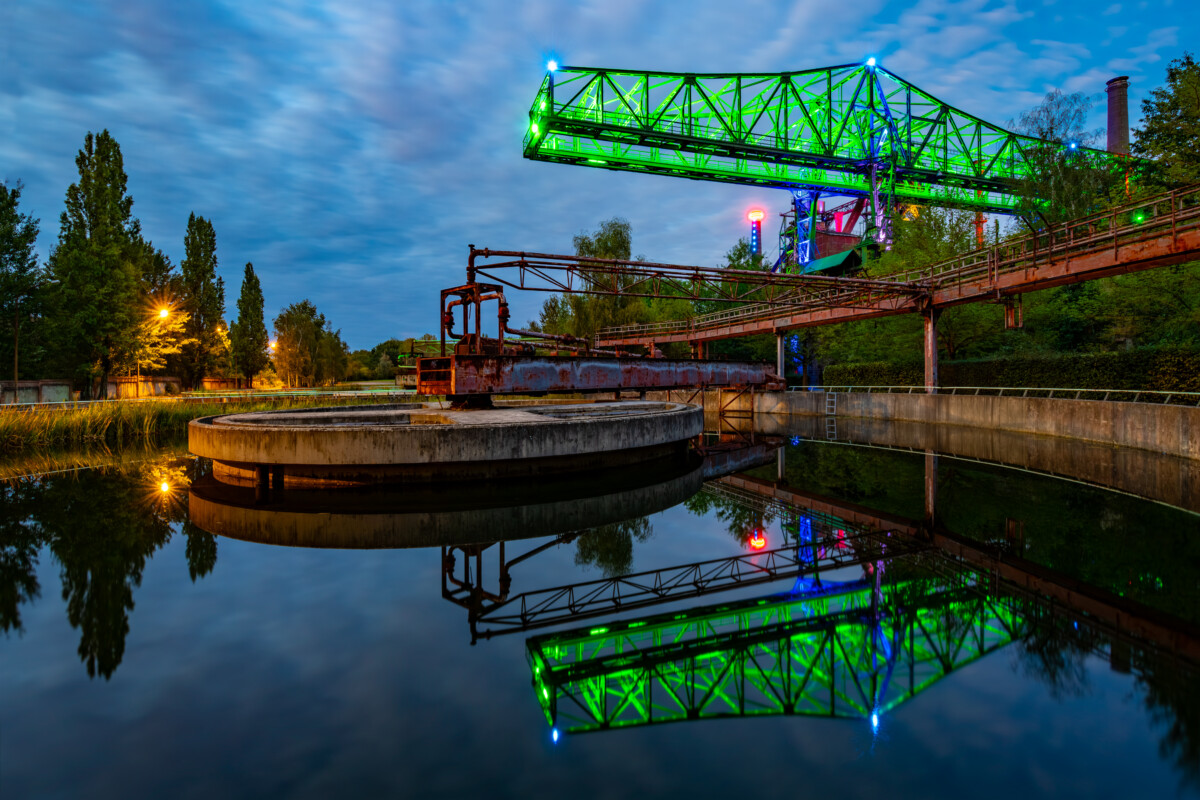
Landschaftspark Duisburg-Nord transforms a former Thyssen ironworks into roughly 180 hectares of public parkland, industrial heritage, event venues, paths, gardens, and specialist activity areas.
Visitors can follow the industrial-heritage circuit, climb to approved viewing points, walk or cycle through the grounds, and photograph the structures after dark. The full lighting installation normally operates on selected evenings, so check the current schedule rather than assuming every night is illuminated.
Park admission is free and the outdoor grounds are generally accessible around the clock. Guided tours, the climbing garden, high-ropes activities, and diving in the former gasometer are separately operated and paid.
15. Rosenstein Park, Stuttgart

Location: Stuttgart, between the Lower Palace Garden and Wilhelma
Best for: Walking and pairing with museums or the zoo
Plan: One to three hours
Rosenstein Park is a 64-hectare English landscape park created under King Wilhelm I of Württemberg in the 1820s. Broad meadows, mature trees, historic paths, and Rosenstein Palace distinguish it from Stuttgart’s more formal central gardens.
Rosenstein Palace now houses part of the State Museum of Natural History. The Museum am Löwentor and Wilhelma zoological-botanical garden are also nearby, making the park a useful connector between paid attractions.
The grounds themselves are free. Continue with these things to do in Stuttgart when planning the rest of the day.
16. Planten un Blomen, Hamburg
Location: Central Hamburg, near the exhibition center and St. Pauli
Best for: Gardens, playgrounds, picnics, and summer water-light concerts
Plan: Two to four hours
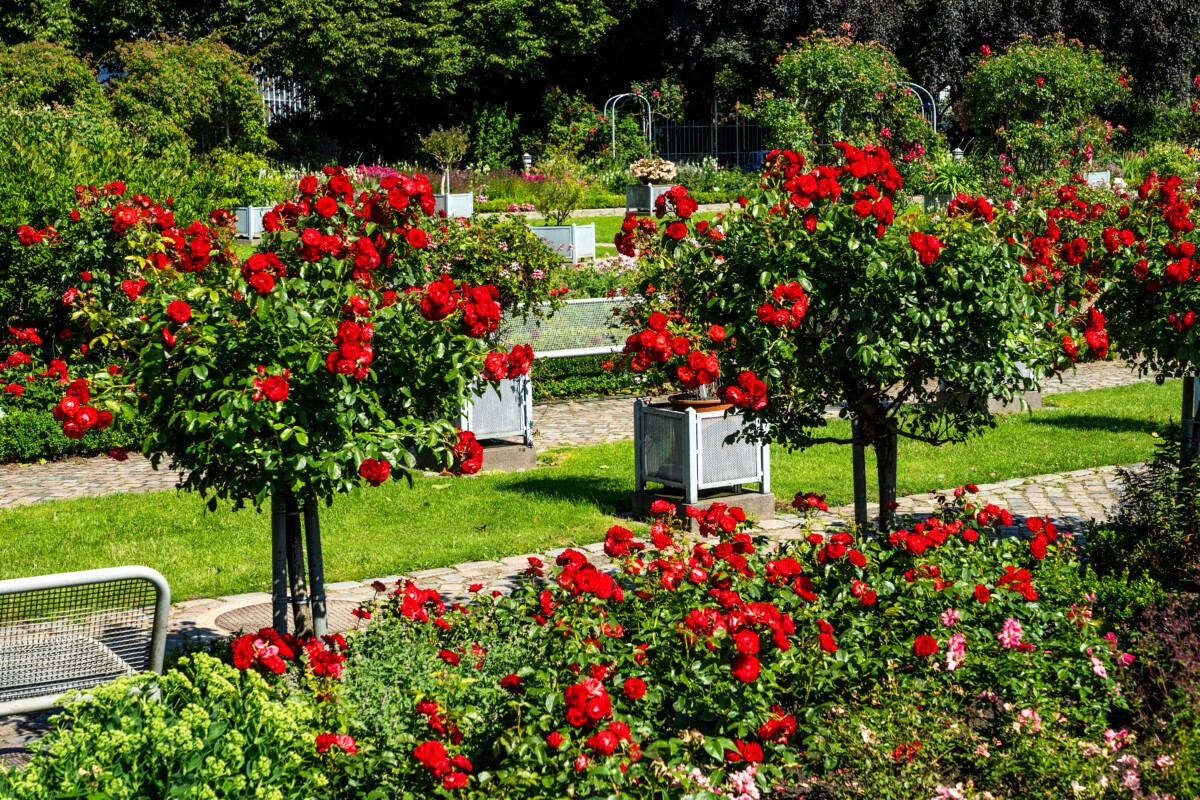
Planten un Blomen combines rose gardens, lawns, water features, play areas, themed planting, event spaces, and one of Hamburg’s most convenient free recreation areas.
The evening water-light concerts usually run from May through September and are free. In the 2026 program, performances begin later during the summer and one hour earlier in September. Confirm the current schedule and park access before arranging an evening around the show.
The park is easy to combine with the city center, St. Pauli, and other Hamburg landmarks. Families should allow extra time for the playgrounds rather than treating the park as a quick photo stop.
Best theme and wildlife parks in Germany
These are commercial attractions rather than public green spaces. Their calendars, ride availability, height restrictions, ticket prices, and event schedules change frequently. Buy directly from the official operator and compare the date-specific ticket with any flexible-ticket premium.
17. Movie Park Germany

Address: Warner-Allee 1, 46244 Bottrop
Best for: Film themes, thrill rides, and families with school-age children
Plan: Full day
Movie Park Germany organizes its rides, shows, and streets around film and television themes. The mix includes children’s areas, water rides, roller coasters, stunt-style entertainment, and more intense attractions.
The park added Journey to the Forbidden Chamber, a Paramount-themed studio experience, for the 2026 season. PAW Patrol Adventure Bay remains one of the primary areas for younger visitors. Check the current attraction list because individual rides can close for maintenance or weather.
High Fall at Movie Park Germany

High Fall is a roughly 60-meter free-fall tower within Movie Park, not a separate park. The published minimum height is 145 centimeters, but visitors should confirm all current age, height, health, and accessibility restrictions with the operator.
Tickets use date-based pricing, and optional queue products increase the total cost. Compare the park with other theme parks in Europe before choosing it solely for roller coasters.
18. Steinwasen Park

Address: Steinwasen 1, 79254 Oberried
Best for: Younger families, wildlife, and rides in a forest setting
Plan: Full day
Steinwasen Park combines wildlife enclosures with family rides in the Black Forest. Its better-known features include an alpine coaster, playgrounds, indoor attractions, a suspension bridge, and viewing areas for native and formerly native European animals.
The admission ticket generally covers the wildlife area, suspension bridge, and standard attractions, while food and coin-operated activities cost extra. Operations are seasonal and weather can affect rides, so use the current calendar rather than relying on a fixed year-round schedule.
The park suits families seeking a gentler alternative to Germany’s largest coaster parks. Dogs are currently permitted on a leash, although they may not be allowed in every facility or ride area.
19. Plopsaland Deutschland

Address: Holiday-Park-Straße 1-5, 67454 Haßloch
Best for: Roller coasters, Studio 100 characters, and mixed-age family groups
Plan: Full day
Plopsaland Deutschland is the current name of the former Holiday Park. The new identity officially launched in June 2025 as part of a wider investment and retheming program.
Expedition GeForce remains the principal thrill ride, while newer areas and attractions focus on Studio 100 characters such as Maya the Bee, Vic the Viking, Heidi, the Smurfs, and 100% Wolf. This mix makes the park more balanced for families than its older coaster-led identity suggested.
Opening dates and ticket prices vary, and some attractions operate only under suitable conditions. Roller-coaster travelers can compare Expedition GeForce with other entries in this guide to the best roller coasters.
20. Eifelpark

Address: Weißstraße 12, 54647 Gondorf
Best for: Wildlife, playgrounds, alpine coasters, and mixed-age families
Plan: Full day
Eifelpark combines more than 60 attractions with wildlife areas containing deer, ibex, mouflon, wild boar, bears, lynx, small animals, and a petting area. The result is closer to a wildlife park and regional amusement park combined than a conventional zoo.
Rides include the Eifel-Coaster, water attractions, towers, smaller coasters, carousels, trampolines, slides, and extensive play areas. The range is useful for families whose children have different height limits or tolerance for intense rides.
The park has a seasonal calendar and may operate shorter hours or fewer attractions on selected days. Check the official opening schedule and buy through the park’s own ticket system.
Other German parks worth comparing
This list is selective rather than exhaustive. Germany’s other national parks include Harz, Hainich, Jasmund, Kellerwald-Edersee, and the Wadden Sea parks. Those may be better choices for a route centered on the Harz Mountains, Thuringia’s beech forests, Rügen, Hesse, or the North Sea coast.
Travelers choosing primarily by rides should also compare Europa-Park, Phantasialand, Heide Park, and LEGOLAND Deutschland. They were not added as numbered entries because this revision retains and corrects the original article’s park inventory, but they belong in any broader comparison of Germany’s major theme parks. See the separate guide to the best theme parks in Europe for more options.
Planning tips for visiting German parks
- Check the official site on the day of travel. Trail closures, fire restrictions, storm damage, ride maintenance, and event schedules can change quickly.
- Separate free grounds from paid attractions. Sanssouci and Bergpark are free to enter, but palace interiors, museums, tours, parking, and transport may not be.
- Use public transport where practical. Central city parks are easy without a car, and Saxon Switzerland, Berchtesgaden, Müritz, and the Bavarian Forest have rail or bus connections to selected gateways.
- Respect national-park zoning. Stay on designated routes, keep dogs leashed where required, take waste with you, and never light a fire outside an explicitly permitted area.
- Prepare for uneven terrain. Historic gardens can include cobblestones, gravel, stairs, and steep slopes. Natural parks may add mud, roots, ladders, snow, or exposed mountain paths.
- Plan family routes by ability. Review guidance on hiking with kids and check every theme park’s current height restrictions before buying tickets.
Frequently asked questions
How many national parks are there in Germany?
Germany has 16 designated national parks. This guide features six of them and separately covers city parks, landscape gardens, theme parks, and wildlife parks.
Which German park is best for a first visit?
Berchtesgaden is a strong choice for Alpine scenery, while the English Garden is easier to add to a city break. Choose Saxon Switzerland for sandstone hiking, Sanssouci for architecture, and Movie Park Germany for film-themed rides.
Are parks in Germany free to visit?
Most national parks and public city parks are free to enter. Palace interiors, museums, boat trips, cable cars, parking, guided tours, and commercial theme parks normally cost extra.
Can you visit Germany’s parks without a car?
Many can be reached without a car. City parks have local transit, Saxon Switzerland has trains, buses, ferries, and a tram, and several national parks have regional buses or rail-accessible visitor centers. Remote trailheads may still require more planning.
What is the best time to visit parks in Germany?
April through October offers the widest range of hiking, gardens, water displays, and theme-park operations. Winter can suit quiet walks, snowshoeing, and cross-country skiing, but daylight is shorter and more routes or attractions may close.
Are dogs allowed in German parks?
Rules vary. Public parks often permit dogs subject to local leash rules, while national parks generally require close control or a leash. Some theme parks permit leashed dogs but restrict access to rides, animal areas, or buildings. Check the official rules for the specific park.
Plan your Germany park itinerary
Group parks by region instead of crossing the country for individual entries. A Bavarian route can combine Munich’s English Garden with the Bavarian Forest or Berchtesgaden. Berlin works with Tiergarten, Treptower Park, Sanssouci, and a longer extension to Saxon Switzerland. Western Germany offers Eifel National Park, Movie Park Germany, Landschaftspark Duisburg-Nord, and Eifelpark within a more compact circuit.
For the north, combine Hamburg’s Planten un Blomen with Müritz National Park. Before booking transport and accommodation, use this guide to plan a trip to Germany and browse the wider collection of Germany travel guides.