

Bologna, known as the culinary capital of Italy, is a vibrant city rich in history, culture, and gastronomy. Famous for its medieval architecture, the city boasts the oldest university in the world, beautiful piazzas, and a lively atmosphere. Visitors can indulge in traditional dishes like tagliatelle al ragù and tortellini while exploring its charming streets and historic landmarks.
The destination guide
Bologna
Bologna’s ragù bears no resemblance to what the rest of the world calls bolognese. That distinction alone tells you everything about this city.
Travel guides for Bologna
Itineraries & day trips (2)
Food & drink (2)
More guides featuring Bologna (8)
At a glance
Currency€ EURCode: EUR
Time zoneCentral European Time
Languages
- Italian
Setting
- Urban cityscape
- Porticoed streets
- Apennine foothills
- Food culture capital
Population395K394,843 residents
VisaDuration: Up to 90 days within any 180-day period in the Schengen Area · Documents: Valid passport issued within the last 10 years and valid for at least 3 months after planned departure, plus proof of accommodation, onward or return travel, and sufficient funds if requested
How Bologna scores
9/10OverallExcellent
Weather7/10
Value for money7/10
Food & cuisine10/10
Culture & arts7/10
Cultural experience9/10
Nature & outdoors5/10
Adventure4/10
Nightlife7/10
Shopping7/10
Family friendly5/10
Romance8/10
Editorial scores on a 10-point scale, weighed against destinations of the same kind.
Travel safety snapshot
Overall83/100High rating
Women travellers80/100
LGBTQ+ travellers72/100
Theft74/100
Medical care85/100
Physical harm86/100
Political freedom76/100
SafePlace indicators use their source 100-point scale; higher is more favourable. Planning context, not a live travel advisory — check official government guidance before you go.
When to go
Best months to visit: March, April, May, June, September, October and November.
- January: 2.1 to 8.4 degrees Celsius, 7.1 millimetres of rain, best-time score 2 out of 5.
- February: 1.6 to 10.3 degrees Celsius, 13.5 millimetres of rain, best-time score 2 out of 5.
- March: 4.9 to 15.1 degrees Celsius, 17.5 millimetres of rain, best-time score 4 out of 5.
- April: 8.1 to 18.4 degrees Celsius, 23.3 millimetres of rain, best-time score 5 out of 5.
- May: 11.3 to 20.3 degrees Celsius, 43.5 millimetres of rain, best-time score 5 out of 5.
- June: 16.8 to 27.1 degrees Celsius, 14.1 millimetres of rain, best-time score 5 out of 5.
- July: 18.9 to 31.6 degrees Celsius, 11.4 millimetres of rain, best-time score 3 out of 5.
- August: 19.9 to 32.3 degrees Celsius, 14.3 millimetres of rain, best-time score 3 out of 5.
- September: 16.9 to 27.5 degrees Celsius, 11 millimetres of rain, best-time score 5 out of 5.
- October: 11.8 to 19.9 degrees Celsius, 37.9 millimetres of rain, best-time score 5 out of 5.
- November: 7.7 to 13.7 degrees Celsius, 65.6 millimetres of rain, best-time score 5 out of 5.
- December: 2.5 to 8.4 degrees Celsius, 15.7 millimetres of rain, best-time score 3 out of 5.
Month-by-month conditions and packing advice
- January
- Cool weather, mostly dry January in Bologna: deep winter is less balanced for a first-time Bologna visit. Crowds: January marks the low tourist season in Bologna, offering quieter streets and easier access to cultural landmarks like Piazza Maggiore and the Archiginnasio Library. Accommodation prices are generally lower, and restaurant reservations are easier to secure. The cooler weather is ideal for immersive indoor experiences—exploring museums, savoring rich Bolognese cuisine, or enjoying the opera season. Outdoor exploration is pleasant with proper layering, though shorter daylight hours mean planning sightseeing efficiently. The limited rainfall and light crowds make it a rewarding time for travelers seeking authentic local life without the bustle of peak seasons. Pack: Warm layered clothing including sweaters and a medium-weight coat; Comfortable waterproof walking shoes for cobblestone streets; Compact umbrella for occasional rain; Scarf, hat, and gloves for early mornings and evenings; Smart casual attire for dining in traditional trattorias; Camera with low-light capability for foggy or overcast conditions
- February
- Cool weather, mostly dry February in Bologna: deep winter is less balanced for a first-time Bologna visit. Crowds: February is firmly within Bologna’s low tourist season, offering a quieter, more authentic feel for visitors. Accommodation rates are significantly lower than in spring or summer, and major attractions remain comfortably uncrowded. While outdoor café culture is limited by the chill, this is an excellent month for museum visits, market browsing, and leisurely walks under the city’s covered porticos, which provide shelter from occasional wind. The cool, mostly dry conditions are perfect for culinary-focused itineraries, with truffle dishes and hearty pastas in seasonal abundance. Travelers should plan for shorter daylight hours, making it wise to schedule key outdoor activities for midday when temperatures are warmest. Advance booking is rarely necessary except for popular dining spots. Pack: Warm, layered clothing for daytime exploration; Insulated jacket for chilly mornings and evenings; Comfortable waterproof walking shoes; Light scarf and gloves for added warmth; Smart casual attire for dining in local restaurants; Compact umbrella for occasional showers
- March
- Cool weather, mostly dry March in Bologna: early spring can work well with layers and some rain planning. Crowds: March is part of Bologna’s shoulder season, offering a quieter, more relaxed atmosphere before the influx of summer tourists. Accommodation prices tend to be moderate, and popular attractions like Piazza Maggiore or the Two Towers are easier to enjoy without long queues. The cool, mostly dry weather is excellent for city walks, market browsing, and museum visits, though early mornings may require a warmer layer. Food lovers will find seasonal specialties at their peak, while cultural events—such as art exhibitions—are in full swing without the congestion of peak season crowds. This is an excellent time for travelers seeking authentic local life over festival bustle. Pack: Light jacket for cool mornings and evenings; Comfortable walking shoes for cobblestone streets; Compact umbrella for occasional showers; Layered clothing to adjust for midday warmth; Scarf for added warmth in shaded areas; Smart-casual attire for dining in trattorias
- April
- Cool weather, mostly dry April in Bologna: food markets, porticoes, museums, cafes, day trips, and Emilia-Romagna food culture balance mild weather and seasonal menus. Crowds: April marks the start of Bologna’s shoulder season, when mild weather and manageable crowds make sightseeing particularly rewarding. It’s an excellent time for food lovers to explore Emilia-Romagna’s culinary capital without battling the high-season bustle. Outdoor cafés and open-air markets operate comfortably, and day trips to Modena or Parma are pleasant with the cooler temperatures. Accommodation prices remain reasonable compared to summer, though cultural festivals like Easter can slightly raise demand. The moderate climate supports both urban walking tours and countryside excursions. While evenings can be brisk, this is prime time for savoring traditional dishes in cozy trattorias after a day of exploration. Advance booking for Easter weekend is advised. Pack: Light jacket for cool mornings and evenings; Comfortable walking shoes for cobblestone streets; Compact umbrella or light rain jacket; Layered clothing for variable spring temperatures; Scarf for added warmth and style; Smart-casual attire for dining out
- May
- Warm and pleasant, some rain May in Bologna: food markets, porticoes, museums, cafes, day trips, and Emilia-Romagna food culture balance mild weather and seasonal menus. Crowds: May is an excellent time to visit Bologna, as it sits between the cooler spring months and the hotter, busier summer period. Tourist numbers rise compared to early spring but remain manageable, with shorter queues at landmarks like the Two Towers and the Archiginnasio Library. Hotel and flight prices begin to increase toward the end of the month, especially around local festivals and university graduations. Weather is ideal for walking tours, day trips to Modena or Parma, and dining al fresco. Occasional showers are unlikely to disrupt plans but may require flexible itineraries. Booking accommodations a few weeks ahead is wise to secure central locations without peak-season premiums. Pack: Lightweight layers for varying daytime and evening temperatures; Compact travel umbrella or light rain jacket; Comfortable walking shoes for cobblestone streets; Sunglasses for bright midday light; Smart-casual attire for trattorias and wine bars; Scarf or light shawl for cooler evenings and church visits
- June
- Warm and pleasant, mostly dry June in Bologna: food markets, porticoes, museums, cafes, day trips, and Emilia-Romagna food culture balance mild weather and seasonal menus. Crowds: June is part of Bologna’s high travel season, combining comfortable warmth with mostly dry conditions. Outdoor dining, cultural festivals, and city walking tours are in full swing, while the countryside’s wine estates are at their lushest. Tourist numbers are rising toward their summer peak, so expect moderate to heavy foot traffic at landmarks like Piazza Maggiore and the Basilica di San Petronio. Accommodation rates trend upward, with advance booking advisable for central hotels. This is a prime month for photography thanks to vibrant light and clear skies. The mild evenings are ideal for sampling Emilia-Romagna’s famed cuisine outdoors, though midday heat may call for breaks in shaded porticos or museums. Pack: Breathable linen or cotton clothing for warm days; Comfortable walking sandals or shoes for cobblestone streets; Light jacket or shawl for cooler evenings; Wide-brimmed hat and sunglasses for sun protection; Reusable water bottle to stay hydrated during sightseeing; Smart-casual attire for dining in upscale restaurants
- July
- Hot and sunny, mostly dry July in Bologna: summer heat or winter chill shifts the visit toward shaded porticoes and indoor food stops. Crowds: July marks Bologna’s high summer, ideal for open-air events, evening dining, and leisurely exploration of the city’s architectural heritage. The hot daytime temperatures encourage morning sightseeing and shaded afternoon breaks, with evenings offering the most comfortable outdoor conditions. Tourist numbers are steady but not overwhelming, as some locals depart for coastal holidays, slightly easing congestion in certain districts. Prices for accommodation remain at seasonal highs, though last-minute deals can be found for longer stays. This is an excellent time for cultural experiences such as music festivals and night markets, but heat-sensitive travelers should plan activities carefully to avoid midday extremes. Booking accommodations with air conditioning is highly recommended. Pack: Light, breathable clothing such as linen or cotton; Wide-brimmed hat for sun protection; Comfortable walking sandals or breathable sneakers; Reusable water bottle to stay hydrated; Light evening layer for occasional cooler nights; Sunglasses with strong UV protection
- August
- Hot and sunny, mostly dry August in Bologna: summer heat or winter chill shifts the visit toward shaded porticoes and indoor food stops. Crowds: This is peak summer in Bologna, with both local and international visitors filling the city’s historic core. The weather is ideal for slow-paced cultural exploration, al fresco dining, and evening events, but midday walking tours may be uncomfortable due to intense heat. Many locals take holidays in August, leading to some smaller businesses closing, though major attractions and restaurants remain open. Hotel rates and airfares can be high, particularly during Ferragosto week in mid-August, so booking well in advance is essential. Day trips to the surrounding countryside or early-morning visits to food markets are especially enjoyable this time of year. Pack: Lightweight, breathable summer clothing; Wide-brimmed hat for sun protection; High-SPF sunscreen and sunglasses; Reusable water bottle to stay hydrated; Comfortable sandals or breathable walking shoes; Light evening layer for cooler nights in the hills
- September
- Warm and pleasant, mostly dry September in Bologna: food markets, porticoes, museums, cafes, day trips, and Emilia-Romagna food culture balance mild weather and seasonal menus. Crowds: September marks one of Bologna’s most rewarding times for visitors, with warm, mostly dry days and fewer tourists compared to the summer peak. The weather supports a wide range of activities, from guided walking tours and culinary workshops to day trips into the surrounding Emilia-Romagna countryside for wine harvest events. While not high season, hotel rates may remain steady due to increased interest from food and culture travelers drawn to autumn festivals. Outdoor dining, cycling, and photography are at their best, while midday warmth still allows for light summer wear. Booking popular restaurants and key cultural sites in advance is wise as locals and visitors alike take advantage of the pleasant conditions. Pack: Lightweight breathable clothing for warm days; A light jacket or cardigan for cooler evenings; Comfortable walking shoes for cobblestone streets; Sunglasses to handle bright midday sun; Reusable water bottle to stay hydrated; Smart-casual attire for dining in traditional trattorias
- October
- Warm and pleasant, some rain October in Bologna: food markets, porticoes, museums, cafes, day trips, and Emilia-Romagna food culture balance mild weather and seasonal menus. Crowds: October offers shoulder-season advantages in Bologna: comfortably cool weather for walking tours, moderate crowds, and more reasonable hotel rates compared to summer peaks. The mild climate supports a wide range of activities—market visits, day trips to Modena or Parma, and sampling autumn specialties like porcini mushrooms and chestnuts. While the chance of rain exists, it’s generally light and short-lived, allowing sightseeing to continue with minimal disruption. Outdoor dining is still possible during warmer afternoons, though evenings call for a light jacket. Travelers benefit from easier reservations at popular restaurants and attractions. For those seeking a balance of vibrant cultural life and calmer streets, this month delivers an optimal mix. Pack: Light sweater or cardigan for cooler evenings; Compact umbrella or rain jacket for occasional showers; Comfortable walking shoes for cobblestone streets; Scarf for added warmth during early mornings; Camera for autumn foliage and cityscapes; Smart-casual attire for dining in trattorias
- November
- Cool weather, some rain November in Bologna: food markets, porticoes, museums, cafes, day trips, and Emilia-Romagna food culture balance mild weather and seasonal menus. Crowds: November marks Bologna’s shoulder season, offering a quieter experience compared to the busier spring and summer months. The cooler temperatures and intermittent rain mean fewer tourists at major attractions like the Two Towers and the Basilica di San Petronio, translating into shorter lines and more relaxed sightseeing. Hotel rates tend to be more moderate, and restaurant reservations are easier to secure. The weather is ideal for indoor-focused activities such as visiting museums, browsing food markets, and indulging in Emilia-Romagna’s renowned cuisine. Outdoor walking tours remain enjoyable on dry days, though an umbrella is essential. This is also a prime month for culinary travelers, as seasonal menus highlight hearty pasta dishes, fresh truffles, and full-bodied local wines. Pack: Waterproof jacket with hood; Compact travel umbrella; Comfortable waterproof walking shoes; Warm scarf and gloves for evenings; Layered clothing for fluctuating temperatures; Smart-casual attire for dining out
- December
- Cool weather, mostly dry December in Bologna: summer heat or winter chill shifts the visit toward shaded porticoes and indoor food stops. Crowds: December marks Bologna’s quiet winter tourism window, with fewer visitors compared to the autumn food festival rush. Cooler temperatures and short daylight hours make this an ideal time for cultural immersion—museums, galleries, and indoor culinary experiences take center stage. Accommodation prices are generally lower except during Christmas and New Year holidays, when festive markets and celebrations attract more crowds. Outdoor sightseeing is pleasant if dressed warmly, but evenings call for cozy trattorias. This is a great month for travelers seeking authenticity, fewer lines, and a slower pace, though those wanting lively outdoor events will find options more limited. Advance booking is wise for holiday periods. Pack: Insulated coat or down jacket for cold days; Warm scarf, hat, and gloves for early mornings and evenings; Comfortable waterproof walking shoes; Layered sweaters and long-sleeve shirts; Smart-casual attire for dining and cultural events; Compact umbrella for occasional showers
Peak season
- June
- July
- August
Off-peak
- November
- December
- January
- February
Know before you go
About
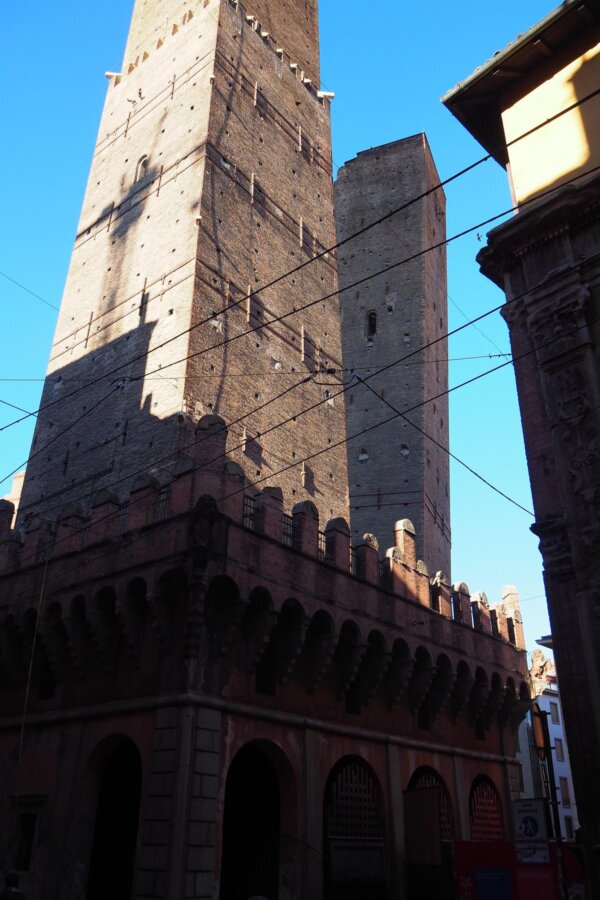
Bologna, the capital of Italy’s Emilia-Romagna region, is a city of roughly 390,000 known for its red-tiled skyline, arcaded streets and deep culinary tradition. It is home to the University of Bologna, founded in 1088 and the oldest university in continuous operation in the world, which has shaped the city’s youthful, scholarly character for nearly a millennium. The historic center revolves around Piazza Maggiore and the immense brick Basilica of San Petronio, one of the largest churches in the world, beside the leaning medieval Two Towers, Asinelli and Garisenda. Bologna’s porticoes, roughly 40 kilometers of covered walkways, were inscribed as a UNESCO World Heritage Site in 2021. Nicknamed la Grassa, the fat one, for its food, it is the birthplace of tagliatelle al ragu, tortellini and mortadella.
Best time to visit
April to June and September to October offer mild weather (10-25°C) and fewer crowds — ideal for exploring on foot. Summer (July-August) is hot and humid, and many locals leave in August, shuttering some shops and restaurants. Winter is cold but atmospheric, with fewer tourists and hearty cuisine like tortellini in brodo.
Season by season
Summer (June-Aug):
Weather: 25-30°C, humid
Highlights: Cinema Ritrovato
Best For: Nightlife
Spring (April-May):
Weather: 15-25°C, mild
Highlights: Gardens
Best For: Walking
Fall (Sept-Oct):
Weather: 15-20°C, perfect
Highlights: Food festivals
Best For: Eating
Winter (Nov-Feb):
Weather: 0-10°C, cold
Highlights: Christmas
Best For: Museums
Crowds
Bologna draws steady visitors year-round with peaks during university term starts and food festivals in spring and autumn (May-October); busiest in May-September and during trade fairs, quieter in January-February off-season.
Getting there and around
Getting there
Bologna Guglielmo Marconi Airport (BLQ) is 6-10 km from the center, connected by the Marconi Express monorail in 7 minutes to Bologna Centrale station. High-speed trains from Rome take 1 hour 25 minutes, from Florence 40 minutes, from Milan 60 minutes, and from Venice 1.5 hours. Bologna Centrale is a 15-minute walk from Piazza Maggiore. FlixBus and Itabus connect to many Italian and European cities.
Getting around
Bologna’s historic center is compact and walkable — most sights are within a 15-minute walk of Piazza Maggiore. The 40 km of covered porticoes (UNESCO World Heritage) keep you sheltered in rain or sun. An efficient TPER bus system covers wider areas (€1.50 per 75-minute ride). Bike and scooter rentals (RideMovi, Bird, Lime) operate citywide. Much of the center is a Limited Traffic Zone (ZTL) from 7 AM to 8 PM, making driving impractical.
Top experiences in Bologna
Piazza Maggiore
The heart of Bologna. It is one of the oldest squares in Italy, surrounded by the Basilica of San Petronio, Palazzo d’Accursio, and Palazzo del Podestà. It is the living room of the city.
The Two Towers (Asinelli & Garisenda)
The symbol of Bologna. The Asinelli Tower (tall) and Garisenda Tower (leaning) are medieval skyscrapers. You can climb the 498 steps of the Asinelli for a stunning view of the red-roofed city.
Basilica di San Petronio
A hilltop basilica outside the city center. It is connected to the city by the world’s longest portico (666 arches). The walk up is a pilgrimage and offers incredible views.
Mercato delle Erbe
The historic seat of the University of Bologna (the oldest in the world). The Anatomical Theatre, carved from wood, is a masterpiece. The walls are covered in thousands of coats of arms of former students.
University of Bologna
The ancient market district with narrow streets named after the guilds (Goldsmiths, Fishmongers). It is packed with delis, bakeries, and wine bars. It is a food lover’s paradise.
Editor-curated picks carried over from our original guide. Where a full place guide exists, the card links to it.
Worth booking ahead in Bologna
Hand-picked from the operators our guides already send readers to. Prices and availability are live on the partner site.
Guided tourGetYourGuide
Colosseum, Forum and Palatine Hill small-group tour (opens GetYourGuide in a new tab)
Small group with the Forum and Palatine Hill included; the standard Colosseum visit done properly.
Where to stayBooking.com
Stays in Bologna (opens Booking.com in a new tab)
Live rates and availability for Bologna on Booking.com; filter by neighbourhood once you know where your days start.
We earn a commission if you book through these links, at no extra cost to you. It is how we keep the guides free and independent.
Where to stay
Grand Hotel Majestic già Baglioni
Via dell'Indipendenza 8, 40121 Bologna, Italy
The only 5-star luxury hotel in Bologna. It is an 18th-century palace filled with frescoes, antiques, and opulent fabrics. Located right next to Piazza Maggiore, it is the epitome of classic Italian elegance.
Albergo Garisenda
Via de' Pignattari 11, 40124 Bologna, Italy
A boutique hotel located in a historic building right next to the Basilica of San Petronio. It offers unique views of the church’s stained glass windows from some rooms. It is full of character and history.
Phi Hotel Bologna
Via de' Fusari 9, 40123 Bologna, Italy
The oldest hotel in the city, dating back to 1375 (formerly the ‘Al Cappello Rosso’). It is a boutique hotel that blends medieval history with modern design. It is located just steps from Piazza Maggiore.
Editor-curated stays carried over from our original guide. Where we have reviewed the hotel, the card links to the review.
Tips from the field
Highlights
- Piazza Maggiore — Medieval civic heart with Palazzo d'Accursio. The Two Towers — Asinelli (97 m, 498 steps) and leaning Garisenda. Basilica di San Petronio — One of Italy's largest churches. Italian gastronomy capital — Tortellini, ragù, mortadella, Parmigiano. University of Bologna — Europe's oldest university (est. 1088). 40 km of UNESCO porticoes.
Best activities
- Climb the Asinelli Tower. Walk the portico to San Luca. Eat Tagliatelle al Ragù (not Spaghetti Bolognese!). Explore the Anatomical Theatre. Shop for food in the Quadrilatero. Visit the Ferrari or Lamborghini museums nearby.
Practical tips
- Tortellini in Bologna is served 'en brodo' (in broth), not with cream sauce — ordering it correctly signals respect for local tradition. The Asinelli Tower has 498 steep steps
- arrive early to avoid midday queues. The Quadrilatero neighborhood around Via Pescherie Vecchie is the best area for food shopping and traditional trattorias. Via Zamboni (university district) has lively nightlife. The ZTL restricts cars in the center during the day.
Photography tips
- Golden Hour: Sunset from the top of the Asinelli Tower or San Luca.
- Iconic Shots:
- The Two Towers from Via Rizzoli.
- The view of Piazza Maggiore from the steps of San Petronio.
- The endless perspective of the Porticoes.
- Fresh pasta in a window in the Quadrilatero.
- The view of the city from San Michele in Bosco.
- Technique: The red brick buildings (The Red City) glow warmly in the late afternoon sun.
Timing
- Peak Season (May-June, Sept):
- Busy, perfect weather
- Low Season (Nov-Feb):
- Cold, fewer tourists
- Best Time (April, Oct):
- Culinary peak
Keeping it authentic
- Bologna is 'La Grassa' (The Fat), 'La Dotta' (The Learned), and 'La Rossa' (The Red). It is famous for its leftist politics and student culture. The food is rich (butter, pork, cheese). Don't ask for Spaghetti Bolognese
- it's Tagliatelle al Ragù.
Culture, customs and safety
Cultural heritage
Bologna preserves Europe’s oldest university city traditions where medieval porticoes stretch 40 kilometers, enabling year-round passage between lectures since 1088. The Two Towers, Asinelli and Garisenda, survived from 180 medieval towers when families competed skyward. The city invented tortellini, supposedly modeled after Venus’s navel, and maintains strict ragù Bolognese protocols registered with Bologna’s Chamber of Commerce. The Archiginnasio’s anatomical theater, where bodies were dissected under the watchful eye of a priest, preserves Renaissance medical education. Student traditions include leaving coins at the Neptune Fountain for exam luck and avoiding the two towers’ shadows before graduation. Local osterie maintain centuries-old recipes in the same locations.
Local customs & etiquette
Bologna’s food culture defines the city – mortadella, tortellini, tagliatelle al ragù (Bolognese sauce), and Parmigiano-Reggiano are local obsessions treated with reverence. The university tradition since 1088 creates a youthful, progressive atmosphere. Aperitivo culture thrives from 6-9 PM with complimentary buffets accompanying drinks. La Dotta, La Grassa, La Rossa (The Learned, The Fat, The Red) nickname reflects the university, cuisine, and terracotta architecture. Markets like Mercato di Mezzo are social centers. Slow food philosophy originated nearby – meals are leisurely affairs. Locals are proud but welcoming, appreciating attempts at Italian over English.
Safety notes
Bologna is generally very safe with low violent crime rates. Pickpocketing can occur on crowded buses and near the train station. The area around Bologna Centrale station can feel uncomfortable after 11 PM. The university district can be noisy but is not unsafe. Standard urban awareness suffices. Emergency: 112.

Travel Style
Activities