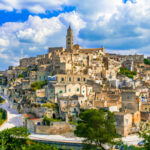
Known for the production of some of the finest wines in the world, Italy has more than 1.5 million acres of vineyards. That’s right, 1.5 million. Can you believe that? You should! These vineyards produce exceptional quality wine.
If you’re a fan, you’re in the right place: follow your nose through vitality and stop for a glass of classic wine. There are several wine tours in Italy… and that’s just scratching the surface.
A rich heritage that extends 2,000 years… Italy’s division into 20 specific wine regions… We’d say Italians are international experts. Pair that with their 250+ varietal wines, and wine lovers are in for a treat upon visiting the Mediterranean peninsula.
No matter where you go, you’ll encounter Italian wines—besides history, it’s the one thing that remains constant: vino. Let us take you on a virtual tour of the many Italian wine cities and become steeped in their lush histories. Read on for more information.
Map of Italian Wine Regions

This wine map of Italy will help you discern the differences between each location and get a feel of where each region is.
Best Wine Regions in Italy
If you’re ready to swim in a glass, you’ve come to the right place. Let’s dive in!
1. Calabria

Located between the Tyrrhenian Sea in Southern Italy and the Ionian, Calabria is a stunner. It’s seen various viticultural influences over the past several centuries, beginning with the Greeks, who established vineyards here. This area is also known for the production of olives and citrus.
Calabria is one of Italy’s best wine regions to visit, partly because it’s the country’s least visited region. Add it to your itinerary—not only will it be less crowded at the wineries you visit, but it’s a culinary gem.
This Italian wine region also boasts a special perk. Its contrasting weather and temperature create flavors different from one vineyard to another. Why not try them all?
- Local vineyards: Tenuta Celimarro Winery, Cantina Rizzo, and Cirimingiano, all specializing in Calabrian wines.
- DOC production: 0.17% of Italy’s DOC production
- Wine tastings in Calabria: Family-owned winery tour and tasting in Ciro’ Marina, Farm wine tasting near Tropea, Tenuta Celimarro Winery tasting
- Looking for a local treat? Try: Red Gaglioppo with pasta Bolognese or white Greco with delicate fish in lemon sauce.
2. Abruzzo

In central Italy, Abruzzo boasts some of the most beautiful vineyards in the country. There’s no question about why. As a mountainous yet sea-adjacent region, this tourist destination is known for its beautiful beaches and spectacular hiking trails.
Here in Abruzzo, the history of wine is long: winemaking was introduced in the area in the 6th century BC and has grown over the last fifty years. As such, the winemaking practice has been employed by generations of experts and entrepreneurs who drive the improvement of the wine they make.
The region is known, in particular, for its classic Montepulciano: a red wine grape. It produces medium-bodied wine with gentle tannins, approachable fruit flavors, and subtle earthy notes.
- Local vineyards: The Vinum Winery, Podere Castorani, and Mazzarosa Winery. All of these offer classic Abruzzese wines and histories of their locales, like Podere Castorani’s farm.
- DOC production: Seven percent of Italy’s total DOC production
- Wine tastings in Abruzzo: Wine tour in Nocciano, Wine tasting experience in Pescara countryside, Private food and wine tour in the cellar with tastings
- Looking for a local treat? Try: Montepulciano with grilled meat.
See Related: Things to Do in Venice, Italy
3. Tuscany
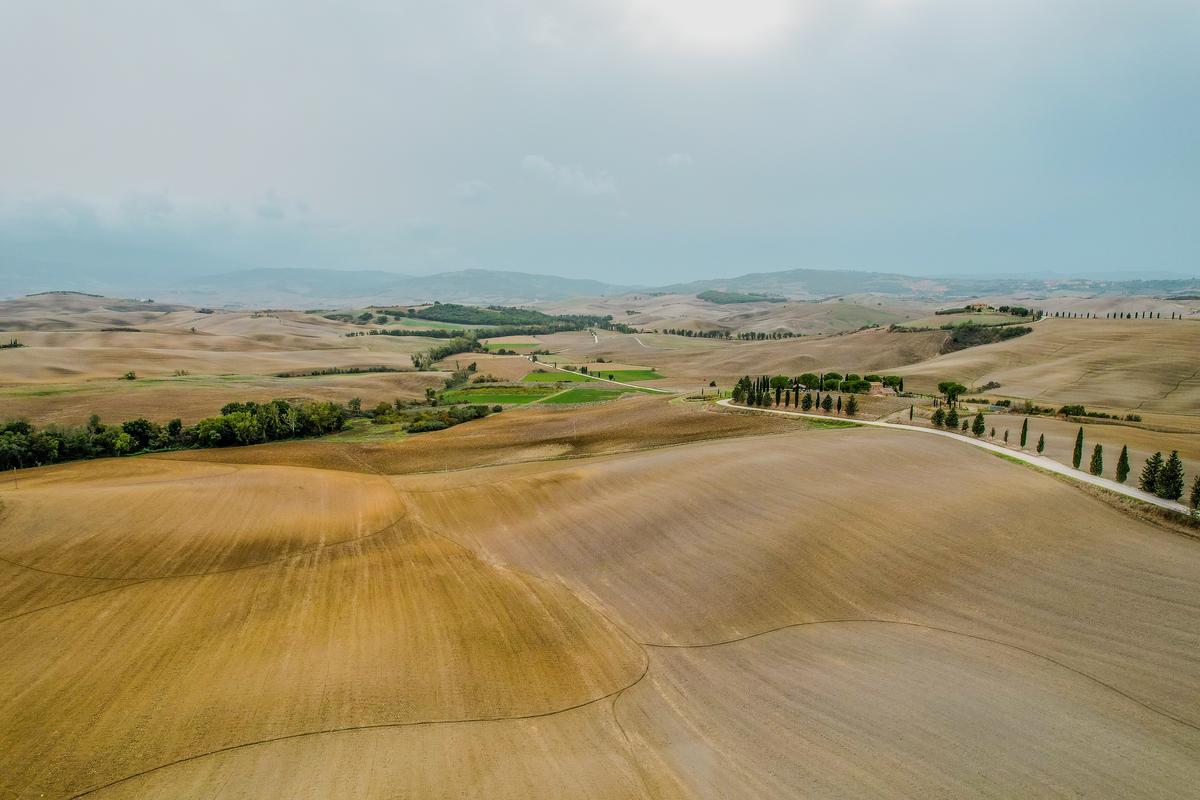
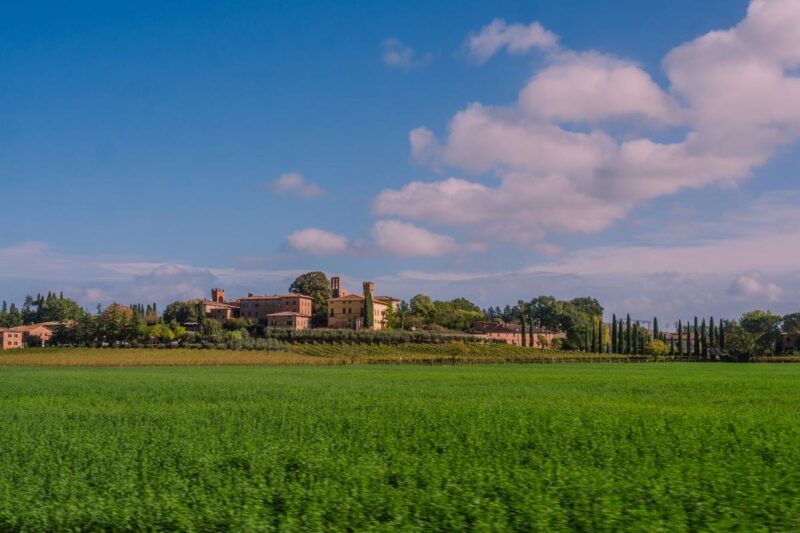
The reigning, most prolific region of Italian wine culture, a true fan cannot skip Tuscany. Located amidst endless rolling hills and over cobbled country roads, this picturesque destination is understandably famous for its outstanding wine and dining scene. Here, you’ll undoubtedly enjoy some Chianti or Brunello di Montalcino.
Tuscany actually boasts its subcategory blends of wine called “Super Tuscans”, which are some of the most famous red wines in the world. These include combinations of local Sangiovese and non-indigenous grapes, like Cabernet Sauvignon and Merlot. Such wines include: Tignanello, Masseto, Solaia, and Sassicaia.
- Local vineyards: Antinori Chianti Classico, Badia a Coltibuono, and Avignonesi, which boasts nine vineyard plots, a villa, a chapel, and several historic wine cellars.
- DOC production: 17% of Italy’s DOC production
- Wine tastings in Tuscany: Val D’orcia scenery with wine tasting, Tuscany Hiking Tour from Siena Including Wine Tasting, Tuscany Wine Tastings with Panoramic View – Florence to Chianti
- Looking for a local treat? Try: Tignanello with herb-heavy, spiced meats or tomato-based pasta dishes.
See Related: Tours in Italy: Food, Walking & Bike Tours
4. Emilia-Romagna

Emilia-Romagna has over 55,000 hectares of fertile vineyards, which produce and have been producing some of the best wines in the country for years. Etruscans originally inhabited it and were then taken over by Romans. Walking the streets, you’ll experience the past within the very flavor of your wine.
This region boasts exceptional variety in its wines, but it’s also a great place to try a sparkling Lambrusco or Sangiovese. Here, Lambrusco is a famous wine that’s actually a bit difficult to come by; a sparkling red wine served chilled, it’s delicious.
- Local vineyards: Tenuta Palazzona Di Maggio, Tenuta Biodinamica Mara, and Acetaia Leonardi, which also showcase a highly informative and interesting tour of the property.
- DOC production: Nine percent of Italy’s DOC production
- Wine tastings in Emilia-Romagna: Wine Degustation Ebrezze, From Bologna: Wine Tasting and Vineyard Tour with the winemaker, Half Day Private Emilia Foodie Experience
- Looking for a local treat? Try: Lambrusco with pork, salumi, or Italian sausages with fennel.
5. Lazio

Italy’s Lazio region is renowned for its beaches, as well as its fertile, nutrient-rich volcanic soils that provide the perfect conditions for cultivating Italian grapes. These unique soils give the grapes an exceptional balance of acidity, resulting in wines with distinctive flavors and characteristics.
On top of Lazio’s winemakers’ exceptional craftsmanship and dedication, the region itself is lovely. A refreshing sea breeze creates a pleasant microclimate. You’ll enjoy not only temperate weather but also enhanced wine quality.
- Local vineyards: Cantina Costantini, Casale Del Giglio Società Agricola, and Merumalia. Merumalia’s team prides itself on introducing you to its wine production philosophy.
- DOC production: Two percent of Italy’s total DOC production
- Wine tastings in Lazio: Sperlonga Experience and Wine Tasting Tour, Aperitivo with Monte Cassino History and the Gustav Wine, From Civitavecchia: Tuscany-Latium Wine Tour with Tastings
- Looking for a local treat? Try: Malvasia di Candia with cakes or dry pastries.
See Related: Tantalizing Types of Traditional Italian Food To Try
6. Lombardy

Lombardy, a landlocked wine region, still has bodies of water to call its own. Its grand lakes, both sizable and beautiful, provide a great environment for vines growing off their shores.
With a more temperate climate in its vineyard zones, Lombardy sits between the Po Basin and the Alps, leading to a huge array of mesh climates. What’s more, it’s populated: with more than 300 museums across the territory, you can easily take a guided food and wine tour.
This area hides the impeccable Oltrepò Pavese, otherwise known as one of the most traditional wine zones in Lombardy. Here, they produce excellent Pinot Nero (what they call Pinot Noir), Pinot Bianco, and Pinot Blanc. Likewise, its sparkling Franciacorta (produced using the same grapes as champagne), red Valtellina, and Pinot Grigio take the flavor to the next level.
- Local vineyards: Al Rocol, Abrami Elisabetta, and Azienda Agricola Monte Cicogna. The latter boasts over a century of history and is still run by the same family.
- DOC production: Seven percent of Italy’s DOC production
- Wine tastings in Lombardy: Domaso: Wine Tasting at the Winery on Como Lake, Italian Wine Tasting & Food Como Lake, eBike Tour Lake Como and Swiss Vineyards
- Looking for a local treat? Try: Pinot Noir with charcuterie, stuffed mushrooms, or savory cheesecake.
See Related: German Wine: History & Different Types
7. Puglia

Puglia, or Apulia to Italians, showcases highly diverse climate and soil conditions when compared to its northern counterparts. Divided in three different areas, this region is known for its nature, its beaches, and is a great place to visit during peak tourism in Italy.
The capital of Puglia, Bari, has everything to offer, including an introduction to one of Italy’s tastiest wine regions. Here, they boast plenty of flavors, and locals recommend the Impigno, a seaside-appropriate salmon-hued rosé, or a Negroamaro.
- Local vineyards: Cantina Masseria Torricella, Torleanzi Winery, and Cantina Petrelli, whose transition from cultivating tobacco to grapes is gladly explained by their tour guides.
- DOC production: Three percent total of Italy’s DOC production
- Wine tastings in Puglia: Wine Ostuni, tour of an Apulian winery with traditional lunch or aperitivo, Orecchiette Cooking Class and Wine Tasting in Lecce, Wine Experience: vineyard, wines and food
- Looking for a local treat? Try: Negroamaro with smoky, grilled red or white meat.
8. Molise

Molise is Italy’s best-kept secret. A newcomer to independence, it’s Italy’s youngest and second-smallest wine region. As a result, the people of Molise have worked in recent years to build both its wine prominence and its populace, as it’s still an underpopulated region.
There’s much to be found here, though. Molise produces a unique soil combination favorable for grapes’ growth.
This is thanks to its diverse geography and climate. Their exceptional wines are garnering attention, and by our prediction, will soon be a thriving, must-see wine region.
- Local vineyards: L’arco Antico, Cantine D’Uva, and Agricolavinica, which was founded to promote eco-sustainability and has since “grown” into a hidden gem of the Molise wine region.
- DOC production: 0.1% of Italy’s DOC wine production
- Wine tastings in Molise: Private Tintilia del Molise Wine Tour from CAMPOBASSO, 4 Days Tour to Discover the Molise Region
- Looking for a local treat? Try: Trebbiano Toscano with seafood pasta or white pizza.
See Related: Italy vs France
9. Sicily

Sicily is one of the largest islands in the Mediterranean Sea and, tangentially, one of the most wonderful wine regions in the country. For over 2,000 years, it’s enjoyed a strong reputation as an epicenter of the wine culture. This, of course, has something to do with the many activities in Sicily that will pair nicely with your wine tours, but there’s more to it than that.
The climate is ideal for grape production, with adequate sunshine and moderate rainfall. Core Sicilian wines rely on this.
It creates delicious Marsala, dry white wine, and Zibibbo. Zibibbo is a fragrant sweet wine produced on the Sicilian island of Pantelleria.
Even if these grapes ferment in the sun, Sicilian wine is still delicious. It results in a Marsala-style beverage with similar characteristics but with lower alcohol content.
- Local vineyards: Gambino Winery, Cantine Florio, and Donnafugata. The latter’s specialty includes authentic and sustainable wines, specifically.
- DOC production: One percent of Italy’s total DOC production
- Wine tastings in Sicily: Private 6-Hour Tour of Three Etna Wineries with food and wine tasting, Etna Countryside Food and Wine Lovers Tour (Small Group), Taormina Food and Wine Walking Tour (Small Group)
- Looking for a local treat? Try: Zibibbo with shellfish.
See Related: Milan Travel Guide
10. Marche

Located on the eastern side of central Italy, Marche covers over 25,000 hectares. It’s one of the twenty regions of Italy, yet among the least known, despite its production of more than 2 million hectoliters of wine each year.
Marche showcases over a thousand years of winemaking history. It was been influenced by the Romans, Lombards, and Etruscans. This results in the birth of a wine culture that covers the breadth of vinicultural tradition and variety in wine styles… all of which you should try!
- Local vineyards: Rio Maggio, Cimarelli, and Tenute Muròla. The latter is not far from a natural reserve and an archaeological site. It’s great for any wine-loving history buffs.
- DOC production: Three percent of Italy’s total DOC production
- Wine tastings in Marche: Guided tour and tasting at Fattoria Paradiso in Bertinoro, eBike tour with organic wine tasting, Wine Tour and Tasting at Le Marche’s Oldest Wine Estate
- Looking for a local treat? Try: Verdicchio with any kind of seafood.
See Related: Things to Do in Naples, Italy
11. Valle d’Aosta

Valle d’Aosta, or Aosta Valley, is the smallest wine region in Italy, surrounded by hills in the Northwest. This area sits on the borders of both Switzerland and France.
Here, you can guarantee a variety in wines during your stay. Its most popular wines reflect its multicultural nearness.
A significant part of this region is used for viticulture. It receives the best temperature variation: hot during the day and cold at night. This allows the local vignerons to use the proper techniques to create a flavorful and definitively unique wine.
- Local vineyards: Les Cretes, Grosjean Vins, and Caves de Donnas. The latter specializes in simplicity, although it maintains a delicious menu.
- DOC production: 0.05% of Italy’s total DOC production
- Wine tastings in Valle d’Aosta: Small Group Market tour and Dining Experience at a Cesarina’s home in Aosta, Aosta Food Tour – Do Eat Better Experience, Aosta walking tour with tasting
- Looking for a local treat? Try: Picotendro with seasoned lamb.
See Related: Ultimate Guide to Living in Italy
12. Basilicata

Located in the southern region of Italy, Basilicata is known for its unique Greek viticultural heritage. The Greeks first introduced vineyards in this region, and today, it still enjoys the Balkan breeze and ample sunshine, which initially inspired the first vignerons to live here.
Its climate and culture make for delicious cuisine that pairs well with any wine you try in the area. If you ask us, the best way to spend your time in Basilicata is to explore its stunning parks with a glass of region-specific Aglianico or Malvasia.
- Local vineyards: Cantine del Notaio, Essenza Lucano, and Carbone Vini, which is family-owned and prides itself on their organically-run vineyards.
- DOC production: 0.1% of Italy’s total DOC production
- Wine tastings in Basilicata: Dining experience at a local’s home in Potenza with cooking demo, 8 Days Best of Puglia and Basilicata
- Looking for a local treat? Try: Malvasia Bianca with a vegetable dish seasoned with cumin.
See Related: How Much is a Trip to Italy?
13. Campania

Campania is known for growing the finest Italian varietals. That includes a large bunch that doesn’t grow anywhere else on Earth! On top of that, its oldest wine zones feature grapes that grow on volcanic soil, and thereby produce more distinctive flavor.
Notably popular for its beautiful landscapes and climate, Campania is surrounded by hills. Despite its serenity and delicious regionally-produced wine, not many are aware of all this region offers. If you want a taste, drink traditional Italian Taurasi during your visit.
- Local vineyards: Mastroberardino, Casa Setaro, and Cantina Del Vesuvio Winery. The latter’s grapes grow in volcanic soil.
- DOC production: 0.5% of Italy’s total DOC production
- Wine tastings in Campania: Paestum’s wines, discover the secrets!, Wine Tasting and Visit to Sant’Agata de ‘Goti cellars, Vesuvius Wine Tasting Tour with Lunch Included
- Looking for a local treat? Try: Taurusi Aglianico with beef brisket or smoked pork.
14. Liguria

A stunning coastal region, Liguria is bordered by France and flanked by Tuscany along the Mediterranean coast. Separated into two by the Riviera, it isn’t easy to grow grapes here; still, many vineyards are managed by artisanal producers who grow their grapes on terraces.
Much of Liguria’s appeal is that some places can only be reached by boat, and all are entirely cultivated by hand. Seafood plays a prominent role in the local diet here, and you’ll find such meals pair well with Liguria’s Vermentino and spicy Rossesse.
- Local vineyards: Bio Vio, Agriturismo Torre Pernice, and Tenuta Maffone. The final winery specializes in working the land by hand. They rarely use mechanical assistance.
- DOC production: 0.2% of Italy’s total DOC production
- Wine tastings in Liguria: Wine Tasting with the Producer – Visit to the Cellar & Vineyards between Langhe & Monferrato, Langhe Wine Tour and Tasting – One day with a Somm, Vineyard Tour and Wine Tasting
- Looking for a local treat? Try: Rossesse with shrimp pesto pasta.
See Related: Italy vs Greece
15. Friuli-Venezia Giulia

Friuli-Venezia Giulia is acclaimed for the efforts of a group of small-scale producers working with local grape varieties. As a result, wines produced in this region are praised across Italy—you’ll find only the finest quality here.
On top of its local delicacies, winemakers in Friuli-Venezia Giulia experiment with international varieties: Cabernet Sauvignon, Chardonnay, and more. It’s a culturally diverse area, reflected in its food and wine. With rich, dry flavors, you can taste the grape in a way that differentiates itself.
Friuli also produces high-quality sparkling wine using the famous Charmat method. You can experience it in person.
- Local vineyards: Il Roncal, Le Due Torri, and Schiopetto, a winery whose staff is credited with the birth of the modern era of white wine in Friuli!
- DOC production: Six percent of Italy’s DOC production
- Wine tastings in Friuli-Venezia Giulia: Prosecco Origins Wine Experience, Collio: Cividale Del Friuli and Wine Tastings from Trieste, Prosecco’s Roots & the Karst Region from Trieste
- Looking for a local treat? Try: Barberesco with truffles or Fontina cheese or Prosecco with sushi (yes, really!).
See Related: Best Places to Stay in Cinque Terre
16. Piedmont

Renowned globally for its tannic red wines, Piedmont offers a truly unparalleled experience for wine enthusiasts. With its strategic positioning in the heart of the country’s finest wine zones, this captivating region boasts an abundance of picturesque villages and charming towns that will leave you spellbound.
Piedmont has earned a well-deserved reputation as a mecca for wine lovers, and while here, you’d do well not to overlook the region’s hidden gem: sparkling white Moscato d’Asti. This delightful wine is a testament to the winemaking excellence that defines Piedmont!
- Local vineyards: Morra Diego, Fratelli Serio & Battista Borgogno, and Giovanni Rosso. Giovanni Rosso’s vineyards encourage plant growth between vines. This maintains a stable, diverse environment and rich soil.
- DOC production: 11% of Italy’s DOC production
- Wine tastings in Piedmont: Discover Piedmont Wines in Turin, Barolo Wine and Food Tasting at Piedmont Region Winery, Truffle Hunting and Barolo Tasting Tour in Piedmont
- Looking for a local treat? Try: Moscato d’Asti with sponge cake, pastries, or fruit tart (except orange marmalade).
See Related: Best Travel Books for Italy
17. Sardinia

Sardinia, the second-largest island in the Mediterranean Sea, proffers a unique Italian wine region—one that’s actually similar to that of Spain, which can be seen in the varieties that grow here. It’s island status and climate produce tasteful wines that largely pair well with fruit, like Moscato Bianco or Grenache.
Looking for a red wine wine that offers 100% Sangiovese grapes? Try Sardinia’s “Brunelloica di Sardegna” for its flavor and cheerful character.
- Local vineyards: Argiolas Winery, Vini Pala, and Audarya Winery. The latter specializes in wines “tied to the territory,” or bringing a modern flair to Sardinian varietals.
- DOC production: One percent of DOC wine production
- Wine tastings in Sardinia: Sardinian Countryside Home Cooking Pasta Class & Meal at a Farmhouse, Guided Wine and Olive Oil Tasting, Half-Day Small-Group Wine Experience with Wine Expert from Cagliari
- Looking for a local treat? Try: Moscato Bianco with a fruity salad (with apple, strawberries, or others!).
18. Trentino-Alto Adige

Trentino-Alto Adige has grown immensely popular in the last century due to its local Schiava and Lagrein varieties. All wines produced in this region bear its hallmark, which has a political and cultural past as complex and dramatic as the climate and geography.
Modern wine-making techniques prevail in Trentino-Alto Adige. It’s also the only wine region in Italy that has increased its planted area in the last two decades. This results in more wine—renowned for its fruitiness—and more visitors.
You can also come here to try international varieties of white wines, like Chardonnay, Pinot Grigio, and Pinot Bianco.
- Local vineyards: Tenuta Alois Lageder, Kellerei Bozen, and Cantina Girlan, which was once an ancient farmstead and has since evolved on that foundation, built by 24 winemakers.
- DOC production: Six percent of DOC production
- Wine tastings in Trentino-Alto Adige: Guided winery tour with tasting in Bolzano at the SKYWINE PAVILLON, From Lake Garda: Full-Day Valpolicella Wine and Lunch Guided Trip, Winery tour and organic wine tasting in Trentino
- Looking for a local treat? Try: Pinot Bianco with roasted duck or garlic prime rib.
See Related: Going.com (Formerly Scott’s Cheap Flights) Review
19. Umbria

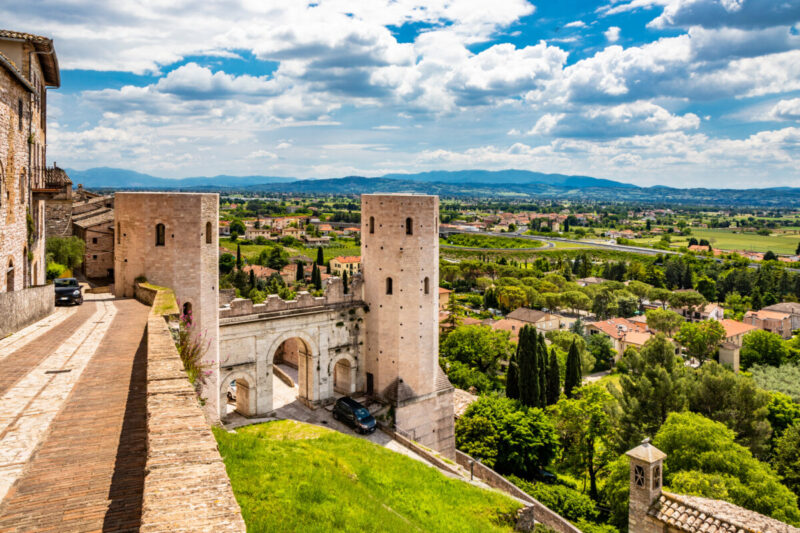
Ideally located in the heart of the Italian wine region, Umbria is surrounded by Marche, Lazio, and Tuscany. This is a popular spot to stay for wine lovers, as you can explore some of the most famous wine regions in a short period.
Still, you don’t have to leave Umbria for wine; albeit less popular than many of its neighbors regarding grape yield, it’s still known for top-quality red wine produced from varietals like Pinot Noir, Merlot, and Cabernet Sauvignon.
Something unique you can try in the area is barrel-fermented Chardonnay. It’s flavorful and special, even to sip. Talk to your guides, those introducing you to each glass, and learn how the process works!
- Local vineyards: Cantine Briziarelli, Tili Vini, and Chiorri, whose wines have been awarded both “DOP/PDO” and “IGP” labels.
- DOC production: Seven percent of Italy’s DOC production
- Wine tastings in Umbria: Taste Perugia Food Tour Led by Local, Open-Air Wine Tasting with Panoramic View, Winery Tour and Private Tasting in Montefalco
- Looking for a local treat? Try: Pinot Noir with pork.
See Related: What’s It Like Living in Italy?
20. Veneto

As one of Italy’s most notable wine regions, Veneto has an impressive variety of red and white wines, as well as countless tours that will teach you about the winemaking process. A wine tour is one of the best experiences you can indulge in while here because not only do you enjoy a refreshing beverage with incomparable flavor, but you’ll learn the complex histories and journeys of the many wineries you visit.
Veneto is certainly among the best places to visit in Northern Italy, and not only because of its wine variety; however, if you’re looking for tips, we recommend Soave, Prosecco, or Recioto while in the area.
- Local vineyards: Fratelli Vogadori, Zenato Winery, and Clementi, specializing in five classic Valpolicella grape varieties: Corvina, Corvinone, Rondinella, Molinara and Oseleta.
- DOC production: 18% of Italy’s DOC production
- Wine tastings in Veneto: Eat, drink and repeat: Wine tasting tour in Venice, Experience Venice Like A Local: Small Group Cicchetti & Wine Tour, Eat Like a Local: 3-hour Venice Small-Group Food Tasting Walking Tour
- Looking for a local treat? Try: Prosecco with any regional fish or poultry.
See Related: Burgundy Wine Tour Itinerary: How to Plan the Perfect Trip
Different Wine Styles Produced in Italy

The soil, climate, altitude, and grape varietals in each region produce various wines with distinct characteristics. For instance, the famous wines from Chianti, well-known in Tuscany, highlight the finest qualities of its tasty grapes for red wine. Tuscany’s wines typically have fruitier profiles than Piedmont’s, while wine from Puglia is richer than Sicily’s. Get the picture?
This doesn’t make one better than the other but differentiates them; these flavors from diverse countrywide vineyards are distinctive yet pleasant as they provide a real taste of their origins.
See Related: Shopping Areas in Milan
Classifications in Italy’s Wine Regions
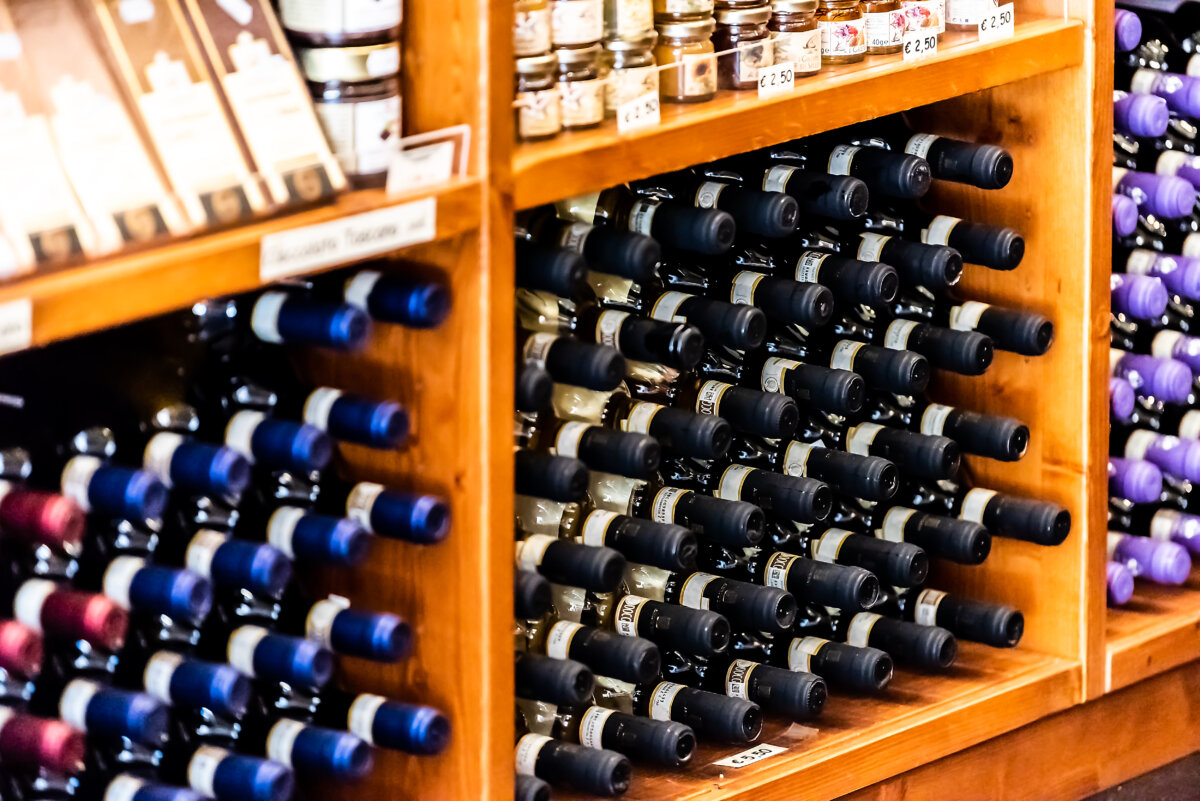
Sparkling wines, white wines, red wines, oh my! When you’ve explored the varietals of high-quality table wines and sparkling and sweet Moscato, you’ve tried it all. Still, there are plenty more classifications in Italy’s wine regions, not just by flavor. Some Italian wines have official marks on their necks, containing the following letters: DOC or DOCG.
These labels are used as part of the Italian appellation system. This system was launched in 1963 with the express purpose of categorizing Italian wines. The following terminology is essential to know before you sample and tour any wine regions mentioned herein.
- DOP or PDO: “Denominazione di origine protetta,” or “Protected Designation of Origin,” which includes the following types of wines:
- DOC wines: “Denominazione di origine controllata,” classification, or a requirement that this DOC wine is produced in a specific region and reaches a pre-ordained quality standard.
- DOCG wines:“Denominazione di Origine Controllata e Garantita,” or “Controlled and Guaranteed Designation of Origin.” Similar to the above, but more stringent than DOC wines.
- IGT wines: “Indicazione Geografica Tipica,” or “Typical Geographic Indication,” illustrates that the wine is still from a particular area, even if it’s not a DOCG.
- Vino da Tavola (VdT): If wine is listed without an indication of its geographic origins, it’s typically considered “Vino da Tavola,” or VdT: which translates to which means “table wine.” These are generic wines of average quality and likely aren’t exported to the States.
What’s the Difference Between DOC and DOCG Wines?
Italy takes one of its main export very seriously; there are still only 77 DOCGs produced across Italy, largely from Tuscany and Veneto. Conversely, there are approximately 330 DOC wines produced in the country. A DOCG wine has stringent quality controls in place that make it high-end.
All wines undergo analysis and testing by a government-approved panel. Those bottled under this label require their status illustrated on the neck: pink for red, green for white.
Popular DOCs
- Prosecco
- Bardolino
- Montepulciano d’Abruzzo
Popular DOCGs
- Barbaresco
- Montefalco Sagrantino
- Fiano D’Avellino
Most Popular Italian Grape Varieties
Ready for a big-time grape-down—oops! I mean, breakdown—of the top grape varieties in Italy? From the immensely popular Montepulciano grape to the famous Nebbiolo, plenty of flavors can be found here. Check out the table below for a more comprehensive list:
| Top 7 Italian Grape Varieties | |
|---|---|
| Red Grapes | White Grapes |
| Sangiovese | Pinot Grigio |
| Montepulciano | Glera |
| Merlot | Trebbiano |
| Dolcetto | Verdicchio |
| Nebbiolo | Moscato Bianco |
| Barbera | Cortese |
| Corvina | Chardonnay |
Wine Tasting in Italy: Tips on Your Next Tour
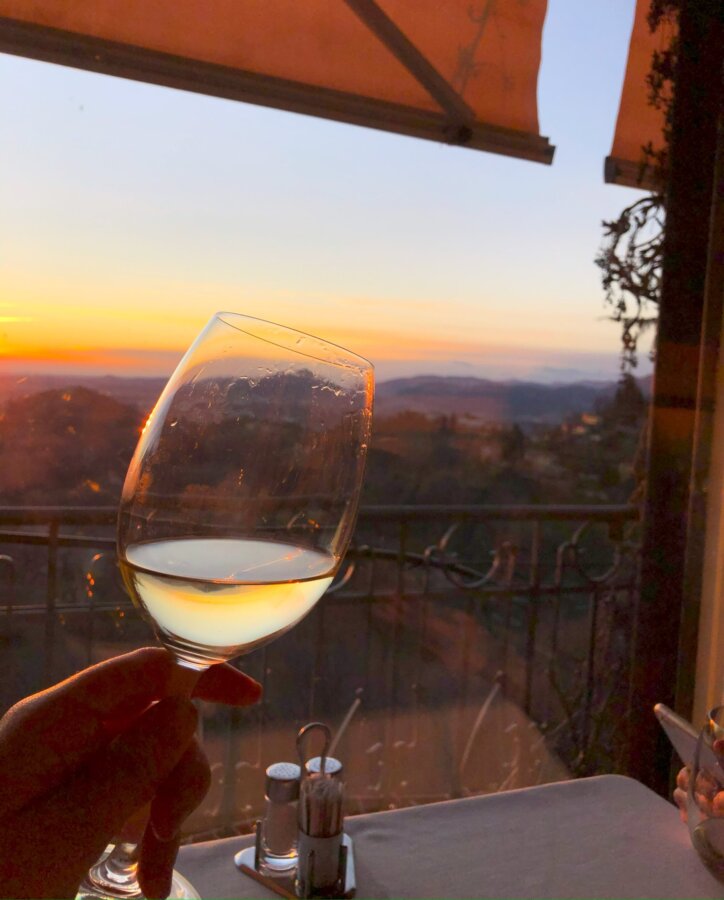
In Italy, wine is a table staple that requires paired foods and proper tasting. Let’s debrief wine-tasting etiquette. Most sommeliers recommend the following tips:
- Make a reservation.
- Consider hiring a driver.
- Dress nicely!
- Strong fragrances or aftershave will impede your wine tasting experience.
- Be open-minded.
- Drink to enjoy and taste.
- Spitting out wine you dislike isn’t a faux pas.
- Cleanse your palate between flavors.
- Try pairing appropriate foods.
- Ask questions and share your opinion on the wines you’re trying.
- Tipping your guide is not necessary, but welcome, nonetheless.
Special Events and Wine Festivals in Italy
There are plenty of events in the regions of Italy year-round—so really, it depends on where and when you want to go. During the recommended seasons (May-June and September-October), festivals occur annually, including Avvinando WineFest, Vinòforum, the Chianti Wine Festival, and Autochtona in some of our favorite Italian wine regions.
See Related: Best Wine Tasting in Paris, France (+ Vineyards)
Frequently Asked Questions (FAQs)
What are the best wine regions in Italy to visit?
You know there are many, so you can’t go wrong with visiting any of them. To start, though, we’d recommend Veneto, Tuscany, Piedmont, Umbria, Emilia-Romagna, and Sicily.
What is the best time of the year to visit the Italian wine regions?
The best time of year to visit Italian wine country is either May or June. This way, you’ll avoid crowds and guarantee beautiful weather. September and October are great for the harvest.
Which Italian wines should I try during my visit?
As a result, there are so many different types of Italian wines and many recommendations. Still, we can narrow down the following: Montefalco Sagrantino, from Umbria; Bardolino, from Veneto; Montepulciano, from Abruzzo; and Fiano D’Avellino, from Campania.
Related Resources