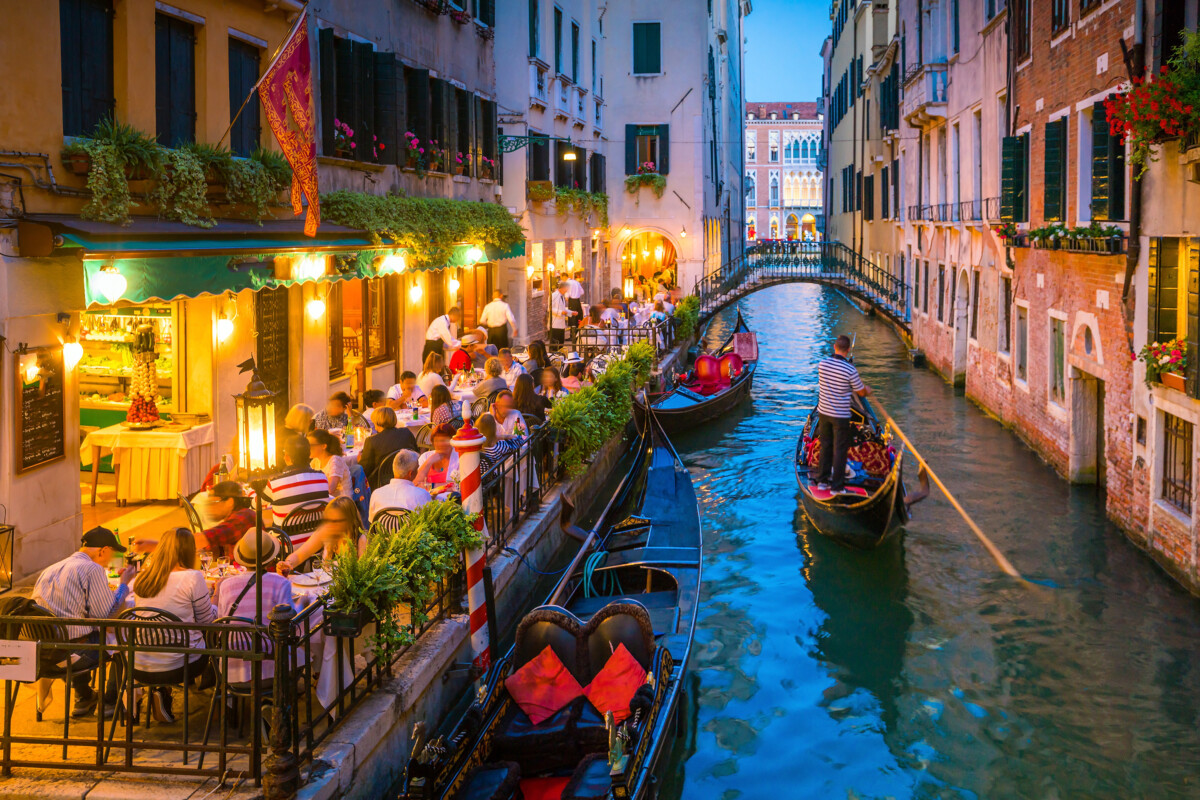
Venice, known as the City of Canals, is a unique and enchanting destination famous for its intricate waterways, stunning architecture, and rich history. Visitors can explore iconic landmarks such as St. Mark’s Basilica, the Grand Canal, and the Rialto Bridge, all while enjoying the romantic ambiance of this floating city.
The destination guide
Venice

Travel guides for Venice
Things to do (3)
Where to stay (1)
Travel tips & costs (1)
Destination stories (1)
More guides featuring Venice (41)
At a glance
Currency€ EURCode: EUR
Time zoneCentral European Time
Languages
- Italian
Setting
- Lagoon canals
- Island archipelago
- Historic urban center
- Adriatic coast
Population258K257,503 residents
VisaDuration: Up to 90 days within any 180-day period in the Schengen Area · Documents: Valid passport issued within the last 10 years and valid for at least 3 months after planned departure, plus proof of accommodation, onward or return travel, and sufficient funds if requested
How Venice scores
10/10OverallExcellent
Weather8/10
Value for money6/10
Food & cuisine8/10
Culture & arts6/10
Cultural experience9/10
Nature & outdoors6/10
Adventure4/10
Nightlife7/10
Shopping8/10
Family friendly5/10
Romance10/10
Editorial scores on a 10-point scale, weighed against destinations of the same kind.
Travel safety snapshot
Overall72/100Moderate rating
Women travellers70/100
LGBTQ+ travellers78/100
Theft50/100
Medical care86/100
Physical harm82/100
Political freedom78/100
SafePlace indicators use their source 100-point scale; higher is more favourable. Planning context, not a live travel advisory — check official government guidance before you go.
When to go
Best months to visit: March, April, May, June, September, October and November.
- January: -7 to -0.6 degrees Celsius, 8.6 millimetres of rain, best-time score 3 out of 5.
- February: -6.3 to 2.1 degrees Celsius, 26.2 millimetres of rain, best-time score 3 out of 5.
- March: -0.8 to 8.7 degrees Celsius, 18.6 millimetres of rain, best-time score 4 out of 5.
- April: 4.9 to 16.1 degrees Celsius, 25.2 millimetres of rain, best-time score 5 out of 5.
- May: 8.8 to 20.4 degrees Celsius, 51.8 millimetres of rain, best-time score 5 out of 5.
- June: 12.6 to 24.4 degrees Celsius, 32.4 millimetres of rain, best-time score 4 out of 5.
- July: 16.3 to 28.3 degrees Celsius, 19.5 millimetres of rain, best-time score 3 out of 5.
- August: 14.9 to 25.8 degrees Celsius, 35.4 millimetres of rain, best-time score 3 out of 5.
- September: 10.5 to 22.8 degrees Celsius, 19.2 millimetres of rain, best-time score 5 out of 5.
- October: 6.9 to 16.2 degrees Celsius, 53.8 millimetres of rain, best-time score 5 out of 5.
- November: 0.2 to 8.3 degrees Celsius, 39.4 millimetres of rain, best-time score 4 out of 5.
- December: -3.1 to 3.3 degrees Celsius, 32.3 millimetres of rain, best-time score 3 out of 5.
Month-by-month conditions and packing advice
- January
- Cold weather, mostly dry January in Venice: winter chill, shorter days, and possible high-water disruption make the city less balanced for a first visit. Crowds: Peak tourist season with excellent conditions for cultural site visits, gondola rides, and art gallery explorations. Hotel rates and crowd levels are highest during this period. UV levels are minimal despite cooler temperatures. Pack: Warm, insulated layers for temperature variation; Waterproof boots for city exploration; Wide-brimmed hat and SPF 30+ sunscreen; Light scarf for air-conditioned spaces; Layered clothing for cultural sites and churches; Breathable wool fabrics
- February
- Cold weather, some rain February in Venice: Carnival can be memorable, but winter chill and event crowds require planning. Crowds: Winter in Venice is ideal for cultural exploration and photography, with fewer tourists compared to the summer months. The city's charm is accentuated by the cold, misty weather, making it perfect for visiting museums and galleries. However, the cold and occasional rain might deter some visitors from outdoor activities. Hotel prices are generally lower during this season, offering good value for accommodations. Pack: Warm, insulated clothing layers; Waterproof and windproof outerwear; Comfortable, waterproof boots; Umbrella for occasional rain; Light scarf and gloves; Waterproof camera gear
- March
- Cold weather, mostly dry March in Venice: season-edge timing can work with rain, events, or early summer crowds planned around. Crowds: Winter in Venice is a quieter time, with fewer tourists and lower hotel rates, making it an excellent period for cultural exploration and photography. The city's iconic sights remain accessible, but visitors should be prepared for cooler temperatures and potential fog. While the weather is generally dry, the presence of mist can affect visibility, especially during early morning and late afternoon. Pack: Warm layers for temperature variation; Waterproof jacket for potential fog; Comfortable walking shoes for cobblestone streets; Wide-brimmed hat and UV protection; Light scarf for added warmth; Breathable, moisture-wicking fabrics
- April
- Cool weather, mostly dry April in Venice: canals, churches, museums, islands, cicchetti bars, and lagoon walks balance weather and crowd levels. Crowds: April marks the beginning of Venice's peak tourist season, with high demand for accommodations and attractions. Hotel rates and ticket prices tend to rise significantly during this period. Despite the cooler temperatures, UV levels remain high, necessitating the use of sunscreen. Visitors are encouraged to plan outdoor activities like gondola rides, museum visits, and exploring the city's many piazzas. Booking in advance is advisable to secure preferred accommodations and experiences. Pack: Lightweight layers for temperature variation; Comfortable walking shoes for exploring narrow streets; Broad-brimmed hat and SPF 50+ sunscreen; Light cardigan for air-conditioned spaces; Waterproof jacket for potential rain showers; Breathable cotton/linen fabrics
- May
- Cool weather, some rain May in Venice: canals, churches, museums, islands, cicchetti bars, and lagoon walks balance weather and crowd levels. Crowds: May marks the beginning of Venice's tourist season, with moderate weather conditions suitable for sightseeing and cultural activities. The city sees a steady increase in visitors, leading to higher hotel rates and potential crowds at popular attractions. While the weather is generally mild, occasional rain showers can disrupt outdoor plans. Visitors are advised to carry an umbrella and dress in layers to adapt to changing conditions. Pack: Lightweight layers for temperature variation; Waterproof jacket for rain protection; Comfortable walking shoes for exploring narrow streets; Wide-brimmed hat and UV-protective sunglasses; Light raincoat for unexpected showers; Breathable, moisture-wicking fabrics
- June
- Warm and pleasant, some rain June in Venice: season-edge timing can work with rain, events, or early summer crowds planned around. Crowds: June marks Venice's peak tourist season, with high levels of activity and crowded streets. Hotel prices and ticket prices for attractions are at their highest during this time. Despite the warm temperatures, UV levels remain high, necessitating the use of sunscreen. Visitors can enjoy a variety of activities, including gondola rides, art gallery visits, and exploring the city's many museums. It's advisable to book tickets in advance to avoid long queues. Pack: Lightweight layers for temperature variation; Comfortable walking shoes for exploring narrow streets; Wide-brimmed hat and UV-protective sunscreen; Light cardigan for air-conditioned spaces; Waterproof jacket for occasional rain showers; Breathable cotton/linen fabrics
- July
- Warm and pleasant, mostly dry July in Venice: heat, crowds, and high prices make sightseeing less comfortable. Crowds: July marks Venice's peak tourist season, with high levels of activity and crowded streets. Hotel prices and ticket prices for attractions are at their highest. Despite the warm temperatures, UV levels remain high, necessitating sunscreen and protective clothing. Visitors should plan for potential rain showers, which are rare but can occur unexpectedly. Pack: Lightweight layers for temperature variation; Comfortable walking shoes for exploring the city; Broad-brimmed hat and SPF 50+ sunscreen; Light cardigan for air-conditioned spaces; Modest clothing for cultural sites and religious sites; Breathable cotton/linen fabrics
- August
- Warm and pleasant, some rain August in Venice: peak-summer heat and crowds make the city less balanced unless events or islands are the focus. Crowds: August marks Venice's peak tourist season, with excellent weather conditions ideal for sightseeing, gondola rides, and exploring the city's cultural landmarks. Hotel rates and crowd levels are at their highest, with high UV levels due to the sunny weather. Visitors should plan for potential rain showers, which are common during this period. Booking accommodations in advance is recommended to secure the best options. Pack: Lightweight layers for temperature variation; Waterproof jacket for occasional rain; Comfortable walking shoes for exploring narrow streets; Wide-brimmed hat and UV-protective sunscreen; Light cardigan for air-conditioned spaces; Modest clothing for cultural sites and religious venues
- September
- Warm and pleasant, mostly dry September in Venice: canals, churches, museums, islands, cicchetti bars, and lagoon walks balance weather and crowd levels. Crowds: September marks the transition from summer to autumn in Venice, presenting excellent conditions for sightseeing and water-based activities. The weather is generally mild, with average temperatures ranging from 17°C to 22.8°C, making it perfect for gondola rides, walking tours, and exploring the city's artistic heritage. Tourist numbers begin to decrease as the peak season concludes, resulting in lower hotel rates and a more tranquil environment. However, visitors should be prepared for occasional rain showers, which are common in September due to the city's unique geographical conditions. Pack: Lightweight layers for temperature variation; Waterproof jacket for potential rain showers; Comfortable walking shoes for exploring narrow streets; Wide-brimmed hat and UV-protective sunglasses; Light scarf for cooler evenings; Breathable cotton fabrics suitable for cultural sites
- October
- Cool weather, some rain October in Venice: canals, churches, museums, islands, cicchetti bars, and lagoon walks balance weather and crowd levels. Crowds: January marks the peak tourist season in Venice, with high demand for accommodations and attractions. While the weather is cool and pleasant, it can be rainy, affecting outdoor activities. Visitors should expect crowded streets and higher prices for hotels and dining. Ideal activities include visiting museums, exploring the Grand Canal, and attending cultural events. Pack: Lightweight layers for temperature variation; Waterproof jacket for rain protection; Comfortable walking shoes for cobblestone streets; Wide-brimmed hat and UV-blocking sunscreen; Light scarf for cooler evenings; Breathable cotton/linen fabrics
- November
- Cold weather, some rain November in Venice: season-edge timing can work with rain, events, or early summer crowds planned around. Crowds: January marks Venice's peak tourist season, with high demand for accommodations and attractions. While the weather is ideal for sightseeing, expect crowded streets and higher prices. Ideal activities include gondola rides, museum visits, and exploring the Grand Canal. Booking in advance is recommended to secure the best experiences and accommodations. Pack: Warm, insulated layers for temperature variation; Waterproof boots for canal exploration; Wide-brimmed hat and UV-blocking sunscreen; Light scarf for added warmth; Waterproof jacket for unexpected rain; Comfortable walking shoes for cobblestone streets
- December
- Cold weather, some rain December in Venice: winter atmosphere can be beautiful, but cold, short days, and possible acqua alta narrow outdoor comfort. Crowds: January marks Venice's peak tourist season, with high demand for accommodations and guided tours. Hotel prices and ticket prices for attractions like the Rialto Bridge and the Grand Canal are at their highest. Despite the cold, visitors enjoy the unique charm of the city, with fewer crowds during the off-peak hours. Ideal activities include gondola rides, exploring hidden canals, and visiting art galleries. Booking in advance is recommended to secure the best experiences and accommodations. Pack: Warm, insulated jacket for temperature variation; Waterproof boots for canal exploration; Wide-brimmed hat and UV-protective sunglasses; Light scarf and gloves for cooler evenings; Comfortable walking shoes for historic sites; Layered clothing for temperature fluctuations
Peak season
- June
- July
- August
Off-peak
- November
- December
- January
- February
Know before you go
About
Venice, capital of Italy’s Veneto region, is a singular city built across 118 small islands in a tidal lagoon, laced with canals and linked by some 400 bridges. Traditionally founded in 421 AD and once the seat of a powerful maritime republic that lasted until 1797, its historic center counts fewer than 50,000 residents today—down from over 100,000 in the 1970s—even as millions of visitors arrive each year. The heart of the city is St. Mark’s Square, framed by the Byzantine domes of St. Mark’s Basilica, the Gothic Doge’s Palace, and the 98.6 m Campanile. The Grand Canal sweeps past palazzi and beneath the marble Rialto Bridge, plied by vaporetti and gondolas. Travelers come for the Carnival’s elaborate masks, the art of the Venice Biennale, and a maze of car-free alleys and quiet backwater canals. A UNESCO World Heritage Site facing rising seas and recurrent acqua alta flooding, Venice remains one of the world’s most romantic and fragile cities.
Best time to visit
April through June and September-November for mild weather and fewer crowds. Venice Carnival falls in February. Acqua alta (flooding) season runs October-January but adds a dramatic atmosphere.
Season by season
Summer (June-Aug):
Weather: 25-30°C, humid
Highlights: Biennale (odd yrs)
Best For: First timers
Spring (April-May):
Weather: 15-20°C, pleasant
Highlights: Easter
Best For: Culture
Fall (Sept-Nov):
Weather: 10-20°C, Acqua Alta
Highlights: Film Festival
Best For: Romance
Winter (Dec-Feb):
Weather: 0-10°C, foggy
Highlights: Carnival (Feb)
Best For: Atmosphere
Crowds
Venice hosts over 20 million visitors annually; peak crowds hit June–August and major events like Carnevale (February) and the Biennale (odd years, spring–fall); quietest in late fall and January (excluding Carnevale) though acqua alta periods can deter visitors—overall extremely crowded in peak months.
Getting there and around
Getting there
Fly into Venice Marco Polo Airport (VCE) and take the Alilaguna water bus or land bus to the city. Treviso Airport (TSF) handles budget airlines with shuttle buses. Trains arrive at Santa Lucia station from across Italy and Europe.
Top experiences in Venice
St. Mark's Basilica
The ‘Church of Gold’. It is a masterpiece of Italo-Byzantine architecture. The interior is covered in golden mosaics. The Pala d’Oro (golden altarpiece) is stunning. The view from the loggia over the square is iconic.
Doge's Palace (Palazzo Ducale)
The residence of the Doge and the seat of Venetian power. It is a masterpiece of Venetian Gothic style. You can walk across the Bridge of Sighs to the prisons. The Tintoretto paintings inside are massive.
Rialto Bridge
The oldest bridge across the Grand Canal. It is lined with shops. The view from the bridge of the bustling canal is the classic image of Venice. Visit the Rialto Market nearby in the morning.
Grand Canal
The main waterway of Venice. It is shaped like an inverted ‘S’. Taking a Vaporetto (water bus) #1 down the canal is the best and cheapest sightseeing tour. The palaces lining it are magnificent.
Peggy Guggenheim Collection
A modern art museum housed in an unfinished 18th-century palace on the Grand Canal. It was the home of Peggy Guggenheim. It has a sculpture garden and works by Picasso, Pollock, and Dalí.
Editor-curated picks carried over from our original guide. Where a full place guide exists, the card links to it.
Worth booking ahead in Venice
Hand-picked from the operators our guides already send readers to. Prices and availability are live on the partner site.
Guided tourGetYourGuide
Colosseum, Forum and Palatine Hill small-group tour (opens GetYourGuide in a new tab)
Small group with the Forum and Palatine Hill included; the standard Colosseum visit done properly.
Where to stayBooking.com
Stays in Venice (opens Booking.com in a new tab)
Live rates and availability for Venice on Booking.com; filter by neighbourhood once you know where your days start.
We earn a commission if you book through these links, at no extra cost to you. It is how we keep the guides free and independent.
Where to stay
The Gritti Palace, a Luxury Collection Hotel
Campo Santa Maria del Giglio 2467, 30124 Venezia, Italy
A historic palazzo on the Grand Canal. It was the residence of Doge Andrea Gritti. It is opulent, filled with antiques, and famous for its terrace dining. It is the ultimate Venetian luxury experience.
Hotel Danieli
Riva degli Schiavoni 4196, 30122 Venezia, Italy
Located steps from St. Mark’s Square. It comprises three palaces dating back to the 14th century. The dangling chandeliers and pink marble columns in the lobby are legendary. It has hosted royalty and celebrities for centuries.
Ca' Sagredo Hotel
Campo Santa Sofia 4198/99, 30121 Venezia, Italy
A 15th-century palace on the Grand Canal, declared a National Monument. It feels like a museum, with grand staircases and frescoes by Venetian masters. It captures the artistic soul of Venice.
Editor-curated stays carried over from our original guide. Where we have reviewed the hotel, the card links to the review.
Tips from the field
Highlights
- Canal – The Grand Canal
- Square – Piazza San Marco
- Palace – Doge's residence
- Art – Guggenheim
- Glass – Murano Island
- Color – Burano Island
- Bridge – Rialto/Accademia
- Event – Carnival masks
Best activities
- Take a Gondola ride (yes, it's touristy but essential). Get lost in the backstreets of Cannaregio. Visit the Rialto Fish Market early. Take a Vaporetto down the Grand Canal. Drink a Spritz in a Campo. Visit Murano (glass) and Burano (lace).
Practical tips
- Currency: Euro (EUR). Cards increasingly accepted; carry cash for smaller shops and bacari.
- Getting There: Marco Polo Airport (VCE) via Alilaguna water bus (€15, 60-90 minutes) or ACTV bus to Piazzale Roma (€8, 25 minutes). Santa Lucia train station is on the Grand Canal.
- Transportation: Vaporetto water buses (single ride €9.50 — very expensive per ride!). Multi-day passes are better value (24hr €25, 48hr €35). Walking is the primary way to explore. Get lost intentionally — Venice rewards wandering.
- Dining: Cicchetti (Venetian tapas) at bacari (€1-3 each) with an ombra (small glass of wine, €2-3) is the local way to eat. Avoid restaurants directly on San Marco. Rialto Market area has authentic restaurants. Pizza/pasta €8-15.
- Free Attractions: San Marco Piazza, Rialto Bridge, Grand Canal views, wandering through sestieri, church exteriors, Dorsoduro walks.
- Entry Fee: €5 day-tripper entry fee on busy days — check in advance.
- Tipping: Round up or leave €1-2
- Electricity: 230V/50Hz, Type C/F/L plugs
Photography tips
- Golden Hour: Sunrise at St. Mark's Square (empty and magical). Sunset from the Accademia Bridge.
- Iconic Shots:
- Gondolas bobbing in front of San Giorgio Maggiore.
- The Rialto Bridge from the water.
- The Bridge of Sighs.
- Reflections in the canals.
- Burano's colorful houses (day trip).
- Technique: Long exposure to smooth out the water and blur the crowds.
Timing
- Peak Season (June-Aug):
- Crowded, expensive
- Shoulder Season (April-May, Sept-Oct):
- Best balance
- Low Season (Nov-March):
- Cold, hauntingly beautiful
Keeping it authentic
- Venice is sinking and crowded, but its magic is undeniable. 'Acqua Alta' (high water) is a winter phenomenon. To find authentic Venice, go to the Dorsoduro or Cannaregio districts. A 'Bacaro' tour (eating Cicchetti and drinking wine) is the local way to dine.
Culture, customs and safety
Cultural heritage
Venice defies nature through architectural ingenuity, creating maritime republic grandeur on lagoon islands connected by bridges and navigated by gondolas. St. Mark Basilica showcases Byzantine splendor with golden mosaics while Doge Palace represents Venetian Gothic power. Rialto Bridge spans the Grand Canal lined with palazzos demonstrating merchant wealth. Murano glass, Burano lace, and carnival masks maintain artisanal traditions. The city preserves unique urban fabric despite tourism pressure and environmental challenges, functioning as living museum of maritime culture and architectural innovation.
Safety notes
Venice is very safe — one of the safest cities in Italy.
General Safety:
• Crime is minimal — the island configuration and small size make it very secure
• Pickpocketing can occur at San Marco, Rialto Bridge, and on vaporetti
• No cars means no traffic danger — but watch out for boats when near canals
Acqua Alta:
• High water flooding occurs October-March — check forecasts and bring waterproof footwear
• Some shops sell rubber boots during floods
Scams:
• Restaurant tourist traps near San Marco — check menus and prices before sitting
• “Cover charge” (coperto) is legal and noted on menus
Emergency contacts:
• General: 112
• Carabinieri: 112