Italy’s famous landmarks span ancient amphitheaters, Renaissance churches, civic squares, museums, and entire cultural landscapes. For a first trip, the core route is Rome, Florence, and Venice; Milan, Pompeii, the Amalfi Coast, Lake Como, Pisa, Siena, and Bologna add distinct art, history, and scenery when time allows.
I’ve visited Italy dozens of times and keep returning. The buildings do not change quickly, but ticket systems, visitor limits, and city access rules do. This updated guide keeps the 30 original landmarks and photographs while adding route logic, realistic visit times, current booking priorities, and corrections to several historical claims.
Affiliate disclosure: Some ticket and tour links are affiliate links. ViaTravelers may earn a commission at no extra cost to you. Official attraction websites are linked first wherever practical so you can compare inventory, rules, and prices before booking.
Last fact-check: July 23, 2026. Prices, hours, access rules, and ticket-release practices can change. Recheck the linked official source before travel.
Quick Answer: Which Italian Landmarks Belong on a First Trip?
For a seven-day first visit, prioritize the Colosseum and Roman Forum, Pantheon, Vatican Museums and Sistine Chapel, Florence Cathedral, Uffizi Gallery, Ponte Vecchio, St. Mark’s Basilica, Piazza San Marco, and the Grand Canal. With 10 to 14 days, add Milan Cathedral, The Last Supper, Pompeii, and either the Amalfi Coast or Lake Como. Reserve The Last Supper, Colosseum, Vatican Museums, Uffizi Gallery, Florence dome climb, and Leaning Tower of Pisa before filling the rest of the schedule.
Italy Landmarks at a Glance
| Landmark | Best base | Typical visit | Booking priority |
|---|---|---|---|
| 1. Pantheon | Rome / Vatican City | 45–75 minutes | Reserve an official timed ticket in busy months. |
| 2. Trevi Fountain | Rome / Vatican City | 20–40 minutes | No ticket for the surrounding piazza; the closest basin zone has a fee. |
| 3. Roman Forum | Rome / Vatican City | 2–3 hours with Palatine Hill | Use the combined Colosseum, Forum, and Palatine ticket. |
| 4. Colosseum | Rome / Vatican City | 1.5–2 hours, plus the Forum | Timed admission is a priority reservation. |
| 5. Castel Sant’Angelo | Rome / Vatican City | 1.5–2 hours | Reserve in peak season; sunset slots are appealing. |
| 6. Spanish Steps | Rome / Vatican City | 20–45 minutes | No ticket; follow conduct rules. |
| 7. Piazza del Popolo | Rome / Vatican City | 30–60 minutes | No ticket; add the Pincio viewpoint. |
| 8. Victor Emmanuel II Monument | Rome / Vatican City | 45–90 minutes | Lower terraces are easy to access; check lift tickets separately. |
| 9. Piazza Navona | Rome / Vatican City | 30–60 minutes | No ticket for the square; underground remains are separate. |
| 10. Arch of Constantine | Rome / Vatican City | 15–25 minutes | No separate ticket; view it beside the Colosseum. |
| 11. Sistine Chapel | Rome / Vatican City | Part of a 3–4 hour Vatican Museums visit | Reserve Vatican Museums admission well ahead. |
| 12. Vatican Museums | Rome / Vatican City | 3–5 hours | Book an official time slot; morning and late-day slots are calmer. |
| 13. Villa d’Este | Rome / Vatican City | 2–3 hours, plus transport | Check fountain operations and Monday hours. |
| 14. Milan Cathedral | Milan | 2–3 hours with rooftop terraces | Reserve rooftop access, especially for lift tickets. |
| 15. The Last Supper | Milan | 15 minutes inside; allow 45–60 minutes total | Reservations are compulsory and released in batches. |
| 16. Galleria Vittorio Emanuele II | Milan | 20–45 minutes | Free to enter; shops and rooftop experiences vary. |
| 17. Grand Canal | Venice | 45–75 minutes by vaporetto | Public transport is the practical first choice; gondolas are optional. |
| 18. Rialto Bridge | Venice | 20–40 minutes | No ticket; visit early for space on the viewpoints. |
| 19. St. Mark’s Basilica | Venice | 60–90 minutes with museum or Pala d’Oro | Use named tickets and carry matching ID. |
| 20. Piazza San Marco | Venice | 45–90 minutes, longer with surrounding sights | The square is free; surrounding monuments require tickets. |
| 21. Uffizi Gallery | Florence | 2.5–4 hours | Reserve a timed ticket; bring ID if required by the ticket. |
| 22. Loggia dei Lanzi | Florence | 20–40 minutes | Free and open from the square. |
| 23. Florence Cathedral | Florence | 2–4 hours across the complex | Dome climb is timed, named, and capacity-limited. |
| 24. Ponte Vecchio | Florence | 20–45 minutes | No ticket to cross; the Vasari Corridor is separate. |
| 25. Piazza Maggiore | Bologna | 45–90 minutes | The square is free; individual buildings set their own access. |
| 26. Pompeii | Naples | 4–6 hours | Buy through the official seller and check the daily open-building list. |
| 27. Amalfi Coast | Amalfi Coast | 2–4 nights for a useful first trip | Reserve lodging and transport early for late spring through early fall. |
| 28. Lake Como | Milan / Lake Como | 2–3 days | Check official ferry timetables before fixing hotel-to-hotel plans. |
| 29. Leaning Tower of Pisa | Pisa / Florence | 2–3 hours for the complex | Tower tickets are timed and limited; reserve ahead. |
| 30. Piazza del Campo | Siena / Florence | 45–90 minutes | The square is free; Palio days have strict access controls. |
How to Build an Italy Landmarks Route
| Route cluster | Useful time | Best use of time | Reserve first |
|---|---|---|---|
| Rome and Vatican City | 4–5 days | Ancient Rome, Baroque center, Vatican Museums, Tivoli day trip | Colosseum, Vatican Museums, Pantheon, Villa d’Este |
| Milan and Lake Como | 3–4 days | Duomo district, The Last Supper, one or two lake towns | The Last Supper, Duomo terraces, seasonal ferry plan |
| Venice | 2–3 days | Grand Canal, San Marco, Rialto, one quieter neighborhood | St. Mark’s Basilica; verify any Access Fee date |
| Florence, Pisa, Siena, Bologna | 4–6 days | Renaissance art plus one or two rail day trips | Uffizi, Florence dome, Pisa tower |
| Naples, Pompeii, Amalfi Coast | 4–6 days | Archaeology, Naples base, two or more coast nights | Pompeii entry, coast lodging, seasonal transport |
For a practical rail-based first trip, follow Rome → Florence → Venice, then add Milan if you have 10 or more days. Keep Pompeii and the Amalfi Coast in a southern cluster rather than forcing them into a rushed northern itinerary. This 7–10 day Italy itinerary guide provides a fuller planning framework.
Current 2026 Visitor Rules That Can Change Your Plan
- Pantheon: standard admission became €7 on July 1, 2026. The official Pantheon page directs visitors to Musei Italiani sales and states that it does not offer a true skip-the-line option.
- Trevi Fountain: the controlled zone closest to the basin costs €2 for tourists and non-residents from 9:00 a.m. to 10:00 p.m.; the wider piazza remains accessible. Verify the Roma Capitale visitor notice before travel.
- Venice Access Fee: in 2026 it applies only on listed dates from April 3 through July 26, between 8:30 a.m. and 4:00 p.m. Overnight guests are exempt but may need proof. After July 26, no 2026 payment or exemption formality is scheduled unless new rules are announced. Check the official Access Fee FAQ.
- The Last Supper: every ticket requires a reservation. Visits last 15 minutes, with a maximum of 40 people per slot, and admissions are released in batches through the official museum website.
- Sistine Chapel: photography and filming are forbidden, silence is required, and Vatican dress rules apply under the Vatican Museums visitor rules.
Famous Landmarks in Italy by Region
- Rome and Vatican City: landmarks 1–13
- Milan: landmarks 14–16
- Venice: landmarks 17–20
- Florence and Bologna: landmarks 21–25
- Naples and the Amalfi Coast: landmarks 26–27
- Lake Como, Pisa, and Siena: landmarks 28–30
Rome and Vatican City
1. Pantheon: Rome’s Best-Preserved Ancient Monument
Address: Piazza della Rotonda, 00186 Roma RM, Italy
Allow: 45–75 minutes
Planning priority: Reserve an official timed ticket in busy months.
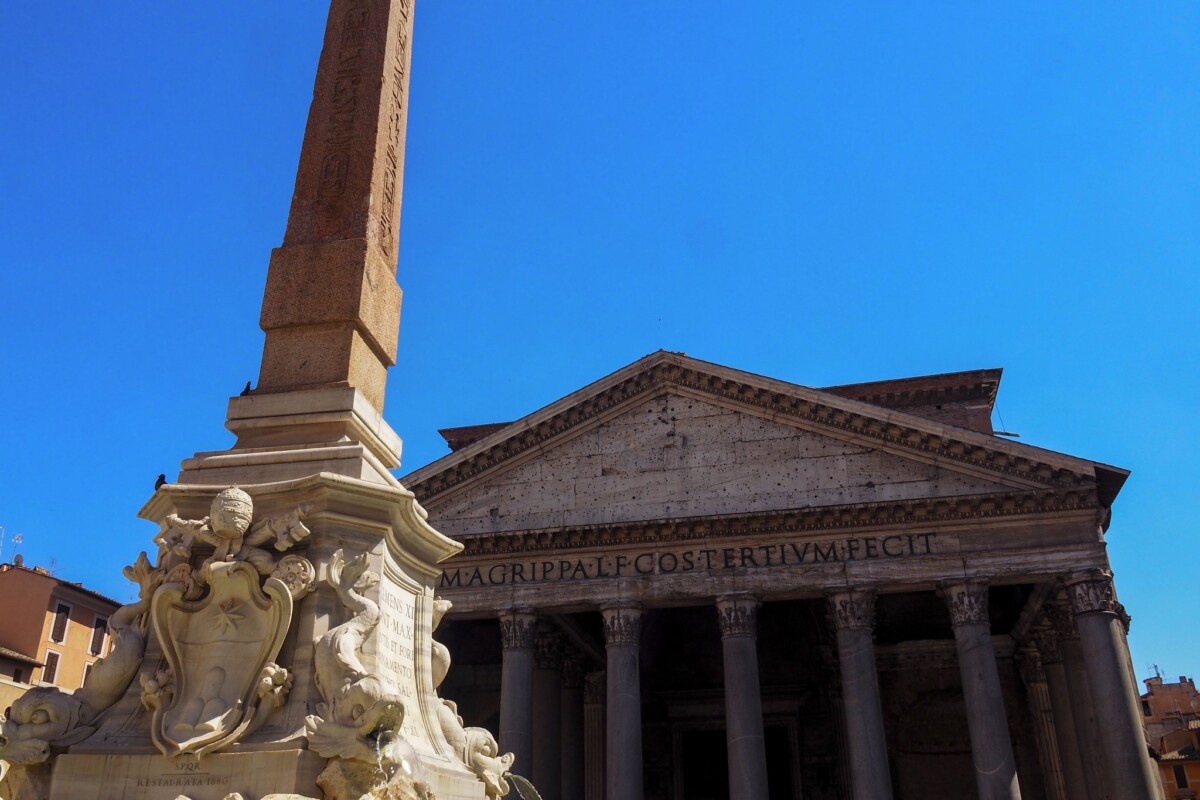
Rome’s Pantheon is the city’s clearest lesson in Roman engineering. The present building dates to Emperor Hadrian’s reign in the second century, and its unreinforced concrete dome still spans the circular interior. The central oculus is both the main source of daylight and part of the building’s drainage design.
The Pantheon became a Christian church in 609, which helped protect it when many ancient buildings were quarried or abandoned. Go shortly after opening for a quieter look at the dome, Raphael’s tomb, and the royal tombs. As of July 1, 2026, the standard admission price is €7; use the official Musei Italiani channel linked by the monument, because the Pantheon does not sell a genuine skip-the-line product.
2. Trevi Fountain: Baroque Theater in the Street

Address: Piazza di Trevi, 00187 Roma RM, Italy
Allow: 20–40 minutes
Planning priority: No ticket for the surrounding piazza; the closest basin zone has a fee.
The Trevi Fountain was built between 1732 and 1762 to designs begun by Nicola Salvi and completed by Giuseppe Pannini. Its central figure, Oceanus, appears to surge out of Palazzo Poli while water pours across rockwork into the basin. The fountain marks the end of the ancient Acqua Virgo aqueduct system.
From February 2, 2026, non-resident visitors pay €2 to enter the controlled area closest to the basin, while the surrounding streets and broader view remain accessible. The fee applies daily from 9:00 a.m. to 10:00 p.m., subject to operational changes. Visit near sunrise or late at night if you care more about seeing the sculpture than joining the coin-toss crowd.
3. Roman Forum: The Civic Center of Ancient Rome
Address: Via della Salara Vecchia, 5/6, 00186 Roma RM, Italy
Allow: 2–3 hours with Palatine Hill
Planning priority: Use the combined Colosseum, Forum, and Palatine ticket.
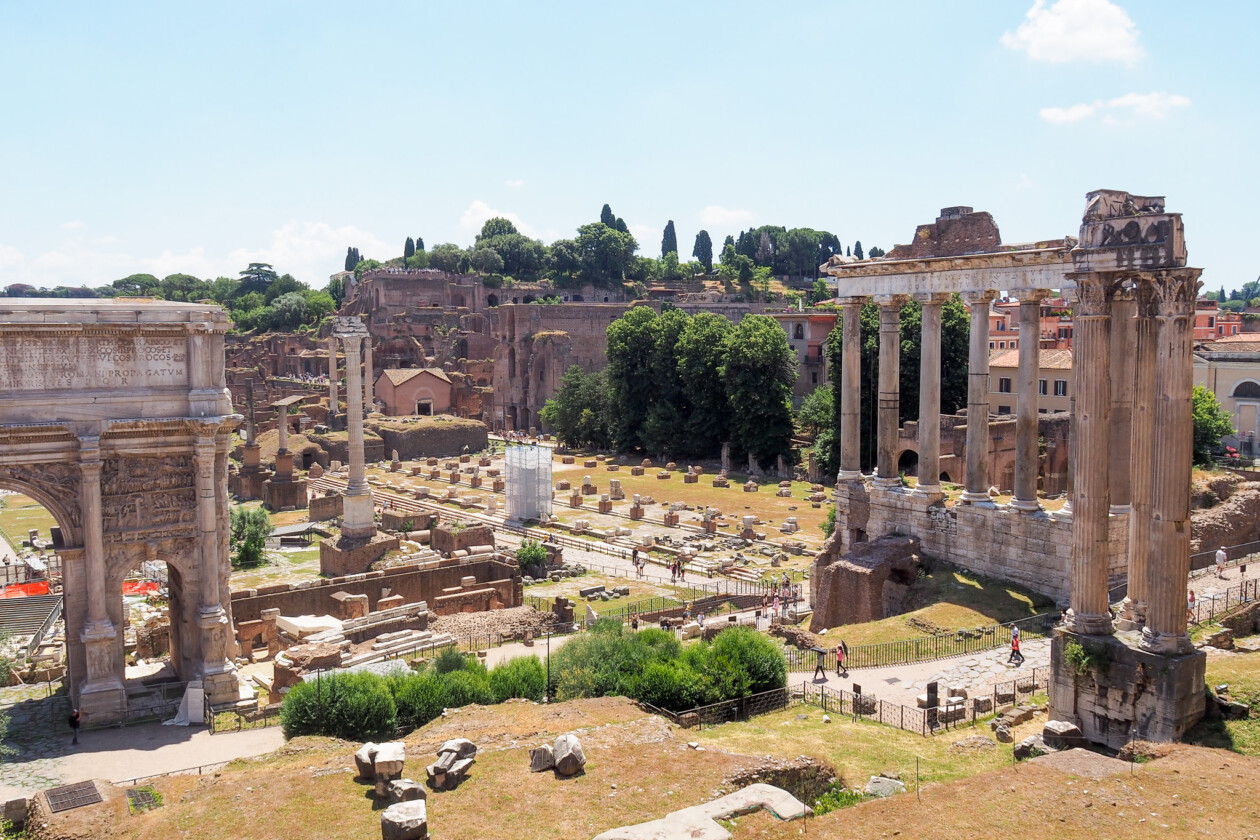
The Roman Forum was the political, religious, and commercial center of Rome for more than a millennium. Its surviving temples, basilicas, arches, and assembly spaces are easier to understand when you follow the Via Sacra and identify a few anchors: the Temple of Saturn, Curia Julia, Arch of Septimius Severus, and House of the Vestals.
This is not a quick photo stop. Allow at least two hours, add Palatine Hill if you want the best overview, and bring water and sun protection in warm weather. A guide or a strong audio guide helps because many buildings survive as foundations and fragments rather than intact rooms.
4. Colosseum: Rome’s Flavian Amphitheater
Address: Piazza del Colosseo, 1, 00184 Roma RM, Italy
Allow: 1.5–2 hours, plus the Forum
Planning priority: Timed admission is a priority reservation.
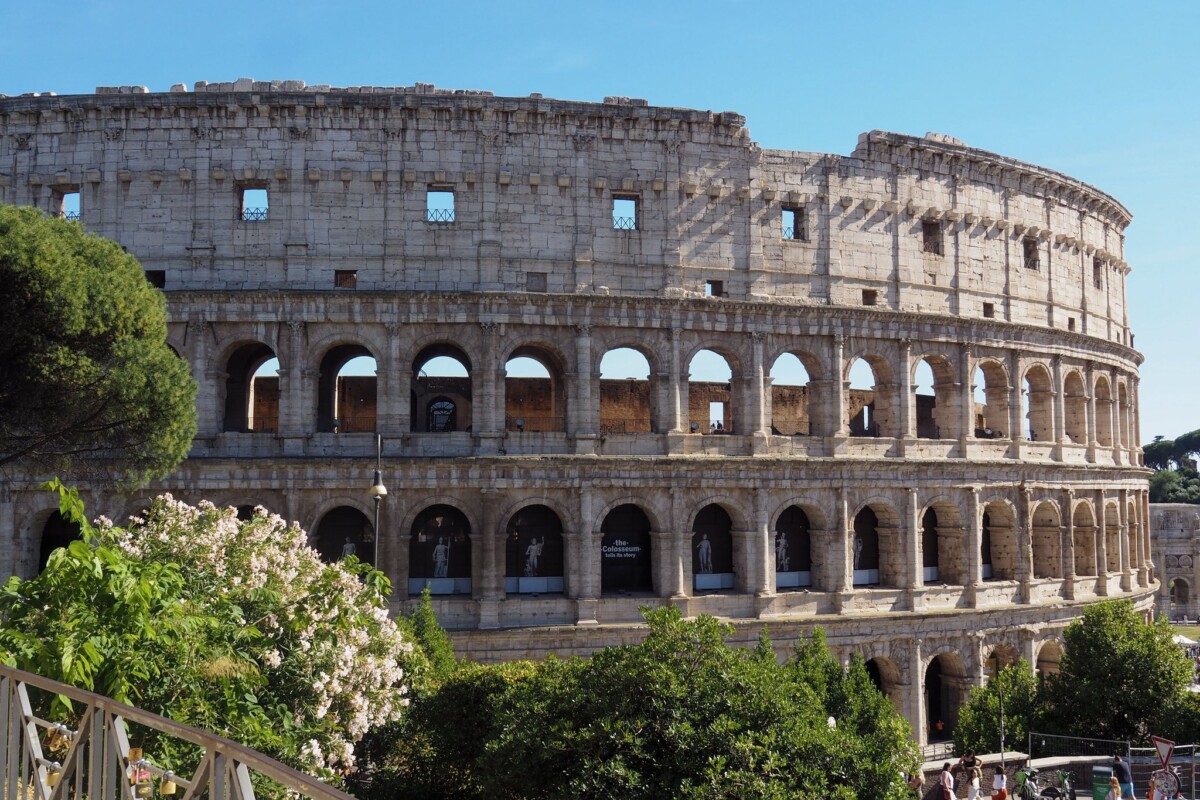
The Colosseum opened under the Flavian emperors in the first century and became Rome’s largest amphitheater. It hosted gladiatorial combat, animal hunts, executions, and other public spectacles before tens of thousands of spectators. The surviving seating tiers, tunnels, and service spaces show how carefully the building controlled movement on event days.
Choose among standard arena access, arena-floor options, and limited underground experiences, then confirm what your ticket actually includes. Official inventory is the safest starting point; a guided Colosseum, Forum, and Palatine visit can be useful when official entry is bundled with interpretation. Pair the site with this guide to the best things to do in Rome rather than treating it as an isolated stop.
5. Castel Sant’Angelo: Mausoleum, Fortress, and Museum
Address: Lungotevere Castello, 50, 00193 Roma RM, Italy
Allow: 1.5–2 hours
Planning priority: Reserve in peak season; sunset slots are appealing.
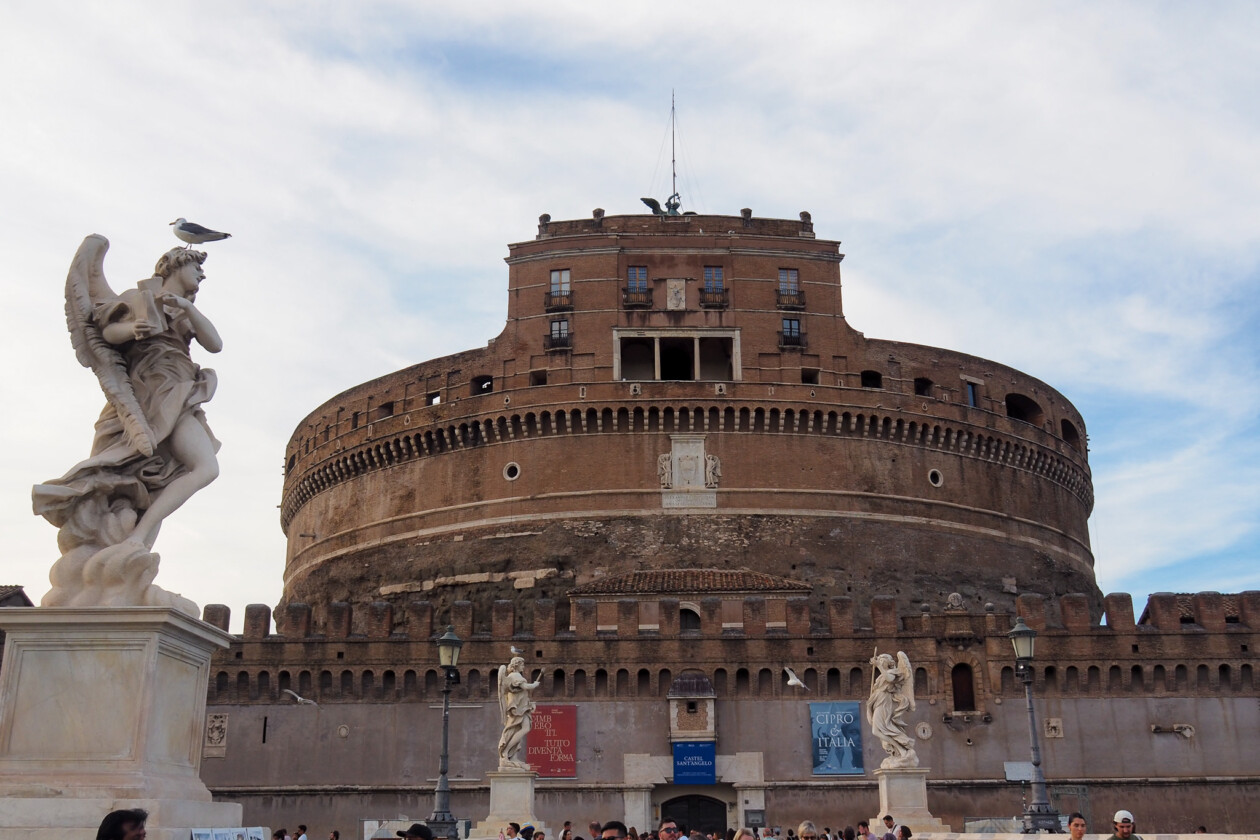
Castel Sant’Angelo began as Emperor Hadrian’s mausoleum, then became a fortress, papal refuge, prison, and museum. That sequence makes the building unusually useful for understanding how Rome reused major structures instead of simply replacing them.
The route climbs through ramps, courtyards, papal rooms, defensive terraces, and the rooftop beneath the bronze angel. The upper levels give one of central Rome’s strongest views toward St. Peter’s Basilica and the Tiber. Standard admission rose to €18 on July 1, 2026. A hosted Castel Sant’Angelo ticket may help on crowded dates, but compare the inclusions with the official ticket first.
6. Spanish Steps: Rome’s Monumental Staircase

Address: Piazza di Spagna, 00187 Roma RM, Italy
Allow: 20–45 minutes
Planning priority: No ticket; follow conduct rules.
The Spanish Steps connect Piazza di Spagna with the church of Trinità dei Monti. Built in the 1720s, the staircase unfolds in terraces and curves rather than one straight climb. Bernini’s Barcaccia fountain anchors the lower piazza.
Come early for cleaner sightlines and continue to the Pincio or Villa Borghese after the climb. Rome prohibits sitting on the steps, and eating or picnicking on the monument can draw enforcement. The appeal is the urban composition: fountain, stair, church, rooftops, and the long perspective back toward the city center.
7. Piazza del Popolo: Rome’s Grand Northern Gateway
Address: Piazza del Popolo, 00187 Roma RM, Italy
Allow: 30–60 minutes
Planning priority: No ticket; add the Pincio viewpoint.
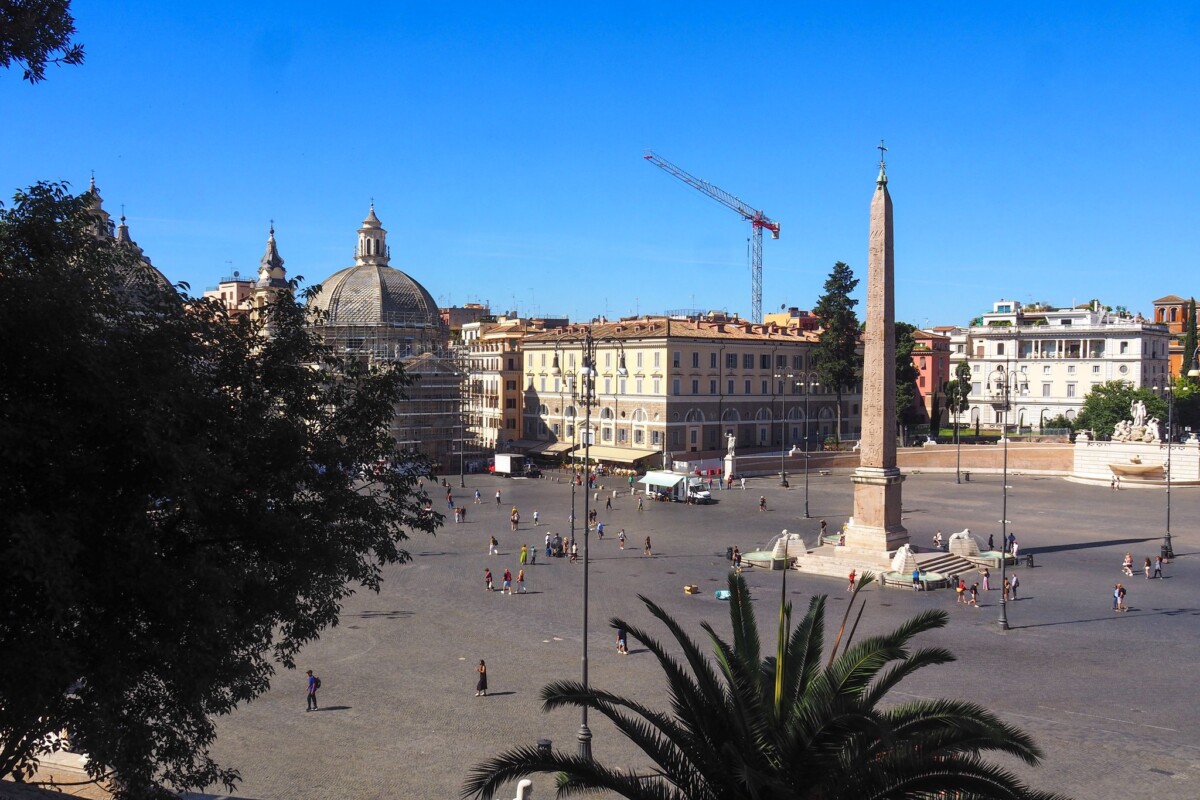
Piazza del Popolo sits inside Rome’s northern gate and opens into a formal oval shaped largely by Giuseppe Valadier in the early 19th century. The Flaminio Obelisk, twin churches, fountains, and converging streets create one of the city’s clearest pieces of urban design.
Climb the steps to the Pincio Terrace before leaving. The view explains the piazza’s geometry and reaches across domes toward St. Peter’s. From here, Via del Corso leads straight through the historic center, making the square a logical start for a walking route rather than a separate detour.
8. Victor Emmanuel II Monument: Italy’s National Memorial
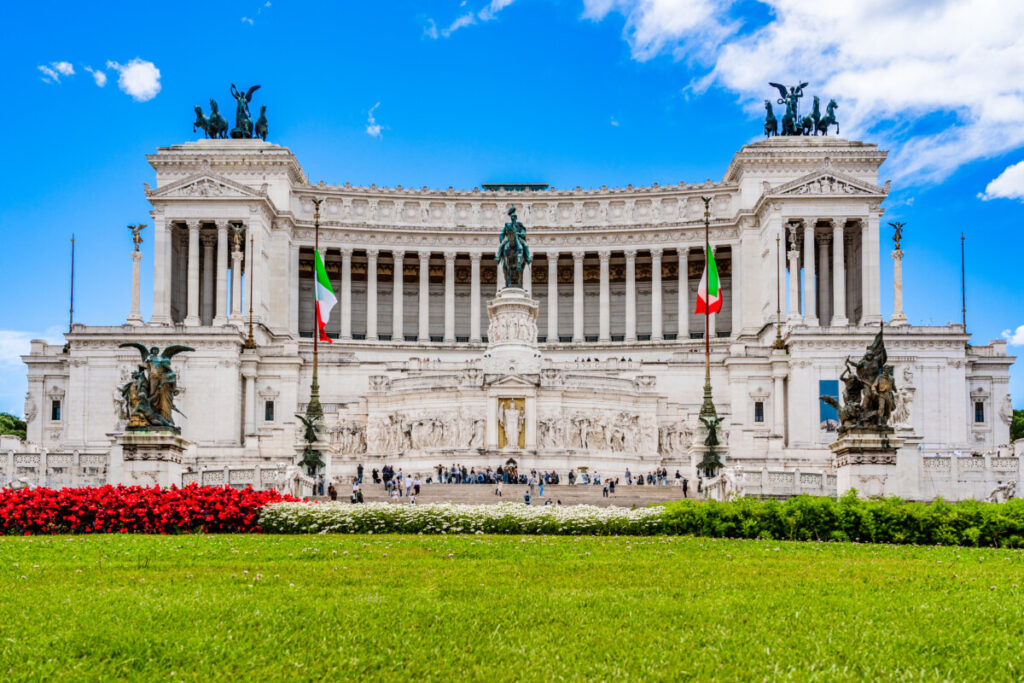
Address: Piazza Venezia, 00186 Roma RM, Italy
Allow: 45–90 minutes
Planning priority: Lower terraces are easy to access; check lift tickets separately.
The Victor Emmanuel II National Monument, often called the Vittoriano or Altare della Patria, honors the first king of a unified Italy. Conceived after his death in 1878 and inaugurated in 1911, it also contains the Tomb of the Unknown Soldier and the Eternal Flame.
Its scale can be divisive, but the monument is central to the story of modern Italy. Walk the terraces for views over Piazza Venezia, the Roman Forum, and the Capitoline area. The panoramic lift costs extra and may close in poor weather, so check the official site before building a tight schedule around it.
9. Piazza Navona: Baroque Rome on an Ancient Stadium
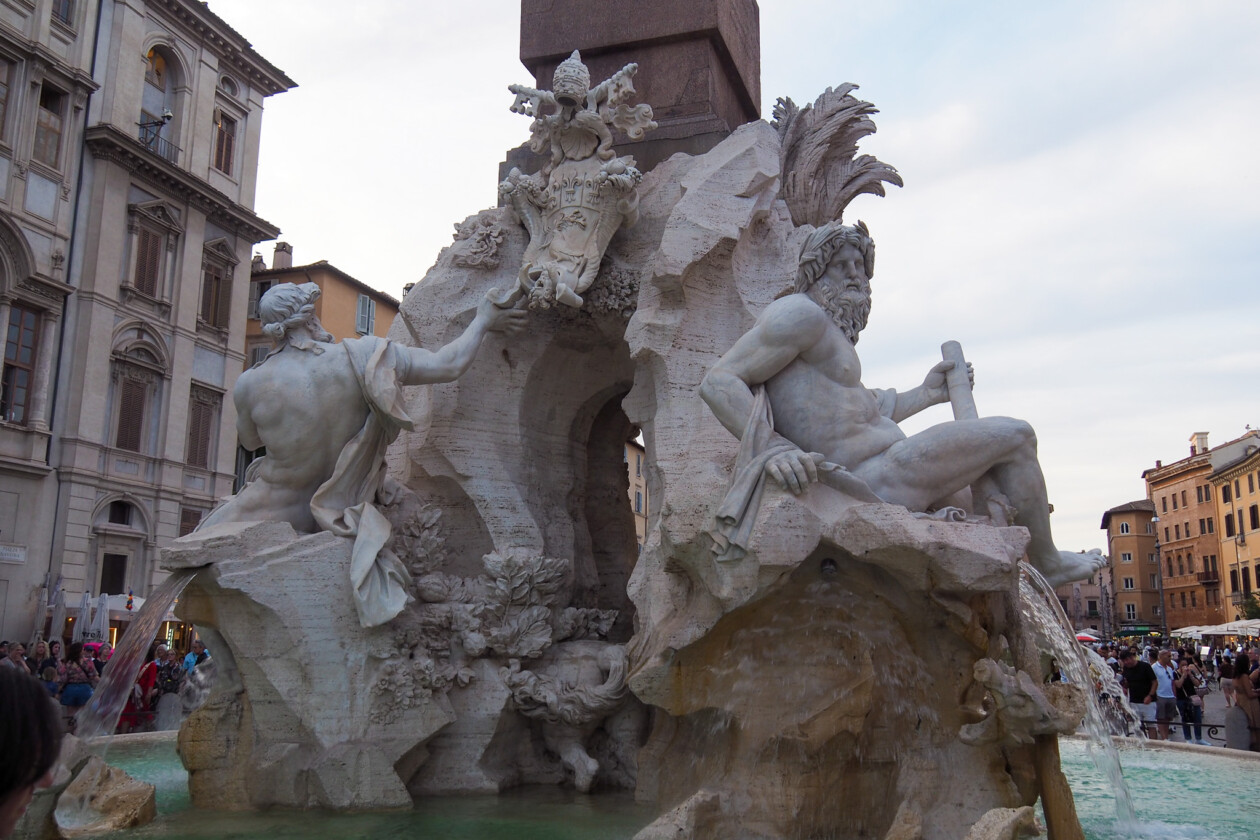
Address: Piazza Navona, 00186 Roma RM, Italy
Allow: 30–60 minutes
Planning priority: No ticket for the square; underground remains are separate.
Piazza Navona follows the long, rounded footprint of Domitian’s ancient stadium. Bernini’s Fountain of the Four Rivers occupies the center, facing Borromini’s Sant’Agnese in Agone in one of Baroque Rome’s most famous architectural exchanges.
The obelisk above Bernini’s fountain is an ancient Roman work with Egyptian-style hieroglyphs, moved here from the Circus of Maxentius. It is not a modern fake. Visit early, then walk to the Pantheon and Campo de’ Fiori; these sights are close enough to cover in one compact route.
10. Arch of Constantine: Victory Monument and Imperial Propaganda
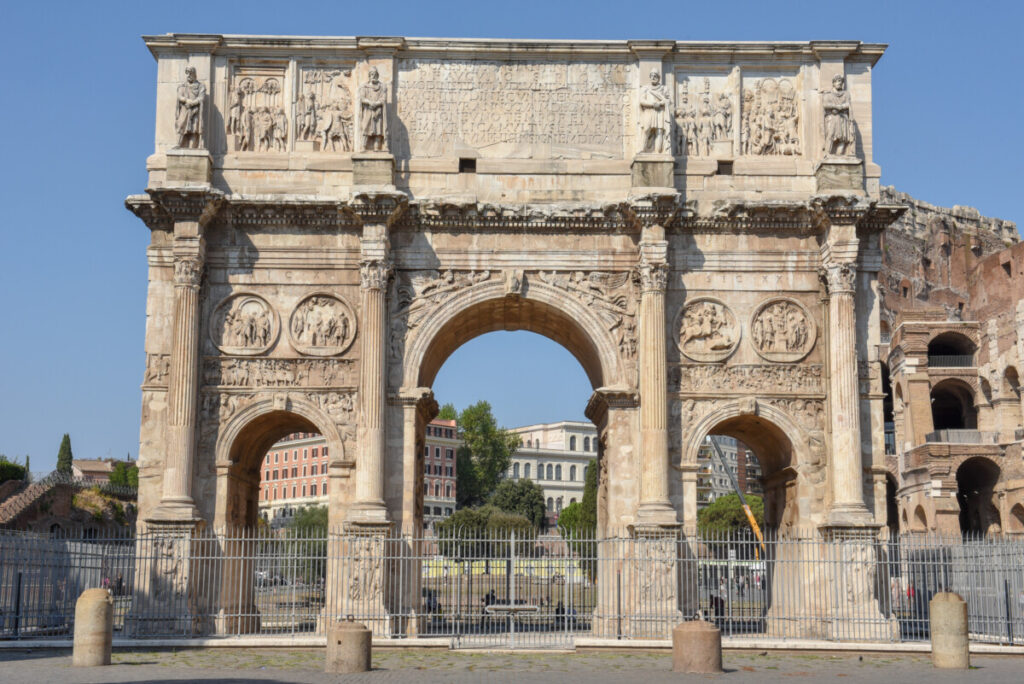
Address: Via di San Gregorio, 00186 Roma RM, Italy
Allow: 15–25 minutes
Planning priority: No separate ticket; view it beside the Colosseum.
The Arch of Constantine celebrates Constantine’s victory over Maxentius at the Battle of the Milvian Bridge on October 28, 312. The Senate dedicated the arch on July 25, 315, during the emperor’s tenth year of rule.
Much of the decoration was reused from monuments of Trajan, Hadrian, and Marcus Aurelius, then recut to support Constantine’s political message. The battle strengthened Constantine’s rule and changed the position of Christianity, but Christianity did not become the Roman Empire’s official religion until 380. Compare the form with Paris’s Arc de Triomphe to see how later states borrowed Rome’s visual language.
11. Sistine Chapel: Michelangelo’s Ceiling and the Papal Conclave

Address: Viale Vaticano, 00165 Vatican City
Allow: Part of a 3–4 hour Vatican Museums visit
Planning priority: Reserve Vatican Museums admission well ahead.
The Sistine Chapel is inside Vatican City, a sovereign state enclosed by Rome. Its walls include work by Botticelli, Perugino, Ghirlandaio, and other Renaissance painters, while Michelangelo painted the ceiling and later the Last Judgment. The chapel is also the setting for papal conclaves.
You reach it near the end of the standard Vatican Museums route, not through a stand-alone street entrance. The Vatican Museums’ visitor rules prohibit photography and filming inside the chapel and require silence; dress must cover shoulders and knees. A timed Vatican Museums and Sistine Chapel ticket can simplify planning, but compare it with official inventory and avoid sellers that imply a private chapel entrance.
12. Vatican Museums: A Collection Built Across Centuries

Address: Viale Vaticano, 00165 Vatican City
Allow: 3–5 hours
Planning priority: Book an official time slot; morning and late-day slots are calmer.
The Vatican Museums hold collections assembled by successive popes, including classical sculpture, Renaissance rooms, maps, tapestries, and modern religious art. The Raphael Rooms, Gallery of Maps, Laocoön, and Sistine Chapel are the usual anchors, but the complex is much larger than a single highlights route.
Decide in advance whether you want a focused three-hour visit or a longer museum day. Security, one-way circulation, and crowds make backtracking difficult. Download the official map, carry only what you need, and leave enough energy for the final rooms rather than racing to the Sistine Chapel from the entrance.
13. Villa d’Este: Renaissance Gardens Powered by Water

Address: Piazza Trento, 5, 00019 Tivoli RM, Italy
Allow: 2–3 hours, plus transport
Planning priority: Check fountain operations and Monday hours.
Villa d’Este in Tivoli is a 16th-century villa and garden complex created for Cardinal Ippolito II d’Este. Its terraces, grottoes, and hundreds of water features shaped garden design across Europe and earned UNESCO World Heritage status.
The steep garden is the main event, so wear shoes with grip and plan for many stairs. On Mondays the site normally opens in the afternoon, and fountains may be suspended during severe weather or water-management work. A Tivoli day trip combining Villa d’Este and Hadrian’s Villa is practical for travelers who do not want to coordinate regional trains and local buses.
Milan
14. Milan Cathedral: A Gothic Project Six Centuries in the Making

Address: Piazza del Duomo, 20122 Milano MI, Italy
Allow: 2–3 hours with rooftop terraces
Planning priority: Reserve rooftop access, especially for lift tickets.
Construction of Milan Cathedral began in 1386 and continued through many campaigns over roughly six centuries. Its marble façade, dense forest of spires, stained glass, and rooftop terraces make it the defining building in central Milan.
The best visit combines the cathedral interior, archaeological area, museum, and terraces. Rooftop tickets vary by stairs or lift, and religious dress rules apply. A Duomo and terraces ticket may be convenient, but confirm whether it covers the lift, museum, and timed terrace entrance. The surrounding district is the natural starting point for a broader Milan travel itinerary.
15. The Last Supper: Leonardo’s Fragile Milan Masterpiece

Address: Piazza di Santa Maria delle Grazie, 20123 Milano MI, Italy
Allow: 15 minutes inside; allow 45–60 minutes total
Planning priority: Reservations are compulsory and released in batches.
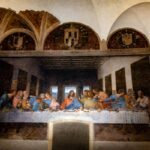
Leonardo da Vinci painted The Last Supper on the refectory wall of Santa Maria delle Grazie in the 1490s. His experimental technique, humidity, war damage, and repeated restoration make the mural exceptionally fragile, which is why access is tightly controlled.
All visitors need a reservation. Visits last 15 minutes, with a maximum of 40 people in each time slot, and ticket releases occur in scheduled batches. Arrive early enough for ticket checks; a missed slot is difficult to replace. When official tickets sell out, a guided Last Supper experience may provide legitimate access, but verify the exact museum time before purchasing.
16. Galleria Vittorio Emanuele II: Milan’s Historic Shopping Arcade
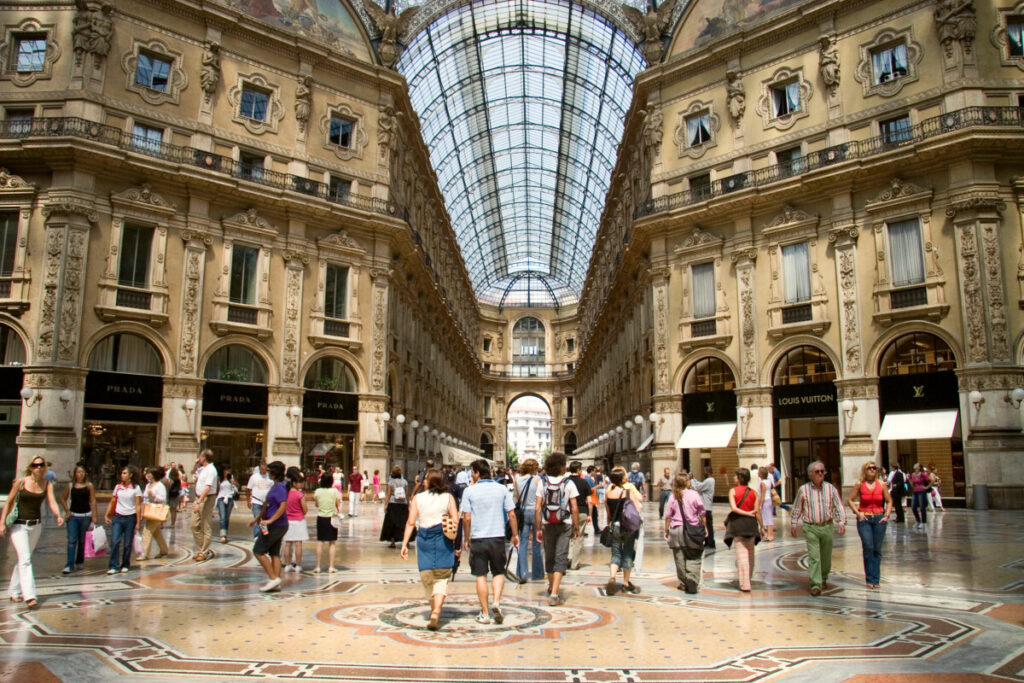
Address: Piazza del Duomo, 20123 Milano MI, Italy
Allow: 20–45 minutes
Planning priority: Free to enter; shops and rooftop experiences vary.
Galleria Vittorio Emanuele II links Piazza del Duomo with Piazza della Scala under a monumental iron-and-glass roof. Built in the 19th century, it is one of Europe’s oldest purpose-built shopping arcades and an important model for later covered commercial passages.
Look up as much as you look at the storefronts. The central octagon, mosaics, lunettes, and glass dome are the architectural payoff. The arcade is open to pedestrians without a ticket, so it works well between the Duomo, La Scala, and the Brera district even when you have no interest in luxury shopping.
Venice
17. Grand Canal: Venice’s Main Waterway

Location: Venice, Italy
Allow: 45–75 minutes by vaporetto
Planning priority: Public transport is the practical first choice; gondolas are optional.
The Grand Canal curves through Venice past palaces, warehouses, churches, and four major bridges. Because most façades were designed to face the water, a boat ride reveals the city’s architecture more clearly than a walk along isolated stretches.
For a first overview, ride a public vaporetto and use the official Venice transport information to choose the right line and ticket. A gondola is a private experience rather than essential transport; compare the posted official tariff before boarding. A prebooked Grand Canal gondola ride can reduce negotiation, but check route length and shared-versus-private terms.
18. Rialto Bridge: Venice’s Oldest Grand Canal Crossing
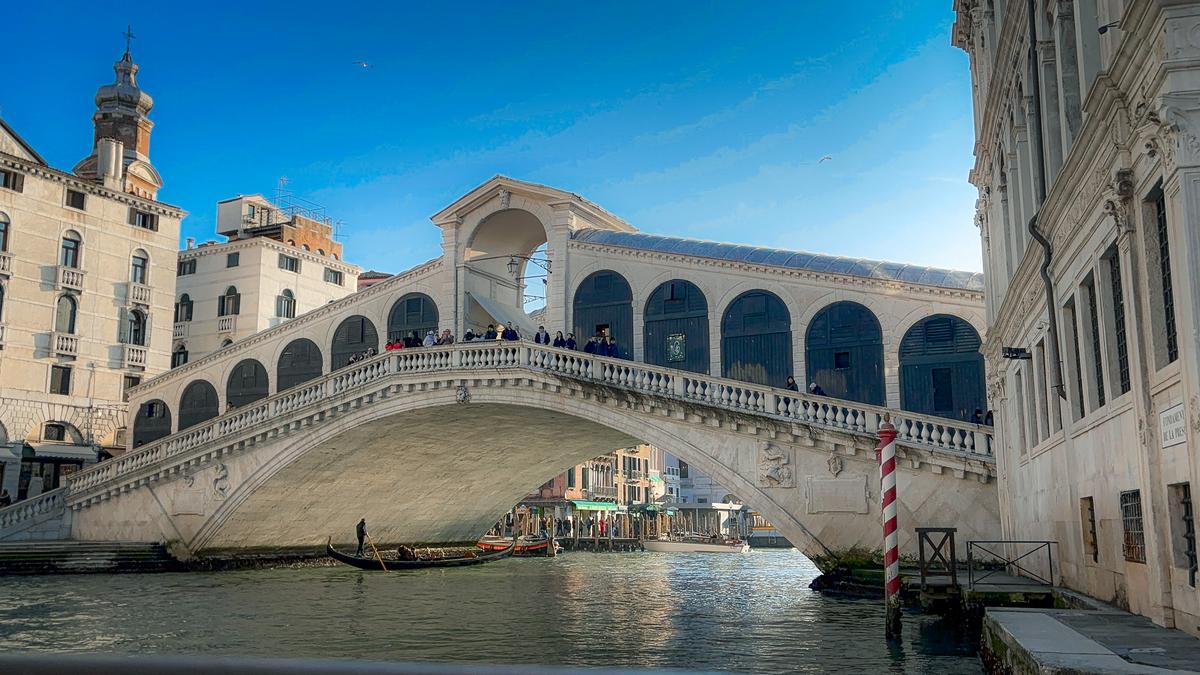
Address: Sestiere San Polo, 30125 Venezia VE, Italy
Allow: 20–40 minutes
Planning priority: No ticket; visit early for space on the viewpoints.
The stone Rialto Bridge was built between 1588 and 1591, replacing earlier wooden crossings. It remained the only bridge across the Grand Canal for centuries and still carries rows of small shops over a single broad arch.
The bridge is busiest from late morning through early evening. Come near sunrise for cleaner views, then walk through the Rialto market area. For a full neighborhood route, use this guide to the best things to do in Venice instead of stopping only at the bridge.
19. St. Mark’s Basilica: Venice’s Gold-Mosaic Cathedral

Address: Piazza San Marco, 30124 Venezia VE, Italy
Allow: 60–90 minutes with museum or Pala d’Oro
Planning priority: Use named tickets and carry matching ID.
The present St. Mark’s Basilica was begun in 1063 and consecrated in 1094, then enriched for centuries. Its domes, marble revetments, and gold mosaics show Venice’s commercial and political connections with Byzantium and the eastern Mediterranean.
Basic entry, the Pala d’Oro, museum, and terrace can involve different tickets. Official online tickets are named, and staff may request ID. Dress for a church and expect bag restrictions. A small-group St. Mark’s Basilica and Doge’s Palace tour is most useful when it provides clear timed access and interpretation rather than vague priority-entry language.
20. Piazza San Marco: Venice’s Ceremonial Center
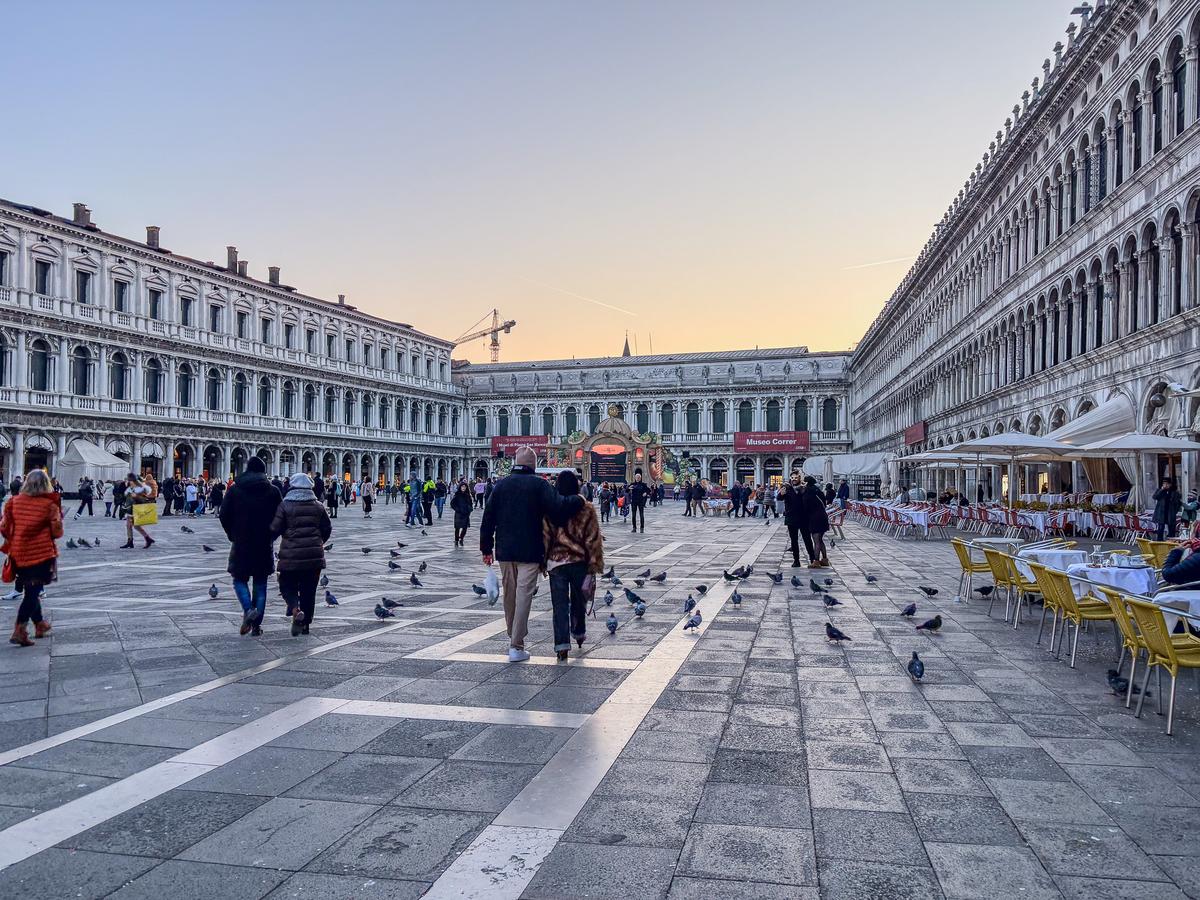
Address: Piazza San Marco, 30124 Venezia VE, Italy
Allow: 45–90 minutes, longer with surrounding sights
Planning priority: The square is free; surrounding monuments require tickets.
Piazza San Marco brings together St. Mark’s Basilica, the Campanile, Doge’s Palace, the Procuratie, and the lagoon-facing Piazzetta. The space was designed for civic ceremony and still gives the clearest single view of Venice’s political and religious center.
Check tide forecasts during acqua alta periods and follow the city’s responsible visitor guidance; feeding pigeons, picnicking on monuments, and obstructing circulation can bring fines. Venice’s 2026 day-visitor Access Fee applies only on specified dates and hours through July 26, so verify the official Access Fee calendar rather than relying on an old blanket statement.
Florence and Bologna
21. Uffizi Gallery: Florence’s Essential Renaissance Collection

Address: Piazzale degli Uffizi, 6, 50122 Firenze FI, Italy
Allow: 2.5–4 hours
Planning priority: Reserve a timed ticket; bring ID if required by the ticket.
The Uffizi Galleries occupy offices built for the Medici government and now hold one of the world’s strongest Renaissance collections. Botticelli, Leonardo, Michelangelo, Raphael, Titian, and Caravaggio appear along a route that also frames views of the Arno and Palazzo Vecchio.
A targeted visit is better than trying to absorb every room. Pick a dozen works, allow time for the Botticelli rooms, and take breaks before fatigue flattens the experience. The ViaTravelers guide to the Uffizi Gallery provides more context. If official slots are gone, a reserved-entry Uffizi ticket can be a reasonable alternative when the time and cancellation terms are explicit.
22. Loggia dei Lanzi: Florence’s Free Open-Air Sculpture Gallery

Address: Piazza della Signoria, 50122 Firenze FI, Italy
Allow: 20–40 minutes
Planning priority: Free and open from the square.
The 14th-century Loggia dei Lanzi was built for public ceremonies and later became an outdoor display space for sculpture. Its broad arches shelter works including Cellini’s Perseus and Giambologna’s Rape of the Sabine Women.
Because the loggia stands beside Palazzo Vecchio and the Uffizi, it is easy to rush through. Slow down long enough to walk around the sculptures and compare how they frame movement from multiple angles. Use the ViaTravelers guide to Piazza della Signoria to connect the loggia with the wider civic square.
23. Florence Cathedral: Brunelleschi’s Dome and the Duomo Complex

Address: Piazza del Duomo, 50122 Firenze FI, Italy
Allow: 2–4 hours across the complex
Planning priority: Dome climb is timed, named, and capacity-limited.
The Cathedral of Santa Maria del Fiore, Florence’s Duomo, was begun in 1296 and crowned in the 15th century by Brunelleschi’s vast masonry dome. The cathedral, Giotto’s Campanile, Baptistery, museum, and ancient Santa Reparata site form one connected complex rather than one short interior visit.
The cathedral nave is generally free to enter, while the dome and other monuments use passes. The Brunelleschi Pass includes a timed dome slot; the climb has 463 steps and no lift, and named tickets require ID. A Florence Duomo and dome-climb package can help when it accurately states which monuments and time slots are included.
24. Ponte Vecchio: Florence’s Medieval Shop-Lined Bridge

Address: Ponte Vecchio, 50125 Firenze FI, Italy
Allow: 20–45 minutes
Planning priority: No ticket to cross; the Vasari Corridor is separate.
The current Ponte Vecchio dates to 1345. Goldsmiths and jewelers have occupied its shops since the late 16th century, and the enclosed Vasari Corridor passes above the eastern side. It was the only bridge in central Florence left intact during the German retreat in 1944.
Cross early or late to avoid the heaviest pedestrian flow. The bridge itself offers limited views of its own profile; for the classic photograph, stand on Ponte Santa Trinita or along the riverbank. Sunset is attractive, but the best light and the quietest crossing do not always coincide.
25. Piazza Maggiore: Bologna’s Civic Heart

Address: Piazza Maggiore, 40124 Bologna BO, Italy
Allow: 45–90 minutes
Planning priority: The square is free; individual buildings set their own access.
Piazza Maggiore has been Bologna’s civic center since the Middle Ages. Palazzo d’Accursio, Palazzo del Podestà, Palazzo dei Notai, the Fountain of Neptune, and the Basilica of San Petronio define the square and make several centuries of city government visible at once.
San Petronio’s unfinished marble-and-brick façade is intentional evidence of a project that changed over time, not neglected maintenance. The basilica began in 1390 and remains one of Europe’s largest churches. Use the square as the start of a Bologna walk through the Quadrilatero food district and the city’s covered porticoes.
Naples and the Amalfi Coast
26. Pompeii: A Roman City Preserved by Vesuvius

Address: Via Villa dei Misteri, 2, 80045 Pompei NA, Italy
Allow: 4–6 hours
Planning priority: Buy through the official seller and check the daily open-building list.
Pompeii Archaeological Park preserves streets, houses, shops, baths, temples, theaters, graffiti, and gardens buried by the eruption of Vesuvius in 79 CE. The famous body casts were created by filling voids left in hardened ash after organic remains decomposed; they are not bodies preserved intact in ash.
Pompeii is large, uneven, and exposed. Download the official map, choose a route before entering, and bring water, a hat, and stable shoes. A half-day covers highlights, while a full day allows houses away from the busiest axes. This guide to Pompeii tours from Naples compares the logistics of independent travel and guided visits.
27. Amalfi Coast: A UNESCO Cultural Landscape

Location: Province of Salerno, Campania, Italy
Allow: 2–4 nights for a useful first trip
Planning priority: Reserve lodging and transport early for late spring through early fall.
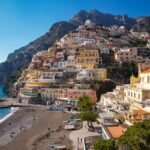
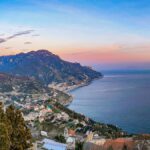
The Amalfi Coast UNESCO World Heritage Site is a cultural landscape shaped by steep terrain, coastal towns, terraced agriculture, churches, villas, and historic routes. Positano is the best-known town, but Amalfi, Ravello, Atrani, Maiori, Minori, and Praiano each offer a different relationship to the coast.
Do not treat the coast as one roadside viewpoint. Base yourself for at least two nights, then combine ferries, buses, and walking where seasonal schedules allow. Driving gives flexibility but also brings narrow roads, parking scarcity, and traffic. Start with the best places to visit on the Amalfi Coast or use this two-day Amalfi Coast itinerary for a compact plan.
More Famous Landmarks in Italy
28. Lake Como: Alpine Scenery, Ferries, and Historic Villas

Location: Lombardy, Italy
Allow: 2–3 days
Planning priority: Check official ferry timetables before fixing hotel-to-hotel plans.
Lake Como’s landmark status comes from the whole setting: steep mountains, long branches of water, ferry-linked towns, villa gardens, and historic waterfronts. Bellagio, Varenna, Menaggio, Tremezzo, and Como make practical first-trip anchors, but no single town represents the entire lake.
Milan is the easiest major-city gateway. Use the official Lake Como ferry timetables because seasonal routes and frequencies change, and do not assume every town has direct service all day. The ViaTravelers guide to places to visit in Northern Italy helps combine the lake with Milan, Bergamo, Verona, or the Alps.
29. Leaning Tower of Pisa: The Bell Tower That Changed Its Own Design

Address: Piazza del Duomo, 56126 Pisa PI, Italy
Allow: 2–3 hours for the complex
Planning priority: Tower tickets are timed and limited; reserve ahead.
The Leaning Tower is the freestanding bell tower of Pisa Cathedral. Construction began in 1173, and the structure started tilting as its shallow foundation settled into soft ground. Builders adjusted later levels as work continued, leaving subtle changes in the tower’s alignment.
The official Piazza dei Miracoli ticket system sells limited, timed tower entries. The climb is not suitable for every visitor, and children face age restrictions. Even without climbing, allow time for the cathedral, baptistery, Camposanto, and museum; the ensemble explains why the square is more important than the novelty photograph alone.
30. Piazza del Campo: Siena’s Shell-Shaped Civic Square

Address: Piazza del Campo, 53100 Siena SI, Italy
Allow: 45–90 minutes
Planning priority: The square is free; Palio days have strict access controls.
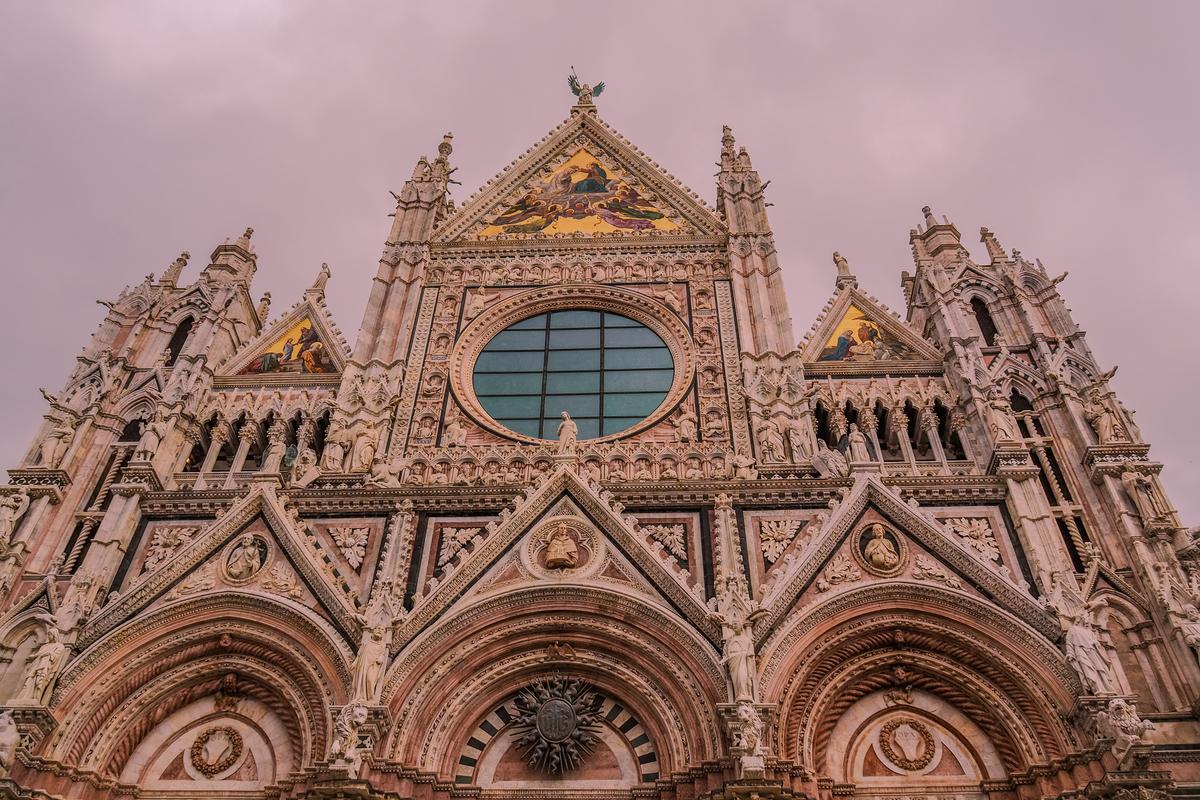
Piazza del Campo is Siena’s main civic square, paved in brick and divided into nine sections that refer to the medieval Council of Nine. Palazzo Pubblico, Torre del Mangia, and Fonte Gaia define the sloping, shell-shaped space. Siena is a provincial capital and one of Tuscany’s major historic cities; Florence is the regional capital.
The Palio di Siena is traditionally run on July 2 and August 16. Race days bring barriers, controlled entry, crowding, heat, and long standing periods, so they require a different plan from a normal sightseeing day. Outside the Palio, use the square as the center of a wider Tuscany itinerary that includes Siena Cathedral and the quieter contrade streets.
Which Italy Landmarks Should You Prioritize?
| Travel goal | Prioritize | Why |
|---|---|---|
| First trip with 7 days | Colosseum and Forum, Pantheon, Vatican Museums, Florence Duomo, Uffizi, Grand Canal, St. Mark’s Basilica | The clearest three-city introduction to ancient Rome, Renaissance Florence, and maritime Venice. |
| Ancient history | Roman Forum, Colosseum, Pantheon, Pompeii, Arch of Constantine | These sites show urban life, engineering, religion, entertainment, and imperial propaganda. |
| Art and architecture | Vatican Museums, Uffizi, Florence Duomo, Milan Duomo, The Last Supper, St. Mark’s Basilica | Reserve the major museums and controlled-entry works before planning free sights. |
| Landscapes and slower travel | Amalfi Coast, Lake Como, Villa d’Este | These reward overnight stays or a dedicated day rather than a rushed checklist. |
| Mostly free sightseeing | Spanish Steps, Piazza Navona, Piazza del Popolo, Piazza San Marco, Rialto Bridge, Ponte Vecchio, Piazza Maggiore, Piazza del Campo | Budget for transport and optional interiors; public spaces still require respectful conduct. |
Other Italian Landmarks Worth Adding
A list of 30 cannot represent every region. Siena Cathedral, St. Peter’s Basilica, the Doge’s Palace, Valley of the Temples, Matera’s Sassi, Mount Etna, Cinque Terre, Verona Arena, Ravenna’s mosaics, and the trulli of Alberobello are strong additions. Choose them because they fit your route, not because a longer checklist automatically makes a better trip.
For coast-focused travel, compare the best beaches in Italy. For bookable experiences, use the ViaTravelers guide to the best tours in Italy after deciding which landmarks genuinely need interpretation or transport help.
Frequently Asked Questions About Italy’s Famous Landmarks
What is the most famous landmark in Italy?
The Colosseum is the strongest single answer because it is globally recognizable and central to the history of ancient Rome. The Leaning Tower of Pisa, Florence Cathedral, Trevi Fountain, and St. Mark’s Basilica are close alternatives, so the answer is partly subjective.
Which landmarks in Italy need advance tickets?
Prioritize advance reservations for The Last Supper, the Colosseum, Vatican Museums and Sistine Chapel, Uffizi Gallery, Florence dome climb, and Leaning Tower of Pisa. Milan Cathedral terraces, St. Mark’s Basilica, Pantheon, and Pompeii can also sell out or develop long lines in busy periods.
How many days do I need to see Italy’s main landmarks?
Seven days is enough for a focused Rome, Florence, and Venice route. Ten to fourteen days allows Milan, Pompeii, Lake Como, Bologna, Pisa, or Siena without turning every day into a transfer. The Amalfi Coast works best with at least two overnight stays.
Are the Vatican Museums and Sistine Chapel in Italy?
No. They are in Vatican City, an independent sovereign state enclosed by Rome. They are included in most Italy landmark itineraries because travelers normally visit them while staying in Rome.
Which famous Italian landmarks are free to visit?
Major free sights include the Spanish Steps, Piazza Navona, Piazza del Popolo, Piazza San Marco, Rialto Bridge, Ponte Vecchio, Piazza Maggiore, Piazza del Campo, the exterior of the Colosseum, and many church exteriors. Individual interiors, towers, museums, and controlled visitor zones may charge admission.
What is the best time to visit Italian landmarks with fewer crowds?
November through March is usually quieter outside Christmas, New Year, Carnival, and major religious holidays. April, May, late September, and October balance milder weather with broader seasonal services. At famous city sights, opening time and the final entry period are usually calmer than midday.
Do Venice and the Trevi Fountain charge entry fees?
The Trevi Fountain charges €2 for the controlled area closest to the basin, while the wider piazza remains accessible. Venice’s 2026 Access Fee applies only on specified day-visit dates and hours through July 26, 2026. Both systems can change, so verify the official pages before travel.
Plan the Landmarks Around the Trip You Actually Want
Italy’s headline sights justify their reputations, but the best itinerary is selective. Book the scarce entries first, group nearby landmarks into walkable days, leave open time for meals and ordinary streets, and resist adding a distant city for one photograph. A well-paced route through eight major sites will usually feel richer than a rushed route through twenty.
Continue with the ViaTravelers guide to planning a trip to Italy, then choose regional guides only after your number of nights and transport pattern are fixed.