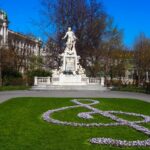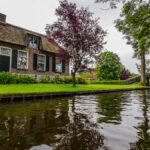
Munich is one of Europe’s strongest bases for regional travel. Direct trains reach Alpine towns, medieval cities, Austrian cultural centers, lakes, castles, and major historical sites within a few hours.
Munich is the obvious base, but the day trips below are only part of what is within reach – our wider guide to places to visit in southern Germany covers the Black Forest and Lake Constance too.
I’ve visited Munich several times and traveled through much of Bavaria. The most useful distinction is not which destination looks best in photographs. It is which trip fits your available hours, preferred transport, weather, and tolerance for transfers.
Neuschwanstein is the classic castle excursion, Salzburg is the strongest international city trip, Augsburg is the easiest full city to reach, and Tegernsee is one of the simplest nature escapes. Dachau Concentration Camp Memorial Site is the most historically important journey on this list, but it should be approached as a place of remembrance and education rather than conventional sightseeing.
Last fact-checked: August 4, 2026. Admission prices, timetables, mountain operations, and temporary closures can change. Confirm the final route and attraction status before departure.
The best Munich day trips for different travelers
- Best iconic castle: Neuschwanstein Castle
- Best international city: Salzburg
- Easiest full city by train: Augsburg
- Best flexible Alpine town: Garmisch-Partenkirchen
- Best mountain summit: Zugspitze on a clear day
- Best easy lake trip: Tegernsee
- Best medieval city: Regensburg
- Most important historical visit: Dachau Concentration Camp Memorial Site
- Better with an overnight stay: Rothenburg ob der Tauber, Bamberg, or Passau
Compare the 16 best day trips from Munich
Times below are typical one-way estimates from central Munich. They do not include every transfer, attraction queue, or uphill walk.
| Destination | Typical one-way travel | Best transport | Best for | Main caveat |
|---|---|---|---|---|
| Neuschwanstein | About 2-2.75 hours | Train and bus or tour | Castles and Alpine scenery | Timed entry and a long uphill approach |
| Dachau Memorial | About 40-50 minutes | S-Bahn and bus | Modern history and remembrance | Emotionally demanding visit |
| Salzburg | About 1.5-2 hours | Direct train | Architecture, music, and museums | Bayern Ticket does not cover Salzburg city transit |
| Nuremberg | About 1 hour by ICE | ICE or regional train | Medieval and 20th-century history | Too many major sites for one deep visit |
| Garmisch-Partenkirchen | About 1.5 hours | Train | Gorges, hiking, and Alpine streets | Weather affects outdoor plans |
| Rothenburg ob der Tauber | About 2.5-3.5 hours | Car, tour, or several trains | Medieval walls and streets | Very long day from Munich |
| Linderhof Palace | About 1.5-2 hours by car | Car or tour | Ludwig II and palace interiors | Public transport is slow |
| Chiemsee | About 1 hour to Prien | Train and boat | Island palaces and lake scenery | Boat routes vary by season and water level |
| Berchtesgaden | About 2.25-3 hours | Car or train and bus | Konigssee and Alpine history | Attractions are geographically dispersed |
| Augsburg | About 30-45 minutes | Train | Urban history and easy logistics | Several landmarks have current access restrictions |
| Innsbruck | About 1.75-2 hours | Direct train | City-and-mountain combination | Not covered by the Bayern Ticket |
| Regensburg | About 1.5 hours | Train | UNESCO medieval architecture | Popular center at weekends |
| Bamberg | About 1.75-2.25 hours | Train | Baroque streets and beer culture | Five hours of round-trip travel is possible |
| Zugspitze | About 1.5 hours to Garmisch, then ascent | Train and mountain railway | Germany’s highest summit | Expensive and highly weather-dependent |
| Tegernsee | About 1 hour | Train | Relaxed lake day | Boat frequency is seasonal |
| Passau | About 2.25-2.75 hours | Train | Baroque architecture and rivers | Better overnight for slower travelers |
1. Neuschwanstein Castle

- Typical travel time: 2-2.75 hours each way by regional train and bus
- Best transport: Train and bus, rental car, or organized tour
- Allow: 9-11 hours
- Best for: First-time visitors prioritizing one major castle
Neuschwanstein remains the most recognizable excursion from Munich. It sits above Hohenschwangau near Fussen, with views across the foothills, Alpsee, and the surrounding mountains. In 2025, UNESCO inscribed Neuschwanstein with Linderhof, Herrenchiemsee, and the King’s House on Schachen as the Palaces of King Ludwig II of Bavaria.
The interior is accessible only on a timed guided tour lasting roughly 30 minutes. Regular adult admission is 21 in 2026, and the official online shop charges a 2.50 reservation fee. Check the rail itinerary first, then reserve through the official Neuschwanstein ticket information. Third-party transport packages do not always include castle admission.
Independent travelers take a train to Fussen and a local bus to Hohenschwangau. From the ticket center, the castle requires a steep walk, a weather-dependent shuttle, or a horse-drawn carriage followed by a shorter uphill walk. Access to Marienbrucke and nearby trails can close because of snow, ice, maintenance, or rockfall risk.
Planning judgment: Treat Neuschwanstein as the day’s main objective. Combining it with Linderhof is practical only with a carefully scheduled car route or organized tour, and even then the visit will feel compressed.
Bookable Neuschwanstein Day Tour Options
If you prefer to bypass train and bus transfers between Munich, Hohenschwangau, and Ettal, organized day tours provide seamless round-trip coach travel directly from central Munich:
- Best Overall (Small Group Coach): The Neuschwanstein & Linderhof Royal Castles Day Tour combines both palaces in a single full-day itinerary with an air-conditioned coach and guide.
- Premium Private Excursion: For personalized timing and luxury transfers, the private Royal Fairytale Day Tour from Munich accommodates small groups or families with flexible pacing.
2. Dachau Concentration Camp Memorial Site
- Typical travel time: 40-50 minutes to the memorial entrance
- Best transport: S2 to Dachau, followed by bus 726
- Allow: At least 3-4 hours at the site
- Admission: Free
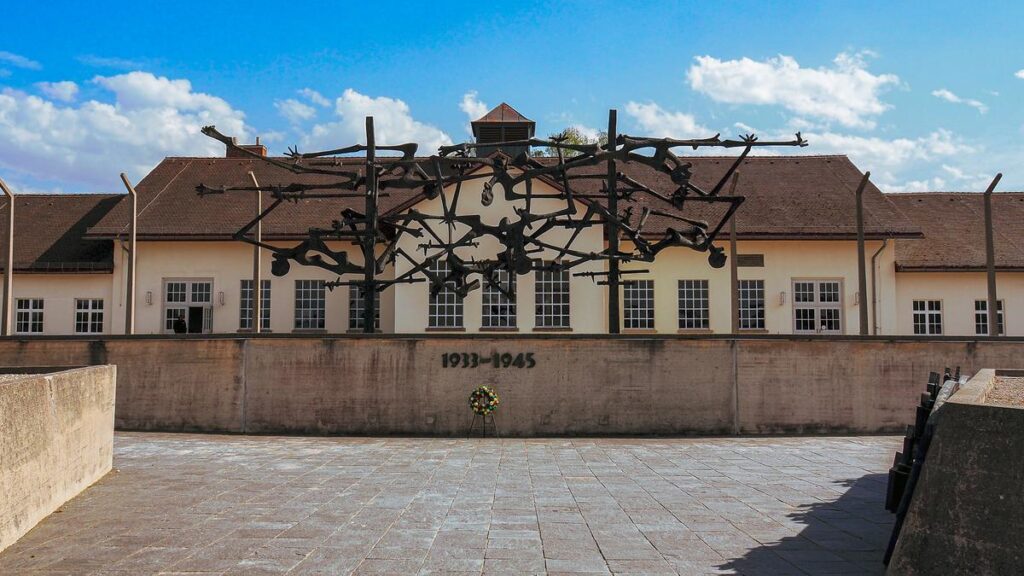
Dachau was the first permanent concentration camp established by the Nazi regime. The memorial documents the persecution, imprisonment, forced labor, and deaths of people held at the site between 1933 and 1945.
The memorial is open daily from 9:00 a.m. to 5:00 p.m., except December 24. The former crematorium area closes at 4:30 p.m. Admission is free. English tours for individual visitors normally begin at 11:00 a.m. and 1:00 p.m., cost 4, and last about 2.5 hours. Participation is limited and intended for visitors aged 13 or older.
Allow time for the permanent exhibition, reconstructed barracks, religious memorials, former crematorium area, and quiet reflection. Comfortable shoes are useful because the grounds are extensive.
Visitor responsibility: Maintain a quiet, respectful manner. Do not pose casually for photographs, climb on structures, or treat the grounds as a conventional attraction.
3. Salzburg, Austria

- Typical travel time: 1.5-2 hours by direct train
- Best transport: Direct regional or long-distance train
- Allow: 9-12 hours
- Best for: Architecture, music history, and a walkable old town
Salzburg provides the most practical international city trip from Munich. Its historic center fits naturally into a walking route connecting Mirabell Gardens, the Salzach River, Getreidegasse, Salzburg Cathedral, and the funicular to Hohensalzburg Fortress.
The regional RE5 service generally reaches Salzburg in just under two hours. Faster long-distance trains may cost more but leave additional sightseeing time. The Bayern Ticket is valid on eligible regional trains to Salzburg Hauptbahnhof. It does not provide unrestricted local transport within Salzburg, so walk the compact center or buy a separate local ticket when needed.
A realistic first visit includes Mirabell Gardens, the Old Town, Salzburg Cathedral, Mozart’s birthplace exterior or museum, and the fortress. The broader Salzburg attractions guide can help prioritize museums, while the guide to Salzburg with kids covers family-specific stops.
Planning judgment: Salzburg is usually a better first Austrian excursion than Innsbruck when historic architecture and museums matter more than immediate mountain access.
4. Nuremberg
- Typical travel time: About 1 hour by ICE; longer by regional train
- Best transport: ICE for time; regional train for Bayern Ticket use
- Allow: 9-12 hours
- Best for: Medieval architecture and 20th-century history
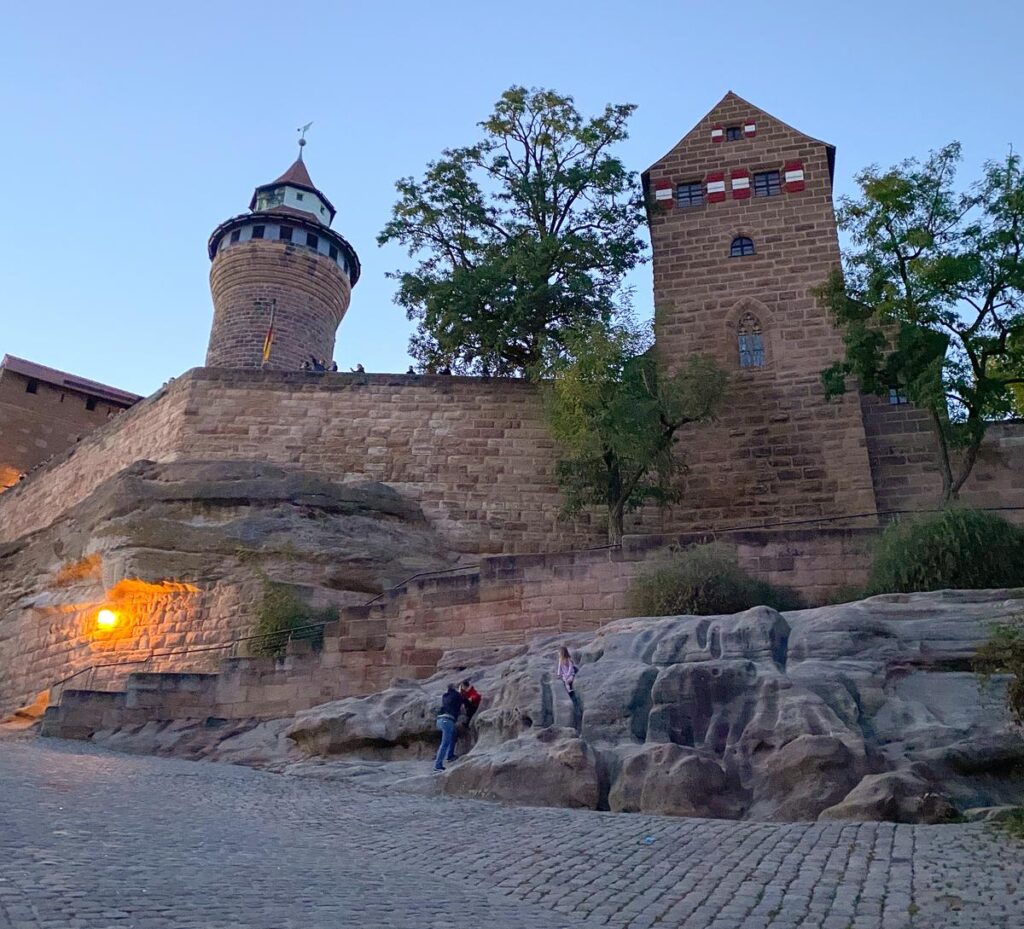
Nuremberg supports two distinct itineraries. The first concentrates on the Imperial Castle, Hauptmarkt, St. Sebald Church, and reconstructed Old Town. The second examines the Nazi Party Rally Grounds and the postwar Nuremberg Trials.
Trying to cover both themes deeply in one day creates a fragmented visit. Choose the Old Town and castle for an architecture-led trip. Choose the Documentation Center Nazi Party Rally Grounds and the Memorium Nuremberg Trials for modern history.
As of August 2026, the Documentation Center is operating in a trial phase ahead of its formal reopening scheduled for November 4, 2026. Courtroom 600 access also varies because the Palace of Justice remains an active institution. Check both official museum pages before traveling.
For a broader itinerary, use the guide to things to do in Nuremberg. Travelers using the Bayern Ticket should remember that it excludes ICE services.
5. Garmisch-Partenkirchen

- Typical travel time: 1.25-1.75 hours
- Best transport: Direct regional train
- Allow: 8-11 hours
- Best for: Hiking, Alpine streets, and flexible outdoor plans
Garmisch-Partenkirchen is the best flexible Alpine base on this list. Unlike a summit-only excursion, it still offers a worthwhile town and valley experience when cloud limits high-mountain visibility.
Partnach Gorge is the principal natural attraction. Its paths follow the river between steep rock walls, but ice, flooding, maintenance, and trail work can affect access. Check the official Partnach Gorge status on the morning of the trip.
An alternative route combines Ludwigstrasse in Partenkirchen, the Olympic Ski Stadium, and a lower-elevation walk. Cable cars provide access to higher terrain, but ticket cost and visibility should influence the decision.
The guide to things to do in Garmisch-Partenkirchen covers more trail and town options. For broader geographic context, see the overview of Germany’s mountain regions.
6. Rothenburg ob der Tauber

- Typical travel time: 2.5-3.5 hours each way
- Best transport: Car, organized tour, or multiple trains
- Allow: 11-14 hours
- Best for: Medieval walls, towers, and preserved streets
Rothenburg ob der Tauber has one of Germany’s most complete walled old towns, but its location makes it a demanding excursion from Munich. The reward is a compact center where the market square, Plonlein, St. James’s Church, fortified gates, and city walls can be explored on foot.
The official Tower Trail follows approximately four kilometers of walls and defensive structures. The Medieval Crime and Justice Museum adds substantial historical context beyond the town’s photographed streets.
Arrive early if traveling by car. Rail passengers should study the final return connection because the journey usually requires several changes. A missed connection can add considerable time.
Planning judgment: Rothenburg is possible in one day, but many travelers will get more value from an overnight stay. The guide to things to do in Rothenburg ob der Tauber is better suited to that slower visit.
7. Linderhof Palace

- Typical travel time: 1.5-2 hours by car; longer by public transport
- Best transport: Car or organized tour
- Allow: 8-10 hours with the surrounding grounds
- Best for: Palace interiors, formal gardens, and Ludwig II history
Linderhof is smaller than Neuschwanstein but provides a more complete view of Ludwig II’s private world. It was the only one of his major palace projects completed during his lifetime and forms part of the UNESCO-listed Palaces of King Ludwig II.
The palace interior is accessible only on a guided tour of approximately 25 minutes. In 2026, palace admission is 11. The Venus Grotto requires a separate guided visit and normally operates from April 15 to October 15. A combined palace-and-grotto ticket costs 18.
The gardens, terraces, fountains, and surrounding park require more time than the palace tour itself. The Moorish Kiosk is under renovation, with reopening currently anticipated in 2028. Check the official Linderhof visitor information before departure.
Planning judgment: Linderhof is a stronger choice than Neuschwanstein for travelers primarily interested in ornate interiors and landscape design. It is less convenient without a car.
8. Chiemsee and Herrenchiemsee Palace
- Typical travel time: About 1 hour to Prien, plus harbor transfer and boat
- Best transport: Train to Prien am Chiemsee, then boat
- Allow: 9-11 hours
- Best for: Lake travel, island walking, and palace architecture
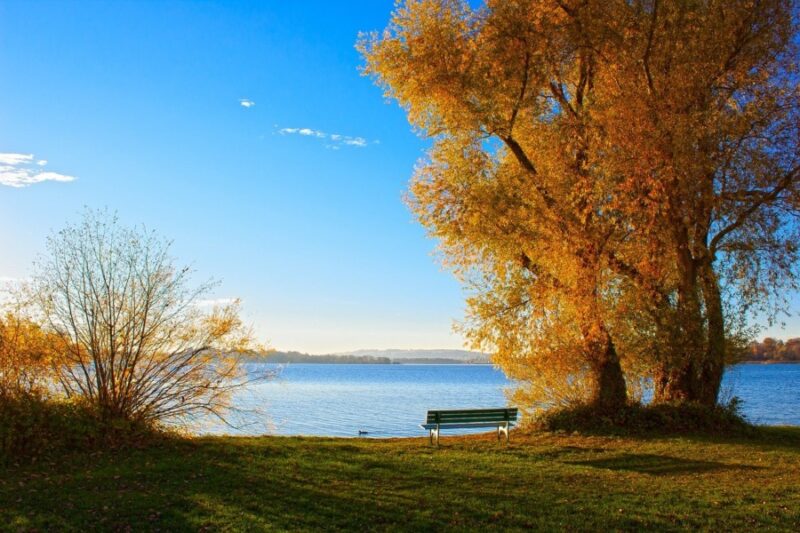
Chiemsee combines a train journey, lake crossing, and two contrasting islands. From Prien station, walk to the harbor or use the seasonal heritage railway when it is operating.
Herreninsel contains Herrenchiemsee New Palace, Ludwig II’s interpretation of Versailles and part of the UNESCO palace property inscribed in 2025. Fraueninsel has a smaller village, Benedictine abbey, gardens, workshops, and lakeside restaurants.
Main island boats operate throughout the year, but frequency and secondary routes change by season. As of August 3, 2026, low water had suspended service to some outer-lake stops, while principal island routes remained available. Check the current Chiemsee boat timetable.
Planning judgment: Visit Herreninsel first if palace entry is the priority. Add Fraueninsel only after confirming the return schedule and allowing enough time for the walk between the Herreninsel landing and palace.
9. Berchtesgaden and Konigssee
- Typical travel time: 2.25-3 hours
- Best transport: Car for flexibility; train and bus for one main destination
- Allow: 11-13 hours
- Best for: Alpine lakes or historically contextualized Obersalzberg sites
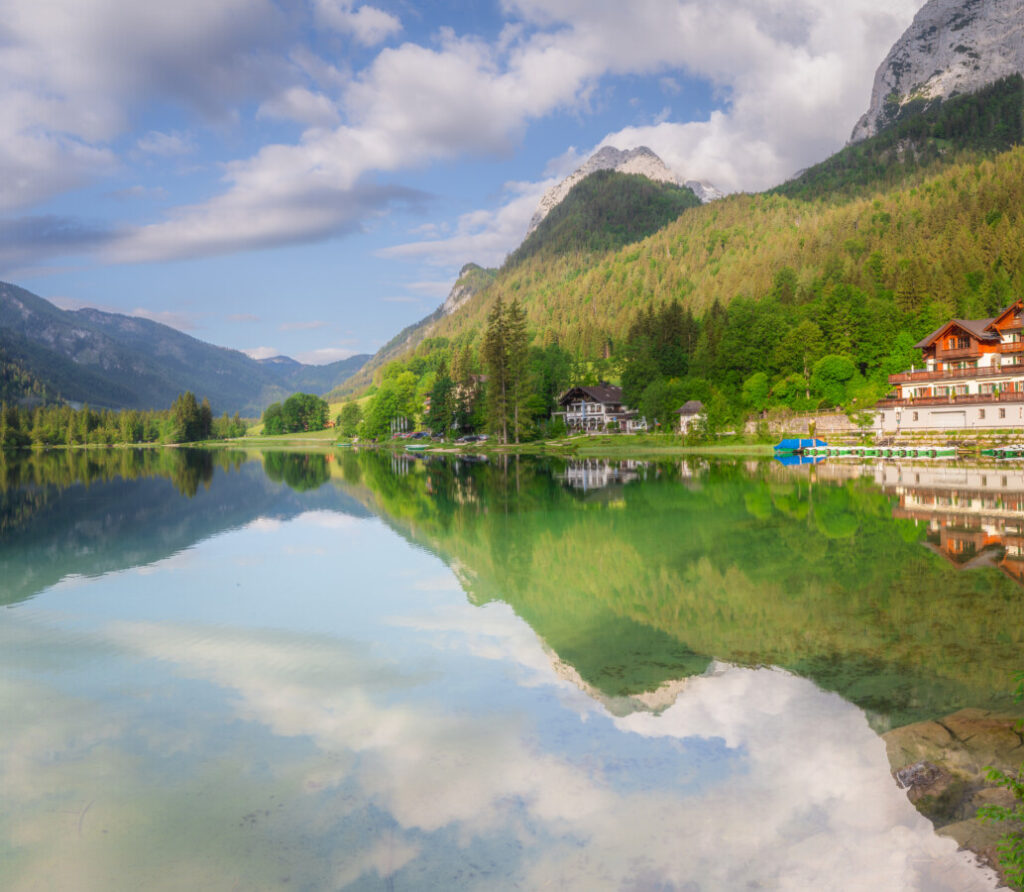
Berchtesgaden is not one compact attraction. Konigssee, the salt mine, Documentation Obersalzberg, the Kehlsteinhaus departure point, and Hintersee sit in different parts of the region. Choose one main objective and at most one nearby secondary stop.
For a nature-led visit, take the electric boat across Konigssee. The return fare is 23.40 to St. Bartholoma and 29.80 to Salet in 2026. Salet service normally runs from late April to mid-October and provides access to Obersee after a short walk. On busy days, the operator recommends arriving before 10:30 a.m. and beginning the return before 2:30 p.m. Check the official Konigssee schedule.
For a history-led visit, start at Documentation Obersalzberg. The museum explains the area’s role as a center of National Socialist power. The Kehlsteinhaus should be understood within that history rather than treated only as a mountaintop viewpoint.
The Berchtesgaden Salt Mine is a weather-resistant family alternative. The guided experience lasts roughly one hour, but visitors should allow 1.5-2 hours in total. The underground temperature is about 12 degreesC. The site also provides useful context for other show caves in Germany.
10. Augsburg

- Typical travel time: 30-45 minutes
- Best transport: Direct train
- Allow: 6-9 hours
- Best for: Easy logistics, urban history, and architecture
Augsburg is the easiest full city excursion from Munich. Its center combines Roman origins, Renaissance civic architecture, the Fugger family’s legacy, and the UNESCO-listed Water Management System of Augsburg.
The Fuggerei was founded in 1521 and remains a functioning social housing settlement. Its symbolic annual base rent is 0.88, accompanied by the traditional obligation to say three daily prayers for the founders. Visitors can explore the lanes, museum spaces, and preserved air-raid shelter.
A second route follows Augsburg’s water heritage, including canals, fountains, and the Waterworks at the Red Gate. This provides a stronger understanding of the city than visiting Rathausplatz alone.
As of August 2026, the Town Hall and Golden Hall have been affected by renovation work, and the Perlachturm observation deck remains closed. Check Augsburg’s official visitor information for reopening updates.
11. Innsbruck, Austria

- Typical travel time: 1.75-2 hours
- Best transport: Direct train with a separate Austria-valid ticket
- Allow: 10-12 hours
- Best for: Combining a historic center with immediate mountain access
Innsbruck compresses an Austrian old town and high-mountain transport into a manageable center. The Golden Roof has 2,657 fire-gilded copper tiles, while the nearby Innsbruck Hofburg and Court Church cover the city’s Habsburg history.
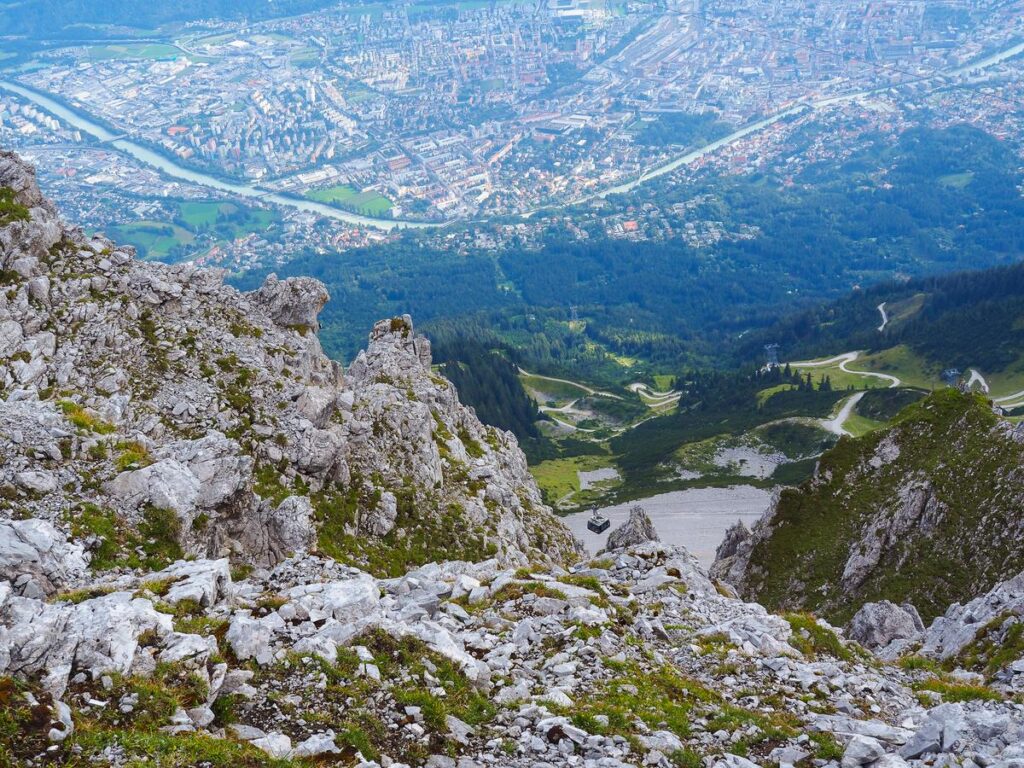
The Nordkette funicular begins near the historic center. Connecting cable cars can reach the 2,334-meter Top of Innsbruck viewpoint in less than 30 minutes under normal operations. Check visibility and the Nordkette operating status before buying a summit ticket.
The Bayern Ticket does not cover travel to Innsbruck. Purchase a separate DB or OBB fare valid for the full cross-border route. Travelers deciding between Austria’s two most practical options can compare Salzburg or Innsbruck. The Innsbruck travel guide provides additional museum, food, and mountain options.
12. Regensburg
- Typical travel time: 1.25-1.75 hours
- Best transport: Direct train
- Allow: 8-10 hours
- Best for: A compact UNESCO-listed medieval city
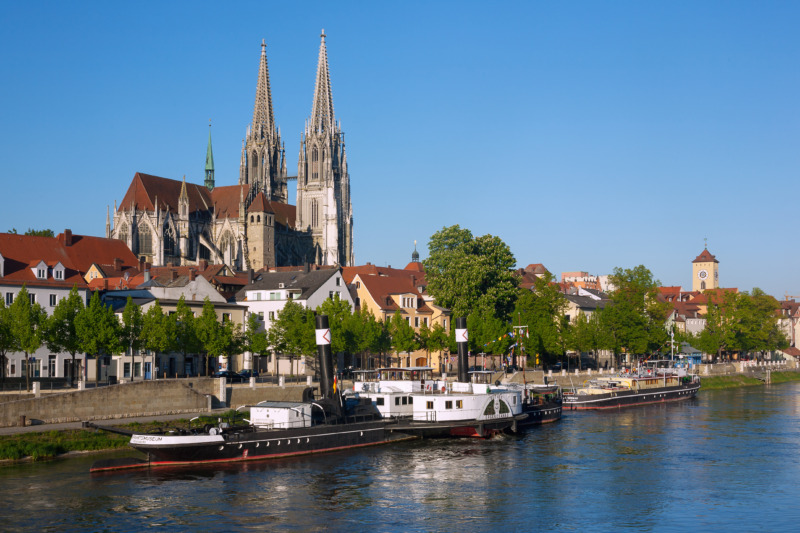
Regensburg is one of the strongest choices for travelers who want substantial medieval architecture without Rothenburg’s travel burden. Its UNESCO-listed center includes the 12th-century Stone Bridge, patrician houses and towers, St. Peter’s Cathedral, and streets shaped by the city’s role in European trade.
Begin at the cathedral and continue through the old town to the Stone Bridge. The bridge provides views of the Danube, the old city, and the former salt warehouse. Nearby, the Historic Sausage Kitchen has operated for more than 500 years, although claims that it has continuously served sausages since 1146 oversimplify its history.
The Old Town Hall and Document Neupfarrplatz provide political, Roman, and Jewish historical context. The guide to things to do in Regensburg covers these sites in greater depth.
Planning judgment: Regensburg offers a better time-to-experience ratio than Rothenburg, Bamberg, or Passau for most rail travelers starting in Munich.
13. Bamberg

- Typical travel time: 1.75-2.25 hours
- Best transport: Train
- Allow: 10-12 hours
- Best for: UNESCO architecture and Franconian beer culture
Bamberg’s UNESCO-listed center preserves a medieval urban plan with substantial Romanesque, Gothic, baroque, and bourgeois architecture. A compact route connects the cathedral, Alte Hofhaltung, Neue Residenz, Old Town Hall, and riverside houses of Klein-Venedig.
The Old Town Hall is the city’s defining exterior view, positioned between bridges in the Regnitz River. Museum access and opening periods should be checked separately rather than assumed from exterior access.
Bamberg is also associated with Rauchbier, or smoked beer. The Schlenkerla tavern property is documented from 1405, but that date should not be simplified into an uninterrupted brewing claim. The brewery’s own history distinguishes the age of the property from the later development of the brewing operation.
Planning judgment: The trip is workable by fast train, but five hours of total transportation leaves limited time for museums and a relaxed meal. An overnight stay is preferable for travelers interested in the city’s brewery culture.
14. Zugspitze
- Typical travel time: About 1.5 hours to Garmisch, followed by the mountain ascent
- Best transport: Train, cogwheel railway, and cable car
- Allow: 10-12 hours
- Best for: A high-Alpine summit without technical climbing
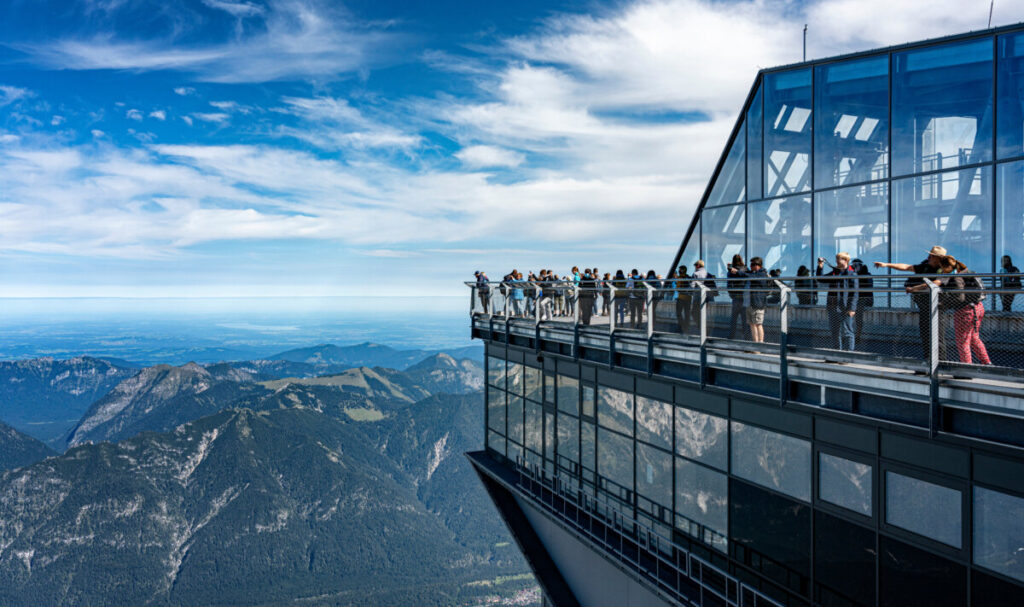
At 2,962 meters, Zugspitze is Germany’s highest mountain. The summit complex includes indoor areas, viewing terraces, restaurants, and access to the glacier area. Visibility, wind, and operating status determine whether the ticket delivers good value.
The standard adult round-trip ticket costs 78 in 2026. A combined ticket covering regional travel from Munich and the mountain journey costs 94.50 during its published 2026 season from May 4 to November 8. Confirm current rates and maintenance periods through the official Zugspitze ticket page.
Travelers can approach via the cogwheel railway or continue toward Eibsee and use the cable car. The better route depends on the current timetable and whether the glacier area is part of the plan.
Planning judgment: Do not buy a nonrefundable mountain ticket solely because the weather in Munich is clear. Check summit webcams and wind conditions. Treat Zugspitze as the day’s primary activity rather than adding a full Garmisch itinerary.
15. Tegernsee
- Typical travel time: About 1 hour
- Best transport: Direct regional train
- Allow: 7-10 hours
- Best for: A relaxed lake day with optional walking or hiking
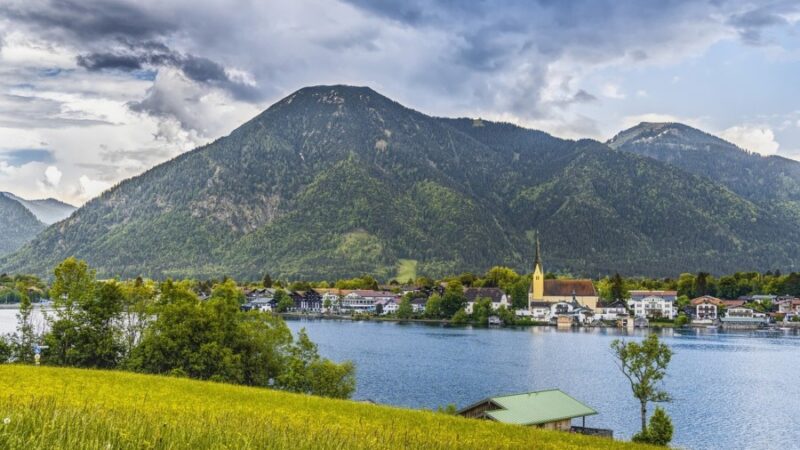
Tegernsee requires less logistical effort than Chiemsee or Konigssee. Trains serve Gmund, Tegernsee, and nearby communities, allowing travelers to choose a lakeside route without coordinating a palace admission or long boat crossing.
A straightforward visit combines the waterfront in Tegernsee town, the former Benedictine monastery complex, its church, and the Herzogliches Braustuberl. More active travelers can use local transport toward Wallberg or follow part of the lake’s walking network.
Boat services connect lakeside communities during the operating season, but frequency changes through the year and sailings can be affected by fog, storms, or high water. Check the official Tegernsee boat timetable.
Planning judgment: Tegernsee is the better choice when the goal is unstructured time by a lake. Chiemsee provides more major attractions, but it also requires more coordination.
16. Passau
- Typical travel time: 2.25-2.75 hours
- Best transport: Train
- Allow: 11-13 hours
- Best for: Baroque architecture, rivers, and elevated city views
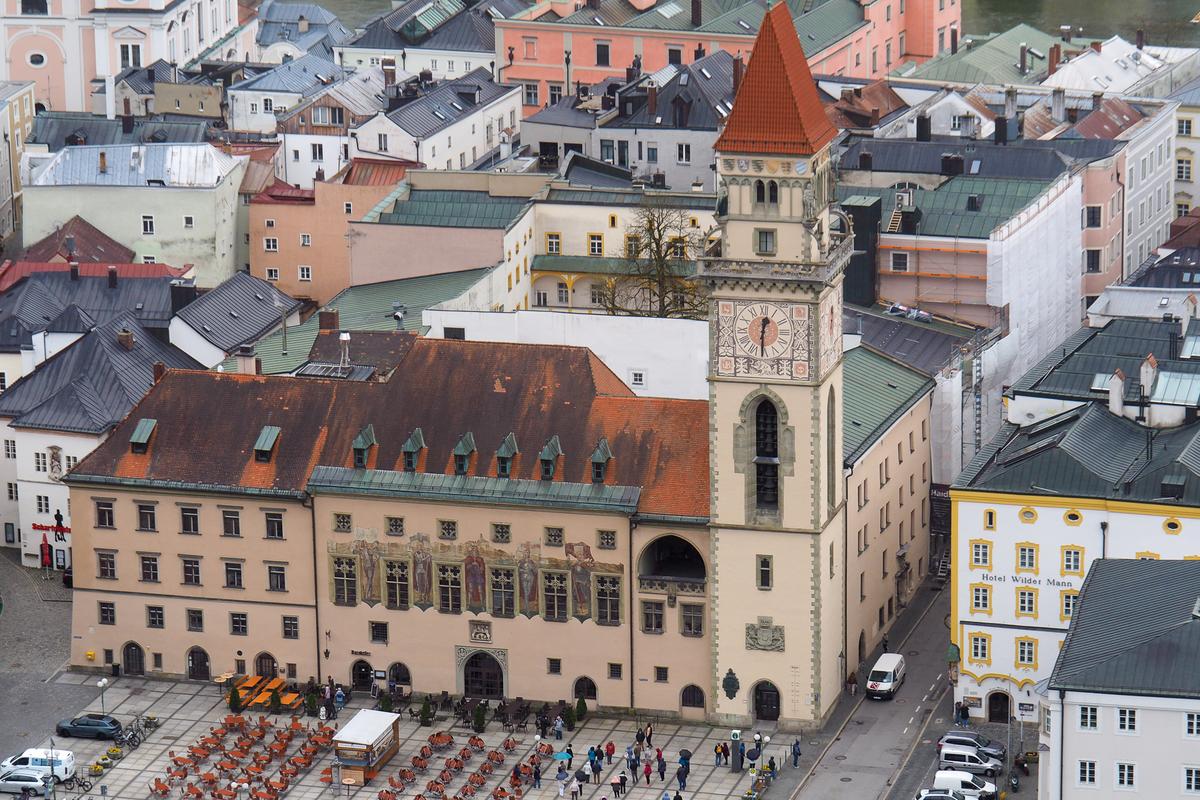
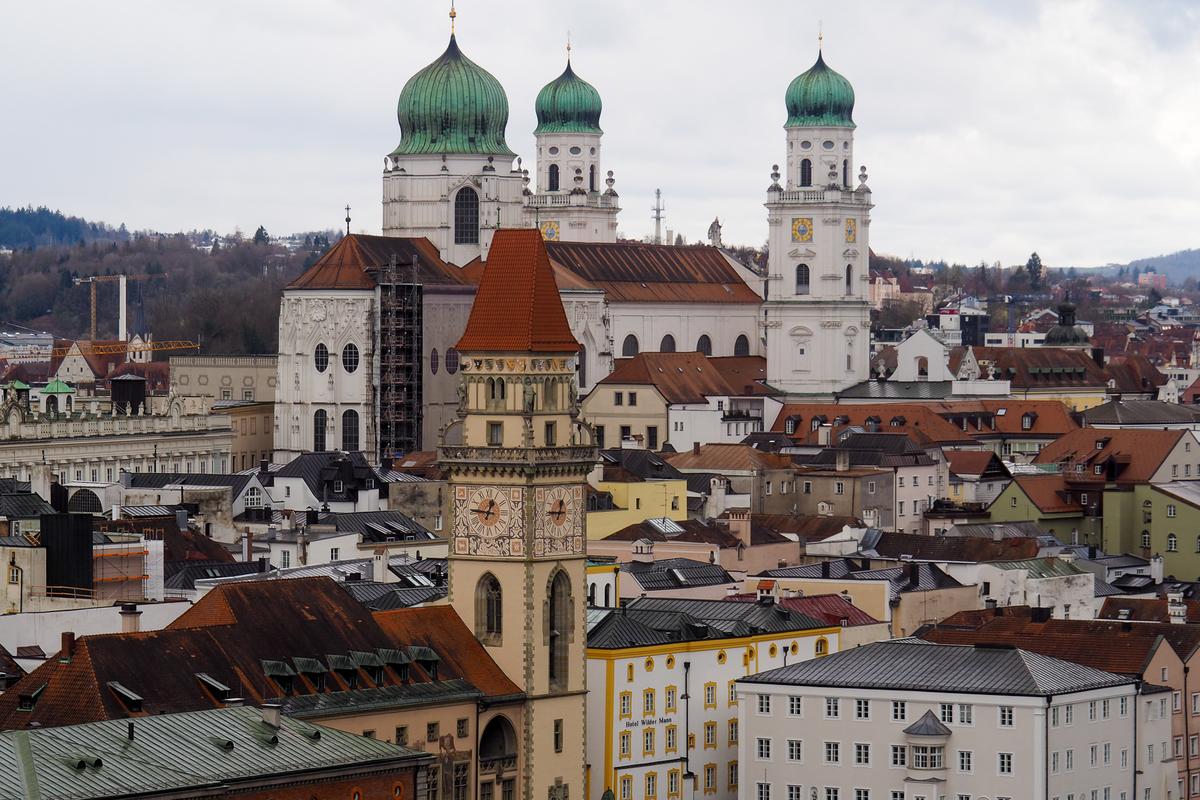
Passau occupies the confluence of the Danube, Inn, and Ilz. The old town extends along the narrow land between the rivers, with St. Stephen’s Cathedral near its center and Veste Oberhaus above the opposite bank.
The cathedral organ contains 17,974 pipes and 233 registers, although a multi-year restoration has been underway since 2023. Midday concerts are scheduled during parts of the visitor season, but not every division of the instrument may be available during restoration. Check the current cathedral program before planning the day around a concert.
Walk to the Dreiflusseeck confluence after exploring the center. For the broadest view, cross the Danube and climb or take transport toward Veste Oberhaus, an extensive fortress complex overlooking the rivers and old town.
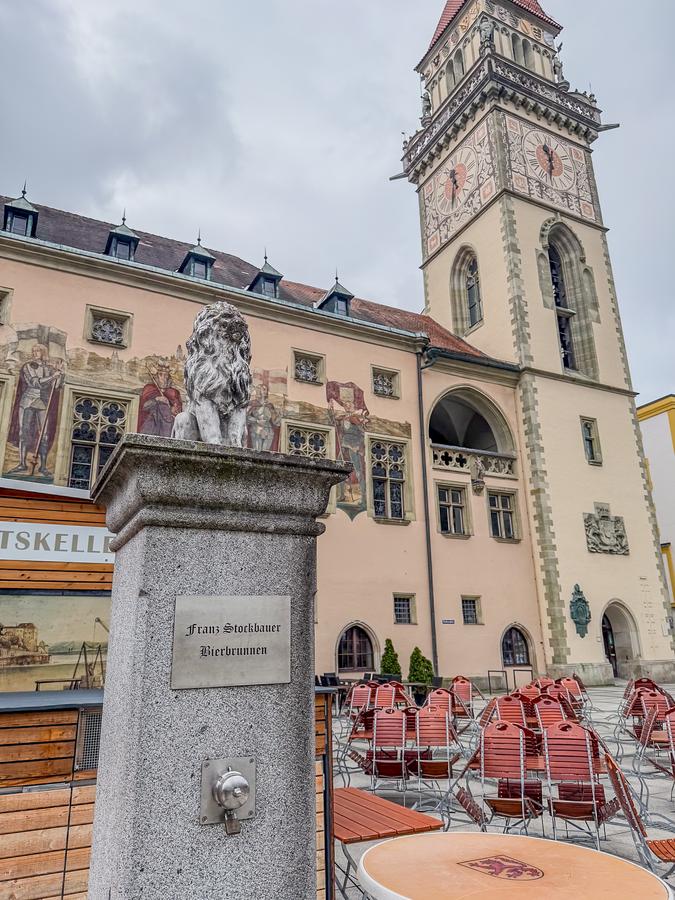
Planning judgment: Passau is possible as a long day, but its riverside setting is better suited to an overnight stay. Regensburg offers a more efficient historical-city trip when time is limited.
How to plan transportation from Munich
Bayern Ticket prices and rules for 2026
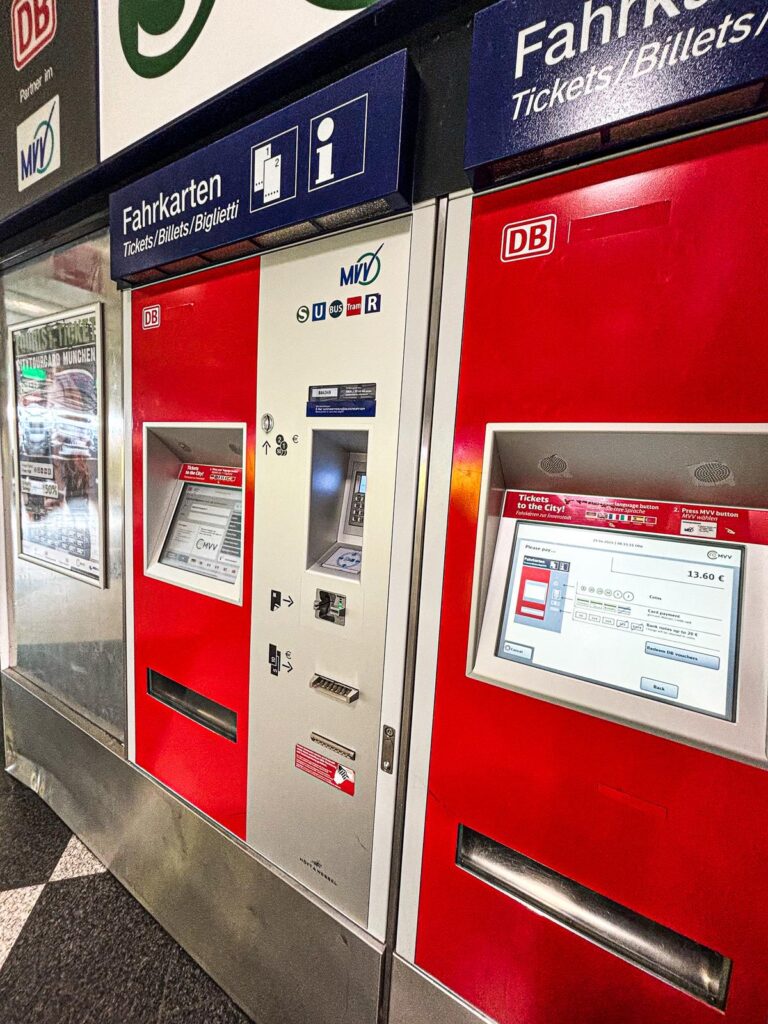
The Bayern Ticket covers local and regional trains, S-Bahn services, and participating local transport in Bavaria. It is not valid on ICE, IC, or EC trains.
| Travelers | 2026 second-class price |
|---|---|
| 1 | 34 |
| 2 | 44 |
| 3 | 55 |
| 4 | 64 |
| 5 | 74 |
On weekdays, the ticket is valid from 9:00 a.m. until 3:00 a.m. the following day. On weekends, public holidays, December 24, and December 31, validity begins at midnight. It covers eligible regional trains to Salzburg Hauptbahnhof but not the journey to Innsbruck.
Check the latest conditions on the official Bayern Ticket page. The broader guide to public transportation in Germany explains regional trains and local networks in more detail.
When a faster train is worth the price
ICE and IC trains can save substantial time on journeys to Nuremberg, Bamberg, and Passau. Compare the total price and travel time rather than assuming the Bayern Ticket is always the best value.
The Deutschlandticket is useful for travelers who already hold the monthly subscription. It costs 63 per month in 2026 and covers local and regional public transport throughout Germany, but not ICE, IC, or EC services. It should not be purchased as a one-day sightseeing pass because it is a recurring subscription.
Use the Deutsche Bahn or DB Navigator journey planner to check platform changes, engineering work, replacement buses, and the final return connection.
Driving from Munich into Austria
Cars using Austrian motorways and expressways generally require a vignette. In 2026, the car vignette costs 9.60 for one day or 12.80 for ten days. One-day and ten-day digital vignettes can normally be valid immediately when purchased through an authorized channel.
Check the official ASFINAG vignette rules before driving to Salzburg or Innsbruck. Some routes also include separate section tolls. Drivers with non-EU licenses should verify Germany’s and Austria’s recognition requirements before renting a car rather than assuming an International Driving Permit is always optional or always mandatory.
Practical planning rules
- Check the route before booking timed admission. Confirm that the first practical connection reaches the attraction before the selected entry time.
- Build around one anchor attraction. Neuschwanstein, Zugspitze, Konigssee, and Herrenchiemsee can each consume most of a day.
- Review the final return connection. This matters most for Rothenburg, Berchtesgaden, Bamberg, and Passau.
- Check mountain conditions on the morning of travel. Munich weather is not a reliable proxy for Zugspitze, Nordkette, or the Berchtesgaden Alps.
- Expect more walking than the map suggests. Castle approaches, gorges, island palaces, fortresses, and old-town streets often involve slopes, steps, or uneven surfaces.
- Treat seasonal services as conditional. Boat routes, grotto access, high roads, bridges, cable cars, and gorge paths can close with limited notice.
- Consider an overnight stay after two-and-a-half hours each way. A day trip remains technically possible, but transport can dominate the experience.
For broader rail, road, payment, and cultural advice, review these Germany travel tips before finalizing the route.
Frequently asked questions
What is the best day trip from Munich for a first-time visitor?
Neuschwanstein Castle is the classic choice for an iconic Bavarian landmark. Salzburg is the better all-around option for travelers who want a walkable city, museums, architecture, and simpler rail logistics. Choose according to the experience you value rather than treating one destination as universally best.
What is the easiest day trip from Munich by train?
Augsburg is the easiest complete city trip, with direct trains taking roughly 30 to 45 minutes. Dachau Concentration Camp Memorial Site is an easy half-day journey by S-Bahn and bus, while Tegernsee is one of the simplest nature trips.
Is the Bayern Ticket worth it in 2026?
The Bayern Ticket can be good value for regional travel, especially for two to five people. In 2026 it costs 34 for one traveler and 74 for five. It is valid after 9:00 a.m. on weekdays and excludes ICE, IC, and EC trains, so compare it with faster advance fares before buying.
Can you enter Neuschwanstein Castle without a guided tour?
You can visit the surrounding area without an interior ticket, but the castle interior is accessible only through a timed guided tour. Reserve through the official ticket service and allow enough time to travel from Munich and reach the uphill entrance.
Does the Bayern Ticket cover Salzburg and Innsbruck?
It covers eligible regional trains to Salzburg Hauptbahnhof, but it does not provide unrestricted Salzburg city transit. It does not cover the full journey to Innsbruck. Buy a separate DB or OBB ticket for Innsbruck.
Which Munich day trips are best in winter?
Salzburg, Nuremberg, Regensburg, and Augsburg work well because their main attractions are urban. Garmisch-Partenkirchen and Zugspitze suit snow-focused trips when conditions are favorable. Neuschwanstein remains open, but bridge, shuttle, and trail access can be restricted by ice or snow.
Which trip should you choose?
Choose Neuschwanstein for a landmark castle, Salzburg for the strongest city itinerary, Regensburg for medieval architecture, Tegernsee for a low-pressure lake day, and Garmisch-Partenkirchen for flexible Alpine access. Reserve Zugspitze for a clear-weather day and treat Dachau as a separate memorial visit requiring time and attention.
Rothenburg, Bamberg, and Passau are valid day trips, but each becomes substantially better with an overnight stay. When the forecast or timetable makes an excursion inefficient, another day in Munich may be the wiser choice. The city itself has enough museums, neighborhoods, parks, markets, and historic sites to fill several days; use this list of things to do in Munich as the fallback plan.