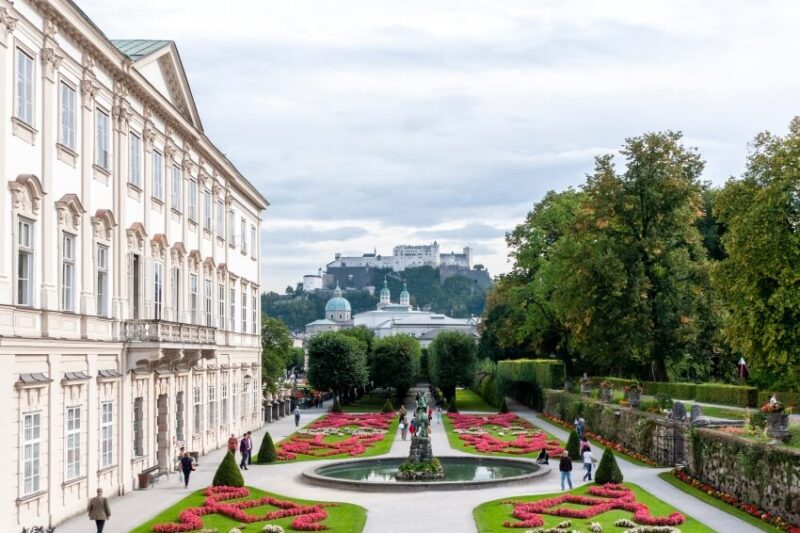
Commanding the Salzburg skyline from its perch atop Festungsberg Hill, Hohensalzburg Fortress stands as one of Europe’s largest and most completely preserved medieval castle complexes. Built in 1077 by Archbishop Gebhard and dramatically expanded over subsequent centuries, this formidable stronghold served as both a symbol of ecclesiastical power and an undefeated defensive fortress. Visitors ascend either by foot path or the century-old Festungsbahn funicular railway to explore its imposing stone battlements, medieval princely chambers, and the magnificent Golden Hall with its stunning carved ceiling and Gothic columns. The Fortress Museum houses a remarkable collection of ancient armaments, torture devices, and royal artifacts that illuminate the region’s turbulent history. From the panoramic terraces, sweeping 360-degree views encompass the baroque splendor of Mozart’s birthplace below, the winding Salzach River, and the majestic Alpine mountains beyond. The fortress regularly hosts classical concerts in historic halls where the acoustics rival the visual grandeur, creating an immersive experience that bridges Salzburg’s medieval foundations with its musical heritage. As a testament to Austrian cultural resilience, Hohensalzburg has withstood eight centuries of European history while remaining an iconic symbol of Salzburg’s artistic and architectural significance.
Cultural Context
Europe’s largest fully preserved medieval fortress crowning Salzburg’s baroque skyline. Hohensalzburg represents the temporal power of prince-archbishops who ruled this independent ecclesiastical state, balancing spiritual authority with military might while fostering arts that produced Mozart.
Historical Context
Built in 1077 by Archbishop Gebhard during Investiture Controversy between Pope and Emperor, expanded over 500 years into impregnable citadel. Never conquered despite numerous sieges, including 1525 Peasants’ War when fortress sheltered archbishop from rebellious miners and farmers demanding social reforms.