Passau, positioned at the strategic confluence of three rivers—the Danube, Inn, and Ilz—exemplifies a distinctive Bavarian city where geography and history have created an architectural wonderland known as the “City of Three Rivers.” This 2,000-year-old settlement occupies a narrow peninsula where its Old Town (Altstadt) rises dramatically from the waterways, crowned by the Italian Baroque masterpiece St. Stephen’s Cathedral, which houses Europe’s largest church organ with 17,774 pipes capable of filling the ornate white and gold interior with magnificent sound during regular summer concerts. Passau’s unique location at the German-Austrian border shaped its historical significance as a medieval prince-bishopric and salt trading center, reflected in its Italian-influenced cityscape where pastel-colored buildings with onion domes and baroque facades create a Mediterranean atmosphere unusual for Germany. The city’s distinctive character emerges through its numerous bridges crossing the three differently colored rivers—the blue Danube, green Inn, and black Ilz—offering multiple vantage points to observe this remarkable natural phenomenon where the waters flow side by side before blending. Beyond architectural splendors like the 13th-century Veste Oberhaus fortress perched 100 meters above the city, Passau maintains a relaxed university town atmosphere along its riverside promenades and winding alleyways filled with artisan workshops, beer gardens, and traditional Bavarian cuisine. Despite periodic flooding that has marked its history, as evidenced by high-water marks on buildings throughout the Old Town, the city has preserved its historical character while embracing its role as a key starting point for Danube River cruises and a gateway between Germany and Eastern Europe.
The destination guide
Passau
Three rivers meet at Passau’s tip in different colors — blue, green, and black — and the view from Veste Oberhaus makes it click.
Travel guides for Passau
More guides featuring Passau (3)
At a glance
- Czech
- Danube River city
- Three rivers confluence
- Baroque old town
- Border town
How Passau scores
Character
Editorial scores on a 10-point scale, weighed against destinations of the same kind.
Travel safety snapshot
SafePlace indicators use their source 100-point scale; higher is more favourable. Planning context, not a live travel advisory — check official government guidance before you go.
When to go
Best months to visit: April, May, June, July, August, September, October and December.
- January: -2.6 to 3.2 degrees Celsius, 83.7 millimetres of rain, best-time score 2 out of 5.
- February: -0.7 to 6.6 degrees Celsius, 70.1 millimetres of rain, best-time score 2 out of 5.
- March: 1.6 to 10.4 degrees Celsius, 60.8 millimetres of rain, best-time score 3 out of 5.
- April: 5.1 to 14.7 degrees Celsius, 62.9 millimetres of rain, best-time score 4 out of 5.
- May: 9.4 to 18.3 degrees Celsius, 100.3 millimetres of rain, best-time score 5 out of 5.
- June: 14.4 to 24 degrees Celsius, 101.8 millimetres of rain, best-time score 5 out of 5.
- July: 15.4 to 24.4 degrees Celsius, 100.1 millimetres of rain, best-time score 4 out of 5.
- August: 15.5 to 24.4 degrees Celsius, 98.4 millimetres of rain, best-time score 4 out of 5.
- September: 11.8 to 19.8 degrees Celsius, 85.8 millimetres of rain, best-time score 5 out of 5.
- October: 7.5 to 14.8 degrees Celsius, 66.3 millimetres of rain, best-time score 5 out of 5.
- November: 2.1 to 7.8 degrees Celsius, 74.8 millimetres of rain, best-time score 3 out of 5.
- December: -0.6 to 4.4 degrees Celsius, 87.3 millimetres of rain, best-time score 4 out of 5.
Month-by-month conditions and packing advice
- January
- Cold, some rain January in Passau: cold winter months outside festive periods are less balanced. Crowds: January in Passau is workable with normal seasonal planning; build in layers, weather checks, and a mix of indoor and outdoor activities. Pack: Pack warm layers, a coat, and comfortable shoes for cold mornings and evenings. Add a rain jacket or compact umbrella.
- February
- Cold, some rain February in Passau: cold winter months outside festive periods are less balanced. Crowds: February in Passau is workable with normal seasonal planning; build in layers, weather checks, and a mix of indoor and outdoor activities. Pack: Pack warm layers, a coat, and comfortable shoes for cold mornings and evenings. Add a rain jacket or compact umbrella.
- March
- Cool to mild, occasional rain March in Passau: variable weather and shorter days narrow outdoor touring. Crowds: March in Passau is workable with normal seasonal planning; build in layers, weather checks, and a mix of indoor and outdoor activities. Pack: Pack warm layers, a coat, and comfortable shoes for cold mornings and evenings.
- April
- Cool to mild, occasional rain April in Passau: summer or Christmas-market timing can be rewarding with heat, crowd, or cold-weather planning. Crowds: April in Passau is workable with normal seasonal planning; build in layers, weather checks, and a mix of indoor and outdoor activities. Pack: Pack layered clothing and comfortable walking shoes.
- May
- Cool to mild, some rain May in Passau: old-town walks, Danube and Inn river views, cycling, cruises, and cafes balance pleasant weather and lighter crowds. Crowds: May in Passau is workable with normal seasonal planning; build in layers, weather checks, and a mix of indoor and outdoor activities. Pack: Pack layered clothing and comfortable walking shoes. Add a rain jacket or compact umbrella.
- June
- Mild to warm, some rain June in Passau: old-town walks, Danube and Inn river views, cycling, cruises, and cafes balance pleasant weather and lighter crowds. Crowds: June in Passau is workable with normal seasonal planning; build in layers, weather checks, and a mix of indoor and outdoor activities. Pack: Pack layered clothing and comfortable walking shoes. Add a rain jacket or compact umbrella.
- July
- Mild to warm, some rain July in Passau: summer or Christmas-market timing can be rewarding with heat, crowd, or cold-weather planning. Crowds: July in Passau is workable with normal seasonal planning; build in layers, weather checks, and a mix of indoor and outdoor activities. Pack: Pack light clothing, sun protection, and comfortable walking shoes. Add a rain jacket or compact umbrella.
- August
- Mild to warm, some rain August in Passau: summer or Christmas-market timing can be rewarding with heat, crowd, or cold-weather planning. Crowds: August in Passau is workable with normal seasonal planning; build in layers, weather checks, and a mix of indoor and outdoor activities. Pack: Pack light clothing, sun protection, and comfortable walking shoes. Add a rain jacket or compact umbrella.
- September
- Cool to mild, some rain September in Passau: old-town walks, Danube and Inn river views, cycling, cruises, and cafes balance pleasant weather and lighter crowds. Crowds: September in Passau is workable with normal seasonal planning; build in layers, weather checks, and a mix of indoor and outdoor activities. Pack: Pack layered clothing and comfortable walking shoes. Add a rain jacket or compact umbrella.
- October
- Cool to mild, occasional rain October in Passau: old-town walks, Danube and Inn river views, cycling, cruises, and cafes balance pleasant weather and lighter crowds. Crowds: October in Passau is workable with normal seasonal planning; build in layers, weather checks, and a mix of indoor and outdoor activities. Pack: Pack layered clothing and comfortable walking shoes.
- November
- Cold, some rain November in Passau: variable weather and shorter days narrow outdoor touring. Crowds: November in Passau is workable with normal seasonal planning; build in layers, weather checks, and a mix of indoor and outdoor activities. Pack: Pack warm layers, a coat, and comfortable shoes for cold mornings and evenings. Add a rain jacket or compact umbrella.
- December
- Cold, some rain December in Passau: summer or Christmas-market timing can be rewarding with heat, crowd, or cold-weather planning. Crowds: December in Passau is workable with normal seasonal planning; build in layers, weather checks, and a mix of indoor and outdoor activities. Pack: Pack warm layers, a coat, and comfortable shoes for cold mornings and evenings. Add a rain jacket or compact umbrella.
Know before you go
Best time to visit
The best time to visit Passau is from May through October, when mild temperatures and long daylight hours make for ideal sightseeing along the three rivers. Summer (June-August) brings the warmest weather with highs reaching 25°C (77°F) and a lively atmosphere of outdoor cafés, beer gardens, and river cruise activity. Late spring and early autumn offer fewer crowds with equally pleasant conditions.
Seasonal Highlights
Winter visitors in December can enjoy the Passau Christmas Market set against the Old Town’s Baroque façades, while the quieter January-February months appeal to travelers seeking museum-focused days and cozy Bavarian hospitality without tourist pressure.
Season by season
Spring (March-May):
Weather: 10-18°C (50-64°F), warming progressively
Highlights: Blooming gardens along the Innstadt, Easter markets, river cruise season begins
Best For: Hiking the Bavarian Forest, cycling the Danube, uncrowded sightseeing
Summer (June-August):
Weather: 18-25°C (64-77°F), occasional rain showers
Highlights: Peak river cruise season, outdoor beer gardens, organ concerts at St. Stephen’s
Best For: River tours, cycling, al fresco dining, Saturday markets
Fall (September-November):
Weather: 8-18°C (46-64°F), vivid fall foliage
Highlights: Autumn colors along the three rivers, wine festivals, quieter Old Town ambiance
Best For: Photography, museum visits, day trips to Bavarian Forest
Winter (December-February):
Weather: -2 to 5°C (28-41°F), snow possible
Highlights: Passau Christmas Market in the Old Town, festive illuminations, cozy Gasthäuser
Best For: Christmas markets, indoor museums, warming Bavarian food and beer
Crowds
Passau gets busiest in summer (June–August) and cruise-ship stopovers from May–September, especially along the riverside Old Town; quietest November–March (except Christmas market) with few tourists — crowding can be high during cruise ship arrivals but otherwise moderate.
Getting there and around
Getting there
Munich Airport (MUC) is the nearest major airport, approximately 160 km (100 miles) northwest. Trains from Munich Airport to Passau Hauptbahnhof take 2-3 hours with one change in Munich or Landshut. Direct ICE trains connect Passau to Frankfurt (4.5 hours), Nuremberg (2 hours), and Vienna (3 hours) via the high-speed rail network.
By car, Passau is accessed via Autobahn A3 from Nuremberg and Regensburg. Drivers from Munich take the A92 east to the A3. The Austrian border is just 4 km from the city center, making Passau a natural stop between Bavaria and Upper Austria.
Passau is also a major departure point for Danube river cruises heading downstream toward Vienna, Bratislava, and Budapest. Linz Airport (LNZ) in Austria, only 67 km away, provides an alternative arrival point with regional European connections.
Getting around
Passau’s compact Old Town (Altstadt) is best explored on foot — most attractions sit within a 15-minute walk of each other along the narrow peninsular strip between the rivers. Comfortable shoes with good traction are essential for the cobblestone streets and hilly terrain leading to Veste Oberhaus.
A shuttle bus runs regularly from the town hall square (Rathausplatz) up to the fortress from mid-March through October. The Stadtwerke Passau (SWP) operates 17 bus lines covering the broader city, with tickets available from drivers or the SWP mobile app. A single ride costs about €2.50.
Cycling is excellent along the well-maintained Danube Cycle Path, and several shops in town offer bike rentals. Taxis are available 24 hours and can be hailed at stands near the Hauptbahnhof or booked by phone. A car is unnecessary for central Passau but useful for day trips into the Bavarian Forest.
Top experiences in Passau
St. Stephen's Cathedral
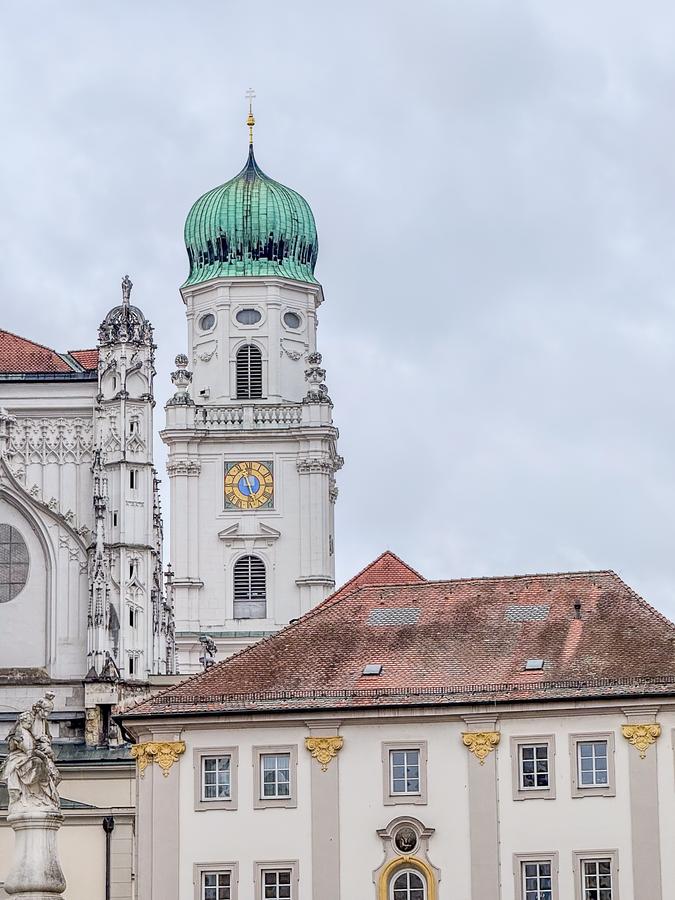
St. Stephen’s Cathedral dominates Passau’s skyline with its distinctive green copper domes. Inside, the cathedral’s Baroque interior — redesigned by Italian architects after the 1662 fire — features ceiling frescoes, stucco work, and the world’s largest cathedral organ with 17,974 pipes and 233 registers spread across five organ cases. Free organ concerts take place daily at noon on weekdays (Wednesday and Saturday at noon during summer), filling the nave with sound for a spellbinding 30-minute experience.
Veste Oberhaus Fortress
Perched 105 meters above the confluence on the opposite bank of the Danube, Veste Oberhaus was built in 1219 by the Prince-Bishops of Passau as a symbol of their power. The fortress complex now houses the Oberhausmuseum, which covers the city’s 2,000-year history through medieval art, guild crafts, and interactive exhibits. The observation platform provides the definitive panoramic view of Passau and its three rivers. Access is via a steep walking trail (20 minutes) or a shuttle bus from Rathausplatz.
Three Rivers Confluence (Dreiflüsseeck)
At the eastern tip of Passau’s Old Town peninsula, the Danube, Inn, and Ilz rivers converge in a visually striking tableau. The Inn’s blue-green Alpine waters, the Danube’s muddy brown, and the Ilz’s dark peat-stained flow remain visibly distinct for several hundred meters downstream before gradually blending. A public promenade at Dreiflüsseeck offers the closest ground-level viewing, while the fortress and Innstadt bridges provide elevated perspectives.
Passau Glass Museum
Housed in the historic Hotel Wilder Mann building on the waterfront, the Passau Glass Museum contains approximately 15,000 pieces spanning 250 years of European glassmaking. The collection includes Bohemian, Bavarian, and Austrian glass art from the Baroque period through Art Nouveau to contemporary pieces. The museum occupies four floors and was established by Georg Höltl, documenting the region’s deep history with glass production in the Bavarian Forest.
Old Town (Altstadt)
Passau’s Old Town occupies a narrow peninsula between the Inn and Danube rivers, creating an intimate cityscape of pastel-painted Baroque buildings, arcaded courtyards, and cobblestone lanes. Rebuilt after the 1662 fire by Italian architects — predominantly Carlo Lurago and Giovanni Battista Carlone — the result is a Bavarian city that feels distinctly Italianate. Key streets include Ludwigstraße, Rindermarkt, and the waterfront promenades on both river sides.
Editor-curated picks carried over from our original guide. Where a full place guide exists, the card links to it.
Worth booking ahead in Passau
Hand-picked from the operators our guides already send readers to. Prices and availability are live on the partner site.
Day tripViator
Neuschwanstein and Linderhof royal castles day tour (opens Viator in a new tab)
Both royal castles and the coach in one long day; the practical way to see them from Munich without a car.
Where to stayBooking.com
Stays in Passau (opens Booking.com in a new tab)
Live rates and availability for Passau on Booking.com; filter by neighbourhood once you know where your days start.
We earn a commission if you book through these links, at no extra cost to you. It is how we keep the guides free and independent.
Where to stay
Hotel König
Untere Donaulände 1, 94032 Passau, Germany
Hotel König is a family-run hotel positioned directly on the Danube waterfront with views of the fortress and river confluence. Rooms blend traditional Bavarian comfort with modern amenities, and the restaurant serves regional cuisine alongside a terrace overlooking the river promenade. The hotel’s central location places guests within a few minutes’ walk of St. Stephen’s Cathedral and the Old Town’s main attractions.
Hotel Residenz Passau
Fritz-Schäffer-Promenade 4, 94032 Passau, Germany
Hotel Residenz Passau sits on the Danube riverbank in the heart of the Old Town, occupying a renovated historic building with contemporary design touches. The property features spacious rooms, a breakfast buffet with regional products, and direct access to the waterfront promenade. Its location offers immediate proximity to the cathedral, Rathausplatz, and the Glass Museum.
Hotel Wilder Mann
Am Rathausplatz 1, 94032 Passau, Germany
Hotel Wilder Mann is a storied property on the Danube waterfront that has hosted guests since the 15th century. Located in the same building as the Glass Museum, the hotel offers traditionally appointed rooms with river views and a restaurant serving Bavarian classics. Its central position on the Schaiblingsturm side of the Old Town provides easy walking access to all major attractions.
Editor-curated stays carried over from our original guide. Where we have reviewed the hotel, the card links to the review.
Tips from the field
Highlights
- St. Stephen's Cathedral — Home to the world's largest cathedral organ (17,974 pipes, 233 registers)
- Veste Oberhaus — 13th-century fortress with panoramic three-river views and a regional history museum
- Three Rivers Confluence — Dramatic meeting point of the Danube, Inn, and Ilz with visibly different water colors
- Baroque Old Town — Rebuilt by Italian architects after the 1662 fire, creating a distinctly Mediterranean atmosphere
- Glass Museum — Over 15,000 European glass exhibits spanning four centuries
- Danube Cycle Path — World-famous cycling route passing directly through Passau
- Town Hall — Historic Rathaus with flood-level markers going back centuries on its walls
- River Cruises — Departure point for Danube cruises to Vienna, Bratislava, and Budapest
Best activities
- Passau sits at the dramatic convergence of the Danube, Inn, and Ilz rivers — a geographical feature visible from multiple vantage points across the city. Start at St. Stephen's Cathedral to hear the world's largest cathedral organ with 17,974 pipes during daily noon recitals. Climb to Veste Oberhaus, a 13th-century fortress perched 105 meters above the city, for sweeping views of all three rivers and the Old Town's Italianate rooftops.
- The Old Town's narrow cobblestone lanes invite leisurely exploration of Baroque architecture rebuilt after the devastating fire of 1662 by Italian craftsmen. River cruises depart from the waterfront promenade — opt for the 45-minute Three Rivers tour for the clearest view of where the Danube's brown, the Inn's green, and the Ilz's black waters flow side by side before gradually merging downstream. The Danube Cycle Path passes directly through the city, connecting riders to Vienna (300 km) and beyond.
Practical tips
- Currency: Euro (EUR). Cards widely accepted; smaller shops and beer gardens may prefer cash.
- Getting There: Munich Airport (MUC) is 160 km away; trains take 2-3 hours. Direct ICE trains from Frankfurt, Nuremberg, and Vienna.
- Transportation: Old Town is fully walkable. Bus service (SWP) covers the wider city at €2.50 per ride. Bike rentals available for the Danube Cycle Path.
- Language: German is spoken locally; English is understood in hotels and tourist areas. Learning 'Grüß Gott' (the Bavarian greeting) earns warmth from locals.
- Dining: Bavarian cuisine features Schweinebraten (roast pork), Knödel (dumplings), and Weißwurst. Local Innstadt brewery produces regional beers. Restaurants typically serve lunch 11:30-14:00 and dinner 17:30-21:00.
- Shopping: Shops close by 18:00-19:00 on weekdays and 14:00 on Saturdays. Everything is closed on Sundays except restaurants and bakeries.
- Tipping: Round up the bill or add 5-10% at restaurants. Hand the tip directly to the server.
Photography tips
- Golden Hour Shots:
- Veste Oberhaus fortress — Sweeping panoramic views of the Old Town and three-river confluence at sunrise or sunset
- Dreiflüsseeck (Three Rivers Corner) — Where the Danube, Inn, and Ilz visibly merge with distinct water colors
- Innstadt waterfront — Classic postcard views of the Old Town skyline
- Iconic Views:
- St. Stephen's Cathedral — Baroque interior and the world's largest cathedral organ
- Rathausplatz — Historic town hall with flood-level markings on its walls
- Covered bridges and narrow lanes of the Altstadt
- Bavarian Forest backdrop beyond the Ilz river
- Best Months: May-September for clear skies and river reflections; December for atmospheric Christmas market shots with Baroque building backdrops.
- Equipment: Wide-angle lens for cathedral interiors and fortress panoramas. Polarizing filter for reducing river glare. Tripod for dawn shots from the Innstadt shore.
Keeping it authentic
- Passau's authenticity lies in its unique geography — no city planner designed the convergence of three rivers at a single point
- nature did, and 2,000 years of settlement grew organically around it. The Italianate Baroque architecture isn't staged romanticism but the result of a genuine historical catastrophe: after the 1662 fire destroyed the medieval city, Italian master builders were brought in to redesign it wholesale. The resulting cityscape is genuinely Mediterranean despite sitting in southeastern Bavaria. Unlike heavily touristed German cities, Passau's daily life revolves around its university (20,000 students), the Bavarian Forest economy, and river trade rather than tourism. River cruise passengers cycle through daily but don't dominate the character of the Old Town, where locals still shop at the weekly market and drink at the same waterfront Gasthäuser their families have patronized for generations.
Culture, customs and safety
Cultural heritage
Passau showcases baroque splendor at the confluence of three rivers, earning the title Venice of Bavaria through Italian-influenced architecture. St. Stephen Cathedral houses the world largest church organ with 17,974 pipes creating extraordinary acoustics. The old town demonstrates baroque urban planning after 1662 fire reconstruction by Italian architects. Prince-bishops legacy appears in ornate residences and fortifications. The city maintains strong musical traditions, Danube shipping heritage, and distinctive Three Rivers cultural identity where German, Austrian, and Bohemian influences converge.
Local customs & etiquette
Passau follows Bavarian customs layered atop broader German etiquette. Greet with ‘Grüß Gott’ (God greet you) rather than ‘Hallo’ for an immediate local connection. Punctuality is deeply valued — arrive on time or a few minutes early for any appointment or reservation.
At restaurants, wait for all diners to receive their food before eating, and keep your hands (not elbows) on the table. Tipping follows the German standard: round up or add 5-10%, and state the total amount you wish to pay when handing money to the server rather than leaving cash on the table.
Maintain a conversational tone on public transport — loud phone calls are considered rude. Jaywalking is technically illegal and socially frowned upon, even at empty intersections. Photography in churches is generally acceptable, but ask permission before photographing individuals. Shops are closed on Sundays, so plan grocery shopping and errands for weekday hours.
Safety notes
Passau is an exceptionally safe city, typical of small Bavarian towns. Crime rates are very low, and violent crime is rare.
General Tips:
• Keep belongings secure in crowded areas like the waterfront promenade and Christmas markets
• The train station (Hauptbahnhof) and central bus station areas are slightly less polished at night — use normal awareness
• Some Old Town cobblestone streets can be poorly lit after dark
Weather & Water Safety:
• The Danube and Inn rivers experience occasional flooding — check local alerts in spring and early summer
• Winter brings icy cobblestones and steep paths to Veste Oberhaus — wear proper footwear
• Summer thunderstorms can arrive quickly; carry a light rain jacket
Emergency: European emergency number 112 (police, fire, medical). Non-emergency police: +49 851 95110.