Choose Greece if the trip is built around beaches, islands and a lower bill. Choose Italy if it is built around cities, art, food regions and moving around by train. That is the honest short answer, and the cost half of it is measurable: on Eurostat’s 2025 price level index for restaurants and accommodation, where the EU average is 100, Greece scores 86.1 and Italy 110.8 (Eurostat). The same basket of hotel nights and restaurant meals costs roughly a fifth less in Greece.
Neither country is a mistake. Both have coastline, ruins and food worth the flight, and plenty of people end up doing both on one trip. But they reward different kinds of holiday, and the gap is wider than the postcards suggest – a week spent island hopping out of Athens looks nothing like a week spent between the ancient ruins of Rome and Florence.
| If your trip is about… | Go to | Why |
|---|---|---|
| Beaches and island hopping | Greece | Far more coastline per day of travel, and ferries make a multi-island trip routine |
| Cities, art and museums | Italy | Rome, Florence, Venice and Naples are all within a few hours of each other by train |
| Keeping costs down | Greece | Accommodation and restaurants price about 22% below Italy on the Eurostat index |
| Traveling without a car | Italy | A dense national rail network; Greek islands need ferries or domestic flights |
| A trip in winter | Italy | Greek island infrastructure largely shuts down; Italian cities stay open year-round |
| Food | Either | Greek tavernas are cheaper and more consistent; Italy has more range and more high-end dining |
| A honeymoon | Depends | Greece for seaside resorts and villa privacy, Italy for sightseeing between hotels |
On the one hand, Italy offers countless historic sites, cities, and famous landmarks worldwide. There’s skiing in the Italian Alps, swimming on the vast coast, and delicious Italian food. You’ll never run out of places to visit or things to see in the many regions of Italy.
A ferry ride across the Adriatic away is Greece, known for the exuberant azures and architecture of Santorini, Mount Olympus, the Acropolis Museum, and much more.
Greece’s ancient history is more than fascinating, but island hopping around the Aegean Sea is what beckons beach lovers and budget travelers from around the world – that and the fantastic Greek food.
With both countries topping the lists of best tourist destinations, it’s certainly hard to choose between them for a European escape. If you’re in an Italy-Greece dilemma, read on to see what our trips to the two countries have taught us and how to plan the vacation of a lifetime.
Introductions: Italy vs Greece
Before we get into the specifics, let’s lay out the basics of these two countries and why you might want to go there. Italy and Greece are neighbors separated by a small strait in the Ionian Sea in southern Europe.
Both are major summer destinations, offer unique and popular cuisines, have ancient histories that form parts of the continent’s identity, and are beloved by travelers.
Italy: “Bel Paese” (Beautiful Country)

The boot-shaped country between France and the Balkans is Italy. It’s part of the European Union and the Schengen Area, so traveling to or from the country from one of the other member states won’t require any pesky border controls. The country is well-connected by air, road, rail, and ship to other places around the continent and worldwide.
Most visitors start in one of the several major Italian cities like Rome, Milan, or Venice, and many choose to stay within these big-name destinations for their trip. And while there’s plenty to see in them in terms of historical sights, beautiful art, and more, the rural countryside and mountainous interior offer even more hidden treasures. Here are some of the top places to see in Italy:
- Rome – The capital city and former seat of the Roman Empire offers the Colosseum and Roman Forum, the tiny country of Vatican City, and the iconic Trevi Fountain.
- Venice – Known around the world for being built on a network of canals, few travelers can resist taking a gondola ride around the city before exploring places like the Rialto Bridge and St. Mark’s Square on foot.
- Amalfi Coast – Just south of Naples, this remote stretch of coastline offers hidden beaches and picturesque seaside towns, making for a very romantic trip; you can visit the island of Capri on a day trip as well.
- Puglia – The heel of the boot may be lesser known, making it all the better, as some of Italy’s best beaches are along this coastline.
- Liguria – The Italian Riviera borders the French Riviera and is best known for the Cinque Terre and Portofino. Still, you can find some unbelievably beautiful villages and beaches up and down this region’s long coastline.
- Alps & Dolomites – In the far north, the Alps of Switzerland and Austria spill over into Italy, creating hiking trails and natural wonders for anyone who wants to get off the road.
To avoid going on for days, I’ll stop myself there – but know there are dozens more cities, regions, and places to visit in Italy.
See Related: How to Plan a Month-Long Vacation
Greece: The Hellenic Republic

Greece is just southeast of Italy and part of the European Union and the Schengen Area. It’s in the southernmost part of the continent and has northern borders with Albania, North Macedonia, Bulgaria, and Turkey. Albania and North Macedonia are not in the Schengen Area, and neither is Turkey – but Bulgaria is. Bulgaria and Romania became full Schengen members when internal land border checks were lifted on 1 January 2025 (European Commission), so Greece is no longer the Schengen island it was for years. There is now an unbroken check-free land route from Greece through Bulgaria and Romania into central Europe, and since Bulgaria adopted the euro on 1 January 2026 that crossing involves no currency change either. Most visitors still fly, because it is faster – but driving or taking a bus north is now a normal option rather than a border ordeal.
Major Greek cities include Athens and Thessaloniki, located on mainland Greece and home to major airports and ferry terminals; use Omio to book your ferry tickets in advance.
They’re also fascinating places for history lovers, but most visitors will look to one or more of the Greek Islands for their trip. Here are some top places to see in Greece:
- Athens – The capital city is famous for its Acropolis, ruins, temples, museums, and other relics of ancient Greece, and it serves as a starting point for those looking to catch a ferry.
- Thessaloniki – The country’s second city, in the north near Turkey, shouldn’t be overlooked, as it holds large portions of Greece’s Roman, Byzantine, and Ottoman history.
- Santorini – The most iconic image of Greece has to be the view of Santorini from the caldera of Oia, where whitewashed cliff houses and blue-domed roofs stand high above the sea.
- Mykonos – Party-goers have made Mykonos a European capital for music and nightlife; its seaside main town and sandy beaches are pretty amazing, too.
- Crete – This massive island in the far southern reaches of Greece has several major cities, as well as luxurious resorts, hundreds of beaches, and massive mountains.
- Corfu – Along with some of the best beaches in the country, the island of Corfu, in the northwestern corner of the country, has a fascinating and unique history.
- Rhodes – On the other side of the Aegean, you’ll find even more variation in architecture and history, as islands like Rhodes are just a short ferry hop away from Turkey, which has influenced them over the centuries.
As with my list of Italian destinations, I will restrain myself from filling more of the page. Greece has a lot more to work with than most people picture: the national tourism organisation counts about 6,000 islands and islets, of which 227 are inhabited, while the 2021 national census – which counts only islands with a recorded resident population – puts the number at 119. Either way, you are choosing from more islands than you could visit in a lifetime, plus a large mainland. People come here for ancient history, beaches, and the food.

Entry Requirements: What Changed at the Border
Italy and Greece have identical entry rules, because both are in the Schengen Area and both use the euro. Whichever you pick, the paperwork is the same – so this is not a reason to choose one over the other. It is a reason to know what happens when you land.
The EU Entry/Exit System (EES) is live. It rolled out from 12 October 2025 and became fully operational across every Schengen country on 10 April 2026, replacing passport stamps with a biometric record (European Commission). On your first entry after the switch, expect a passport scan, four fingerprints and a facial image, taken either at a kiosk or by an officer. Children under 12 are not fingerprinted. Later trips are a biometric match and should be quicker. Your record is kept for three years after your last trip.
In practice the rollout has been uneven, with reported queues and manual fallback processing at several southern European airports through mid-2026. Member states can partially suspend EES checks at a specific crossing for short periods when queues get excessive. Build in extra time at passport control on your first post-EES arrival, especially at Athens, Rome Fiumicino and Milan Malpensa in peak season. If you have read that British visitors are exempt from EES in Greece, that is out of date – Greece announced such a suspension and then withdrew it after the Commission ruled that nationality-based blanket exemptions are not permitted.
ETIAS is not in force yet, and there is no published start date. The EU removed its previous target from the official ETIAS page in July 2026 and now says only that it will announce a date several months in advance. When it does launch, it will be an online travel authorisation costing EUR 20, free for travelers under 18 and over 70, valid for three years or until your passport expires. Do not buy anything from a site selling ETIAS today – there is nothing to buy.
Best Months to Travel to Greece or Italy
You can visit Greece and Italy any time of the year, but different seasons can make for very different types of trips. Both countries have four seasons and experience very hot summers, while winters can be mild or cold and snowy depending on the location.
Therefore, the season of your visit can make a big difference when deciding between the countries, in summary. It may be better to go to Italy if you travel in the colder months.
Summer in Greece vs Summer in Italy

Summertime, specifically June through August, is the European travel high season. Countries around the continent fill with visitors, and Greece and Italy are two of the most popular, thanks to the relief their idyllic Mediterranean coastlines provide from the hot sun.
While that makes for an enjoyable summer holiday, prices will inevitably rise, and crowds will be much larger.
Greece sees the huge majority of its visitors during these months, especially to the islands, as even locals from mainland cities flock to the ferries. Summer on a Greek island is all about pool, beach, and outdoor fun, so this is not the season or country for you if that doesn’t sound like a good time.
Some of my favorite spots in the Greek Islands include the Domes Miramare on Corfu and one of the many caldera-view vacation rentals on Santorini. In Italy, summertime is quite similar. Some popular seaside destinations include the Amalfi Coast and Capri, Sicily, Sardinia, and Liguria.
The city hotspots like Venice and Florence also keep their share of visitors throughout the hot months. There’s a fantastic resort in the northeastern tip of the country called Tivoli Portopiccolo Sistiana Resort for those who want to see a region less traveled and avoid the masses.
If your trip concerns seeing museums, landmarks, historical spots, and other similar things, consider avoiding the summer. There’s no reason to see all those things under the blazing sun when prices are at their highest and when everything is most crowded. However, summer could be your season if you want a seaside escape or outdoor adventure.
See Related: Best Places to Stay in Cinque Terre
Winter in Greece vs Winter in Italy

Things are very different in Italy and Greece over the winter. Luckily, these countries are in the southern part of the continent, so many places don’t get too freezing cold. Beachside locales sometimes close up for the season and become ghost towns, while cities remain bustling.
Most of Greece comes to a standstill from a tourist point of view for the winter, except for cities like Athens and Thessaloniki. The islands’ shops, restaurants, and hotels close down, with huge portions of the population departing for the season.
You should NOT come to the Greek Islands for a seaside holiday during the winter! However, this is a great time to visit Greece to see things like the Parthenon, the Acropolis, and other historic sites and museums.
Italy is a bit different, remaining relatively open over the winter. While the beach destinations close up much like they do in Greece, many more destinations do not.
The canals of Venice, the villages of Cinque Terre, and the ruins of Rome will certainly be less crowded. Still, they are largely open for business – plus, they get beautifully decorated for the Christmas season.
Winter is a great time to visit for culture and history-oriented visitors who don’t need the sea or sun. Plus, you’ll save money as hotel and flight prices fall dramatically for much of the winter.
In summary, winter is an appropriate time to visit places like Athens or Thessaloniki in Greece, but not the rest of the country; Italy is probably better suited for winter visitors.
Fall & Spring in Greece vs Fall & Spring in Italy

Many people refer to the beginning of fall and the end of spring as the shoulder seasons of Europe, and they’re especially great for countries like Greece and Italy.
That’s because the weather is pleasant, prices are lower than in the summertime, and crowds are smaller, making it great for exploring and relaxing. Of course, the closer you get to winter, the cooler (and potentially rainier) it can get.
The islands of Greece start their season in late spring and end in early fall, so it is feasible to plan an island trip during these times of the year. While the air and sea temperatures may be borderline appropriate for swimming, it is possible.
I enjoyed my suite’s private pool at the Domes Zeen Chania on Crete this past May. You also save a ton of money and avoid nearly all crowds (probably why I got upgraded to that room!), and visiting historical places is much more pleasant.
The same ideas apply in Italy, where the seaside resorts and restaurants begin and end their seasons. Temperatures in the 60s and 70s Fahrenheit are perfect for wandering the alleys and bridges of Florence or the ancient ruins of Pompeii.
This weather is perfect for visiting my favorite spa resort in the country – Grotta Giusti, an Autograph Collection Resort in the hills of Tuscany. Its swimming pools are heated by natural thermal water, which contrasts perfectly with a mild fall or spring day.
Fall and spring can be ideal times to visit for sun seekers and explorers. Prices are much fairer than in high season, crowds are smaller, and the weather can be just right for most activities. Just know that depending on your exact dates and destinations, places could start hibernating or coming out of it.
See Related: Top Vacations That Require No Walking
Budget Considerations in Italy and Greece
Both Italy and Greece have varying vacation expenses. You can plan a very cheap or very expensive trip to either country. However, there are certain places to go and things to know about planning appropriately for your trip.
The Taxes and Fees Nobody Quotes You
Both countries add charges on top of the room rate you booked, and they are usually collected in cash or card at the property rather than by the booking site. On a two-week trip they add up to real money.
| Charge | Country | 2026 amount | How it works |
|---|---|---|---|
| Climate resilience fee | Greece | April-October: EUR 2 (1-2 star), EUR 5 (3 star), EUR 10 (4 star), EUR 15 (5 star). November-March: EUR 0.50 to EUR 4 | Charged per room per night, not per person. Short-term rentals pay EUR 8, or EUR 15 for a detached house over 80 sq m. Stays past 30 consecutive nights are exempt from the 31st night |
| Cruise passenger levy | Greece | Santorini and Mykonos: EUR 20 (1 June-30 Sep), EUR 12 (April-May and October), EUR 4 (winter). Other ports: EUR 5 / 3 / 1 | Per disembarking passenger. Applies to transit calls and to passengers starting their cruise there |
| Tourist tax (tassa di soggiorno) | Italy | Set by each municipality. Rome charges EUR 3 to EUR 10 per person per night by accommodation category | Per person per night, capped at a set number of nights – 10 in Rome, 7 in Florence, 5 in Venice |
| Venice access fee | Italy | Not currently in force | The 2026 trial ran on 60 selected days and ended on 27 July 2026. Whether it returns in 2027 has not been decided |
The Venice one is worth flagging because a lot of what you will read about it is out of date. The city ran the access fee as a trial across 60 non-consecutive days between April and July 2026, charging day visitors EUR 5 booked in advance or EUR 10 booked late, between 08:30 and 16:00. Both the city’s official portals now state the fee is no longer in effect as of 27 July 2026 (Comune di Venezia). It applied only to the historic centre – Murano, Burano and the Lido were excluded in 2026 – and anyone staying overnight anywhere in the Comune, including Mestre, was exempt but still had to register for a QR code. If you are planning a 2027 trip, check the official portal rather than a blog before you assume you owe anything.
Headline attraction pricing has also moved. The Acropolis is EUR 30 for an adult, year-round – the old cheaper winter rate was abolished – with a mandatory timed slot and a daily cap of 20,000 visitors spread across twelve hourly entry zones (ODAP). The Colosseum, Roman Forum and Palatine combined ticket is EUR 18, also timed, and the park is explicit that you cannot enter outside your booked slot (Parco archeologico del Colosseo). In both cities, the ticket is not the constraint – the slot is. Book the entry time before you book anything else that day.
For Budget Travelers

Those on a tight budget should consider the above advice about avoiding the summer high season, as Italy and Greece will get significantly more expensive during July and August. If you still want to enjoy the sun and sea, consider June or September for major savings and very little difference in weather.
Italy’s big cities are home to very expensive hotels and restaurants. If you’re on a budget, you will need to consider staying a bit distant from city centers and main attractions.
For example, I always stay at the Voco Venice Mestre, barely 20 minutes from the canals, and I pay a fraction of what they pay on the other side of the causeway! Accommodations and dining in smaller Italian villages will also be much more budget-friendly and undoubtedly beautiful.
In Greece, food is generally more affordable, in my opinion. There are countless traditional tavernas ready to make you a Greek meal for a fair price.
Budget accommodation is easier to find here, too, as long as you stay away from the hotspots like Oia in Santorini; you will surely pay a pretty penny to stay there. Instead, look to places like Kamari Beach, one of the island’s best spots with plenty of fairly-priced vacation rentals.
For Luxury Travelers

On the other hand, if you’re looking to do it big, there are plenty of luxury resorts and villa rentals around Greece and Italy. Book well in advance if you want to go in high season, as these places definitely sell out.
There are luxurious resorts all around Italy. Florence, one of the most romantic cities in the country, is home to a beautiful Four Seasons and a highly-acclaimed St. Regis, and you can find brands like these in other major cities as well. Michelin-star dining, private tours, and high-end spas are also more than available.
Greece has no shortage of luxury accommodations, but you’ll find fewer big-brand names on the islands. They exist, but luxury travelers will find more in the way of villa rentals and five-star boutique hotels.
For example, I stayed at this unbelievable villa with a private pool on the island of Kefalonia last summer. It should be noted that five-star dining is less prevalent in Greece outside Athens.
See Related: Italy vs France: Which is Better to Visit?
What are the Key Differences between Italy and Greece?
Many different types of travelers look for many things when they travel. So, if you fall into one or more of the below categories, use our opinions of Greece and Italy to help you decide and plan your trip.
Beaches

While the Italian coastline is stunning in many places, I have to say that Greece has the best beaches in all of Europe. From the sandy bays of Mykonos to the moonscape shores of Milos, to the black sand beaches of Santorini, to the cliff-backed hidden beaches of Corfu, there are endless places to dive in or lounge out in Greece during beach season. Read our full guide on where to stay in Corfu.
Italian beaches are often easier to access and have sandy shores, although some pebble beaches are found in the north. The island of Sardinia has some very remote and beautiful beaches that rival Greece. On the Amalfi Coast, you’ll find quaint cafes and cliff-perched beach hotels along the beach.
In both places, beaches may offer boating, diving, cliff jumping, hiking trails, and other activities. Don’t leave home without a proper travel insurance plan from TravelInsurance.com if you envision yourself doing anything that could go wrong.
See Related: Things to do in Ravello
Historical Sites

I will not make the call on this one – there’s way too much history in Italy and Greece to decide which one is better! Italy’s most famous historic sites include the Trevi Fountain, the Colosseum, the Roman Forum, the ruins of Pompeii, the Sassi of Matera, and much more.
You have the Parthenon, the Acropolis, the Temple of Olympian Zeus, Ancient Thera, and Akrotiri on Santorini, and many others in Greece, along with the ever-fascinating history of Greek names from mythology, which you can learn about nearly anywhere you visit in Greece.
If you’re planning on island hopping in Greece, I recommend taking one full day in Athens before or after getting on your ferry or flight. You can see most of the big historic spots in the city during that time. These places are everywhere in Italy, so you must plan your days carefully to hit the ones you want to.
Food

Before we get into this, know that Greek food and Italian food are some of the best on the continent. For me, though, Greek cuisine takes the lead just a bit.
It’s rich in olive oil, herbs, and vegetables, with fresh seafood and lean meats. It’s simple, flavorful, and healthy, and essentially any taverna you find will be great (from my experience).

The food scene in Italy is nothing to complain about, and it’s going to taste way better than your favorite pizza from back home. Italian cuisine is known for its simplicity, but it’s amazing how flavorful a quality pasta dish or a properly prepared pizza can be.
Either way, Greece and Italy feature some of the best food in the world, so it’s hard to go wrong here.
See Related: Best Wine Regions in Italy
Nightlife

The Greek nightlife is slightly better than that of Italy, considering it’s catered towards tourists from all over Europe and the world looking for a party. Once you’re done discovering the beaches and ruins during the day, you can dance your heart out at the clubs of Paros, Kos, Mykonos, and other southern Greek islands.
If you want to enjoy the nightlife in Italy, add Milan and Florence to your itinerary. For a luxurious nightlife scene, Riviera Romagnola is your best bet. Versilia has some of the best beach parties at night, as does the Amalfi Coast, with its club inside a cave, Africana.
Honeymoon Destination

Whether Italy or Greece is better for the honeymoon depends on the kind of couple you are. If you’re two adventurous souls who can’t leave their wanderlust behind even on their honeymoon, Italy is the right country for you. It has plenty of sightseeing and exploratory opportunities around famous landmarks and historical gems.
In contrast, Greece has some idyllic islands if you’re inclined to fine dining, cuddling, and relaxing by the water. There’s more of a selection of romantic seaside resorts here, and picking the right one can make you feel like you’re light years away from the rest of the world. Of course, there’s plenty of exploring and sightseeing around Greece, too.
See Related: Best Party Islands in Greece
Family Trips

Although mainly advertised as vacation spots for couples and solo travelers, Italy and Greece are great for families too. If you’re going for pool and beach vibes, there are plenty of family-friendly resorts around both countries. If I had to choose one, I’d say Greece has more of this accommodation type.
In Italy, you can take your kids for a walk in the rose garden by the Piazzale Michelangelo or get them in touch with marine life at the Aquarium of Genoa. Kids are fascinated by Venice being built on canals and seeing places like the Blue Grotto in Capri. Therefore, Italy could be a better bet for the adventurous family.
Are Greek and Italian Cultures Similar?
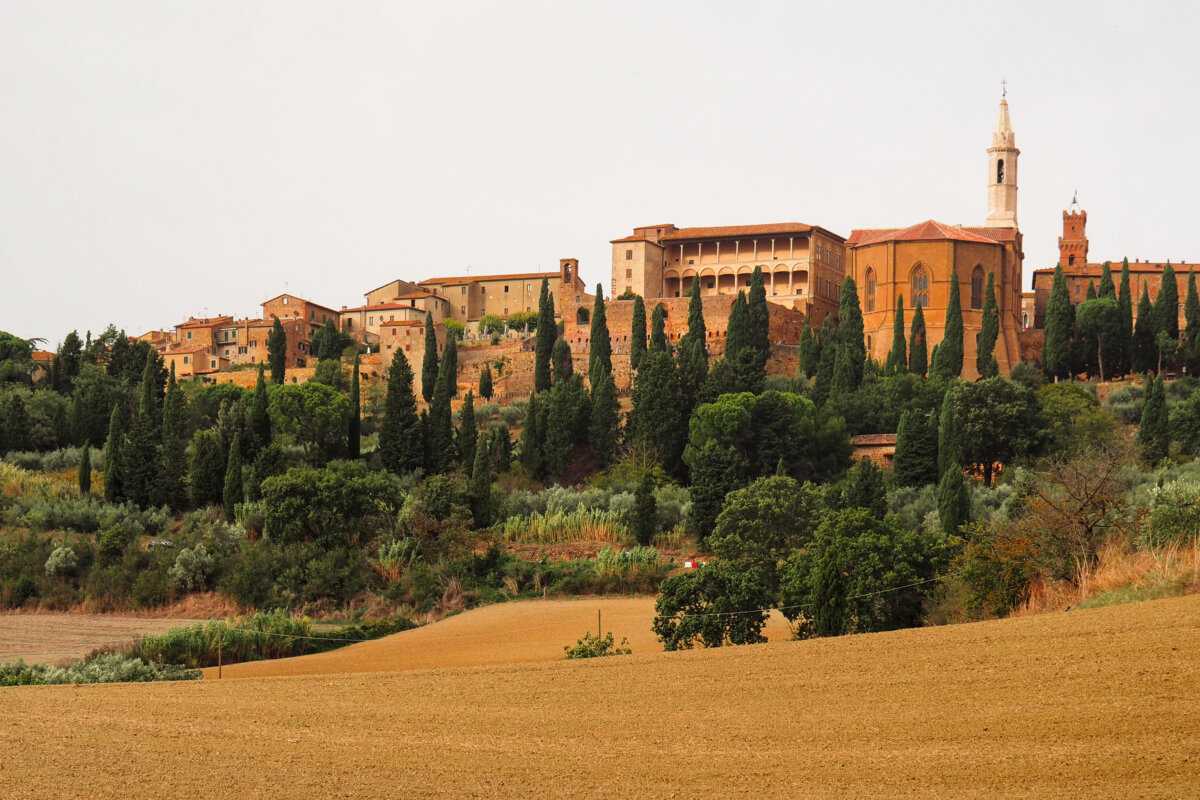
In some ways, Greek and Italian cultures are quite similar; in others, they are very different. Nearly 3,000 years ago, the Greeks sailed across the Ionian Sea and settled in southern Italy, introducing aspects of their cuisine, language, and daily life. Likewise, the Roman Empire and the Venetians sailed far and wide around the Mediterranean, establishing many settlements in Greece.
Cities in Puglia, such as Monopoli and Ostuni, have remarkably Greek-looking architecture, while the streets of Corfu and Zakynthos have a very Venetian look. Roman-style amphitheaters can be found around Greece, while ancient Greeks introduced the wine Italy is so beloved for. Both countries rely on olives as a major food item, and groves of the trees can be found throughout their countryside.
One major difference is religion, as the Greek Orthodox Church is the majority faith in the Hellenic lands. Of course, Roman Catholicism dominates Italy, as the Pope’s country is within Italy. Modern Greece went through a debt crisis that ran from 2009 to 2018 and left its infrastructure spending behind Italy’s for a decade. That gap has been closing since – Greece regained investment-grade credit ratings in 2023 – but you will still notice it outside Athens and the major island resorts, mostly in road surfaces and rural public transport.
See Related: Going (Formerly Scott’s Cheap Flights) Review
FAQs
Is Italy or Greece cheaper?
Greece is cheaper. On Eurostat’s 2025 price level index for restaurants and accommodation, where the EU average is 100, Greece scores 86.1 and Italy 110.8 – so the same hotel nights and restaurant meals cost roughly 22 percent less in Greece. That is a national average, and it reverses in specific places: a caldera-view rental in Oia on Santorini will cost more than a family-run hotel in rural Sicily. Location within each country and time of year move the number more than the choice of country does.
Is Italy or Greece better to visit?
The Italy or Greece vacation dilemma is a common one. Both are known for their rich history, fascinating architecture, inspiring art, stunning beaches, incredible cuisine, and other natural scenery.
Both countries offer unique experiences, and the choice ultimately depends on personal preferences. I vote for Greece for beach and relaxation, and Italy for exploration and history.
Are beaches better in Italy or Greece?
Beaches in Italy and Greece are both beautiful, but the best beaches depend on what you’re looking for. Greek beaches have more variety, with hundreds of islands offering thousands of beaches, ranging from cliff-backed and hard-to-reach paradises to party central club beaches.
Both extremes can be found in Italy, too, but you’re probably more likely to find sandy coastlines with rentable sun loungers along its shores.
Is Greece in Italy?
No, Greece is not in Italy. Greece is its own European country. They are separate countries, both located in Southern Europe.