
MenuClose

Plan the practical part

Graz Trip Cost: How Much Does It Cost to Visit in 2026?

Daily budget guide for Graz (prices in EUR)Updated

  • Budget€65–€150 / day
  • Mid-range€150–€380 / day
  • Luxury€380–€570 / day
graz destination image
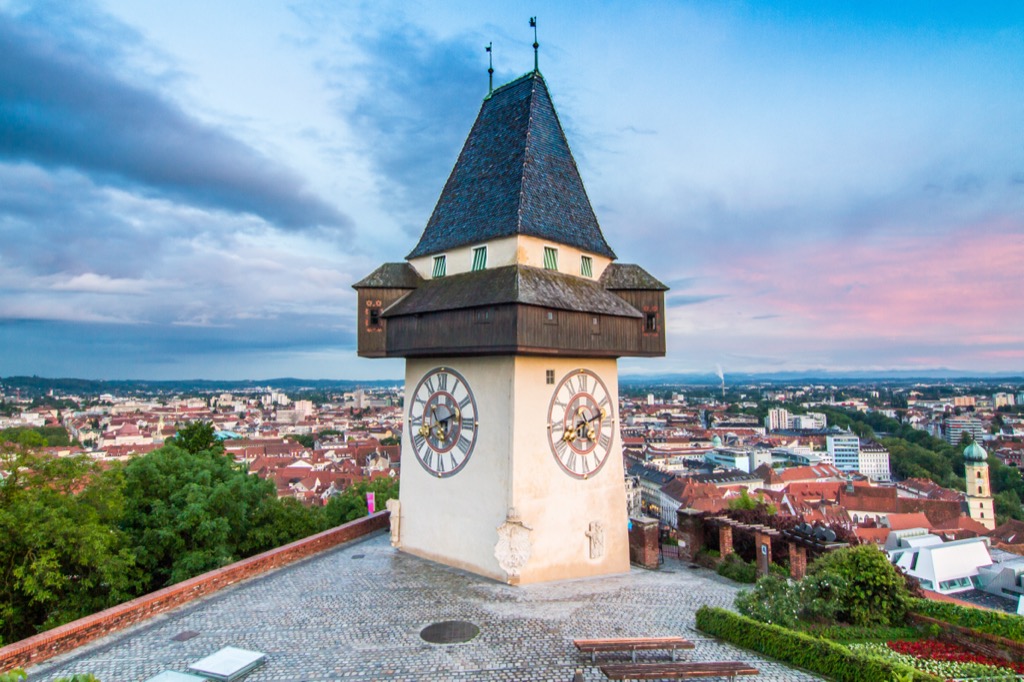
The landmark of Graz. The clocktower is located on a hill in the center of the city
Daily budget

What a day in Graz costs

Budget

€65–€150 / day

≈ $75 USD

Hostels or guesthouses, street food and markets, public transport.

Mid-range

€150–€380 / day

≈ $174 USD

Comfortable hotels, sit-down restaurants, a few paid activities.

Luxury

€380–€570 / day

≈ $440 USD

Boutique or five-star stays, fine dining, private tours and transfers.

Estimates are per person, per day, in EUR. USD equivalents use open.er-api.com exchange rates from 3 Sep 2026.

Make it your trip

What could your trip cost?

Choose your pace and travel style. Start with the published daily estimate, then make room for the things you care about.

Estimated trip budget · EUR

€1,050–€2,660

7 days · 1 traveler · Mid-range

Daily budget per person
€150–€380
Season adjustment
×1

An editorial estimate, not a booking quote. Daily budget × days × travelers × season adjustment. Add flights, insurance, and any costs outside the guide separately. Shared rooms and child rates may change your total.

Breakdown

Where the money goes

Daily cost by category and budget tier, in EUR
CategoryBudgetMid-rangeLuxury
Do€10€35€100

Category figures are typical daily spends; the tier totals above them include everyday extras, so the two need not match to the unit.

Cost of living

Everyday prices

Meal budget
€8
Mid-range meal for two
€20
Meal luxury
€55
Local beer
€4
Cappuccino
€3
Bottled water
€0.50
Local transport
€0

Typical prices at the time of research, in EUR; expect variation by neighbourhood and season.

Seasonal pricing

Prices through the year

  • Low×0.8
  • High×1.25
  • Shoulder×0.95

May to June, September to October

Overview

Graz, Austria’s second-largest city, is a UNESCO World Heritage gem that blends perfectly preserved medieval architecture with daring contemporary design. The futuristic Kunsthaus art museum (locally nicknamed the Friendly Alien) sits alongside Renaissance courtyards and baroque facades. Known as a UNESCO City of Design and a culinary hotspot, Graz offers authentic Austrian culture at prices significantly below Vienna and Salzburg.

The euro (EUR) is the local currency. Cards are widely accepted. Graz is a university city with a youthful energy that keeps prices reasonable, especially for dining and nightlife. The compact old town is easily walkable, and the excellent tram system covers everything else. Visit April-October for the best weather; winter brings Christmas markets and lower accommodation prices.

Daily Budget Breakdown

Budget ($65-$100/day): Stay in a hostel or pension ($35-$65/night), eat at Beisl (traditional pubs) and bakeries ($10-$18/day), walk or tram around the compact center ($2-$3/ride), and hike up the Schlossberg for free panoramic views.

Mid-Range ($120-$200/day): Book a boutique hotel in the old town ($80-$160/night), dine at Styrian restaurants with local pumpkin seed oil specialties ($22-$40/day), visit the Kunsthaus, Landeszeughaus armory, and Eggenberg Palace ($8-$15 each), and take a day trip to a Styrian wine road ($30-$60).

Luxury ($300-$450+/day): Reserve a luxury hotel ($200-$450+/night), enjoy fine dining with Styrian wine pairings ($55-$110/day), book private city tours and cooking classes ($80-$150), and arrange exclusive experiences like a truffle hunt in the Styrian forests ($60-$100).

How to Save Money in Graz

  • Walk the old town — it is compact and all major sights are within 15-20 minutes on foot.
  • Hike up the Schlossberg instead of paying for the funicular — the trail is scenic and takes about 20 minutes.
  • Eat at Beisl (traditional Austrian pubs) for hearty meals at $8-$15 per person.
  • Shop at the Kaiser-Josef-Platz farmers market for fresh, cheap Styrian produce and snacks.
  • Graz is 30-40% cheaper than Vienna — take advantage with longer stays and local dining.

Worth the Splurge

  • The Landeszeughaus (Styrian Armory) — the world’s largest historic armory with 32,000 weapons and suits of armor ($10-$12).
  • A Styrian pumpkin seed oil tasting paired with local wines at a traditional Buschenschank ($20-$35).
  • The Kunsthaus Graz — the Friendly Alien art museum with cutting-edge contemporary exhibitions ($10-$15).
  • Schloss Eggenberg, a stunning baroque palace with peacock gardens and a planetarium ceiling ($15-$18).
Tips

Stretch your budget

Ways to save
  • Use the free ALSTADTBIM tram in the city center — public transport in the hypercentre is completely free
  • Get the Graz Card (24/48/72hr) for free museum entry, free funicular, free public transport, and guided tour
  • Take a FlixBus from Vienna to Graz for as low as 10 euro instead of the 40 euro train
  • Eat at street food stalls in Hauptplatz and Jakominiplatz — sandwiches and Asian cuisine for 4-7 euro
  • Climb the 260 steps to Schlossberg instead of paying for the funicular — better workout and the same views
Budget tips
  • Graz is much cheaper than Vienna or Salzburg. Eat at Beisl (traditional pubs) for affordable Austrian meals. Walk or bike the compact old town. Visit the free Schlossberg viewpoint by hiking up instead of taking the funicular. Shop at Kaiser-Josef-Platz farmers market for fresh local produce. Get a student-priced museum pass if eligible.
Free things to do
  • Climbing the 260 steps to Schlossberg for panoramic city views
  • Strolling across the Murinsel floating steel island on the Mur River
  • Exploring Stadtpark and the Augarten gardens
  • Walking through the UNESCO-listed Altstadt with its Renaissance courtyards
  • Visiting the Kunsthaus Graz exterior (the alien-shaped Friendly Alien art museum)
FAQ

Frequently asked questions

Is Graz expensive compared to Vienna?

Graz is noticeably cheaper than Vienna. Hostel beds start at 16 euro, restaurant meals average 10-15 euro, and many attractions offer free or reduced-price entry. The free city-center tram and free Schlossberg access make daily transport costs minimal.

How long should I spend in Graz?

2-3 days is ideal. Day 1 for the Altstadt and Schlossberg, Day 2 for museums (Kunsthaus, Landeszeughaus armoury), Day 3 for a day trip to the Austrian wine country in southern Styria.

What is Graz known for?

Graz is Austria second-largest city, a UNESCO City of Design, and home to the largest medieval armoury in the world (Landeszeughaus). It is also famous for its blend of Renaissance, Baroque, and contemporary architecture, including the blob-shaped Kunsthaus.

Planning the trip? Read the full Graz guide.

Updated Data: Editorial research · Published daily-cost surveys · Open exchange rates