

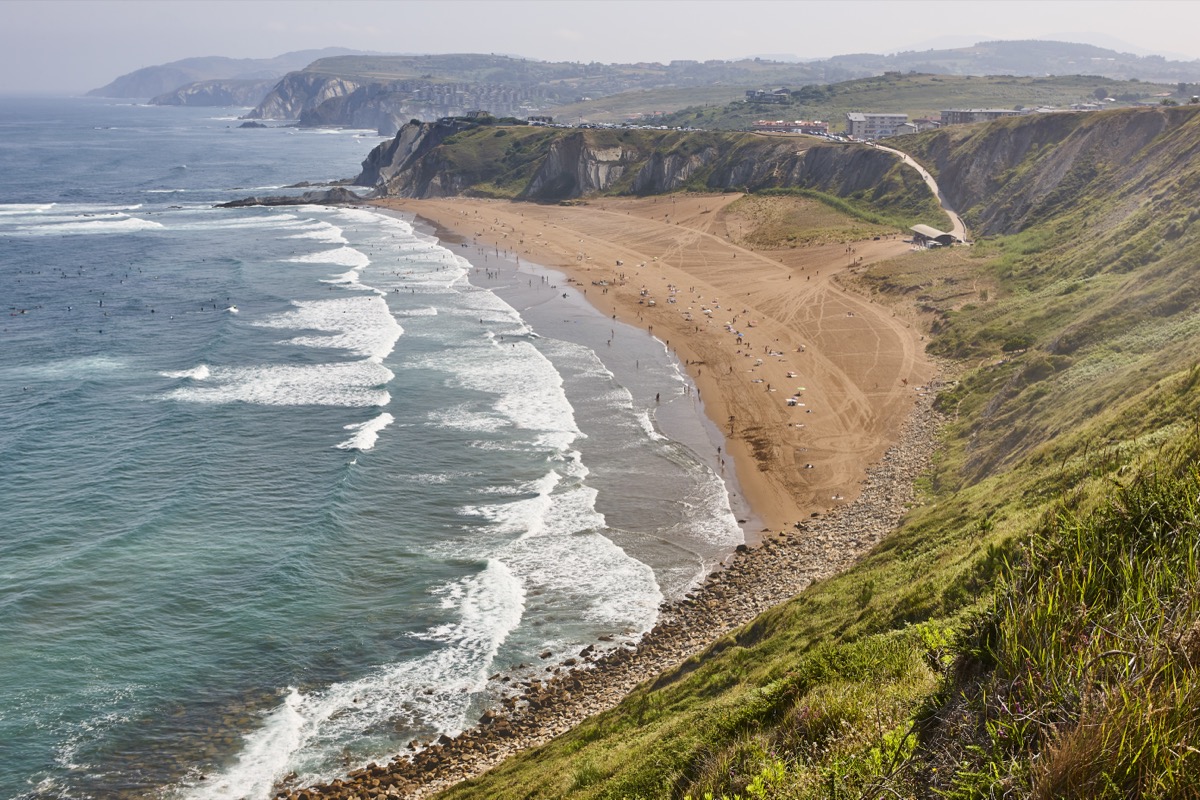
The Basque Coast showcases the distinctive cultural identity of Euskal Herria (Basque Country) along a dramatic shoreline where the Pyrenees meet the Bay of Biscay. This rugged coastline spans both Spain and France, featuring limestone cliffs carved into striking formations by Atlantic waves, sheltered fishing harbors, and golden beaches that attract surfers to world-class breaks at Mundaka and Biarritz. Fiercely independent Basque culture manifests in every aspect of coastal life, from the ancient Euskara language—unrelated to any other European tongue—to unique sports like jai alai and stone lifting competitions performed during village festivals. Picturesque towns including Hondarribia, Saint-Jean-de-Luz, and Getaria preserve medieval architecture alongside colorful fishing boats, while sophisticated San Sebastián (Donostia) balances Belle Époque elegance with one of the world’s highest concentrations of Michelin-starred restaurants. Culinary traditions distinguish the region, where seafood-focused pintxos bars serve intricate small bites that represent Basque gastronomy’s artistry, accompanied by local txakoli wine or sagardoa (cider) poured from height to create natural carbonation. Coastal paths like the Flysch Route reveal 60 million years of geological history in exposed rock strata, while the Guggenheim Museum in Bilbao showcases architectural innovation. The Basque Coast offers authentic cultural immersion in communities that maintain their distinctive heritage while embracing contemporary creativity, all against the backdrop of breathtaking maritime landscapes.
The destination guide
Basque Coast
San Sebastián has more Michelin stars per capita than anywhere else on earth. The pintxos bars alone justify the trip.
At a glance
- Spanish
- Catalan
- Basque
- Galician
- Atlantic coastline
- Green hills
- Fishing villages
- Flysch rock formations
How Basque Coast scores
Editorial scores on a 10-point scale, weighed against destinations of the same kind.
Travel safety snapshot
SafePlace indicators use their source 100-point scale; higher is more favourable. Planning context, not a live travel advisory — check official government guidance before you go.
When to go
Best months to visit: April, May, June, July, August, September and October.
- January: 6.2 to 12.1 degrees Celsius, 204.5 millimetres of rain, best-time score 2 out of 5.
- February: 7.1 to 14.2 degrees Celsius, 150.5 millimetres of rain, best-time score 2 out of 5.
- March: 8 to 15.2 degrees Celsius, 156.1 millimetres of rain, best-time score 3 out of 5.
- April: 9.6 to 16.9 degrees Celsius, 121.7 millimetres of rain, best-time score 4 out of 5.
- May: 11.9 to 19.2 degrees Celsius, 127.9 millimetres of rain, best-time score 5 out of 5.
- June: 15.4 to 22.2 degrees Celsius, 108.4 millimetres of rain, best-time score 5 out of 5.
- July: 17.3 to 23.7 degrees Celsius, 73.1 millimetres of rain, best-time score 5 out of 5.
- August: 17.5 to 24.6 degrees Celsius, 98.7 millimetres of rain, best-time score 5 out of 5.
- September: 15.6 to 23.1 degrees Celsius, 127.1 millimetres of rain, best-time score 5 out of 5.
- October: 13.5 to 20.7 degrees Celsius, 137.8 millimetres of rain, best-time score 4 out of 5.
- November: 9.8 to 15.7 degrees Celsius, 229.8 millimetres of rain, best-time score 2 out of 5.
- December: 8 to 13.8 degrees Celsius, 189.4 millimetres of rain, best-time score 3 out of 5.
Month-by-month conditions and packing advice
- January
- Cool to mild, rainy Cold winter weather, few tourists. Crowds: January in Basque Coast is one of the wetter periods, so museums, food stops, flexible reservations, and backup indoor plans make the trip easier. Pack: Pack layered clothing and comfortable walking shoes. Add a rain jacket or compact umbrella.
- February
- Cool to mild, rainy Chilly and quiet, good for museums. Crowds: February in Basque Coast is one of the wetter periods, so museums, food stops, flexible reservations, and backup indoor plans make the trip easier. Pack: Pack layered clothing and comfortable walking shoes. Add a rain jacket or compact umbrella.
- March
- Cool to mild, rainy Beginning to warm up, spring blossoms. Crowds: March in Basque Coast is one of the wetter periods, so museums, food stops, flexible reservations, and backup indoor plans make the trip easier. Pack: Pack layered clothing and comfortable walking shoes. Add a rain jacket or compact umbrella.
- April
- Cool to mild, some rain Pleasant spring weather, great for walking. Crowds: April in Basque Coast is workable with normal seasonal planning; build in layers, weather checks, and a mix of indoor and outdoor activities. Pack: Pack layered clothing and comfortable walking shoes. Add a rain jacket or compact umbrella.
- May
- Cool to mild, some rain Excellent weather before the summer crowds. Crowds: May in Basque Coast is workable with normal seasonal planning; build in layers, weather checks, and a mix of indoor and outdoor activities. Pack: Pack layered clothing and comfortable walking shoes. Add a rain jacket or compact umbrella.
- June
- Mild to warm, some rain Warm, sunny, and lively. Crowds: June in Basque Coast is workable with normal seasonal planning; build in layers, weather checks, and a mix of indoor and outdoor activities. Pack: Pack layered clothing and comfortable walking shoes. Add a rain jacket or compact umbrella.
- July
- Mild to warm, some rain Peak summer heat and peak tourist season. Crowds: July in Basque Coast is workable with normal seasonal planning; build in layers, weather checks, and a mix of indoor and outdoor activities. Pack: Pack layered clothing and comfortable walking shoes. Add a rain jacket or compact umbrella.
- August
- Mild to warm, some rain Very warm, many festivals and outdoor dining. Crowds: August in Basque Coast is workable with normal seasonal planning; build in layers, weather checks, and a mix of indoor and outdoor activities. Pack: Pack light clothing, sun protection, and comfortable walking shoes. Add a rain jacket or compact umbrella.
- September
- Mild to warm, some rain Perfect shoulder season with great weather. Crowds: September in Basque Coast is workable with normal seasonal planning; build in layers, weather checks, and a mix of indoor and outdoor activities. Pack: Pack layered clothing and comfortable walking shoes. Add a rain jacket or compact umbrella.
- October
- Mild to warm, rainy Crisp autumn air and beautiful colors. Crowds: October in Basque Coast is one of the wetter periods, so museums, food stops, flexible reservations, and backup indoor plans make the trip easier. Pack: Pack layered clothing and comfortable walking shoes. Add a rain jacket or compact umbrella.
- November
- Cool to mild, rainy Cooling down rapidly, often rainy. Crowds: November in Basque Coast is one of the wetter periods, so museums, food stops, flexible reservations, and backup indoor plans make the trip easier. Pack: Pack layered clothing and comfortable walking shoes. Add a rain jacket or compact umbrella.
- December
- Cool to mild, rainy Cold but festive holiday atmosphere. Crowds: December in Basque Coast is one of the wetter periods, so museums, food stops, flexible reservations, and backup indoor plans make the trip easier. Pack: Pack layered clothing and comfortable walking shoes. Add a rain jacket or compact umbrella.
- July
- August
- November
- December
- January
- February
- March
Know before you go
Neighbourhoods
San Sebastián, Bilbao, Biarritz, Saint-Jean-de-Luz
Best time to visit
The best time to visit the Basque Coast is June and September, when warm temperatures, reduced crowds, and lower prices converge. The Basque Coast has a maritime climate — milder and wetter than interior Spain — with rainfall possible year-round.
Spring (March-May)
Temperatures rise from 10-18°C (50-64°F). Green hillsides and blooming coastline make for beautiful hiking. Crowds are thin, but some beach-side businesses may not yet be fully open. Easter brings processional celebrations.
Summer (June-August)
Highs of 22-28°C (72-82°F) with long days and the warmest sea temperatures. July and August are peak season — beaches fill, Aste Nagusia festivals enliven Bilbao and San Sebastián, and accommodation prices spike. Book well in advance for August. June is ideal for balancing warmth and crowd levels.
Autumn (September-October)
September delivers warm weather (18-24°C / 64-75°F) with noticeably fewer visitors. The San Sebastián International Film Festival in September brings cultural energy. October is harvest season in the txakoli wine region. Rainfall increases through November.
Winter (November-March)
Mild by northern European standards — 8-13°C (46-55°F) — but rainy. Storm-watching along the coast is dramatic. Pintxos culture thrives indoors, and cultural attractions like the Guggenheim are crowd-free. Ideal for food-focused travel.
Crowds
Basque Coast (coastal Spain) is busiest in July–August and during local summer festivals (e.g., Semana Grande in August), with popular surf towns and coastal routes crowded; quietest November–March (except holiday weekends), when seaside tourism falls markedly.
Getting there and around
Getting there
Bilbao Airport (BIO) is the main international gateway, with direct flights from major European cities including London, Amsterdam, Paris, Frankfurt, and Rome. San Sebastián Airport (EAS) handles fewer routes, mainly domestic. Biarritz Airport (BIQ) in the French Basque Country is 35 km from San Sebastián. High-speed Renfe trains connect Bilbao and San Sebastián to Madrid (about 5-6 hours). The AP-8 motorway links the coast, while the A-1 connects to Madrid. From France, the A63 crosses the border at Irún near San Sebastián.
Getting around
Euskotren regional trains connect San Sebastián and Bilbao in about 2.5 hours via a scenic coastal route. PESA buses cover the same route faster (about 1 hour 15 minutes on the motorway). Within Bilbao, the modern Metro system (designed by Norman Foster) connects the center to beach neighborhoods like Getxo, complemented by the Bilbobus network and a tram line along the river. The Barik card works across all Bilbao public transport. In San Sebastián, the compact Dbus network covers all neighborhoods, and the Dbizi bike-share system is popular. Taxis are metered in both cities, and Uber operates but with limited availability. A rental car is useful for coastal day trips to Zumaia, Getaria, or Gaztelugatxe.
Top experiences in Basque Coast
La Concha Beach & Old Town
Often rated among Europe’s finest urban beaches, La Concha sweeps in a near-perfect crescent between Monte Urgull and Monte Igueldo. The promenade’s ornate Belle Époque railing frames views of Santa Clara Island. Behind the beach, the Parte Vieja (Old Town) is the undisputed heart of pintxos culture — narrow streets packed with bars where the counter displays rival any museum exhibition. The Basílica de Santa María del Coro and the 16th-century Iglesia de San Vicente anchor the quarter’s historic identity.
Guggenheim Museum Bilbao
Frank Gehry’s titanium-clad masterpiece redefined Bilbao when it opened in 1997, turning a post-industrial port city into a global art destination. The building itself is the primary exhibit — its flowing organic forms appear to shift with the light and weather. Inside, galleries house rotating exhibitions of contemporary art alongside permanent installations by Richard Serra, Jeff Koons, and Louise Bourgeois. Outside, the giant floral puppy ‘Puppy’ by Koons and Bourgeois’ spider ‘Maman’ have become city icons.
Pintxos Culture
Pintxos — the Basque Country’s answer to tapas — are an art form here, elevated by more Michelin stars per capita than almost anywhere on earth. In San Sebastián, the ritual involves moving from bar to bar through the Old Town, eating one or two pintxos at each stop, paired with txakoli (local sparkling white wine) or a small beer (zurito). Bilbao’s Plaza Nueva and Casco Viejo offer their own distinct pintxos culture. The experience is as much social as culinary — conversation flows freely between strangers at the bar.
Gaztelugatxe
A rocky islet connected to the mainland by a dramatic stone stairway of 241 steps, Gaztelugatxe is topped by a 10th-century hermitage dedicated to San Juan. The approach involves a winding cliff path with views of crashing Atlantic waves. The site gained international fame as a filming location for Game of Thrones (Dragonstone). Located between Bilbao and Bermeo, the visit takes about 2-3 hours round-trip and is best done early morning to avoid crowds and midday heat.
Flysch Cliffs of Zumaia
The coastal cliffs between Zumaia and Deba expose 60 million years of geological history in stacked layers of limestone and marl known as flysch. These dramatic formations — best seen from a boat tour or the coastal hiking path — include the K-T boundary layer that marks the asteroid impact that ended the dinosaurs. The beach at Itzurun, framed by vertical flysch formations, is one of the Basque Coast’s most photographed spots. Zumaia’s two beaches are also popular surf spots.
Editor-curated picks carried over from our original guide. Where a full place guide exists, the card links to it.
Worth booking ahead in Basque Coast
Hand-picked from the operators our guides already send readers to. Prices and availability are live on the partner site.
BrowseViator
Tours and tickets in Basque Coast on Viator (opens Viator in a new tab)
Viator's full list of bookable tours and tickets in Basque Coast.
BrowseGetYourGuide
Experiences in Basque Coast on GetYourGuide (opens GetYourGuide in a new tab)
Everything GetYourGuide sells in Basque Coast, with the cancellation terms on each listing.
Where to stayBooking.com
Stays in Basque Coast (opens Booking.com in a new tab)
Live rates and availability for Basque Coast on Booking.com; filter by neighbourhood once you know where your days start.
We earn a commission if you book through these links, at no extra cost to you. It is how we keep the guides free and independent.
Where to stay
Lasala Plaza Hotel
Paseo de la República Argentina, 4, 20004 Donostia-San Sebastián, Gipuzkoa, Spain
A contemporary 5-star hotel on the edge of San Sebastián’s Old Town with direct views over La Concha Bay and the fishing port. The 63 rooms feature floor-to-ceiling windows, natural materials, and a muted palette that lets the seascape take center stage. The rooftop terrace and infinity pool deliver one of the most photographed panoramas in the city. Its location places guests within steps of the pintxos bars of the Parte Vieja and the promenade along La Concha Beach.
Hotel Miro
Alameda Mazarredo, 77, 48009 Bilbao, Bizkaia, Spain
A sleek boutique hotel directly facing Frank Gehry’s Guggenheim Museum, Hotel Miro was designed by fashion designer Antonio Miró. The 50 rooms feature minimalist décor, custom furniture, and many offer Guggenheim views. The ground-floor restaurant serves contemporary Basque cuisine with seasonal tasting menus. Situated on the Nervión River promenade, the hotel provides easy walking access to the Casco Viejo, Mercado de la Ribera, and the Fine Arts Museum.
Editor-curated stays carried over from our original guide. Where we have reviewed the hotel, the card links to the review.
Tips from the field
Highlights
- La Concha Beach – Crescent-shaped bay rated among Europe's finest
- Guggenheim Bilbao – Gehry's titanium masterpiece of contemporary art
- Pintxos Culture – World-class culinary tradition in every bar
- Gaztelugatxe – Dramatic island hermitage and Game of Thrones location
- Basque Identity – Europe's oldest language and unique cultural traditions
- Coastal Scenery – Flysch cliffs, surfing beaches, and fishing villages
Best activities
- The Basque Coast combines world-class gastronomy with dramatic Atlantic scenery. In San Sebastián, a guided pintxos tour through the Old Town is essential — bars like La Cuchara de San Telmo, Gandarias, and Bar Nestor are institutions. The funicular ride to Monte Igueldo rewards with sweeping views of La Concha Bay. Surfing at Zurriola Beach draws both beginners and experienced riders.
- In Bilbao, the Guggenheim Museum anchors a cultural circuit that includes the Fine Arts Museum and the Azkuna Zentroa cultural center designed by Philippe Starck. The Casco Viejo invites exploration of independent shops, traditional restaurants, and the cavernous Mercado de la Ribera. Day trips along the coast to Gaztelugatxe, the flysch cliffs of Zumaia, and the fishing village of Getaria (birthplace of Balenciaga) round out the experience. The GR-121 coastal hiking trail connects many of these points on foot.
Local experiences
- Join a cooking class at one of San Sebastián's gastronomic societies (txoko) to learn traditional Basque recipes. Take a txakoli wine tasting in the vineyards above Getaria with views over the coast. Hike the coastal GR-121 path between Zumaia and Deba to see flysch formations up close. Catch a live pelota match (cesta punta) at the Jai-Alai fronton in San Sebastián. Browse the Sunday morning flea market in Bilbao's Plaza Nueva.
Practical tips
- Pintxos Etiquette: Order at the bar, eat standing, and move on after 1-2 bites per bar.
- Dining Schedule: Lunch 1:30-3:30 PM, dinner 9:00-11:00 PM — restaurants won't serve outside these windows.
- Rain Gear: The Basque Coast averages 150+ rainy days per year; pack a light rain jacket year-round.
- Txakoli: This local sparkling wine is poured from height — let the bartender do it.
- Language: Signs are in both Euskera and Spanish; 'agur' means goodbye.
- Gaztelugatxe: Reservations required in summer; book online via the Bizkaia province website.
Photography tips
- La Concha Bay photographs best from the Monte Igueldo viewpoint at sunset, with the bay curving below and Monte Urgull across the water. The Guggenheim is most dramatic shot from the Puente de La Salve bridge at blue hour, when the titanium panels glow. For pintxos photography, ask permission first — bar staff are usually happy to showcase their creations. Gaztelugatxe is best captured in the morning light from the mainland cliff before descending the steps. The flysch cliffs at Zumaia's Itzurun beach deliver their most dramatic compositions at low tide when the full rock layers are exposed.
Keeping it authentic
- The Basque Country is fiercely independent in culture, language, and identity — Euskera, the Basque language, predates all other European languages and has no known relatives. This isn't a tourist marketing angle
- it reflects a living culture where village festivals (fiestas patronales) feature rural sports like stone-lifting (harrijasotzaileak) and wood-chopping (aizkolari) that originated from working life. The pintxos tradition is not a restaurant concept but a social institution — locals eat standing at the bar, moving from place to place with friends, and the best bars are judged by neighborhood regulars, not guidebooks. The cultural revival since ETA's disbanding in 2018 has brought renewed pride in Basque language and traditions.
Culture, customs and safety
Cultural heritage
The heritage of the Basque Coast belongs to one of Europe’s most ancient and distinct cultures, defined by its unique language, Euskara, and a resilient identity that transcends the French-Spanish border. Its deep history is evident in the UNESCO-listed prehistoric cave art of Ekain and Santimamiñe, while its industrial prowess is symbolized by the Vizcaya Bridge, another World Heritage site. The culture is deeply tied to both the sea, with a long history of fishing and whaling, and the land, with traditions and rural sports rooted in the life of the iconic Basque farmhouse.
Local customs & etiquette
Dining times follow Spanish schedules — lunch is served from 1:30-3:30 PM and dinner from 9:00-11:00 PM. During pintxos hopping, order at the bar (not seated), keep your toothpicks (they’re used to tally your bill at some bars), and move on after one or two bites. Txakoli wine is poured from height to aerate it — this is tradition, not showmanship. Greet with ‘kaixo’ (hello in Euskera) and locals will appreciate the effort. Aste Nagusia festival weeks in August are raucous, joyful, and deeply communal — participation is welcomed. Sunday is family day; many restaurants fill with extended family groups for long lunches.
Safety notes
The Basque Country is one of Spain’s safest regions. Since ETA’s disbanding in 2018, the political context has stabilized entirely. Violent crime is uncommon, and tourist areas in both San Sebastián and Bilbao are well-patrolled. The primary risk is petty pickpocketing in crowded areas — La Concha promenade during peak summer, Bilbao’s Casco Viejo, and transit stations. Both cities have excellent healthcare through Spain’s public system. Emergency number: 112. Pharmacies (farmacias) are widely distributed and rotate 24-hour duty schedules.

