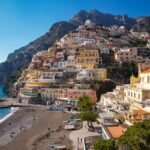
Aphrodite’s mythological birthplace at Petra tou Romiou where Ancient Greek goddess of love emerged from sea foam amid dramatic rock formations along Cyprus’s most beautiful coastline, plus Aphrodite’s Baths natural cave under fig trees where she met lover Adonis during hunting stops. UNESCO Paphos Archaeological Park’s ancient villa ruins featuring extraordinary mosaics depicting mythological scenes—more well-preserved than Pompeii—surrounding Sanctuary of Aphrodite Paphia pilgrimage site and Tombs of the Kings necropolis (4th century BCE) cut from living rock. World’s last divided capital Nicosia where Ledra Street checkpoint enables crossing from Greek Cypriot south to Turkish Cypriot north through UN buffer zone, stark reminder of 1974 invasion heritage creating unique geopolitical tourism experience. Troodos Mountains’ pine-scented Byzantine art treasures across 10 religious buildings contrasting simple rural architecture with rich interior decorations, while turtle-nesting beaches provide timeless antidotes to sun-kissed resort culture. 300+ annual sunshine days illuminating Coral Bay’s soft white sand and gentle seas, Akamas Peninsula’s virgin beaches and fascinating geology, plus diverse accommodation: Paphos (beach access), Limassol (central), Nicosia (culture), Larnaca (airport proximity). Ancient mythology, archaeological treasures, beautiful Mediterranean coastlines, and fascinating divided island status creating unique cultural heritage spanning millennia.
The destination guide
Cyprus

Travel guides for Cyprus
More guides featuring Cyprus (3)
At a glance
- Greek
- Turkish
- Mediterranean island
- Sandy beaches
- Mountain ranges
- Ancient ruins
How Cyprus scores
Editorial scores on a 10-point scale, weighed against destinations of the same kind.
Travel safety snapshot
SafePlace indicators use their source 100-point scale; higher is more favourable. Planning context, not a live travel advisory — check official government guidance before you go.
When to go
Best months to visit: March, April, May, June, July, August, September, October and November.
- January: -1.4 to 5.6 degrees Celsius, 94.9 millimetres of rain, best-time score 2 out of 5.
- February: -1 to 6.9 degrees Celsius, 49.6 millimetres of rain, best-time score 2 out of 5.
- March: 1 to 9.8 degrees Celsius, 47.7 millimetres of rain, best-time score 4 out of 5.
- April: 5.1 to 14.9 degrees Celsius, 33 millimetres of rain, best-time score 5 out of 5.
- May: 9.2 to 19.5 degrees Celsius, 25.4 millimetres of rain, best-time score 5 out of 5.
- June: 13.1 to 23.8 degrees Celsius, 11.3 millimetres of rain, best-time score 5 out of 5.
- July: 16.5 to 27.6 degrees Celsius, 2.1 millimetres of rain, best-time score 4 out of 5.
- August: 16.1 to 27 degrees Celsius, 3.6 millimetres of rain, best-time score 4 out of 5.
- September: 13.3 to 23.8 degrees Celsius, 10.7 millimetres of rain, best-time score 5 out of 5.
- October: 9 to 18.8 degrees Celsius, 19.2 millimetres of rain, best-time score 5 out of 5.
- November: 4.7 to 13.1 degrees Celsius, 32.1 millimetres of rain, best-time score 4 out of 5.
- December: 1 to 8 degrees Celsius, 75.5 millimetres of rain, best-time score 3 out of 5.
Month-by-month conditions and packing advice
- January
- Cold, some rain January in Cyprus: midwinter is less balanced for a broad Cyprus trip. Crowds: January in Cyprus is workable with normal seasonal planning; build in layers, weather checks, and a mix of indoor and outdoor activities. Pack: Pack warm layers, a coat, and comfortable shoes for cold mornings and evenings. Add a rain jacket or compact umbrella.
- February
- Cold, occasional rain February in Cyprus: midwinter is less balanced for a broad Cyprus trip. Crowds: February in Cyprus is workable with normal seasonal planning; build in layers, weather checks, and a mix of indoor and outdoor activities. Pack: Pack warm layers, a coat, and comfortable shoes for cold mornings and evenings.
- March
- Cold, occasional rain March in Cyprus: early spring, summer, or late autumn can work with heat or rain planned around. Crowds: March in Cyprus is workable with normal seasonal planning; build in layers, weather checks, and a mix of indoor and outdoor activities. Pack: Pack warm layers, a coat, and comfortable shoes for cold mornings and evenings.
- April
- Cool to mild, occasional rain April in Cyprus: beaches, archaeological sites, villages, hiking, food, and coastal drives balance warm weather with fewer peak crowds. Crowds: April in Cyprus is workable with normal seasonal planning; build in layers, weather checks, and a mix of indoor and outdoor activities. Pack: Pack layered clothing and comfortable walking shoes.
- May
- Cool to mild, mostly dry May in Cyprus: beaches, archaeological sites, villages, hiking, food, and coastal drives balance warm weather with fewer peak crowds. Crowds: May in Cyprus is workable with normal seasonal planning; build in layers, weather checks, and a mix of indoor and outdoor activities. Pack: Pack layered clothing and comfortable walking shoes.
- June
- Mild to warm, mostly dry June in Cyprus: beaches, archaeological sites, villages, hiking, food, and coastal drives balance warm weather with fewer peak crowds. Crowds: June in Cyprus is comfortable for sightseeing, neighborhoods, food stops, day trips, and outdoor time with limited weather friction. Pack: Pack layered clothing and comfortable walking shoes.
- July
- Warm to hot, mostly dry July in Cyprus: early spring, summer, or late autumn can work with heat or rain planned around. Crowds: July in Cyprus is comfortable for sightseeing, neighborhoods, food stops, day trips, and outdoor time with limited weather friction. Pack: Pack light clothing, sun protection, and comfortable walking shoes.
- August
- Warm to hot, mostly dry August in Cyprus: early spring, summer, or late autumn can work with heat or rain planned around. Crowds: August in Cyprus is comfortable for sightseeing, neighborhoods, food stops, day trips, and outdoor time with limited weather friction. Pack: Pack light clothing, sun protection, and comfortable walking shoes.
- September
- Mild to warm, mostly dry September in Cyprus: beaches, archaeological sites, villages, hiking, food, and coastal drives balance warm weather with fewer peak crowds. Crowds: September in Cyprus is comfortable for sightseeing, neighborhoods, food stops, day trips, and outdoor time with limited weather friction. Pack: Pack layered clothing and comfortable walking shoes.
- October
- Cool to mild, mostly dry October in Cyprus: beaches, archaeological sites, villages, hiking, food, and coastal drives balance warm weather with fewer peak crowds. Crowds: October in Cyprus is workable with normal seasonal planning; build in layers, weather checks, and a mix of indoor and outdoor activities. Pack: Pack layered clothing and comfortable walking shoes.
- November
- Cool to mild, occasional rain November in Cyprus: early spring, summer, or late autumn can work with heat or rain planned around. Crowds: November in Cyprus is workable with normal seasonal planning; build in layers, weather checks, and a mix of indoor and outdoor activities. Pack: Pack layered clothing and comfortable walking shoes.
- December
- Cold, some rain December in Cyprus: winter rain and cooler evenings narrow beach and mountain plans. Crowds: December in Cyprus is workable with normal seasonal planning; build in layers, weather checks, and a mix of indoor and outdoor activities. Pack: Pack warm layers, a coat, and comfortable shoes for cold mornings and evenings. Add a rain jacket or compact umbrella.
Know before you go
Best time to visit
April through October for beachgoing and outdoor exploration. Spring wildflowers are spectacular. September-October offer warm seas with fewer tourists.
Season by season
Summer (July-Sept):
Weather: 22-26°C, sunny
Highlights: Film Festival (Sept)
Best For: Beach/Swim
Spring (April-June):
Weather: 15-20°C, fresh
Highlights: Cider Season
Best For: Food/Hiking
Fall (Oct-Nov):
Weather: 15-20°C, rain
Highlights: Gastronomia
Best For: Eating
Winter (Dec-March):
Weather: 8-15°C, stormy
Highlights: Tamborrada (Jan)
Best For: Cozy bars
Crowds
Cyprus peaks in July–August and around Easter and Christmas holidays with coastal resorts crowded and busy ferry/flight connections; quietest November–March (mild winter), when resort areas are much quieter though some coastal towns remain active—overall high summer crowds on the coast.
Getting there and around
Getting there
Cyprus is primarily accessed by air with two international airports: Larnaca International (LCA) as main hub and Paphos International (PFO). Served by airlines including British Airways, easyJet, and Ryanair offering direct flights from UK and major European hubs like Athens and Brussels. No direct U.S. flights – travelers must connect through Europe or Middle East. Possible to enter Turkish-occupied northern Cyprus via Ercan International (ECN), but all flights transit through Turkey and this entry considered illegal by Republic of Cyprus government. Ferry services connect northern Cyprus with Turkey, but no regular passenger ferries to southern island since 2001.
Getting around
Getting around Cyprus is largely dependent on buses, as the island lacks metros or trams, and intercity public transport operates mainly via the reliable and affordable network of intercity and urban buses. While city centers like Nicosia, Limassol, and Larnaca are reasonably walkable, navigating between towns or reaching rural attractions—like ancient ruins or coastal villages—almost always requires a car, making car rental a common and practical choice for travelers seeking flexibility. Taxis are readily available, but rideshare apps aren’t widely used outside of select services like Bolt in certain urban areas, and prices can rise steeply at night or on weekends. For public transit users, consider buying a daily or weekly bus pass from local stations or kiosks to save on multiple rides, especially if you’re basing yourself in one city.
Top experiences in Cyprus
Paphos Archaeological Park & Tombs of the Kings
A UNESCO World Heritage site showcasing extraordinary Roman mosaic floors in the Houses of Dionysos and Theseus, alongside the monumental rock-carved Tombs of the Kings dating back to the 4th century BC.
Petra tou Romiou (Aphrodite's Rock)
A dramatic sea stack along the coastal road between Limassol and Paphos, celebrated in mythology as the birthplace of the ancient goddess Aphrodite where she emerged from the sea foam.
Troodos Mountains & Painted Byzantine Churches
The pine-clad Troodos mountain range preserves ten UNESCO-listed Byzantine churches and monasteries, renowned for their intricate medieval frescoes, alongside terraced vineyards producing sweet Commandaria wine.
Kourion Ancient Amphitheatre
A magnificent Greco-Roman city-kingdom perched on coastal limestone bluffs overlooking Episkopi Bay, featuring a restored open-air amphitheater, the House of Eustolios with mosaic baths, and early Christian basilicas.
Cape Greco National Forest Park
Located on the southeastern tip of Cyprus between Ayia Napa and Protaras, this coastal nature reserve features dramatic sea caves, natural limestone arches, and crystal-clear turquoise lagoons.
Editor-curated picks carried over from our original guide. Where a full place guide exists, the card links to it.
Worth booking ahead in Cyprus
Hand-picked from the operators our guides already send readers to. Prices and availability are live on the partner site.
BrowseViator
Tours and tickets in Cyprus on Viator (opens Viator in a new tab)
Viator's full list of bookable tours and tickets in Cyprus.
BrowseGetYourGuide
Experiences in Cyprus on GetYourGuide (opens GetYourGuide in a new tab)
Everything GetYourGuide sells in Cyprus, with the cancellation terms on each listing.
Where to stayBooking.com
Stays in Cyprus (opens Booking.com in a new tab)
Live rates and availability for Cyprus on Booking.com; filter by neighbourhood once you know where your days start.
We earn a commission if you book through these links, at no extra cost to you. It is how we keep the guides free and independent.
Where to stay
Anassa Hotel
40 Alekou Michailidi Road, Neo Chorio 8852, Cyprus
An exclusive five-star hillside resort overlooking Chrysochou Bay on the Akamas Peninsula, styled like a traditional Cypriot village with world-class Thalassa spa rituals.
Hotel de Londres y de Inglaterra
Zubieta Kalea, 2, 20007 Donostia, Gipuzkoa, Spain
A historic hotel located right on the La Concha promenade. The sea view rooms offer one of the most famous views in the world. It exudes old-world charm and is walking distance to everything.
Akelarre – Relais & Châteaux
Padre Orkolaga Ibilbidea, 56, 20008 Donostia, Gipuzkoa, Spain
A luxury boutique hotel attached to the 3-star Michelin restaurant of Pedro Subijana. It is located on Mount Igueldo with sweeping sea views. It is sleek, modern, and a destination for foodies who want the ultimate experience.
Editor-curated stays carried over from our original guide. Where we have reviewed the hotel, the card links to the review.
Tips from the field
Highlights
- Paphos Archaeological Park — UNESCO-listed Roman mosaics and ancient Tombs of the Kings
- Petra tou Romiou — Mythological birthplace of Aphrodite amidst dramatic coastal sea stacks
- Troodos Mountains — Alpine pine forests and UNESCO-listed medieval painted churches
- Kourion Archaeological Site — Restored Greco-Roman cliffside amphitheater overlooking the sea
- Cape Greco — Sea caves, natural limestone bridges, and turquoise swimming coves
- Cypriot Meze & Wine — Authentic halloumi, sheftalia kebabs, and historic Commandaria wine
Best activities
- Go for a Pintxo crawl in Parte Vieja. Sunbathe on La Concha beach. Take the funicular to Monte Igueldo. Walk to the Comb of the Wind sculptures. Eat at a Michelin-star restaurant. Visit a cider house (Sagardotegi) in Astigarraga.
Photography tips
- Golden Hour: Sunset from Monte Igueldo looking back at the lit-up city.
- Iconic Shots:
- The white railings of La Concha promenade.
- The Comb of the Wind with crashing waves.
- A plate of colorful Pintxos.
- The view from the funicular.
- Surfers at Zurriola.
- Technique: Use a fast shutter speed for the waves at the Peine del Viento.
Timing
- Peak Season (July-Aug):
- Expensive, crowded
- Shoulder Season (May-June, Sept):
- Gourmet choice
- Low Season (Nov-March):
- Rainy, local feel
Keeping it authentic
- Donostia (San Sebastian) is the culinary capital of the world per capita. The 'Pintxo' etiquette: don't fill your plate at one place
- have one drink and one pintxo, then move to the next bar. Throw napkins on the floor (in traditional places, it means the food is good).
Culture, customs and safety
Cultural heritage
Cyprus three UNESCO World Heritage Sites span 9,000 years of Eastern Mediterranean civilization. Paphos (1980) preserves cult center of Aphrodite with spectacular 3rd-5th century mosaics in Houses of Dionysus, Orpheus, and Aion, buried 16 centuries yet remarkably intact and considered finest in Eastern Mediterranean. Rock-hewn Tombs of Kings feature monumental Doric pillared structures carved from solid rock showcasing exceptional ancient architecture. Troodos Painted Churches (1985) encompass ten Byzantine monasteries and churches with richly decorated murals depicting Byzantine and post-Byzantine art, including Panagia of Podythou with Italian-influenced frescoes, Holy Cross Church from 1100s, and Archangel Michael Church with stunning 1400s murals. Choirokoitia (1998) represents 7000 BC Neolithic settlement twice older than Great Pyramid, featuring circular stone dwellings and defensive walls revealing early human social organization and East-West cultural exchange. All sites received enhanced protection status in 2010 recognizing global cultural importance. Architectural heritage ranges from prehistoric circular settlements through Greco-Roman villa complexes with peristyle tombs to distinctive Byzantine domed churches, demonstrating Cyprus role as Eastern Mediterranean crossroads throughout millennia.
Local customs & etiquette
Hospitality is a cornerstone of Cypriot culture, so do not be surprised if you are offered coffee or a snack when visiting a home or even a shop. Greetings are typically warm and friendly, starting with a handshake. When visiting the island many beautiful monasteries and churches, it is important to dress modestly.