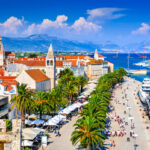
The Dalmatian Coast unfolds along the eastern Adriatic as a 350-kilometer limestone frontier where crystalline turquoise waters meet dramatic karst mountains, encompassing over 1,000 islands and some of Europe’s most historically significant coastal cities. This Croatian coastline preserves layers of civilization within its stone settlements—from Dubrovnik’s perfectly maintained 15th-century walls to Split’s urban center built within Roman Emperor Diocletian’s 4th-century palace, now bustling with cafés and boutiques amid ancient columns. Maritime culture defines local identity, expressed through generations of skilled shipbuilding, fishermen who still practice traditional methods, and distinctive gastronomic heritage blending Mediterranean ingredients with Slavic influences. On islands like lavender-producing Hvar, vineyard-terraced Korčula (purported birthplace of Marco Polo), and densely forested Mljet, villages maintain centuries-old traditions including klapa a cappella singing and religious festivals that follow the pre-industrial calendar. Beyond the increasingly popular coastal hubs, secluded coves accessible only by boat offer respite from summer crowds, while hilltop towns in the hinterland provide authentic glimpses into rural life largely unchanged by tourism. The region’s complex history under Venetian, Ottoman, Habsburg, and Yugoslav influences created distinctive cultural expressions in architecture, cuisine, and dialect that vary noticeably between microregions—rewarding travelers who venture beyond photogenic sailing routes to engage with communities where fishing, olive cultivation, and traditional stonemasonry remain essential to both economy and identity.
The destination guide
Dalmatian Coast

Travel guides for Dalmatian Coast
More guides featuring Dalmatian Coast (7)
At a glance
- Croatian
- Adriatic coast
- Island archipelago
- Walled cities
- Mediterranean pines
- Ancient Roman history
- Coastal Mediterranean lifestyle
- Game of Thrones filming locations
How Dalmatian Coast scores
Character
Editorial scores on a 10-point scale, weighed against destinations of the same kind.
Travel safety snapshot
SafePlace indicators use their source 100-point scale; higher is more favourable. Planning context, not a live travel advisory — check official government guidance before you go.
When to go
Best months to visit: April, May, June, July, August, September and October.
- January: 3.9 to 11 degrees Celsius, 128.8 millimetres of rain, best-time score 2 out of 5.
- February: 5.4 to 12.8 degrees Celsius, 99.2 millimetres of rain, best-time score 2 out of 5.
- March: 7.1 to 14.9 degrees Celsius, 112.1 millimetres of rain, best-time score 2 out of 5.
- April: 10.1 to 18.2 degrees Celsius, 96.5 millimetres of rain, best-time score 4 out of 5.
- May: 14.5 to 22.2 degrees Celsius, 107.3 millimetres of rain, best-time score 5 out of 5.
- June: 19.4 to 28.1 degrees Celsius, 46.7 millimetres of rain, best-time score 5 out of 5.
- July: 21.9 to 31.2 degrees Celsius, 30 millimetres of rain, best-time score 4 out of 5.
- August: 22.2 to 31.2 degrees Celsius, 57.4 millimetres of rain, best-time score 4 out of 5.
- September: 17.8 to 26 degrees Celsius, 123.6 millimetres of rain, best-time score 5 out of 5.
- October: 13.5 to 21.2 degrees Celsius, 111 millimetres of rain, best-time score 5 out of 5.
- November: 9.8 to 16.2 degrees Celsius, 258.3 millimetres of rain, best-time score 3 out of 5.
- December: 6 to 12.7 degrees Celsius, 171.6 millimetres of rain, best-time score 2 out of 5.
Month-by-month conditions and packing advice
- January
- Cool to mild, some rain January in Dalmatian Coast: winter closures and cool weather make coast-first travel less balanced. Crowds: January in Dalmatian Coast is workable with normal seasonal planning; build in layers, weather checks, and a mix of indoor and outdoor activities. Pack: Pack layered clothing and comfortable walking shoes. Add a rain jacket or compact umbrella.
- February
- Cool to mild, some rain February in Dalmatian Coast: winter closures and cool weather make coast-first travel less balanced. Crowds: February in Dalmatian Coast is workable with normal seasonal planning; build in layers, weather checks, and a mix of indoor and outdoor activities. Pack: Pack layered clothing and comfortable walking shoes. Add a rain jacket or compact umbrella.
- March
- Cool to mild, some rain March in Dalmatian Coast: winter closures and cool weather make coast-first travel less balanced. Crowds: March in Dalmatian Coast is workable with normal seasonal planning; build in layers, weather checks, and a mix of indoor and outdoor activities. Pack: Pack layered clothing and comfortable walking shoes. Add a rain jacket or compact umbrella.
- April
- Cool to mild, some rain April in Dalmatian Coast: conditions can be excellent, though high summer crowds and prices need planning. Crowds: April in Dalmatian Coast is workable with normal seasonal planning; build in layers, weather checks, and a mix of indoor and outdoor activities. Pack: Pack layered clothing and comfortable walking shoes. Add a rain jacket or compact umbrella.
- May
- Mild to warm, some rain May in Dalmatian Coast: coastal towns, ferries, islands, swimming, wineries, and historic walks balance warmth with fewer peak crowds. Crowds: May in Dalmatian Coast is workable with normal seasonal planning; build in layers, weather checks, and a mix of indoor and outdoor activities. Pack: Pack layered clothing and comfortable walking shoes. Add a rain jacket or compact umbrella.
- June
- Warm to hot, occasional rain June in Dalmatian Coast: coastal towns, ferries, islands, swimming, wineries, and historic walks balance warmth with fewer peak crowds. Crowds: June in Dalmatian Coast is comfortable for sightseeing, neighborhoods, food stops, day trips, and outdoor time with limited weather friction. Pack: Pack light clothing, sun protection, and comfortable walking shoes.
- July
- Warm to hot, mostly dry July in Dalmatian Coast: conditions can be excellent, though high summer crowds and prices need planning. Crowds: July in Dalmatian Coast is workable with normal seasonal planning; build in layers, weather checks, and a mix of indoor and outdoor activities. Pack: Pack light clothing, sun protection, and comfortable walking shoes.
- August
- Warm to hot, occasional rain August in Dalmatian Coast: conditions can be excellent, though high summer crowds and prices need planning. Crowds: August in Dalmatian Coast is workable with normal seasonal planning; build in layers, weather checks, and a mix of indoor and outdoor activities. Pack: Pack light clothing, sun protection, and comfortable walking shoes.
- September
- Mild to warm, some rain September in Dalmatian Coast: coastal towns, ferries, islands, swimming, wineries, and historic walks balance warmth with fewer peak crowds. Crowds: September in Dalmatian Coast is workable with normal seasonal planning; build in layers, weather checks, and a mix of indoor and outdoor activities. Pack: Pack light clothing, sun protection, and comfortable walking shoes. Add a rain jacket or compact umbrella.
- October
- Mild to warm, some rain October in Dalmatian Coast: coastal towns, ferries, islands, swimming, wineries, and historic walks balance warmth with fewer peak crowds. Crowds: October in Dalmatian Coast is workable with normal seasonal planning; build in layers, weather checks, and a mix of indoor and outdoor activities. Pack: Pack layered clothing and comfortable walking shoes. Add a rain jacket or compact umbrella.
- November
- Cool to mild, rainy November in Dalmatian Coast: quiet travel is possible, but weather and ferry schedules are less dependable. Crowds: November in Dalmatian Coast is one of the wetter periods, so museums, food stops, flexible reservations, and backup indoor plans make the trip easier. Pack: Pack layered clothing and comfortable walking shoes. Add a rain jacket or compact umbrella.
- December
- Cool to mild, rainy December in Dalmatian Coast: winter closures and cool weather make coast-first travel less balanced. Crowds: December in Dalmatian Coast is one of the wetter periods, so museums, food stops, flexible reservations, and backup indoor plans make the trip easier. Pack: Pack layered clothing and comfortable walking shoes. Add a rain jacket or compact umbrella.
- July
- August
- June
- September
- November
- December
- January
- February
- March
- April
- May
- October
Know before you go
Best time to visit
The best time to visit the Dalmatian Coast is during the shoulder seasons of late spring (May to June) and early fall (September to October) when the weather is warm and the crowds are smaller. Summer months can be quite busy, but they offer vibrant nightlife and numerous festivals.
Getting there and around
Getting there
The Dalmatian Coast welcomes visitors through three strategic gateways perfectly positioned along Croatia’s stunning Adriatic shoreline. Zadar Airport (ZAD), centrally located just 15 minutes from the city, serves as the northern entry point with connections via Croatia Airlines, Lufthansa, and Ryanair. Split Airport (SPU) anchors the coast’s center, offering extensive public transport including buses, taxis, and private marine operators reaching virtually any Dalmatian destination. Dubrovnik Airport (DBV) in Čilipi, 22km from the Pearl of the Adriatic, provides southern access with Atlas buses meeting all flights (€7, 30-40 minutes to city). Croatia’s exceptional bus network offers fast, economical coastal connections from Rijeka to Zadar, Split, and Dubrovnik – the 348km Zadar-Dubrovnik route takes 5 hours by motorway. Ferry services from Italy connect Ancona to Split year-round and Zadar in summer, while domestic ferries link Dubrovnik, Korčula, Hvar, Bol, and Split. Innovation meets tradition with UberBOAT services connecting Split Airport to 1,200 coastal islands. En route to Dubrovnik, prepare passports for the 20km Bosnian corridor crossing at Neum. Summer brings European charters and budget airlines, dramatically increasing connections. Avoid Croatia’s limited, slow rail network – the Zagreb-Split train takes 2-4 hours longer than buses, with no Dubrovnik service.
Getting around
Getting around the Dalmatian Coast is both scenic and practical, though it requires a bit of planning due to the region’s geography. Public buses are the mainstay of local transit, connecting coastal towns like Split, Dubrovnik, and Šibenik efficiently, with frequent intercity services but limited late-night options; however, there are no trams or metros in this region. Within historic city centers, walkability is excellent—especially in Split’s Diocletian’s Palace or Dubrovnik’s Old Town, where pedestrian-only zones dominate, so wear sturdy shoes for the cobblestones. Taxis are available but pricey, so locals often prefer rideshare apps like Bolt, and if you’re staying a while, buying a local SIM and using the mobile versions of bus company websites or apps will help you snag real-time updates and lower fares that aren’t always posted at bus terminals.


Worth booking ahead in Dalmatian Coast
Hand-picked from the operators our guides already send readers to. Prices and availability are live on the partner site.
BrowseViator
Tours and tickets in Dalmatian Coast on Viator (opens Viator in a new tab)
Viator's full list of bookable tours and tickets in Dalmatian Coast.
BrowseGetYourGuide
Experiences in Dalmatian Coast on GetYourGuide (opens GetYourGuide in a new tab)
Everything GetYourGuide sells in Dalmatian Coast, with the cancellation terms on each listing.
Where to stayBooking.com
Stays in Dalmatian Coast (opens Booking.com in a new tab)
Live rates and availability for Dalmatian Coast on Booking.com; filter by neighbourhood once you know where your days start.
We earn a commission if you book through these links, at no extra cost to you. It is how we keep the guides free and independent.
Tips from the field
Highlights
- Diocletian's Palace
- Saint Domnius Cathedral
- Forest Park Marjan
- Meštrović Gallery
- Riva Waterfront Promenade
Best activities
- Walk through Diocletian's Palace
- Climb the Saint Domnius Bell Tower for panoramic views
- Hike in Forest Park Marjan
- Visit the Meštrović Gallery
Practical tips
- Purchase a Split Card for discounts on attractions and transportation
- Wear comfortable shoes for walking on cobblestone streets
- Stay hydrated, especially during summer months
Keeping it authentic
- Explore the narrow streets of Diocletian's Palace for a glimpse into ancient Roman architecture
- Visit the Green Market to experience local life and fresh produce
Culture, customs and safety
Cultural heritage
The Dalmatian Coast preserves layers of Mediterranean civilization where Illyrian hillforts, Roman amphitheaters, and Venetian palazzos create an outdoor museum stretching from Zadar to Dubrovnik. Traditional klapa singing earned UNESCO recognition, with male voices harmonizing in church acoustics. Stone masonry traditions continue on Brač Island, source of Diocletian’s Palace and White House limestone. Each town maintains distinct identities: Zadar’s Sea Organ plays wave music, Split lives within palace walls, and Dubrovnik’s Republic legacy shapes modern governance. Traditional peka cooking under iron bells, coral diving, and salt harvesting using Roman methods survive. The distinctive Dalmatian dog breed originated here, while local dialects preserve Venetian vocabulary unknown in Zagreb.
Local customs & etiquette
Dalmatian culture pulses with Mediterranean soul where leisurely coffee sessions, communal dining, and spontaneous klapa singing define daily rhythms. Life unfolds slowly – locals dedicate hours to socializing over meals spread across large tables, accompanied by homemade wine or rakija (fruit brandy) while UNESCO-recognized klapa harmonies float through the air. These haunting a cappella songs, traditionally performed by small male groups, capture themes of love, sea, and local legends at gatherings, festivals, and tavern nights. Sunday church attendance remains culturally vital, balanced by soccer’s quasi-religious status – support the home team to forge instant friendships. Fishermen’s Nights celebrate maritime heritage during summer festivals where locals and tourists share grilled octopus caught that day, local wines, dancing, and games embodying authentic Dalmatian warmth. Accept hospitality graciously – coffee or meal invitations lead to memorable cultural connections. The famous peka cooking method involves meat or fish slow-roasted under iron bells, while local specialties include black risotto colored by squid ink, Skradin risotto requiring 7-12 hours preparation, and pašticada beef stew paired with indigenous Plavac Mali wine. Agricultural traditions persist through ancient olive oil production, stone masonry passed through generations, and vineyard cultivation producing world-renowned Dingač and Postup wines. Mediterranean ingredients dominate – seafood, olive oil, garlic, lemons – reflecting centuries of Venetian influence alongside Slavic traditions.