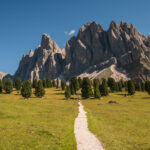
The Dolomites form a dramatic mountain landscape in northeastern Italy, where sheer pale limestone peaks rise abruptly above alpine meadows and dense forests. This UNESCO World Heritage site encompasses 18 major peaks exceeding 3,000 meters, creating a stunning panorama of vertical walls, deep valleys, and distinctive rock formations that glow pink and orange during the renowned alpenglow or enrosadira. Beyond their geological significance, the Dolomites preserve unique Ladin culture in isolated valleys where an ancient Rhaeto-Romance language persists alongside traditional wooden architecture, artisanal crafts, and alpine cuisine blending Italian, Austrian, and indigenous influences. Outdoor enthusiasts discover an expansive network of trails, vie ferrate (protected climbing routes), and ski areas, while mountain rifugi (huts) provide authentic hospitality with hearty regional specialties. The region balances adventure with cultural depth through seasonal festivals celebrating mountain traditions, local museums documenting wartime history from the Italian-Austrian front lines of World War I, and remarkably preserved medieval villages that maintain centuries-old customs beneath the towering peaks.
The destination guide
Dolomites
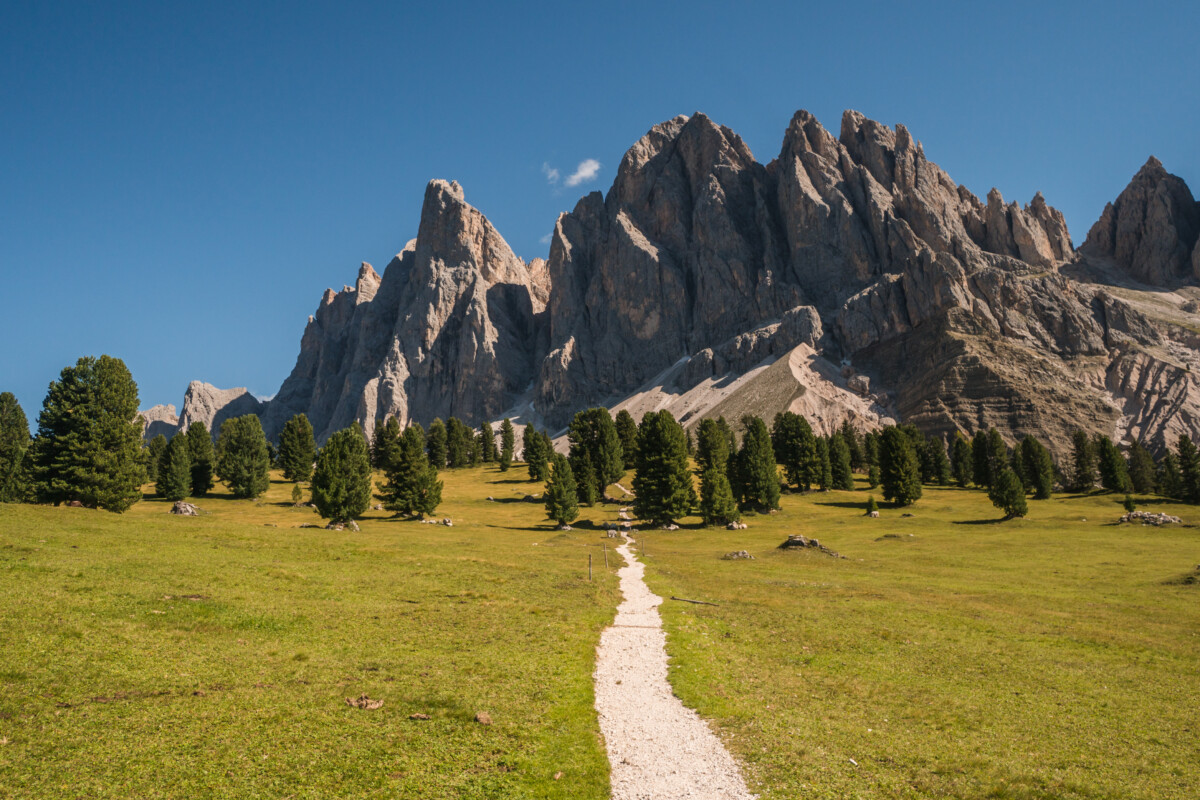
The Dolomites are Italian Alps that don’t look like any other mountains — pale limestone towers, pink sunsets called enrosadira, and via ferrata routes bolted into vertical rock.
At a glance
- Italian
- German
- Ladin
- English
- Alpine mountain chain
- Dramatic peaks
- Alpine meadows
- Mountain lakes
- Hiking
- Skiing
- Photography
- Nature
- Gastronomy
- Via Ferrata
- Scenic Drives
- Alpine Wellness
How Dolomites scores
Character
Editorial scores on a 10-point scale, weighed against destinations of the same kind.
Travel safety snapshot
SafePlace indicators use their source 100-point scale; higher is more favourable. Planning context, not a live travel advisory — check official government guidance before you go.
When to go
Best months to visit: January, February, March, June, July, August, September, October and December.
- January: -18.1 to -9.2 degrees Celsius, 50.2 millimetres of rain, best-time score 5 out of 5.
- February: -15.6 to -6.8 degrees Celsius, 58.8 millimetres of rain, best-time score 5 out of 5.
- March: -14.2 to -5 degrees Celsius, 71.4 millimetres of rain, best-time score 4 out of 5.
- April: -11 to -1.9 degrees Celsius, 109.9 millimetres of rain, best-time score 3 out of 5.
- May: -6.8 to 2.4 degrees Celsius, 162.7 millimetres of rain, best-time score 3 out of 5.
- June: -1.4 to 9.1 degrees Celsius, 143.7 millimetres of rain, best-time score 4 out of 5.
- July: 0 to 10.4 degrees Celsius, 163.7 millimetres of rain, best-time score 5 out of 5.
- August: 0.4 to 10.2 degrees Celsius, 150.7 millimetres of rain, best-time score 5 out of 5.
- September: -3.3 to 6.2 degrees Celsius, 103.8 millimetres of rain, best-time score 5 out of 5.
- October: -6.9 to 2.2 degrees Celsius, 110.6 millimetres of rain, best-time score 4 out of 5.
- November: -12.4 to -4.3 degrees Celsius, 116.5 millimetres of rain, best-time score 3 out of 5.
- December: -16.2 to -7.9 degrees Celsius, 85 millimetres of rain, best-time score 5 out of 5.
Month-by-month conditions and packing advice
- January
- Very cold, occasional rain January in Dolomites: the region is strongest for either ski season or summer hiking, rifugios, lifts, lakes, and mountain photography. Crowds: January in Dolomites is best for winter-ready travelers; outdoor plans need warm gear, shorter daylight expectations, and weather-aware transport planning. Pack: Pack insulated layers, warm footwear, gloves, and a serious winter coat.
- February
- Very cold, occasional rain February in Dolomites: the region is strongest for either ski season or summer hiking, rifugios, lifts, lakes, and mountain photography. Crowds: February in Dolomites is best for winter-ready travelers; outdoor plans need warm gear, shorter daylight expectations, and weather-aware transport planning. Pack: Pack insulated layers, warm footwear, gloves, and a serious winter coat.
- March
- Very cold, some rain March in Dolomites: late ski, early summer, or fall trips can be excellent if lifts, huts, and weather cooperate. Crowds: March in Dolomites is best for winter-ready travelers; outdoor plans need warm gear, shorter daylight expectations, and weather-aware transport planning. Pack: Pack insulated layers, warm footwear, gloves, and a serious winter coat. Add a rain jacket or compact umbrella.
- April
- Very cold, some rain April in Dolomites: transition-season closures limit hiking or skiing choices despite beautiful scenery. Crowds: April in Dolomites is best for winter-ready travelers; outdoor plans need warm gear, shorter daylight expectations, and weather-aware transport planning. Pack: Pack insulated layers, warm footwear, gloves, and a serious winter coat. Add a rain jacket or compact umbrella.
- May
- Cold, rainy May in Dolomites: transition-season closures limit hiking or skiing choices despite beautiful scenery. Crowds: May in Dolomites is best for winter-ready travelers; outdoor plans need warm gear, shorter daylight expectations, and weather-aware transport planning. Pack: Pack insulated layers, warm footwear, gloves, and a serious winter coat. Add a rain jacket or compact umbrella.
- June
- Cold, rainy June in Dolomites: late ski, early summer, or fall trips can be excellent if lifts, huts, and weather cooperate. Crowds: June in Dolomites is one of the wetter periods, so museums, food stops, flexible reservations, and backup indoor plans make the trip easier. Pack: Pack warm layers, a coat, and comfortable shoes for cold mornings and evenings. Add a rain jacket or compact umbrella.
- July
- Cool to mild, rainy July in Dolomites: the region is strongest for either ski season or summer hiking, rifugios, lifts, lakes, and mountain photography. Crowds: July in Dolomites is one of the wetter periods, so museums, food stops, flexible reservations, and backup indoor plans make the trip easier. Pack: Pack warm layers, a coat, and comfortable shoes for cold mornings and evenings. Add a rain jacket or compact umbrella.
- August
- Cool to mild, rainy August in Dolomites: the region is strongest for either ski season or summer hiking, rifugios, lifts, lakes, and mountain photography. Crowds: August in Dolomites is one of the wetter periods, so museums, food stops, flexible reservations, and backup indoor plans make the trip easier. Pack: Pack warm layers, a coat, and comfortable shoes for cold mornings and evenings. Add a rain jacket or compact umbrella.
- September
- Cold, some rain September in Dolomites: the region is strongest for either ski season or summer hiking, rifugios, lifts, lakes, and mountain photography. Crowds: September in Dolomites is workable with normal seasonal planning; build in layers, weather checks, and a mix of indoor and outdoor activities. Pack: Pack warm layers, a coat, and comfortable shoes for cold mornings and evenings. Add a rain jacket or compact umbrella.
- October
- Cold, some rain October in Dolomites: late ski, early summer, or fall trips can be excellent if lifts, huts, and weather cooperate. Crowds: October in Dolomites is best for winter-ready travelers; outdoor plans need warm gear, shorter daylight expectations, and weather-aware transport planning. Pack: Pack insulated layers, warm footwear, gloves, and a serious winter coat. Add a rain jacket or compact umbrella.
- November
- Very cold, some rain November in Dolomites: transition-season closures limit hiking or skiing choices despite beautiful scenery. Crowds: November in Dolomites is best for winter-ready travelers; outdoor plans need warm gear, shorter daylight expectations, and weather-aware transport planning. Pack: Pack insulated layers, warm footwear, gloves, and a serious winter coat. Add a rain jacket or compact umbrella.
- December
- Very cold, some rain December in Dolomites: the region is strongest for either ski season or summer hiking, rifugios, lifts, lakes, and mountain photography. Crowds: December in Dolomites is best for winter-ready travelers; outdoor plans need warm gear, shorter daylight expectations, and weather-aware transport planning. Pack: Pack insulated layers, warm footwear, gloves, and a serious winter coat. Add a rain jacket or compact umbrella.
- June
- July
- August
- November
- December
- January
- February
Know before you go
Best time to visit
Late June through mid-September for hiking (trails snow-free, rifugi open, wildflowers). July–August is warmest but busiest. September offers golden larch foliage and fewer crowds. December through March for skiing on the Sellaronda circuit.
Season by season
Spring (Apr–May): Snow melting, limited trail access, some lifts opening late May. Summer (Jun–Aug): 18–28 °C at valley level, 5–15 °C at altitude, wildflowers, rifugi open. Autumn (Sep–Oct): 8–18 °C, golden larch season (mid-Oct), fewer crowds. Winter (Dec–Mar): -5 to 5 °C, ski season, Sellaronda circuit operates.
Crowds
Very High in July–August at iconic sites (Tre Cime, Braies); moderate in June and September; lower in winter outside ski holidays
Getting there and around
Getting there
The nearest airports are Bolzano (BZO, small), Innsbruck (INN, 1.5h), Verona (VRN, 2h), Venice Marco Polo (VCE, 2.5h), and Munich (MUC, 3h). Trains reach Bolzano, Bressanone, and Fortezza on the Brenner line. From Bolzano, regional buses (SAD) connect to Val Gardena, Alpe di Siusi, and other valleys. A rental car provides maximum flexibility for exploring multiple valleys and mountain passes.
Getting around
A rental car is the most practical way to explore the Dolomites, as attractions span multiple valleys connected by mountain passes. The SAD bus network covers many valleys from Bolzano. Cable cars and gondolas provide mountain access from valley stations. In winter, ski buses connect resorts within the Dolomiti Superski area. Cortina d’Ampezzo has a local bus system. Some passes (Stelvio, Sella) close in winter.
Top experiences in Dolomites
Tre Cime di Lavaredo
Three iconic limestone pinnacles rising 2,999 m above a vast alpine plateau — the most photographed formation in the Dolomites and a UNESCO World Heritage Site. A 10 km loop trail around the base (3–4 hours, moderate) passes rifugi serving polenta and strudel. Pre-book parking at Rifugio Auronzo.
Lago di Braies
A turquoise glacial lake surrounded by dark conifer forest and sheer Dolomite walls, often called the ‘Pearl of the Alps.’ Rent a classic wooden rowing boat, walk the 3.5 km lakeside trail, or photograph the iconic boathouse at dawn before crowds arrive. Vehicle access is restricted in summer — arrive before 9 AM or take the shuttle.
Seceda Ridgeline
A dramatic ridgeline at 2,500 m above Ortisei in Val Gardena, reached by cable car. The Seceda summit delivers one of the most spectacular Dolomite panoramas: a jagged skyline of Odle/Geisler peaks dropping into green meadows. The gentle ridgeline walk (1 hour) is suitable for families.
Val di Funes & Church of St. John
A fairytale valley backed by the pointed Odle/Geisler peaks, best known for the Church of St. John in Ranui — a small white Baroque chapel framed against mountain spires, and the most-photographed scene in the Italian Alps. Visit at sunrise or sunset for golden light on the peaks. Stay in Santa Maddalena for proximity.
Alpe di Siusi (Seiser Alm)
Europe’s largest high-altitude alpine meadow (52 km²) at 1,850 m, blanketed in wildflowers from June to August. A cable car from Compatsch accesses the plateau; gentle walking trails and panoramic chairlifts crisscross the meadow. The Sassolungo and Sciliar massifs form a dramatic backdrop. Cross-country skiing and snowshoeing replace hiking in winter.
Editor-curated picks carried over from our original guide. Where a full place guide exists, the card links to it.
Worth booking ahead in Dolomites
Hand-picked from the operators our guides already send readers to. Prices and availability are live on the partner site.
Guided tourGetYourGuide
Colosseum, Forum and Palatine Hill small-group tour (opens GetYourGuide in a new tab)
Small group with the Forum and Palatine Hill included; the standard Colosseum visit done properly.
Where to stayBooking.com
Stays in Dolomites (opens Booking.com in a new tab)
Live rates and availability for Dolomites on Booking.com; filter by neighbourhood once you know where your days start.
We earn a commission if you book through these links, at no extra cost to you. It is how we keep the guides free and independent.
Where to stay
Hotel Dorfhotel Beludei
Via Stazione 11, 39047 Santa Cristina Val Gardena, Italy
A 4-star superior family-run hotel in Santa Cristina, featuring a panoramic spa with indoor-outdoor pool overlooking the Sassolungo massif, a gourmet half-board restaurant using local ingredients, and direct access to the Sellaronda ski circuit. Dolomite architecture blends larch timber, stone, and South Tyrolean textiles.
Savoy Dolomites Luxury Spa Hotel
Località Pecol 1, 39048 Selva di Val Gardena, Italy
A 5-star luxury spa hotel at the foot of the Sella Group, with an 1,800 m² wellness center, multiple heated outdoor pools, a Michelin-level restaurant and a wine cellar specializing in Alto Adige whites. Ski-in/ski-out access to the Sellaronda circuit.
Grand Hotel Savoia Cortina d'Ampezzo
Corso Italia 92, 32043 Cortina d'Ampezzo, Italy
A legendary 5-star grand hotel in the heart of Cortina d’Ampezzo since 1912, combining Belle Époque elegance with modern alpine luxury. Features a spa, indoor pool, multiple restaurants, and front-row views of the Tofane peaks from the terrace café.
Editor-curated stays carried over from our original guide. Where we have reviewed the hotel, the card links to the review.
Tips from the field
Highlights
- Tre Cime di Lavaredo
- Lago di Braies
- Seceda Ridgeline
- Val di Funes & St. John Church
- Alpe di Siusi
- Sellaronda Ski Circuit
- Great Dolomites Road
- Rifugio Dining
Best activities
- Hike the Tre Cime loop, row on Lago di Braies at sunrise, ride the cable car to Seceda, photograph the Church of St. John in Val di Funes, walk the wildflower meadows of Alpe di Siusi, complete the Sellaronda ski circuit, via ferrata the Cinque Torri, drive the Great Dolomites Road, dine at a rifugio, and explore the Ladin villages of Val Badia.
Local experiences
- Eat Kaiserschmarrn at a high-altitude rifugio after a morning hike, join a wood-carving workshop in Ortisei, taste Alto Adige Gewürztraminer at a family winery in Bolzano, attend a moonlit snowshoe hike in winter, or cycle the Great Dolomites Road between Bolzano and Cortina.
Practical tips
- Transport: A rental car provides the most flexibility; some passes close in winter. Summer shuttle buses serve popular trailheads.
- Parking: Pre-book at Tre Cime and Braies in peak season — access is restricted.
- Rifugi: Most mountain huts close mid-October through mid-June; book beds in advance for overnight stays.
- Languages: Italian, German, and Ladin are spoken. English is common in tourist areas.
- Currency: Euro (EUR). Cards accepted at larger hotels and restaurants; carry cash for rifugi.
- Tipping: 5–10 % at restaurants; round up at rifugi.
Photography tips
- Tre Cime's classic angle is from the Locatelli rifugio at sunrise when warm light hits the east face. Val di Funes's Church of St. John requires a telephoto (100–200 mm) from the approved viewpoint
- arrive before 7 AM in summer. Lago di Braies reflects best on windless mornings before 8 AM. Seceda's ridgeline frames against the Odle peaks with a wide-angle from the north-facing edge. In autumn (mid-October), golden larches create vivid contrast against grey Dolomite limestone.
Timing
- Allow 5–7 days for the core Dolomites (Val Gardena, Tre Cime, Braies, Cortina). Combine with Bolzano (2 days) or Lake Garda (2 days). A hut-to-hut trek (Alta Via 1 or 2) requires 8–12 days.
Keeping it authentic
- The Dolomites straddle Italian and Austrian-German culture: road signs are bilingual, menus blend polenta and Wiener schnitzel, and Ladin — a Romance language spoken by 30,000 people — survives in Val Gardena, Val Badia, and Val di Fassa. Mountain huts (rifugi) are the social hubs of alpine life
- a lunch of Kaiserschmarrn (torn pancakes) with lingonberry jam or Tris di canederli (three bread dumplings in broth) at a sun-drenched terrace is the quintessential Dolomite experience. Wood-carving in Val Gardena dates to the 17th century and continues today.
Culture, customs and safety
Cultural heritage
The Dolomites, a dramatic mountain range in northeastern Italy, are a UNESCO World Heritage Site recognized for both their geological significance and deep-rooted cultural traditions. Historically, the region was a crossroads of Latin, Germanic, and Ladin cultures, evident in its trilingual identity and alpine customs preserved in local villages. Ladin-speaking communities have maintained distinct traditions, including woodcarving, mountain dairy farming, and seasonal festivals tied to ancient pagan and Christian cycles. Architecturally, the Dolomites are known for their “masi” farmsteads and ornate alpine churches, reflecting centuries of rural mountain life. World War I left a lasting imprint on the landscape, with open-air museums and via ferrata climbing routes tracing former military paths across the high passes.
Local customs & etiquette
The Dolomites straddle three cultures: Germanic (South Tyrol), Italian (Veneto/Trentino), and Ladin (central valleys). In South Tyrol, greet with ‘Grüß Gott’; in Italian areas, ‘Buongiorno.’ Meals are a cultural event—lunch is typically the main meal, and dinner starts at 7-8 PM. Mountain hut etiquette: greet fellow hikers, use indoor shoes in huts, and don’t leave waste. Tipping 5-10% is customary. Respect the mountain environment—stay on trails and carry waste out.
Safety notes
The Dolomites are generally very safe with negligible crime. The main risks are mountain-related: sudden weather changes (bring layers and rain gear even on sunny mornings), altitude (some trails exceed 2,500 m), and via ferrata falls (use proper harnesses and helmets). Stay on marked trails — off-trail terrain is loose scree and rockfall zones. Check weather forecasts daily. In winter, avalanche awareness is critical for off-piste skiing. Emergency: 112 (EU) or 118 (Italian mountain rescue).