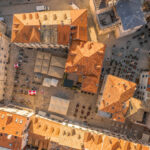
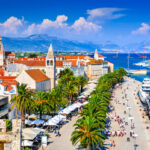
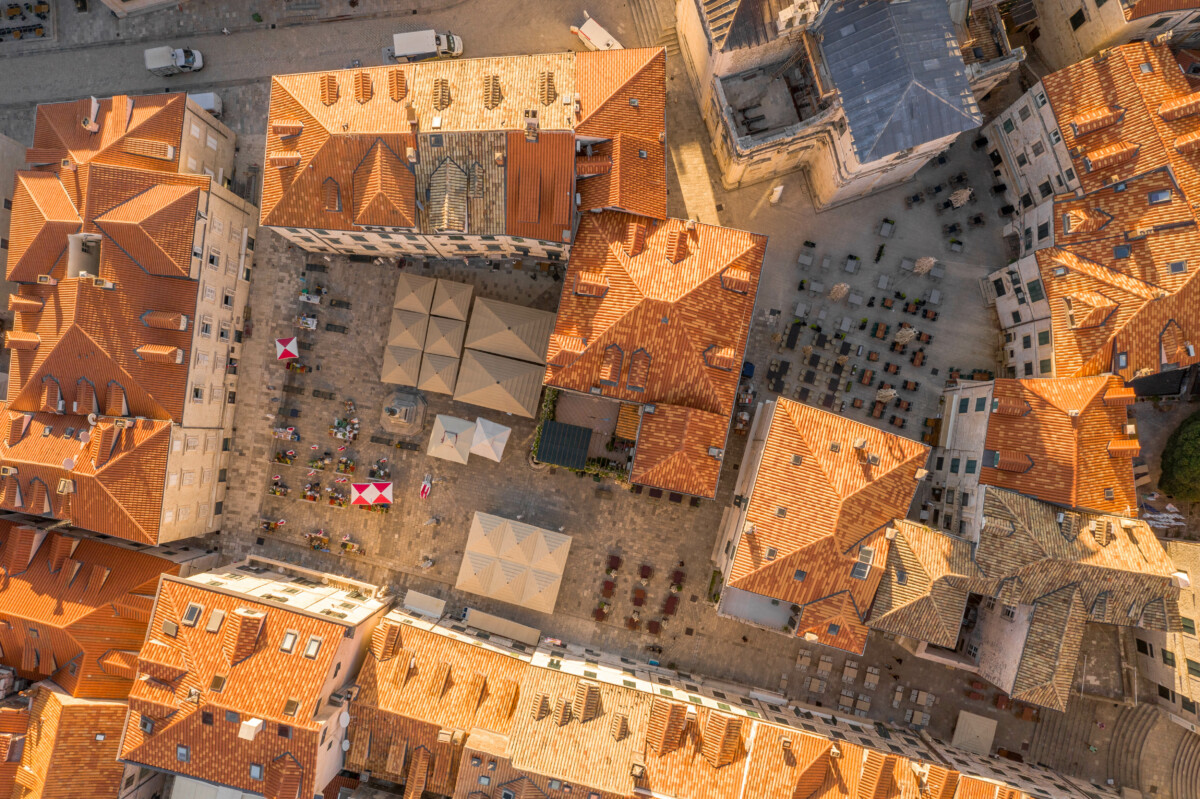
Dubrovnik preserves Europe’s most complete medieval walled city as a UNESCO World Heritage Site, where 1,940-meter limestone fortifications up to 25 meters high encircle marble-paved streets that doubled as King’s Landing in Game of Thrones. The former Republic of Ragusa maintained independence for 450 years through diplomatic excellence, creating architectural masterpieces like the Gothic-Renaissance Rector’s Palace and Sponza Palace that survived the 1667 earthquake. Beyond film tourism, authentic experiences include climbing Fort Lovrijenac for panoramic Adriatic views, exploring Lokrum Island’s botanical gardens with the original Iron Throne replica, and discovering Trsteno Arboretum’s 500-year-old gardens overlooking crystal-clear waters. The Old Town transforms from cruise ship crowds during peak hours to intimate evening strolls along Stradun’s polished limestone, where traditional klapa singers perform UNESCO-recognized a cappella harmonies in ancient courtyards.
The destination guide
Dubrovnik
Travel guides for Dubrovnik
Things to do (1)
More guides featuring Dubrovnik (11)
At a glance
- Croatian
- Adriatic coast
- Walled old town
- Limestone cliffs
- Island views
- Medieval History
- Game of Thrones
- Architecture
- Beach
- Sea Kayaking
- Island Hopping
- Gastronomy
- Nightlife
How Dubrovnik scores
Character
Editorial scores on a 10-point scale, weighed against destinations of the same kind.
Travel safety snapshot
SafePlace indicators use their source 100-point scale; higher is more favourable. Planning context, not a live travel advisory — check official government guidance before you go.
When to go
Best months to visit: April, May, June, July, August, September and October.
- January: 3.8 to 11.2 degrees Celsius, 191.1 millimetres of rain, best-time score 2 out of 5.
- February: 5.3 to 13 degrees Celsius, 181.8 millimetres of rain, best-time score 2 out of 5.
- March: 7 to 14.6 degrees Celsius, 231.3 millimetres of rain, best-time score 2 out of 5.
- April: 9.9 to 17.9 degrees Celsius, 128.5 millimetres of rain, best-time score 4 out of 5.
- May: 14 to 21.7 degrees Celsius, 143.5 millimetres of rain, best-time score 5 out of 5.
- June: 19 to 27 degrees Celsius, 54 millimetres of rain, best-time score 5 out of 5.
- July: 21.3 to 30 degrees Celsius, 42.6 millimetres of rain, best-time score 4 out of 5.
- August: 21.5 to 30.2 degrees Celsius, 53.5 millimetres of rain, best-time score 4 out of 5.
- September: 17.5 to 25.5 degrees Celsius, 144.6 millimetres of rain, best-time score 5 out of 5.
- October: 13.1 to 21.1 degrees Celsius, 192.1 millimetres of rain, best-time score 5 out of 5.
- November: 9.7 to 16.6 degrees Celsius, 358 millimetres of rain, best-time score 3 out of 5.
- December: 5.8 to 13 degrees Celsius, 222.1 millimetres of rain, best-time score 2 out of 5.
Month-by-month conditions and packing advice
- January
- Cool to mild, rainy January in Dubrovnik: winter conditions and closures make this less balanced for a coast-first visit. Crowds: January in Dubrovnik is one of the wetter periods, so museums, food stops, flexible reservations, and backup indoor plans make the trip easier. Pack: Pack layered clothing and comfortable walking shoes. Add a rain jacket or compact umbrella.
- February
- Cool to mild, rainy February in Dubrovnik: winter conditions and closures make this less balanced for a coast-first visit. Crowds: February in Dubrovnik is one of the wetter periods, so museums, food stops, flexible reservations, and backup indoor plans make the trip easier. Pack: Pack layered clothing and comfortable walking shoes. Add a rain jacket or compact umbrella.
- March
- Cool to mild, rainy March in Dubrovnik: winter conditions and closures make this less balanced for a coast-first visit. Crowds: March in Dubrovnik is one of the wetter periods, so museums, food stops, flexible reservations, and backup indoor plans make the trip easier. Pack: Pack layered clothing and comfortable walking shoes. Add a rain jacket or compact umbrella.
- April
- Cool to mild, some rain April in Dubrovnik: weather can be excellent, though high summer crowds, heat, and prices require planning. Crowds: April in Dubrovnik is workable with normal seasonal planning; build in layers, weather checks, and a mix of indoor and outdoor activities. Pack: Pack layered clothing and comfortable walking shoes. Add a rain jacket or compact umbrella.
- May
- Mild to warm, rainy May in Dubrovnik: city walls, islands, sea kayaking, beaches, ferries, and old-town walks are strongest outside peak crowd pressure. Crowds: May in Dubrovnik is one of the wetter periods, so museums, food stops, flexible reservations, and backup indoor plans make the trip easier. Pack: Pack layered clothing and comfortable walking shoes. Add a rain jacket or compact umbrella.
- June
- Warm to hot, occasional rain June in Dubrovnik: city walls, islands, sea kayaking, beaches, ferries, and old-town walks are strongest outside peak crowd pressure. Crowds: June in Dubrovnik is comfortable for sightseeing, neighborhoods, food stops, day trips, and outdoor time with limited weather friction. Pack: Pack light clothing, sun protection, and comfortable walking shoes.
- July
- Warm to hot, occasional rain July in Dubrovnik: weather can be excellent, though high summer crowds, heat, and prices require planning. Crowds: July in Dubrovnik is workable with normal seasonal planning; build in layers, weather checks, and a mix of indoor and outdoor activities. Pack: Pack light clothing, sun protection, and comfortable walking shoes.
- August
- Warm to hot, occasional rain August in Dubrovnik: weather can be excellent, though high summer crowds, heat, and prices require planning. Crowds: August in Dubrovnik is workable with normal seasonal planning; build in layers, weather checks, and a mix of indoor and outdoor activities. Pack: Pack light clothing, sun protection, and comfortable walking shoes.
- September
- Mild to warm, rainy September in Dubrovnik: city walls, islands, sea kayaking, beaches, ferries, and old-town walks are strongest outside peak crowd pressure. Crowds: September in Dubrovnik is one of the wetter periods, so museums, food stops, flexible reservations, and backup indoor plans make the trip easier. Pack: Pack light clothing, sun protection, and comfortable walking shoes. Add a rain jacket or compact umbrella.
- October
- Mild to warm, rainy October in Dubrovnik: city walls, islands, sea kayaking, beaches, ferries, and old-town walks are strongest outside peak crowd pressure. Crowds: October in Dubrovnik is one of the wetter periods, so museums, food stops, flexible reservations, and backup indoor plans make the trip easier. Pack: Pack layered clothing and comfortable walking shoes. Add a rain jacket or compact umbrella.
- November
- Cool to mild, rainy November in Dubrovnik: quiet travel is possible, but reduced services and weather make plans less flexible. Crowds: November in Dubrovnik is one of the wetter periods, so museums, food stops, flexible reservations, and backup indoor plans make the trip easier. Pack: Pack layered clothing and comfortable walking shoes. Add a rain jacket or compact umbrella.
- December
- Cool to mild, rainy December in Dubrovnik: winter conditions and closures make this less balanced for a coast-first visit. Crowds: December in Dubrovnik is one of the wetter periods, so museums, food stops, flexible reservations, and backup indoor plans make the trip easier. Pack: Pack layered clothing and comfortable walking shoes. Add a rain jacket or compact umbrella.
- July
- August
- June
- September
- November
- December
- January
- February
- March
- April
- May
- October
Know before you go
Best time to visit
The best time to visit Dubrovnik is during the shoulder seasons of spring (April to June) and fall (September to October) when the weather is pleasant and the crowds are smaller. The summer months are popular for beachgoers, but they can be quite crowded and hot.
Season by season
Spring (Apr–May): 15–23 °C, blooming gardens, mild crowds, ideal sightseeing. Summer (Jun–Aug): 25–32 °C, peak season, beaches, Summer Festival, very crowded. Autumn (Sep–Oct): 20–28 °C, warm sea, shoulder prices, fewer visitors. Winter (Dec–Feb): 8–15 °C, quiet, atmospheric, best prices.
Crowds
Extremely high in the Old Town during cruise-ship hours (10 AM–4 PM) from May–October; manageable before 9 AM and after 5 PM; moderate in spring and autumn; low in winter
Getting there and around
Getting there
Dubrovnik Airport (DBV) is located 15.5 km south of the Old Town, with seasonal direct flights from major European cities increasing dramatically in summer. Airport shuttle buses run every 30 minutes to the Pile Gate (40 minutes), timed with flight arrivals. Year-round connections require stops in Zagreb, Vienna, or Frankfurt. The coastal highway from Split (230 km, 3 hours) offers spectacular Adriatic views but requires crossing Bosnia-Herzegovina briefly at Neum. Jadrolinija ferries connect to Italian ports (Bari) and Croatian islands. Cruise ships anchor in Gruž port, 3 km from Old Town, creating significant crowds from April to October. International buses from Zagreb, Sarajevo, and Kotor provide budget options.
Getting around
Dubrovnik’s Old Town (Stari Grad) is entirely pedestrian-only within the medieval walls, with polished limestone streets that become slippery when wet. Libertas buses connect suburbs to Old Town’s Pile and Ploče gates. The cable car to Mount Srđ offers panoramic views and sunset experiences. Water taxis and kayaks access the city walls from the sea and reach Lokrum Island (15 minutes). The main Stradun promenade runs east-west through Old Town, with steep stairs climbing north and south. Early morning (before 9 AM) and evening (after 6 PM) offer respite from cruise ship crowds and heat. City Walls tickets (250 HRK) are valid for one day – start early to avoid queues and heat. Uber operates in Dubrovnik, useful for airport transfers and reaching beaches like Lapad or Copacabana.
Top experiences in Dubrovnik
Dubrovnik City Walls
A 1,940-metre circuit of medieval fortifications reaching 25 metres high, encircling the entire Old Town and offering unbroken panoramic views of terracotta rooftops, the Adriatic coast, and Lokrum Island. Built between the 12th and 17th centuries, the walls include towers, bastions, and the massive Minceta Tower at the northwest corner. The full walk takes 1.5–2 hours; enter at the Pile Gate entrance for the most dramatic opening views. Arrive at 8 AM in summer to avoid the heat and cruise-ship crowds. One of Europe’s finest medieval fortification systems.
Fort Lovrijenac
Perched 37 metres above the sea on a rocky promontory just west of the Pile Gate, this imposing fortress earned the nickname ‘Dubrovnik’s Gibraltar.’ Built to resist Venetian attacks, with walls up to 12 metres thick on the seaward side, it served as a military strongpoint from the 11th century onward. Game of Thrones fans know it as the Red Keep. The views from the battlements—looking back at the walled Old Town with the Adriatic stretching south—are among the finest in Croatia. The Dubrovnik Summer Festival stages Hamlet here each July. Admission is included with the City Walls ticket.
Lokrum Island
A lush, car-free island nature reserve just 15 minutes by ferry from the Old Town harbour. A Benedictine monastery with a Renaissance cloister sits among botanical gardens planted with over 500 subtropical species, while wild peacocks strut along the pathways. The rocky southern shore has designated swimming areas, including a famous (clothing-optional) beach near the Dead Sea salt lake. Game of Thrones filmed Qarth scenes here, and a replica Iron Throne sits in the monastery courtyard. Ferries run every 30 minutes in summer. Last return is around 7 PM.
Dubrovnik Cable Car & Mount Srđ
A 4-minute cable-car ride from the northern edge of the Old Town to 412-metre Mount Srđ, delivering the definitive panoramic view of Dubrovnik—the walled city, its terracotta rooftops, the harbour, and the Elaphiti Islands stretching into the Adriatic blue. The summit houses a 19th-century Imperial Fortress with a Homeland War exhibit documenting the 1991–92 siege. Come at sunset for the most dramatic light. A café-restaurant at the top serves cocktails with the view. Alternatively, hike the zigzag trail up in 45 minutes.
Rector's Palace & Stradun
The Stradun (Placa) is Dubrovnik’s polished limestone main street, running 300 metres from the Pile Gate to Luza Square. At its eastern end stands the Rector’s Palace, an elegant Gothic-Renaissance seat of government now housing the Cultural Historical Museum. Nearby, the 14th-century Franciscan Monastery contains Europe’s third-oldest operating pharmacy (since 1317) and a Romanesque cloister. The Dominican Monastery opposite holds a collection of 15th-century paintings. Together, these form the cultural spine of the Old Town. Cafe hopping along the Stradun is a Dubrovnik ritual.
Editor-curated picks carried over from our original guide. Where a full place guide exists, the card links to it.
Worth booking ahead in Dubrovnik
Hand-picked from the operators our guides already send readers to. Prices and availability are live on the partner site.
BrowseViator
Tours and tickets in Dubrovnik on Viator (opens Viator in a new tab)
Viator's full list of bookable tours and tickets in Dubrovnik.
BrowseGetYourGuide
Experiences in Dubrovnik on GetYourGuide (opens GetYourGuide in a new tab)
Everything GetYourGuide sells in Dubrovnik, with the cancellation terms on each listing.
Where to stayBooking.com
Stays in Dubrovnik (opens Booking.com in a new tab)
Live rates and availability for Dubrovnik on Booking.com; filter by neighbourhood once you know where your days start.
We earn a commission if you book through these links, at no extra cost to you. It is how we keep the guides free and independent.
Tips from the field
Highlights
- Dubrovnik City Walls Circuit
- Fort Lovrijenac (Game of Thrones Red Keep)
- Lokrum Island Nature Reserve
- Mount Srđ Cable Car Panorama
- Stradun & Rector's Palace
- Buža Bar Cliffside Drinks
- Sea Kayaking Around the Walls
- Elaphiti Islands Day Trip
Best activities
- Walk the full City Walls circuit at sunrise, visit Fort Lovrijenac (the Red Keep), ferry to Lokrum Island for swimming and peacocks, ride the cable car to Mount Srđ at sunset, sea-kayak around the walls, walk the Stradun and drink at Buža Bar, take a Game of Thrones walking tour, visit Rector's Palace, kayak to Betina Cave, and day-trip to the Elaphiti Islands or Peljesac wine peninsula.
Local experiences
- Climb the City Walls at 8 AM before the crowds, drink cold beer at Buža Bar through the gap in the wall, kayak around the Old Town's sea-facing walls, ferry to Lokrum to swim in the Dead Sea salt lake, walk the Jesuit Stairs (Cersei's Walk of Shame), eat fresh seafood at Konoba Dalmatino, visit the Franciscan Monastery's 700-year-old pharmacy, drink cocktails at sunset on Mount Srđ, explore Rector's Palace and Sponza Palace, and day-trip to Ston on the Peljesac Peninsula for oysters and salt pans.
Practical tips
- Currency: Euro (EUR) since January 2023. Cards widely accepted.
- Getting There: Dubrovnik Airport (DBV) via shuttle bus (€6, 30 minutes). Ferry from Bari (Italy).
- Transportation: Libertas buses. Old Town is car-free and walkable. Cable car to Srđ Hill. Boat taxis to Lokrum Island and Elafiti Islands.
- Dining: Seafood and Dalmatian cuisine. Fresh oysters from Ston (nearby day trip). Restaurant meals €15-35 (Old Town is priciest). For better value, eat in Gruž or Lapad.
- Free Attractions: Stradun main street, Old Town walls exterior views, Lovrijenac Fortress exterior, Banje Beach, Lapad Beach, sunset from Fort Imperial/cable car area.
- Tipping: Round up or 10%
- Electricity: 230V/50Hz, Type C/F plugs
Photography tips
- The City Walls at sunrise deliver the definitive Dubrovnik composition—terracotta rooftops against the Adriatic blue with no crowds in the frame. Mount Srđ at sunset provides the wide panoramic shot of the entire walled city. Fort Lovrijenac's battlements frame the Old Town harbour beautifully in late-afternoon sidelight. The Stradun's polished limestone reflects pedestrians and buildings at twilight, creating mirror-like compositions with a low-angle shot. From Lokrum Island, a telephoto lens compresses the walled city into a dramatic cityscape. Drone photography over the walls is restricted
- check regulations.
Timing
- Allow 2–3 full days: a walls and Old Town day (City Walls circuit, Stradun, Rector's Palace, monasteries, Buža Bar), a sea day (Lokrum Island ferry, sea kayaking, Banje Beach), and a panorama day (Mount Srđ cable car, Fort Lovrijenac, Game of Thrones tour). Add a day for an Elaphiti Islands boat trip or Peljesac wine peninsula excursion. Dubrovnik connects to Split by coastal bus (4.5 hrs) or a scenic ferry.
Keeping it authentic
- Dubrovnik walks a fine line between living city and open-air museum. The Old Town's 1,000 residents—down from 5,000 two decades ago—still hang laundry between medieval walls and drink espresso at the same Stradun cafés. The UNESCO-listed fortifications are not reconstructions: they survived the 1991–92 siege, and bullet scars are still visible on certain façades (a dedicated map marks the damage). Buža Bar, a hole-in-the-wall cliffside spot accessible through a gap in the city wall, is as local as it gets. To dodge cruise-ship crowds (up to 8,000 passengers daily in summer), visit the Old Town before 9 AM or after 5 PM.
Culture, customs and safety
Cultural heritage
Dubrovnik, the “Pearl of the Adriatic,” preserves Europe’s finest walled medieval city as a UNESCO World Heritage Site since 1979. The Republic of Ragusa maintained independence for 450 years through diplomatic brilliance, abolishing slavery in 1416 – centuries before other nations. The limestone walls, up to 25 meters high and 6 meters thick, protected a sophisticated maritime republic that rivaled Venice. St. Blaise Festival honors the city’s patron saint with processions dating to 972 CE. The Rector’s Palace showcases Gothic-Renaissance architecture, while Sponza Palace preserves archives documenting medieval trade networks. Traditional klapa singing, UNESCO-recognized a cappella harmonies, echo through marble streets during summer festivals.
Local customs & etiquette
Dubrovnik culture proudly maintains its Republic of Ragusa heritage, distinct from the rest of Croatia, with locals calling their city “grad” (the city) with particular reverence. The phrase “Sloboda se ne prodaje ni za sve zlato svijeta” (Freedom is not sold for all the gold in the world) reflects the historic republic’s values. Game of Thrones tourism brings prosperity but also local ambivalence about crowds. The evening promenade (korzo) along Stradun is a social institution where locals dress up and catch up. Klapa singing (a cappella groups) performs spontaneously in Old Town acoustics. Swimming from the rocks below the city walls is a local tradition at Buza bars. The Feast of St. Blaise (February 3) sees the entire city celebrate their patron saint. Restaurant prices inside the walls are inflated – locals eat in Gruž or Lapad. The war siege (1991-1992) remains a sensitive topic approached with respect.
Safety notes
Dubrovnik is very safe — Croatia’s most popular tourist destination.
General Safety:
• The Old Town and surrounding neighborhoods are safe
• Extremely low crime rate for tourists
Heat:
• Summer crowds are intense — visit major sites early morning
• Stone streets in Old Town get very hot — wear comfortable shoes
Cruise Ship Days:
• Old Town can be overwhelmingly crowded when ships are in port
• Check cruise ship schedules and plan accordingly
Emergency number: 112